Just when we thought global trade couldn’t get more complicated, January 2026 delivered a geopolitical earthquake.
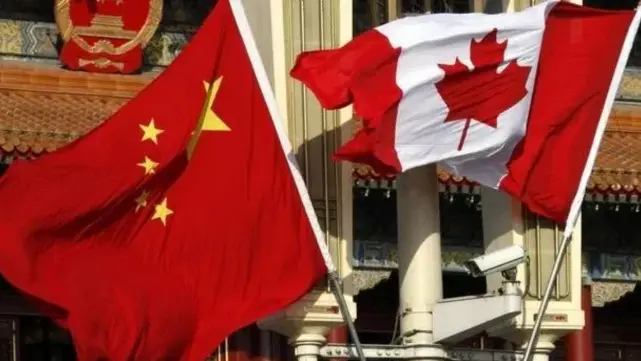
On January 16, 2026, Canadian Prime Minister Mark Carney shook hands with officials in Beijing, finalizing a “Preliminary Agreement-in-Principle” that effectively resets the turbulent trade relationship between the two nations.
- The Headline: Canada is lowering its 100% EV tariff to 6.1% for a quota of 49,000 Chinese vehicles.
- The Quid Pro Quo: China is dropping retaliatory tariffs on Canadian canola, beef, and seafood.
- The Fallout: On January 24, U.S. President Donald Trump threatened a 100% tariff on all Canadian goods if this deal proceeds.
For our clients importing goods from China to Canada (or via Canada to the US), this is a moment of extreme volatility. The rules of the game have changed twice in two weeks.
At Efanda Logistics, we are parsing the legal texts to understand what this means for your supply chain. Is Canada opening up, or is it about to be walled off by the US?
The Deal: What Exactly Changed on Jan 16?
For the last two years, Canada-China trade has been in a deep freeze. Canada mirrored US tariffs (100% on EVs, 25% on steel/aluminum), and China retaliated against Canadian agriculture. The January 16 agreement, which comes into full force on March 1, 2026, is a pragmatic de-escalation.
Key Provisions for Importers
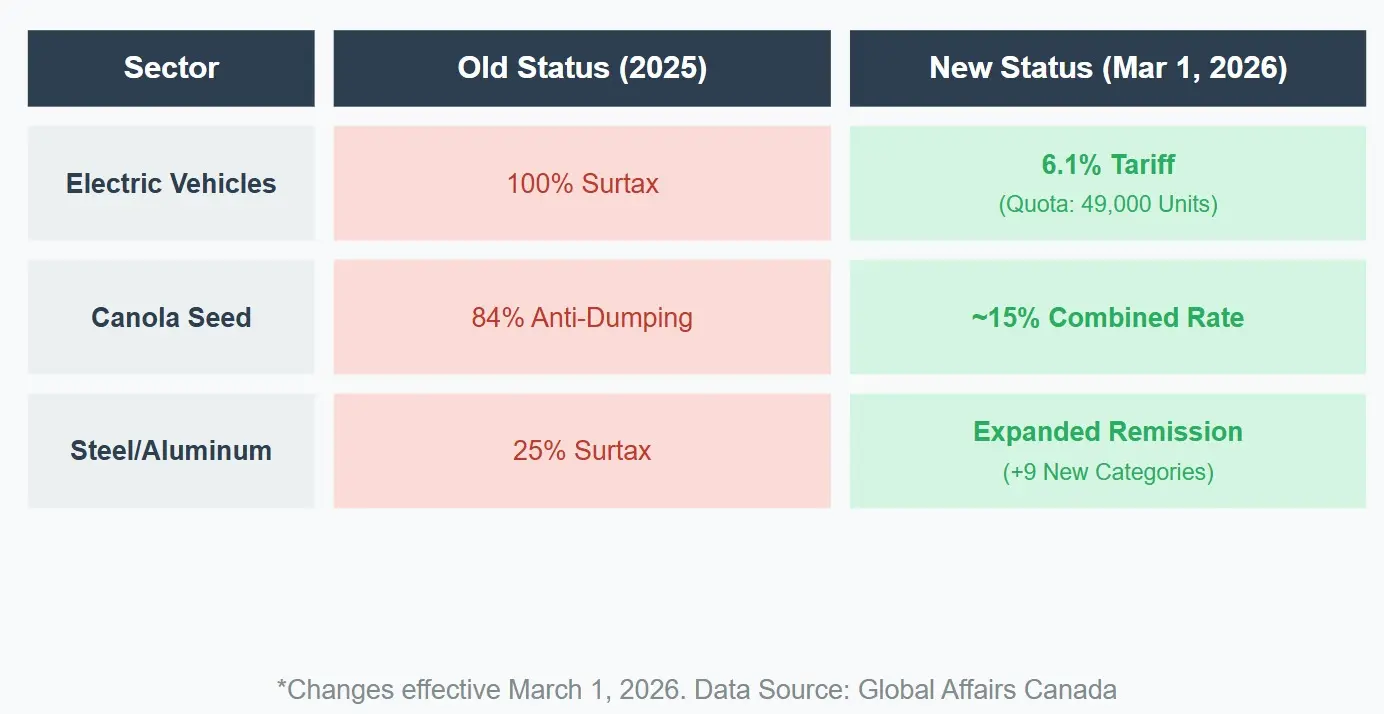
| Sector | Previous Status (2024-2025) | New Status (Effective Mar 1, 2026) |
|---|---|---|
| Electric Vehicles (EVs) | 100% Surtax on all Chinese EVs. | 6.1% Tariff (MFN Rate) for a quota of 49,000 units/year. Above quota = 100%. |
| Steel & Aluminum | 25% Surtax. | Extended Remission for 66 product lines (shortage list) + 7 new steel / 2 aluminum products added. |
| Canola Seed | 84% Anti-Dumping Duty. | Reduced to ~15% (Combined Rate). |
| Seafood (Lobster/Crab) | Retaliatory Tariffs. | 0% / Normal MFN Rate (Anti-discrimination measures removed). |
Efanda Analysis: This is a massive win for Chinese EV manufacturers (BYD, NIO) looking for a North American foothold, and for Canadian farmers. But for general importers, the most critical part is the Steel & Aluminum Remission List. If you import specialized industrial components that contain Chinese steel, you might now be exempt from the 25% tax if your HS code is on the new “short supply” list.
The Trump Factor: The “100% Threat”
The ink was barely dry on the Beijing agreement when the reaction came from Washington. President Trump’s January 24th declaration—threating a 100% tariff on all Canadian imports—changes the risk profile for everyone.
Why This Matters for You
If you use Canada as a “backdoor” to the US market (e.g., importing components to Vancouver, assembling in Ontario, and shipping to Detroit), your business model is in the crosshairs.
- The Risk: The USMCA (CUSMA) free trade agreement is under threat. The US interprets Canada’s “EV Quota” as a betrayal of the North American auto pact.
- The Immediate Impact: We are already seeing increased inspections at the Canada-US border (Detroit/Windsor and Sweetgrass/Coutts). CBP officers are demanding rigorous Certificate of Origin documentation to prove goods aren’t “transshipped” Chinese products.
Impact Analysis by Sector
A. Automotive & Batteries (HS 8703, 8507)
- For Chinese Exporters: The 49,000 unit quota is a “Golden Ticket.” We expect a rush to secure these slots.
- Efanda Tip: The quota allocation method hasn’t been published yet. It will likely be “First Come, First Served” based on customs entry date. Speed is everything.
- For Canadian Importers: If you import EV chargers, battery packs, or parts, expect scrutiny. While the deal lowers tariffs on cars, it doesn’t explicitly exempt all parts.
B. Steel & Aluminum (HS 72, 73, 76)
- The Opportunity: The “Remission Order” extension is retroactive to Jan 1, 2026.
- Action: Check if your past shipments qualify for a refund of the 25% surtax.
- New Products: The 9 new added categories (7 steel, 2 aluminum) are mostly specialized alloys used in construction and aerospace, which Canada cannot produce domestically.
C. Retail & Consumer Goods (Shein/Temu Model)
- The Shadow: While not explicitly mentioned in the Jan 16 deal, the “De Minimis” loophole is part of the US-Canada tension. Canada is under immense pressure to lower its de minimis threshold (currently CAD $20) or increase enforcement to match the US crackdown.
- Forecast: Expect delays for small parcel shipments into YVR (Vancouver) and YYZ (Toronto) as CBSA steps up enforcement to appease the US.
Strategic Advice for “China-to-Canada” Importers
Navigating this “Triangle Trap” (China-Canada-US) requires surgical precision.
Strategy 1: The “Pure Canada” Play
If your goods are for domestic consumption in Canada (not re-export to US), this is the best time in years to import.
- Action: Lock in contracts with Chinese suppliers now. The removal of retaliatory tariffs on Canadian ag-products means Chinese buyers will have more CAD currency/trade flow, lubricating the bilateral payment channels.
- Logistics: Route directly to Vancouver (Prince Rupert is also a good option for rail speed).
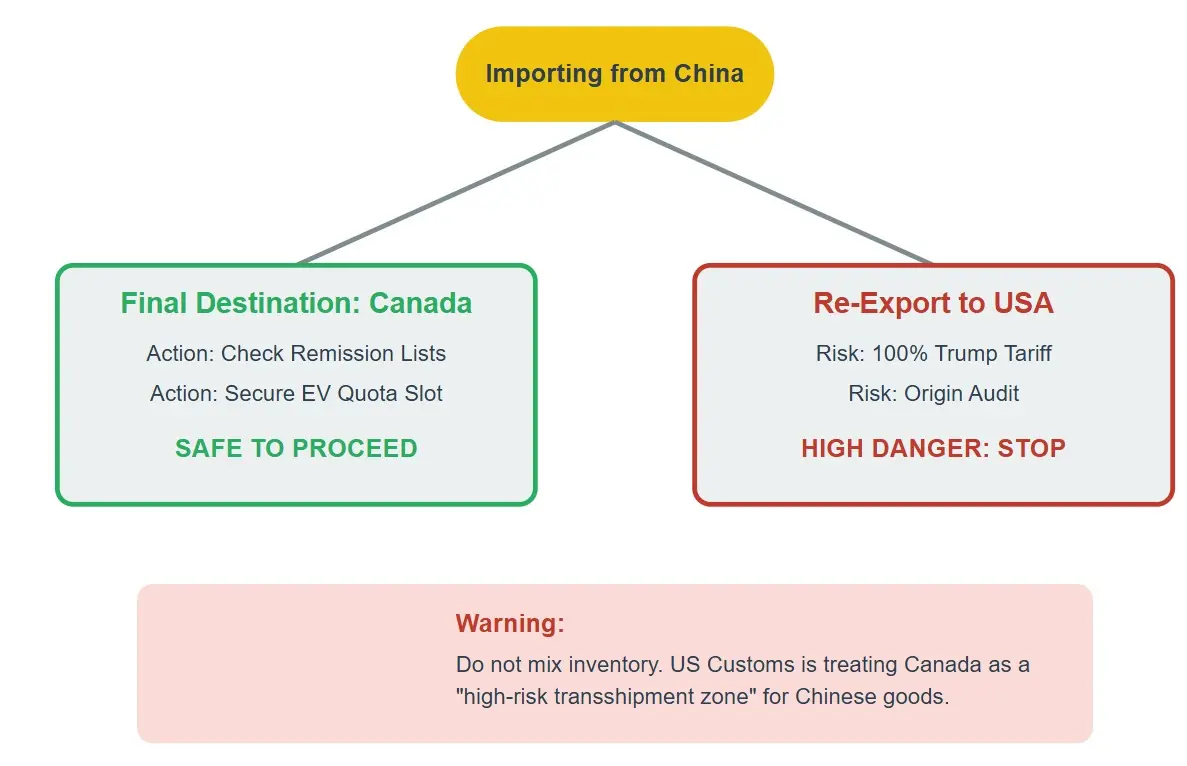
Strategy 2: The “Wall-Jumper” Risk
If you plan to re-export to the US: STOP.
- Danger: The “Substantial Transformation” rule is being tightened. Even if you process Chinese steel in Canada, if the US implements the 100% tariff, your Canadian product becomes toxic.
- Efanda Advice: Segregate your supply chains.
- Supply Chain A: China -> Canada (for Canada market).
- Supply Chain B: Vietnam/Mexico -> US (for US market).
- Do not mix.
Strategy 3: Audit Your HS Codes
The Steel/Aluminum remission list is specific to the 8-digit or 10-digit HS code level.
- Task: Review your product catalog. Are you paying 25% surtax on a “steel bracket” that is actually classified as “furniture part” (HS 9403)? Or is it a “specialized alloy” now on the exempt list?
- Value: A correct classification could save you 25% immediately.
Technical Deep Dive: The EV Quota Mechanism
The 49,000 vehicle quota is the centerpiece of the deal. How will it work? Based on similar TRQ (Tariff Rate Quota) systems, we anticipate:
- Allocation: Likely managed by Global Affairs Canada (GAC).
- Permits: Importers will need a specific import permit before the goods arrive.
- Tracking: Once the 49,001st car arrives, the tariff snaps back to 100%.
Warning for Freight Forwarders: Do not ship EVs without a confirmed quota slot. If the quota fills while the ship is on the water, your client faces a 100% tax bill upon arrival. Efanda recommends “Bonded Warehousing” solutions in Vancouver to hold stock until quota slots open.
Case Study: “The Aluminum Paradox”
Client: “BuildCo Canada” (Imports aluminum window frames from Guangdong).
- Situation: They were paying 25% surtax since Oct 2024.
- Jan 2026 Change: Their specific alloy (6063-T5 customized profile) was added to the Remission List because Canadian extruders have a 40-week lead time (short supply).
- Result:
- Immediate: They stop paying 25% duty on new shipments.
- Retroactive: They can file a B2 Adjustment to claim back duties paid since Jan 1, 2026.
- Risk: If they sell these windows to a builder in Seattle, the US might hit them with the “Trump Tariff.” They must ensure these windows stay in Canada.
The US-Canada Border: The New Chokepoint
We cannot overstate the risk at the 49th parallel. Since Trump’s Jan 24 threat, we have seen:
- Wait Times: Truck delays at Windsor-Detroit have doubled.
- Inspections: “Intensive Exams” for goods marked “Made in Canada” but with high import content.
- Documentation: CBP is asking for “Traceability Records” going back to the raw material origin.
Efanda’s Protocol: For all shipments crossing Canada-to-US, we now require a “Manufacturer’s Affidavit” confirming the non-Chinese origin of key components, or explicit declaration if Chinese content is present. Transparency is the only defense against seizure.
Conclusion: A Window of Opportunity (With Bars)
The January 16 agreement is a lifeline for Canada-China trade, but it comes with a heavy price tag: US wrath.
Summary for Importers:
- Canada is Open: Tariffs are down for EVs (quota), Canola, and specialized metals.
- US is Closed: The border is hardening. Do not treat Canada as a transshipment hub.
- Compliance is King: HS code verification and Origin documentation are your only shields against the 100% tariff threat.
At Efanda Logistics, we are helping clients navigate this “Two-System” reality. We are setting up segregated inventory systems in our Vancouver and Toronto warehouses to ensure “Canada-bound” goods never accidentally drift south, and vice versa.
Confused by the new Remission Orders? Need to secure EV shipping capacity? Contact Efanda’s trade compliance team for a free consultation.
FAQ
Q: When does the EV quota reset? A: It is an annual quota. The period will likely run Jan 1 – Dec 31, but for 2026, it starts effectively on March 1. Expect the first year’s allocation to be pro-rated or rushed.
Q: Can I still ship DDP to Canada from China? A: Yes, but be careful with valuation. The CBSA is cracking down on undervaluation to avoid the GST/HST. Ensure your declared value matches the transaction value.
Q: Does the Steel Surtax Remission apply to finished goods? A: Generally, no. It applies to raw/semi-finished steel (plate, coil, rod). However, some “steel derivatives” (like fasteners or specific structural parts) are included. You must check the specific HS code list in the Remission Order.
Q: Is the Trump 100% tariff threat real? A: President Trump has a history of using tariffs as leverage. While it may be a negotiating tactic to force Canada to tighten its perimeter, the threat alone is enough to disrupt supply chains. Plan for the worst.
Legal Disclaimer The information provided in this article is based on the “Agreement-in-Principle” announced Jan 16, 2026, and subsequent government statements. Final legislative text may vary. Efanda Logistics is not a law firm; please consult trade counsel for binding legal advice.