Home > News > China’s Record Export Surge Triggers Jan 2026 Customs Crackdown: Survival Guide for Importers
Efanda
February 6, 2026
1:29 am
China’s Record Export Surge Triggers Jan 2026 Customs Crackdown: Survival Guide for Importers
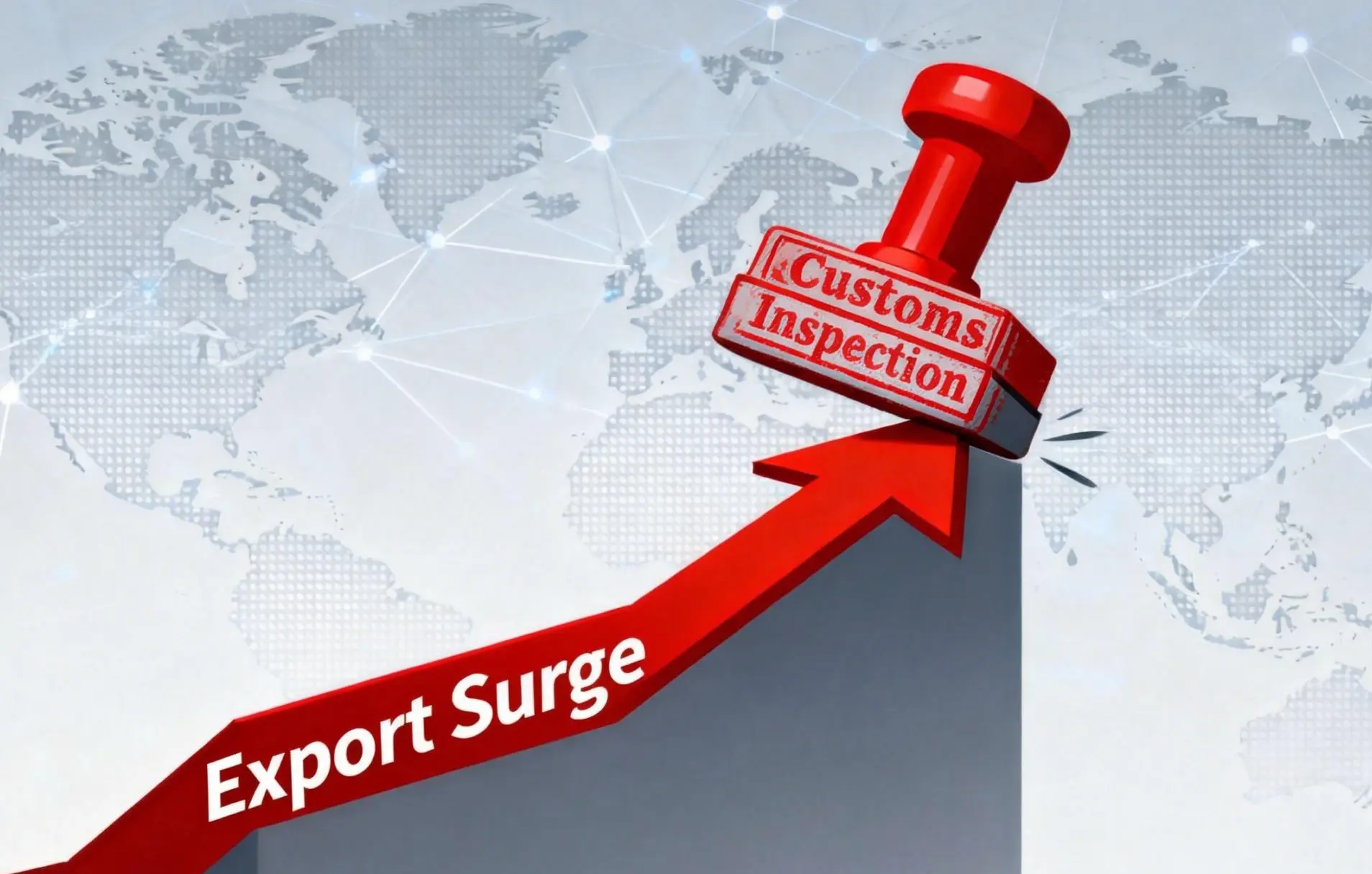
On January 13, 2026, China confirmed a historic $1.2 Trillion trade surplus for 2025. While this signals robust manufacturing capacity, it has triggered an immediate and “severe” reaction from Western trading partners. As of mid-January 2026, Customs authorities in the USA (CBP) and EU have quietly initiated coordinated “Anti-Surge” enforcement actions, targeting the flood of inbound containers.
For foreign merchants importing from China, the rules of the game changed overnight. Efanda Logistics explains exactly how this “Silent Crackdown” affects your shipping costs, transit times, and product margins—and how to dodge the bullets based on our on-the-ground experience.
1. The Event: A Record Surplus Meets a Hard Wall
The Headline Data China’s General Administration of Customs (GAC) reported that despite global headwinds, exports surged to record highs in 2025, driven by demand from the Global South and continued reliance from the West.
The Trigger: The sheer volume of goods has overwhelmed destination ports and raised “Market Distortion” alarms in Washington and Brussels.
The Response: Effective January 15, 2026, major destination ports began implementing “Enhanced Screening” protocols.
The Warning: China’s Customs Vice Minister Wang Jun explicitly warned that 2026 would face a “severe and complex external trade environment.”
What This Means for You If you are an importer, you are no longer just fighting for shelf space; you are fighting for clearance. The era of “auto-release” customs entries is pausing.
2. The Consequence: The “Red Lane” Reality
The “Green Lane” (automatic clearance) is shrinking.
Targeted HS Codes: The crackdown is not random. It specifically targets:
Textiles & Apparel: Checking for forced labor compliance (UFLPA) and correct valuation.
Consumer Electronics: Scrutinizing “Smart” devices for data security compliance.
Green Tech: Lithium batteries and EV components facing rigorous safety and origin checks.
The New Normal: Inspection rates for these categories have jumped from 2% to over 15% in just three weeks.
Efanda Case Log : A client shipping “Smart LED Strips” (HS 9405.42) recently had 3 containers held in Long Beach. The Issue: The instruction manual was in Chinese only, raising suspicion of “non-compliant market dumping” and safety violations. The Fix: Our local broker helped them immediately translate and submit digital manuals via the ACE portal. The Result: Cargo released in 5 days instead of the typical 14-day detention. Details matter.
3. Logistics Impact: The “Hidden Tax” of 2026
The impact on your supply chain is measurable in Time and Money.
Time Impact: The 14-Day “Black Hole”
Before (2025): A container typically cleared customs 2-3 days prior to arrival and was picked up within 48 hours of discharge.
Now (Jan 2026): Importers are increasingly receiving CBP Form 28 (Request for Information). Containers flagged for “Intensive Exam” are sitting in Customs Examination Stations (CES) for 7 to 14 days.
The Risk: If you are shipping Spring/Summer fashion, a 2-week delay means missing your floor set date.
Cost Impact: Inflation by Inspection
The delay is annoying; the bill is painful.
Exam Fees:
X-Ray (VACIS): ~$300 per container.
Intensive (Devanning): $1,500 – $2,500 per container.
Demurrage & Detention:
While your box sits at the exam site, the steamship line still charges you for equipment use. At $200/day, a 10-day delay adds $2,000 to your bill.
Total Hit: One inspection can wipe out $4,000+ of profit per container.
Product Specific Impact
For E-Commerce (Amazon FBA): Amazon FBAsellers are hit hardest. If one box in a consolidated container is flagged, the entire container stops. Your “Best Seller” rank could tank due to stockouts.
For Heavy Goods: Furniture and machinery importers face physical damage risks during the “Devanning” (unloading for inspection) process.
4. Strategic Solutions: How to Survive the Crackdown
You cannot control Customs, but you can control your preparation.
Solution A: The “Perfect Paperwork” Protocol
Ambiguity is the enemy.
The Fix: Ensure your Commercial Invoice and Packing List are 100% accurate. Descriptions must be specific (e.g., use “Steel Screws, 5mm” instead of just “Parts”).
Efanda’s Role: We perform a “Pre-Export Audit.” We cross-reference your items with the USITC HTS Database to ensure the HS Code matches the physical product perfectly.
Solution B: Secondary Port Strategy
Major hubs like Los Angeles/Long Beach and Rotterdam are the primary targets for these “Anti-Surge” audits.
The Fix: Route cargo through “Secondary Ports” like Tacoma (USA), Norfolk (USA), or Koper (EU).
The Benefit: These ports often have lower inspection volumes and faster turnaround times.
In a “severe and complex” year, you need a partner who acts as your compliance shield.
1. We Are Compliance Experts
We don’t just book space; we protect your cargo. Our team stays updated on the latest CBP (USA) and EU Customs directives. We know which HS Codes are “hot” and how to declare them correctly to avoid CBP Form 29 (Notice of Action).
Worried about surprise fees? Choose our DDP (Delivered Duty Paid) service. We quote you one all-inclusive price that covers freight, duty, and standard clearance.
Q1: My shipment is under $800 (De Minimis/Section 321). Am I safe from these audits?
A: Not anymore. As of Jan 2026, CBP has tightened enforcement on “Section 321” entries, specifically looking for undervalued goods and split shipments (structuring). Even small packages are facing X-ray screenings at express hubs like Cincinnati and Memphis.
Q2: Which ports are currently experiencing the worst delays?
A: Currently, Los Angeles (LAX/LGB) and New York (JFK/NY) in the US, and Hamburg in Europe are seeing the highest backlog of inspections. We recommend considering alternative gateways like Seattle or Antwerp if your final delivery location allows.
Q3: Who pays for the customs exam fee?
A: According to standard Incoterms (like FOB or CIF), the importer (Buyer) is responsible for all costs related to import clearance, including exam fees and demurrage. However, if you use Efanda’s DDP Service, we can discuss inclusive pricing structures to mitigate this volatility.
Q4: Can Efanda help if my container is already stuck in customs?
A: Yes. While we cannot force Customs to release cargo, our licensed brokers can communicate directly with the officers to clarify documents. Often, a quick response to a CBP Form 28 can expedite the release process once the exam is complete.
Disclaimer
This article is based on trade data and logistics trends observed as of February 2026. Customs regulations and enforcement levels are subject to change without notice. Efanda Logistics advises all importers to consult with a licensed customs broker for specific legal advice.