Are you looking to import goods and need reliable Sea Freight from China to India? As the two largest emerging economies in Asia, China and India share a massive trade relationship, with bilateral trade volume exceeding $100 billion annually. However, navigating the logistics, customs, and documentation between these two giants can be complex.
In this comprehensive 2026 guide, we break down everything you need to know about Sea Freight from China to India—from updated cost estimates and transit times to critical compliance requirements like BIS certification. Whether you are a seasoned importer or a first-time buyer, this guide will help you optimize your supply chain and avoid costly delays.
Key Takeaways
- Cost-Effective: Sea freight is ~80% cheaper than air freight, making it the top choice for bulk imports.
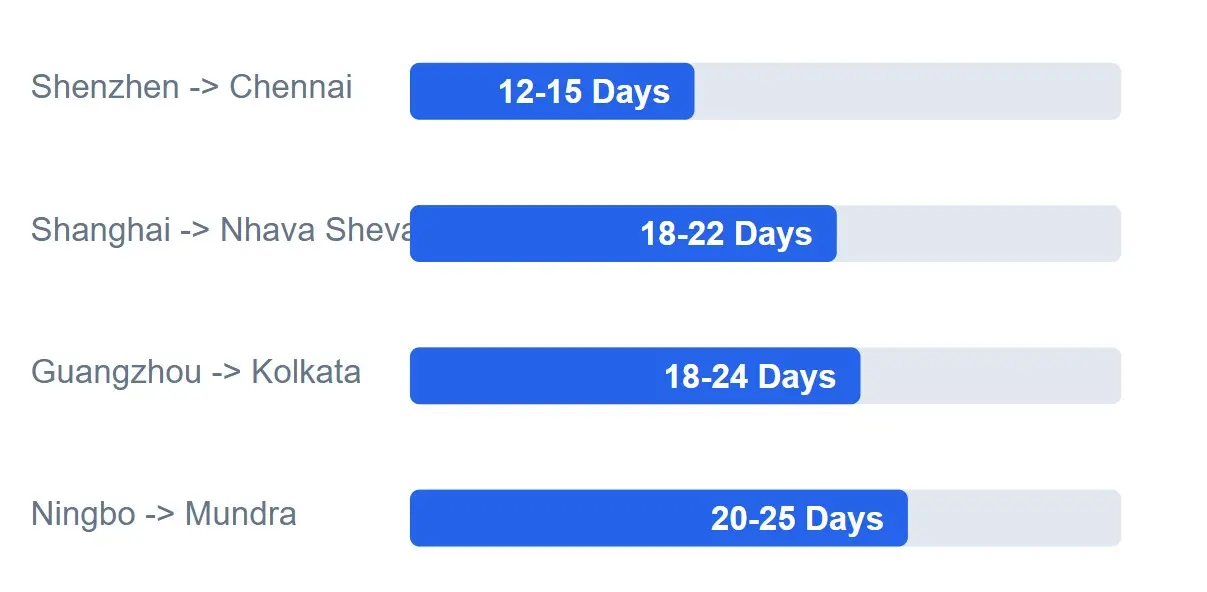
- Transit Time: Ranges from 12-15 days (Shenzhen to Chennai) to 20-25 days (Ningbo to Mundra).
- Compliance: Success hinges on BIS Certification, accurate HS Codes, and understanding anti-dumping duties.
- Strategic Partners: Choosing a forwarder with local expertise in India is crucial for smooth customs clearance.
1. The Strategic Importance of Sea Freight from China to India
Despite geopolitical fluctuations, China remains India’s largest source of imports. From heavy machinery and electronics to organic chemicals and plastics, Indian businesses rely heavily on Chinese manufacturing. Sea Freight from China to India serves as the backbone of this trade corridor, handling over 90% of the cargo volume due to its cost-effectiveness for bulk goods.
However, the “China-India” route is unique. It requires not just logistical planning but also a deep understanding of India’s evolving regulatory landscape, managed by the Central Board of Indirect Taxes and Customs (CBIC). Understanding nuances like BIS (Bureau of Indian Standards) norms and anti-dumping duties is the difference between a smooth delivery and a shipment stuck at Nhava Sheva for weeks.
2. Sea Freight from China to India vs. Air Freight: Which Should You Choose?
Choosing between sea and air freight depends on your budget, cargo volume, and urgency. Here is a quick comparison to help you decide.
Cost Analysis
Sea Freight from China to India is significantly cheaper than Air Freight. Typically, sea freight costs are about 15-20% of air freight costs for the same weight. If your profit margins are tight, sea freight is the obvious choice.
Transit Time vs. Urgency
- Air Freight: 3-7 days. Ideal for high-value electronics, samples, or urgent spare parts.
- Sea Freight: 15-35 days. Best for planned inventory replenishment.
Ideal Scenarios for Sea Freight
You should choose Sea Freight from China to India if:
- You are shipping Full Container Loads (FCL) or large Less than Container Loads (LCL) (over 100kg or 1 CBM).
- Your goods are heavy or bulky (e.g., industrial machinery, furniture, raw materials).
- You have a lead time of at least 4 weeks.
3. Shipping Modes for Sea Freight from China to India: FCL vs. LCL
FCL (Full Container Load)
FCL means you rent the entire container for your goods. It is the safest and most efficient method.
- 20ft Container: Ideal for heavy goods (minerals, metals, machinery). Payload ~28 tons, Volume ~33 CBM.
- 40ft Container: Ideal for voluminous but lighter goods (textiles, furniture, toys). Payload ~26 tons, Volume ~67 CBM.
- Advantages: Faster clearance, less risk of damage (no consolidation handling), and lower per-unit cost for large volumes.
LCL (Less than Container Load)
LCL allows you to ship smaller quantities (e.g., 2-10 CBM) by sharing a container with other importers.
- Process: Your goods are consolidated at a warehouse in China (e.g., Shenzhen) and deconsolidated at the Indian port (e.g., Chennai).
- Expert Warning: Be very careful with LCL Destination Charges. Some forwarders offer “zero ocean freight” for LCL but charge exorbitant fees at the destination port in India. Always ask for an “All-In” quote or a breakdown of destination charges before booking.
4. Sea Freight Costs from China to India (2025/2026 Rate Guide)
Freight rates are volatile and change weekly based on demand, fuel prices, and carrier capacity. Below are indicative market rates for early 2026.
| Container Type | Estimated Cost (USD) | Notes |
|---|---|---|
| 20ft Container (FCL) | $1,000 – $1,500 | Varies by origin/destination pair. |
| 40ft Container (FCL) | $1,800 – $2,500 | Higher rates during peak season. |
| LCL (per CBM) | $50 – $100 | Plus destination charges. |
Key Cost Components
- Ocean Freight (O/F): The basic cost to move the container.
- BAF (Bunker Adjustment Factor): Surcharge for fuel price fluctuations.
- PSS (Peak Season Surcharge): Applicable during Chinese New Year (Jan/Feb) and Diwali (Oct/Nov) when demand spikes.
- GRI (General Rate Increase): Periodic rate hikes by shipping lines.
Note: These are port-to-port rates. Landed costs in India will also include customs duties, GST, and local transportation.
5. Sea Freight from China to India Transit Time: Port-to-Port Breakdown
Transit times vary depending on the route (direct vs. transshipment) and the ports involved.
| Origin Port (China) | Destination Port (India) | Approx. Transit Time |
|---|---|---|
| Shenzhen (Shekou/Yantian) | Chennai | 12 – 15 Days |
| Shanghai | Nhava Sheva (Mumbai) | 18 – 22 Days |
| Ningbo | Mundra | 20 – 25 Days |
| Guangzhou (Nansha) | Kolkata | 18 – 24 Days |
| Qingdao | New Delhi (ICD) | 28 – 35 Days (via Mundra/Pipavav) |
Delay Factors
- Monsoon Season (June-September): Heavy rains can disrupt port operations and road transport in India.
- Port Congestion: Nhava Sheva (JNPT) frequently experiences congestion, which can add 3-5 days to the delivery timeline.
6. Major Ports for Sea Freight from China to India
Key Chinese Origin Ports
- Shanghai: The world’s busiest container port. Ideal for suppliers in the Yangtze River Delta.
- Shenzhen: Key gateway for electronics and tech products from Guangdong.
- Ningbo-Zhoushan: Excellent alternative to Shanghai, often less congested.
- Guangzhou (Nansha): Hub for textiles and manufacturing in South China.
Key Indian Destination Ports
- Nhava Sheva (JNPT): Located near Mumbai, it handles over 50% of India’s container traffic. Best for shipments to Western and Central India (Maharashtra, Gujarat, Madhya Pradesh).
- Chennai: The main hub for South India. Critical for the automotive and manufacturing industries in Tamil Nadu and Karnataka.
- Mundra: A highly efficient private port in Gujarat. Often the preferred gateway for cargo moving to New Delhi and North India via rail (ICD).
- Kolkata/Haldia: Serves Eastern India (West Bengal) and provides transit to landlocked neighbors like Nepal and Bhutan.
7. Customs Clearance & Duties for Sea Freight from China to India
This is the most challenging part of importing from China to India. India’s customs clearance regime is strict, and compliance is non-negotiable.
Indian Customs Tariff Structure
Your total import tax is calculated as:
- Basic Customs Duty (BCD): Varies by HS Code (typically 7.5% – 20%).
- Social Welfare Surcharge (SWS): 10% of the BCD value.
- IGST (Integrated GST): Typically 18% (can be 12% or 28%), calculated on the value of (CIF Value + BCD + SWS).
Compliance Criticals
- BIS Certification: The Bureau of Indian Standards (BIS) requires mandatory certification for many products imported from China, including:
- Electronics (Laptops, Tablets, LED lights).
- Steel products.
- Chemicals.
- Toys (Quality Control Order).
- Alert: If your product requires BIS and you don’t have it, customs will confiscate the goods.
- Anti-Dumping Duties (ADD): India imposes ADD on various Chinese products (e.g., certain chemicals, ceramic tiles, steel) to protect local industry. Always check the Directorate General of Trade Remedies (DGTR) website to see if your HS code attracts ADD.
Process Insight
Ensure your Indian entity is registered on the ICEGATE portal. Accurate HS Code classification is vital; incorrect classification can lead to heavy fines and delays.
Real-World Scenario: The BIS Compliance Trap
In late 2025, a client shipped a container of LED drivers to Nhava Sheva without checking the latest BIS Quality Control Orders. The goods were detained for 45 days, incurring over $8,000 in demurrage and detention charges because they lacked the specific ISI mark registration.
- Lesson: Always verify BIS applicability and anti-dumping status before production begins.
8. Essential Documents for Sea Freight from China to India
To clear customs smoothly, ensure you have the following documents:
- Bill of Lading (BL): The transport contract. You can use an Original BL or a Telex Release for faster processing.
- Commercial Invoice: Must detail the description, value, and HS code of goods.
- Packing List: Must match the invoice and BL exactly (weight, package count).
- Certificate of Origin (CoO): Necessary to claim preferential duty rates if applicable (e.g., under Asia-Pacific Trade Agreement), though standard imports from China usually pay MFN rates.
- BIS Registration Certificate: If your product falls under the mandatory list.
- Import Export Code (IEC): The unique 10-digit code required for any business to import into India.
- Insurance Policy: Highly recommended to protect your cargo. Consider cargo insurance services for peace of mind.
9. Why Choose Efanda Logistics for Sea Freight from China to India?
At Efanda Logistics, we specialize in the China-India trade lane. We understand the unique challenges of this route and offer tailored solutions:
- End-to-End Handling: We can manage EXW pickups in China and coordinate with your Indian broker for smooth delivery.
- Local Expertise: Our team stays updated on the latest BIS norms and Indian customs regulations to guide you before you ship.
- Competitive Rates: We have volume contracts with major carriers like COSCO, MSC, and CMA CGM, ensuring you get the best rates even during peak seasons.
- Transparency: For LCL shipments, we provide clear “All-In” quotes, so you never face hidden destination charges.
10. FAQ: Sea Freight from China to India
Q: What is the cheapest mode of Sea Freight from China to India?
A: LCL (Less than Container Load) is cheapest for small volumes (under 15 CBM), while FCL (Full Container Load) is more economical for larger shipments.
Q: How does the BIS requirement affect my shipment?
A: If your product is on the BIS mandatory list (e.g., LED lights, steel), you must have a valid BIS registration number printed on the product and packaging. Without it, customs will not clear the goods.
Q: Can Efanda handle door-to-door delivery in India?
A: Yes, we offer Door-to-Door Shipping (DAP/DDP) services. However, for DDP (Delivered Duty Paid) in India, the consignee (importer) typically handles the duty payment directly to customs due to tax regulations, while we handle the logistics.
Q: What are the current transit times for Sea Freight from China to India?
A: Transit times range from 12-15 days for Shenzhen to Chennai, to 20-25 days for Shanghai/Ningbo to Nhava Sheva or Mundra.