Are you navigating the complexities of shipping goods from the world’s factory to Europe’s economic powerhouse? In the shifting landscape of 2026, understanding ocean freight from China to Germany is more than just booking a container—it’s about strategic supply chain management. At Efanda Logistics, we’ve seen firsthand how the right shipping strategy can save businesses up to 30% on landed costs. This guide covers everything from the latest 2026 rates and transit times to navigating German customs with precision.
1. Navigating Ocean Freight from China to Germany
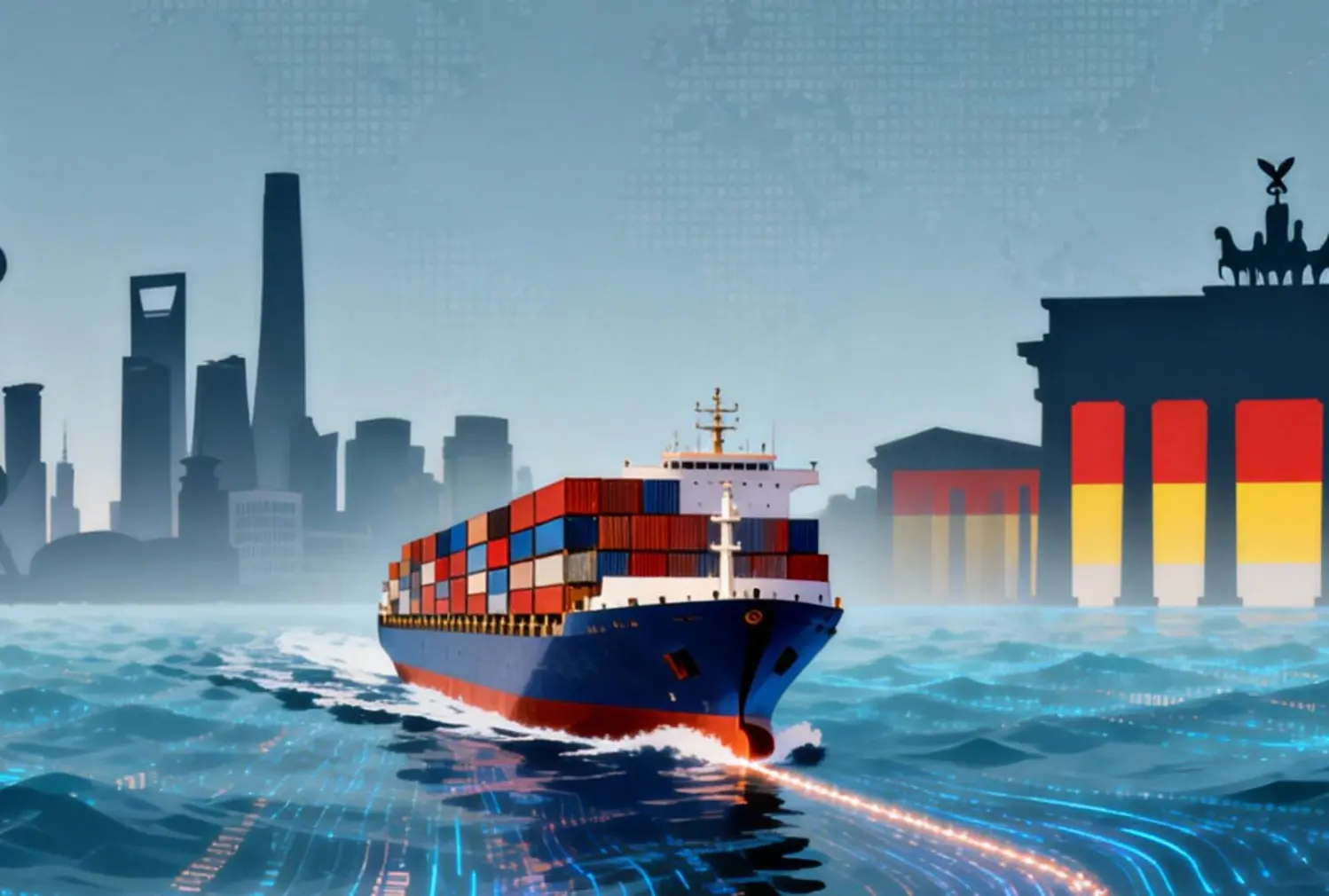
The trade route between China and Germany is the artery of modern commerce. As Germany remains China’s largest trading partner in Europe, the demand for reliable ocean freight from China to Germany has never been higher. For importers, this route represents the balance between cost-efficiency and supply chain reliability.
In 2026, we are seeing a stabilization of rates after the volatility of previous years, but new challenges like the “Red Sea Effect” becoming the new normal have altered transit expectations. Whether you are shipping automotive parts from Shanghai or consumer electronics from Shenzhen, ocean freight remains the backbone of this trade, accounting for over 90% of cargo volume by weight.
This guide is written by our team of logistics veterans at Efanda Logistics. We will walk you through:
- Real-time cost analysis for 2026.
- The truth about transit times (and why they vary).
- A step-by-step customs clearance guide for the German market.
- Actionable strategies to avoid demurrage and detention fees.
2. Why Choose Ocean Freight from China to Germany?
When bringing goods into the EU, importers typically weigh three options: Ocean, Rail, and Air. However, ocean freight from China to Germany dominates for several compelling reasons.
Cost-Effectiveness
It is undeniably the most budget-friendly option. For example, shipping a standard pallet via air might cost you $1,500, whereas the same volume via sea (LCL) could be as low as $150. For high-volume, low-to-medium value goods, ocean freight preserves your profit margins.
Capacity and Scalability
- FCL (Full Container Load): Ideal for large shipments (typically 15 cbm or more). You get a sealed container (20ft or 40ft) dedicated to your goods.
- LCL (Less than Container Load): Perfect for smaller businesses or trial orders. You share container space with other shippers, paying only for the volume (CBM) you use.
Sustainability
With the EU’s Carbon Border Adjustment Mechanism (CBAM) coming into full effect, carbon footprint is now a financial metric. Ocean freight emits significantly less CO2 per ton-mile compared to air freight, helping your business meet sustainability targets and potentially lower carbon taxes.
Versatility
From hazardous lithium batteries to heavy machinery for Germany’s industrial sector, ocean vessels can handle cargo that air planes simply cannot.
3. Comparison: Ocean Freight from China to Germany vs. Rail & Air
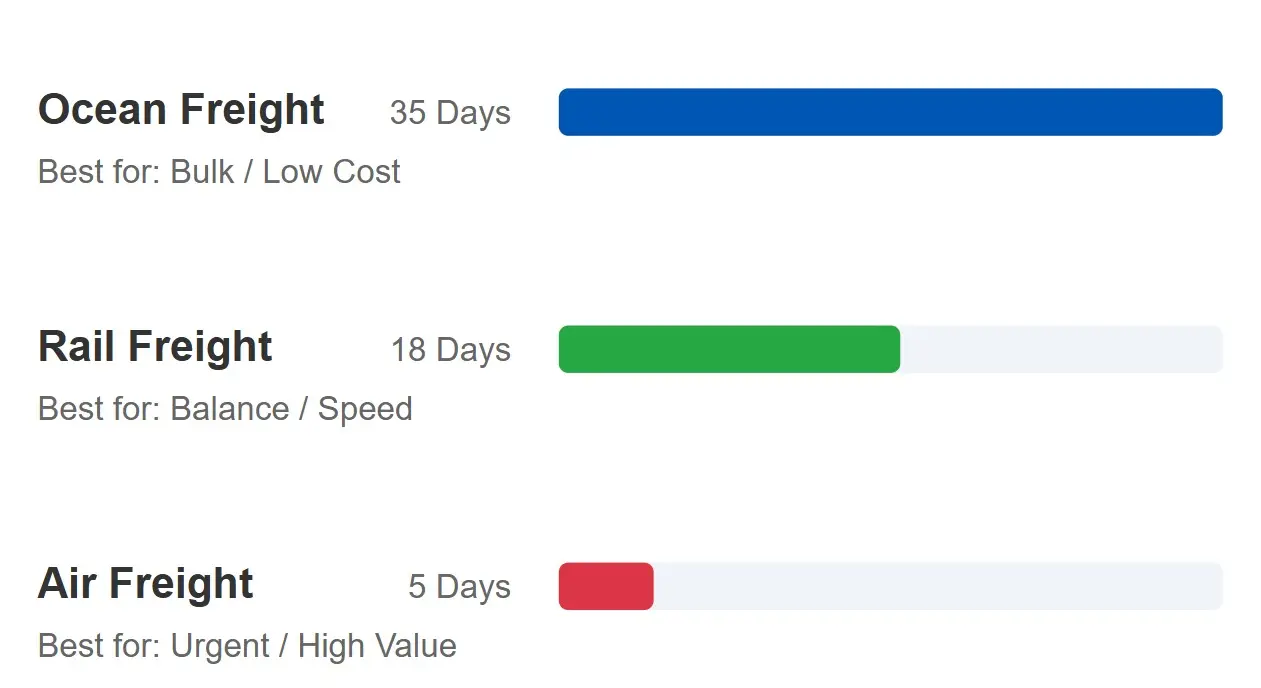
Choosing the right mode is about balancing speed, cost, and risk. Here is how ocean freight from China to Germany stacks up against the alternatives in 2026.
| Feature | Ocean Freight | Rail Freight (China-Europe Express) | Air Freight |
|---|---|---|---|
| Transit Time | 30-45 Days | 15-20 Days | 3-7 Days |
| Cost (Index) | $ (Lowest) | $$ (Medium) | $$$$ (Highest) |
| Reliability | Moderate (Weather/Port impact) | High (Scheduled) | Very High |
| Carbon Footprint | Low | Medium | High |
| Best For | Bulk goods, planned inventory | Time-sensitive bulk, high value | Urgent, perishable, samples |
Decision Matrix: When to Switch?
- Stick to Ocean: If you have >4 weeks lead time and margins are tight.
- Switch to Rail: If you miss a production deadline and need to recover 2 weeks without paying air freight premiums.
- Emergency Air: Only for “line-down” situations or high-margin product launches.
4. Shipping Routes and Transit Times for Ocean Freight from China to Germany
One of the most common questions we get at Efanda is: “How long does it really take?” The answer depends heavily on your specific route.
Standard Transit Times (Port-to-Port)
In 2026, most vessels are routing via the Cape of Good Hope due to long-term stability concerns in the Red Sea, though some express services have returned to the Suez.
- Shanghai to Hamburg: ~32-38 days
- Shenzhen (Yantian) to Hamburg: ~28-35 days
- Ningbo to Bremerhaven: ~33-40 days
- Qingdao to Wilhelmshaven: ~35-42 days
Factors Affecting Transit Time
- Port Congestion: Hamburg and Bremerhaven can experience delays during peak seasons (Aug-Oct), adding 3-5 days to waiting times.
- Weather: Typhoon season in the South China Sea (July-Sept) often disrupts departures from Shenzhen and Hong Kong.
- Transshipment vs. Direct: Direct vessels are faster. Transshipment (e.g., via Singapore or Rotterdam) can add 7-10 days to your lead time. Tip: Always ask your forwarder if the service is direct.
5. Cost of Ocean Freight from China to Germany (2026 Market Trends)
Pricing in 2026 has stabilized compared to the chaotic post-pandemic years, but it remains dynamic.
Current Rate Benchmarks (Estimates for Q1 2026)
- 20ft Container (FCL): $1,750 – $2,150 USD
- 40ft/40HQ Container (FCL): $2,800 – $3,450 USD
- LCL Rates: ~$70 – $85 USD per CBM
Note: Rates fluctuate weekly. Contact Efanda Logistics for a live quote tailored to your cargo.
Understanding Surcharges
Your freight invoice will include more than just the base rate. Watch out for:
- BAF (Bunker Adjustment Factor): Fuel surcharge, fluctuating with oil prices.
- CAF (Currency Adjustment Factor): Hedging against USD/EUR exchange rate shifts.
- GRI (General Rate Increase): Carriers often apply this at the start of the month if demand is high.
- Peak Season Surcharge (PSS): Applied during pre-holiday rushes.
Peak Season Impact
- Chinese New Year (Jan/Feb): Rates spike 2-4 weeks before CNY as factories rush to ship before closing.
- Golden Week (Oct 1): Another rush period.
- Strategy: Book your space 3-4 weeks in advance during these periods to secure a spot and lock in a rate.
6. Major Ports for Ocean Freight from China to Germany
Top Chinese Departure Ports
- Shanghai: The world’s busiest container port. Best for goods from the Yangtze River Delta (Suzhou, Hangzhou).
- Shenzhen (Yantian/Shekou): The gateway for electronics and tech from the Pearl River Delta (Dongguan, Guangzhou).
- Ningbo-Zhoushan: Ideal for heavy industry and manufacturing goods from Zhejiang.
- Qingdao: Key for exporters in North China (Shandong province).
Top German Arrival Ports
- Port of Hamburg: Germany’s largest port and the “Gateway to the World.” It has excellent rail and truck connections to Berlin, Munich, and Eastern Europe.
- Bremerhaven: A specialized hub, particularly famous for automotive logistics and handling oversized cargo.
- Wilhelmshaven: Germany’s only deep-water port, capable of handling the largest mega-vessels fully loaded, independent of tides.
7. Step-by-Step Process for Ocean Freight from China to Germany
Shipping international cargo can feel daunting. Here is the workflow we manage for our clients every day:
- Booking: You provide cargo details; we secure space with carriers like Cosco, Maersk, or Hapag-Lloyd.
- Cargo Pickup: We arrange trucking from your supplier’s factory to the port of loading (or consolidation warehouse for LCL).
- Export Customs (China): We handle the export declaration to ensure goods leave China legally. Crucial: Verify your supplier’s export license.
- Ocean Transit: Your goods are on the water. We provide tracking updates.
- Import Customs (Germany): Before arrival, we prepare the ATLAS customs entry.
- Port Handling & Release: Once cleared, we pay port fees and pick up the container.
- Final Delivery: Trucking or rail transport to your warehouse or Amazon FBA center in Germany. If you need consolidation or temporary storage, we offer dedicated warehouse services to streamline your distribution.
8. Customs Clearance for Ocean Freight from China to Germany
Germany’s customs authority (Zoll) is known for being strict and precise. Mistakes here can lead to costly delays.
Mandatory Requirements
- EORI Number: You must have an EORI (Economic Operators Registration and Identification) number to import into the EU.
- HS Codes: The correct 8-10 digit code determines your duty rate. Use the official TARIC database to verify.
- Commercial Invoice: Must include the EORI numbers of both buyer and seller, Incoterms, and a clear description of goods.
Import Duties and Taxes
- Duty: Varies by product (e.g., 0% for some electronics, 6-12% for textiles).
- Import VAT (Einfuhrumsatzsteuer): Germany’s standard VAT rate is 19%. It is calculated on the CIF Value + Duty.
- Formula: (Goods Value + Shipping Cost + Insurance + Duty) x 19%.
Pro Tip: If you are a registered business in Germany, you can reclaim this VAT in your regular tax return.
9. Understanding Incoterms for Ocean Freight from China to Germany
Choosing the right Incoterm defines your liability.
- FOB (Free on Board): Recommended. You control the freight and choose your own forwarder (like Efanda). The supplier handles local costs in China.
- EXW (Ex Works): You are responsible for everything from the factory door. Good for maximum control but high workload.
- CIF (Cost, Insurance, and Freight): Avoid if possible. The supplier picks the forwarder, often leading to hidden “handover fees” at the destination port that you are forced to pay.
- DDP (Delivered Duty Paid): The “all-inclusive” option. The seller handles everything including duties and VAT. Popular for Amazon sellers but usually more expensive.
10. Finding the Best Freight Forwarder for Ocean Freight from China to Germany
Not all forwarders are created equal. To ensure a smooth experience:
- Look for Specialization: Choose a forwarder with a strong presence in both China and Germany.
- Check Their Network: Do they have their own agents in Hamburg to handle customs issues locally?
- Transparency: Ask for a quote that breaks down all destination charges.
- Communication: Can they communicate in English and Chinese to bridge the gap with your supplier?
At Efanda Logistics, we pride ourselves on being your bridge. Whether you need comprehensive door to door shipping or standard port-to-port service, we solve problems before they happen.
11. Conclusion: Successful Ocean Freight from China to Germany
Mastering ocean freight from China to Germany gives your business a competitive edge. By choosing the right mode, understanding the costs, and preparing for customs, you turn logistics from a headache into a strategic asset.
Ready to streamline your supply chain? Contact Efanda Logistics today for a free, no-obligation quote. Let us handle the heavy lifting so you can focus on growing your business.
12. FAQ about Ocean Freight from China to Germany
Q: What is the cheapest time of year to ship from China to Germany?
A: Typically, the months of March and April (post-Chinese New Year) and early summer often see lower rates before the peak season hits in August.
Q: Can I ship battery products via ocean freight?
A: Yes, but they are classified as Dangerous Goods (DG). You will need an MSDS (Material Safety Data Sheet) and UN38.3 test report. We specialize in handling DG cargo safely.
Q: How do I track my container?
A: We provide a tracking number that works on our website or the carrier’s site. You can track by Container Number, Booking Number, or Bill of Lading Number.
Q: What happens if my goods are damaged?
A: If you have cargo insurance services (which we highly recommend), you can file a claim. Always inspect the cargo immediately upon arrival and take photos of any damage.