Are your shipments under Sea Shipping from China to Italy arriving later than planned while your landed cost keeps increasing? Most delays and cost overruns do not come from one dramatic disruption; they come from weak booking timing, incomplete charge visibility, and customs data mismatches. This guide gives you a practical framework to choose the right mode, estimate realistic costs, control timeline risk, and clear Italian customs with fewer surprises.
Key Takeaways for Sea Shipping from China to Italy
The fastest way to improve China–Italy sea freight performance is to manage mode selection, cost structure, and customs readiness as one integrated workflow instead of separate tasks.
- FCL is usually stronger for stable volume and lower unit economics.
- LCL is flexible for small shipments but can bring extra handling and time variability.
- Typical 2026 port-to-port transit is around 30-45 days; door-to-door is longer.
- Total landed cost must include BAF, THC, brokerage, inland delivery, and delay penalties.
- Booking 3-4 weeks before peak windows improves vessel options and quote quality.
- HS Code accuracy and document consistency are critical for smooth Italian customs release.
Choosing the Right Sea Shipping from China to Italy Mode
The correct mode is determined by shipment volume, inventory urgency, and risk tolerance for handling complexity.
FCL (20GP/40HQ) vs LCL: Practical Break-Even Thinking
FCL is typically more efficient when your volume is stable and repeatable, while LCL works better for lower-CBM replenishment or market testing. If timing pressure is higher than cost pressure, some importers also evaluate air freight for urgent SKUs.
In our operations, importers often compare only ocean quotes and ignore destination-side costs. An LCL shipment that looks cheaper at origin can become more expensive after destination handling and deconsolidation.
Port Pair Strategy (Shanghai/Ningbo/Shenzhen to Genoa/La Spezia)
Port-pair selection directly affects transit consistency, transshipment exposure, and inland trucking efficiency in Italy.
Shanghai and Ningbo often provide strong frequency for north and central China cargo, while Shenzhen-origin cargo can be efficient for south-China suppliers. On the Italy side, Genoa and La Spezia have different terminal and trucking dynamics. We recommend choosing lanes by reliability history and inland practicality, not only quoted vessel days.
2026 Cost Breakdown for Sea Shipping from China to Italy
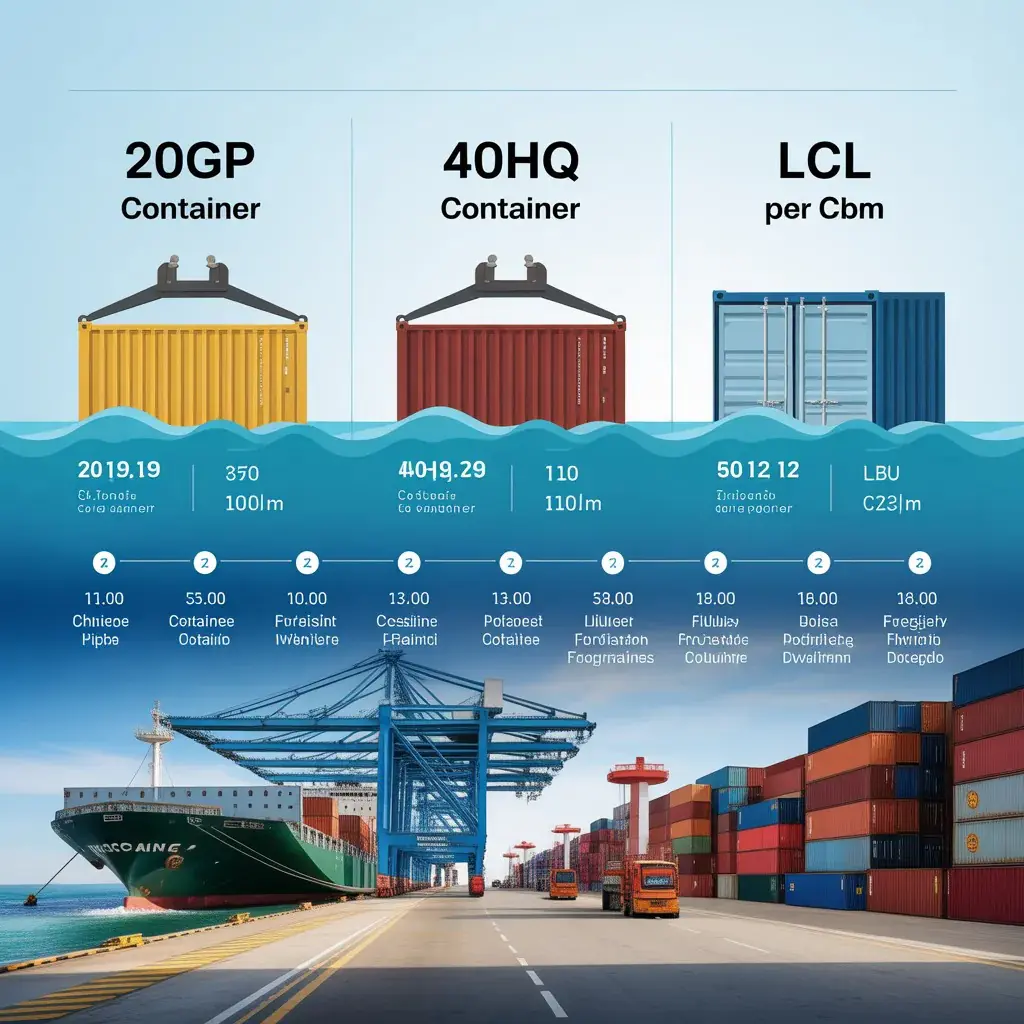
In Q1 2026, planning ranges are commonly USD 1,900-3,400 for 20GP, USD 2,700-4,900 for 40HQ, and USD 85-160 per CBM for LCL, with final totals changing by season, route, and local destination charges.
The table below is a planning reference for budgeting and supplier negotiations.
| Mode | Typical 2026 Planning Range | Best Use Case | Main Cost Risks |
|---|---|---|---|
| FCL 20GP | USD 1,900-3,400 / container | Medium-volume steady replenishment | BAF volatility, peak-space premiums |
| FCL 40HQ | USD 2,700-4,900 / container | Higher-volume or bulky cargo | Equipment imbalance, terminal surcharges |
| LCL | USD 85-160 / CBM | Low-volume or trial shipments | Deconsolidation fees, extra handling, delay risk |
These ranges are operational estimates, not fixed offers.
Total Landed Cost Structure (Ocean + Local + Delivery)
Total landed cost should always be calculated from supplier pickup to final Italian delivery, not from ocean freight alone.
A realistic cost model includes base ocean rate, BAF, Terminal Handling Charges (THC), documentation, customs brokerage, destination handling, and inland trucking. ICC Incoterms® 2020 alignment is essential before comparing offers.

Hidden Cost Risks: Demurrage, Detention, and Rollover
Demurrage, Detention, and rollover events are the most common reasons budgets fail after booking.
Demurrage is charged when loaded containers stay in terminal beyond free time. Detention applies when equipment is kept outside terminal beyond allowed days. Both escalate quickly if release, filing, or pickup is delayed.
In one shipment set we handled, the importer avoided major penalty costs by pre-booking truck slots and confirming free-time terms before vessel arrival.
Peak Season and Booking Window Strategy
Peak windows can raise both rates and rollover risk, so booking timing is a cost-control decision, not just an operational detail.
Pre-holiday procurement surges and carrier capacity balancing increase volatility. We advise booking 3-4 weeks in advance and splitting volume between planned and flexible allocations.
Transit Times for Sea Shipping from China to Italy
Typical 2026 port-to-port transit is around 30-45 days, while real door to door shipping timelines are longer because they include pickup, terminal processing, customs release, and inland distribution.
Many importers plan against vessel ETA only. That is risky because final delivery can still be delayed by destination queueing, customs inspection, or trucking bottlenecks.
Port-to-Port vs Door-to-Door: Timeline Planning
Door-to-door planning is more reliable than vessel-only planning for inventory and sales commitments.
As a baseline, many shipments need additional days for pickup, terminal handover, destination handling, and final-mile trucking.
Major Delay Drivers in 2026
Blank sailings, terminal congestion, weather disruption, and customs inspection are the top delay factors for China–Italy sea freight in 2026.
Carriers continue to adjust capacity week by week. Terminal workload and customs inspections may also extend timelines. We recommend milestone control from cargo ready date to final delivery appointment, with schedule context cross-checked through the World Shipping Council.

Italy Customs Clearance for Sea Shipping from China to Italy
Efficient Italy customs clearance depends on accurate HS classification, consistent commercial data, and compliant duty/VAT processing under EU and Italian rules.
Customs problems are often preventable and usually come from document inconsistency, vague descriptions, or value mismatch. Compliance principles should align with guidance from the Italian Customs and Monopolies Agency (ADM) and the EU Taxation and Customs Union framework.
Mandatory Documents and Data Consistency
The mandatory document set usually includes Bill of Lading, Commercial Invoice, and Packing List, and all three must be fully consistent.
Descriptions should be specific enough for classification and valuation review. Quantities, values, Incoterms, and consignee information must align across files. Product coding should follow the logic of the WCO Harmonized System (HS).
Our team runs a pre-departure document review for HS Code logic and declared value rationale to reduce costly amendments later.
Duties, Import VAT, and Common Compliance Mistakes
The most frequent compliance mistakes are incorrect HS Codes, unsupported declared values, and last-minute document edits after cargo has arrived.
Italian import duty and VAT outcomes are heavily affected by tariff classification and customs value treatment. For first-time importers, align product specs with code logic early and keep document history auditable.
How Efanda Supports Sea Shipping from China to Italy
Efanda supports importers by combining transparent quotations, lane planning, and customs-aligned execution to reduce landed-cost volatility and delivery uncertainty.
Capacity Planning and Route Optimization
Capacity planning improves reliability by matching booking strategy to cargo readiness and seasonal risk.
Instead of treating each booking as isolated, we map shipping rhythm by month, lane, and inventory cycle.
Door-to-Door Coordination and Exception Management
Door-to-door coordination improves control by linking origin handling, ocean movement, customs workflow, and delivery scheduling in one execution chain.
When disruptions occur, structured exception management is critical. We prioritize early warning and recovery options so importers can decide quickly.
Frequently Asked Questions (FAQ)
Is FCL or LCL cheaper for shipping from China to Italy?
It depends on your all-in destination cost and shipment volume. For stable higher volume, FCL usually provides better unit economics and stronger control. For low volume or trial runs, LCL may reduce initial spend but can carry higher handling and timing variability.
How long does sea freight from China to Italy usually take in 2026?
Port-to-port transit is commonly around 30-45 days, but door-to-door transit is longer once origin handling, destination processing, customs release, and final trucking are included.
Which Italian port should importers choose: Genoa or La Spezia?
The better choice depends on your final inland destination, service reliability, and trucking plan. Compare route consistency and inland delivery practicality instead of choosing by vessel days alone.
What documents are mandatory for Italy customs clearance?
At minimum, importers should prepare a consistent Bill of Lading, Commercial Invoice, and Packing List, supported by accurate HS Code logic and declaration values aligned across all files.
How can I reduce demurrage and detention risks?
Confirm free-time terms in writing before arrival, pre-book destination pickup capacity, and ensure customs documentation is complete early. Most penalty costs come from process gaps, not from unavoidable events.
Conclusion
Sea Shipping from China to Italy can remain cost-efficient in 2026, but only when importers control mode selection, landed-cost visibility, and compliance workflow together.
If you want a practical shipping from china to italy plan with clearer cost structure and fewer delay surprises, Efanda can help design an execution model aligned with your cargo profile.
Disclaimer (Updated March 2026): Rate ranges and transit timelines in this guide are market references for planning, not fixed commercial or legal commitments. Final outcomes depend on booking week, carrier allocation, customs review, and destination execution conditions.