Are you struggling to balance soaring air cargo costs and tight delivery deadlines when importing from China? In our team’s daily operations at Efanda Logistics, we see firsthand how booming e-commerce volumes from giants like Temu and Shein are aggressively squeezing cargo space in 2026. This shift is making it exponentially harder for small-to-medium (SMB) importers to secure predictable rates, avoid devastating delays, and maintain their profit margins. This comprehensive guide breaks down the exact costs, transit timelines, customs clearance requirements, and insider strategies to master your Shipping From China to USA.
Key Takeaways
- Current 2026 Average Rates: Expect to pay between $4.50 and $7.50 per kilogram for standard air freight, depending on seasonal demand and fuel prices.
- Standard Transit Time: Typical airport-to-airport transit takes 3 to 7 days, while express courier options deliver door-to-door in 1 to 3 days.
- Customs Necessity: A US Customs Bond is strictly required for any commercial shipment valued over $2,500.
- Key to Savings: Mastering volumetric weight calculations and utilizing off-peak consolidation (ULD build-up) are the most effective strategies to lower your per-unit shipping costs.
What Are the 2026 Costs for Air Freight Shipping from China to USA?
As of early 2026, standard Air Freight Shipping from China to USA typically ranges between $4.50 and $7.50 per kilogram, heavily influenced by fuel surcharges and seasonal capacity shifts driven by e-commerce.
To accurately forecast your logistics budget, you must look beyond the base per-kilogram rate. Airline pricing models are structured to cover their operational costs, and knowing these components helps you negotiate better terms with your forwarder.

Breakdown of Air Freight Rates
When our operations team issues a quote, it consolidates several underlying airline and terminal fees. Here is exactly what you are paying for:
- Base Rate: The airline’s core charge for moving cargo from Origin (e.g., PVG – Shanghai) to Destination (e.g., LAX – Los Angeles).
- Fuel Surcharge (FSC): A variable fee that fluctuates based on global aviation fuel indices. In 2026, FSC remains a significant portion of the total cost. According to the International Air Transport Association (IATA), fuel prices can cause monthly rate swings of up to 15%.
- Security Surcharge (SSC): Mandatory fees for x-ray screening and terminal security compliance before loading.
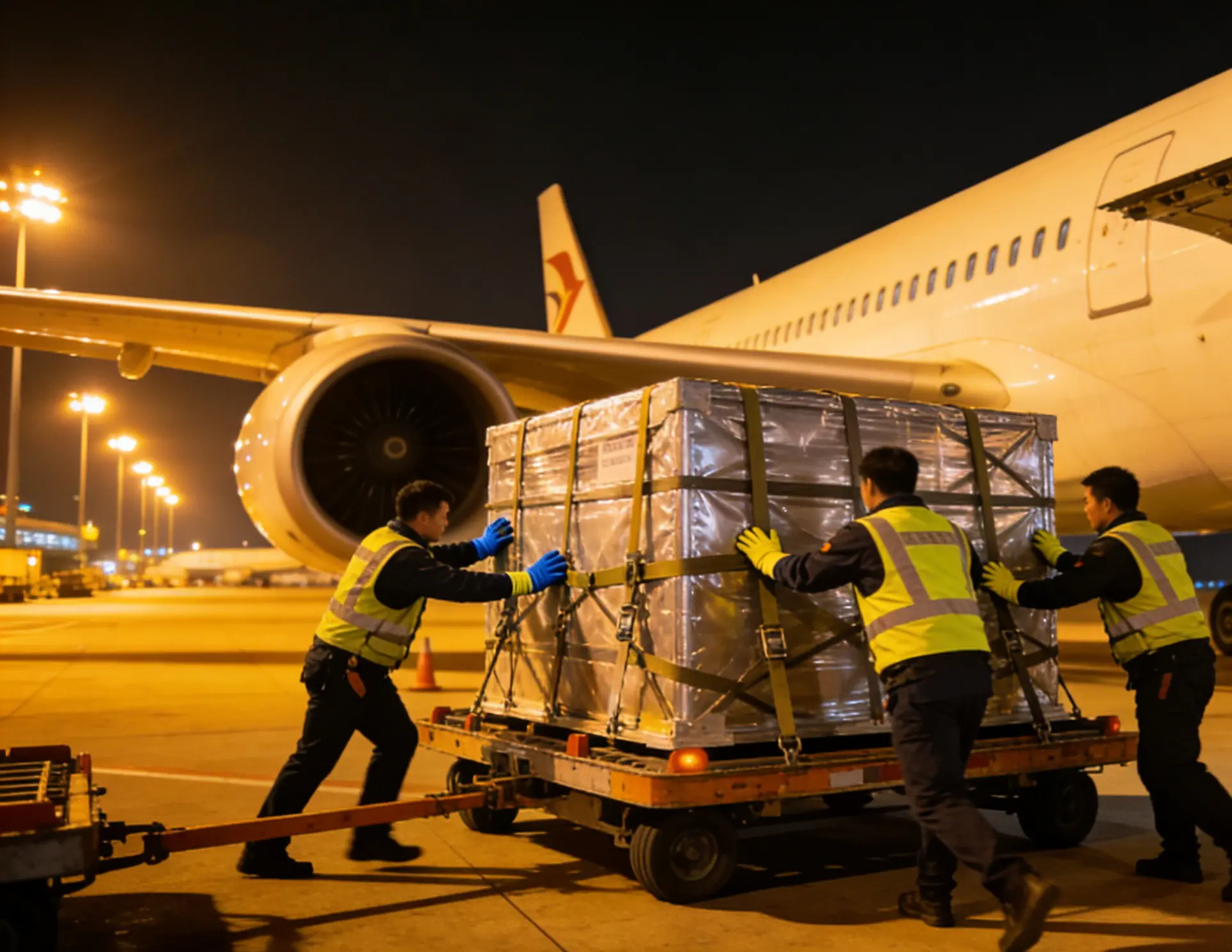
- Terminal Handling Charges (THC): Fees applied by ground handling agents at both the origin and destination airports for moving your cargo from the warehouse, building the aircraft pallet (ULD), and breaking it down upon arrival.
Source Note: Based on data from the TAC Index, peak seasons (Q3/Q4) routinely see these base rates spike by up to 40% as capacity tightens across transpacific routes.
Actual Weight vs. Volumetric Weight Explained
In air freight, airlines charge based on Chargeable Weight—which is the greater of the Actual Weight (gross weight) or the Volumetric Weight (dimensional weight). Airlines use a standard ratio of 1:167 (1 CBM = 167 kg) for standard air freight.
Practical Calculation Example from Our Warehouse:
Just last month, a client shipped 5 cartons of lightweight electronics.
- Total Actual Weight = 100 kg.
- Total Volume = 1.2 CBM.
- Volumetric Weight Calculation: 1.2 CBM × 167 = 200.4 kg.
Because the volumetric weight (200.4 kg) is strictly greater than the actual weight (100 kg), the airline billed them for 200.4 kg of chargeable weight. This is why optimizing your packaging is the single most important step for cost control in air cargo.
How Long Does Air Freight Shipping from China to USA Take?
Standard air freight takes 3 to 7 days, whereas express courier services (like DHL, FedEx, or UPS) deliver in 1 to 3 days door-to-door.
While air freight is the fastest commercial shipping method available, “flight time” is only one piece of the puzzle. Ground handling, customs clearance, and consolidation processes dictate the actual door-to-door transit time. In our experience, importers often underestimate the ground delays at congested airports like LAX or JFK.

Step-by-Step Transit Timeline
A standard air cargo shipment from a factory in Shenzhen to a warehouse in Chicago typically follows this timeline:
- Origin Pickup & Consolidation (1-2 Days): Your goods are picked up from the supplier, transported to our warehouse, weighed, measured, and built into an airline ULD (Unit Load Device).
- Export Customs & AMS Filing (1 Day): Chinese export customs clearance is processed. Simultaneously, the Automated Manifest System (AMS) filing is submitted to US Customs prior to wheels-up, in compliance with Transportation Security Administration (TSA) air cargo security mandates.
- Flight Time (1-2 Days): Direct flights (e.g., PVG to LAX) take about 12-14 hours. Indirect flights routed through hubs like ICN (Seoul) or TPE (Taipei) may add 24 to 48 hours to the journey but are often cheaper.
- US Import Customs & Breakdown (1-2 Days): Upon landing, cargo is transferred to a bonded warehouse services facility (CFS), broken down from the pallet, and cleared through US Customs and Border Protection (CBP).
- Final Delivery (1-2 Days): The loose cargo is loaded onto domestic trucking networks (LTL or FTL) for final mile delivery.
Express vs. Standard Air Freight Comparison
Understanding the difference between Express Courier and Standard Air Freight ensures you don’t overpay for speed you don’t actually need.
| Feature | Standard Air Freight | Express Courier (DHL/FedEx/UPS) |
|---|---|---|
| Cost per kg | $4.50 – $7.50 (Moderate) | $8.00 – $12.00+ (High) |
| Transit Time | 3 to 7 Days | 1 to 3 Days (Door-to-Door) |
| Ideal Cargo Weight | 150 kg to 1000+ kg | Under 150 kg |
| Customs Clearance | Requires Customs Broker & Bond | Handled internally by courier (often De Minimis) |
| Capacity Stability | Subject to airline offloads | High priority boarding |
Essential US Customs Clearance Requirements for Air Cargo
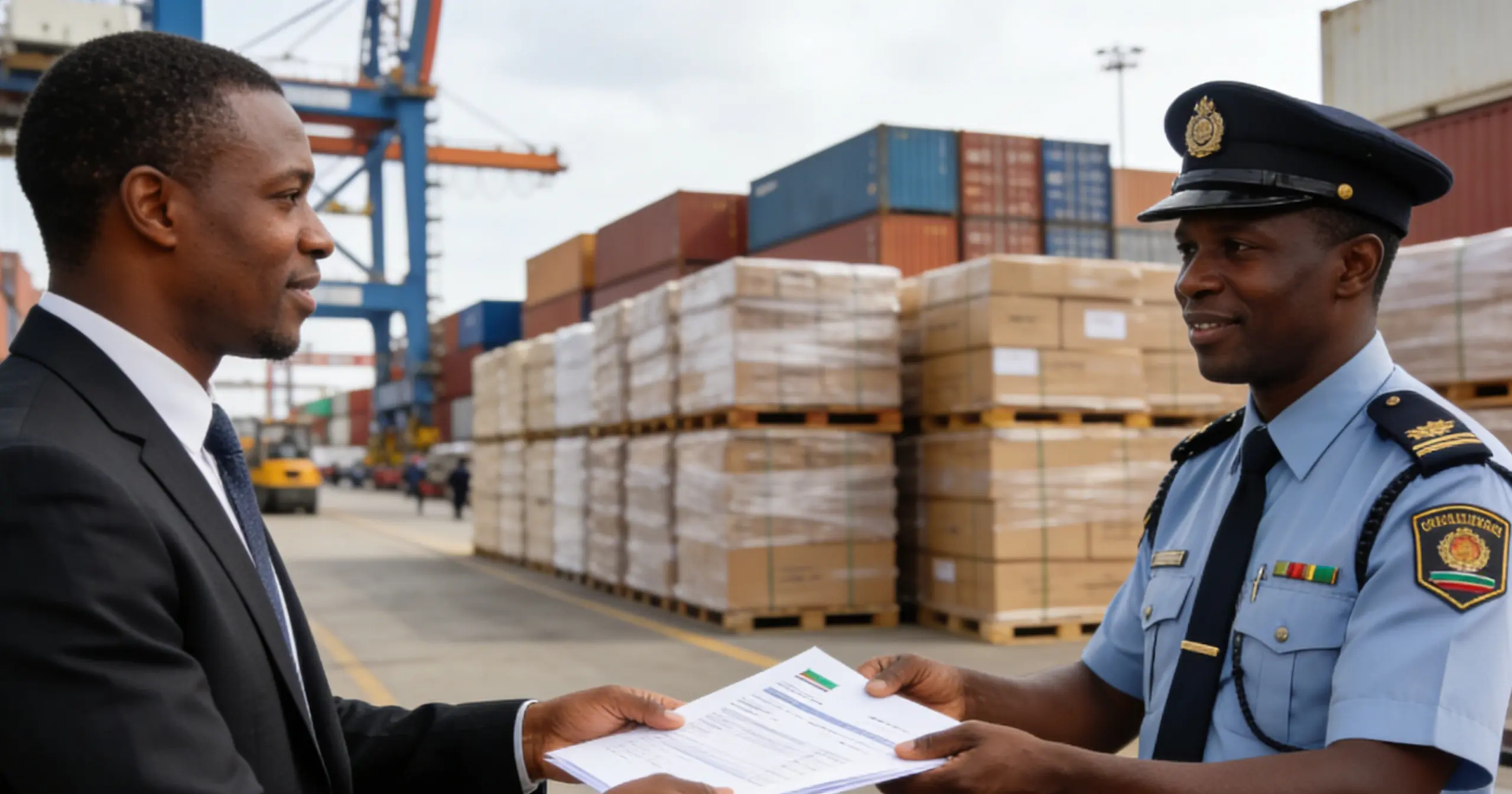
To successfully clear US customs, importers must provide a Commercial Invoice, Packing List, Air Waybill (AWB), and ensure AMS filing before departure.
Customs compliance is where most delays occur. US Customs and Border Protection (CBP) enforces strict regulations on all inbound air freight, and mistakes here can erase the time advantage of flying your goods. We’ve seen poorly prepared paperwork result in cargo holds that cost hundreds of dollars a day in terminal storage fees.
CBP Regulations, Form 7501, and Customs Bonds
For any commercial import valued over $2,500, CBP requires a formal entry (Form 7501) and a Customs Bond.
- Single Entry Bond: Good for a one-off shipment, usually costing around $50-$65 per entry.
- Continuous Bond: Valid for 12 months and covers all US ports of entry. Costing roughly $300-$500 annually, we highly recommend this if you plan to import more than 3-4 times a year via air or ocean.
Additionally, if your products fall under Partner Government Agencies (PGAs) such as the U.S. Food and Drug Administration (FDA) for medical devices or food-contact items, you must submit additional documentation. Failure to do so results in severe penalties, cargo holds, and daily storage fees at the airline terminal (which are significantly higher than ocean port demurrage).
Section 321 (De Minimis) for E-commerce Imports
If you are an e-commerce seller shipping B2C directly to US consumers, you can leverage Section 321. According to US Customs and Border Protection (CBP), this regulation allows shipments valued under $800 to enter the USA duty-free and without a formal customs entry. However, CBP has recently intensified scrutiny on Section 321 filings to prevent abuse. Working with a compliant forwarder who understands Type 86 entries is crucial to avoid having your packages flagged and seized.
Top 3 Strategies to Reduce Your Air Freight Costs
You can lower costs on Air Freight Shipping from China to USA by optimizing packaging to reduce volumetric weight, utilizing LCL air consolidation, and booking mid-week off-peak flights.
At Efanda Logistics, our operations team implements these specific strategies daily to protect our clients’ margins against volatile airline pricing.
Strategy 1: Packaging Optimization (Case Study)
As demonstrated in the volumetric weight calculation above, dead space costs money. Work with your supplier to reduce carton sizes. Remove unnecessary styrofoam, utilize custom-fit corrugated boxes, and avoid palletizing at the factory if the forwarder can floor-load the boxes into the airline ULD more efficiently. In a recent shipment for an Amazon seller, we repacked 25 cartons of LED lights, reducing the total volume by 0.4 CBM and saving the client over $600 on a single flight.
Strategy 2: Air Consolidation (ULD Build-up)
Instead of shipping directly with the airline as loose cartons, use a freight forwarder that builds their own ULD pallets (consolidation). Forwarders aggregate cargo from multiple clients to maximize the contour of the airline pallet. This efficiency allows us to negotiate lower per-kg rates with the airline and pass the savings on to you. It also drastically reduces the risk of your individual cartons getting lost or damaged during terminal handling.
Strategy 3: Negotiating the Right Incoterms (FOB vs. EXW)
For air freight, negotiating FOB (Free On Board) terms with your Chinese supplier is often more cost-effective than EXW (Ex Works). Under FOB, the supplier pays for local trucking to the origin airport and covers the Chinese export customs fees. Under EXW, you absorb all origin charges, which can unexpectedly add $200-$400 to your total air freight bill before the plane even leaves the ground.
Why Choose Efanda Logistics?
Navigating the volatile air freight market requires a partner with deep operational roots in China and robust infrastructure in the USA.
Block Space Agreements (BSA) with Top Airlines
Efanda Logistics holds direct Block Space Agreements (BSA) with premium carriers including China Southern (CZ), Cathay Pacific (CX), and China Airlines (CI). This means we have pre-purchased, guaranteed cargo space on specific flights. When e-commerce volumes peak and standard shipments get bumped off flights (offloaded), our BSA cargo flies strictly on schedule.
Seamless Door-to-Door US Delivery Solutions
We don’t just fly your cargo to LAX or JFK and leave you to figure out the rest. Our in-house customs brokerage handles the CBP clearance while the freight is still in the air. Upon arrival, our dedicated door to door shipping network instantly routes your goods to amazon fba centers, 3PL warehouses, or direct to your B2B customers, completely eliminating expensive terminal storage fees.
Frequently Asked Questions (FAQ)
Q1: What are the restricted items for air freight to the USA?
Strict regulations govern the air transport of dangerous goods (DG). Items like lithium batteries, flammable liquids (perfumes, cosmetics), and strong magnets require specialized DG packaging, Material Safety Data Sheets (MSDS), and specific airline approvals. Many passenger aircraft will not accept these items, restricting them to pure freighter planes (cargo-only flights).
Q2: Do I need a customs bond if my shipment is under $2,500?
Generally, no. Shipments valued under $2,500 can usually be cleared as an “Informal Entry,” which does not require a customs bond. However, if the goods are subject to partner government agencies (like FDA, EPA, or FCC), a formal entry and bond may still be required regardless of the commercial value.
Q3: Which US airports handle the most air cargo from China?
The primary gateways for Asian air cargo are Los Angeles (LAX), Chicago O’Hare (ORD), New York (JFK), and Dallas/Fort Worth (DFW). LAX handles the highest volume of direct flights from China, making it the most popular—but sometimes most congested—entry point. Routing through alternative airports like ORD or DFW can sometimes save time during peak season.
Conclusion
Mastering Air Freight Shipping from China to USA is no longer just about finding the cheapest quote; it’s about strategic execution. By understanding how chargeable weight dictates your pricing, preparing the correct customs documentation, and optimizing your packaging, you can transform air freight from a margin-killer into a competitive advantage.
Disclaimer: Air freight rates and customs regulations are subject to frequent changes. Always consult with a licensed customs broker or freight forwarder for the most current information regarding your specific shipment.
Don’t let volatile e-commerce capacity disrupt your supply chain in 2026. Contact Efanda Logistics today for customized air freight quotes, guaranteed space allocations, and a seamless, risk-free door-to-door experience from China to the USA.