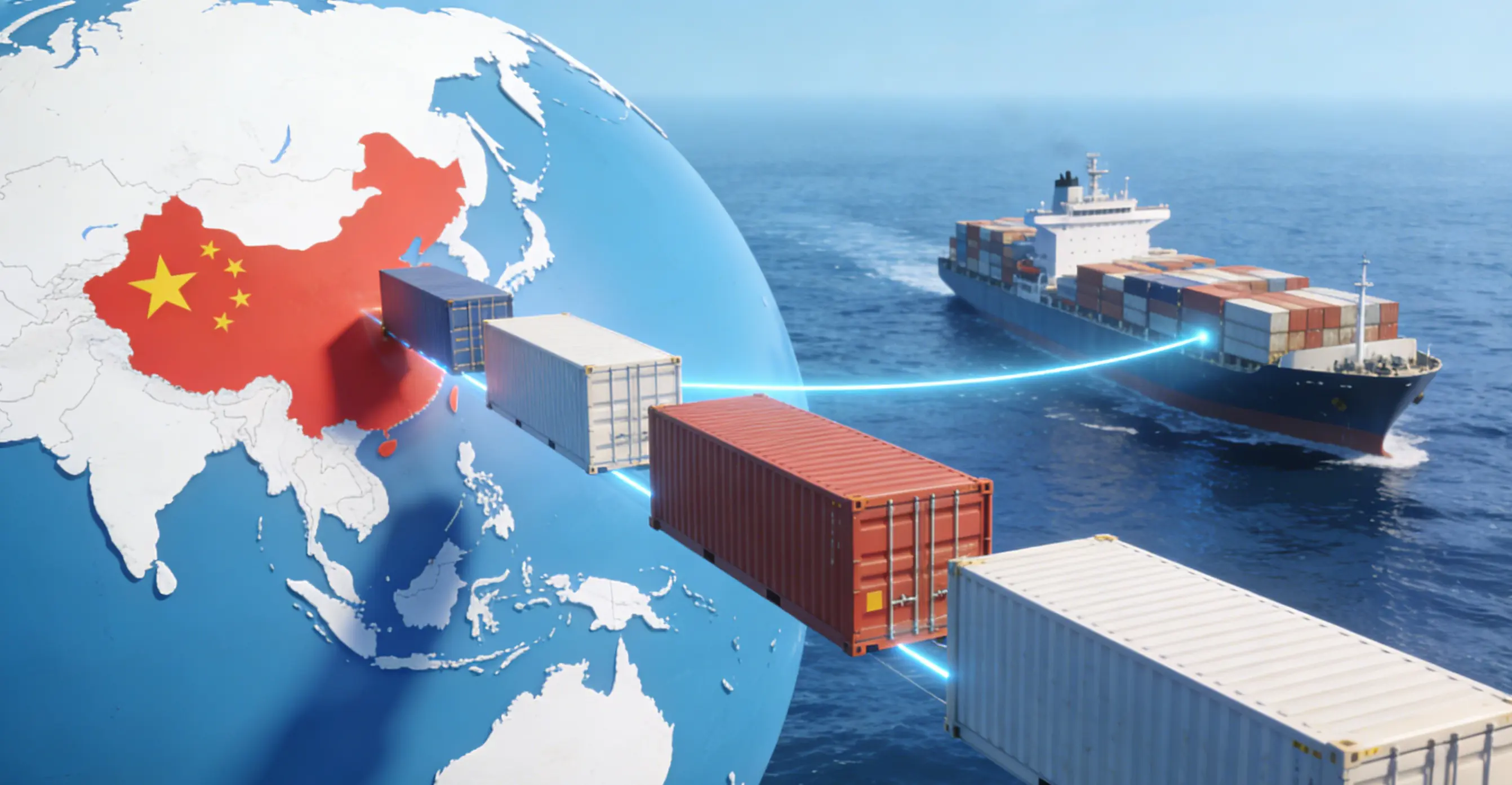
Are you looking to capitalize on the booming Chinese EV market by bringing high-quality, affordable electric cars to Europe? With Chinese brands like BYD, Nio, and Xpeng gaining traction, learning how to import and ship New Energy Vehicles from China to the Netherlands is a strategic move for car dealers and individual enthusiasts alike.
In this comprehensive guide, updated for 2026 regulations, we break down the complex compliance landscape, compare Ro-Ro vs. Container shipping with operational insights, and explain the specific dangerous goods (DG) requirements for lithium batteries to ensure your vehicles arrive safely at the Port of Rotterdam.
1. Why Import New Energy Vehicles from China to the Netherlands?
The global automotive landscape is shifting, and China is at the forefront of the electric vehicle (EV) revolution. For Dutch importers, sourcing from China is no longer just an option; it’s a competitive necessity driven by technology, cost, and logistics efficiency.
Cost Advantage and Technology
Chinese EVs offer superior technology at competitive prices compared to European and American models. Brands like BYD, Zeekr, and MG provide advanced battery technology (such as LFP Blade Batteries), longer ranges, and premium interiors at a price point that is often 20-30% lower than comparable Western vehicles. This price gap exists even after accounting for shipping and the new EU anti-subsidy duties, making the arbitrage opportunity significant for dealerships.
Supply Chain Dominance
China controls approximately 75% of the global battery supply chain, ensuring faster production and delivery times. While European manufacturers often face months-long backlogs due to component shortages, Chinese manufacturers can often supply stock immediately. This “speed to market” is crucial in the fast-paced EV sector, allowing you to turn inventory faster.
Netherlands as a Gateway
The Port of Rotterdam is not just a destination; it is Europe’s largest port and the primary logistics hub for the continent. Importing to the Netherlands allows for seamless distribution to Germany, Belgium, France, and beyond. The Dutch infrastructure for EV logistics—including charging stations at terminals like Rhenus or C.RO, and specialized warehouse services—is among the best in the world. From here, you can easily connect to other key markets via our shipping from China to Germany, shipping from China to Belgium, and shipping from China to France networks.
2. Regulations for Importing NEVs from China to the Netherlands
Navigating the regulatory landscape is the most challenging aspect of importing cars. Failure to comply can result in your vehicle being seized at customs or denied registration. Our team at Efanda Logistics handles these checks daily, and here is what you strictly need to know.
WVTA (Whole Vehicle Type Approval)
For mass imports (dealerships importing 50+ units), Whole Vehicle Type Approval (WVTA) is essential. This certifies that the vehicle model meets all EU safety, environmental, and production standards under Regulation (EU) 2018/858. Most major Chinese export brands (like MG or Polestar) already have this. However, emerging domestic market brands may not.
COC (Certificate of Conformity)
Every single vehicle must have a Certificate of Conformity (COC). This document is issued by the manufacturer and proves that the specific VIN number corresponds to the approved type.
- Crucial Tip: Before buying, ask the supplier for a copy of the COC. Without it, you cannot register the car in the Netherlands via the RDW (Netherlands Vehicle Authority). We have seen cases where importers bought “China-spec” cars without COCs, rendering them unregisterable in Europe without expensive individual vehicle approval (IVA).
UN38.3 Test Report
This is critical for shipping. The UN38.3 Test Report certifies that the lithium battery has passed rigorous safety tests, including:
- Altitude simulation
- Thermal cycling
- Vibration and shock
- External short circuit
- Overcharge protection
Shipping lines will not accept a booking without a valid UN38.3 report for the specific battery model installed in the car.
MSDS (Material Safety Data Sheet)
The MSDS provides detailed information on the chemical composition of the battery and emergency handling procedures. It is required by the carrier’s dangerous goods safety advisor (DGSA) to approve the loading of the cargo.
The New “Battery Passport” (Future Proofing)
Be aware that under the new EU Battery Regulation, starting from February 2027, every EV battery with a capacity over 2kWh will need a digital “Battery Passport”. This will track the battery’s carbon footprint and recycled content. While not fully mandatory for clearance today, sourcing vehicles that are compliant now will save you headaches in the future resale market.

3. Shipping Methods for New Energy Vehicles from China to the Netherlands
Choosing the right shipping method affects cost, transit time, and safety. Here is a detailed comparison based on our operational experience handling hundreds of EVs.
Ro-Ro (Roll-on/Roll-off) for EV Shipping
Ro-Ro is the standard for new car logistics. Vehicles are driven directly onto specialized vessels that look like floating parking garages.
- Best for: New cars, large volume shipments, and running vehicles.
- Process: Cars are driven onto the ship at the port of loading (e.g., Shanghai Haitong Terminal, Guangzhou Nansha) and secured (lashed) to the deck.
- Pros:
- Cost-Effective: Generally the cheapest option for running vehicles ($1,200 – $2,200 depending on CBM).
- Simplicity: No need for packing or stuffing; minimal handling damage risk if the car starts.
- Cons:
- Exposure: Although inside the ship, cars are driven by port workers.
- Strict Schedule: Ro-Ro schedules are less frequent than container ships.
- No Personal Items: You absolutely cannot pack spare tires, charging cables (other than the standard one), or personal goods inside the car.
Container Shipping (FCL) for Electric Cars
FCL (Full Container Load) involves loading vehicles into 20ft or 40ft containers. This method utilizes standard sea freight infrastructure.
- Best for: High-value cars, luxury prototypes, non-running cars, or when you need to ship spare parts/accessories alongside the vehicle.
- Process: Cars are loaded into containers and secured using wheel chocks and lashing straps.
- Pros:
- Protection: Fully enclosed steel box protects against salt water and theft.
- Flexibility: Can ship to any port, not just major Ro-Ro hubs.
- Cons:
- Cost: Often more expensive per unit than Ro-Ro unless optimized.
- Complexity: Requires professional stuffing and unstuffing. If the lashing is poor, the car can move and get damaged.
Container Racking Systems Optimization
To compete with Ro-Ro pricing, logistics companies like Efanda Logistics use specialized steel racking systems.
- Optimization: We can stack 3 to 4 medium-sized EVs (like a BYD Atto 3) in a single 40ft HQ container.
- Benefit: This slashes the per-unit shipping cost significantly. If a 40HQ costs $4,000, shipping 4 cars brings the ocean freight cost down to $1,000 per unit, which is very competitive with Ro-Ro.

4. Safety Guide: Shipping Lithium Battery Vehicles from China
Electric vehicles are not just “cars” in the eyes of maritime law; they are Class 9 Dangerous Goods. Compliance is non-negotiable.
IMDG Code Compliance
Under the IMDG Code (International Maritime Dangerous Goods), EVs are classified under:
- UN Number: UN 3171 (Battery-powered vehicle).
- Class: 9 (Miscellaneous dangerous substances and articles).
State of Charge (SoC) Management
This is the most common stumbling block for inexperienced importers.
- The Rule: For sea transport, the battery State of Charge (SoC) must usually be between 20% and 50%.
- Why? A fully charged battery (100%) poses a higher fire risk due to thermal runaway potential. A fully depleted battery (0%) can suffer permanent damage (bricking) during the 30-day transit.
- Action: Ask your supplier to charge/discharge the vehicle to the optimal level (around 30-40%) before delivering to the port.
Booking Requirements & Penalties
When booking freight with Efanda Logistics, we need to declare the cargo correctly to the shipping line. Failure to declare the correct UN number or hiding the fact that it’s an EV can result in:
- Cargo Rejection: The captain can refuse to load the container.
- Massive Fines: Fines for undeclared dangerous goods can reach tens of thousands of dollars, enforced by agencies like the Human Environment and Transport Inspectorate (ILT) in the Netherlands.
- Liability: In case of a fire, the shipper is fully liable if the goods were misdeclared. We strongly recommend adding cargo insurance services to cover these high-value risks.
5. Cost Breakdown: Duties and Taxes for Importing EVs to the Netherlands
Calculating the “Landed Cost” is essential to ensure your import is profitable. Let’s break it down with a hypothetical example of importing a Chinese EV worth €30,000 (CIF).
Import Duty & Anti-Subsidy Tariffs (2026 Update)
- Standard Duty: The standard import duty for passenger cars entering the EU is 10%.
- Anti-Subsidy Tariffs: As of 2026, the European Commission has imposed additional duties on Chinese EVs. These rates vary by manufacturer:
- BYD: ~17.4%
- Geely: ~19.9%
- SAIC (MG): ~37.6%
- Other cooperating companies: ~20.8%
- Non-cooperating companies: ~37.6%
- Example Calculation (for a cooperating brand at 20.8%):
- CIF Value: €30,000
- Base Duty (10%): €3,000
- Anti-Subsidy Duty (20.8%): €6,240
- Total Customs Value: €39,240
VAT (BTW)
The Netherlands charges 21% VAT (BTW).
- Calculation Base: VAT is calculated on the (CIF Value + All Duties).
- Calculation: (€30,000 + €3,000 + €6,240) * 21% = €8,240.40.
- Deductibility: If you are a VAT-registered business, you can reclaim this 21% VAT. Using an Article 23 permit allows you to defer this payment entirely to your tax return, avoiding a cash flow hit at the border. Check with the Belastingdienst (Tax Administration) for details.
BPM (Private Motor Vehicle and Motorcycle Tax)
BPM is a luxury tax normally based on CO2 emissions.
- EV Advantage: Since fully electric vehicles emit 0g/km of CO2, they are currently exempt from BPM (zero rate) in 2026. This is a massive saving compared to importing a petrol car, where BPM can cost €5,000 – €15,000.
| Cost Component | Rate | Example Amount (€30k Car) |
|---|---|---|
| Import Duty | 10% | €3,000 |
| Anti-Subsidy Duty | ~20.8% (Varies) | €6,240 |
| BPM | Exempt | €0 |
| VAT (BTW) | 21% | €8,240.40 (Recoverable) |
| Clearance & Handling | Fixed | ~€250 |
| Total Landed Cost | €47,730.40 (or €39,490 ex-VAT) |
6. Step-by-Step Guide: How to Ship New Energy Vehicles from China to the Netherlands
Step 1: Sourcing and Compliance Check
Buy from a reputable supplier. Ensure they have the Export License (not all Chinese car dealers have the license to export cars directly; they may need to use a trading agent). Confirm the COC and UN38.3 documents are available.
Step 2: Documentation Preparation
Collect the Commercial Invoice, Packing List, and MSDS. The invoice must clearly state the VIN numbers and HS Codes (usually 870380 for electric vehicles).
Step 3: Booking Freight
Contact Efanda Logistics 2-3 weeks before the cargo is ready. We will assess whether Ro-Ro or Container is better for your specific shipment and handle the DG booking with the carrier.
Step 4: Export Clearance (China)
We handle the Chinese customs declaration. This involves presenting the export license and vehicle data to Chinese Customs. For EVs, we also handle the “Dangerous Goods Declaration” at the port of loading.
Step 5: International Shipping
The vessel departs. Transit time from main Chinese ports (Shanghai, Ningbo, Shenzhen) to Rotterdam is approximately 30 to 35 days. During this time, you should prepare your funds for tax payment.
Step 6: Import Clearance (Netherlands)
Upon arrival in Rotterdam, our Dutch partners file the import entry. We provide comprehensive customs clearance services. If you have an Article 23 permit, we apply it to defer the VAT.
Step 7: Registration (RDW)
Once cleared, the car must be inspected by the RDW. They will check the VIN, lights, and safety features against the COC. After passing, you receive your Dutch license plates (yellow plates).
7. Why Choose Efanda for Shipping New Energy Vehicles from China to the Netherlands?
Shipping electric vehicles is not a job for a generalist freight forwarder. It requires specialized knowledge of dangerous goods regulations and automotive logistics.
- DG Expertise: We are fully certified to handle Class 9 dangerous goods. We know exactly how to label, document, and stow lithium battery vehicles to satisfy the strictest carrier requirements.
- Ro-Ro Contracts: We hold direct booking accounts with major Ro-Ro carriers like Wallenius Wilhelmsen, Hoegh, and NYK, ensuring we can get space even during peak seasons.
- Customs Solutions: Our team stays updated on the latest EU anti-subsidy tariff rules, helping you calculate accurate landed costs and avoid unpleasant surprises at the border.
- End-to-End Service: From factory pickup to door to door shipping, we manage the entire logistics chain.
8. FAQ: Shipping EVs from China to the Netherlands
Q1: How much does it cost to ship a car from China to the Netherlands?
Ro-Ro rates typically range from $1,200 to $2,200 per unit, depending on the vehicle size (CBM). Container shipping rates fluctuate with the market; currently, a 40ft HQ container (holding 3 cars) might cost $3,000 – $5,000, meaning roughly $1,000 – $1,600 per car. Contact us for a live quote.
Q2: Can I import a Chinese EV as an individual?
Yes, but it is complex. You need an EORI number (even as a private individual for one-off imports) and you are fully responsible for the RDW registration. We recommend using a forwarder like Efanda who can guide you through the customs maze.
Q3: How long is the shipping time?
Direct sea freight typically takes 30-35 days port-to-port. If transshipment is involved, it can take 40-50 days.
Q4: Do Chinese EVs have a warranty in Europe?
Only if the brand has an official European presence (e.g., BYD, Xpeng, MG). If you parallel import a model not officially sold in Europe (like a Xiaomi SU7 or a specific Zeekr model), you will likely have no manufacturer warranty and may struggle to find parts.
Q5: Can I ship a used EV?
Yes, but used EVs are subject to stricter inspections for battery health. Some shipping lines refuse used EVs due to higher fire risks. Always declare the condition honestly.
Ready to bring the future of driving to the Netherlands? Contact Efanda Logistics today for a quote on shipping your New Energy Vehicles safely and efficiently.