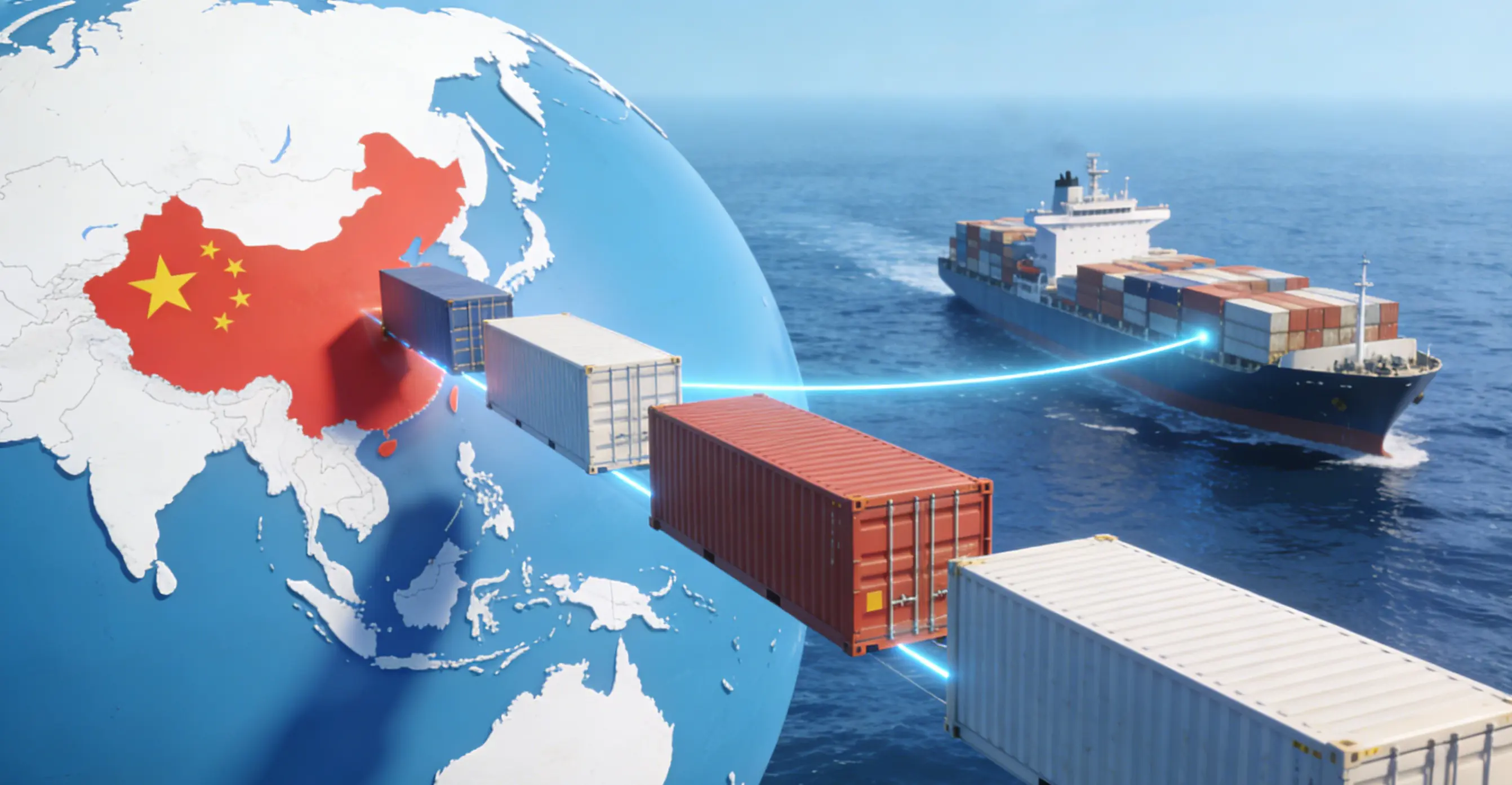
1. Introduction: Is LCL Shipping from China to USA Right for You?
Are you a small business owner, an e-commerce entrepreneur, or an Amazon FBA seller looking to import goods from China, but you don’t have enough volume to fill a standard 20ft or 40ft container? You are not alone. In 2025, over 40% of US imports from China were moved by small and medium-sized enterprises (SMEs) who faced this exact dilemma.
The solution is LCL shipping from China to USA (Less than Container Load). It allows you to ship smaller quantities of cargo without paying for a full container, making it the backbone of global trade for growing businesses. While this guide focuses on the US market, the core principles also apply to shipping from China to Canada and Mexico.
As of March 2026, the logistics landscape has shifted. Sea freight rates have stabilized following the post-CNY (Chinese New Year) peak, but new regulations and surcharges have emerged. Navigating these changes requires up-to-date knowledge. In this comprehensive guide, Efanda Logistics draws on over 8 years of freight forwarding experience to break down everything you need to know. We will explain how to calculate costs accurately using the “W/M” rule, how to avoid the notorious “destination fee” traps, and how to ensure your goods clear US Customs smoothly.
Why This Guide Matters
Many new importers focus solely on the ocean freight rate, only to be hit with unexpected fees upon arrival in Los Angeles or New York. Our goal is to provide you with a transparent, “no-surprise” roadmap to importing. Whether you are shipping electronics from Shenzhen or textiles from Ningbo, this guide is your blueprint for success.
2. What is LCL Shipping? Understanding the Basics
LCL (Less than Container Load) is a method of shipping where multiple shippers share space in a single container. Think of it like a “carpool” for cargo. Instead of renting the entire bus (FCL – Full Container Load), you simply buy a ticket for the seat (space) you need.
Who is LCL Shipping For?
LCL is the ideal solution for:
- Small to Medium Volume: Shipments typically ranging between 1 CBM and 15 CBM.
- Startups & SMEs: Businesses that cannot afford to tie up capital in massive inventory.
- Product Testing: Importers testing a new SKU in the US market before committing to bulk orders.
- High-Frequency Restocking: Amazon FBA sellers who need to replenish stock weekly or monthly rather than quarterly.
Comparison: LCL Shipping from China to USA vs. FCL
Understanding the difference between LCL and FCL is critical for your bottom line. Here is a detailed comparison based on current 2026 market conditions:
| Feature | LCL (Less than Container Load) | FCL (Full Container Load) |
|---|---|---|
| Volume Suitability | Best for 1 – 15 CBM | Best for > 15 CBM |
| Cost Structure | Pay per CBM (Cubic Meter) | Pay per Container (20GP/40HQ) |
| Transit Time | Slower (requires consolidation/deconsolidation) | Faster (direct loading/unloading) |
| Risk of Damage | Higher (goods are handled more often) | Lower (goods are sealed at factory) |
| Customs Entry | Individual filing per shipper | Single filing per container |
| Ideal For | Small batches, samples, diverse SKUs | Bulk orders, large machinery |
Efanda Insight: If your shipment exceeds 15 CBM, it is often more cost-effective to book a 20ft FCL container, even if you don’t fill it completely. The break-even point usually sits around 13-15 CBM depending on the specific port pairs.
3. Cost of LCL Shipping from China to USA (2026 Rates & Analysis)
Pricing for LCL shipping can be complex because it involves multiple metrics. The most important concept to master is the “Chargeable Weight” or W/M (Weight or Measure) rule.
The Golden Rule: W/M Calculation
In ocean freight LCL, 1 CBM is considered equivalent to 1,000 KG. The shipping line will charge you based on whichever is greater: the volume (CBM) or the weight (in tons).

- Formula:
Chargeable Volume = Max(Actual Volume in CBM, Actual Weight in Tons)
Scenario A: Volume-Based Charge (Most Common)
You are shipping 2 CBM of plush toys. The total weight is 200 kg (0.2 tons).
- Volume: 2 CBM
- Weight Equivalent: 0.2 tons
- Chargeable: 2 CBM (Since 2 > 0.2)
Scenario B: Weight-Based Charge (Heavy Cargo)
You are shipping 1 CBM of steel machinery parts. The total weight is 1,500 kg (1.5 tons).
- Volume: 1 CBM
- Weight Equivalent: 1.5 tons
- Chargeable: 1.5 CBM (Since 1.5 > 1)
Note: For air freight, the ratio is different (1 CBM = 167 KG), so do not confuse the two.
Current Rate Estimates (March 2026)
Below are the estimated Port-to-Port ocean freight rates for LCL shipments from major Chinese ports to US hubs. Please note these are indicative ranges and subject to weekly GRI (General Rate Increases).
| Origin Port (China) | Destination Port (USA) | Estimated Rate (per CBM) | Transit Mode |
|---|---|---|---|
| Shanghai (SHA) | Los Angeles (LAX/LGB) | $45 – $75 | Direct Ocean |
| Shenzhen (SZX) | New York (NYC/EWR) | $65 – $95 | All Water (via Panama) |
| Ningbo (NGB) | Chicago (ORD/CHI) | $55 – $85 | IPI (Ocean + Rail) |
| Qingdao (TAO) | Houston (HOU) | $60 – $90 | Direct Ocean |
The “CIF Trap” (WARNING)
This is the single most common mistake we see new importers make.
The Scenario: Your supplier in China offers to ship your goods to the USA for “Free” or a very low cost (e.g., $10/CBM) under CIF terms (Cost, Insurance, and Freight).
The Trap: The freight isn’t free. The supplier pays a “kickback” to the booking agent in China. When the cargo arrives in the US, the destination handling agent will charge you (the consignee) exorbitant fees to release the cargo. These can include:
- CFS (Container Freight Station) fees: $85/CBM (vs market rate $30)
- Documentation fees: $150
- Handling fees: $100+
- CISF (China Import Service Fee): $50/CBM
Efanda Recommendation: Always buy under FOB (Free on Board) or EXW (Ex Works) terms. This allows you to nominate your own forwarder (like Efanda) who provides an “All-In” quote with no hidden destination surprises. Refer to the ICC (International Chamber of Commerce) for official definitions of Incoterms 2020 and to understand exactly where your liability begins and ends.
The “Hidden” Surcharges: GRI and PSS
Ocean freight isn’t static. Carriers adjust rates based on demand and capacity. Understanding these acronyms can save you from billing shocks:
- GRI (General Rate Increase): Often applied on the 1st and 15th of each month. In 2026, we’ve seen GRIs ranging from $5 to $20 per CBM.
- PSS (Peak Season Surcharge): Typically hits from August to October (holiday rush) and January (pre-CNY).
- Efanda Tip: Book your cargo 14 days in advance to lock in rates and avoid sudden hikes.
4. Transit Time: How Long Does LCL Shipping from China to USA Take?
One of the trade-offs for the lower cost of LCL is time. LCL shipments generally take 5-7 days longer than FCL shipments.

Why the Delay?
- Origin Consolidation (CFS): Your goods must wait in a warehouse until enough cargo is gathered to fill a container. (Delay: 3-5 days).
- Destination Deconsolidation: Upon arrival, the container must be moved to a bonded warehouse and unpacked. Each shipment must be separated before release. (Delay: 2-4 days).
Typical Transit Times (Port-to-Port)
- West Coast (LA/Long Beach/Oakland): 18 – 25 days. This is the fastest route. Many Amazon FBA sellers prefer shipping to LA and then trucking to inland fulfillment centers.
- East Coast (NY/Savannah/Miami): 28 – 38 days. Ships typically transit via the Panama Canal.
- Inland Points (Chicago/Dallas/Memphis): 25 – 35 days. These shipments usually arrive in LA/LB and move via rail (IPI) to the interior.
Door to Door Shipping: To calculate the total time to your warehouse, add 7-10 days to the port-to-port times above for customs clearance, vessel unloading, and final truck delivery.
5. Process Flow: LCL Shipping from China to USA Step-by-Step
Understanding the lifecycle of your shipment helps you plan inventory better.
- Booking: You or your forwarder books space with the consolidator based on the cargo ready date.
- Pickup & Delivery to CFS: The supplier trucks the goods to the designated Container Freight Station (CFS) in China.
- Consolidation: The warehouse measures the cargo (checking for discrepancies) and loads it into a container with goods from other shippers.
- Export Customs: The consolidator files export customs in China.
- Ocean Transit: The vessel sails to the USA.
- Arrival & Deconsolidation: The vessel docks. The container is moved to a US CFS warehouse and stripped (unloaded).
- US Customs Clearance: Your customs broker files the entry. Customs clearance must be finalized before goods can be picked up.
- Final Delivery: Once released, a truck picks up your pallets/cartons and delivers them to your door.
6. Critical Documents for US Customs Clearance
Compliance is key. Missing documents can lead to Customs Exams and expensive storage fees.
- ISF 10+2 Filing (Importer Security Filing):
- Rule: Must be filed at least 24 hours prior to loading the vessel in China.
- Penalty: CBP may issue fines up to $5,000 for late or inaccurate filing.
- Responsibility: Your forwarder usually handles this, but you must provide the data.
- Commercial Invoice & Packing List:
- Must list the seller, buyer, detailed description of goods, value, and HS Codes. Accuracy is vital for duty calculation. Verify your codes at the USITC HTS Search database to avoid misclassification penalties.
- Bill of Lading (B/L):
- For LCL, you will receive a House Bill of Lading (HBL) issued by the NVOCC/Forwarder. This is your title to the goods.
- Customs Bond:
- All commercial imports into the US valued over $2,500 require a Customs Bond.
- Single Entry Bond: Good for one shipment (approx cost $50-$60).
- Continuous Bond: Good for one year (approx cost $400-$500). Recommended if you import more than 3-4 times a year.
Understanding Customs Exams (The Unknown Risk)
Even with perfect paperwork, your cargo might be flagged for an exam. This is a reality of importing that few forwarders discuss openly.
- VACIS / NII (Non-Intrusive Inspection): An X-ray exam of the container.
- Cost: ~$300.
- Delay: 2-3 days.
- Tail Gate Exam: A CBP officer breaks the seal and opens the container doors to inspect the cargo visually.
- Cost: ~$350.
- Intensive Exam: The most disruptive scenario. The container is moved to a Centralized Examination Station (CES) and fully unloaded.
- Cost: $1,000 – $2,500+ (includes drayage, stripping, and storage).
- Delay: 1-2 weeks.
- Mitigation: While random, you can reduce risk by ensuring your ISF is filed early and your HTS codes are precise.
7. Expert Tips for LCL Shipping from China to USA
As veterans in the industry, here are three tips to save you money and headaches:
1. Packaging Matters
In an LCL container, your goods are stacked with cargo from 10-20 other shippers. Heavy crates might be placed next to your cartons.
- Do: Palletize your cargo. Use standard US pallets (40×48 inches) if possible. Use plastic shrink wrap and strapping.
- Don’t: Ship loose, weak cardboard boxes. They are easily crushed or lost during deconsolidation.
Special Note on Wood Packaging (ISPM 15)
If you use wooden pallets or crates, they MUST be heat-treated and stamped with the ISPM 15 mark.
- The Risk: If your pallets lack this stamp, US Customs will reject the entire shipment and order it to be re-exported at your expense.
- The Fix: Use plywood, plastic, or press-wood pallets, which are exempt from these regulations.
2. Cargo Insurance is Mandatory
LCL cargo is handled multiple times (truck -> warehouse -> container -> warehouse -> truck). The risk of damage is statistically higher than FCL.
- Tip: Always purchase “All Risk” cargo insurance services. It costs a fraction of the cargo value (often min $50-$100) but covers total loss and damage.
3. Consolidate Suppliers
If you are buying from three different factories in Shenzhen, don’t ship three separate LCL shipments.
- Efanda Solution: We can collect goods from all three suppliers, consolidate them into ONE shipment, and send them to you. This saves you three sets of destination fees and customs entry fees.
8. Why Choose Efanda Logistics?
At Efanda Logistics, we specialize in helping SMEs navigate the complexities of global trade. We are a fully bonded NVOCC licensed by the Federal Maritime Commission (FMC), ensuring your shipment is handled with the highest legal standards.
- Transparent Pricing: We hate hidden fees as much as you do. Our quotes are “All-In” to your door, including DDC and CFS charges.
- Amazon FBA Specialists: We are experts in Amazon FBA delivery. We understand the strict appointment systems of fulfillment centers like ONT8, FTW1, and CLT2.
- US Network: With a strong network in Los Angeles and New York, we ensure your LCL cargo is deconsolidated quickly, minimizing delays.
9. FAQ: LCL Shipping from China to USA
Q: What is the minimum volume for LCL?
A: Theoretically, you can ship 0.1 CBM, but most forwarders charge a minimum of 1 CBM. If you have 0.5 CBM, you will pay for 1 CBM.
Q: Is LCL cheaper than Air Freight?
A: Yes, significantly. Air freight is typically 5-8 times more expensive than LCL. If your shipment is over 150kg and not urgent, LCL is the better choice.
Q: How do I track my LCL shipment?
A: Efanda provides real-time tracking. You can track your container status from the moment it leaves the Chinese port until it arrives at the US warehouse.
Q: Can I ship batteries via LCL?
A: Yes, but it requires special documentation (MSDS, UN38.3 test report). It is classified as dangerous goods (DG), so verify with us before booking.
Q: Do I need to pay duties on LCL shipments?
A: Yes, import duties apply regardless of shipping method. Duties are based on the HS Code of your product and the country of origin.
Ready to ship? Contact Efanda Logistics today for a free, transparent LCL quote.