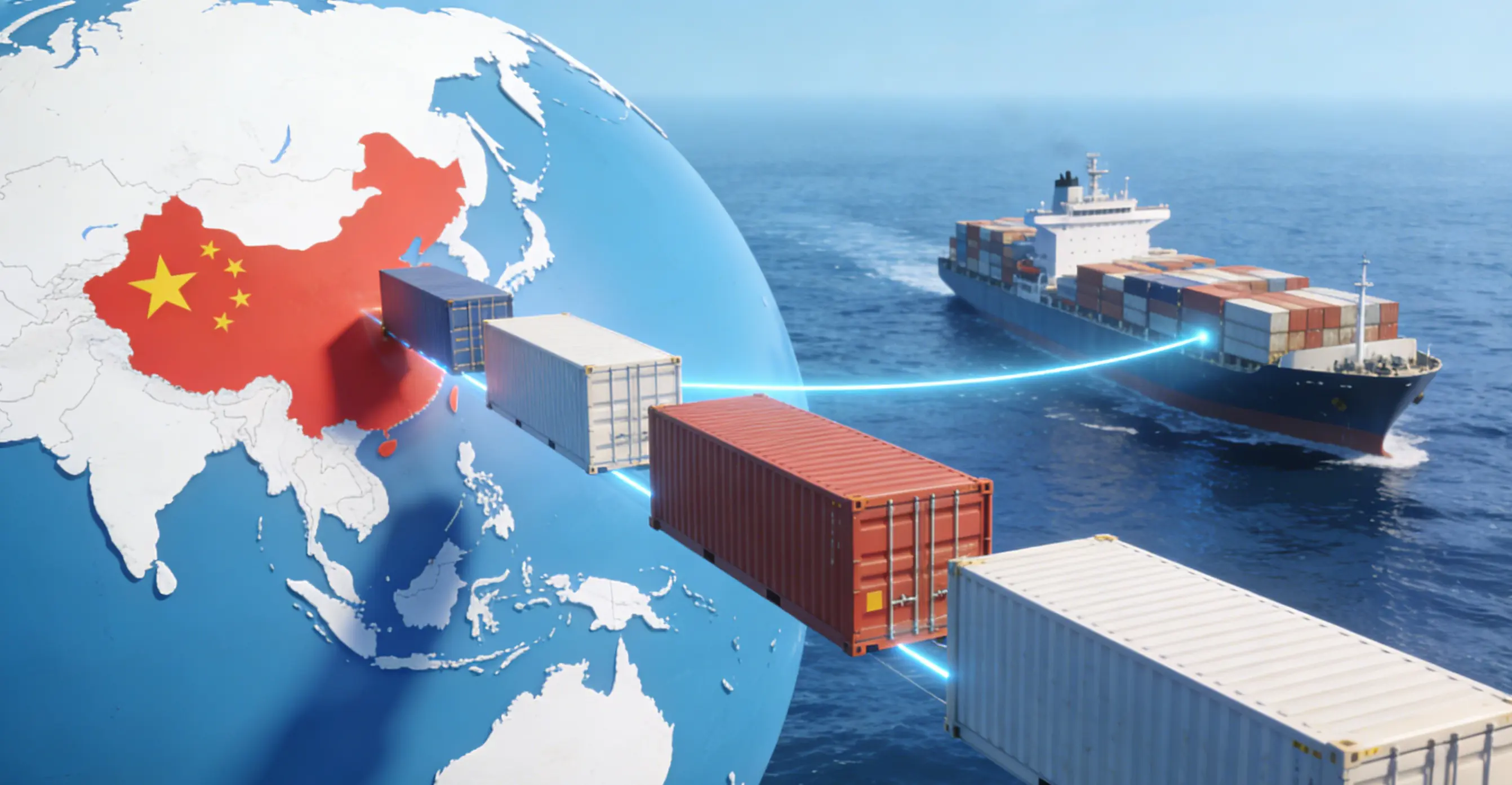
Are you planning to import electronics, textiles, or machinery and wondering about the nuances of shipping from China to Mexico in 2026? You are not alone. With the nearshoring boom transforming Mexico into a global manufacturing hub, trade volume between China and Mexico has surged past $100 billion according to Data México. However, the logistics landscape has shifted dramatically. From the January 1, 2026 tariff amendments to the volatility of sea freight rates, navigating this corridor now requires more than just booking a container—it requires strategy.
This comprehensive guide, updated for February 2026, covers everything you need to know: real-time costs, transit times, new customs compliance rules, and how to choose the right port. Whether you are a seasoned importer or an Amazon FBA seller, this article will serve as your roadmap.
1. Introduction: The Boom in Shipping from China to Mexico
The “Made in China, Assembled in Mexico” model is reshaping global supply chains. As Chinese manufacturers move production closer to the US market—a trend known as nearshoring—the demand for raw materials and components shipping from China to Mexico has exploded.
In 2026, this trade lane is busier than ever. However, it also faces new hurdles. The Mexican government’s recent push to protect local industries has led to significant changes in import regulations. For importers, this means that understanding the 2026 customs landscape is as critical as securing a low freight rate.
At Efanda Logistics, we have seen firsthand how these changes impact businesses. We don’t just move boxes; we help clients navigate the complexities of customs clearance and supply chain optimization to ensure your goods arrive on time and without unexpected penalties.
2. Ocean Freight Rates from China to Mexico (February 2026)
Understanding freight costs is vital for your profit margins. While rates have stabilized compared to the pandemic peak, 2026 has brought its own volatility due to global equipment shortages and the Red Sea crisis’s ripple effects.
FCL Rates Snapshot (Estimated)
Here is a snapshot of current market rates for Full Container Load (FCL) shipments from major Chinese ports to Mexico’s key Pacific gateways:
| Container Type | Port Pair (China to Mexico) | Estimated Cost (USD) | Trend |
|---|---|---|---|
| 20ft Container (20GP) | Shanghai/Ningbo to Manzanillo | $1,500 – $1,900 | Stable |
| 40ft Container (40HQ) | Shanghai/Ningbo to Manzanillo | $1,600 – $2,000 | Slight Increase |
| 20ft Container (20GP) | Shenzhen to Lazaro Cardenas | $1,550 – $1,950 | Stable |
| 40ft Container (40HQ) | Shenzhen to Lazaro Cardenas | $1,650 – $2,100 | Slight Increase |
> Note: These rates are for port-to-port shipping only. They do not include local charges at both ends. Rates fluctuate weekly based on carrier capacity (GRI) and fuel surcharges (BAF).
LCL Costs: A Flexible Option
For smaller shipments (typically under 15 CBM), Less than Container Load (LCL) is the way to go.
- Rate: Approx. $130 – $150 per CBM.
- Minimum: Most forwarders charge a minimum of 1 CBM.
- Advice: If your shipment is over 15 CBM, upgrading to a 20ft FCL is often cheaper and safer than LCL.
Hidden Costs to Watch Out For
When budgeting for sea freight, don’t forget these additional fees:
- THC (Terminal Handling Charges): ~$200 – $300 per container.
- Documentation Fees: ~$50 – $100.
- Peak Season Surcharge (PSS): Applicable during pre-CNY (Chinese New Year) and Q3 peak season.
- Cargo Insurance: Always protect your investment against transit risks with cargo insurance services, typically 0.1-0.3% of commercial value.
3. Critical 2026 Update: Import Tariffs for Shipping to Mexico
The biggest game-changer in 2026 is the new Tariff Law that came into effect on January 1st. As published in the Diario Oficial de la Federación (DOF), Mexico has increased import duties on goods from countries with which it does not have a Free Trade Agreement (FTA)—including China.
New Tariff Regulations
Tariffs have been hiked by 5% to 50% on over 500 tariff lines. The most affected sectors include:
- Textiles and Footwear: Duties up to 35%.
- Steel and Aluminum: Duties up to 50% to prevent dumping.
- Electronics: Specific components now face 15-20% duties.
Stricter Customs Audits
The Agencia Nacional de Aduanas de México (ANAM) has implemented stricter auditing protocols:
- HS Code Accuracy: Misclassification is no longer just a clerical error; it is treated as tax evasion. Penalties can range from 70% to 150% of the omitted taxes, plus potential seizure of goods.
- Digital Traceability: The Pedimento (customs declaration document) now requires more granular detail about the product’s origin and value.
Efanda Insight – Case Study: Last month, a client shipping LED components to Guadalajara was flagged for a “generic” HS code. The shipment was held at Manzanillo for 12 days. Our team stepped in, re-classified the goods under the new 2026 specific subheading, and filed a corrected Pedimento, saving the client over $15,000 in potential fines. Lesson: Generic codes don’t fly in 2026.
Strategy: Always work with a licensed Mexican customs broker or a forwarder like Efanda who offers DDP (Delivered Duty Paid) services. We ensure your HS codes are vetted before the cargo leaves China.
4. Best Routes & Transit Time for Shipping from China to Mexico
Time is money. Choosing the right port pair can save you days or even weeks.
Top Ports Overview
- Chinese Ports: Shanghai (world’s busiest), Shenzhen (tech hub), Ningbo, Qingdao.
- Mexican Ports:
- Manzanillo: The primary gateway on the Pacific coast. Handles ~70% of Asian imports. Ideal for cargo destined for Mexico City and Guadalajara.
- Lazaro Cardenas: A deepwater port with excellent rail connections. Best for heavy cargo and shipments heading to Monterrey or the US border (Laredo).
- Veracruz: Located on the Gulf coast. Generally not used for direct shipments from China unless routing via the Panama Canal (which adds significant time and cost).
Transit Time Table
| Origin Port (China) | Destination Port (Mexico) | Estimated Transit Time |
|---|---|---|
| Shanghai | Manzanillo | 20 – 25 days |
| Ningbo | Manzanillo | 22 – 27 days |
| Shenzhen (Yantian) | Lazaro Cardenas | 22 – 28 days |
| Qingdao | Manzanillo | 25 – 30 days |
| Hong Kong | Manzanillo | 23 – 28 days |
> Pro Tip: During congestion at Manzanillo (common in peak season), routing via Lazaro Cardenas can save 3-5 days of berthing delay.
5. Methods for Shipping from China to Mexico: FCL, LCL, & DDP
Choosing the right shipping method depends on your volume, budget, and urgency.
FCL (Full Container Load)
- Best for: High volume (>15 CBM) or fragile goods.
- Pros: Lower per-unit cost, faster transit (no consolidation/deconsolidation), safer.
- Cons: You pay for the whole box even if it’s half empty.
LCL (Less than Container Load)
- Best for: Small shipments (1-10 CBM).
- Pros: Pay only for the space you use.
- Cons: Higher risk of damage due to mixed cargo; slower (adds 5-7 days for consolidation).
DDP (Delivered Duty Paid)
For many small businesses and Amazon FBA sellers, DDP shipping is the ultimate solution.
- How it works: The forwarder (Efanda) gives you an “all-in” price that includes freight, customs clearance in both countries, duty payment, and final delivery to your door.
- Why choose it: You don’t need to have your own import license (Padrón de Importadores) in Mexico, which can be difficult to obtain.
6. Import Duties and Taxes when Importing from China to Mexico
Calculating the “Landed Cost” is crucial to avoid losing money. Mexico’s tax structure is complex.
Key Taxes
- IGI (General Import Tax): The ad valorem duty based on the CIF value. Rates vary from 0% to 50% under the 2026 law.
- DTA (Customs Processing Fee): A fixed rate, typically around 0.8% of the declared value.
- IVA (Value Added Tax): A standard 16% VAT applied to the sum of (CIF Value + Duty + DTA).
Calculation Example
Let’s say you are importing machinery parts worth $10,000 (CIF value).
- Duty (IGI): 10% rate = $1,000.
- DTA: 0.8% = $80.
- Tax Base for IVA: $10,000 + $1,000 + $80 = $11,080.
- IVA (16%): $11,080 * 0.16 = $1,772.80.
- Total Taxes: $1,000 + $80 + $1,772.80 = $2,852.80.
7. Required Documents for Importing from China to Mexico
Mexican Customs is notorious for its bureaucracy. A single typo can lead to shipments being held for weeks. Ensure you have these documents:
- Commercial Invoice: Must be in Spanish or English (Spanish preferred). It must show the detailed description of goods, unit price, and total value. Do not undervalue—customs has a database of reference prices.
- Packing List: Must match the invoice and the physical cargo exactly.
- Bill of Lading (B/L): The title of the goods.
- Certificate of Origin: Essential if you are claiming any preferential treatment (though rare for China-Mexico).
- Pedimento: The official Mexican customs entry form (handled by your broker).
- NOM Certificates: Many products (electronics, medical devices, toys) require compliance with Normas Oficiales Mexicanas (NOM). Without a valid NOM certificate verified against the Catálogo Mexicano de Normas, your goods cannot clear customs.
8. Tips to Reduce Shipping Costs from China to Mexico
Shipping costs can eat into your profits, but there are ways to minimize them.
1. Plan Ahead
Freight rates spike during peak seasons (Aug-Oct) and before Chinese New Year (Jan/Feb). Booking 2-3 weeks in advance can secure you a better spot rate and avoid “rollovers.”
2. Optimize Packaging
Ocean freight is often charged by volume (CBM). Reducing empty space in your packaging can save hundreds of dollars. Palletizing is safer but takes up more space; loose cartons (floor loaded) maximize container utilization.
3. Choose the Right Port
If your final destination is Mexico City, Manzanillo is the standard choice. However, if Manzanillo is congested, Lazaro Cardenas might offer a faster discharge and rail connection, saving on demurrage fees.
4. Work with a Specialist
Generalist forwarders may not know the intricacies of the Mexican Padrón de Importadores or the latest tariff updates. Working with a specialist like Efanda Logistics ensures you have a partner who understands the local regulations.
9. Why Choose Efanda for China to Mexico Freight?
At Efanda Logistics, we bridge the gap between Chinese manufacturing and the Mexican market.
- Mexico Expertise: We stay ahead of regulatory changes like the 2026 Tariff Law so you don’t have to.
- Competitive Rates: Our volume contracts with carriers like COSCO, CMA CGM, and MSC allow us to pass significant savings to you.
- End-to-End Service: From factory pickup in Shenzhen (including warehouse services for consolidation) to door to door shipping in Mexico City, we handle every step.
Ready to streamline your supply chain? Contact Efanda today for a free, no-obligation quote for your next shipment from China to
10. FAQ about Shipping from China to Mexico
Q: What is the cheapest shipping method from China to Mexico?
A: For shipments over 2 CBM, Ocean Freight (LCL) is usually the cheapest. For shipments over 15-18 CBM, FCL (20ft container) is the most economical. Air freight is only cost-effective for goods under 100kg or urgent cargo.
Q: Do I need an import license to ship to Mexico?
A: Yes, officially you need to be registered in the Padrón de Importadores. However, if you use a DDP service from a forwarder like Efanda, we use our trading company’s license to import on your behalf, bypassing this requirement for you.
Q: How long does customs clearance take in Manzanillo?
A: Typically 3-5 working days if all documents are correct. If there is a red light (inspection), it can take 7-10 days.
Q: Can I ship liquids or batteries to Mexico?
A: Yes, but these are classified as dangerous goods. You will need an MSDS (Material Safety Data Sheet) and a specialized forwarder to handle them safely.