Are you tired of unexpected delays, KRA tax surprises, and hidden customs fees when importing goods through the Port of Mombasa? Navigating KEBS compliance (PVoC), calculating accurate import duties, and securing reliable cargo space for Ocean Freight shipping from china to kenya can severely eat into an importer’s profit margins. In our experience handling East African trade routes, the most common pitfall is treating Kenya like any other destination; its unique regulatory landscape demands precise preparation. This comprehensive guide breaks down the exact 2026 costs, transit times, and strict Kenyan customs requirements, providing you with actionable strategies to optimize your supply chain and avoid costly penalties.
Key Takeaways
- Current Rates: As of early 2026, standard FCL rates from major Chinese ports to Mombasa range from $2,200 to $3,500 per container, while LCL consolidation averages $100-$150 per CBM.
- Transit Time: Port-to-port ocean transit from China (e.g., Shanghai/Shenzhen) to Mombasa takes approximately 25 to 35 days, depending on the carrier and routing.
- Customs Necessity: Obtaining a Certificate of Conformity (CoC) via the PVoC program is an absolute legal requirement for nearly all commercial imports into Kenya.
- Inland Transport: Utilizing the Standard Gauge Railway (SGR) from Mombasa to Nairobi drastically reduces inland transit times from weeks to just 24-48 hours.
What Are the 2026 Costs for Ocean Freight Shipping from China to Kenya?
The average cost for ocean freight shipping from China to Kenya in 2026 is between $2,200 and $3,500 for a Full Container Load (FCL), and $100 to $150 per cubic meter (CBM) for Less than Container Load (LCL). However, your final landed cost will heavily depend on seasonal demand, hidden port surcharges, and the specific incoterms you negotiate. According to recent maritime shipping data, East African freight rates are highly sensitive to global fuel fluctuations. If you are also exploring other regions, our guides on shipping from china to tanzania and shipping from china to uganda provide similar insights for neighboring East African markets.
To protect your profit margins, you must understand the complete breakdown of these costs before your cargo leaves the Chinese factory.

2026 FCL vs. LCL Rates (Shanghai/Shenzhen to Mombasa)
Choosing between FCL and LCL is the primary driver of your base shipping cost.
| Shipping Method | Average Cost (2026) | Best Used For | Break-even Point |
|---|---|---|---|
| LCL (Less than Container Load) | $100 – $150 per CBM | Small shipments, new product testing, SMEs | Under 15 CBM |
| 20ft FCL (Full Container) | $2,200 – $2,800 | Heavy goods, machinery, dense cargo | 15+ CBM |
| 40ft HC (High Cube FCL) | $2,800 – $3,500 | Voluminous goods, garments, furniture | When volume exceeds 30 CBM |
Data Note: Rates are estimated averages for Q1/Q2 2026 from major ports like Shenzhen, Guangzhou, and Shanghai to Mombasa. Rates typically spike by 20-30% during the peak season leading up to the holiday months.
Hidden Fees to Watch Out For (BAF, THC, and Mombasa Port Charges)
The base freight rate is never the final bill. We frequently see importers caught off guard by destination charges at the Port of Mombasa. When reviewing a quote, always ask your forwarder to itemize:
- Bunker Adjustment Factor (BAF): A floating surcharge to compensate for volatile maritime fuel prices.
- Terminal Handling Charges (THC): Fees applied by both the Chinese departure port and the Kenya Ports Authority (KPA) for moving the container.
- Demurrage and Detention (D&D): If your customs clearance in Mombasa is delayed (often due to missing PVoC documentation), shipping lines charge steep daily fees for holding their containers beyond the allowed free days (typically 7-14 days).
How Long Does Ocean Freight Shipping from China to Kenya Take?
Ocean freight shipping from China to Kenya generally takes between 25 and 35 days for port-to-port transit, plus an additional 3 to 7 days for customs clearance and inland delivery to Nairobi or other domestic locations.
While ocean freight is the most cost-effective method, it requires careful inventory planning to account for the month-long lead time. Delays at the origin port or transshipment hubs can occasionally add up to a week to your schedule.

Port-to-Port Transit Times (e.g., Guangzhou to Mombasa)
Transit times vary slightly based on the origin port in China and the specific carrier’s route (direct vs. transshipment via hubs like Singapore or Colombo).
- Southern China (Shenzhen/Guangzhou) to Mombasa: 25 – 28 Days (Fastest routing).
- Eastern China (Shanghai/Ningbo) to Mombasa: 28 – 32 Days.
- Northern China (Qingdao/Tianjin) to Mombasa: 32 – 35 Days.
Inland Transport to Nairobi via Standard Gauge Railway (SGR)
Once your cargo arrives at the Port of Mombasa, it must move inland. Historically, trucking via the Mombasa-Nairobi highway was plagued by severe congestion and delays. Today, the Standard Gauge Railway (SGR) is the mandated and most efficient route for most containerized cargo heading to the capital.
- SGR Transit: The train journey from Mombasa port to the Inland Container Depot (ICD) in Embakasi, Nairobi, takes just 10 to 12 hours.
- Clearance at ICD: Importers can clear customs directly at the Nairobi ICD rather than in Mombasa, streamlining the final leg of the journey and reducing the risk of port demurrage.
Essential Customs Regulations for Kenya Ocean Imports
To successfully clear ocean freight in Kenya, importers must strictly comply with the Pre-Export Verification of Conformity (PVoC) program, secure a Certificate of Conformity (CoC), and pay the mandatory Import Declaration Fee (IDF) prior to shipment.
Kenya has one of the strictest customs regimes in East Africa. The Kenya Revenue Authority (KRA) and the Kenya Bureau of Standards (KEBS) work aggressively to prevent substandard goods and tax evasion.
KEBS, PVoC, and the Mandatory Certificate of Conformity (CoC)
Before your goods even leave the Chinese port, they must be inspected by an authorized third-party agency (such as SGS, Intertek, or Bureau Veritas) appointed by KEBS. This is the PVoC process.
- The Rule: If your product passes inspection, you are issued a Certificate of Conformity (CoC).
- The Risk: If your cargo arrives in Mombasa without a valid CoC, you will face a penalty of 15% of the CIF value of the goods, and KEBS will force a destination inspection, leading to massive delays and storage fees. In extreme cases, non-compliant goods are destroyed at the importer’s expense.
Navigating the Import Declaration Fee (IDF) and KRA Taxes
Before shipping, Kenyan importers must apply for an Import Declaration Form (IDF) via the KRA’s KenTrade system.
- IDF Fee: This is generally charged at 3.5% of the Customs Value (CIF).
- Railway Development Levy (RDL): Charged at 2.5% of the CIF value to fund infrastructure projects.
- Import Duties & VAT: Depending on the HS Code of your product under the East African Community (EAC) Common External Tariff, you will pay import duty (typically 0%, 10%, 25%, or 35%) plus a standard 16% Value Added Tax (VAT).
Top 3 Strategies to Reduce Your Ocean Freight Shipping Costs to Kenya
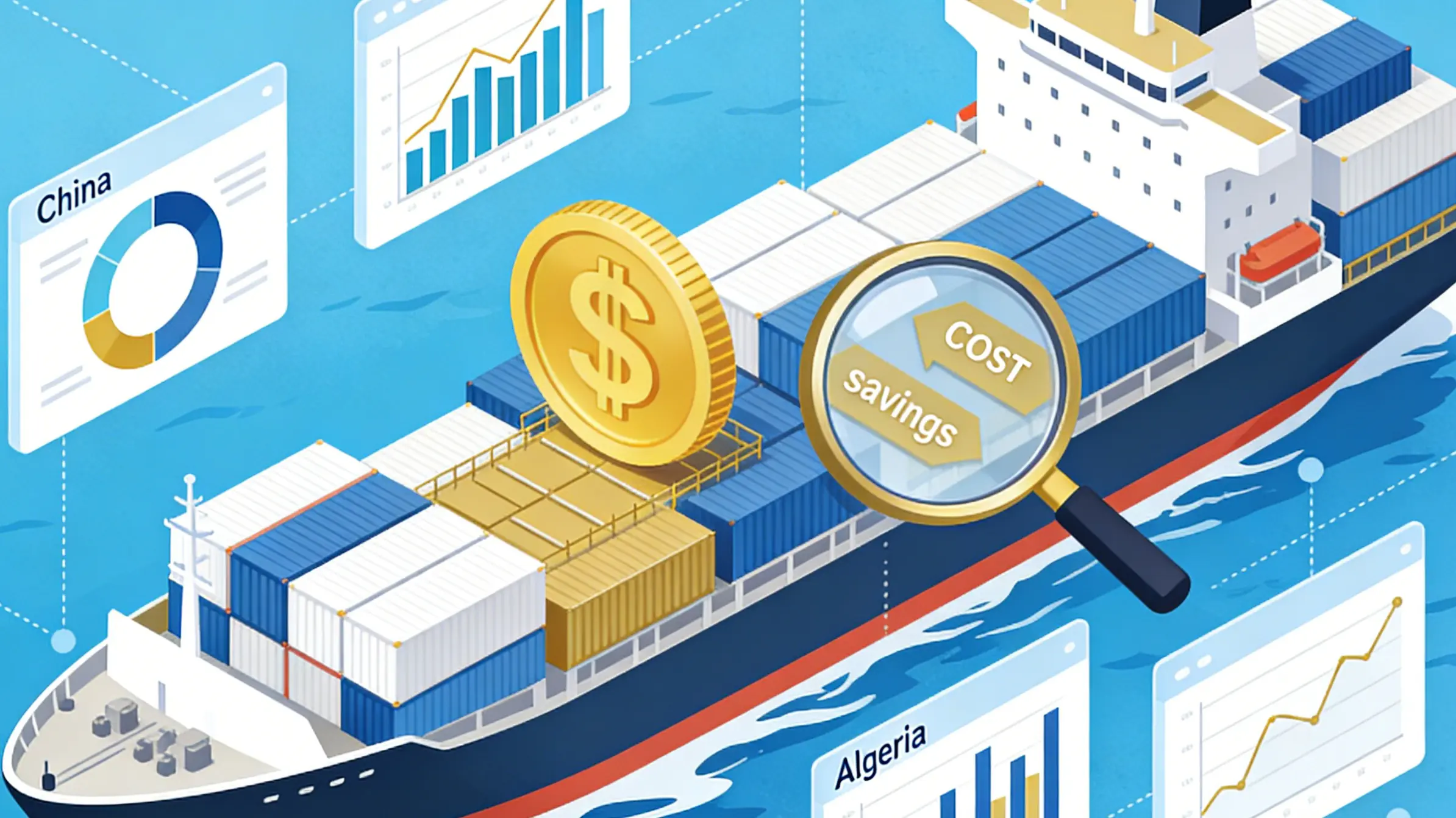
You can significantly reduce your ocean freight costs to Kenya by consolidating LCL shipments, negotiating FOB incoterms with Chinese suppliers, and optimizing product packaging to minimize cubic volume (CBM).
At Efanda Logistics, we routinely audit our clients’ supply chains to uncover these hidden savings.
Consolidate Shipments (LCL) for SME Importers
If you are importing 5 CBM of electronics and 8 CBM of clothing from different suppliers, do not ship them as separate LCL consignments. Utilize a forwarder’s consolidation warehouse in Guangzhou or Yiwu to combine these orders into a single shipment or a dedicated 20ft FCL. This strategy dilutes the fixed destination charges (like document fees and local handling) across a larger volume of goods, drastically lowering your per-unit cost.
Choose the Right Incoterms (FOB vs. CIF)
Many Kenyan importers make the mistake of buying goods on CIF (Cost, Insurance, and Freight) terms, letting the Chinese factory arrange the shipping. While it seems easier, the factory will inevitably mark up the freight cost. By purchasing on FOB (Free On Board) terms, you take control of the ocean freight. You can hire your own forwarder to negotiate better rates directly with carriers and gain full transparency over the process.
Optimize Packaging to Minimize CBM (Cubic Meters)
In ocean shipping, volume is money. Work with your suppliers to eliminate dead space in packaging. Remove excessive styrofoam, use custom-fit corrugated boxes, and avoid palletizing goods at the factory if they can be floor-loaded securely into the container. A reduction of just 2 CBM can save you hundreds of dollars on a single LCL shipment to Mombasa.
Why Choose Efanda Logistics for China-Kenya Trade?
Navigating the complexities of KEBS compliance and Mombasa port operations requires a partner with deep expertise in the East African trade corridor.
Direct Carrier Contracts & Guaranteed Space to East Africa
Efanda Logistics maintains direct service contracts with major shipping lines operating the Asia-East Africa routes, including Maersk, MSC, and PIL. This allows us to secure guaranteed container space and highly competitive rates even during peak seasons when other forwarders are rolling cargo.
End-to-End Customs Clearance Support in Mombasa
We don’t just move boxes; we ensure compliance. Our dedicated customs teams assist you with the entire PVoC process in China, ensuring your CoC is secured before sailing. Upon arrival in Kenya, our local brokerage experts handle customs clearance and KRA documentation, ICD transfers via the SGR, and seamless final delivery to your warehouse in Nairobi.
Frequently Asked Questions (FAQ)
Q1: Do I need a CoC for all ocean imports to Kenya?
Yes, almost all commercial goods imported into Kenya fall under the KEBS PVoC program and require a Certificate of Conformity (CoC) issued in the country of origin (China) prior to shipment. Very few exceptions exist, mainly for raw materials used in specific manufacturing processes.
Q2: What is the cheapest way to ship from China to Kenya?
sea freight is definitively the cheapest method. For shipments under 15 CBM, LCL (consolidation) is the most cost-effective. For shipments over 15 CBM, booking a dedicated 20ft FCL container offers the lowest cost per unit.
Q3: Can I ship door-to-door from China to Nairobi?
Yes. Through DDP (Delivered Duty Paid) or door to door shipping services, your freight forwarder handles the ocean freight, Mombasa port clearance, KRA duties, SGR inland transport, and final trucking directly to your designated address in Nairobi.
Q4: What are the restricted or prohibited items for Kenya?
Kenya strictly prohibits the import of counterfeit goods, certain agricultural chemicals, used tires for commercial vehicles, and specific types of plastic bags (due to environmental bans). All goods must meet KEBS quality standards.
Q5: How does the SGR affect transit times from Mombasa to Nairobi?
The Standard Gauge Railway (SGR) has revolutionized inland transport. What used to take days via congested highways now takes roughly 10 to 12 hours via freight train. It allows containers to bypass Mombasa port bottlenecks and clear customs directly at the Nairobi Inland Container Depot (ICD).
Conclusion
Mastering Ocean Freight Shipping from China to Kenya requires more than just finding a cheap freight rate; it demands strict adherence to KEBS regulations and strategic routing via the SGR. By understanding the true breakdown of FCL and LCL costs, securing your CoC before departure, and optimizing your incoterms, you can build a resilient and highly profitable supply chain.
Don’t let customs penalties and port demurrage erode your margins. Contact Efanda Logistics today for transparent ocean freight quotes, expert PVoC guidance, and seamless door-to-door delivery from China to Kenya.