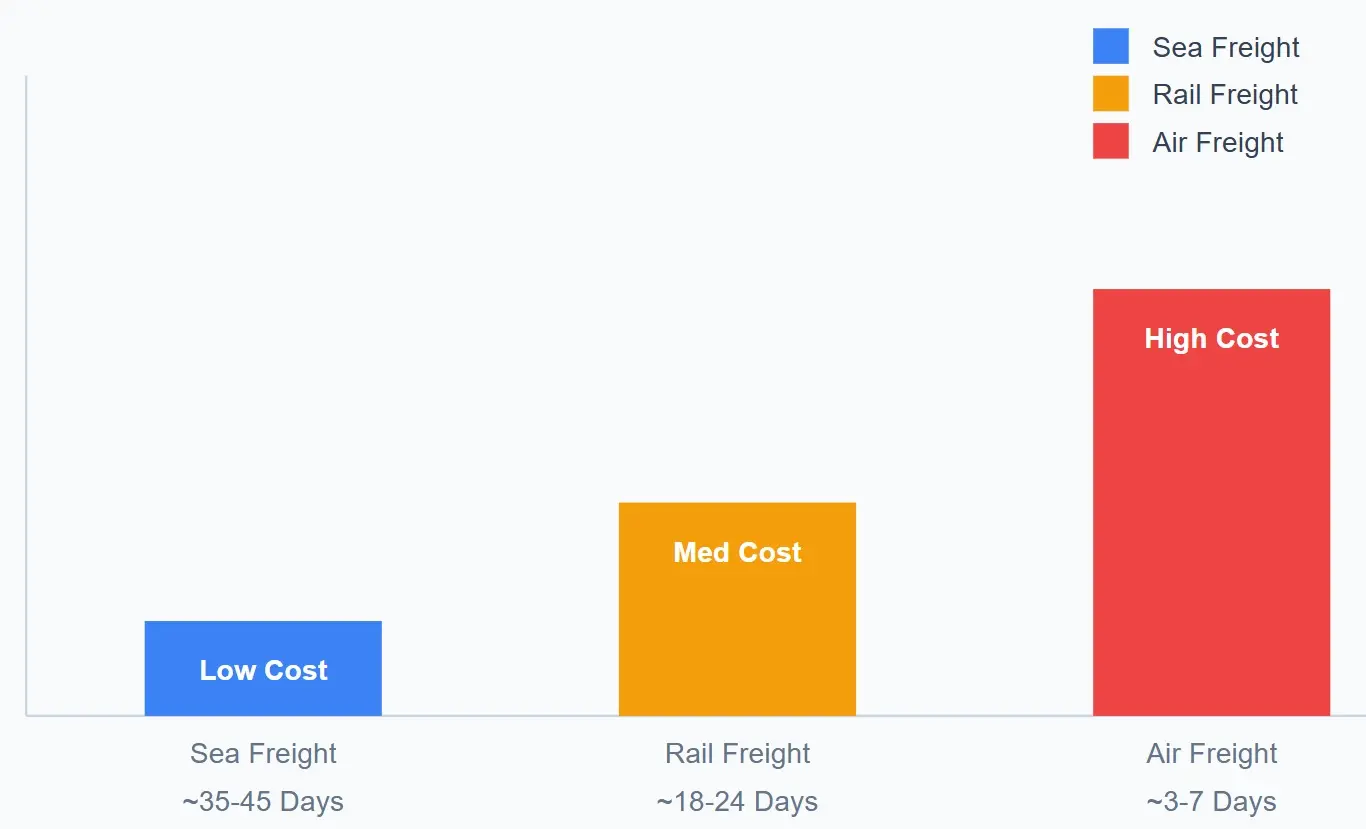
In early 2026, shipping costs from China to the UK have stabilized but remain significantly higher than pre-pandemic levels due to ongoing global supply chain adjustments. Sea Freight remains the most economical option, averaging $800 – $1,500 for a 20ft container (rates vary weekly) or roughly $150 – $250 per CBM for LCL. Rail Freight (China-Europe Railway Express) offers a “middle ground” at approximately $3.50 – $4.50 per kg, with a transit time of 18-24 days. Air Freight is the fastest (3-5 days) but most expensive, costing between $6.00 – $12.00 per kg depending on urgency. For small to medium enterprises (SMEs), DDP (Delivered Duty Paid) shipping is often the best choice, providing an all-inclusive price that covers customs duties and VAT.
As a seasoned freight forwarder with over a decade of experience managing China-UK trade lanes, I have seen firsthand how the post-Brexit customs landscape and the 2026 fuel surcharge trends are impacting profit margins for UK importers. It is no longer enough to just look at the “port-to-port” freight rate; you must calculate the total Landed Cost to ensure profitability.
This guide breaks down every cost component—from ex-factory charges in Shenzhen to final delivery in London—helping you make informed logistics decisions for your business.
Efanda Operational Insight: In Q1 2026, we are seeing a surge in demand for Rail Freight as a reliable alternative to Sea Freight, which still faces occasional delays due to route adjustments around the Cape of Good Hope. Importers who switched to rail in January saved an average of 14 days in transit time compared to sea freight.
Shipping Modes Breakdown: Rates & Transit Times
Choosing the right shipping mode is a trade-off between speed, cost, and reliability. Below is a detailed comparison table to help you decide.
| Shipping Mode | Estimated Cost (2026 Avg) | Transit Time | Best For | Risk Factor |
|---|---|---|---|---|
| Sea Freight (FCL) | $1,200 – $2,500 / 20ft | 35 – 45 Days | Large bulk shipments (>15 CBM) | Port congestion, weather delays |
| Sea Freight (LCL) | $150 – $280 / CBM | 35 – 45 Days | Small shipments (1 – 15 CBM) | Consolidation delays |
| Rail Freight | $3.50 – $5.00 / kg | 18 – 24 Days | Medium value goods, urgent stock | Geopolitical disruptions |
| Air Freight | $6.00 – $12.00 / kg | 3 – 7 Days | High value, time-sensitive goods | Flight cancellations, high cost |
| Express (DHL/UPS) | $8.00 – $15.00 / kg | 2 – 4 Days | Samples, documents, very small parcels | Strict customs limits |
| DDP Shipping | All-inclusive (Quote based) | 12 – 25 Days | E-commerce (Amazon FBA), SMEs | Carrier reliability |
Sea Freight to UK (Felixstowe, Southampton, London Gateway)
Sea freight is the backbone of international trade. For UK imports, the primary ports of entry are Felixstowe, Southampton, and London Gateway.
- FCL (Full Container Load): If you are shipping more than 15 CBM (cubic meters), booking a full 20ft or 40ft container is usually more cost-effective. In 2026, while spot rates fluctuate, locking in a rate with a forwarder like Efanda can protect you from sudden GRI (General Rate Increases).
- LCL (Less than Container Load): For smaller shipments, we consolidate your cargo with others in a shared container. You only pay for the space you use.
- Note: Be aware of “destination charges” with LCL. Some forwarders offer very low ocean freight (e.g., $10/CBM) but charge exorbitant fees (up to £300/CBM) at the UK port. At Efanda, we provide transparent “All-In” quotes that include these costs upfront.
- Transit Time: Due to the continued preference for the Cape of Good Hope route to avoid Red Sea instability, typical transit times from China (Shanghai/Ningbo/Shenzhen) to the UK are currently hovering around 35-45 days.
Efanda Case Log: Avoiding Detention Fees:
A client importing furniture to Birmingham recently faced a 7-day delay in picking up their container at Felixstowe due to a haulier shortage. Because they used our “Premier Service” with 14 days of free detention time (compared to the standard 7 days), they avoided over £800 in detention charges. Lesson: Always negotiate free time before booking.
Rail Freight: The “Iron Silk Road” Alternative
The China-Europe Railway Express has become a vital link for UK importers. Departing from hubs like Yiwu, Chongqing, and Chengdu, trains travel across Eurasia to reach European hubs (like Duisburg or Hamburg) before crossing into the UK via the Channel Tunnel or short-sea ferry.
- Cost/Speed Sweet Spot: It is significantly cheaper than air freight (often 50-70% less) and faster than sea freight (saving 15-20 days).
- Stability: Rail is less affected by port congestion and weather conditions, making it a reliable option for just-in-time inventory.
- Best For: Electronics, fashion retail, and seasonal goods that miss the sea freight window but can’t afford air freight.
Real World Example: A client importing consumer electronics to Manchester switched from Air to Rail in January 2026. They increased their lead time by 14 days but reduced their shipping spend by 65%, significantly boosting their Q1 profit margins.
Air Freight vs. Express
When speed is non-negotiable, air freight is the solution.
- Standard Air Freight: This is airport-to-airport service (e.g., SZX to LHR). It is ideal for shipments over 100kg. You will need to arrange customs clearance and final haulage in the UK (or let Efanda handle it).
- Express (Courier): Carriers like DHL, UPS, and FedEx offer door-to-door service. This is best for samples or shipments under 21kg. The “per kg” rate is higher, but it includes clearance (excluding duties/taxes) and delivery.
DDP Shipping (Delivered Duty Paid)
For many Amazon FBA sellers and Shopify store owners, DDP is the ultimate convenience.
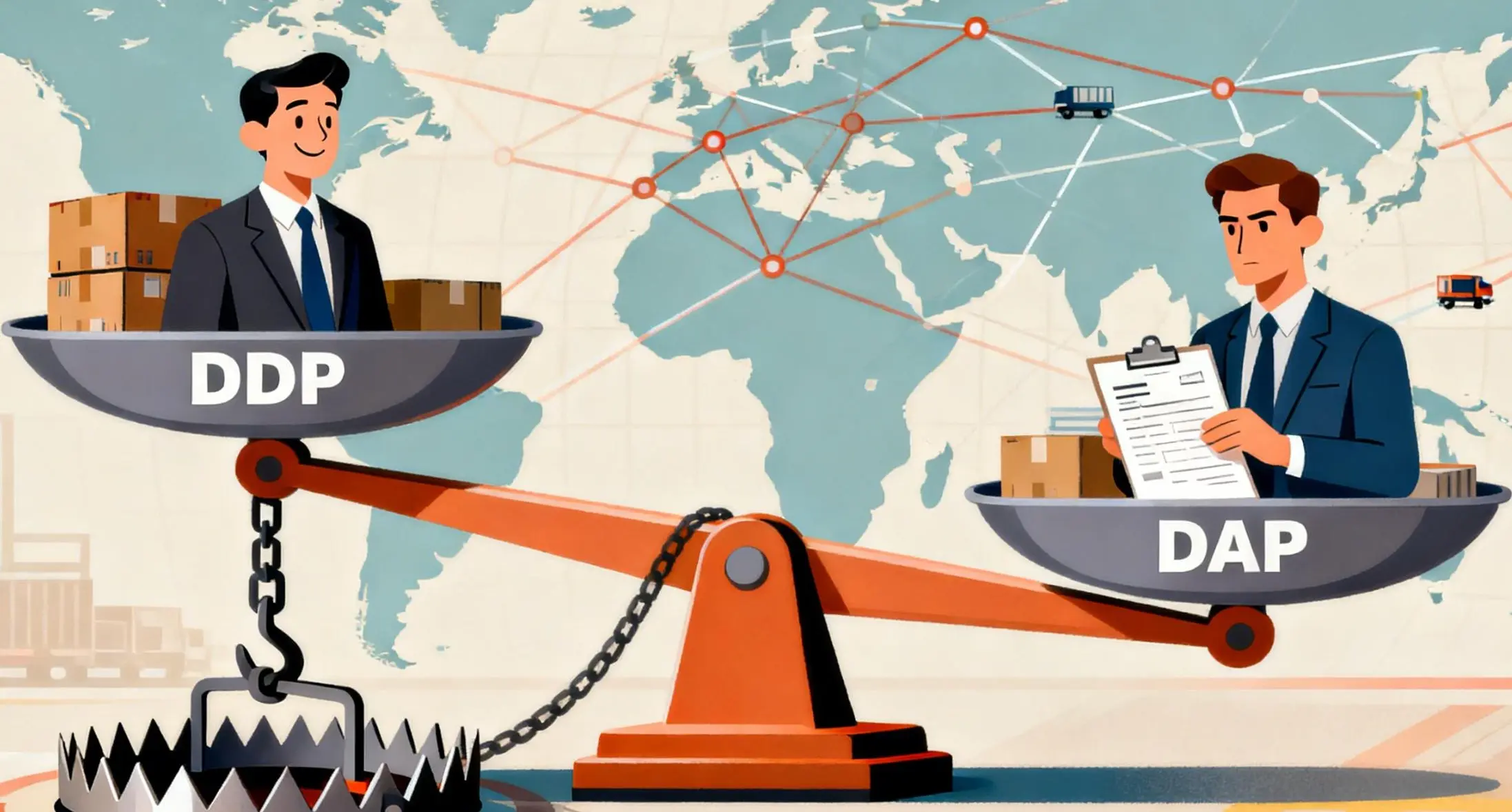
- The “All-In” Solution: The price you are quoted includes the goods’ pick-up in China, export clearance, freight (Sea/Rail/Air), UK import duty, UK import VAT, and final delivery to your door or Amazon warehouse.
- Why it Matters: It removes the risk of unexpected tax bills upon arrival. You know exactly what your landed cost is before the goods leave China.
- Efanda Advantage: We have specialized shipping from China to UK DDP routes that are optimized for speed and compliance.
Key Factors Influencing Shipping Costs from China to UK
Understanding these variables will help you negotiate better rates and plan your budget.
Weight & Volume (CBM)
Freight rates are calculated based on either Actual Weight or Volumetric Weight, whichever is higher.
- Sea Freight: Mostly based on Volume (CBM). 1 CBM = 1000 kg (standard ratio).
- Air/Express: Uses a volumetric divisor (usually 5000 or 6000).
- Formula: (Length x Width x Height in cm) / 6000.
- Tip: If you are shipping light but bulky items (like pillows), you will pay for the volume, not the weight.
Seasonal Fluctuations
Shipping costs are not static. They follow a seasonal pattern:
- Pre-CNY (Chinese New Year): January/February. Rates spike as factories rush to ship before closing.
- Peak Season (Oct – Dec): The holiday shopping rush. Expect PSS (Peak Season Surcharges) and tight space.
- Slack Season (Mar – Apr): Often the best time to negotiate lower rates.
UK Import Duties & Taxes (Post-Brexit Rules)
Since leaving the EU, the UK has its own customs regime. Ignoring this can lead to expensive fines.
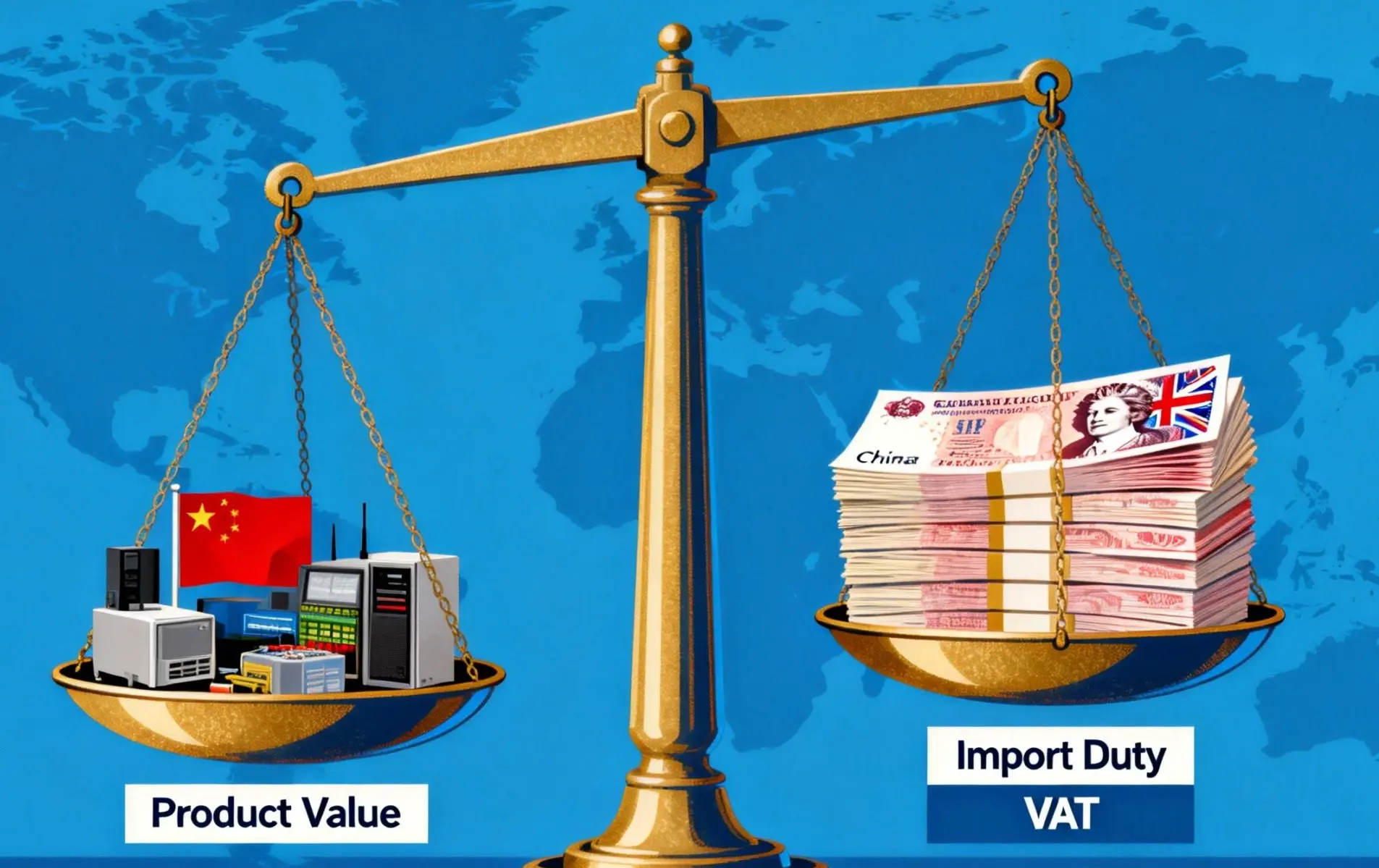
- VAT (Value Added Tax): The standard rate is 20%. This is calculated on the (Value of Goods + Shipping Cost + Duty).
- PVA (Postponed VAT Accounting): A major cash flow benefit. Instead of paying import VAT upfront at the border, registered businesses can account for it on their VAT return. Pro Tip: To use PVA, you must select “Method of Payment G” in Box 47e of your customs declaration. Ask your accountant about this!
- Duty: This depends entirely on the HS Code of your product. Some goods are 0%, others (like textiles or bicycles) can be 12% or higher.
- Resource: Check the UK Trade Tariff for official rates.
- EORI Number: You must have a GB EORI number (starting with “GB”) to import into Great Britain. Do not try to use an EU EORI number; it will not work for UK imports.
- CDS (Customs Declaration Service): The old CHIEF system is gone. All imports are now declared via CDS. Ensure your forwarder (Efanda) is fully CDS-compliant. We require specific data elements (like Data Element 1/10 for Procedure Codes) to process your clearance smoothly.
Step-by-Step Guide: The Shipping Process from China to UK
To help you visualize the journey, here is the standard workflow we follow at Efanda:
- Booking & Pickup: You provide the supplier’s contact details. We contact them to arrange pickup (EXW) or coordinate delivery to our warehouse (FOB).
- Export Clearance (China): We prepare the commercial invoice and packing list, declaring the goods to Chinese Customs. Note: Strict checks on batteries and branded goods in 2026.
- International Transit: Your goods are loaded onto the vessel, train, or plane. You receive a Bill of Lading (B/L) or Air Waybill (AWB).
- Arrival & Discharge (UK): Upon arrival at Felixstowe or Heathrow, the carrier unloads the cargo.
- Import Clearance (CDS): We submit the import declaration to HMRC. You pay any applicable Duty/VAT (unless using DDP).
- Final Delivery: Once cleared, we arrange a haulier to deliver the goods to your warehouse or Amazon FBA center.
How to Reduce Your Shipping Costs
In 2026, efficiency is key. Here are three proven strategies to cut costs.
Consolidate Shipments
If you buy from multiple suppliers (e.g., one in Guangzhou, one in Yiwu), shipping them separately is wasteful.
- Solution: Use Efanda’s warehouse services to collect goods from different suppliers. We combine them into a single shipment. This saves on minimum freight charges, documentation fees, and destination handling costs.
Optimize Packaging
Carriers love “dead air”—empty space inside boxes that you pay to ship.
- Action: Ask your supplier to optimize packaging dimensions. Vacuum seal soft goods. Nest items where possible. Reducing the volume by just 10% can save hundreds of dollars on a large air shipment.
Choose the Right Incoterm
- FOB (Free on Board): We highly recommend this. Your supplier pays local charges in China, and you control the freight from the Chinese port. You get transparency and control.
- EXW (Ex Works): You pay for everything from the factory door. This can be complex and often includes hidden local pickup fees.
- CIF (Cost, Insurance and Freight): Avoid this if possible. The supplier controls the shipping, often using the cheapest carrier with the highest hidden destination fees. It looks cheap upfront but costs more in the end.
Common Pitfalls for UK Importers in 2026
Avoid these costly mistakes that we frequently see new importers make.
- Ignoring Packaging Waste Regulations (EPR): The UK has strict Extended Producer Responsibility (EPR) laws. If you import packaged goods, you may be liable for waste management fees. Check the GOV.UK EPR guidance.
- Undervaluing Goods: HMRC is cracking down on undervalued imports. Declaring a lower value to save on Duty/VAT is illegal and can lead to goods being seized, heavy fines, and your EORI number being blacklisted. Always declare the true transaction value.
- Missing Documents: Ensure you have a Commercial Invoice, Packing List, and Bill of Lading. For certain goods (like toys or electronics), you may also need a Certificate of Conformity (UKCA mark).
Why Choose Efanda Logistics for UK Shipments?
Shipping to the UK requires more than just booking a slot on a boat. It requires deep knowledge of UK customs, VAT rules, and local logistics.
- UK Focus: We handle hundreds of containers to the UK monthly. We know the ins and outs of Felixstowe and Southampton.
- Comprehensive Services: From door to door shipping to specialized Amazon FBA prep services, we handle it all.
- Customs Expertise: Our team is fully trained on the UK’s CDS system, ensuring your customs clearance is smooth and compliant.
- Insurance: We offer comprehensive cargo insurance services to protect your investment against total loss or damage.
Ready to ship? Contact Efanda today for a transparent, no-obligation quote.
FAQ: Shipping from China to UK
Q1: How much does it cost to ship a 40ft container to the UK in 2026?
A: Rates fluctuate, but in early 2026, you can expect to pay between $2,200 and $3,500 depending on the carrier and route. Always get a valid quote before booking.
Q2: Is Rail Freight cheaper than Sea Freight?
A: No, Sea Freight is generally cheaper. Rail Freight is a “middle” option—cheaper than Air, but more expensive than Sea. It is chosen for its speed (approx. 20 days vs 40 days for sea).
Q3: Do I need to pay VAT on imports from China to the UK?
A: Yes. Import VAT is charged at 20% on the total value (CIF value + Duty). If you are VAT registered, you can use Postponed VAT Accounting (PVA) to avoid paying it upfront.
Q4: What is the cheapest way to ship 100kg to London?
A: For 100kg, Sea Freight LCL is usually the cheapest, but the minimum charges might make it comparable to Rail Freight. Air Freight would be significantly more expensive. We often recommend LCL or Rail Groupage for this weight.
Q5: How long does shipping take from Shenzhen to Felixstowe?
A: Via Sea Freight, it typically takes 30-40 days. If the vessel routes via the Cape of Good Hope, add another 7-10 days.
Q6: Can you handle shipping from other countries to the UK?
A: While our specialty is China, we have a global network. However, our core routes like shipping from China to USA and shipping from China to Canada leverage the same high standards of service.
Q7: Do you offer shipping to other European countries?
A: Yes! We have strong lanes for shipping from China to Netherlands, shipping from China to Germany, shipping from China to France, and shipping from China to Italy, among others.
Disclaimer: Shipping rates and transit times are estimates based on market conditions in February 2026 and are subject to change. Customs regulations (like UK VAT and Duty) are complex; always consult with a professional. Efanda Logistics is not a law firm; this guide is for informational purposes only.