Are you tired of confusing customs invoices and unexpected fees eating into your profit margins? You are not alone. In our 10+ years of experience managing shipments for UK importers, we have seen hundreds of businesses underestimate their “Landed Cost” by focusing solely on the supplier’s price tag.
As we enter 2026, the rules for Importing from China to UK have become stricter. With the UK government reviewing the £135 threshold and introducing new compliance systems like CDS, ignorance is no longer just expensive—it is a compliance risk. This guide will walk you through every penny you need to pay, from HS Codes to the final VAT bill, ensuring your business stays profitable and compliant.
1. Introduction: The Real Cost of “Cheap” Imports
Many first-time importers fall into a common trap: they see a product on Alibaba for $5.00, see it selling on Amazon UK for £15.00, and think, “I’ve tripled my money!”
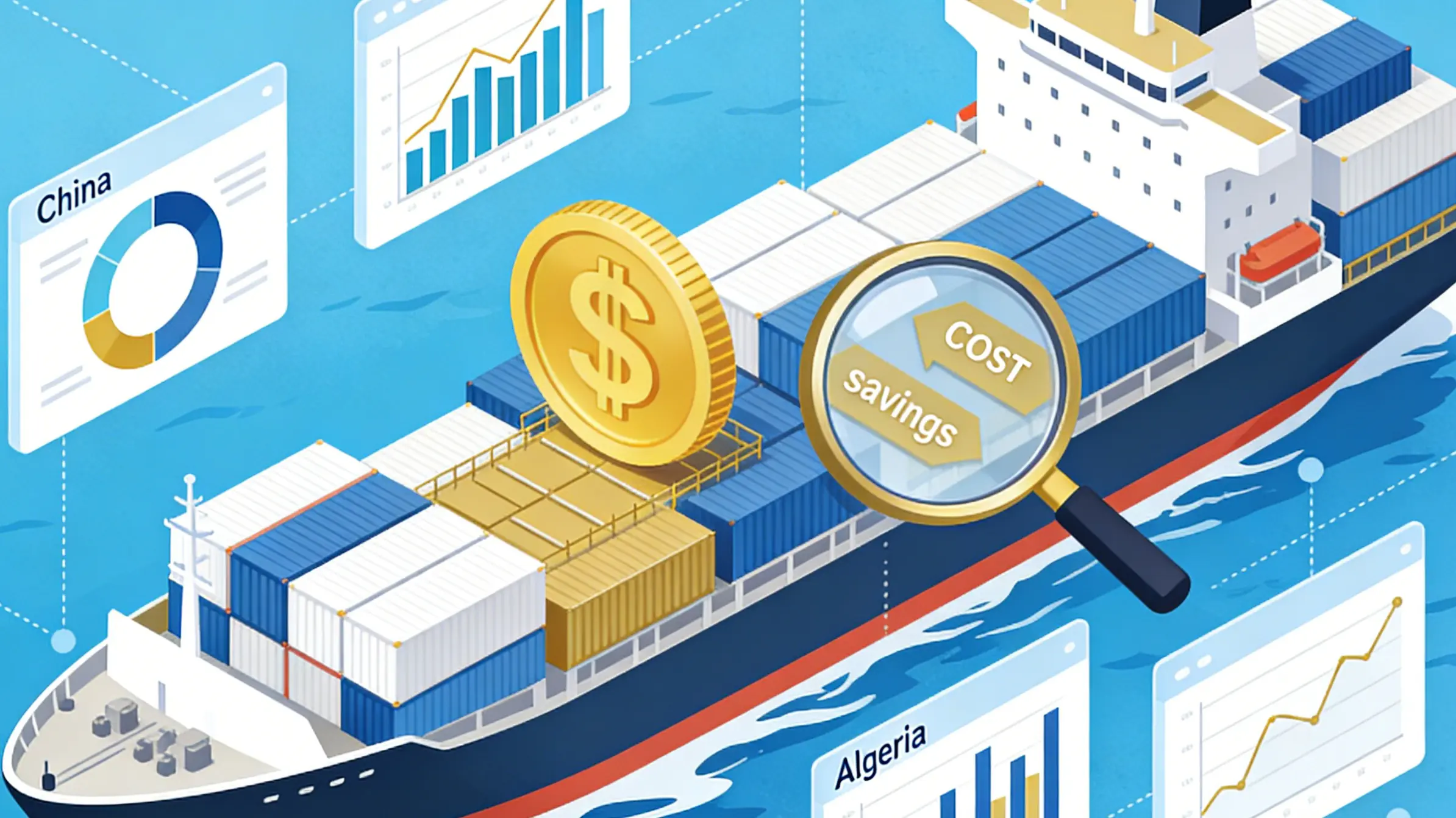
The reality? That $5.00 is just the starting point. By the time your goods arrive at your warehouse in Manchester or London, the cost could easily double. The “Supplier Price” typically accounts for only 60-70% of your total expenditure. The rest disappears into a black hole of Import Duty, Import VAT, shipping fees, and hidden customs charges.
In 2026, two major shifts are reshaping the landscape:
- Stricter Enforcement: The transition to the Customs Declaration Service (CDS) means zero tolerance for incorrect data.
- Threshold Scrutiny: The “Low Value Consignment Relief” (£135 rule) is under intense review to prevent cheap imports from “flooding” the market.
At Efanda, we believe in radical transparency. We don’t just ship boxes; we help you calculate the true cost of your supply chain before you spend a single Yuan.
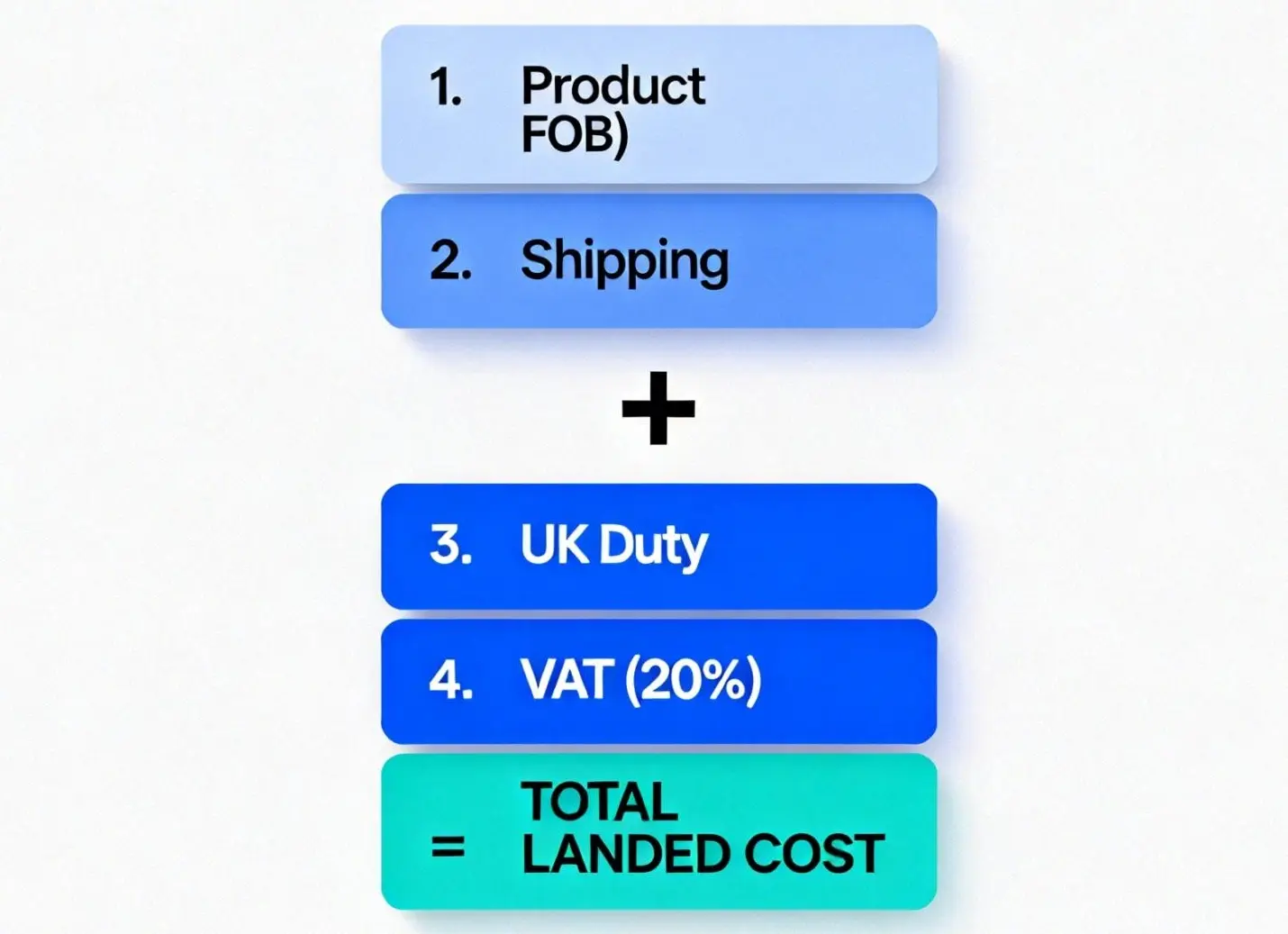
2. The 4 Pillars of Landed Cost: Formula Breakdown
To know if your product is viable, you must calculate the Total Landed Cost. This is the final cost of a product once it has arrived at your door, duty paid.
The Formula:
Landed Cost = Product Cost (FOB) + Shipping Costs + Import Duty + Import VAT + Hidden Fees
Let’s break down the pillars:
- Product Cost (FOB): The price you pay the supplier to get goods to the Chinese port (Free on Board).
- Shipping Costs: The cost of Sea Freight, Air Freight, or Rail freight, plus cargo insurance.
- UK Import Duty: A tax based on the type of product (HS Code).
- Import VAT: A 20% tax on the total value of the shipment.
Pro Tip: Never calculate profit based on the FOB price. Always use the Landed Cost.
3. Step 1: Calculating UK Import Duty (HS Codes & Tariffs)
Import Duty is the first tax layer. It is not a flat rate; it depends entirely on what you are shipping.
What is an HS Code?
The Harmonized System (HS) Code (or Commodity Code in the UK) is a 10-digit number that classifies your product. It tells customs exactly what the item is and what duty rate applies.
Example:
- Cotton T-Shirts: HS Code
6109 10 00 10→ 12% Duty - Bluetooth Headphones: HS Code
8518 30 00 90→ 0% Duty - Ceramic Mugs: HS Code
6912 00 23 10→ Anti-Dumping Duty (can be >50%)
How to Find Your Rate
You can check the official UK Global Tariff Tool or use the Trade Tariff Service.
- Search for your product (e.g., “Led Lights”).
- Find the correct code.
- Look at the “Third Country Duty” rate (this applies to China).
Warning: Anti-Dumping Duty
This is the “silent killer” of import businesses. The UK imposes massive extra taxes on specific Chinese goods to protect local industries.
- Electric Bikes: Up to 62.1%
- Ceramics/Tableware: 17.9% – 58.8%
- Heavy Steel: Variable rates
Our Advice: Before you order anything, ask Efanda to verify the HS Code. We have seen clients order e-bikes thinking the duty was 6%, only to be hit with a 62% bill upon arrival.
Case Study: The “Safety Shoe” Mistake
In 2025, a UK client imported 5,000 pairs of “hiking boots” from China. They used the HS code for generic sports footwear (16.9% duty).
The Fix: Our team noticed the boots had reinforced steel toes. We reclassified them as “Safety Footwear” (5% duty).
The Result: The client saved over £12,000 in import duty on a single container. Details matter.
4. Step 2: Understanding Import VAT (Value Added Tax)
Import VAT is the biggest tax cost for most importers. In the UK, the standard rate is 20%.
The “Tax on Tax” Rule
Many people assume VAT is just 20% of the product price. Wrong.
VAT is calculated on the Customs Value, which includes:
- The Product Value
- The Shipping Cost
- The Insurance Cost
- The Import Duty amount
Formula:
Import VAT = 20% x (Product Value + Shipping + Duty)
Postponed VAT Accounting (PVA)
Introduced post-Brexit, this is a massive cash-flow benefit for VAT-registered businesses.
- Old Way: You pay the 20% VAT at the port to release goods, then claim it back 3 months later. This ties up your cash.
- PVA Way: You don’t pay VAT at the border. Instead, you declare it on your next VAT return as both “input” and “output” tax (see Check if you can account for import VAT on your VAT Return). It cancels out legally, meaning zero cash leaves your bank account at the time of import.
Requirement: You must provide your EORI number and VAT number to your freight forwarder (like Efanda) before customs clearance to use PVA.
5. Step 3: Shipping & Logistics Fees (Sea, Air, Rail)
Shipping isn’t just one fee. It’s a collection of charges that varies by mode.
2026 Estimated Shipping Costs (China to UK)
| Mode | Typical Cost | Transit Time | Best For |
|---|---|---|---|
| Sea Freight (LCL) | $80 – $150 / cbm | 35-45 Days | Small shipments (1-15 cbm) |
| Sea Freight (FCL) | $1,500 – $3,000 / 20ft | 30-40 Days | Bulk orders (>15 cbm) |
| Air Freight | $4.50 – $8.00 / kg | 5-8 Days | Urgent / High-value goods |
| Rail Freight | $120 – $180 / cbm | 18-24 Days | Middle ground (Faster than Sea, cheaper than Air) |
Note: Rates fluctuate weekly. Contact Efanda for a live quote.
Hidden Logistics Fees
- Terminal Handling Charges (THC): Fees charged by the port (approx. £150-£200 for FCL).
- Documentation Fee: £30-£50 for processing the Bill of Lading.
- Courier vs Freight Forwarder:
- Couriers (DHL/FedEx) charge “all-in” rates per kg but are expensive for heavy loads (>100kg).
- Freight Forwarders (Efanda) offer much lower rates for pallets/containers but have separate line items for THC/Duty.
6. The £135 Threshold: Low Value Consignment Relief Explained
This rule is critical for e-commerce sellers (dropshippers) and small sample orders.
The Rule
If the total value of goods in a consignment is £135 or less:
- Import Duty: £0 (Exempt).
- Import VAT: Not charged at the border. Instead, the seller (you or the marketplace) must charge UK VAT at the point of sale (e.g., on your Shopify checkout).
2026 Update: The “Flooding” Review
The UK government is currently reviewing this threshold because foreign sellers are splitting large orders into small packages to evade duty.
- Risk: If you deliberately split a £500 order into four £125 packages, HMRC may flag this as tax evasion.
- Strategy: Don’t rely on “packet splitting” as a long-term business model. Build your margins assuming you will eventually pay full duty.
7. Hidden Costs That Eat Your Margin
Beyond the “Big 3” (Product, Duty, VAT), these smaller fees can kill your profit:
- Customs Clearance Fee:
- Brokers charge £40-£60 to file your entry.
- Efanda includes this in our transparent quotes.
- Duty Deferment Fee:
- If the forwarder pays duty on your behalf, they often charge a 2-5% “advancement fee”.
- Tip: Get your own Duty Deferment Account (DDA) with HMRC to pay directly and avoid this fee.
- Port Storage & Demurrage:
- If your paperwork is missing (e.g., incorrect EORI), customs holds your container.
- Cost: After ~5 free days, ports charge £50-£100 per day.
- Bank Fees:
- Paying suppliers in USD via high-street banks can cost you 3-4% in exchange rates. Use specialized FX brokers.
8. DDP vs DAP: Who Pays the Taxes?
When negotiating with your Chinese supplier, you must choose an Incoterm.
DDP (Delivered Duty Paid)
- Supplier’s Promise: “We handle everything. You just receive the goods.”
- The Trap: The supplier pays the duty/VAT. Since they are the importer, you cannot reclaim the VAT. You lose 20% of your cost immediately.
- Verdict: Avoid DDP if you are VAT-registered.
DAP (Delivered at Place)
- How it works: Supplier ships to your door, but you are responsible for customs clearance and taxes.
- The Benefit: You pay the VAT directly to HMRC (or via PVA), so you get the C79 certificate to reclaim it.
- Efanda Recommendation: For any serious business, DAP (or FOB/EXW) is the only way to maintain control and tax efficiency.
9. How to Pay Your Duties & Taxes
You have three main options:
- Pay via Freight Forwarder (Efanda):
- We calculate the total, you pay us, and we pay HMRC. Simple, but may incur a small admin fee.
- Pay via Duty Deferment Account (DDA):
- Link your bank to HMRC. Taxes are automatically debited once a month.
- Best for high-volume importers.
- Pay via CDS Cash Account:
- Top up your HMRC cash account online (like a prepaid wallet).
- Money is deducted instantly upon clearance. Great for avoiding admin fees.
10. 3 Strategies to Legally Reduce Your Import Costs
You don’t have to evade taxes to save money. Here is how pros do it:
- Accurate HS Code Engineering:
- Sometimes a product fits two descriptions. A “Sports Shoe” might be 16.9% duty, while a “Safety Shoe” is 5%. If your product has safety features, use the correct, lower-rate code. Always consult an expert.
- Inward Processing Relief (IPR):
- If you import goods to repair or process and then re-export them (not sell in UK), you can pay 0% Duty and VAT using Inward Processing Relief.
- Consolidate Shipments:
- Importing 2 cubic meters (LCL) has high fixed port fees.
- Wait until you have 5-10 cbm. The “per unit” shipping cost drops dramatically, diluting the impact of fixed clearance fees.
11. Why Choose Efanda for Transparent Pricing?
At Efanda Logistics, we hate “surprise invoices” as much as you do.
- Detailed Breakdowns: Our quotes separate Freight, THC, Duty (Estimate), and Clearance. No lumping fees together.
- Compliance Check: We review your HS Codes before shipping to prevent Anti-Dumping surprises.
- Tax Efficiency: We support PVA and DAP shipments to ensure you can reclaim your VAT.
- One-Stop Solution: From door to door shipping to final delivery, we handle it all.
Ready to calculate your exact landed cost? Contact Efanda today for a free, itemized quote.
12. FAQ: Common Questions on China-UK Import Taxes
Q: Do I pay duty on the shipping cost?
A: Yes. Import Duty is calculated on the CIF value (Cost of goods + Insurance + Freight).
Q: What if my goods are samples?
A: Genuine commercial samples of negligible value (usually <£15) can be imported duty-free. They must be mutilated (e.g., a shoe with a hole in the sole) so they cannot be sold.
Q: Can I import without an EORI number?
A: No. You must have an EORI number (starting with GB) to move goods into the UK commercially. It takes 5 minutes to apply on GOV.UK.
Q: Does Alibaba include import tax?
A: Generally, no. Most Alibaba prices are EXW or FOB. Even if they say “DDP”, be careful—they often use illegal clearance methods that leave you with no tax reclamation proof.