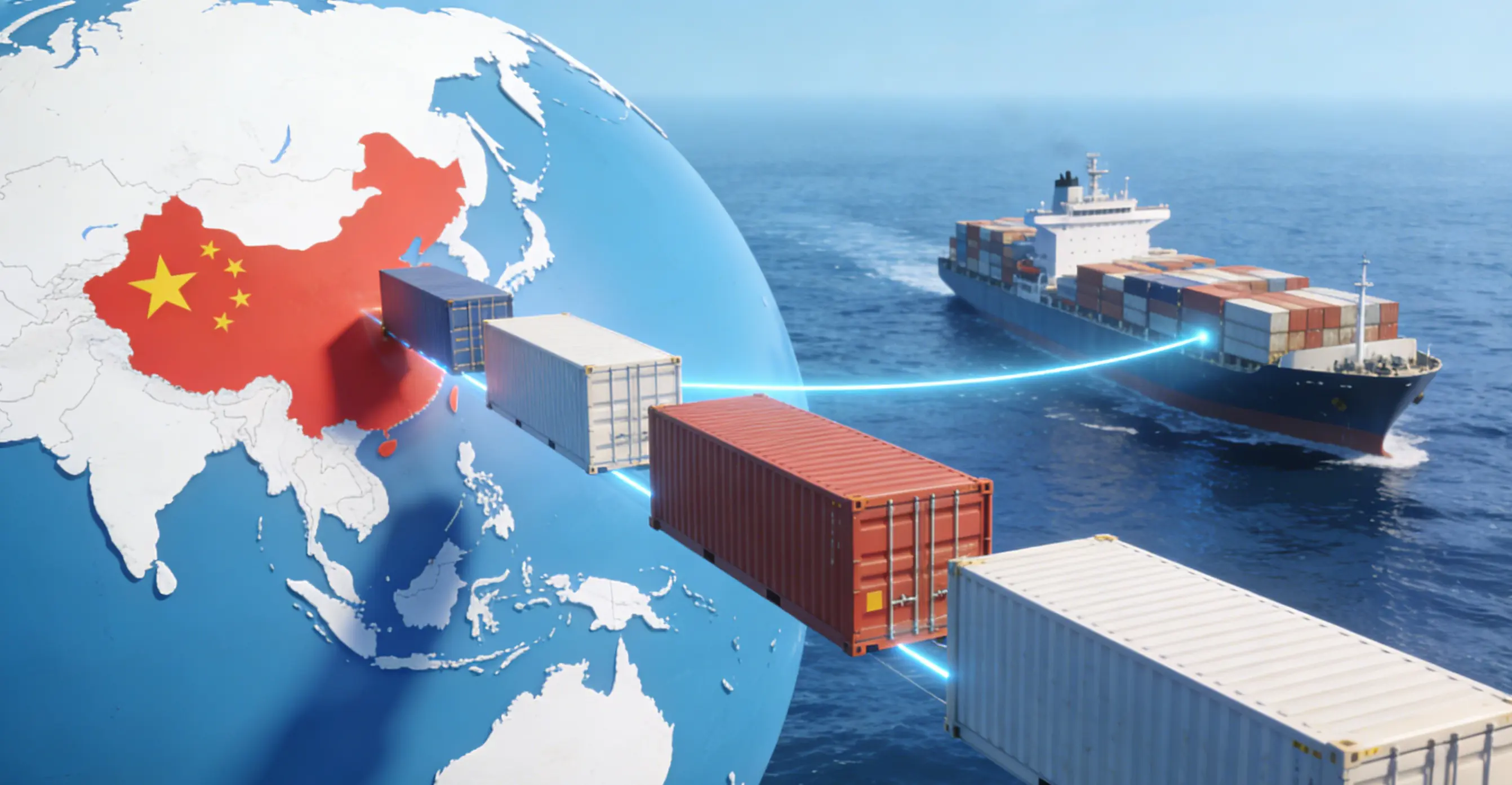
On February 1, 2026, the global trade landscape shifted overnight. In a move that caught many supply chain managers by surprise, President Trump declared “national emergencies” regarding fentanyl and border security, invoking the International Emergency Economic Powers Act (IEEPA) to impose sweeping new tariffs.
If you are an importer bringing goods into the United States, your landed costs have likely just increased significantly. The new administration has moved beyond threats to implementation, imposing a 25% tariff on almost all goods from Mexico and Canada, and an additional 10% tariff on goods from China.
This isn’t just a political headline; it’s a logistical reality that affects your bottom line immediately. At Efanda Logistics, we have spent the last 48 hours analyzing the executive orders to help you navigate this chaos. This guide breaks down exactly what you need to pay, how the new calculations work, and how to survive this new trade war era.
1. The New Tariff Structure: What You Need to Pay
Understanding the new cost structure is critical. These are not just “potential” costs; they are active duties payable upon entry.
1.1 The “China +10%” Rule: Cumulative Pain
The most critical detail for businesses shipping from China to USA is that the new 10% tariff is cumulative. It does not replace existing duties; it sits on top of them.
The formula for your new duty calculation is:
Total Duty = MFN Duty (Standard) + Section 301 Tariff (Trump 1.0) + New Emergency Tariff (Trump 2.0)
Let’s look at a practical example. If you are importing furniture (HS Code 9403.xx), which was already subject to a 25% Section 301 tariff:
| Component | Previous Rate (Jan 2026) | New Rate (Feb 2026) | Notes |
|---|---|---|---|
| MFN Duty | 0% (Free) | 0% | Standard rate remains unchanged. |
| Section 301 | 25% | 25% | The “old” trade war tariff. |
| Emergency Tariff | N/A | 10% | The new IEEPA add-on. |
| TOTAL DUTY | 25% | 35% | A 40% increase in duty payable. |
Efanda Insight: This 10% increase is applied to the Customs Value of the goods. If your invoice value is $50,000, your duty bill just went up by $5,000 instantly.
1.2 The “USMCA Override”: Mexico & Canada Hit with 25%
Perhaps the more shocking development is the blanket 25% tariff on imports from Mexico and Canada. This effectively overrides the duty-free benefits of the USMCA (United States-Mexico-Canada Agreement) for the duration of the emergency.
- The Impact: Automotive parts, agricultural produce, and near-shored manufactured goods that previously entered the US duty-free now face a flat 25% tax.
- The Challenge: Supply chains that moved to Mexico to avoid China tariffs are now caught in the crossfire. If you “near-shored” to Mexico in 2024 or 2025, your cost advantage has just been eroded.
2. Why Now? Decoding the “National Emergency”
To navigate these changes, you must understand the legal vehicle being used: the IEEPA.
2.1 The Fentanyl & Border Security Link
Unlike standard trade disputes which are investigated by the USTR over months, these tariffs were enacted under emergency powers. The administration explicitly linked trade policy to “border security” and the “fentanyl crisis.”
2.2 Policy vs. Logistical Reality
While the stated goal is national security, the logistical reality is a massive bottleneck.
- Customs (CBP) is now tasked with enforcing high-stakes duty collection on borders that were previously free-flowing.
- Inspection rates are skyrocketing as agents look for contraband to justify the emergency declaration.
3. Immediate Impact on Your Supply Chain
The financial cost is obvious, but the operational impact is where many businesses will fail.
3.1 Landed Cost Explosion
Let’s quantify the damage. Consider a standard 40HQ container of consumer electronics worth $100,000.
- Before Feb 1: Duty might have been ~25% ($25,000). Total Landed Cost: $125,000 + Freight.
- After Feb 1: Duty is now ~35% ($35,000). Total Landed Cost: $135,000 + Freight.
- Result: You need an extra $10,000 in cash flow per container just to clear customs.
3.2 Customs Clearance & The “De Minimis” Crackdown
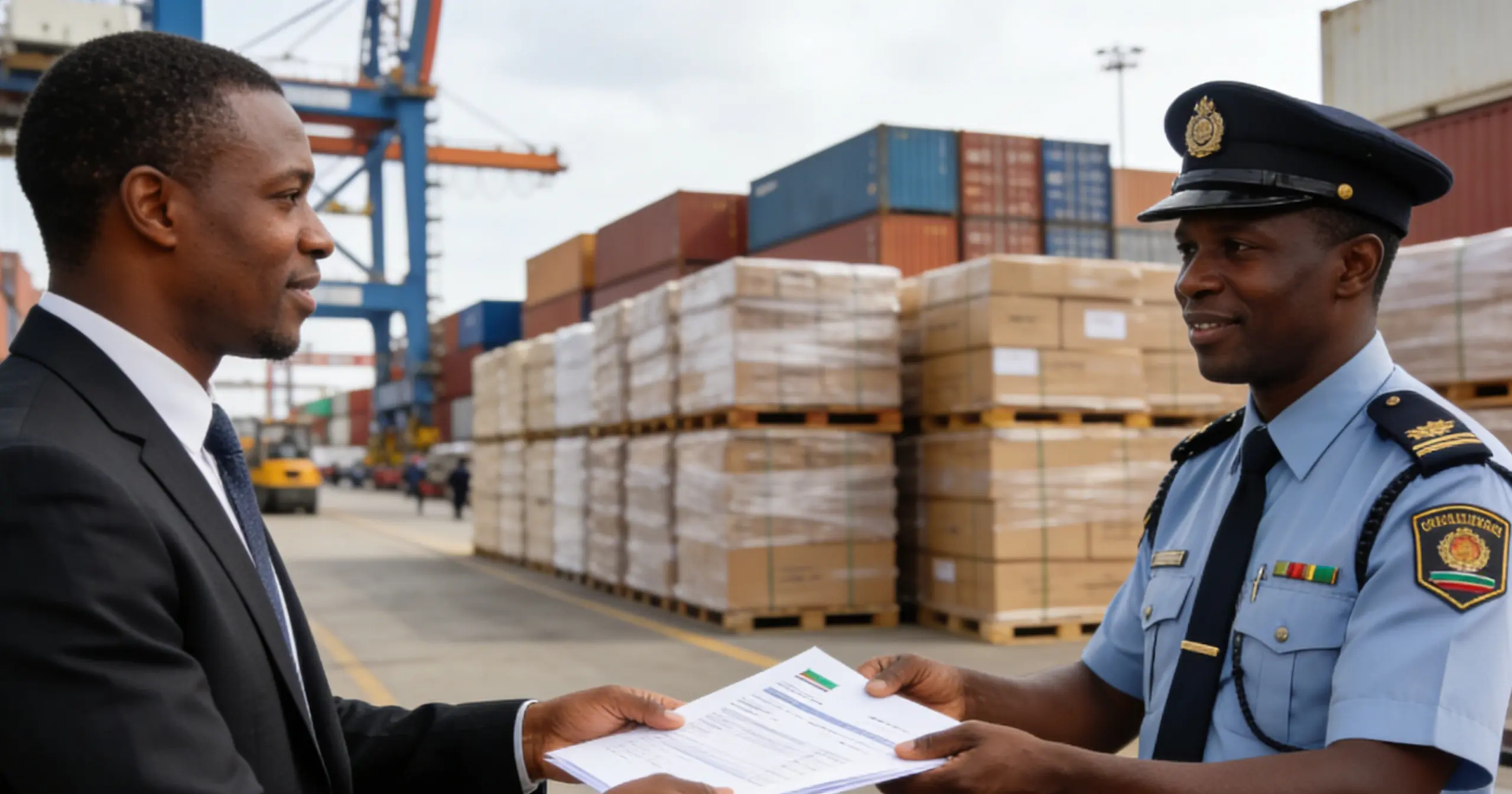
Smooth customs clearance is now critical. The “De Minimis” loophole (Section 321), which allowed duty-free entry for shipments under $800, was already removed for Chinese goods in May 2025. Now, enforcement is tightening even further.
- Physical Inspections: We are seeing a spike in Intensive Exams at major ports like Los Angeles/Long Beach (LA/LB) and Laredo.
- Delays: An intensive exam adds 5-10 days to your lead time and can cost $1,000 – $2,500 in exam fees and storage.
- Efanda Warning: If you are an e-commerce seller (e.g., using Amazon FBA) shipping multiple small packages to the same address to try and fly under the radar, stop immediately. CBP’s targeting systems are flagging these patterns aggressively.
3.3 The “Transshipment” Trap
Some importers might be tempted to route goods through a third country (e.g., China -> Vietnam -> USA) to avoid the “China Origin” label.
Do not do this.
- CBP is using AI-driven tools to track supply chain origins.
- If caught, you face not only the unpaid duties but massive penalties (up to 4x the loss of revenue) and potential criminal charges for evasion.
- Rule of Thumb: If the goods were made in China, the Country of Origin is China, regardless of where they ship from.
4. Efanda’s Expert Advice: How to Survive the Trade War
In our 8+ years of handling logistics during trade wars, we have learned that agility and compliance are your best defenses. Here is our actionable advice for 2026.
4.1 Re-Verify Your HS Codes
Are you 100% sure your HS Code is correct?
- In the past, a “close enough” code might have resulted in a 2% duty difference. Now, it could mean the difference between a 35% tariff and a standard rate.
- Action: Audit your product catalog. Check for any specific exclusions (though rare) or engineering changes that might legitimately shift a product to a different classification.
4.2 Re-Calculate Margins Immediately
Do not wait for the freight bill to arrive.
- Cash Flow: Ensure you have the liquidity to pay the higher duties. Customs will not release cargo until duties are paid (unless you have a continuous bond with sufficient coverage, which you may need to increase).
- Pricing: You may need to pass these costs on to consumers immediately.
4.3 Logistics Strategy: Stability Over Speed
- For China Imports: The 10% hike is painful but manageable for many high-margin goods. Stick to sea freight to keep shipping costs low.
- For Cross-Border (Mexico/Canada): Expect gridlock at land border crossings (trucking).
- Pro Tip: For shipments from deep Mexico to the US East Coast, consider switching from truck to Short Sea Shipping (sea freight) to bypass the congested land border inspection points.
5. Conclusion
The era of predictable, low-tariff trade is on pause. We are back in a volatile environment where government policy dictates your profit margins as much as market demand.
However, global trade does not stop. It adapts. The importers who survive 2026 will be the ones who prioritize compliance, manage their cash flow, and partner with logistics experts who understand the rules.
Don’t let customs hold your cargo.
Contact Efanda Logistics today. We offer a free “Landed Cost Analysis” to help you estimate your new duty exposure and ensure your documentation is 100% audit-proof. Let us handle the complexity so you can focus on your business.
6. FAQ: Common Questions on the New Tariffs
Q: When does the new tariff take effect?
A: The tariffs are effective immediately as of February 1, 2026.
Q: Does this affect goods already on the water?
A: Yes. US Customs duties are assessed based on the Date of Entry (when the vessel arrives and documents are filed), not the date of export. If your ship arrives after Feb 1, you pay the new rate.
Q: Are there any exclusions for small businesses?
A: Currently, no. The administration has taken a “blanket” approach to maximize impact. There are no exemptions based on company size.
Q: Can I use Section 321 (De Minimis) to avoid this?
A: No. Goods subject to Section 301 tariffs or these new emergency tariffs are generally disqualified from Section 321 benefits. Attempting to use it is a red flag for CBP.
Q: Will these tariffs be removed soon?
A: It is unpredictable. While they are “emergency” measures, such policies often become bargaining chips in long-term negotiations. Plan for them to be in place for at least Q1 and Q2 of 2026.