Are you looking for the fastest way to transport your goods? When time is critical, Air Freight Shipping from China to Australia becomes the go-to solution for many importers. Whether you are restocking inventory for the upcoming holiday season or fulfilling urgent B2B orders, understanding the intricacies of this logistics route is crucial for maintaining your profit margins.
Drawing from our team’s decade of hands-on experience managing the China-Australia trade lane, we often see importers lose thousands of dollars simply due to misclassified HS codes or missed duty exemptions. This comprehensive, updated 2026 guide covers everything you need to know—from detailed air freight costs and transit times to strict Australian customs clearance requirements—providing actionable, insider advice to ensure your shipments arrive safely and on budget.
How Long Does Air Freight Shipping from China to Australia Take?
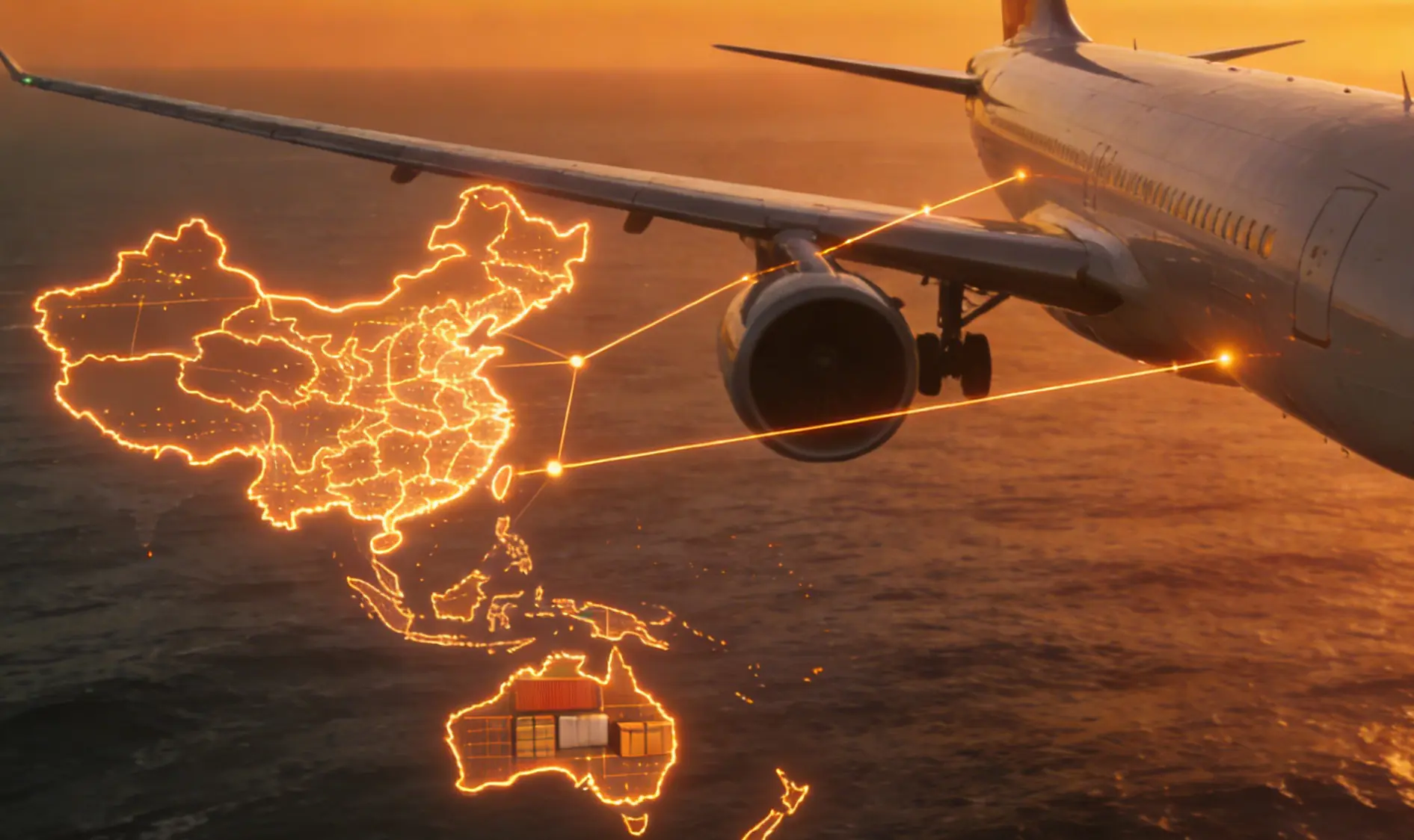
Air freight shipping from China to Australia typically takes between 3 to 8 days, depending on whether you choose direct or consolidated flights. This rapid transit makes it the optimal choice for time-sensitive cargo, high-value electronics, and seasonal fashion goods.
While the flight itself only takes around 9 to 12 hours from major Chinese hubs like Shenzhen, Guangzhou, or Shanghai to Sydney or Melbourne, the total door-to-door transit time includes export customs, terminal handling, and import clearance. Here is a breakdown of the expected timelines based on the service level:
| Service Level | Estimated Transit Time | Best For |
|---|---|---|
| Express Courier (DHL/FedEx/UPS) | 2 to 4 days | Small parcels (<45kg), urgent documents, and high-value samples. |
| Direct Air Freight | 3 to 5 days | Time-sensitive commercial cargo requiring minimal handling. |
| Consolidated Air Freight | 5 to 8 days | Cost-conscious importers willing to wait a few extra days for better rates. |
Note: Transit times are subject to change based on flight schedules, peak season congestion (such as the Q4 holiday rush), and customs processing times at Australian borders.

Cost Breakdown for Air Freight Shipping from China to Australia
The cost of air freight shipping from China to Australia generally ranges from $4 to $8 per kilogram, fluctuating based on seasonal demand, fuel surcharges, and the specific airline chosen. Understanding how these costs are calculated is essential for accurate budgeting and avoiding unexpected expenses.
In air freight, airlines charge based on either the Actual Weight or the Volumetric Weight (Chargeable Weight), whichever is greater. The standard volumetric calculation is Length (cm) x Width (cm) x Height (cm) / 6000. If you are shipping light but bulky items, you will pay for the space they occupy rather than their physical weight.
A comprehensive air freight quote from your forwarder should include the following components:
- Air Freight Rates: The base cost charged by the airline per kilogram.
- Origin Charges: Trucking to the airport in China, export customs clearance, and terminal handling charges (THC).
- Destination Charges: Airport handling in Australia, customs clearance fees, and final delivery (drayage) to your warehouse or Amazon FBA center.
- Surcharges: Fuel Surcharges (FSC) and Security Surcharges (SSC), which adjust based on global market conditions.

Customs Clearance Process for Air Freight from China to Australia
To clear customs for air freight in Australia, importers must provide a Commercial Invoice, Packing List, Air Waybill, and a Certificate of Origin (ChAFTA) to claim duty concessions. The Australian Border Force (ABF) is strict regarding documentation accuracy and biosecurity compliance.
When importing from China to Australia, you need to account for the following core taxes and fees:
- Goods and Services Tax (GST): A flat 10% applied to the Value of the Taxable Importation (VoTI), which includes the customs value, duty, and international transport / insurance costs.
- Import Duties: While standard duties are often 5%, leveraging the China-Australia Free Trade Agreement (ChAFTA) can legally reduce this to 0% for eligible goods. To claim this concession, we always remind our clients that they must secure a valid ChAFTA Certificate of Origin from their Chinese supplier before the flight departs.
- Biosecurity and Quarantine: Australia has some of the strictest biosecurity laws in the world. Depending on the nature of your products (e.g., wooden packaging or agricultural items), your shipment may be subject to the Brown Marmorated Stink Bug (BMSB) seasonal measures enforced by the Department of Agriculture, Fisheries and Forestry (DAFF). Failing to fumigate wooden pallets at the origin often results in cargo destruction or mandatory return at the importer’s expense.
Ensure your supplier uses the correct HS Code and clearly defines the Incoterms (such as EXW, FOB, or DAP) on the commercial invoice to prevent clearance delays.
Step-by-Step Guide to Air Freight Shipping from China to Australia
Shipping via air freight involves booking space, preparing documentation, export clearance in China, the flight, and import clearance in Australia. To ensure a smooth process, follow these actionable steps:
- Verify Your HS Code and ChAFTA Eligibility: Before shipping, confirm your product’s HS Code to determine the applicable duty rates. Always request a ChAFTA Certificate of Origin from your Chinese supplier to legally minimize import duties.
- Optimize Your Packaging: Since air freight costs are heavily influenced by volumetric weight, pack your goods as compactly and securely as possible. Avoid unnecessary void space in cartons.
- Partner with an Experienced Freight Forwarder: Work with a logistics provider who has established networks in both China and Australia. They can handle the complexities of space booking, local trucking, and dual-customs brokerage, saving you time and mitigating risks.
Common Risks in China-Australia Air Freight & How to Avoid Them
The most common risks include unexpected delays during peak seasons and miscalculated chargeable weight leading to budget overruns. As an importer, anticipating these challenges is key to maintaining a resilient supply chain.
- Rate Volatility During Peak Seasons: Air freight rates typically spike during Q4 (leading up to Christmas) and right before the Chinese New Year. Suggestion: Book your flights at least 1 to 2 weeks in advance during these periods to secure space and lock in rates.
- Customs Holds Due to Inaccurate Documentation: Discrepancies between the packing list and the actual cargo, or missing biosecurity declarations, will result in immediate customs holds. In our experience, airport storage fees (demurrage) in Sydney or Melbourne can easily exceed $150 per day after the brief free-time window expires. Suggestion: Always double-check your commercial invoice and packing list for 100% accuracy before the cargo leaves China.
- Hidden Fees in Quotes: Some low-ball quotes exclude destination handling fees or fuel surcharges. Always request an itemized, all-inclusive quote from your forwarder.
Why Choose Efanda Logistics for Your Air Freight Needs?
Efanda Logistics provides seamless, end-to-end air freight solutions tailored to your specific business needs, ensuring timely and compliant deliveries from China to Australia. With deep expertise in the China-Australia trade lane, we offer competitive pricing, guaranteed cargo space, and full-service customs brokerage.
Whether you need direct flights for urgent B2B deliveries or consolidated options to balance speed and cost, our team manages every step of the journey. We pride ourselves on transparent pricing—no hidden fees, just reliable logistics. Contact Efanda Logistics today to get a customized air freight quote for your next shipment.
FAQs
- Q: Is air freight always better than sea freight to Australia?
A: Not always. Air freight is best for high-value, low-volume, or extremely urgent shipments (3-8 days). If you have bulky, heavy cargo and a flexible timeline (15-25 days), sea freight is significantly more cost-effective. - Q: How do I calculate the volumetric weight for my shipment?
A: Measure the outer dimensions of your carton in centimeters. Multiply Length × Width × Height, then divide the result by 6,000. The result is your volumetric weight in kilograms. You will be charged based on this number if it is higher than the actual gross weight. - Q: Are there any restricted items for air freight to Australia?
A: Yes. Dangerous goods (like lithium batteries, flammable liquids, and certain chemicals) require special handling, MSDS documentation, and specific airline approvals. Additionally, Australia has strict biosecurity laws prohibiting untreated wood, soil, and certain plant/animal products.