
Shipping From China to Egypt Reliable Freight Forwarder
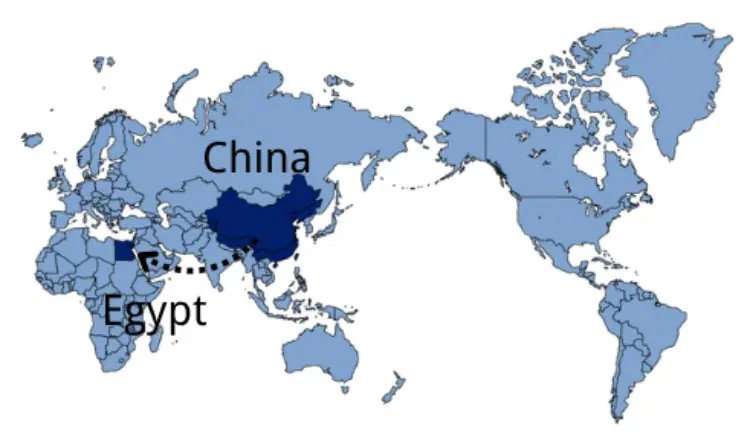
EFANDA Logistics offers professional shipping solutions from China to Egypt, including sea freight, air freight, and door-to-door services.
We support reliable transit times, efficient customs handling, and competitive freight rates to major Egyptian ports like Cairo, Alexandria, Port Said, and other key locations.
Whether you’re shipping commercial cargo or project shipments, we customize our logistics services to align with your Egyptian supply chain needs. Get Your Personalized Shipping Quote Today!
Sea Freight to Egypt
Air Freight to Egypt
Dedicated Logistics Experts
Starting Price
Our Shipping Services from China to Egypt
Sea Freight, Air Freight & Door-to-Door Solutions for Egypt Importers
Sea Freight from China to Egypt
Cost-effective ocean freight for bulk and commercial shipments to Egypt. FCL & LCL available.
- Transit time: 30–45 days
- FCL & LCL available
- Support for Egypt import clearance
Competitive sea freight rates – request a quote
Air Freight from China to Egypt
Fast and secure air cargo solutions for urgent, high-value, or time-sensitive shipments to Egypt.
- Transit time: 3–7 days
- Real-time shipment tracking
- Express customs clearance
Fast air freight with transparent pricing
Door-to-Door Shipping from China to Egypt
Complete door-to-door logistics from pickup to delivery in Egypt.
- Export documentation & coordination
- Customs clearance support in Egypt
- Delivery to warehouse or final address
No hidden charges
Why Choose EFANDA Logistics for China–Egypt Shipping
Specialized freight forwarding solutions with proven experience in Egypt customs, ports, and delivery networks.
Competitive Rates
Direct contracts with carriers and optimized routing via major China ports help reduce shipping costs without hidden fees.
Fast Transit
Optimized sea and air schedules with reliable ETD/ETA, minimizing delays caused by transshipment or port congestion.
Customs Expertise
Deep understanding of Egypt import regulations, HS codes, and documentation requirements to reduce clearance risks.
24/7 Dedicated Support
Dedicated customer support team available 24/7, providing timely assistance and reliable support for all your logistics needs.
Table of Contents
Shipping from China to Egypt is a key part of international trade, as both countries engage in significant import and export activities. For businesses and importers, understanding the best shipping methods, costs, and timeframes is essential to ensure efficient and cost-effective delivery. Whether you’re importing electronics, textiles, or machinery, choosing the right shipping method can save time and money. In this guide, we will walk you through the different shipping options, including sea and air freight, customs procedures, and how to select the best freight forwarder for your business.
By the end of this guide, you will have a solid understanding of the shipping process from China to Egypt, empowering you to make informed decisions for your business. Let’s dive into the details of the most common shipping methods, key ports and airports, and essential shipping costs. With the right logistics strategy and an experienced freight forwarder, businesses can ship goods from China to the Egypt safely, cost-effectively, and on schedule.
Sea Freight From China to Egypt
Sea freight is one of the most popular methods for shipping goods from China to Egypt, particularly when shipping large volumes or heavy goods. Compared to air freight, sea freight is generally more economical, although it takes longer. Choosing sea freight is often the best option for businesses that prioritize cost over speed.
When to Choose Sea Freight
Sea freight from China to Egypt is ideal for businesses that need to ship large quantities of goods at a more affordable rate. If time is not a critical factor, sea freight allows you to move substantial cargo over long distances efficiently. It’s especially suitable for bulk shipments such as machinery, electronics, textiles, and consumer goods.
When deciding whether to choose sea freight, consider the following:
Large Cargo Volume: Sea freight is the best option for large shipments that require a lot of space, as the cost per unit decreases with larger volumes.
Lower Costs: Compared to air freight, sea freight is significantly cheaper, making it the preferred choice for businesses with tight budgets.
Non-urgent Shipments: If your goods are not time-sensitive, sea freight provides a reliable, cost-effective solution with slightly longer shipping times.
Key Ports and Routes
The key ports for sea freight from China to Egypt include:
Shanghai Port: One of China’s busiest ports, located on the East Coast, offering direct shipping routes to Egypt.
Shenzhen Port: Located in southern China, this port is a critical gateway for goods to Egypt.
Tianjin Port: Located near Beijing, Tianjin serves as a major hub for shipping to Africa, including Egypt.
For Egypt, the primary ports for receiving sea freight include:
Port Said: Located near the Mediterranean Sea, it is the most important port for receiving goods from China, offering direct links to major Chinese ports.
Alexandria Port: Egypt’s largest port, located on the Mediterranean, handling both container and bulk shipments.
The most common sea routes are:
Shanghai to Alexandria: The most direct and frequently used route for sea freight.
Shenzhen to Port Said: Another popular route for containerized shipments.
Tianjin to Alexandria: A less common, but viable option for some bulk shipments.
Types of Sea Freight Services
There are different types of sea freight services to consider when shipping from China to Egypt, each catering to different needs in terms of volume, speed, and cost. Understanding these options will help you choose the best service for your business.
Full Container Load (FCL)
Full Container Load (FCL) is the most common form of sea freight service, ideal for businesses shipping large volumes of goods. With FCL, you rent an entire container, meaning your goods are the only cargo inside. This method is more cost-effective when shipping large quantities because the cost per unit of cargo decreases as the container is fully utilized.
When to Choose FCL
Large Shipments: If you are shipping enough goods to fill an entire container, FCL is the most efficient and cost-effective option.
Less Risk of Damage: FCL shipments are typically safer because your goods are not mixed with those of other shippers, reducing the risk of damage.
Faster Transit Times: FCL containers often move faster through ports because they are prioritized, and there’s no need for consolidation or deconsolidation with other shipments.
Less than Container Load (LCL)
Less than Container Load (LCL) is an ideal option for businesses that need to ship smaller quantities of goods that don’t fill an entire container. With LCL, your cargo shares space with other shippers’ goods, making it more affordable for smaller shipments.
When to Choose LCL
Smaller Shipments: If you don’t have enough goods to fill an entire container, LCL is an economical choice.
Budget Constraints: LCL is more affordable for businesses with limited budgets since you only pay for the space you use in the container.
Flexible Shipment Sizes: LCL allows businesses to ship smaller quantities without the need for large-scale shipments, giving more flexibility in inventory management.
Roll-on/Roll-off Ship (RoRo Ship)
Roll-on/Roll-off (RoRo) ships are designed for transporting wheeled cargo, such as vehicles, trucks, and heavy machinery. This shipping method is particularly useful for businesses involved in the automotive industry or large equipment shipping.
When to Choose RoRo Shipping
Wheeled Cargo: RoRo is ideal for shipping goods that have wheels, such as cars, trucks, construction equipment, and other large vehicles.
Heavy Machinery: If your business imports or exports large machinery, RoRo vessels offer a safer and more cost-effective solution for transporting these goods.
Simple Loading and Unloading: RoRo vessels allow for easier loading and unloading, as vehicles can simply drive on and off the ship, reducing handling time.
| Service Type | Ideal For | Advantages |
|---|---|---|
| FCL (Full Container Load) | Large shipments | Cost-effective, less risk of damage, faster transit |
| LCL (Less than Container Load) | Smaller shipments | More affordable for small shipments |
| RoRo Ship (Roll-on/Roll-off) | Vehicles and machinery | Easy loading/unloading, cost-effective for heavy cargo |
Understanding these different sea freight services will help you choose the right option based on your shipment size, cargo type, and budget. The decision between FCL, LCL, and RoRo will directly affect your shipping costs, delivery times, and the safety of your goods.
Air Freight From China to Egypt
Air freight is often the preferred choice for businesses that need to ship goods quickly from China to Egypt. While air shipping is generally more expensive than sea freight, it offers a significant reduction in transit times, making it ideal for urgent or high-value shipments. Whether you’re dealing with time-sensitive electronics, perishable goods, or luxury items, air freight provides a fast and reliable solution. Let’s explore when to choose air freight, the key airports and routes, and the different air freight services available.
When to Choose Air Freight?
Air freight from China to Egypt is the best option when speed is of the essence. Unlike sea freight, which can take weeks, air freight typically takes just a few days, ensuring that goods reach Egypt quickly. It’s also ideal for shipments with high value or items that are sensitive to damage, as air transport tends to offer better security and handling.
Here are some key reasons to choose air freight:
Time-sensitive Shipments: If your goods need to be delivered quickly, air freight is the fastest option. For example, if you’re importing electronics or high-demand products, air shipping will ensure a quicker turnaround.
High-Value Goods: Air freight is often used for shipping goods that have a high monetary value and require extra security during transportation, such as jewelry, luxury items, and medical equipment.
Perishable Goods: For perishable products like pharmaceuticals, food items, or flowers, air freight ensures that they arrive fresh and in optimal condition, minimizing spoilage and waste.
Lightweight Cargo: Air freight is often more cost-effective for smaller, lighter shipments that need to reach their destination in a hurry. It’s the best solution when you are shipping goods that weigh less but need to be moved quickly.
However, businesses should consider the higher costs of air freight compared to sea freight. For larger, bulkier shipments, sea freight may still be the better choice. Additionally, air freight is subject to various restrictions, so checking the specific requirements of both the exporting and importing countries is crucial.
Key Airports and Routes
The primary airports for air freight between China and Egypt are strategically located in both countries, providing efficient links for goods transportation. Here are some of the key airports and common routes:
Major Airports in China:
Beijing Capital International Airport (PEK): China’s largest and busiest airport, handling a significant amount of freight. It offers regular flights to Egypt’s major airports.
Shanghai Pudong International Airport (PVG): One of the busiest freight hubs in China, offering direct and indirect air freight services to Egypt.
Guangzhou Baiyun International Airport (CAN): Serving southern China, Guangzhou offers a variety of international air freight services, including routes to Egypt.
Major Airports in Egypt:
Cairo International Airport (CAI): As Egypt’s primary international airport, Cairo handles the majority of air freight, connecting to various Chinese cities. It’s a key hub for international imports and exports.
Alexandria International Airport (HBE): While smaller than Cairo, Alexandria serves as another gateway for air freight into Egypt, especially for businesses located in northern Egypt.
The most common air routes for freight shipments from China to Egypt are:
Beijing (PEK) to Cairo (CAI)
Shanghai (PVG) to Cairo (CAI)
Guangzhou (CAN) to Cairo (CAI)
These direct and indirect routes are typically serviced by major international airlines and dedicated cargo carriers, ensuring swift transport of goods.
Types of Air Freight Services
Air freight services from China to Egypt offer a range of options to suit various business needs. The type of service you choose will depend on the urgency, volume, and nature of your cargo. Below are the main types of air freight services:
Standard Air Freight
Standard air freight is the most commonly used air shipping option for general cargo. It is typically used for non-urgent, but still time-sensitive shipments. While not as fast as express services, standard air freight is more cost-effective for goods that do not require immediate delivery.
When to Choose Standard Air Freight:
Non-urgent Shipments: If your shipment doesn’t need to arrive in a matter of hours but still requires a faster transit time than sea freight.
General Cargo: Ideal for shipping items like electronics, consumer goods, and machinery.
Express Air Freight
Express air freight is the fastest air shipping option, offering priority handling and quicker delivery times, often within 1-2 days. This service is ideal for businesses that need their goods delivered as quickly as possible, with a premium cost for the speed.
When to Choose Express Air Freight:
Urgent Shipments: If you need goods delivered within a tight timeframe (1-3 days).
Time-sensitive Business Needs: This option is suitable for industries where fast delivery is essential, such as fashion, electronics, or automotive parts.
Consolidated Air Freight
Consolidated air freight allows multiple shippers to share space in one shipment, making it a more cost-effective option for businesses shipping smaller volumes. This service is similar to Less than Container Load (LCL) in sea freight, where your goods share space with other shipments to reduce costs.
When to Choose Consolidated Air Freight:
Smaller Shipments: If you are shipping smaller quantities of goods and want to reduce shipping costs by sharing space with other cargo.
Flexible Shipping Schedules: Consolidated air freight typically takes a few extra days, so it’s best for shipments that are not urgently needed.
Charter Air Freight
Charter air freight involves hiring an entire aircraft to transport your goods. This option is typically used for large, heavy, or time-critical shipments that cannot fit into a standard cargo hold.
When to Choose Charter Air Freight:
Large or Oversized Shipments: If your goods are too large or heavy for regular air cargo holds, chartering a plane ensures safe and efficient transportation.
High-value, Time-critical Cargo: For urgent shipments that require dedicated air transport.
| Service Type | Ideal For | Advantages | Delivery Time |
|---|---|---|---|
| Standard Air Freight | Non-urgent, general cargo | Cost-effective for time-sensitive shipments | 3-5 days |
| Express Air Freight | Urgent, high-priority shipments | Fastest delivery, premium service | 1-2 days |
| Consolidated Air Freight | Smaller shipments, cost-conscious | Affordable option for smaller shipments | 5-7 days |
| Charter Air Freight | Large, time-critical cargo | Full control over transport, dedicated aircraft | Flexible, usually within 1-2 days |
Door to Door Shipping from China to Egypt
Door-to-door shipping from China to Egypt is the most convenient and hassle-free option for businesses and importers. With this service, the logistics provider takes care of the entire process from the point of origin in China to the final destination in Egypt, including all handling, transport, customs clearance, and delivery directly to your door.
This all-in-one solution simplifies the shipping process, saving businesses time and effort in managing different stages of the supply chain. Here’s an overview of how door-to-door shipping works and why it may be the best option for your business.
Key Benefits of Door-to-Door Shipping
Convenience: All logistics, from pickup to delivery, are managed by the shipping provider, allowing businesses to focus on other aspects of their operations.
Comprehensive Service: The provider handles everything, including customs clearance, transport, insurance, and final delivery.
Tracking: Real-time tracking allows businesses to monitor their shipments throughout the entire journey from China to Egypt.
Time-Saving: With the complexities of international shipping taken care of, businesses can save time on coordination and paperwork.
When to Choose Door-to-Door Shipping
Complex Shipments: If you are importing a variety of goods, door-to-door shipping ensures that everything arrives in one shipment with minimal hassle.
Lack of Expertise in Shipping: For businesses that are unfamiliar with international shipping processes, door-to-door shipping offers peace of mind that everything is handled by professionals.
Urgency: If you need your goods delivered as quickly and smoothly as possible, door-to-door services can streamline the process.
Shipping Costs From China to Egypt
Shipping costs from China to Egypt can vary significantly depending on the type of freight, the weight and size of the goods, the shipping method chosen, and the port or airport involved. Understanding the factors that affect these costs is crucial for businesses and importers in managing their budgets effectively. In this section, we will break down the costs of both sea freight and air freight from China to Egypt, so you can make the best choice based on your needs and budget.
Sea Freight Cost From China to Egypt
Sea freight remains the most economical shipping method for large shipments between China and Egypt. The cost of sea freight is typically influenced by factors such as the size of the shipment (FCL or LCL), the origin and destination ports, and fluctuations in global shipping rates.
Key Factors Affecting Sea Freight Costs
Full Container Load (FCL) vs. Less than Container Load (LCL):
FCL: If you’re shipping large quantities that fill an entire container, the cost per unit is generally lower. The total cost is higher, but it’s a more cost-effective choice for larger shipments.
LCL: If you’re shipping a smaller volume that doesn’t fill a container, the cost will be based on the volume (measured in cubic meters) and the weight of your cargo. While it’s cheaper for smaller shipments, LCL can still be costly due to shared container space and additional handling fees.
Shipping Distance and Ports:
The specific ports involved (e.g., Shanghai or Shenzhen in China and Alexandria or Port Said in Egypt) can affect the cost. Ports closer to the origin and destination tend to have lower handling and transport fees.
Seasonal Fluctuations:
Rates can fluctuate depending on the time of year, with higher costs during peak shipping seasons (e.g., pre-holiday shipping).
Type of Cargo:
Special cargo such as hazardous goods or refrigerated items (reefers) can incur additional costs.
Estimated Sea Freight Costs
Below is a table that estimates typical sea freight costs for FCL and LCL shipments from China to Egypt. These rates can vary widely based on the above-mentioned factors, so they should be used as a general guide:
| Shipping Method | Estimated Cost (USD) | Cargo Type | Estimated Transit Time |
|---|---|---|---|
| FCL (20-foot container) | $1,500 – $2,500 | Large shipments (full container) | 25 – 30 days |
| FCL (40-foot container) | $2,500 – $3,500 | Large shipments (full container) | 25 – 30 days |
| LCL (per cubic meter) | $50 – $80 | Small shipments (shared space) | 30 – 35 days |
Note that these are estimated costs and can change based on the volume, destination port, and shipping provider.
Air Freight Cost From China to Egypt
Air freight is faster than sea freight but comes at a higher price. The cost of air shipping from China to Egypt depends on several key factors, including the weight and volume of the cargo, the type of service (express or standard), and the chosen airport route. While air freight costs can be steep, it’s the preferred option for high-value or time-sensitive shipments.
Key Factors Affecting Air Freight Costs:
Weight and Volume:
Air freight rates are typically calculated by either the chargeable weight (the actual weight or the volumetric weight, whichever is greater) or the volumetric volume (cubic meters).
Lighter, bulky cargo may cost more due to how air freight charges volumetric weight.
Airline and Service Type:
Express services (such as same-day or 1-2 day delivery) cost more than standard air freight. Express shipping services offer faster delivery but with a premium price.
Fuel Surcharges:
Fuel costs can add to the overall price, as airlines often impose fuel surcharges based on market fluctuations.
Destination and Airport Charges:
The airport at the destination (e.g., Cairo International Airport) may have its own handling and terminal charges that impact the total shipping cost.
Estimated Air Freight Costs
Below is a table summarizing the general cost of air freight from China to Egypt for different types of cargo. These rates are rough estimates, and actual costs can vary significantly.
| Shipping Method | Estimated Cost (USD) | Cargo Type | Estimated Transit Time |
|---|---|---|---|
| Standard Air Freight | $4 – $6 per kg | General cargo (electronics, machinery) | 4 – 6 days |
| Express Air Freight | $6 – $10 per kg | Time-sensitive shipments (fashion, tech) | 1 – 3 days |
| Consolidated Air Freight | $2 – $3 per kg | Smaller shipments (shared space) | 5 – 7 days |
Air freight is ideal for businesses needing speed, but it is important to weigh the cost against the urgency and value of the shipment.
Shipping Time From China to Egypt
The shipping time from China to Egypt varies based on the shipping method chosen and the specific logistics involved. While sea freight is more economical, it takes longer, whereas air freight offers faster delivery but at a higher cost. Understanding the expected shipping times for both methods will help businesses plan their logistics and inventory more efficiently.
Sea Shipping Time From China to Egypt
Sea freight from China to Egypt generally takes anywhere from 25 to 35 days, depending on the origin and destination ports, the type of service (FCL or LCL), and seasonal variations.
Key Factors Affecting Sea Shipping Time:
Distance and Routes:
The most common sea routes, such as Shanghai to Alexandria, can take around 25 days for FCL shipments. However, LCL shipments might take longer due to consolidation processes.
Port Efficiency:
The speed at which goods are processed through ports (such as Port Said or Alexandria in Egypt) can impact overall shipping time. Efficient customs handling can reduce delays.
Weather and Seasonal Delays:
Bad weather, especially in the monsoon season, can cause delays in transit. Peak shipping seasons around holidays also tend to extend transit times.
Estimated Sea Shipping Times
| Shipping Method | Estimated Time (Days) | Notes |
|---|---|---|
| FCL (Full Container Load) | 25 – 30 days | Faster for full shipments |
| LCL (Less than Container Load) | 30 – 35 days | Longer due to consolidation and handling |
Air Shipping Time From China to Egypt
Air freight is the fastest shipping method from China to Egypt, with typical transit times ranging from 1 to 6 days depending on the type of service chosen (standard vs. express).
Key Factors Affecting Air Shipping Time:
Service Type:
Express air freight offers the quickest delivery times, often between 1-3 days. This is ideal for urgent shipments that need to arrive without delay.
Standard air freight generally takes 4-6 days for delivery but is more affordable for businesses that can plan shipments with a bit more time.
Customs Clearance:
Air freight shipments clear customs faster than sea freight, which contributes to the overall shorter transit time.
Airline Routes and Hub Efficiency:
Direct flights from major Chinese airports like Shanghai and Beijing to Cairo reduce transit time. However, if shipments need to be transferred or if they’re consolidated with other cargo, it can slightly delay delivery.
Estimated Air Shipping Times
| Shipping Method | Estimated Time (Days) | Notes |
|---|---|---|
| Standard Air Freight | 4 – 6 days | Affordable for non-urgent shipments |
| Express Air Freight | 1 – 3 days | Fastest option, ideal for time-sensitive goods |
Understanding the shipping costs and times associated with both sea and air freight allows businesses to make more informed decisions based on their specific needs. Whether you choose the cost-effective sea freight for larger, non-urgent shipments, or the fast air freight for time-sensitive cargo, this guide helps you navigate the key factors affecting shipping costs and delivery times from China to Egypt.
Customs Clearance & Documents Required
When shipping from China to Egypt, customs clearance is a crucial step that ensures your goods comply with Egyptian regulations. Understanding the required documentation and the customs procedures will help avoid delays, penalties, and additional costs. Proper documentation and timely customs clearance are essential to ensure smooth shipping operations and timely delivery of goods to Egypt.
Key Documents Required for Customs Clearance
There are several key documents that need to be submitted to Egyptian Customs for clearance. These documents vary depending on the type of goods being imported and the shipping method used (sea or air freight). Below is a list of the most commonly required documents for both sea and air shipments from China to Egypt:
Commercial Invoice: This is the primary document that outlines the details of the transaction between the buyer and seller. It includes information about the goods being shipped, their value, the country of origin, and other relevant details.
Packing List: The packing list provides detailed information about the packaging and contents of each shipment. This document helps customs authorities understand the nature of the cargo and how it is packed.
Bill of Lading (B/L): For sea freight, the Bill of Lading is a legal document issued by the shipping carrier. It serves as proof of shipment and receipt of goods. It also functions as a title of ownership and can be required for customs clearance.
Air Waybill (AWB): For air freight, the Air Waybill is the equivalent of the Bill of Lading. It serves as a contract of carriage and contains details about the shipment, including the consignee and shipper information.
Certificate of Origin: This document certifies the origin of the goods being shipped, which is required to determine if any duties or taxes are applicable based on the trade agreements between China and Egypt.
Import License: Certain goods may require an import license before they can be cleared by Egyptian customs. It’s important to check whether your products fall under restricted or controlled categories that require additional licensing.
Customs Declaration Form: This is a form filled out by the importer or freight forwarder that lists the shipment’s contents and provides customs with the necessary details to process the import.
Insurance Certificate: If goods are insured during shipment, an insurance certificate must be presented. It proves that the cargo is covered in case of damage or loss during transit.
Health and Safety Certificates: For specific products, especially food, pharmaceuticals, or chemicals, additional health and safety certificates may be required to ensure that the products meet Egyptian health standards.
Customs Clearance Procedure
Once the required documents are in place, the customs clearance process in Egypt involves several steps:
Submission of Documents: The importer or their agent submits all required documents to Egyptian Customs for review. The documents should be accurate and complete to avoid delays.
Customs Inspection: Customs officials may inspect the goods to ensure they match the details in the documents and comply with Egyptian import regulations. This may involve physical inspection or checking against the Customs Declaration.
Payment of Duties and Taxes: Once cleared, the importer must pay any applicable import duties, taxes, or fees. The rates depend on the nature of the goods and the applicable trade agreements between Egypt and China.
Release of Goods: After all fees are paid and the shipment passes inspection, customs will release the goods for delivery to the final destination.
| Document Required | Purpose | Example |
|---|---|---|
| Commercial Invoice | Outlines the transaction details | Goods description, value, buyer, seller |
| Packing List | Details the packaging and contents of the shipment | Size, weight, contents per package |
| Bill of Lading (B/L) | Legal proof of shipment and receipt for sea freight | Provided by the shipping carrier |
| Air Waybill (AWB) | Legal contract for air freight shipments | Provided by the airline or logistics provider |
| Certificate of Origin | Verifies the origin of the goods | Required to determine applicable duties |
| Import License | Authorizes the import of restricted goods | Required for controlled products |
Tips for Smooth Customs Clearance:
Accuracy is Key: Ensure all documents are accurate and match the actual shipment. Mistakes or discrepancies can cause delays and additional costs.
Pre-clearance: If possible, initiate the customs clearance process before the goods arrive in Egypt. This can help speed up the release once the goods reach the port or airport.
Work with a Freight Forwarder: Partnering with a reputable freight forwarder who has experience with Egyptian customs procedures can help streamline the process and ensure all requirements are met.
Common Mistakes When Shipping From China to Egypt
Shipping from China to Egypt involves multiple steps, and any misstep along the way can result in delays, increased costs, or even legal complications. Here are some of the most common mistakes businesses make when shipping goods between China and Egypt, and how to avoid them:
1. Inaccurate Documentation
One of the most common mistakes when shipping from China to Egypt is the submission of inaccurate or incomplete documentation. Missing or incorrect details on documents like the commercial invoice, packing list, or certificate of origin can lead to customs delays, fines, or even confiscation of goods.
How to Avoid It:
Double-check all documentation before submission to ensure that every detail is correct.
Work with experienced logistics providers or customs brokers who are familiar with both Chinese and Egyptian regulations.
Ensure that the goods’ value, classification, and origin match the information on the documents.
2. Not Understanding Import Regulations
Different products are subject to different regulations in Egypt. For example, electronics may require specific certifications, while food and pharmaceuticals must meet health and safety standards. Failing to understand these import regulations can result in your shipment being held up at customs.
How to Avoid It:
Familiarize yourself with Egypt’s import regulations for your specific type of product before shipping.
Work with a customs broker who can guide you through the regulatory landscape.
3. Underestimating Shipping Costs
Many businesses underestimate the true cost of shipping from China to Egypt. While sea freight is generally cheaper than air freight, there are additional costs to consider, including customs duties, taxes, and handling fees.
How to Avoid It:
Request detailed cost breakdowns from your freight forwarder, including all potential additional costs like customs duties and port charges.
Be aware of any fluctuating costs, such as fuel surcharges or seasonal rate increases.
4. Neglecting Insurance
Failing to insure your goods is a mistake that can have serious consequences. In the event of damage, theft, or loss during transit, not having insurance can result in significant financial losses.
How to Avoid It:
Always insure valuable or fragile shipments. The cost of insurance is typically minimal compared to the potential loss.
Work with your freight forwarder to ensure that your shipment is adequately insured.
5. Choosing the Wrong Shipping Method
Another common mistake is choosing the wrong shipping method based on cost or convenience rather than the specific needs of the shipment. For example, shipping perishable goods by sea freight could lead to spoilage due to longer transit times.
How to Avoid It:
Carefully evaluate your shipment’s needs (urgency, value, size) before selecting the shipping method.
Consider factors such as transit time, cost, and the nature of the goods when deciding between air and sea freight.
6. Not Accounting for Customs Delays
Customs clearance can take time, and delays can occur if the necessary paperwork is not prepared in advance. Failing to account for potential delays can result in unexpected costs and longer lead times for your products.
How to Avoid It:
Prepare all required documentation in advance and ensure that customs clearance is handled promptly.
Factor in potential customs delays when planning your shipping schedule.
| Common Mistake | Consequence | How to Avoid It |
|---|---|---|
| Inaccurate Documentation | Customs delays, fines, or confiscation | Double-check documents, work with experts |
| Not Understanding Regulations | Shipment delays or rejection | Familiarize yourself with regulations |
| Underestimating Shipping Costs | Unexpected additional fees | Get detailed cost breakdowns |
| Neglecting Insurance | Loss or damage without compensation | Always insure valuable or fragile goods |
| Choosing the Wrong Shipping Method | Shipment delays, damage, spoilage | Choose based on shipment needs |
| Not Accounting for Customs Delays | Unexpected costs, delayed delivery | Plan for customs clearance and delays |
By avoiding these common mistakes, businesses can ensure smoother, faster, and more cost-effective shipments from China to Egypt. Proper planning, attention to detail, and working with reliable partners can help mitigate risks and make the shipping process much more efficient.
How to Choose the Right Freight Forwarder
Choosing the right freight forwarder for your shipments from China to Egypt is critical for ensuring that your goods arrive on time, in good condition, and at the most cost-effective price. A freight forwarder acts as a logistics partner, handling the transportation, documentation, customs clearance, and other services related to your shipment. With the complexity of international shipping, selecting a reliable and experienced freight forwarder can help streamline your supply chain operations.
In this section, we will discuss the key criteria to consider when selecting a freight forwarder, and why choosing a reputable provider is essential for your business’s success.
Key Criteria When Selecting a Forwarder
There are several key factors to consider when choosing a freight forwarder to handle your shipments from China to Egypt. These criteria will help you evaluate potential freight forwarders and ensure that you select the best option for your specific needs.
1. Experience and Expertise
A freight forwarder’s experience in managing shipments from China to Egypt is crucial. Experienced forwarders will be familiar with the local regulations, the best routes, and the potential challenges in shipping between these countries. This knowledge ensures smooth customs clearance and minimizes delays.
Look for: Years of operation, specialization in China-Egypt routes, and industry-specific experience (such as handling electronics, pharmaceuticals, or perishable goods).
2. Reputation and Reliability
Research the freight forwarder’s reputation in the industry. Reliable forwarders will have a proven track record of timely deliveries, minimal damage to goods, and strong customer support. Reviews, testimonials, and case studies can help assess their reliability.
Look for: Customer testimonials, industry certifications (e.g., IATA, FIATA), and recommendations from other businesses.
3. Range of Services
A good freight forwarder should offer a wide range of services, including sea freight, air freight, customs clearance, warehousing, and door-to-door shipping. If your business requires a comprehensive logistics solution, working with a forwarder that can handle all these aspects will be more efficient and cost-effective.
Look for: Full-service offerings such as freight booking, packing, labeling, insurance, and tracking systems.
4. Pricing Structure
Transparent pricing is essential when selecting a freight forwarder. Understand the pricing structure and what services are included in the cost. Avoid forwarders that have hidden fees or unclear terms. Compare quotes from multiple forwarders to ensure you’re getting a fair rate.
Look for: Clear and detailed quotations, transparency in pricing, and options for both cost-effective and expedited services.
5. Technology and Tracking Capabilities
The ability to track your shipment in real-time is vital for modern businesses. Ensure that your freight forwarder provides a user-friendly platform or app for tracking your cargo. This gives you peace of mind and helps with proactive planning.
Look for: Digital tracking systems, easy-to-use online portals, and the ability to monitor the status of your shipment at every stage.
6. Customer Service and Support
Excellent customer service can make all the difference when resolving issues or handling urgent shipments. Choose a freight forwarder that offers responsive customer support, including a dedicated contact person who can assist with any issues that arise during transit.
Look for: 24/7 customer support, multilingual staff, and dedicated account managers.
7. Customs Knowledge and Compliance
Navigating customs regulations in both China and Egypt can be complex. Your freight forwarder should have in-depth knowledge of the customs processes, ensuring that your shipment complies with all import/export regulations and avoids unnecessary delays.
Look for: Expertise in handling customs documentation, knowledge of Egyptian import laws, and the ability to resolve any customs-related issues efficiently.
| Criteria | What to Look For | Why It Matters |
|---|---|---|
| Experience & Expertise | Specialized knowledge in China-Egypt routes | Ensures smooth customs clearance and fewer delays |
| Reputation & Reliability | Positive reviews, industry certifications | Guarantees reliable and timely deliveries |
| Range of Services | Sea freight, air freight, customs clearance | Provides an all-in-one solution for your logistics needs |
| Pricing Structure | Transparent, detailed quotes | Avoids unexpected fees and ensures competitive pricing |
| Technology & Tracking | Real-time tracking systems | Offers visibility and control over your shipment |
| Customer Service | 24/7 support, dedicated account manager | Resolves issues quickly and efficiently |
| Customs Compliance | Knowledge of local import/export regulations | Reduces the risk of customs delays and fines |
Why Work With EFANDA Logistics
EFANDA Logistics is a trusted name in the global logistics industry, offering expert freight forwarding services between China and Egypt. Choosing EFANDA Logistics as your freight forwarder provides several key benefits that can streamline your shipping process and improve your overall supply chain efficiency.
1. Specialized China-Egypt Shipping Expertise
EFANDA Logistics specializes in shipping from China to Egypt, giving them a deep understanding of the unique challenges and opportunities involved in this trade lane. Whether you’re shipping by sea or air, EFANDA’s expertise ensures your goods are handled with care and arrive on time.
Why It’s Important: Specialized knowledge helps avoid delays, minimizes risks, and ensures smooth operations throughout the shipping process.
2. Comprehensive Service Offering
EFANDA Logistics provides a full range of services, from sea freight and air freight to customs clearance, warehousing, and door-to-door delivery. This means that businesses can rely on EFANDA for end-to-end logistics solutions, making it easier to manage multiple aspects of the supply chain through a single provider.
Why It’s Important: A one-stop-shop for all logistics needs simplifies operations and reduces the complexity of dealing with multiple service providers.
3. Transparent Pricing and Competitive Rates
EFANDA Logistics is committed to offering transparent and competitive pricing with no hidden fees. Their clear pricing structure ensures that you know exactly what you’re paying for, allowing for better budgeting and financial planning.
Why It’s Important: Transparent pricing helps businesses avoid unexpected costs and provides peace of mind throughout the shipping process.
4. Advanced Tracking and Technology
With EFANDA Logistics, you’ll have access to real-time tracking and a user-friendly online portal to monitor your shipments. Their advanced technology ensures you stay informed about the status of your goods at every step of the journey.
Why It’s Important: Real-time tracking reduces uncertainty and gives businesses the ability to manage shipments proactively.
5. Expert Customs Clearance Services
Navigating the customs procedures for importing goods into Egypt can be complicated. EFANDA Logistics has extensive experience handling customs clearance in Egypt, ensuring that your goods are compliant with all import regulations and avoid unnecessary delays.
Why It’s Important: Avoiding customs issues is crucial for timely deliveries and reducing the risk of fines or confiscations.
6. Dedicated Customer Support
EFANDA Logistics offers dedicated customer support to assist with all inquiries, from booking shipments to handling any issues that arise during transit. Their responsive team is available to guide you through every step of the shipping process.
Why It’s Important: Having a dedicated support team ensures quick resolution of problems and ensures you have the assistance you need whenever you need it.
| Benefit | How It Helps Your Business | Why EFANDA Logistics Is the Right Choice |
|---|---|---|
| Specialized Expertise | Smooth, efficient handling of China-Egypt shipments | In-depth knowledge of local regulations |
| Comprehensive Services | All logistics handled under one provider | Simplifies operations and reduces complexity |
| Transparent Pricing | Clear cost structure with no hidden fees | Budget-friendly, avoids unexpected charges |
| Advanced Tracking Technology | Real-time updates on your shipment | Full visibility and control over your logistics |
| Expert Customs Clearance | Fast, compliant clearance through Egyptian customs | Ensures timely delivery and avoids fines |
| Dedicated Customer Support | Quick problem resolution and guidance | Personalized service with a dedicated support team |
By choosing EFANDA Logistics, you gain a partner who understands your specific needs and is committed to providing reliable, efficient, and cost-effective solutions. Their expert team ensures that your shipments from China to Egypt are handled seamlessly, so you can focus on growing your business.
Related Articles
China to Egypt Shipping Guides & Resources
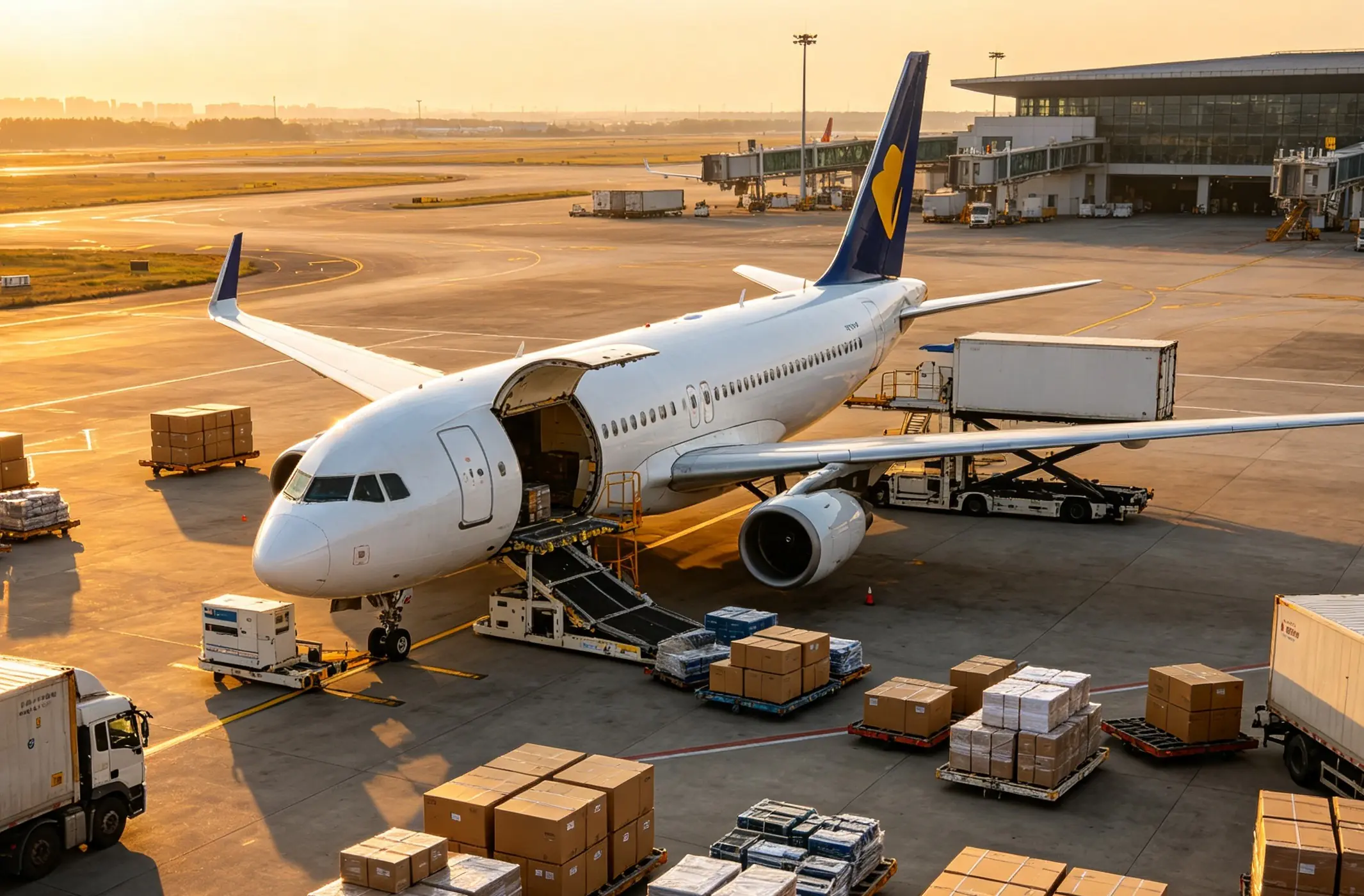
Air Freight from China to Egypt: 2026 Cost, Transit Time & Complete Shipping Guide
Get the latest 2026 air freight rates from China to Egypt ($3.50–$6.50/kg), door-to-door transit times, ACID customs guide, airline comparisons, and a practical decision matrix for Egyptian importers.
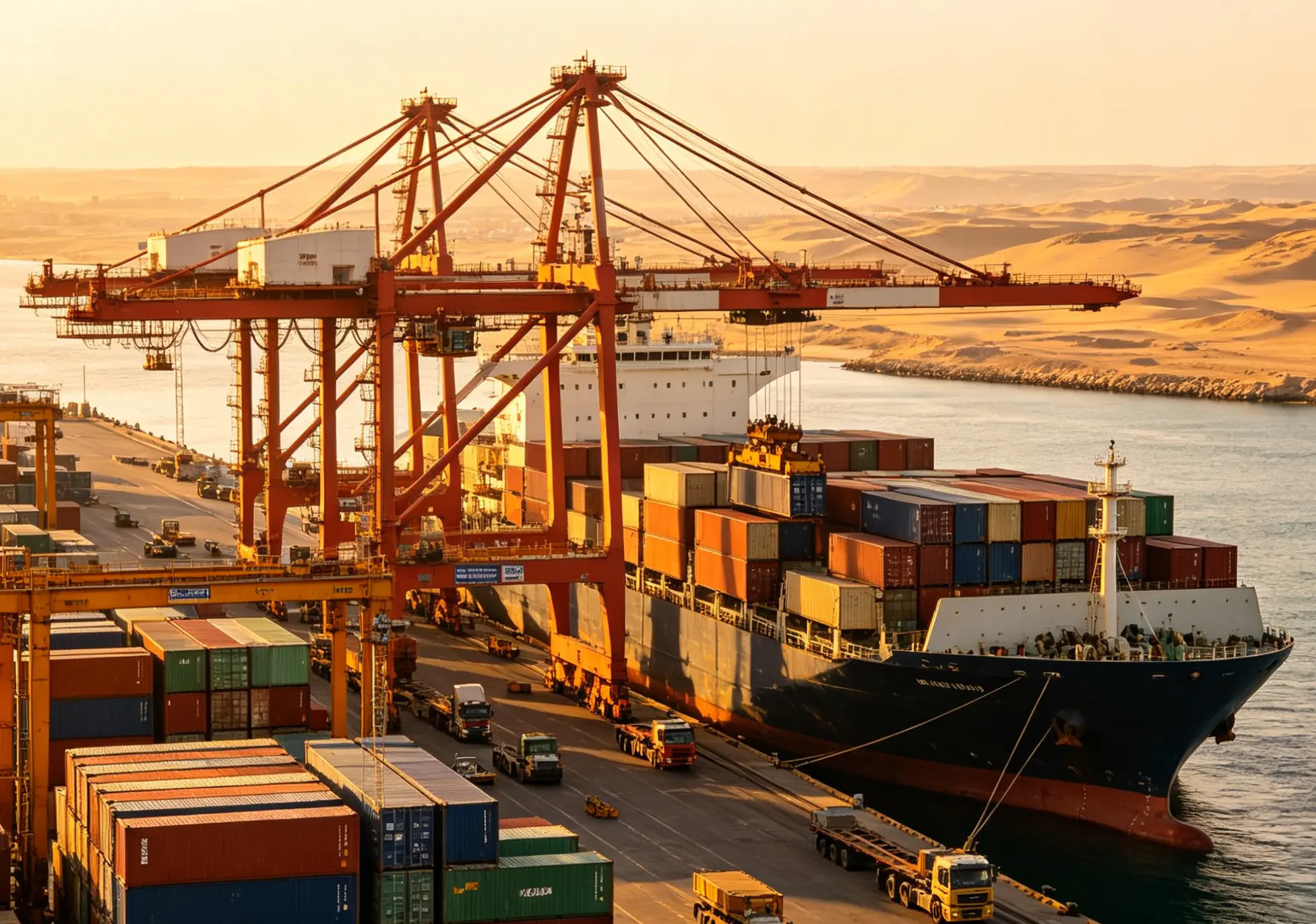
How Long Does Shipping from China to Egypt Take? The Complete 2026 Transit-Time Guide (FCL, LCL, Air & DDP)
How long does shipping from China to Egypt take? Get 2026 transit times for FCL, LCL, air, express, and DDP, plus customs and Red Sea delay tips.
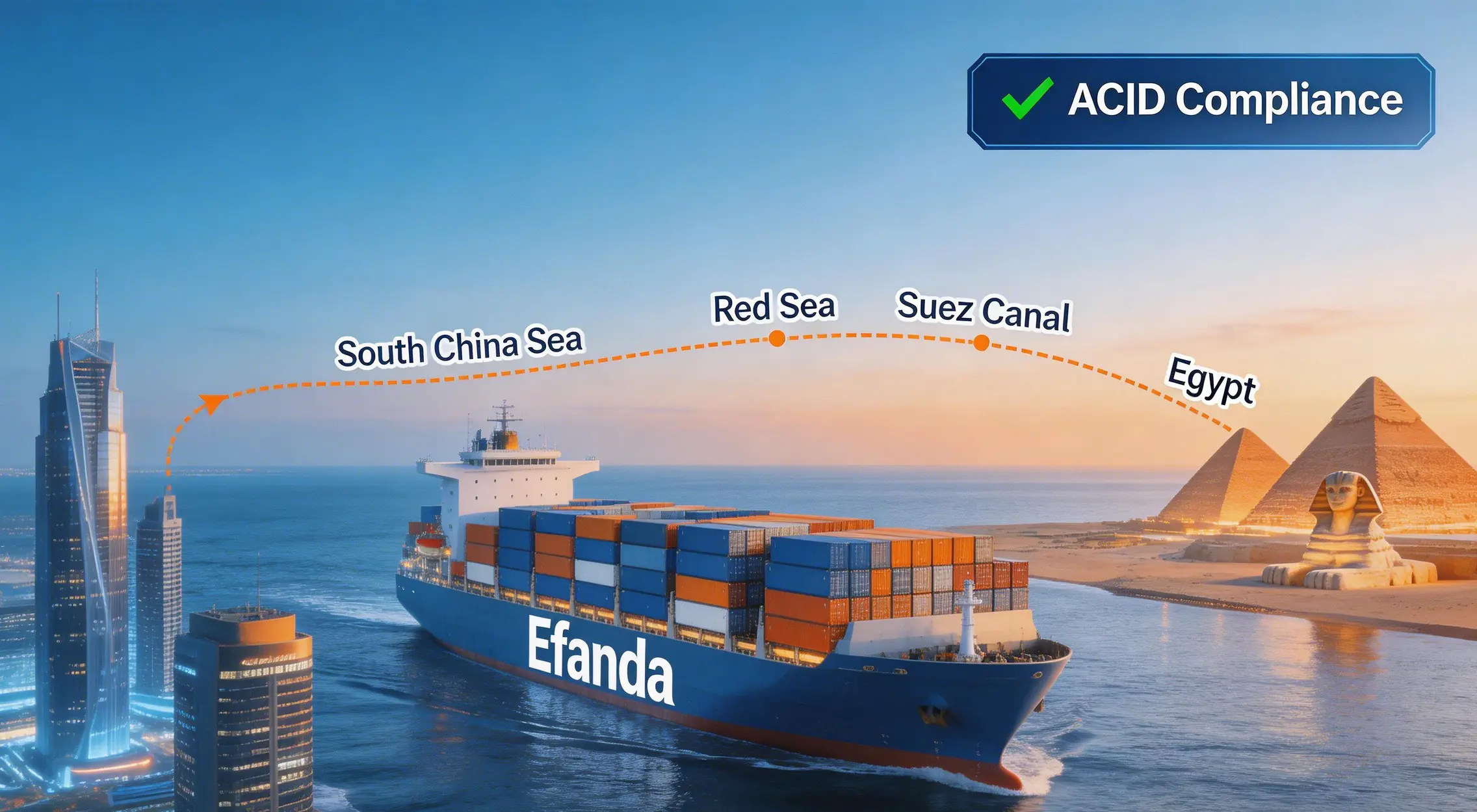
Shipping from Shenzhen China to Egypt: The 2026 Ultimate Guide for Importers
This comprehensive 2026 guide details shipping from Shenzhen, China to Egypt, focusing on mandatory ACID/Nafeza compliance for importers. It compares sea freight (FCL/LCL) via Red Sea/Suez routes against air freight, providing estimated costs and transit times (20-35 days). Key ports like Yantian, Shekou, Alexandria, and Sokhna are analyzed for efficiency.
Frequently Asked Questions
Find clear answers to the most common questions about shipping from China to Egypt
- Sea Freight: 25-35 days
- Air Freight: 5-10 days
- Express Shipping: 3-5 days (for urgent deliveries)
Transit time varies depending on the destination, shipping method, and customs clearance.
Sea freight is the most economical option for bulk shipments. It takes longer but offers competitive rates for larger volumes. For time-sensitive deliveries, air freight is faster but more expensive.
Common documents required include a commercial invoice, packing list, bill of lading, and customs declaration. EFANDA assists with all documentation to ensure compliance with Egyptian regulations.
EFANDA handles everything from pickup at your supplier’s location in China to final delivery in Egypt. We take care of documentation, customs clearance, and shipping directly to your specified address.
EFANDA offers real-time tracking for all shipments. You’ll receive updates throughout the shipping process to monitor your cargo’s progress.
EFANDA is committed to transparent pricing. All costs are outlined upfront, and we ensure no hidden fees for your shipments.
Ready to Ship from China to Egypt with a Reliable Freight Forwarder?
Get a fast, transparent shipping quote tailored to your cargo, route, and delivery needs — no obligation, no hidden fees.
Shipments Handled from China
Customer Satisfaction Rate