Planning to import vehicles for your dealership or personal use, but worried about complex customs rules or sky-high shipping costs? Navigating how to importing and shipping car from China to Mexico requires mastering strict vehicle homologation (NOM), understanding varying taxes like VAT and ISAN, and making the critical choice between RoRo and FCL container shipping.
This comprehensive guide breaks down shipping costs, transit times, and the step-by-step customs clearance process to ensure your vehicles are shipped safely and legally from China to Mexico.
Key Takeaways (Executive Summary)
- Average Costs: Shipping a vehicle typically ranges from $1,500 to $3,500, heavily dependent on the chosen method and vehicle size.
- Fastest Transit Times: Ocean freight usually takes 25 to 35 days to reach major Pacific ports like Manzanillo and Lazaro Cardenas.
- Best Shipping Methods: RoRo is the most cost-effective solution for standard operational cars, while FCL (container shipping) offers the highest level of security, making it ideal for luxury vehicles and EVs.
- Import Taxes: Importers must prepare to pay a 16% VAT alongside the ISAN (New Vehicle Tax), which varies based on the car’s value.
What is the Best Way for Container and RoRo Shipping from China to Mexico?
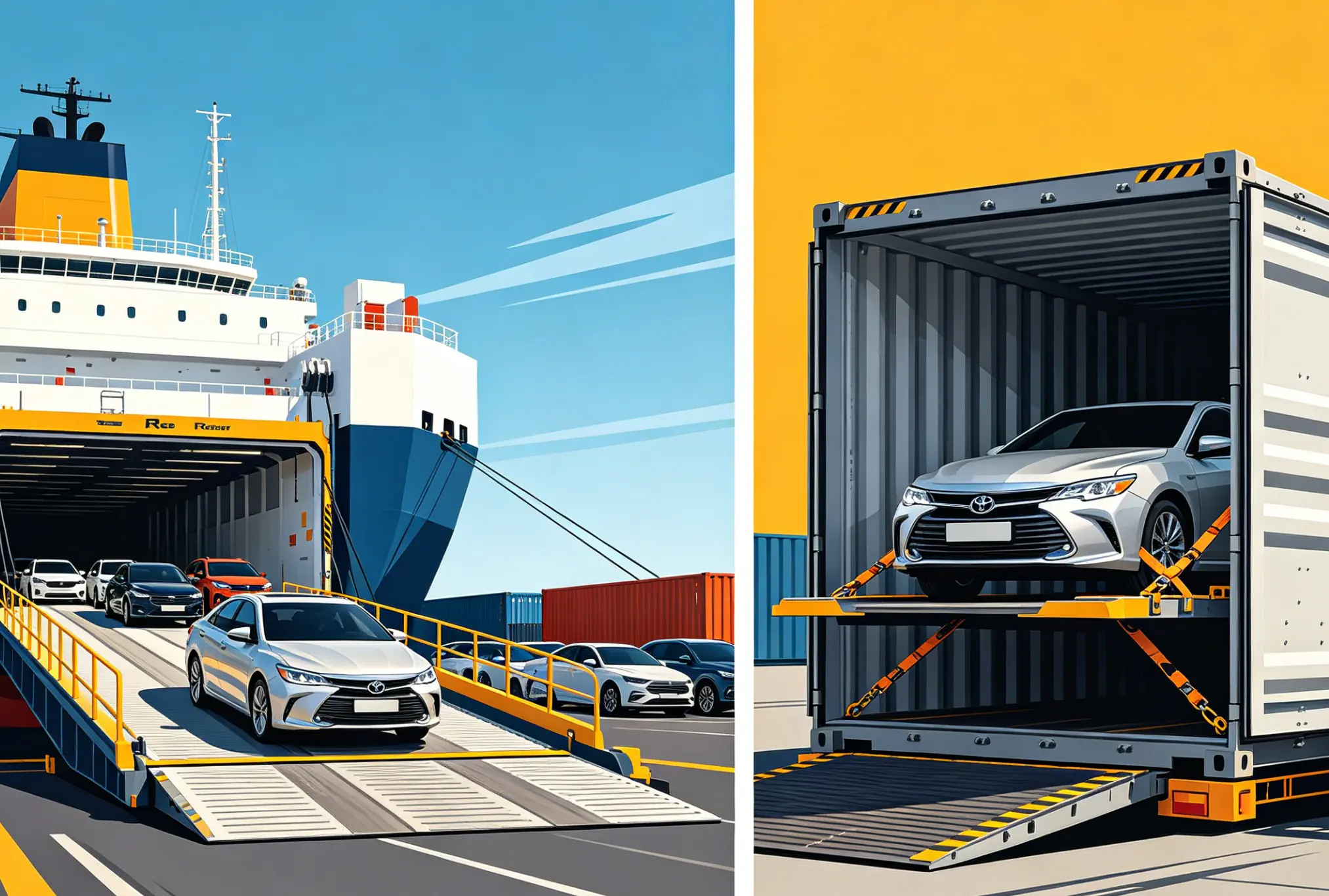
The best way to ship a car from China to Mexico depends on your budget and vehicle type; roro shipping from China to Mexico is the most cost-effective for standard operational vehicles, while container shipping vehicles China to Mexico offers maximum security for luxury cars and EVs.

RoRo Shipping (Roll-on/Roll-off)
RoRo involves driving the vehicle directly onto a specialized ship, making it the cheapest and fastest loading method for large fleets. Because the cars are simply driven onto the vessel’s cargo deck and secured, there are no expensive container packing or unpacking fees. This method is highly recommended for standard sedans, SUVs, and commercial trucks that are in full working condition. However, vehicles shipped via RoRo are exposed to the elements during loading and unloading, and you cannot pack any personal items or spare parts inside the car.
FCL Container Shipping Vehicles China to Mexico (20ft & 40ft)
FCL (Full Container Load) provides a dedicated, sealed container for your vehicle, protecting it from weather and allowing you to ship spare parts alongside the car. You can typically fit one standard car into a 20ft container or two cars into a 40ft container. While it is more expensive than RoRo due to container handling, loading, and unloading fees, it is the preferred method for high-value luxury cars, classic cars, and electric vehicles (EVs) that require maximum protection.
| Shipping Method | Loading Process | Security | Best For | Estimated Cost Level |
|---|---|---|---|---|
| RoRo Shipping | Driven onto ship deck | Medium (Exposed) | Standard cars, large fleets | Low |
| FCL Container | Sealed in 20ft/40ft box | Maximum (Weatherproof) | Luxury cars, EVs | High |
Shipping Cars from China to Mexico Cost & Import Tax Guide
The shipping cars from China to Mexico cost typically ranges between $1,500 and $3,500 per vehicle, varying heavily by the shipping method, vehicle dimensions, and destination port.

Breakdown of Ocean Freight Rates (RoRo vs Container)
Sea freight (or ocean freight) is the largest portion of your shipping bill. For RoRo shipping, costs are usually calculated based on the cubic volume of the vehicle, averaging around $1,200 to $1,800 per car. If you opt for container shipping, a 20ft container might cost between $2,000 and $2,800, while a 40ft container (which can hold two vehicles) generally ranges from $3,000 to $4,500.
Import Tax for Cars in Mexico from China (VAT & ISAN)
When calculating your total budget, do not ignore the import tax for cars in Mexico from China. Importers must pay a 16% VAT (Value Added Tax) and an ISAN (Impuesto Sobre Automóviles Nuevos) which varies based on the car’s value, alongside standard import duties. According to the Mexican Tax Administration Service (SAT), the ISAN is a specialized tax applied to new vehicles, and its percentage scales up with the purchase price of the car. Additionally, depending on trade agreements, standard import tariffs can range from 15% to 20% if the vehicle does not qualify for exemptions. In our experience, failing to accurately calculate the ISAN upfront is one of the most common reasons for budget overruns.
Hidden Costs: Port Handling and Customs Brokerage
Beyond freight and taxes, importers should budget for Destination Terminal Handling Charges (DTHC), which cover the cost of moving your vehicle from the ship to the port holding area. These usually range from $200 to $400. You will also need to pay a licensed customs broker to handle the paperwork, which typically adds another $150 to $300 to your total expenses.
How Long Does It Take to Ship a Car from China to Mexico?
So, how long does it take to ship a car from China to Mexico? Ocean freight transit time ranges from 25 to 35 days, with Manzanillo and Lazaro Cardenas being the fastest entry ports on the Pacific coast.
Transit Times from Major Chinese Ports (Shanghai, Ningbo, Shenzhen)
The exact duration depends on the departure port in China and the arrival port in Mexico. Pacific ports in Mexico receive direct shipments much faster than Gulf ports like Veracruz, which require the ship to pass through the Panama Canal.
| Departure Port (China) | Destination Port (Mexico) | Estimated Transit Time |
|---|---|---|
| Shanghai / Ningbo | Manzanillo | 25 – 29 Days |
| Shenzhen / Guangzhou | Lazaro Cardenas | 24 – 28 Days |
| Shanghai | Veracruz | 32 – 38 Days |
| Qingdao | Altamira | 35 – 40 Days |
Factors That Cause Shipping Delays (Port Congestion & Weather)
While the schedules above are standard, delays can occur. Port congestion at major hubs like Manzanillo is common during peak shipping seasons (such as the months leading up to the holidays). Severe weather conditions over the Pacific Ocean can also force vessels to reroute or slow down. Furthermore, if your paperwork is incomplete, customs holds can easily add a week or more to your overall timeline.
Customs Clearance: Importing Electric Vehicles and Cars to Mexico
To successfully clear customs clearance (Aduana/SAT) in Mexico, you must hire a licensed customs broker and provide essential documents like the Bill of Lading, Commercial Invoice, and NOM certificates.

Essential Documents for Vehicle Importation (B/L, Commercial Invoice)
Mexican customs regulations are incredibly strict. You cannot clear a vehicle without a complete document package. The most critical documents include:
- Bill of Lading (B/L): The official receipt of cargo from the shipping line.
- Commercial Invoice: Must clearly state the vehicle’s value, VIN (Vehicle Identification Number), and engine specifications.
- Packing List: Details the contents of the shipment (especially important for FCL).
- Certificate of Origin: Proves the vehicle was manufactured in China.
Vehicle Homologation (NOM) and Emissions Standards
Before a car can be legally driven or sold in Mexico, it must pass strict homologation processes. This involves obtaining a NOM (Norma Oficial Mexicana) certificate, which ensures the vehicle meets Mexican safety and technical standards. Additionally, the vehicle must pass emissions tests to comply with environmental regulations. Ensure your manufacturer provides a valid NIV (Número de Identificación Vehicular) that matches the physical car exactly.
Special Regulations for Importing Electric Vehicles to Mexico
Importing electric vehicles to Mexico requires strict adherence to battery regulations, including MSDS documentation and specialized hazardous goods handling. Because EV batteries are classified as dangerous goods (UN3481) for ocean transport under the International Maritime Organization (IMO) guidelines, shipping lines demand a Material Safety Data Sheet (MSDS) and a UN Testing Certificate. Failure to provide these will result in the shipping line refusing to load the vehicle. Our team has handled hundreds of EV shipments and we always ensure the UN3481 paperwork is pre-cleared before the vehicle even reaches the departure port.
Why Choose Efanda Logistics for Auto Transport?
Efanda Logistics offers end-to-end vehicle shipping solutions from China to Mexico, ensuring guaranteed space, competitive RoRo rates, and expert handling of EV battery compliance.
Expertise in Automotive Logistics and EV Compliance
Navigating the complexities of dangerous goods documentation for EVs or securing space on a crowded RoRo vessel requires deep industry expertise. Our team specializes in the China-Mexico trade lane, ensuring that your vehicle’s paperwork is flawless before it even arrives at the loading port.
Seamless Door-to-Door (DDP/DAP) Solutions
We offer comprehensive door to door shipping (DDP/DAP) services, meaning we handle everything from picking up the car at the Chinese factory to clearing Mexican customs and delivering it directly to your dealership or driveway. By managing the entire supply chain, we eliminate the stress of coordinating with multiple third-party brokers and port authorities.
You may be interested in the following related articles:
- shipping from china to jamaica
- shipping from china to venezuela
- shipping from china to poland
- shipping from china to sweden
- shipping from china to finland
Frequently Asked Questions (FAQ)
Can I import a used car from China to Mexico?
Yes, but it is highly regulated. Used cars must pass stringent emissions and mechanical inspections, and they are subject to different tax brackets. It is generally much easier and more cost-effective to import new vehicles.
What is the import tax for cars in Mexico from China?
Importers must pay a 16% VAT, an ISAN (New Vehicle Tax) that scales with the vehicle’s price, and a standard import tariff that generally ranges from 15% to 20%, unless specific trade agreements apply.
Is RoRo shipping safe for new cars?
Yes, RoRo is a standard and safe method used by major automotive manufacturers globally. The vehicles are securely lashed to the deck inside the ship, protecting them from shifting, though they are not as isolated from dust and sea air as they would be inside an FCL container.
Do I need a Mexican import license (Padrón de Importadores) to ship cars?
Yes, to import vehicles commercially into Mexico, you or your company must be registered in the Padrón de Importadores (Official Register of Importers) managed by the SAT (Mexican tax authority). If you are an individual importing a single car for personal use, you may be able to use a specialized customs broker’s license, but commercial imports require your own registration.