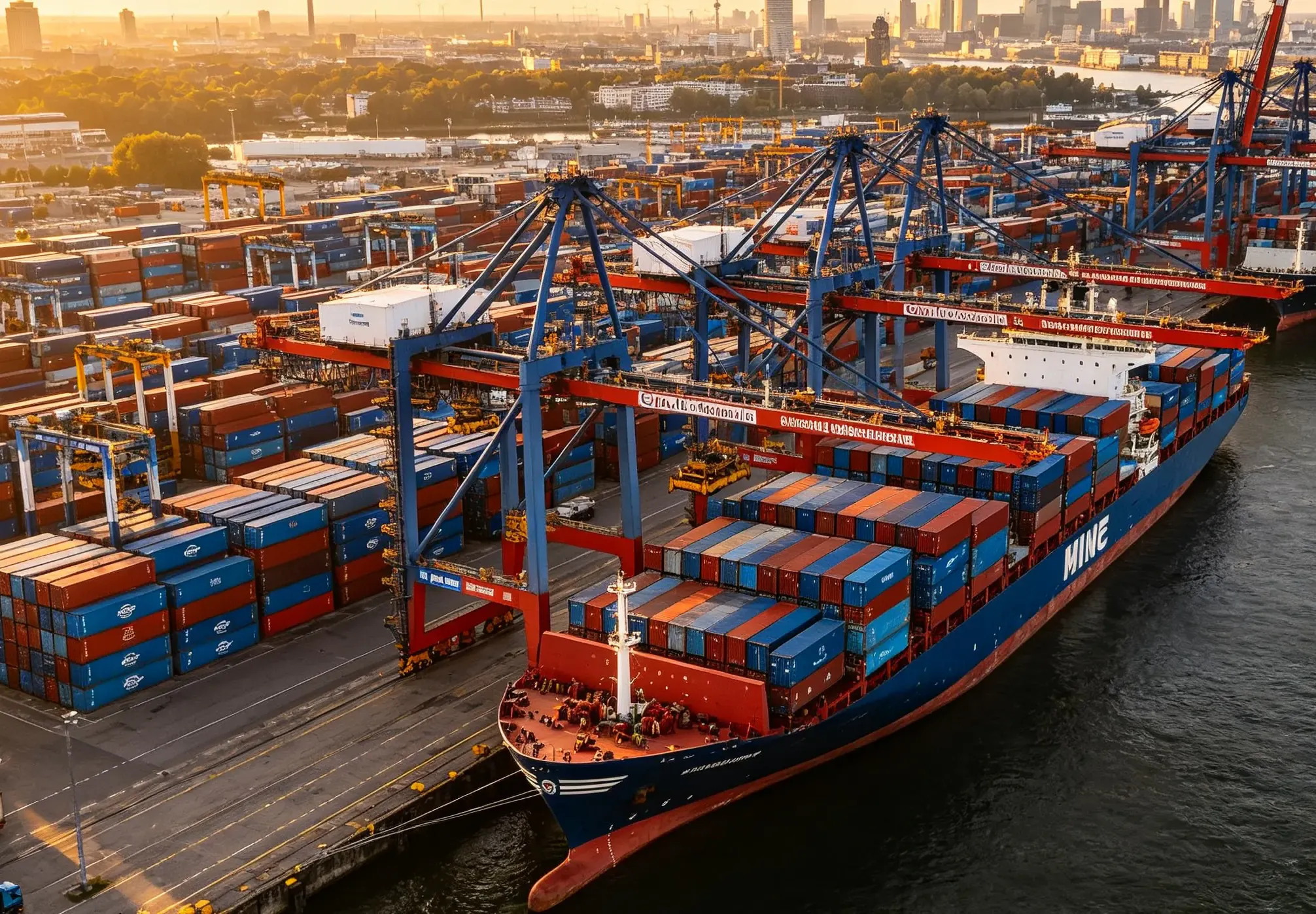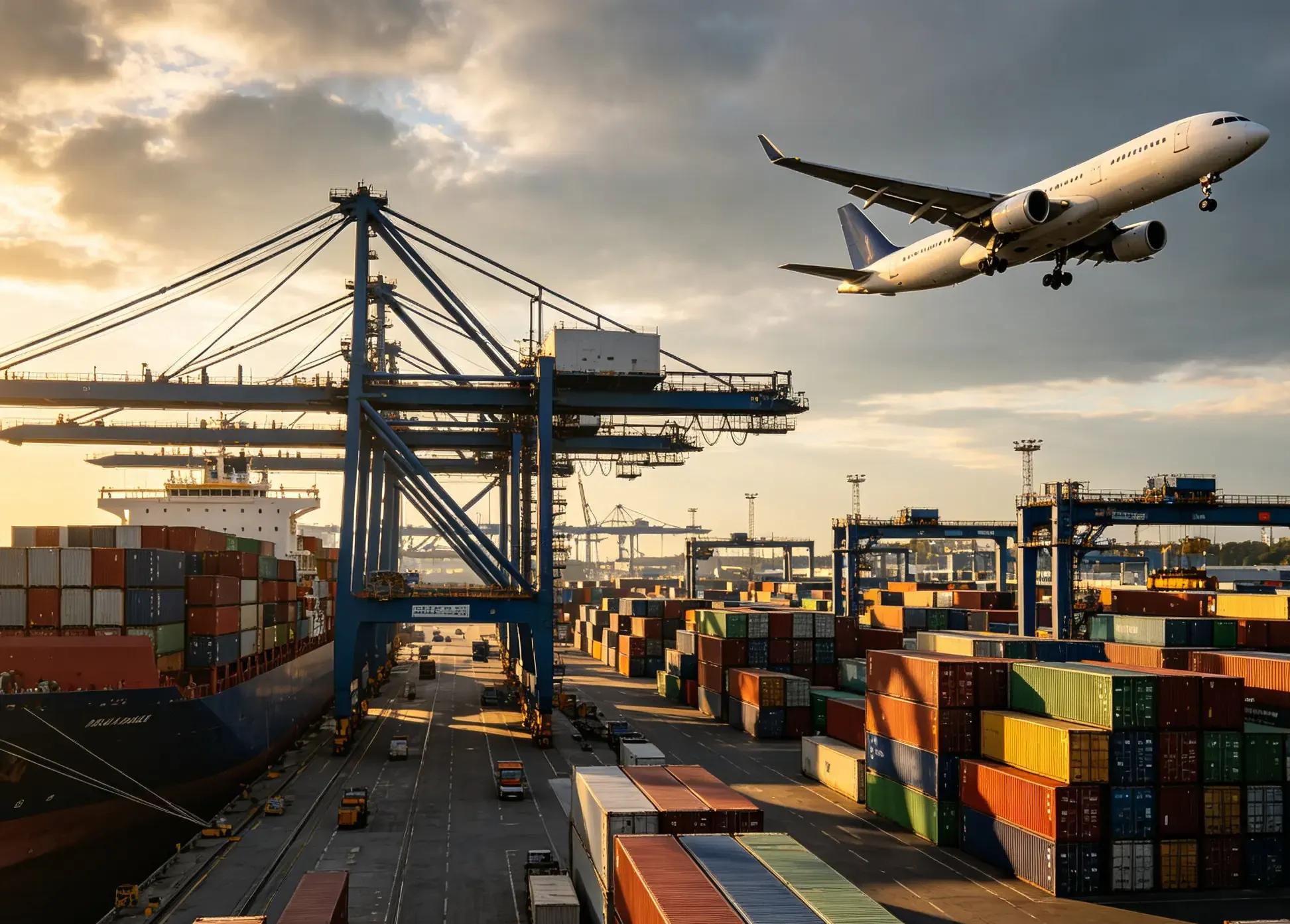
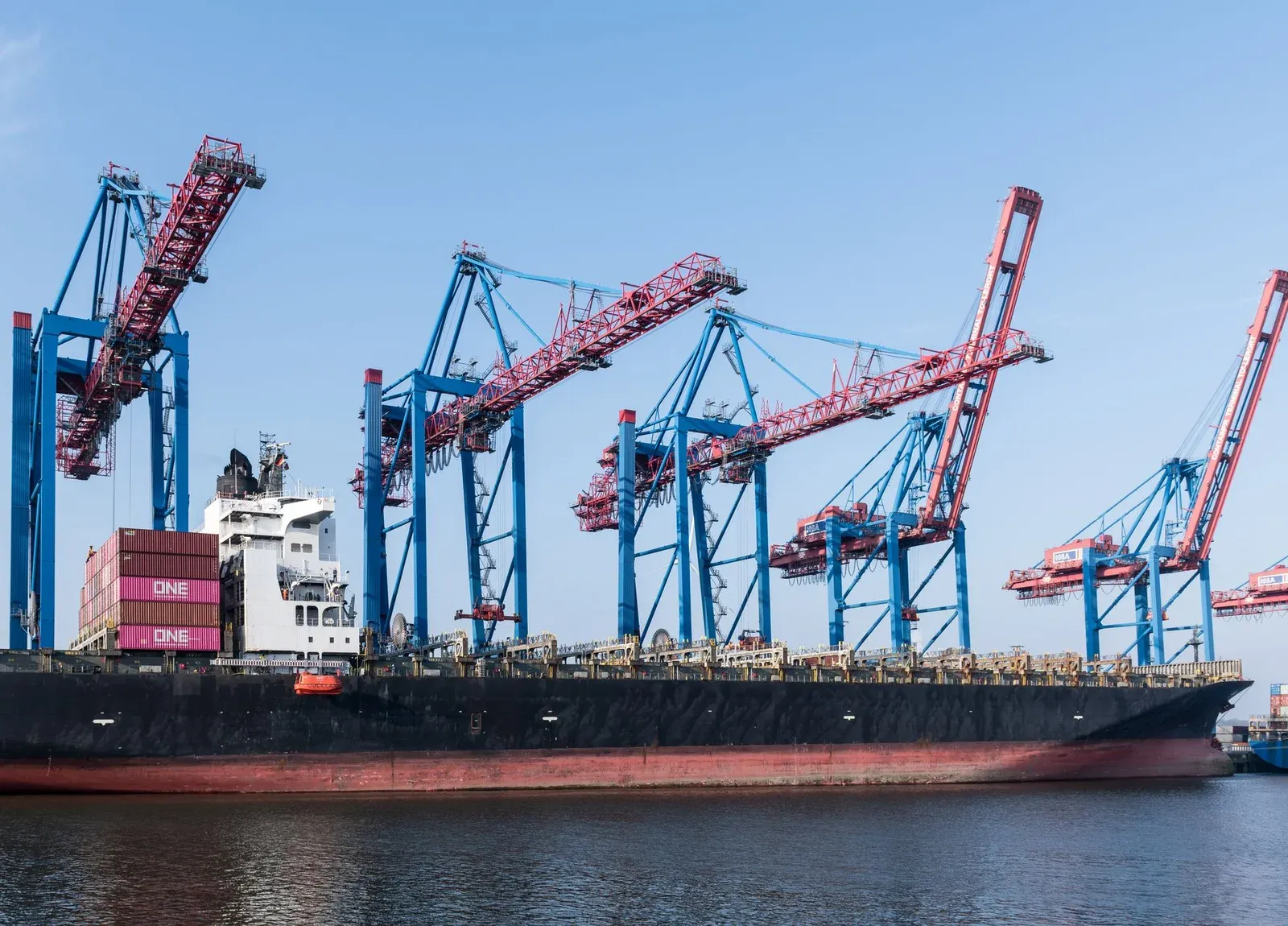
What actually stops a container of electronics on its way from Shenzhen to Hamburg is rarely the ocean freight rate. It is a missing declaration of conformity, an undeclared lithium battery, or a WEEE registration nobody filed before the goods left the factory. How to ship electronics from China to Germany therefore comes down to four decisions taken in the right order: whether the product may legally be sold in Germany, which transport mode carries it at a cost that still leaves margin, which Incoterm decides who owns the customs liability, and which forwarder can execute the first three without improvising.
At Efanda Logistics we have moved consumer electronics from Shenzhen, Dongguan and Suzhou into Hamburg, Bremerhaven, Frankfurt and Amazon FBA centres since 2018, and the pattern is consistent. Shipments fail on paperwork far more often than on capacity. This guide gives you the 2026 costs and transit times, the German registration duties that catch first-time importers, the battery rules that changed on 1 January 2026, and a clearance example you can check line by line. Rates and transit times move with fuel, capacity and season, so treat every number here as a planning range dated October 2026, not a quotation.
How to Ship Electronics from China to Germany: The Short Answer
The short answer is to clear compliance before you book freight, because a product that cannot legally be sold in Germany is not worth moving. Work through four gates in sequence: conformity documents, mode selection, Incoterm, then forwarder. Skipping the first gate is the expensive mistake, since German customs can hold, return or destroy non-compliant goods, and the freight is already spent by then.
The effort is justified by the volume. China exported US$38.68 billion of electrical and electronic equipment to Germany in 2025, according to UN Comtrade data, and total China–Germany trade reached €251.8 billion, which made China Germany’s largest trading partner again. Electronics is the segment where German buyers compare landed cost most carefully, and where compliance differences between suppliers show up fastest.
| Mode | Door-to-door planning time | Priced on | Best for |
|---|---|---|---|
| Express courier (DHL, FedEx, UPS) | 2–5 days | per kg, minimum charge per shipment | Samples, spare parts, under 100 kg |
| Air freight, consolidated | 6–9 days | chargeable kg (volume or actual, whichever is greater) | Product launches, restocks, high value density |
| Sea freight LCL | 33–45 days | per CBM, minimum charge | 1–15 CBM, non-urgent replenishment |
| Sea freight FCL | 31–37 days | per container | 20 CBM and above, bulky accessories |
| Rail via China–Europe corridor | 28–38 days | per container or CBM | Inland destinations, mid urgency |
This guide covers the electronics-specific layer. The route overview on shipping from China to Germany covers ports, carrier schedules and seasonality.
What Does It Cost to Ship Electronics from China to Germany?
Air freight from Shenzhen to Frankfurt runs about $4.50 to $7.50 per chargeable kilo in the bands most electronics importers use, while sea freight for a 40ft high-cube container from Yantian to Hamburg sits around $4,500 to $5,900 all-in under DDP terms. The gap looks dramatic until you price the inventory sitting on the water for an extra four weeks, which is why the mode decision belongs to the finance side of the business as much as to logistics.
These are the air freight from China base rates by weight band, excluding duties and VAT. They reflect October 2026 market levels and move with fuel surcharges, capacity and pre-Chinese New Year demand.
| Weight band | Rate per kg (USD) | Note |
|---|---|---|
| Under 45 kg | $8.00 – $12.00 | Minimum charge applies; courier is often cheaper |
| 45 – 100 kg | $6.50 – $9.00 | Break point where air becomes workable |
| 100 – 300 kg | $5.50 – $7.50 | Most common band for consumer electronics |
| 300 – 500 kg | $4.80 – $6.50 | Negotiation room for regular shippers |
| 500 – 1,000 kg | $4.50 – $6.00 | Volume leverage begins |
| Over 1,000 kg | $4.20 – $5.50 | Charter options worth quoting |
Sea freight under DDP terms, which includes export clearance, ocean freight, German import clearance, duty, VAT and delivery to your address:
| Container | Capacity | DDP range (all-in) | Suited to |
|---|---|---|---|
| 20ft GP | about 33 CBM | $2,800 – $3,800 | Dense goods: power banks, adapters, small appliances |
| 40ft GP | about 67 CBM | $4,200 – $5,600 | Mixed cartons, monitors, accessories |
| 40ft HQ | about 76 CBM | $4,500 – $5,900 | Light, bulky items such as speakers and packaging-heavy products |
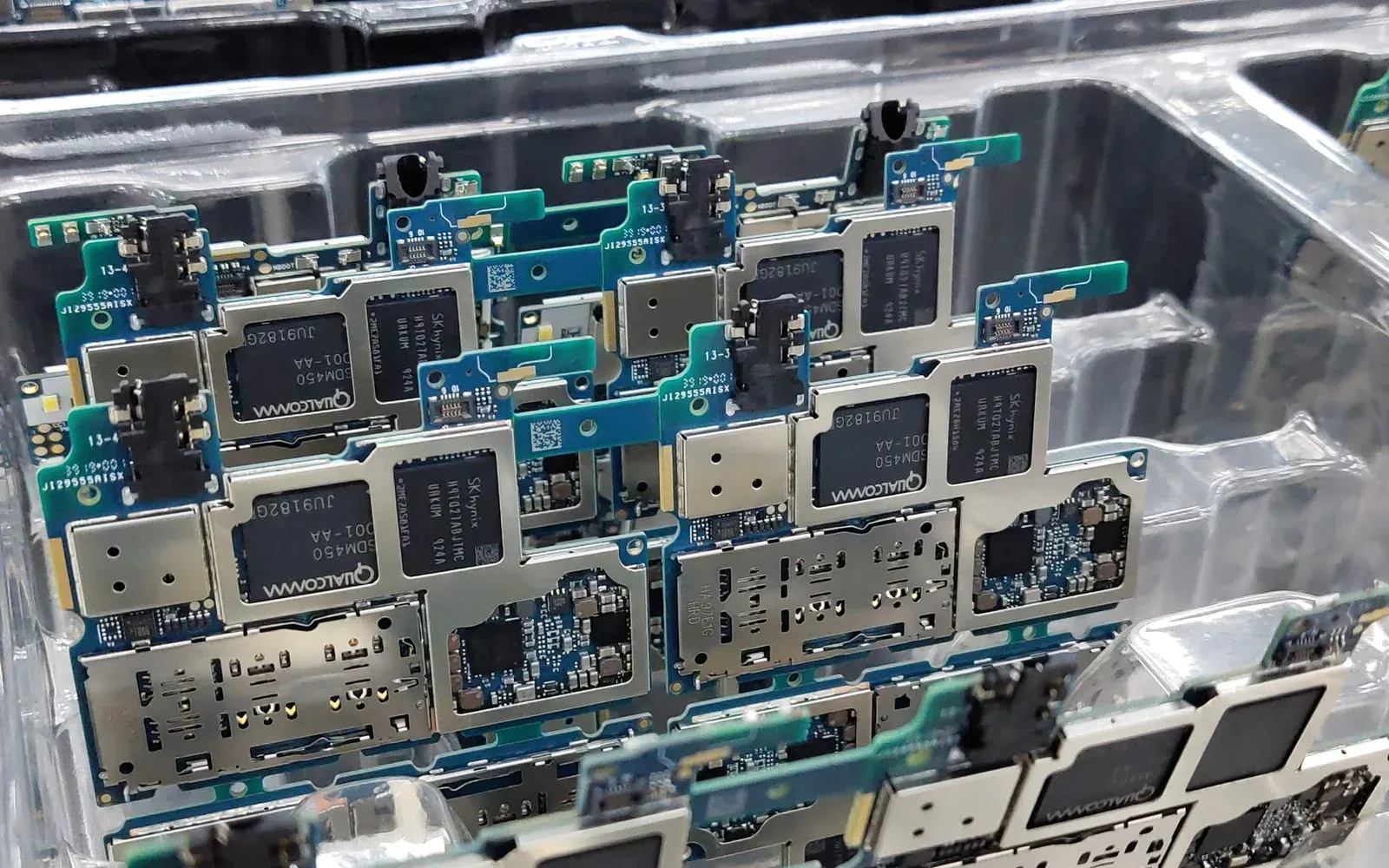
LCL is priced per cubic metre and suits trial orders: $130 to $150 per CBM for 1 to 3 CBM, $100 to $130 for 3 to 10 CBM, and $80 to $100 above 10 CBM. Add cargo insurance services at roughly 0.3% to 0.5% of insured value for all-risk cover, ESD and moisture-barrier packaging for boards and finished devices, and any certificate testing your buyer requires.
Air Freight vs Sea Freight for Electronics: Transit Times and the Value-Density Rule
Air freight wins on time and loses on cost per kilo. The useful question is how much margin the extra 25 days puts at risk. Door-to-door times for the main gateways look like this:
| Route | Airport-to-airport | Door-to-door |
|---|---|---|
| Shanghai (PVG) to Frankfurt (FRA) | 3–5 days | 5–8 days |
| Shenzhen (SZX) to Frankfurt (FRA) | 4–6 days | 6–9 days |
| Hong Kong (HKG) to Frankfurt (FRA) | 3–5 days | 5–8 days |
| Guangzhou (CAN) to Leipzig (LEJ) | 5–7 days | 7–10 days |
| Yantian to Hamburg (sea) | 26–30 days | 31–37 days |
| Ningbo to Hamburg (sea) | 28–33 days | 33–40 days |
A useful rule for electronics is value density. Take a shipment of 500 wireless headsets at 0.4 kg each, so 200 chargeable kilos. Air at $7 per kilo costs $1,400. The same volume by LCL is roughly 1.5 CBM at $130, or $195, and arrives about 25 days later. Carrying cost on that inventory is trivial at any normal rate. The decision turns on what a stockout costs: if each unit earns €30 of margin and three weeks of downtime loses 300 sales, the air option protects €9,000 of margin for an extra €1,200. If nothing is at risk, sea freight is the correct answer and the saved money belongs in your bank account.
Most importers we work with end up on a split rhythm rather than a single mode, sending the launch volume by air so listings stay live, then replenishing by sea once sell-through data exists. Anything with a battery inside adds a third constraint, covered below, because some air options close entirely once the pack exceeds certain watt-hour limits.
CE Marking, RoHS and the EU Responsible Person: Market Access Rules
CE marking is required when an EU directive or regulation covering your product applies to it, so a plain USB cable and a Bluetooth speaker fall under different rules. For electronics sold in Germany, the common set is the EMC Directive for electromagnetic compatibility, the Low Voltage Directive for mains-powered equipment between 50 and 1,000 volts, the Radio Equipment Directive for anything that transmits or receives by radio, and RoHS for restricted substances. A phone charger with Wi-Fi and a lithium cell can touch four of them at once.
The manufacturer, not the importer, issues the EU Declaration of Conformity and compiles the technical file, which must be kept for ten years and produced on request. Where a harmonised standard exists and is applied, self-declaration is legal, so a Chinese factory can issue a valid DoC without a notified body. That is also why so many certificates look convincing and fail inspection: the DoC references a standard, but no test report exists, or the model number on the certificate does not match the carton.
Since 13 December 2024 the General Product Safety Regulation (EU) 2023/988 applies to virtually every non-food consumer product sold in the EU, and it requires a responsible person established in the Union. That person’s name and address must appear on the product, the packaging or the accompanying documents, and they must hold the technical documentation and answer market surveillance authorities. Amazon and other marketplaces enforce this at listing level, so a missing EU responsible person can suspend your sales before customs ever looks at the cargo.
WEEE, Batteries and Packaging: Germany’s Three Registers
Germany runs three separate producer registers, and electronics importers usually need all three: WEEE for the equipment, a battery registration where cells are included, and LUCID for the packaging. Registration is tied to who first places the goods on the German market, which is normally the importer, or the forwarder acting as importer of record under DDP.
For WEEE, register with stiftung elektro-altgeräte register (stiftung ear) before the goods are placed on the market, per brand and per equipment category. The application asks for the brand, the equipment type, and either an insolvency-safe guarantee for equipment used in private households or a take-back concept plus evidence for purely commercial equipment. stiftung ear states that a complete application normally takes three to four weeks to process, so this is a step to start when you place the production order, not when the container is booked.
Batteries carry a registration under the German Battery Act, also handled through stiftung ear, and the EU Batteries Regulation (EU) 2023/1542 adds labelling requirements from 2026 and a QR code from 2027. Packaging is the third register: anyone who first places system-relevant sales packaging on the German market must register in LUCID at the Zentrale Stelle Verpackungsregister, sign a system participation contract with a licensed scheme, and report the quantities placed on the market. Since July 2022 the obligation applies to all producers regardless of company size.
Shipping Lithium Batteries from China to Germany: UN38.3 and the 30% Rule
Lithium batteries travel as Class 9 dangerous goods, and the packing instruction that applies decides whether your shipment can fly at all. Since 1 January 2026 the 30% state-of-charge limit also covers batteries packed with equipment, not just cells shipped on their own, which changed the paperwork for a large share of consumer electronics.
| Packing instruction | UN number and description | State of charge rule | Typical product |
|---|---|---|---|
| PI 965 | UN3480, cells or batteries shipped alone | Maximum 30% since 2016 | Spare battery packs, power banks |
| PI 966 | UN3481, batteries packed with equipment | Maximum 30% mandatory since 1 January 2026 | Device plus spare battery in one box |
| PI 967 | UN3481, batteries contained in equipment | Reduced charge strongly recommended | Laptops, phones, speakers with installed cells |
Every lithium shipment needs a UN38.3 test summary, a safety data sheet, a dangerous goods declaration signed by the shipper, UN-certified packaging and Class 9 labels. Sea freight moves the same goods under the IMDG code, which is more permissive on state of charge but stricter on stowage and segregation. The mistake that costs the most is silence: a carton described as “electronic accessories” that contains cells will be rejected by the carrier once screening finds it, and the shipper carries the liability for the misdeclaration.
Standalone UN3480 batteries are the hardest category to fly, because many airlines and consolidators no longer accept them as general air freight. Plan those shipments through a forwarder with a battery-approved lane, expect a lower chargeable weight ceiling per package, and budget more time than the published transit suggests.
German Customs Clearance: HS Codes, Duty and the 19% Import VAT
German customs clearance works from the customs value, which is the transaction price plus freight and insurance up to the EU border. Duty is charged on that value, then 19% import VAT is charged on the value plus duty. Most finished electronics enter duty-free, but the accessories around them usually do not.
| Product | HS heading | EU duty, 2026 |
|---|---|---|
| Smartphones | 8517.13 | 0% |
| Laptops and tablets | 8471 | 0% |
| Integrated circuits and components | 8542 | 0% |
| Connectors and relays | 8536 | 2.3% |
| Cable assemblies | 8544 | 3.7%, 0% for certain telecom types |
| Power supplies and adapters | 8504.40 | 3.7% |
| Monitors and televisions | 8528 | about 14% |
On a mixed order with a CIF value of $25,000, made up of $20,000 of laptops, $4,000 of cable assemblies and $1,000 of freight and insurance. Duty applies only to the cables: $4,000 at 3.7% is $148. Import VAT is 19% of $25,148, which comes to $4,778.12. Total import taxes are $4,926.12, and the laptops contribute nothing in duty despite carrying most of the value. A single invoice line described as “electronic goods, HS 8542” would understate duty on the cables, and German customs can recover that difference within the three-year post-clearance window from the importer of record, not from the supplier.
What changed for small parcels in 2026
The €150 duty exemption for low-value consignments ended on 1 July 2026. Under Council Regulation (EU) 2026/382, a temporary customs duty of €3 per item now applies to consignments up to €150, calculated per item by tariff classification rather than per parcel, and it runs until 1 July 2028. A €2 Union handling fee applies from 1 November 2026, and product identifiers become mandatory the same day. Separately, ICS2 requires an entry summary declaration for consignments entering the EU by any transport mode, so the advance data a forwarder files is now part of the critical path for air and sea alike.
DDP vs DAP: Who Is the Importer of Record?
Under DDP the seller or forwarder clears the goods and pays duty and VAT, and under DAP the buyer does, which changes who owns the customs liability and, more importantly, who can reclaim the VAT. For a German VAT-registered business, that difference is often larger than the freight difference between the two quotes.
| Responsibility | DDP | DAP | CIF |
|---|---|---|---|
| Export clearance in China | Seller or forwarder | Seller | Seller |
| Freight and insurance to Germany | Seller or forwarder | Seller | Seller |
| German import declaration | Seller or forwarder as importer of record | Buyer | Buyer |
| Duty and 19% import VAT | Seller or forwarder | Buyer | Buyer |
| VAT reclaim by the buyer | Usually not possible | Yes, with the import document in the buyer’s name | Yes |
| Best for | First shipments, FBA launches, buyers without a German VAT number | Established importers with an EORI and VAT registration | Buyers with their own broker |
The difficulty with DDP shows up in the paper trail. When a forwarder acts as importer of record, the import VAT is paid in the forwarder’s name, so a buyer without a German VAT registration cannot deduct it, and the 19% simply becomes part of the landed cost. That is a fair trade for a first container or an FBA launch. It becomes expensive once your volumes are steady and you are VAT-registered, because you are paying 19% you could otherwise recover.
For Amazon FBA from China, Amazon will not act as importer of record, so somebody in the chain must be. Deliveries need booked appointments, carton and pallet labels that match the shipment plan, and products that already carry the required EU responsible person details. A forwarder who has not delivered to a German fulfilment centre will still get the container to the gate, then discover the appointment is three weeks out.
Eight Checks Before You Book a Freight Forwarder
A forwarder for electronics needs more than a rate sheet, so screen for capability in the order the shipment will test it.
- Dangerous goods capability: ask which packing instructions they handle by air, and whether they accept UN3480 at all.
- Importer of record options: DDP with their EORI, DAP with yours, or a hybrid where they clear and you hold the VAT registration.
- HS classification: ask for the ten-digit TARIC code in writing before booking, not after arrival.
- Insurance: all-risk cover with a stated insured value, and the claims process in writing.
- Damage history: packaging standards for ESD-sensitive boards and shock-sensitive devices.
- FBA experience: appointment booking, label compliance and rejection handling.
- Tracking granularity: milestone updates through clearance, not just port to port.
- Quote completeness: confirm that terminal handling, customs brokerage, duty advances and delivery are inside the number you were given.
A Shenzhen audio brand we work with faced a launch deadline in March 2026 with 3,200 units of a Bluetooth speaker. We split the order: 800 units by air on a PI 967 shipment, cleared in Frankfurt and delivered to the FBA centre in Leipzig in nine days, with the remaining 2,400 units by sea to Hamburg in 34 days. The air batch carried the launch, the sea batch refilled the listing at a third of the freight cost per unit, and no stockout occurred. What made it work was the WEEE registration and the GPSR responsible-person label being ready three weeks before the first carton was packed, rather than the routing.
Efanda Logistics has run China-to-Germany electronics shipments since 2018 from our Shenzhen base, with clearance, insurance and door-to-door delivery under one account manager. For a landed-cost comparison before you commit to a mode, send your carton dimensions, weights and HS codes.
Frequently Asked Questions
How much does it cost to ship electronics from China to Germany?
Air freight runs $4.20 to $7.50 per chargeable kilo on the main weight bands, plus surcharges and destination fees, while a 40ft container by sea costs $4,200 to $5,600 under DDP terms. Add 19% import VAT on the customs value plus duty, which is zero for laptops and phones and around 2.3% to 3.7% for connectors, cables and power supplies.
How long does shipping from China to Germany take?
Air freight takes 6 to 9 days door to door from Shenzhen to Frankfurt, sea freight 31 to 37 days from Yantian to Hamburg with delivery, and express courier 2 to 5 days for small parcels. Rail via the China–Europe corridor sits between sea and air at roughly 28 to 38 days. All of these are planning ranges, not commitments.
Can I ship electronics with lithium batteries by air?
Yes, if the batteries are declared and the packing instruction is met. From 1 January 2026, batteries packed with equipment under PI 966 must ship at a state of charge of no more than 30%, and standalone UN3480 cells under PI 965 have had the same limit since 2016. You need a UN38.3 test summary, an MSDS, a dangerous goods declaration and UN-certified packaging, and some carriers refuse standalone batteries entirely.
Do I need CE marking for every electronic product?
No. CE marking applies only where an EU directive or regulation covering the product requires it, such as the Radio Equipment Directive, EMC Directive, Low Voltage Directive or RoHS. Every consumer product sold in the EU still needs a responsible person under the General Product Safety Regulation, even when CE marking does not apply.
What is a WEEE number and do I need one?
A WEEE registration number comes from stiftung ear and is required before you place electrical or electronic equipment on the German market. Registration is done per brand and equipment category, and equipment used in private households requires an insolvency-safe guarantee. Complete applications normally take three to four weeks, so file early.
Who is the importer of record under DDP?
The forwarder or seller who clears the goods under DDP is the importer of record, which means duty and import VAT are paid in their name. The practical consequence is that a buyer without a German VAT registration cannot reclaim the 19% VAT, so DDP prices usually embed it. Established importers with an EORI and VAT number often save money on DAP instead.
Is sea freight cheaper than air for electronics?
Per kilo, yes, usually by a factor of ten or more, but the comparison only matters against the cost of four extra weeks in transit. If a stockout would cost more than the air premium, ship by air; if the goods are not time-critical, sea freight keeps the margin.
What documents does German customs require for electronics?
A commercial invoice with ten-digit TARIC codes, a packing list, the bill of lading or air waybill, an EORI number, and the conformity documents for the product: the EU Declaration of Conformity, test reports where applicable, and the WEEE and battery registration numbers. Battery shipments also need the UN38.3 summary, MSDS and dangerous goods declaration.

Written by the EFANDA Logistics team — a Shenzhen-based freight forwarder established in 2018, moving cargo from China to ports worldwide with end-to-end pickup, consolidation, customs and door delivery.About us