Are you struggling with unexpected customs delays or skyrocketing air freight costs when shipping from China to Saudi Arabia?
While air freight is the fastest way to restock inventory in Riyadh or Jeddah, navigating Saudi Arabia’s strict SABER certification and fluctuating volumetric rates can quickly eat into your profit margins. As a senior international freight forwarding team handling Middle East routes daily, we frequently see importers face heavy demurrage (storage) fees simply because of a single misaligned HS code or a missing SCoC certificate.
This comprehensive guide breaks down the exact 2026 air freight costs, transit times to major Saudi airports, and provides a step-by-step checklist to master SABER customs clearance, ensuring your cargo arrives safely, compliantly, and on time.
Key Takeaways
- 2026 Air Freight Rates: Average costs range from $3.50 to $6.00 per kg for shipments over 100kg, heavily influenced by seasonal demand and volumetric weight.
- Transit Times: Expect 3 to 8 days door-to-airport, depending on whether you secure direct flights or transit routing.
- Customs Compliance: Registration on the SABER platform (obtaining both PCoC and SCoC) is strictly mandatory for customs clearance; non-compliance guarantees rejection.
- Best Arrival Port: King Khalid International Airport (RUH) in Riyadh generally offers the smoothest clearance process and best local handling rates for general cargo.
What Are the Real Challenges of Air Freight to Saudi Arabia?
The two biggest hurdles for air freight to Saudi Arabia are managing high volumetric weight costs and passing the mandatory SABER certification system. Importers who fail to plan for these factors often face unexpected airline fees and terminal storage charges.
The Impact of SABER Certification on Customs
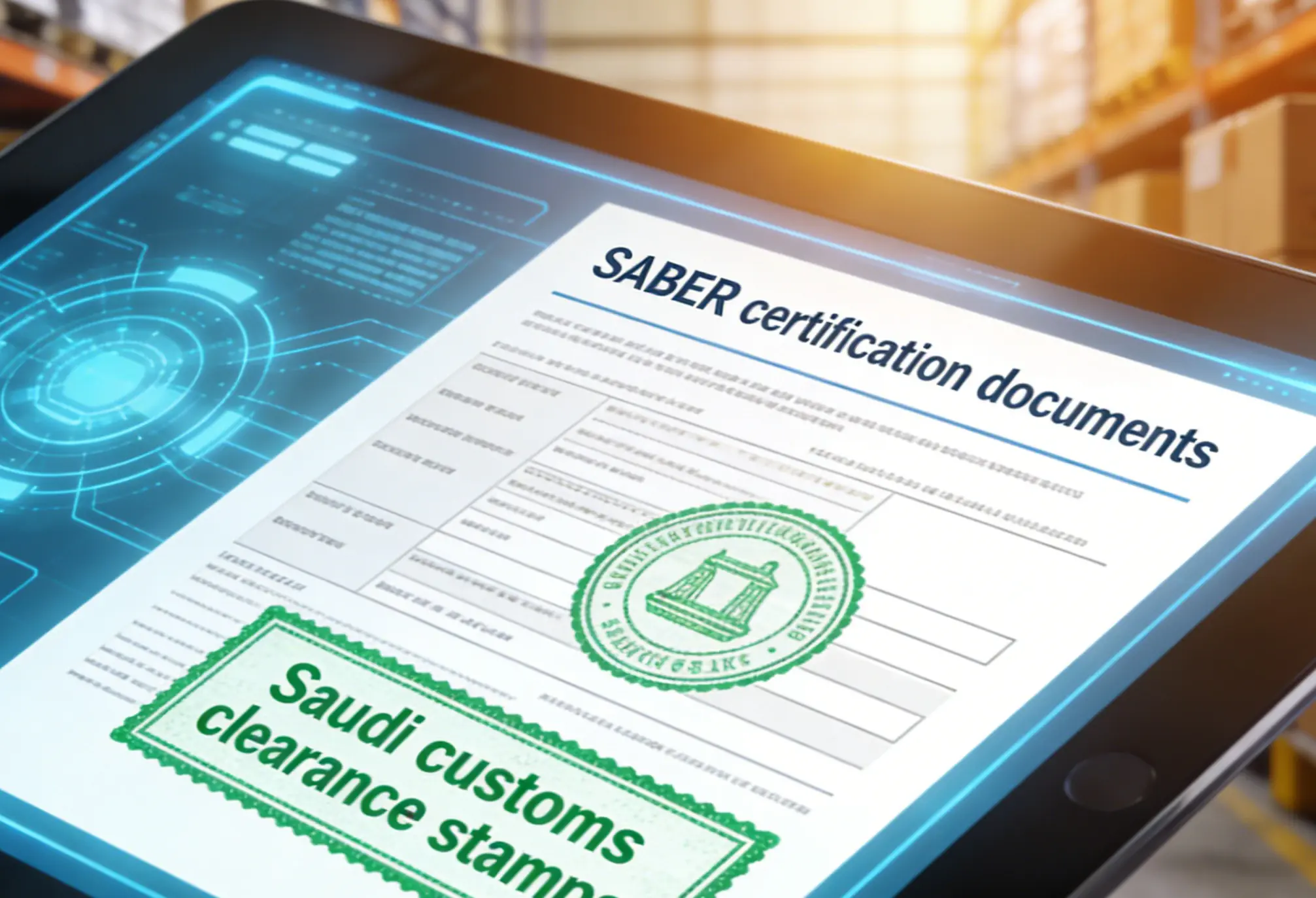
Every regulated product entering Saudi Arabia must be registered on the official SABER platform with a valid Product Certificate of Conformity (PCoC) and Shipment Certificate of Conformity (SCoC), otherwise, customs clearance will be strictly blocked. Enforced by the Saudi Standards, Metrology and Quality Organization (SASO), this system ensures product safety and regulatory compliance.
Understanding the Two-Certificate System:
| Certificate | Scope | Validity | Key Notes |
|---|---|---|---|
| PCoC (Product CoC) | Per product/model per HS Code | 1 year | Requires SASO-approved lab testing; must be obtained before shipment departure |
| SCoC (Shipment CoC) | Per individual shipment | Single use | Must match PCoC HS codes and commercial invoice values exactly; applied before flight arrival |
The PCoC confirms your product meets Saudi technical regulations — think of it as the “product passport.” The SCoC confirms that this specific shipment matches that approved product. Both are mandatory, and the sequence matters: you cannot obtain an SCoC without a valid PCoC first.
How Long Does SABER Registration Take?
| Stage | Timeline | Bottleneck Risk |
|---|---|---|
| Product testing (SASO-accredited lab) | 5–15 business days | High — delays are common if the lab requires retesting |
| PCoC application & approval | 2–5 business days | Medium — incomplete documentation is the main cause of rejection |
| SCoC application & approval | 1–3 business days | Low — if PCoC is already valid, this is a straightforward step |
Plan for at least 3–4 weeks from lab testing to holding both certificates in hand. Rushing this process is the #1 reason we see air freight shipments held at customs in Riyadh and Jeddah.
From our experience: We frequently see shipments held up because the HS codes on the commercial invoice do not perfectly match the SCoC. Even a single digit discrepancy — e.g., declaring HS 8471.30 (laptops) while the SCoC lists 8471.41 (desktops) — triggers an automatic rejection. Without these certificates matched precisely, your cargo will be stuck at the airport, racking up heavy daily storage fees (demurrage) that can quickly exceed the value of the freight itself. We’ve also seen cases where an importer secured the PCoC but overlooked that certain accessories (chargers, cables) fall under different HS codes requiring their own certification.
2026 Market Trends: Why Air Cargo Demand is Surging
Due to ongoing Red Sea shipping disruptions and regional supply chain shifts, more importers are transferring high-value goods to air freight, driving up demand for routes via Saudia Cargo and China Southern Airlines. This shift means securing space during peak seasons (such as before Ramadan or Q4) requires booking well in advance, and spot rates can fluctuate by 20-30% week-over-week.

How to Ship by Air from China to Saudi Arabia (Step-by-Step)
To ship successfully, you must calculate chargeable weight, select the optimal destination airport, and prepare compliance documents before booking the flight. Following a structured process eliminates guesswork and protects your budget.
Step 1: Calculate Gross vs. Volumetric Weight
Airlines charge based on chargeable weight, which is the greater of the gross (actual physical) weight or volumetric (dimensional) weight. For standard air freight, the formula is:
Chargeable Weight = Length × Width × Height (cm) ÷ 6000
Real-World Calculation Example:
Imagine you’re shipping a pallet of LED light fixtures from Shenzhen:
- Dimensions: 120 cm × 100 cm × 80 cm
- Volumetric weight: 120 × 100 × 80 ÷ 6000 = 160 kg
- Actual gross weight: 95 kg
- Chargeable weight: 160 kg (the higher value)
In this case, you are billed for 160 kg — nearly 70% more than the actual weight. This is why shipping lightweight, bulky goods by air can surprise unprepared importers. A single pallet of plastic housings or foam-lined packaging can easily hit 200+ kg in chargeable weight despite weighing only 80 kg on a scale.
Actionable Tip from Our Warehouse Team: Always ask your supplier to optimize packaging and eliminate dead space before delivery to the forwarder’s warehouse. Consolidating smaller boxes into properly palletized loads can save you up to 15% on volumetric charges. For high-volume shipments, ask your forwarder to run a chargeable weight simulation before booking — a different pallet arrangement could drop your billable weight by 10–20 kg per pallet.
Step 2: Choose Your Departure and Arrival Airports
Selecting the right airport pair directly impacts your transit time, clearance speed, and total landed cost. Here is how the key hubs compare:
China Departure Airports Comparison:
| Airport (IATA) | Best For | Flight Frequency | Rate Competitiveness |
|---|---|---|---|
| Guangzhou (CAN) | General cargo, textiles, consumer goods | High (daily flights via Saudia Cargo, China Southern) | Most competitive — often $0.30–$0.50/kg cheaper than PVG |
| Shenzhen (SZX) | Electronics, batteries, DG cargo | High (strong tech export corridor) | Competitive for electronics due to high volume |
| Shanghai Pudong (PVG) | Machinery, industrial equipment | High (hub for multiple carriers) | Slightly higher than CAN/SZX; better for heavy machinery with special handling needs |
| Hong Kong (HKG) | High-value goods, time-critical shipments | Very high (global cargo hub) | Lowest per-kg rates but adds 1–2 days for cross-border trucking from mainland China |
Saudi Arabia Arrival Airports Comparison:
| Airport (IATA) | Best For | Clearance Speed | Local Handling Fees | Seasonal Congestion Risk |
|---|---|---|---|---|
| King Khalid (RUH) — Riyadh | Central/eastern distribution, general goods | Fast (1–2 days typical) | Moderate | Low — steady year-round |
| King Abdulaziz (JED) — Jeddah | Western region, Jeddah market | Moderate (2–3 days typical) | Slightly higher | High during Hajj & Umrah seasons (May–August) |
| King Fahd (DMM) — Dammam | Eastern Province, industrial cargo | Moderate | Moderate | Low — but fewer direct flights from China |
Recommendation: For general cargo bound for central Saudi Arabia, RUH is the default choice for its faster clearance and lower congestion risk. If your market is Jeddah or Mecca, use JED but avoid scheduling arrivals during peak pilgrimage months (late May through August) when cargo terminal capacity is severely constrained. Dammam (DMM) is a viable alternative for eastern province deliveries but has fewer direct flight options.

Step 3: Prepare the Commercial Invoice and SABER Documents
Accurate documentation is non-negotiable for Saudi customs; your commercial invoice must match your packing list perfectly, and HS codes must align with your SABER registration.
Document Requirements Comparison: General vs. Special Cargo
| Document / Requirement | General Cargo | Special Cargo (e.g., Electronics, Batteries) |
|---|---|---|
| Commercial Invoice | Required (Must show actual value) | Required (Must show actual value) |
| Packing List | Required | Required |
| SABER PCoC & SCoC | Required for regulated items | Mandatory (Requires strict SASO testing) |
| MSDS & UN38.3 | Not required | Mandatory for battery-operated items |
| Certificate of Origin | Required | Required |

Cost Analysis & Transit Times for 2026
Standard air freight from China to Saudi Arabia costs between $3.50 and $6.00 per kg in 2026, with transit times ranging from 3 to 8 days depending on the carrier and routing. Prices fluctuate based on fuel surcharges (FSC), seasonal demand (especially pre-Ramadan peaks), and available airline capacity. We strictly advise importers to lock in rates 1-2 weeks in advance during these high-demand windows.
Breakdown of Air Freight Rates by Departure City (2026 Baseline)
While rates change frequently, here is a realistic baseline for 2026 based on shipments from major Chinese hubs to Riyadh (RUH) or Jeddah (JED). Note: Rates into Riyadh are occasionally slightly more expensive than Jeddah, but the faster clearance often justifies the difference. All rates below are airport-to-airport and exclude fuel surcharges (FSC), security fees, and local terminal handling charges.
| Origin City (IATA) | 100 kg | 300 kg | 500 kg+ | Notes |
|---|---|---|---|---|
| Guangzhou (CAN) | $4.20/kg | $3.70/kg | $3.50/kg | Most competitive — high flight frequency via Saudia Cargo |
| Shenzhen (SZX) | $4.50/kg | $4.00/kg | $3.80/kg | Electronics hub; DG surcharges may apply |
| Shanghai (PVG) | $4.80/kg | $4.30/kg | $4.00/kg | Best for machinery & heavy industrial equipment |
| Hong Kong (HKG) | $4.00/kg | $3.60/kg | $3.40/kg | Lowest base rate; add ~$0.15–$0.25/kg for cross-border trucking from mainland |
Pro Tip: The per-kg rate drops significantly at the 300 kg and 500 kg breakpoints. If your shipment is currently at 280 kg, consolidating with another small order to cross the 300 kg threshold can reduce your total freight cost — not just the marginal cost. Always ask your forwarder to quote multiple weight brackets.
Cost Components Beyond the Freight Rate
The headline per-kg rate is just one piece of the total cost. Here’s what else you should budget for:
| Cost Component | Typical Range | Notes |
|---|---|---|
| Fuel Surcharge (FSC) | $0.40–$0.80/kg | Fluctuates monthly; indexed to global jet fuel prices |
| Security Surcharge | $0.10–$0.20/kg | Mandatory on all air cargo |
| Air Waybill Fee | $15–$30 per AWB | Fixed fee per shipment |
| Terminal Handling (Origin) | $0.05–$0.10/kg | Chinese airport cargo terminal fee |
| Terminal Handling (Destination — RUH/JED) | $0.08–$0.15/kg | Saudi airport handling; JED slightly higher than RUH |
| Customs Clearance Broker Fee | $80–$150 per entry | If not using DDP, you pay this separately in Saudi Arabia |
| Demurrage/Storage (if delayed) | $0.05–$0.15/kg/day | Kicks in after 24–48 hours of free storage at Saudi airports |
Transit Time Comparison: Standard Air vs. Express Courier
When speed is critical, you must choose between standard air cargo and express courier services.
| Shipping Mode | Transit Time | Best For | Cost Profile | Customs Handling |
|---|---|---|---|---|
| Express Courier (DHL, FedEx, UPS) | 3–5 days door-to-door | Urgent parcels under 100 kg | $6–$9/kg (higher but all-inclusive) | Included in service; simplified clearance |
| Standard Air Freight | 5–8 days airport-to-airport | Shipments over 100 kg | $3.50–$4.80/kg (rate only) | Requires separate broker or DDP arrangement |
| DDP Air Freight | 7–10 days door-to-door | 100–1000 kg commercial cargo needing full-service | $5.50–$7.50/kg (all duties & taxes included) | Fully managed by forwarder |
Seasonal Alert — Hajj & Ramadan Impact: During the Hajj pilgrimage season (late May through August), Jeddah (JED) airport faces severe cargo congestion. Expect 2–4 extra days for clearance and higher local handling fees. During Ramadan, airlines reduce belly cargo capacity as passenger flights shift schedules. Lock in space at least 2 weeks ahead during both periods.
Real-World Case Study: DDP Air Freight — Shenzhen to Riyadh
To make these numbers concrete, here is an actual shipment we handled for a consumer electronics importer in Q1 2026:
Shipment Profile:
- Product: Bluetooth speakers (regulated — requires SABER)
- Origin: Supplier warehouse, Shenzhen (SZX)
- Destination: Importer’s warehouse, Riyadh city center
- Gross weight: 320 kg / Volumetric weight: 348 kg → Chargeable: 348 kg
- Service: DDP Air Freight (door-to-door, all duties and taxes included)
Total Landed Cost Breakdown:
| Cost Item | Amount (USD) | Per kg |
|---|---|---|
| Air freight (SZX → RUH, 348 kg chargeable @ $3.85/kg) | $1,339.80 | $3.85 |
| Fuel & security surcharges | $208.80 | $0.60 |
| Export customs clearance (China) | $65.00 | — |
| Air Waybill & terminal handling | $55.00 | — |
| Import customs clearance (Saudi Arabia) | $120.00 | — |
| Customs duty (5% on CIF value of $12,500) | $625.00 | — |
| VAT (15% on CIF + duty) | $1,968.75 | — |
| Last-mile delivery (RUH → Riyadh city center) | $85.00 | — |
| Total Landed Cost | $4,467.35 | $12.84 |
Timeline: 9 days from factory pickup to final delivery (3 days SABER document prep + 6 days transit & clearance).
Key Takeaway: The headline air freight rate was $3.85/kg, but the true all-in landed cost including duties, VAT, and clearance fees came to $12.84/kg — over 3× the freight rate. This is why we always advise importers to budget for the total landed cost, not just the per-kg air freight quote. Using a DDP service with a forwarder experienced in Saudi clearance means no surprises: you know your exact total before the shipment leaves China.
Understanding Your Service Options: Airport-to-Airport vs. DAP vs. DDP
Choosing the right Incoterms and service level dramatically affects your cost, risk, and involvement in the logistics process. Here’s how the three main options stack up for air freight to Saudi Arabia:
| Service Level | What’s Included | What You Handle | Best For | Typical All-In Cost (300kg) |
|---|---|---|---|---|
| Airport-to-Airport (FCA/CPT) | Flight booking, AWB, origin terminal handling | Saudi customs clearance, duties, VAT, last-mile delivery, destination terminal fees | Experienced importers with their own Saudi broker | Low per-kg but high hidden costs |
| DAP (Delivered at Place) | Flight, export & import clearance, last-mile delivery | Import duties & VAT (paid by importer upon arrival) | Importers who want delivery handled but prefer to pay duties directly | Medium — duties paid separately |
| DDP (Delivered Duty Paid) | Everything: flight, clearance, duties, VAT, last-mile delivery | Nothing — forwarder handles the entire process | First-time importers, eCommerce sellers, anyone wanting a single landed cost | $8–$13/kg all-inclusive |
Recommendation: For importers unfamiliar with Saudi customs requirements or shipping regulated goods (which require SABER), DDP is almost always the safer and more cost-predictable choice. The risk of demurrage fees from a documentation error at Saudi customs can easily exceed the premium of a DDP service.
Last-Mile Delivery in Saudi Arabia: From Airport to Final Destination
Once your cargo clears customs at RUH, JED, or DMM, it still needs to reach its final destination. Last-mile delivery within Saudi Arabia is an often-overlooked component that can add significant time and cost.
Estimated Last-Mile Delivery Times & Costs from Major Airports:
| From Airport | To Destination | Transit Time | Approximate Cost | Notes |
|---|---|---|---|---|
| RUH (Riyadh) | Riyadh city center | 1 day | $50–$100 | Shortest route — same-day possible |
| RUH (Riyadh) | Dammam / Eastern Province | 2–3 days | $150–$300 | ~400 km; highway freight |
| JED (Jeddah) | Jeddah city center | 1 day | $50–$100 | Same-day delivery common |
| JED (Jeddah) | Mecca / Medina | 1–2 days | $100–$200 | Highway access; heavier traffic during pilgrimage seasons |
| JED (Jeddah) | Riyadh | 2–3 days | $250–$400 | ~950 km; consider RUH as arrival airport instead |
| DMM (Dammam) | Riyadh | 1–2 days | $150–$250 | ~400 km; good alternative to RUH for eastern shipments |
Packing and Insurance for Last-Mile Transit:
Road conditions on Saudi highways are generally excellent, but summer temperatures exceeding 45°C (113°F) pose a genuine risk to heat-sensitive cargo. If you are shipping electronics, cosmetics, or food products, specify temperature-controlled trucking for the last-mile leg. We also recommend cargo insurance at 0.3–0.5% of the declared value — a $12,500 shipment can be insured for as little as $40.
Why Choose Efanda Logistics for Your Saudi Shipments?
Efanda Logistics offers specialized DDP and air freight solutions to Saudi Arabia, ensuring 100% SABER compliance and competitive airline rates. We understand that a delayed shipment means lost revenue and damaged client relationships.
Expertise in Saudi Customs & SABER
We don’t just book flights; we guide our clients through the complex PCoC and SCoC certification process. Our team ensures that your HS codes are perfectly aligned with Saudi regulations before your cargo even leaves our Chinese warehouse services, mitigating the risk of destination delays.
Guaranteed Space with Premium Airlines
Thanks to our long-standing partnerships with major carriers like Saudia Cargo, China Southern Airlines, and Emirates SkyCargo, we secure reliable capacity even during peak seasons. Whether you need standard airport-to-airport air freight or a full door-to-door (DDP) solution, we deliver transparency and speed.
Frequently Asked Questions (FAQ)
1. How much does it cost to ship 100kg by air from China to Saudi Arabia?
For a 100kg shipment, expect to pay between $4.50 and $5.50 per kg in 2026. The total freight cost will be approximately $450 to $550, excluding origin local charges, destination customs duties, and taxes.
2. How long does air freight take from Shenzhen to Riyadh?
Standard air freight from Shenzhen to Riyadh typically takes 5 to 8 days. This accounts for flight scheduling, potential transit stops, and standard customs clearance times at RUH.
3. What is the difference between air freight and express courier to Saudi Arabia?
Express courier (DHL/FedEx) is a door-to-door service ideal for goods under 100kg, taking 3-5 days. Standard air freight is an airport-to-airport service, better suited for larger shipments over 100kg, and requires separate customs clearance arrangements.
4. Who pays the 15% VAT on imports to Saudi Arabia?
The importer of record is responsible for paying the 15% Value-Added Tax (VAT) mandated by the Zakat, Tax and Customs Authority (ZATCA), along with any applicable customs duties based on the CIF (Cost, Insurance, and Freight) value. If you use a DDP (Delivered Duty Paid) service, your freight forwarder handles these payments on your behalf, providing a seamless, transparent landed cost. (Disclaimer: Tax rates are subject to government policy changes; always verify current rates for 2026).
5. Can I ship products containing batteries by air to Jeddah?
Yes, but they are classified as Dangerous Goods (DG) under IATA regulations. You must provide proper documentation, including an MSDS (Material Safety Data Sheet) and a UN38.3 test report. The airline must approve the shipment, and special DG packaging rules apply. We highly recommend working with a certified forwarder, as non-compliant battery shipments will be rejected by the airline.
6. How long does SABER certification take, and which products require it?
SABER certification is mandatory for virtually all consumer and industrial products imported into Saudi Arabia — including electronics, textiles, machinery, toys, cosmetics, and construction materials. The full process (product testing + PCoC + SCoC) typically takes 3–4 weeks for a new product. Once you have a valid PCoC (valid for 1 year), obtaining the SCoC for each shipment takes only 1–3 business days. Products exempt from SABER include raw materials not intended for consumer use and certain medical devices regulated separately by the Saudi Food and Drug Authority (SFDA).
7. Which Chinese departure airport offers the cheapest air freight to Saudi Arabia?
Hong Kong (HKG) typically offers the lowest base air freight rate at $3.40–$4.00/kg for 500kg+ shipments. However, mainland Chinese cargo must be trucked to HKG, adding 1–2 days and approximately $0.15–$0.25/kg in cross-border trucking costs. For direct mainland departures, Guangzhou (CAN) is consistently the most cost-competitive at $3.50–$4.20/kg for 500kg+ shipments, followed by Shenzhen (SZX). Shanghai (PVG) is typically $0.30–$0.50/kg more expensive but offers the best infrastructure for oversized or heavy machinery cargo.