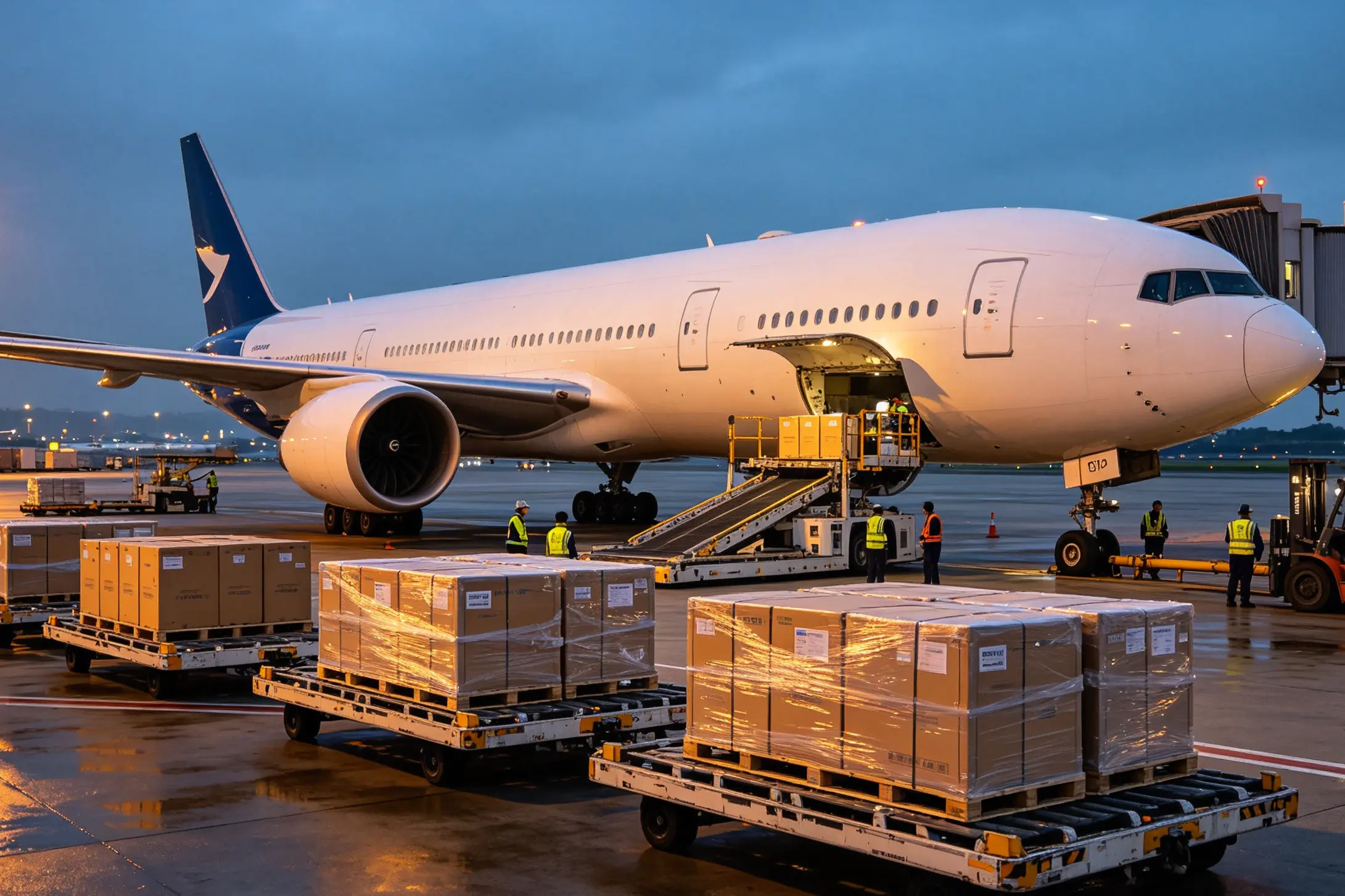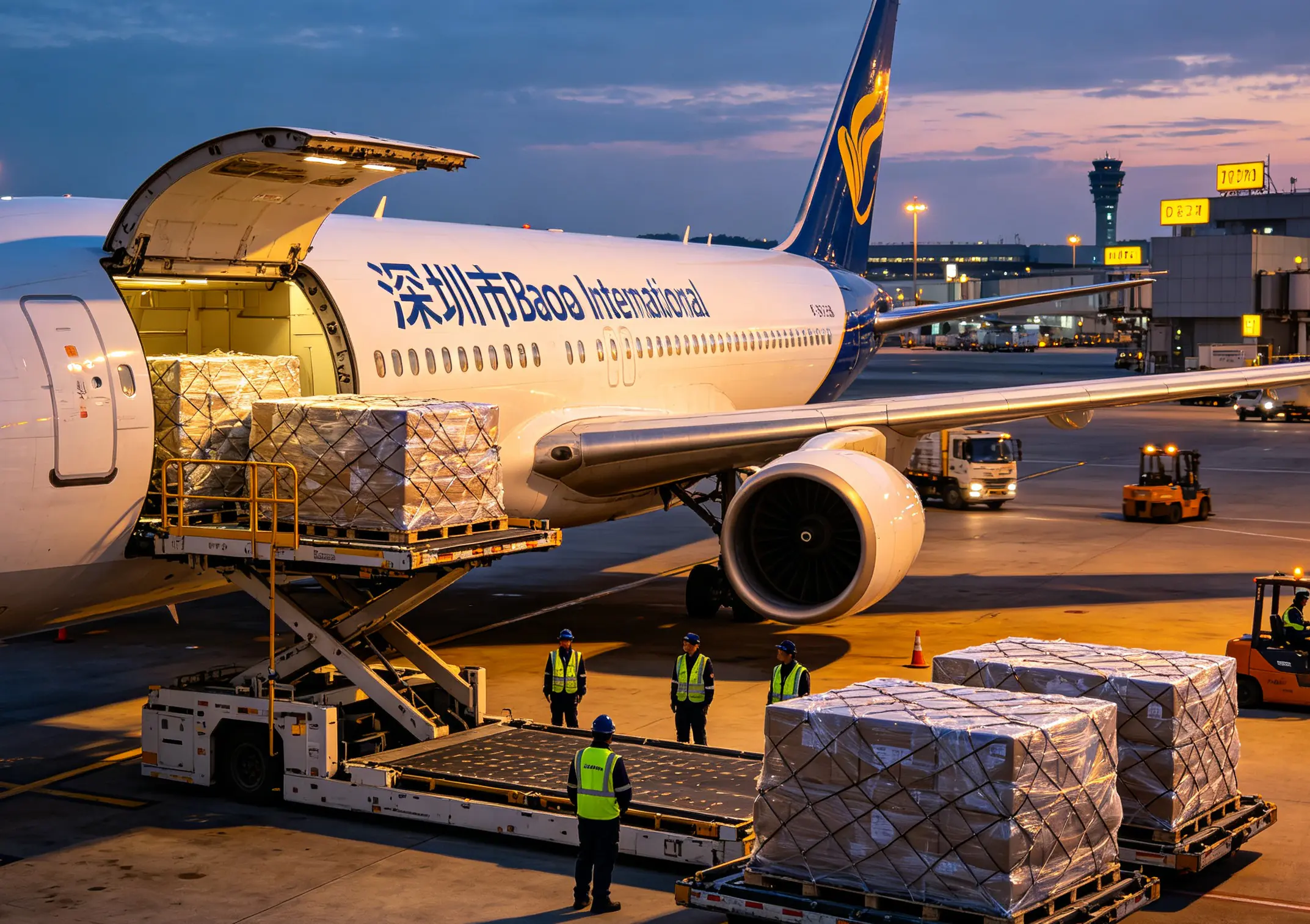
When shipping from China to Canada via air freight, importers are often forced to balance speed and cost while navigating strict CBSA regulations. Air Freight from China to Canada is the premier choice for time-sensitive, high-value, or low-volume goods. In our years of managing these trans-Pacific trade lanes, we’ve seen firsthand how a lack of preparation can lead to unexpected delays and hidden fees. In this 2026 ultimate guide, our logistics experts will cover everything you need to know about current air freight costs, realistic transit times, the new CARM customs requirements, and restricted items to ensure your supply chain remains efficient and profitable.
Expected Transit Times for Air Freight from China to Canada
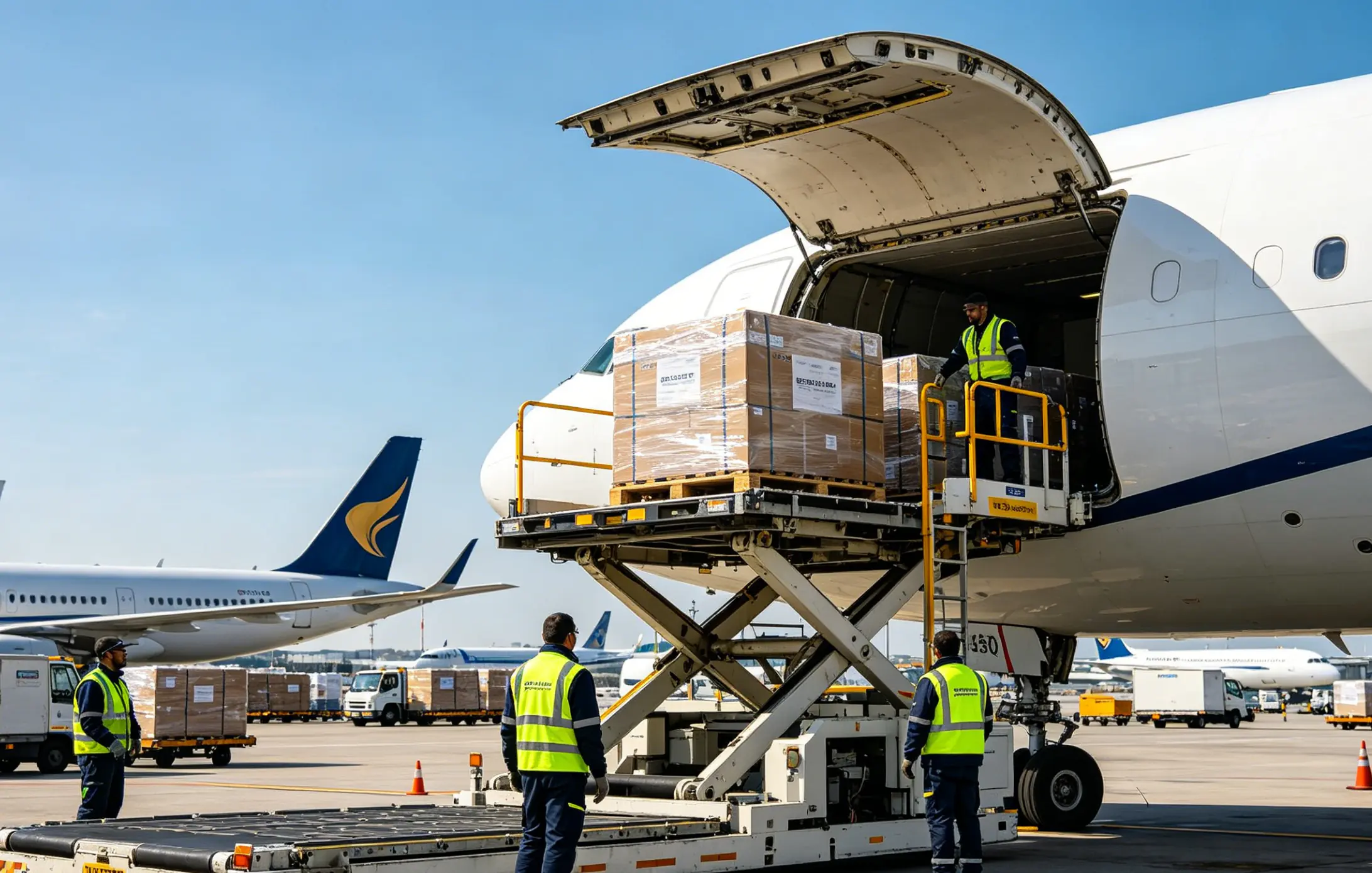
Air freight from China to Canada typically takes 3 to 7 days for standard air cargo and 1 to 3 days for express courier services (like DHL, FedEx, or UPS).

The exact transit time depends heavily on your chosen routing and the level of service. For example, direct flights from Shenzhen (SZX) to Vancouver (YVR) can take as little as 3-5 days door-to-door, while shipments from Shanghai (PVG) to Toronto (YYZ) may take 4-7 days due to distance and local processing times.
It is important to note that delays can occur. Severe winter weather conditions in Canada, peak season (Q4) congestion at major hubs, and CBSA (Canada Border Services Agency) customs holds can add days to your timeline.
Actionable Advice: Book shipments 7-10 days in advance during peak seasons (such as the weeks leading up to Black Friday or Chinese New Year) to secure space and avoid premium spot rates.
How Much Does Air Freight from China to Canada Cost in 2026?
In 2026, standard air freight from China to Canada costs between $4.50 and $8.50 per kilogram, while express shipping ranges from $7.00 to $12.00 per kilogram depending on fuel surcharges and seasonal demand.
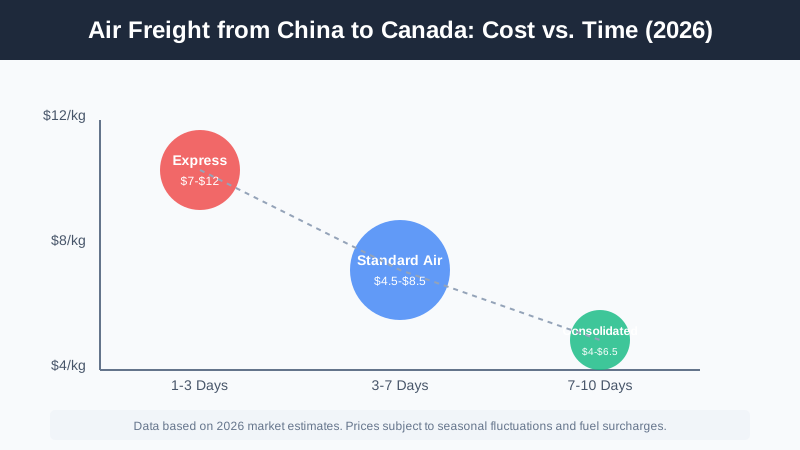
To help you decide which service fits your budget and timeline, here is a comparison based on current 2026 market rates:
| Shipping Method | Cost per KG (USD) | Transit Time | Best For Scenarios |
|---|---|---|---|
| Express Courier (DHL/UPS) | $7.00 – $12.00 | 1 – 3 Days | Urgent samples, documents, shipments < 50kg |
| Standard Air Freight | $4.50 – $8.50 | 3 – 7 Days | Commercial goods, electronics, shipments > 100kg |
| Consolidated Air Cargo | $4.00 – $6.50 | 7 – 10 Days | Less urgent bulk shipments seeking cost savings |
Note: Prices are estimates and fluctuate based on seasonal demand and airline fuel surcharges.
Several factors affect your final price, including seasonality (rates spike in Q4), fluctuating airline fuel surcharges, and the chargeable weight calculation.
Actionable Advice: For shipments weighing over 500kg, standard air freight is significantly more cost-effective than express courier services. Always ask your freight forwarder for a consolidated air option if your timeline allows for an extra 2-3 days of transit.
Major Airports for Air Freight from China to Canada
The primary origin airports for shipping from China are Shanghai (PVG), Guangzhou (CAN), and Shenzhen (SZX), while the main destination airports in Canada are Toronto (YYZ), Vancouver (YVR), and Montreal (YUL).
Routing plays a crucial role in both cost and speed. Flying direct to Vancouver (YVR) is generally faster and cheaper for West Coast buyers or those looking to truck goods inland. Conversely, Toronto Pearson (YYZ) serves the East Coast and is the largest cargo hub in Canada, making it ideal for distributions centered around Ontario and Quebec. Choosing the right airport combination based on your supplier’s location and your final destination can save you both time and inland trucking costs.
Customs Clearance for Air Cargo from China to Canada: Required Documents
To clear Canadian customs for air shipments, you must provide a Commercial Invoice, Packing List, Air Waybill (AWB), and a Canada Customs Invoice (CCI) for shipments valued over CAD 3,300.
The CBSA requires precise documentation for all commercial imports. A major shift for 2026 is the mandatory transition to the CARM (CBSA Assessment and Revenue Management) system. According to the official Canada Border Services Agency (CBSA) guidelines, commercial importers must now be registered on the CARM Client Portal (CCP) and post their own financial security to clear goods, rather than relying on a customs broker’s bond.
Actionable Advice: From our team’s experience assisting clients with the CARM transition, the most common reason for penalties is incorrect HS Code classification. Ensure your supplier accurately declares the HS Code and valuation on the Commercial Invoice to avoid severe CARM penalties and cargo seizures at the airport.
How to Calculate Chargeable Weight for Your Air Shipments to Canada
The chargeable weight for air freight from China to Canada is calculated as the greater of the actual gross weight or the volumetric weight, using the standard 1:167 formula (1 CBM = 167 KG) for air cargo.

Airlines charge based on the space a package takes up, not just how heavy it is. To calculate volumetric weight, multiply the dimensions of your cargo in cubic meters (CBM) by 167.
Calculation Example:
If you have a box weighing 50kg, but its dimensions equal 1 CBM, the airline will compare the actual weight (50kg) against the volumetric weight (1 CBM x 167 = 167kg). You will be billed for 167kg, which is the chargeable weight.
Restricted and Prohibited Items for Air Freight to Canada
Dangerous goods such as lithium batteries, liquids, chemicals, and counterfeit products face strict regulations or total bans when shipping by air to Canada.

Air freight safety regulations are heavily enforced by both the airlines and CBSA. Common restricted items include:
- Lithium Batteries: Must strictly comply with the International Air Transport Association (IATA) Dangerous Goods Regulations, requiring UN38.3 test reports and specialized packing.
- Liquids & Powders: Require MSDS (Material Safety Data Sheets) and non-hazardous certifications.
- Food & Pharmaceuticals: Regulated by the CFIA (Canadian Food Inspection Agency) and Health Canada, requiring specific import permits.
Actionable Advice: We cannot stress this enough: always declare battery-powered items correctly. Hidden batteries or undeclared liquids can lead to immediate cargo rejection by the airline, heavy fines, and a permanent red flag on your importer record.
You may be interested in the following related articles:
- shipping from china to afghanistan
- shipping from china to angola
- shipping from china to morocco
- shipping from china to nigeria
- shipping from china to libya
Why Choose Efanda Logistics for Your Canada Shipments?
Efanda Logistics provides seamless, end-to-end air freight from China to Canada, ensuring competitive rates, fast CBSA customs clearance, and guaranteed space allocation even in peak seasons.
We understand the complexities of the Canadian market. Our advantages include tailored DDP (Delivered Duty Paid) options, robust local warehouse services in Toronto and Vancouver, and deep expertise in Canadian compliance, including full support for the new CARM system. We don’t just move freight; we solve your supply chain problems.
Frequently Asked Questions (FAQ)
How do I track my air freight shipment from China to Canada?
You can track your standard air freight shipment using the 11-digit Master Air Waybill (MAWB) number on the specific airline’s cargo tracking website. If you use an express courier, tracking is available directly on their app or website. Efanda Logistics provides a centralized dashboard for real-time tracking of all your shipments.
Does air freight include door-to-door delivery?
Standard air freight is typically Airport-to-Airport. However, freight forwarders like Efanda Logistics can arrange door to door shipping by coordinating the origin pickup in China, the air freight, customs clearance, and the final truck delivery to your warehouse in Canada.
What is the difference between DDP and DAP for Canadian imports?
Under DAP (Delivered at Place), the seller arranges delivery to your Canadian address, but you (the buyer) are responsible for paying Canadian customs duties, taxes (GST/HST), and handling CBSA clearance. Under DDP (Delivered Duty Paid), the seller or forwarder handles all costs, including shipping, customs clearance, and taxes, delivering the goods to your door with zero hidden fees.