How do you find the cheapest shipping from China to Yemen without watching your cargo sit in port for weeks or your invoice balloon with surcharges you never expected? Yemen is not a standard Middle East route. Red Sea disruptions, mandatory UNVIM inspections, volatile War Risk Surcharges (WRS), and divided local customs systems mean the lowest headline rate is rarely the cheapest final cost. In this guide, you will learn which shipping mode is actually cheapest for your shipment size, what fees to watch for, and how to keep your cargo moving in 2026.

Why Shipping From China to Yemen Is Different in 2026
Yemen sits at the southern end of the Red Sea and the Gulf of Aden, making it one of the most strategically located — and logistically complex — destinations in the Middle East. Since late 2023, the Red Sea crisis has forced many carriers to reroute around the Cape of Good Hope, adding 7–12 days to transit times and increasing fuel and operating costs. Even when carriers return to Red Sea routes, they typically add a War Risk Surcharge (WRS) that can change weekly.
If your cargo is headed to the northern Yemeni ports of Hodeidah or Saleef, it must pass through the United Nations Verification and Inspection Mechanism (UNVIM). This pre-arrival inspection process is mandatory for commercial shipments and can add several days — sometimes weeks — to your timeline. For this reason, most importers now treat the Port of Aden as the default discharge port for commercial cargo and only route through Hodeidah when the final destination specifically requires it.
Yemen also operates under dual administrative systems, with different customs practices in the north and south. A registered local consignee is almost always required to clear goods, which makes Door-to-Door (D2D) and Delivered Duty Paid (DDP) arrangements more complicated than in neighboring countries like the UAE or Saudi Arabia.
The bottom line: shipping to Yemen in 2026 is not just about finding the lowest freight rate. It is about building a route strategy that balances cost, transit time, and risk.
Cheapest Shipping Option by Shipment Size
The word “cheapest” only makes sense when you match the shipping mode to your cargo. A 2 kg sample and a 20-ton container should never be quoted the same way. Below is a practical decision framework for finding the cheapest way to ship goods from China to Yemen based on volume, weight, and urgency.
| Shipment Size | Recommended Mode | Estimated Cost Range (June 2026) | Best For |
|---|---|---|---|
| Small parcels ≤ 2 kg | Postal / express courier | $8–$35 per parcel | Samples, dropshipping, documents |
| Small commercial 2 kg–1 CBM | Economy courier or LCL consolidation | $4–$8/kg or $90–$150/CBM | E-commerce, small retail orders |
| Medium commercial 1–15 CBM | LCL sea freight | $80–$220/CBM | Regular importers, mixed cargo |
| Large commercial 15+ CBM | FCL shipping from China to Yemen | $900–$5,500 per container | Bulk shipments, manufacturers |
| Urgent / high-value | Air freight or DDP air | $7.50–$11.00/kg | Spare parts, medical supplies, electronics |

For most regular importers, LCL sea freight is the sweet spot between 1 and 15 CBM. It gives you ocean freight pricing without paying for empty container space. Once you cross roughly 15 CBM, a 20ft FCL container usually becomes cheaper per cubic meter. For shipments above 30 CBM, a 40ft HQ container is generally the most cost-effective choice.
Air freight looks expensive on a per-kilogram basis, but it can be the “cheapest” option when stockouts, production downtime, or missed sales would cost more than the freight bill.
Sea Freight From China to Yemen: The Cheapest Choice for Most Cargo
FCL vs. LCL: Which Saves More Money?
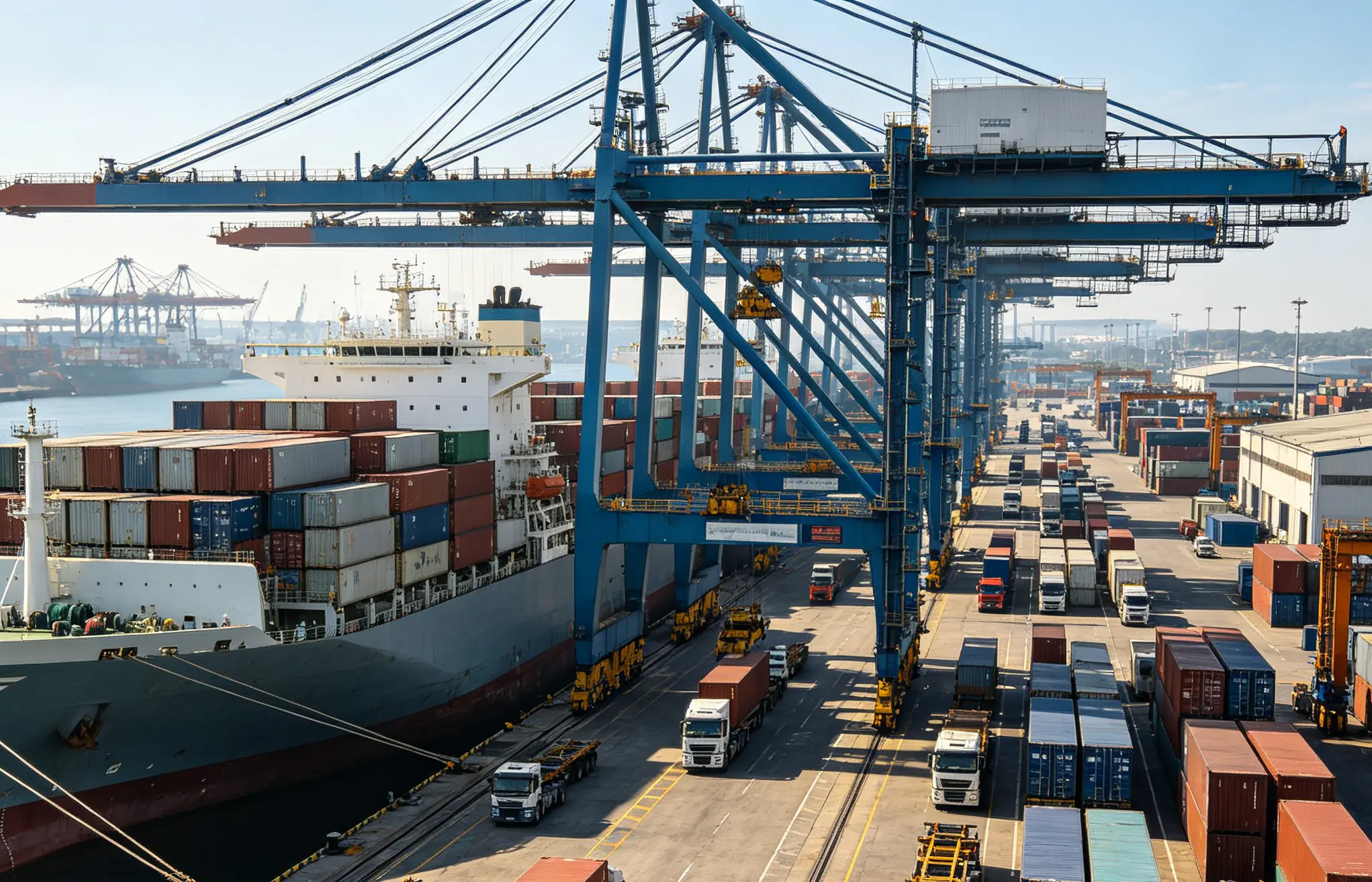
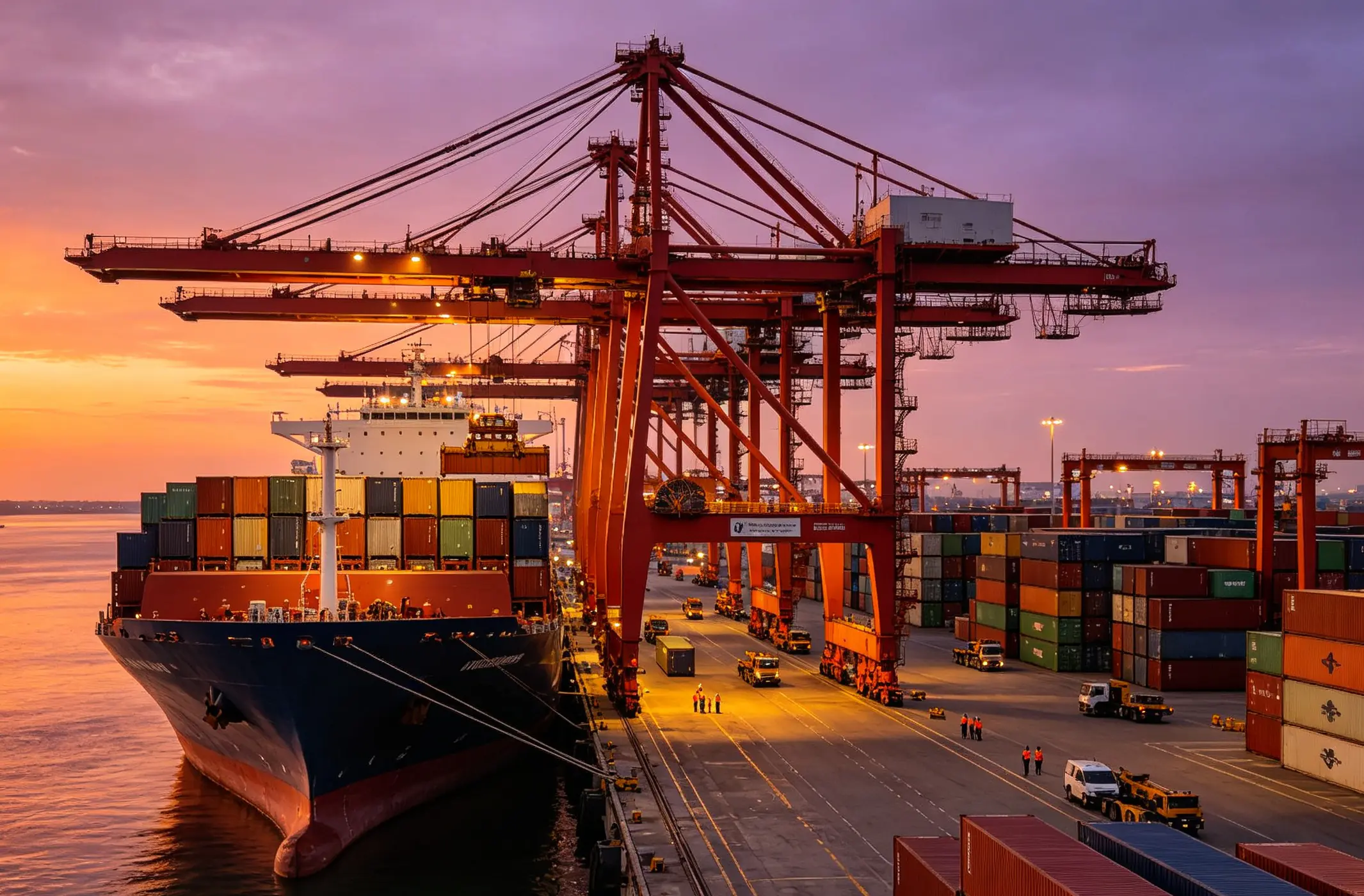
FCL (Full Container Load) means you book an entire container for your cargo. LCL (Less than Container Load) means your cargo shares container space with other shippers. The break-even point usually sits around 15 CBM. Below that, LCL is cheaper because you only pay for the space you use. Above that, FCL becomes cheaper per unit because you are not splitting handling and consolidation fees with other cargo.
The most common shipping container dimensions are:
| Container Type | Internal Volume | Typical Payload | Best For |
|---|---|---|---|
| 20GP | ~33 CBM | ~28,000 kg | Dense cargo, machinery, smaller bulk orders |
| 40GP | ~67 CBM | ~26,500 kg | Large-volume general cargo |
| 40HQ | ~76 CBM | ~26,500 kg | Light, bulky cargo such as furniture or textiles |
Cost Breakdown for Sea Freight (June 2026)
The following ranges reflect market conditions as of June 2026. Rates change frequently due to WRS, fuel adjustments, and carrier capacity, so treat these as planning estimates rather than fixed quotes.
| Service | Unit | Estimated Cost Range (USD) |
|---|---|---|
| LCL sea freight | Per CBM | $80 – $220 |
| 20ft FCL | Per container | $900 – $3,500 |
| 40ft FCL / HQ | Per container | $1,600 – $5,500 |
| War Risk Surcharge | Per TEU | $200 – $800+ |
| Bunker Adjustment Factor (BAF) | Variable | Included in base or added separately |
| Origin/destination handling | Per shipment | $100 – $400 |
| Documentation fees | Per shipment | $50 – $150 |
To compare LCL and FCL fairly, convert everything to a per-CBM cost. For example, if a 40ft HQ container costs $3,000 and holds roughly 65 usable CBM, your effective freight cost is about $46/CBM — well below typical LCL rates. But that only saves money if you actually fill the container.
Transit Times by Port Pair
Direct mainline service from China to Yemen is rare. Most cargo transships through Jebel Ali (Dubai), Salalah (Oman), or King Abdullah Port before arriving on a smaller feeder vessel.
| Origin in China | Destination Port | Estimated Transit Time |
|---|---|---|
| Shanghai / Ningbo | Aden | 25–35 days |
| Shenzhen / Guangzhou | Aden | 22–32 days |
| Shanghai / Ningbo | Hodeidah | 35–45+ days (includes UNVIM) |
| Shenzhen / Guangzhou | Hodeidah | 32–42+ days (includes UNVIM) |
| Major Chinese ports | Mukalla | 28–38 days |
Choosing the Right Yemeni Port
- Port of Aden: The safest default for most commercial cargo. More stable operations, faster clearance, and better feeder connections from Middle East hubs.
- Port of Hodeidah: Use only when your consignee or final destination is in northern Yemen. Budget extra time and paperwork for UNVIM inspections.
- Port of Mukalla: A useful alternative for eastern Yemen and regional redistribution, though vessel frequency is lower.
Air Freight From China to Yemen: When Speed Beats Cost
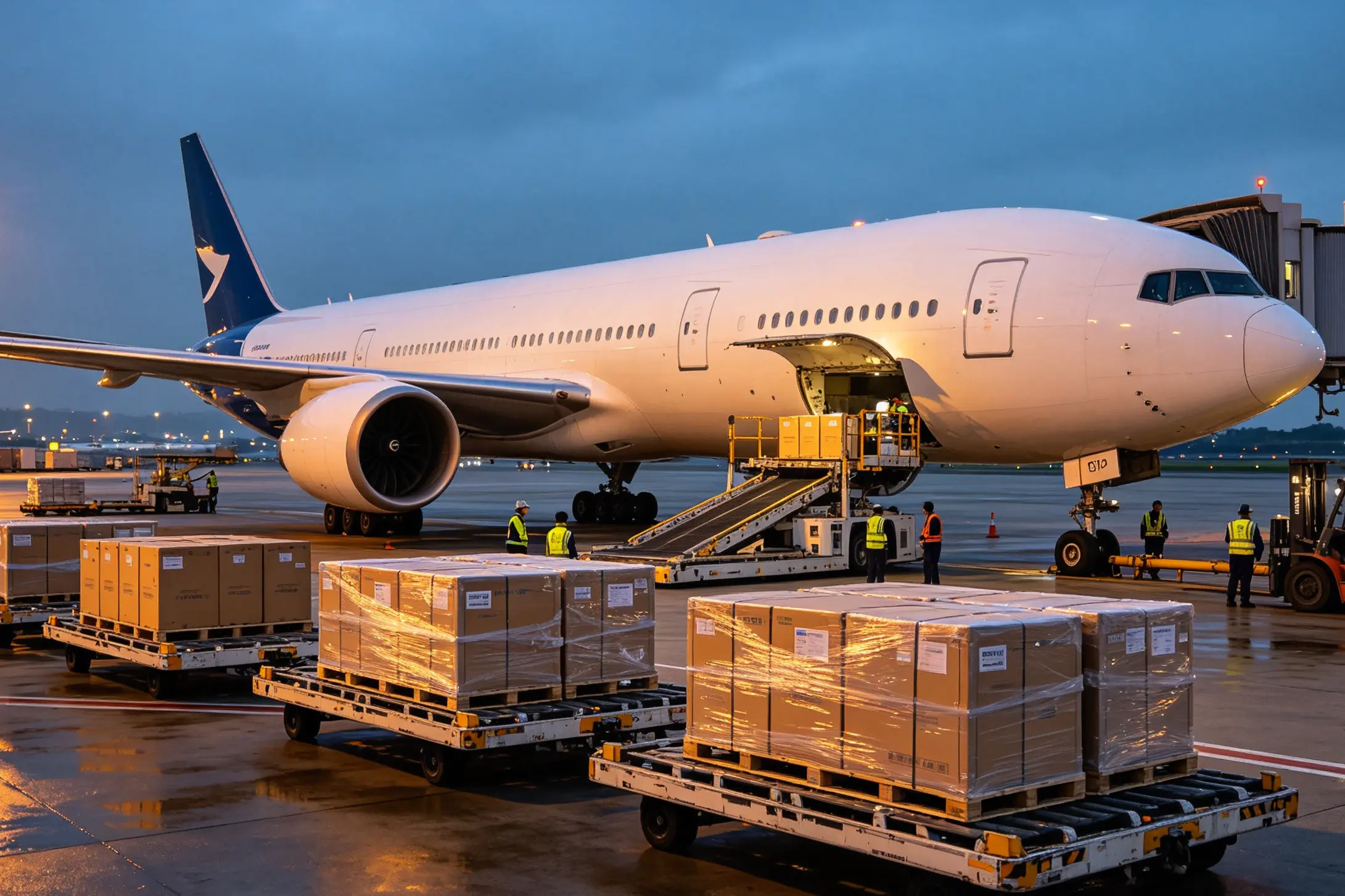
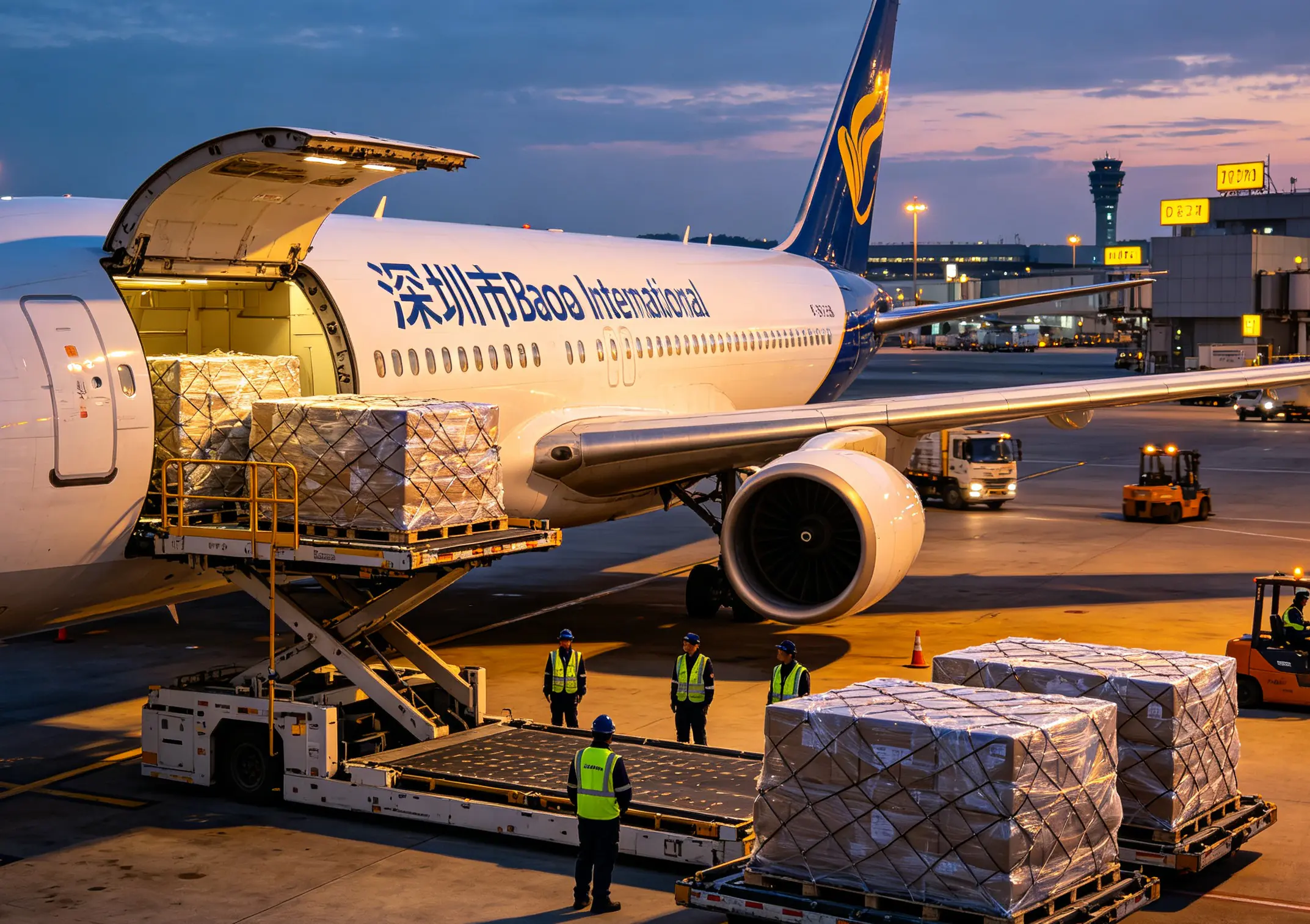
For urgent or high-value cargo, air freight is the only realistic option. Understanding the trade-offs between sea freight vs air freight helps you decide when the extra speed is worth the cost. As of June 2026, expect shipping cost from China to Yemen per kg to fall in the $7.50–$11.00 range for shipments above 100 kg. Smaller consignments are often charged at express courier rates, which can be significantly higher.
The main commercial gateway is Aden International Airport (ADE). Sana’a International Airport (SAH) is largely restricted to UN and humanitarian flights, so commercial cargo should not be planned through it. Seiyun Airport (GXF) can be an alternative for certain eastern destinations.
Yemeni customs pay close attention to dual-use goods. Electronics, drones, telecommunications equipment, and anything with GPS or encryption capabilities may require pre-approved government permits. Without the correct paperwork, shipments can be rejected or held indefinitely, turning a fast air freight option into an expensive storage problem.
One cost-saving alternative for urgent cargo is the Oman corridor: fly into Salalah, Oman, and truck across the border. This avoids Red Sea maritime chokepoints and is often cheaper than attempting direct air service to restricted Yemeni airports.
Door-to-Door and DDP Shipping From China to Yemen
DDP shipping from China to Yemen sounds simple — one price covers pickup, freight, customs, duties, and delivery. In practice, Yemen’s fragmented customs environment makes pure DDP difficult to guarantee for all cargo types. Local duty rules vary between regions, and final-mile delivery depends on the security status of the destination.
That said, DDP can still be the most predictable and sometimes cheapest option when:
- You are shipping small to medium air freight where the forwarder has a vetted local partner.
- Your cargo is consolidated LCL moving through Aden with a trusted destination agent.
- You need cost certainty more than the absolute lowest possible rate.
For door-to-door shipping from China to Yemen price estimates, expect air DDP to start around $10–$15/kg all-inclusive for small commercial shipments, while sea DDP for LCL typically adds destination customs and local delivery charges on top of ocean freight. Always confirm exactly what is included before comparing DDP quotes.
7 Proven Ways to Reduce Shipping Costs From China to Yemen
- Choose the right Incoterm. Under EXW (Ex Works), you control the entire chain but must arrange pickup in China. Under FOB (Free On Board), your supplier delivers to the port and you control the ocean leg. DDP (Delivered Duty Paid) is convenient but usually includes a margin for risk. For the lowest total landed cost, FOB often gives the best balance of control and cost.
- Optimize packaging. Carriers charge by whichever is greater — actual weight or chargeable volume. Use right-sized cartons, avoid empty space, and palletize efficiently. A poorly packed shipment can double your LCL bill.
- Consolidate LCL shipments. If you buy from multiple suppliers, have your forwarder collect goods into one warehouse and ship them as one LCL lot. One consolidation fee is far cheaper than paying separate handling charges for every small box.
- Time your shipments around peak seasons. Rates spike before Chinese New Year (January/February), before Ramadan, and during the year-end Q4 rush. Booking 2–4 weeks ahead of these windows helps lock in lower rates.
- Lock in War Risk Surcharge validity. Because WRS adjusts weekly, a quote that looks cheapest today may not be cheapest next week. Ask your forwarder to fix the WRS rate when you accept the quote.
- Maximize container utilization. If you are booking FCL, plan the load so every cubic meter and kilogram of payload is used. A half-empty 40ft container is one of the most expensive mistakes in international shipping.
- Ship from South China when possible. Shenzhen and Guangzhou have dense feeder connections to Middle East transshipment hubs, which often produces more competitive cheapest shipping from Shenzhen to Yemen and cheapest shipping from Guangzhou to Yemen options compared to northern ports.
Hidden Fees and Surcharges That Inflate Your Yemen Shipping Bill
A low base freight rate can quickly disappear once surcharges are added. Here are the most common add-ons for China-Yemen routes.
| Surcharge | What It Covers | Typical Impact |
|---|---|---|
| War Risk Surcharge (WRS) | Red Sea / Gulf of Aden security risk | $200–$800+ per TEU |
| Bunker Adjustment Factor (BAF) | Fuel price volatility | Varies monthly |
| Peak season surcharge | High-demand periods | $100–$500 per container |
| Documentation fees | B/L, AWB, Certificate of Origin, VGM | $50–$150 per shipment |
| Port handling / THC | Terminal handling at origin and destination | $100–$400 per shipment |
| Demurrage & Detention | Late container return or storage | $50–$200+ per day |
| Customs inspection | Physical inspection or X-ray | $80–$300 per occurrence |
The simplest way to avoid surprises is to request an itemized, all-inclusive quote with clearly stated validity dates. If a forwarder cannot explain each line item, that is a warning sign.
Essential Documents and Customs Clearance for Yemen
Accurate paperwork is non-negotiable. Discrepancies between your commercial invoice, packing list, and actual cargo can lead to fines, confiscation, or weeks of delays.
The standard document set includes:
- Commercial Invoice — shows value, seller, buyer, and HS codes.
- Packing List — details weight, dimensions, and carton contents.
- Bill of Lading (B/L) for sea freight or Air Waybill (AWB) for air freight.
- Certificate of Origin — often required to determine duty rates.
- Import License — usually needed for restricted or regulated goods.
For Hodeidah or Saleef, UNVIM requires additional pre-arrival documentation and may physically inspect cargo before discharge. A registered Yemeni consignee is typically required to handle import clearance, pay duties, and arrange final delivery.
Yemeni import duties generally range from 5% to 10% for basic commodities and can reach 25% for luxury goods. A 5% VAT is usually applied on the CIF value plus duties. Always verify the latest rates with your consignee or forwarder, as local rules can change.
Cargo Insurance and Risk Mitigation for Yemen Shipments
Standard carrier liability is usually too low for the risks involved in Yemen shipping. A comprehensive cargo insurance policy covering 110% of CIF value is the safest baseline. For Red Sea or Gulf of Aden routes, confirm that the policy explicitly includes war risk and piracy coverage.
A practical risk checklist includes:
- Pre-screen HS codes and restricted-goods lists before booking.
- Verify supplier credentials and packaging quality.
- Confirm your Yemeni consignee is registered and authorized to import.
- Track shipments via B/L or AWB and request proactive updates from your forwarder.
- Build buffer time into your supply chain for inspections, rerouting, or port congestion.
Seasonal Shipping Calendar for China-Yemen Routes
Timing has a direct impact on cost. Use this calendar to plan bookings and avoid the most expensive windows.
| Period | Market Condition | Recommendation |
|---|---|---|
| January–February | Chinese New Year; factories close, space tight | Book 3–4 weeks early |
| March–April | Post-holiday normalization; softer rates | Good window for routine shipments |
| May–June | Stable demand; Ramadan may shift timing | Monitor Middle East demand surges |
| July–August | Pre-Ramadan buildup (when Ramadan falls in summer) | Book early for consumer goods |
| September–October | Post-summer lull; often favorable rates | Ideal for cost-sensitive bookings |
| November–December | Year-end peak; capacity crunch | Expect surcharges and longer transit |
How to Choose a Reliable Freight Forwarder for Yemen
Not every freight forwarder that advertises Middle East service has real Yemen experience. Because of UNVIM requirements, security surcharges, and local clearance complexity, you need a partner that handles Aden and Hodeidah regularly.
Look for these qualities:
- Yemen-specific track record: Ask how many shipments they move to Aden and Hodeidah each month.
- Transparent, itemized quoting: Base freight and every surcharge should be listed separately.
- Carrier and local partnerships: Strong relationships with COSCO, MSC, Maersk, and vetted Yemeni trucking agents improve space access and last-mile reliability.
- Compliance support: HS code review, UNVIM documentation, and dangerous goods handling should be part of the service.
- Dedicated communication: A single logistics specialist who understands your cargo saves time and prevents mistakes.
This is where an experienced freight forwarder China to Yemen like Efanda Logistics adds value. Based in Shenzhen since 2018, Efanda provides end-to-end sea freight, air freight, and customs clearance support for challenging Middle East routes. With competitive transparent pricing, no hidden fees, and a dedicated logistics specialist for each shipment, Efanda helps importers navigate Aden and Hodeidah requirements without overpaying.
FAQ
What is the cheapest way to ship from China to Yemen?
For most commercial cargo between 1 and 15 CBM, LCL sea freight is the cheapest option. For shipments above 15 CBM, a 20ft or 40ft FCL container usually offers the lowest per-unit cost. Small parcels under 2 kg are cheapest by postal or economy courier.
How long does sea freight take from China to Yemen?
Typical transit time to Aden is 25–35 days from major Chinese ports, including transshipment through Jebel Ali or Salalah. Hodeidah takes 35–45+ days because of UNVIM inspections and Red Sea routing complexities.
What is UNVIM, and do I need it for Yemen?
UNVIM stands for the United Nations Verification and Inspection Mechanism. It is mandatory for commercial shipments entering Hodeidah or Saleef to verify compliance with international restrictions. You do not need it for the Port of Aden.
Can I ship electronics or lithium batteries to Yemen?
Yes, but they are heavily scrutinized as potential dual-use goods. You generally need detailed product descriptions, MSDS for batteries, and sometimes pre-approved import permits. Work with a forwarder experienced in restricted cargo.
Should I choose FOB, EXW, or DDP for Yemen shipments?
FOB usually offers the best balance of cost and control for experienced importers. EXW gives full control but requires inland pickup arrangements in China. DDP is convenient but includes risk margins and may be limited depending on the Yemeni destination.
How much does air freight cost per kg from China to Yemen?
For commercial shipments above 100 kg, expect $7.50–$11.00 per kg as of June 2026. Express courier rates for smaller parcels are higher.
Is door-to-door delivery available in Yemen?
Yes, but it is more complex than in neighboring countries. Cargo usually clears at Aden and is moved inland by vetted local trucking partners. Full DDP to all destinations is not always guaranteed due to local customs and security conditions.
Do I need cargo insurance for Yemen shipments?
Yes. Standard carrier liability is typically insufficient for a conflict-affected route. A policy covering 110% of CIF value, including war risk coverage, is strongly recommended.
Which Yemeni port is best for commercial imports?
The Port of Aden is the best default for most commercial imports because it is more stable, has faster clearance, and does not require UNVIM inspections. Use Hodeidah only when the final destination requires it.
How can I avoid hidden shipping fees to Yemen?
Request an itemized quote that separates base freight from WRS, BAF, documentation, handling, and local charges. Confirm the quote validity period and ask your forwarder to lock in the WRS rate.
Conclusion
Finding the cheapest shipping from China to Yemen is not about chasing the lowest base freight rate. It is about matching the right mode to your shipment size, choosing the right port, understanding the real cost of surcharges, and working with a forwarder who knows how to keep cargo moving through Aden and Hodeidah.
For medium commercial shipments, LCL sea freight to Aden is usually the most cost-effective choice. For bulk cargo, FCL containers deliver the lowest per-unit cost. Air freight and DDP air shipping from China to Yemen are best reserved for urgent or high-value shipments where speed or predictability outweighs freight cost.
If you want a tailored, itemized quote for your specific cargo, Efanda Logistics can help. Based in Shenzhen and active on China-Yemen routes since 2018, Efanda offers transparent pricing, dedicated support, and end-to-end shipping from China to Yemen logistics solutions designed to avoid delays and hidden costs.