Struggling to decide whether to book a full container or just share space for your next international shipment? In our 15+ years of managing global supply chains at Efanda Logistics, we’ve seen countless importers make the wrong choice. Choosing the wrong shipping method between FCL vs LCL can result in overpaying for unused space, hidden fees, or suffering weeks of unexpected consolidation delays. This guide breaks down exact cost thresholds, transit times, and risk factors for 2026 to help you make the most profitable logistics decision for your supply chain.
Key Takeaways: FCL vs LCL Shipping at a Glance
Understanding the differences between FCL vs LCL shipping is crucial for optimizing your logistics budget and transit times.
- FCL (Full Container Load) is best for high-volume (>15 CBM) or high-security shipments.
- LCL (Less than Container Load) is cost-effective for smaller, flexible shipments but takes longer.
- The “15 CBM Rule” is the typical break-even point for choosing FCL over LCL.
- LCL has hidden costs like consolidation and deconsolidation fees at destination ports.
FCL vs LCL: Understanding the Core Freight Differences
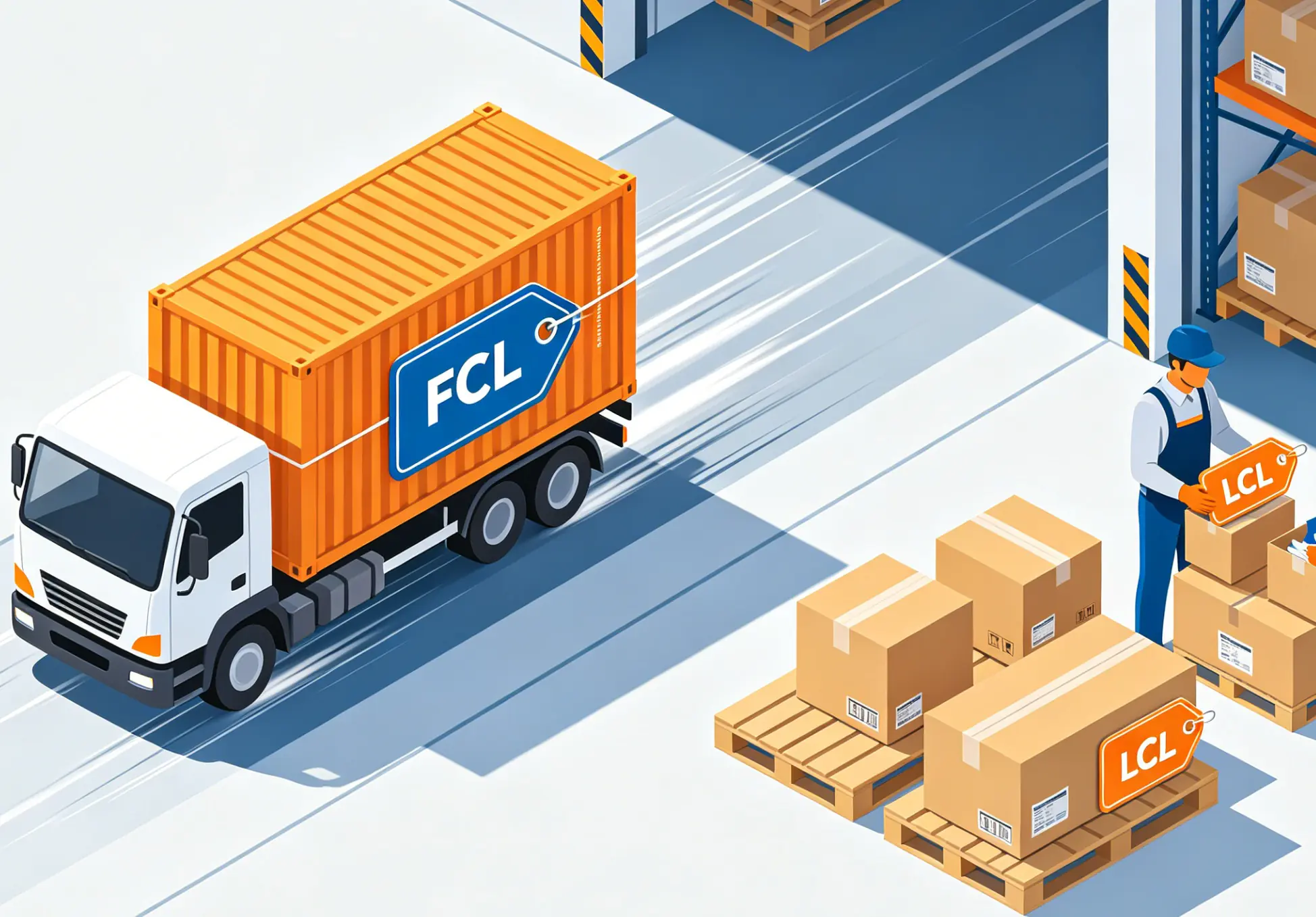
FCL means renting an entire container for your goods exclusively, while LCL involves sharing container space with other shippers and paying only for the volume you use. Depending on your cargo volume, the method you select significantly impacts pricing and operational workflows.
What is FCL (Full Container Load)?
FCL is a shipping arrangement where a single shipper exclusively uses a 20ft or 40ft container, ensuring goods remain sealed from origin to destination without being mixed. You pay a flat rate for the container, regardless of whether it is completely full. This method offers the highest level of security and the most straightforward transit process, as the container is loaded at your supplier’s facility and only opened upon arrival at the final destination.
What is LCL (Less than Container Load)?
LCL allows multiple shippers to consolidate smaller cargo into one shared container, making it a budget-friendly option for shipments under 15 cubic meters (CBM). Instead of paying for a full container, you pay freight charges based on the actual volume (CBM) or weight of your cargo. The goods are grouped together at a Container Freight Station (CFS) before departure and separated at a destination CFS before final delivery.
FCL vs LCL: How to Choose the Right Ocean Shipping Method
The right choice depends on your cargo volume, budget, urgency, and security needs. Use the 15 CBM threshold and your delivery timeline to guide the decision. Evaluating these variables will ensure you don’t overspend or expose your products to unnecessary risks.
Factor 1: Cargo Volume and the “15 CBM Rule”
If your cargo exceeds 15 CBM, upgrading to a 20ft FCL container is usually cheaper and safer than paying LCL volume rates. A standard 20ft container holds approximately 28 to 33 CBM. Once your LCL shipment reaches the 15 CBM mark, the cumulative costs of LCL freight and destination CFS fees often surpass the flat rate of a 20ft FCL container. In our experience shipping from Shenzhen to Los Angeles, we frequently advise clients to book a 20ft container for 14 CBM shipments simply to avoid the notorious destination handling markups common with LCL.

Factor 2: Delivery Speed and Transit Urgency
FCL offers faster transit times because it bypasses the consolidation and deconsolidation processes required for LCL shipments. LCL cargo must be delivered to a warehouse days before vessel departure to be packed into the shared container. Upon arrival, it takes another several days to unpack and sort the container before your goods are ready for pickup. If speed is critical, FCL is always the superior choice.
Factor 3: Cargo Security and Handling Risks
FCL minimizes handling damage since the container stays sealed, whereas LCL involves multiple loading and unloading stages at shared warehouses. Because LCL shipments are packed alongside other companies’ goods, there is an inherently higher risk of mishandling, contamination, or misplacement during the deconsolidation phase.
FCL vs LCL Quick Comparison Table
| Feature | FCL (Full Container Load) | LCL (Less than Container Load) |
|---|---|---|
| Ideal Volume | > 15 CBM (or high-value goods) | < 15 CBM |
| Cost Structure | Flat rate per container | Charged per CBM or Ton |
| Transit Time | Faster (Direct port-to-port) | Slower (Requires consolidation) |
| Security | High (Sealed container) | Moderate (Multiple handling points) |
| Customs Risk | Lower (Only your paperwork) | Higher (Delays if others fail customs) |
FCL vs LCL Cost Analysis: Breakdown of Shipping Rates & Hidden Fees
FCL charges a predictable flat rate per container, whereas LCL charges per CBM and often includes hidden destination fees for warehouse handling. To make an accurate cost comparison, importers must look beyond the initial ocean freight quote and evaluate the total landed cost.
Understanding FCL Flat Rates
FCL pricing is straightforward, involving a fixed container fee plus standard origin and destination port charges, making budgeting highly predictable. The primary costs include the ocean freight rate, Terminal Handling Charges (THC), documentation fees (such as the Bill of Lading fee), and inland trucking to deliver the container. Because you control the entire unit, there are rarely surprise charges unless you incur Demurrage or Detention from port delays or customs holds. Always clarify the number of “free days” your carrier provides at the destination port.
LCL Pricing and Consolidation Surcharges
While LCL offers lower upfront sea freight costs, importers must calculate extra charges like CFS (Container Freight Station) fees, deconsolidation, and documentation. Many forwarders offer extremely low LCL ocean freight rates to attract business, only to hit the consignee with exorbitant CFS unloading fees, destination handling charges (DHC), and release fees upon arrival. Always ask your forwarder for a full Door-to-Door shipping or CIF/DAP breakdown before booking LCL.

Why Choose Efanda Logistics for Your FCL and LCL Shipments?
Efanda Logistics provides tailored FCL and LCL solutions from China to global destinations—including shipping from China to UK, shipping from China to UAE, and shipping from China to Saudi Arabia—ensuring transparent pricing, secure consolidation, and guaranteed space during peak seasons. We understand the nuances of international trade and help importers avoid the common pitfalls associated with ocean freight.
Competitive FCL Rates and Direct Routing
We leverage direct carrier contracts to secure competitive FCL rates and fast routing to major global ports. Our strong relationships with top ocean liners ensure that your full containers get priority loading, minimizing the risk of being rolled over during busy shipping seasons.
Hassle-Free LCL Consolidation in China
Our self-operated warehouse services in Shenzhen, Guangzhou, and Yiwu ensure safe, efficient LCL consolidation with zero hidden destination fees. By controlling the CFS process on the origin side, we protect your cargo from damage and provide upfront, transparent pricing so you know exactly what you will pay when your goods arrive.
You may be interested in the following related articles:
- shipping from china to afghanistan
- shipping from china to morocco
- shipping from china to nigeria
- shipping from china to libya
Frequently Asked Questions About FCL vs LCL Shipping
1. What is the break-even volume between LCL and FCL?
The industry standard break-even point is typically around 15 CBM. Once your shipment hits 13 to 15 CBM, the cost of a 20ft FCL container is usually equal to or cheaper than LCL, especially when factoring in destination handling fees.
2. Does LCL take longer to ship than FCL?
Yes. LCL shipments generally take 5 to 10 days longer than FCL. This extra time is required for consolidating the goods into a shared container at the origin port and deconsolidating them at the destination port.
3. Can I ship fragile goods via LCL?
You can, but it carries higher risk. LCL involves more physical handling (loading, packing, unpacking, reloading), which increases the chances of damage. If your goods are highly fragile or valuable, FCL provides a much safer, sealed environment.
4. Are customs clearance procedures different for FCL and LCL?
The core customs rules (HS Codes, duties, taxes) remain the same, regardless of the shipping method. However, in an LCL container, if another shipper’s cargo is flagged by customs for an X-ray or physical inspection, the entire container may be held up, delaying your goods as well. We strongly recommend that new importers use the WCO Incoterms® 2020 standard to clearly define customs responsibilities with their supplier, particularly when shipping LCL. FCL shipments, conversely, are only dependent on your own commercial documentation and compliance.
5. What does CBM mean in LCL shipping?
CBM stands for Cubic Meter. It is the primary unit of measurement used to calculate LCL freight rates. You calculate it by multiplying the length, width, and height of your packaged cargo in meters (L x W x H = CBM).