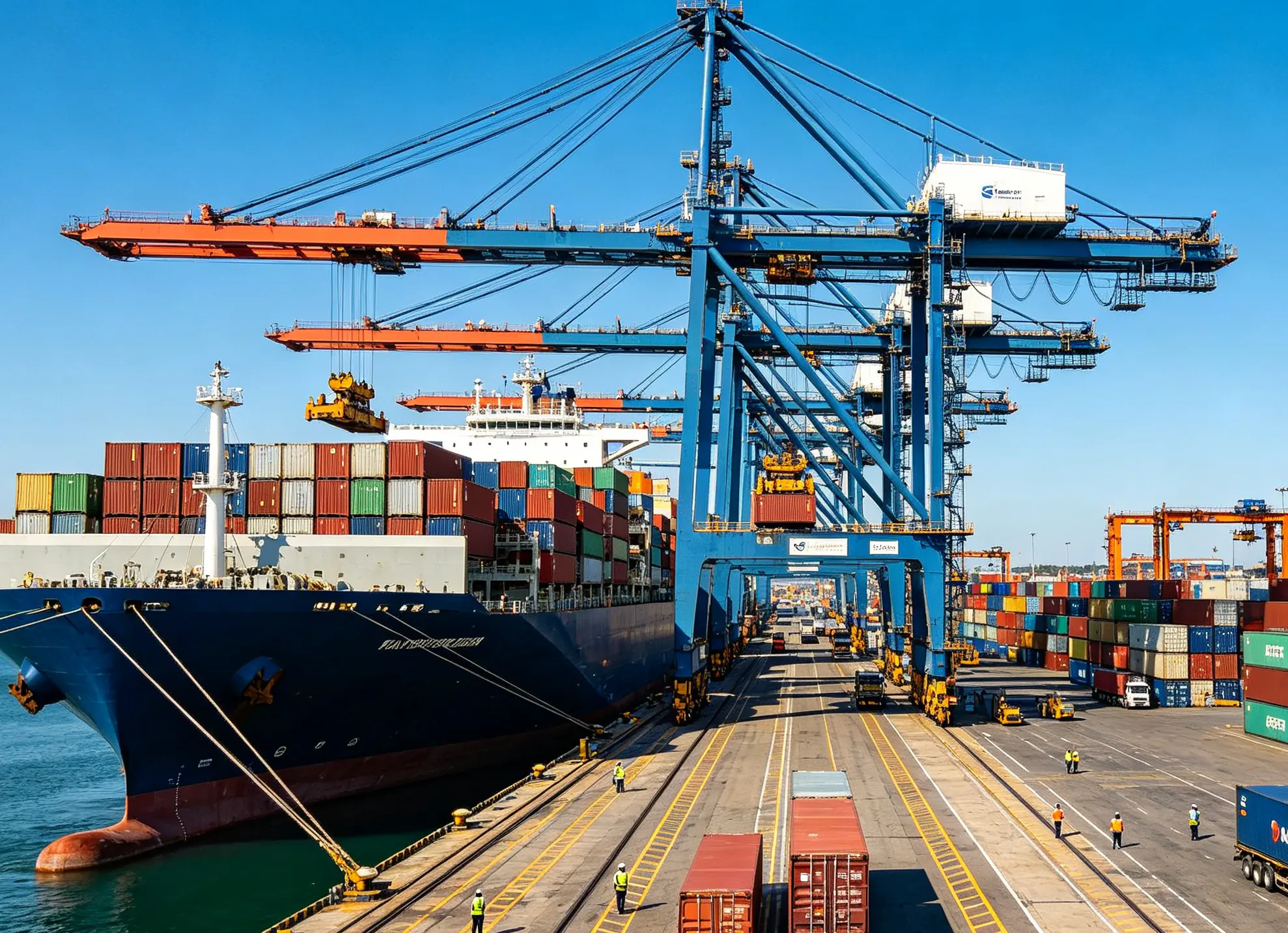
You have placed the purchase order, the supplier confirms production is ready, and now the only number that matters is not on the invoice. It is the delivery date. How Long Does Shipping from China to Germany Take? The honest answer is that it depends on the shipping method, the exact route, the Incoterms you agree on, and how well your documentation is prepared before the cargo moves.
Over the years, our team at Efanda Logistics — a Freight Forwarder headquartered in Shenzhen — has coordinated thousands of China-to-Germany moves, and the difference between a shipment that arrives in 35 days and one that needs 50 days usually comes down to decisions made before the cargo ever leaves the factory floor. As of 2026, this guide gives you realistic Door-to-Door (D2D) planning ranges for every major mode, explains why a single Shanghai-to-Hamburg sailing can land anywhere between 33 and 45 days in total, and shows you how to choose the right option for your deadline. All figures are planning estimates, not guarantees, because freight rates and vessel schedules fluctuate with market conditions, fuel surcharges, and seasonal demand.
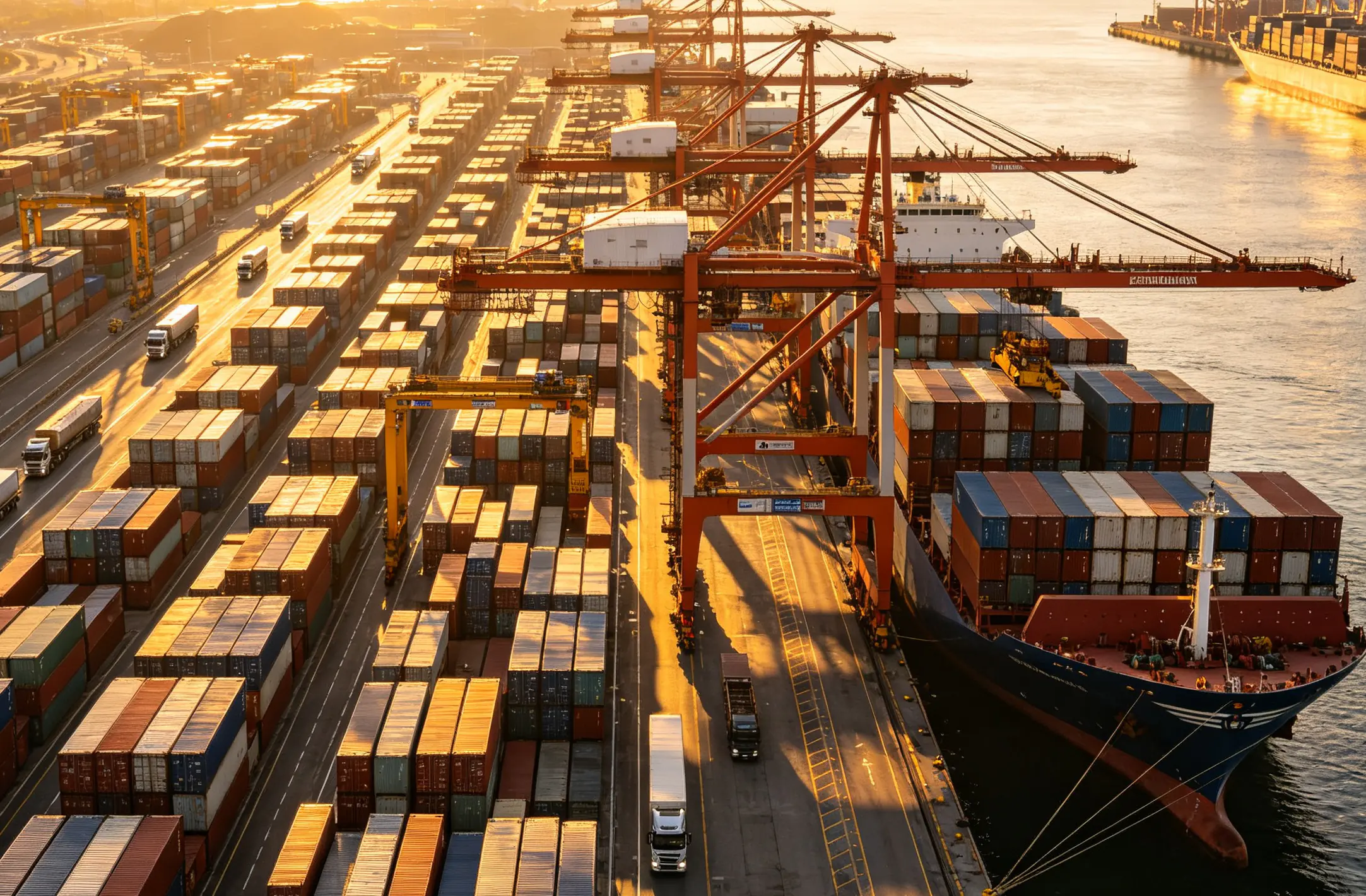
How Long Does Shipping from China to Germany Take? Quick Answer by Mode
The fastest way is rarely the cheapest, and the cheapest way is rarely the fastest. Use the table below as your starting benchmark for shipping from China to Germany door-to-door planning from a Chinese supplier address to a German business or warehouse.
| Shipping Method | Door-to-Door Transit Time | Best For | Cost Level |
|---|---|---|---|
| Express Courier (DHL/FedEx/UPS) | 3–5 business days | Samples, documents, urgent parcels under ~30 kg | $$$$ |
| Air Freight | 5–8 business days | High-value electronics, seasonal restocking, Amazon FBA | $$$ |
| Rail Freight | 18–25 days | Mid-volume goods where air is too expensive and sea is too slow | $$ |
| FCL Sea Freight | 35–45 days | Large, heavy, or non-urgent cargo that fills a container | $ |
| LCL Sea Freight | 40–55 days | Smaller shipments that do not fill a full container | $$ |
| Sea Freight DDP | 40–55 days | Bulk cargo needing simplified customs and predictable delivery | $$ |
Door-to-door means the total cycle from supplier pickup or warehouse collection in China through export clearance, main transit, German import clearance, duty and VAT handling, and final delivery to your address. Port-to-port only covers the ocean or air portion and can mislead your inventory planning if you treat it as the total lead time.

How Long Does Shipping from China to Germany Take by Sea? (FCL & LCL)
Sea freight remains the backbone of China-Germany trade. It is the most cost-effective choice for bulky, heavy, or non-urgent cargo, but it also has the longest and most variable transit time. When our Shenzhen operations team plans a sea move, we look first at the Bill of Lading (B/L) — the document that acts as both contract of carriage and proof of title — because the B/L type (original, telex release, or sea waybill) determines how quickly cargo can be released on arrival in Hamburg or Bremerhaven.
FCL (Full Container Load) means you book an entire 20-foot or 40-foot container. Because the container moves directly from your supplier to the destination without waiting for other shippers’ cargo, it is usually faster and safer than shared-container options. LCL (Less than Container Load) means your cargo shares container space with other shipments. You pay only for the space you use, but the forwarder must consolidate cargo in China and deconsolidate it in Germany, which adds extra handling days.
Typical Sea Freight Transit Times from China to Germany
| Shipping Method | Port-to-Port | Door-to-Door | Notes |
|---|---|---|---|
| FCL Sea Freight | 28–38 days | 35–45 days | Fastest ocean option for full-container volumes |
| LCL Sea Freight | 32–42 days | 40–55 days | Extra days for consolidation and deconsolidation |
Route-Specific Port-to-Port Transit Times
| Route | FCL Transit Time | LCL Transit Time | Notes |
|---|---|---|---|
| Shanghai → Hamburg | 28–36 days | 32–42 days | High-frequency direct service |
| Ningbo → Bremerhaven | 30–40 days | 34–45 days | Occasional transshipment via Southeast Asia |
| Shenzhen/Yantian → Hamburg | 28–35 days | 32–42 days | Strong southern route capacity |
| Guangzhou → Hamburg | 27–36 days | 30–40 days | Feeder to main hub, then direct sailing |
| Qingdao → Wilhelmshaven | 32–42 days | 36–48 days | Northern China origin, longer sailing distance |
| Tianjin → Wilhelmshaven | 34–44 days | 38–50 days | Best for North China industrial cargo |
| Xiamen → Hamburg | 30–40 days | 34–46 days | Southeast China origin |
| Shanghai → Bremerhaven | 30–38 days | 34–44 days | Alternative North Sea gateway |
These ranges assume direct or single-transshipment services. If your cargo routes through Singapore, Colombo, or the Middle East, or if Red Sea diversions force a longer route, add 3–7 days to the upper end of the estimate. For a deeper look at ocean routing and container options, see our dedicated guide to ocean freight from China to Germany.
FCL Door-to-Door Stage Breakdown
| Stage | Typical Time |
|---|---|
| Supplier pickup + inland haulage to port | 1–3 days |
| Export customs clearance in China | 1–2 days |
| Ocean transit (port-to-port) | 28–38 days |
| Import customs clearance in Germany | 1–3 days |
| Duty, VAT payment, and terminal release | 1–2 days |
| Last-mile delivery to German address | 2–5 days |
| Total door-to-door | 35–45 days |
For LCL, add roughly 5–10 days for consolidation at the origin warehouse in China and 3–5 days for deconsolidation at the destination CFS in Germany. That is why LCL almost always sits 5–10 days behind FCL on the same corridor.
Our Industry Insight: In 2026, Red Sea routing uncertainty and occasional blank sailings have made the 40-to-45-day FCL planning range safer than the old 30-to-35-day assumption. We regularly advise German importers to book FCL space two weeks earlier than they did in 2024 if they need inventory on the shelf by a fixed launch date. In our experience, the clients who treat the sailing schedule as the total lead time are usually the ones calling us on day 38 asking why the container is still at the destination terminal.
How Long Does Shipping from China to Germany Take by Air?
Air freight is the fastest mainstream option for cargo that justifies a premium. It is ideal for urgent electronics, seasonal restocking, high-value machinery parts, and Amazon FBA replenishment where stock-outs cost more than the shipping premium. In our daily quotes for B2B importers, we typically see air freight chosen when the product margin is high enough that a 5-to-8-day lead time protects revenue that would otherwise be lost to a stock-out.
| Air Service Type | Airport-to-Airport | Door-to-Door | Best For |
|---|---|---|---|
| Standard Air Freight | 3–5 days | 5–8 business days | Palletized cargo, scheduled commercial flights |
| Express Air Freight | 2–4 days | 4–6 business days | Very urgent cargo, premium service |
Major Airport Pairs
| Origin (China) | Destination (Germany) | Typical Door-to-Door Time |
|---|---|---|
| Shanghai Pudong (PVG) | Frankfurt (FRA) | 5–7 business days |
| Shenzhen Bao’an (SZX) | Frankfurt (FRA) | 5–8 business days |
| Guangzhou Baiyun (CAN) | Leipzig/Halle (LEJ) | 5–8 business days |
| Beijing Capital (PEK) | Munich (MUC) | 6–9 business days |
| Hong Kong (HKG) | Frankfurt (FRA) | 4–6 business days |
Air Freight Door-to-Door Stage Breakdown
| Stage | Typical Time |
|---|---|
| Supplier pickup + delivery to airport | 1–2 days |
| Security screening + export clearance | 1 day |
| Main air transit | 1–2 days |
| Import clearance in Germany | 1–2 days |
| Duty/VAT payment and customs release | 1 day |
| Last-mile delivery | 1–3 days |
| Total door-to-door | 5–8 business days |
Airlines charge by chargeable weight, which is the greater of actual weight or volumetric weight. For air cargo, volumetric weight is calculated as length × width × height in centimeters divided by 6,000. Light but bulky cargo can be surprisingly expensive by air, so always compare chargeable weight before booking.
Rail Freight Transit Time from China to Germany
Rail freight has become a genuine third option between sea and air. It is roughly 50% faster than ocean and 60% cheaper than air, making it attractive for mid-volume cargo heading to inland German destinations such as Duisburg, Nuremberg, or Munich.
| Rail Corridor | Main Transit Time | Door-to-Door Time | Notes |
|---|---|---|---|
| Xi’an → Duisburg | 12–16 days | 18–22 days | High-frequency Belt and Road corridor |
| Chengdu → Duisburg | 13–17 days | 19–24 days | Stable automotive and electronics volumes |
| Chongqing → Duisburg | 13–18 days | 19–25 days | Strong west China origin |
| Zhengzhou → Hamburg | 14–18 days | 20–25 days | Connects to North Sea port logistics |
| Yiwu → Duisburg | 14–19 days | 20–26 days | Ideal for small commodities |
| Wuhan → Hamburg | 15–19 days | 21–27 days | Growing corridor for machinery |
Rail Freight Door-to-Door Stage Breakdown
| Stage | Typical Time |
|---|---|
| Supplier pickup + consolidation at rail hub | 2–4 days |
| Export customs + loading at origin terminal | 1–2 days |
| Main rail transit (including border transloading) | 12–18 days |
| Destination unloading + import clearance | 2–3 days |
| Duty/VAT payment and terminal release | 1–2 days |
| Last-mile delivery in Germany | 2–5 days |
| Total door-to-door | 18–25 days |
Rail is limited to containerized cargo, and gauge changes at the China-Kazakhstan or China-Mongolia border require transloading, which adds time. In our experience, the most reliable rail bookings are the ones that build in two extra days at the border, because weather and gauge-switch queues are the most common reasons a 16-day transit slips to 19 days. However, rail schedules are generally more stable than ocean during peak congestion because they are less exposed to port congestion and Suez routing disruptions.
Express Shipping from China to Germany: How Long Does It Take?
For samples, documents, and small e-commerce parcels, express couriers such as DHL, FedEx, and UPS offer the fastest door-to-door service.
| Courier | Typical Door-to-Door Time | Weight Sweet Spot |
|---|---|---|
| DHL Express | 3–5 business days | Up to ~30 kg |
| FedEx International Priority | 3–5 business days | Up to ~30 kg |
| UPS Worldwide Saver | 3–5 business days | Up to ~30 kg |
Express shipping includes pickup, customs clearance, and final delivery in a single all-in per-kilogram rate. It is the simplest option but becomes cost-prohibitive for cargo above roughly 30–50 kg. For heavier or palletized shipments, consolidated air freight is usually more economical.
Door-to-Door vs Port-to-Port Shipping from China to Germany
One of the most common mistakes in logistics planning is confusing port-to-port transit time with door-to-door transit time.

- Port-to-port only measures the time between the origin port or airport and the destination port or airport. It excludes supplier pickup, export clearance, import clearance, duty payment, and final delivery.
- Door-to-door measures the full cycle from the supplier’s address in China to your final delivery address in Germany.
A Shanghai-to-Hamburg ocean transit of 30 days can easily become 42 days door-to-door once you add pickup, clearance, and German inland haulage. If you plan inventory around the 30-day figure, you risk stock-outs.
How Incoterms Affect Timing
Your Incoterms rule determines who controls each leg of the journey, and that control directly affects how predictable your lead time will be.
| Incoterm | Who Arranges Main Transit | Who Handles German Clearance | Timing Predictability |
|---|---|---|---|
| EXW (Ex Works) | Buyer | Buyer | Lower, because buyer coordinates every leg |
| FOB (Free On Board) | Buyer | Buyer | Lower, buyer must arrange ocean and import clearance |
| CIF (Cost, Insurance, and Freight) | Seller (to port) | Buyer | Lower, import clearance can add unmanaged days |
| DDP (Delivered Duty Paid) | Seller/Forwarder | Seller/Forwarder | Higher, one party controls the full chain |
Under DDP shipping from China to Germany, your forwarder handles export clearance, international transit, import clearance, duty and VAT payment, and final delivery. Because one provider coordinates the entire chain, delays from hand-offs are minimized, and your total lead time becomes far more predictable. If you are an importer without a dedicated German customs broker, DDP usually removes the hidden days that other Incoterms leave unmanaged.
What Really Affects Shipping Time from China to Germany?
Even with the right mode, several variables can stretch or compress your timeline.
Customs Clearance Time
German customs clearance typically takes 1–3 days if documents are accurate. Delays happen when the Commercial Invoice, Packing List, or HS Code is inconsistent, when certificates are missing for regulated goods, or when customs selects the shipment for physical inspection. Every importer into Germany also needs an EORI number; without one, cargo sits at the terminal and storage fees accumulate daily.
Peak Season and Disruption Calendar
| Period | Impact | Recommended Buffer |
|---|---|---|
| Chinese New Year (Jan/Feb) | Factory closures, space shortages | Add 1–2 weeks |
| Golden Week (early October) | Reduced departures from China | Add 3–7 days |
| Q4 pre-Christmas rush | Port congestion, higher rates | Add 1–2 weeks |
| European summer holidays (July/Aug) | Slower customs and inland delivery | Add 3–5 days |
| Year-end factory push (November) | Space tightens before CNY | Add 1 week |
2026 Regulatory Factors
Two regulatory changes are actively shaping China-to-Germany transit times in 2026:
- ICS2 Release 3: The EU’s Import Control System 2 now requires advance cargo data before loading in many cases. Missing or inaccurate data can delay departure or trigger inspection on arrival.
- CBAM: The Carbon Border Adjustment Mechanism adds reporting requirements for imports of steel, aluminum, cement, fertilizers, hydrogen, and electricity. If your product falls under CBAM, incomplete filing can delay customs release.
Route and Operational Factors
- Transshipment: Direct sailings are faster. Routes through Singapore, Colombo, or the Middle East can add 3–7 days.
- Port congestion: Hamburg and Bremerhaven can experience berthing delays, especially after storms or labor shortages.
- Blank sailings: Carriers sometimes cancel scheduled sailings to balance capacity, pushing cargo to the next vessel.
- Weather and geopolitics: Red Sea diversions, Suez Canal restrictions, and winter storms in Northern Europe can all extend ocean transit.
- Cargo-specific delays: Hazardous goods, food products, electronics, and medical devices may require additional certifications or inspections.
How to Speed Up Shipping from China to Germany
If your deadline is fixed, use this prioritized checklist to protect your lead time without overspending.
- Match the mode to the deadline. Choose air for launch dates, rail for mid-urgency restocking, and sea for baseline inventory.
- Book space early. Carrier space tightens before Chinese New Year, Golden Week, and Q4. Booking two to three weeks ahead reduces roll-over risk.
- Prepare complete documentation. Accurate Commercial Invoice, Packing List, HS codes, and certificates prevent customs holds.
- Use direct routes when possible. Avoid unnecessary transshipment hubs.
- Choose DDP for predictable delivery. Let your forwarder control the full chain.
- Pre-clear customs. Experienced freight forwarders can pre-submit data under ICS2 and coordinate with German customs before arrival.
- Build buffer days. Add 5–10% to your expected transit time for inspections, transshipment, or minor congestion.
- Consolidate shipments. Combining multiple supplier orders into one FCL or rail load reduces handling time compared to multiple LCL moves.
Our Industry Insight: The importers who hit their Germany launch dates consistently are not the ones who chase the cheapest rate. They are the ones who plan around door-to-door lead time, lock space early, and let their forwarder pre-clear customs before the vessel arrives.
FAQ
How long does shipping from China to Germany take by sea?
Sea freight from China to Germany typically takes 28–38 days port-to-port for FCL and 32–42 days for LCL. Door-to-door, expect 35–45 days for FCL and 40–55 days for LCL.
How long does FCL shipping from China to Germany take?
FCL shipping usually takes 28–38 days port-to-port and 35–45 days door-to-door, depending on the origin port and whether the service is direct.
How long does LCL shipping from China to Germany take?
LCL shipping generally takes 32–42 days port-to-port and 40–55 days door-to-door, because cargo must be consolidated in China and deconsolidated in Germany.
How long does air freight from China to Germany take?
Air freight from China to Germany takes about 3–5 days airport-to-airport and 5–8 business days door-to-door.
How long does DDP shipping from China to Germany take?
DDP sea shipping from China to Germany typically takes 40–55 days door-to-door, while DDP air shipping takes 5–10 business days.
Why is my shipment from China to Germany delayed?
Common causes include customs inspections, missing documentation, port congestion, transshipment delays, blank sailings, peak-season space shortages, and Red Sea routing disruptions.
What is the fastest way to ship from China to Germany?
Express courier is the fastest at 3–5 business days, followed by air freight at 5–8 business days. For larger cargo, rail is the fastest realistic option at 18–25 days.
How does port-to-port differ from door-to-door transit time?
Port-to-port only covers the main ocean or air transit between ports. Door-to-door includes supplier pickup, export clearance, main transit, import clearance, duty/VAT payment, and final delivery.
Conclusion
How Long Does Shipping from China to Germany Take? In practical 2026 terms, express takes 3–5 business days, air takes 5–8 business days, rail takes 18–25 days, FCL sea takes 35–45 days, and LCL sea takes 40–55 days door-to-door. The exact number depends on your origin, route, service type, and how well your paperwork is prepared.
For most importers, the key is to plan around the full door-to-door lead time, not the port-to-port sailing figure. Choosing the right Incoterms, booking space early, and preparing accurate customs documentation will do more to protect your timeline than chasing the fastest advertised transit time.
If you need a reliable freight forwarder to manage the full chain from supplier pickup in China to final delivery in Germany, Efanda Logistics can help. Founded in 2018 and headquartered in Shenzhen, we offer end-to-end sea freight, air freight, rail freight, customs clearance, warehousing, and door-to-door solutions. Our team provides competitive and transparent pricing with no hidden fees, time-efficient routing, and a dedicated logistics specialist for every shipment.
Ready to plan your next shipment? Contact Efanda Logistics today for a transparent, no-hidden-fee quote tailored to your China-to-Germany route. Please note that transit times and rates fluctuate based on market conditions, seasonality, and route disruptions, so we always include reasonable buffer time and clear risk disclosure in every proposal.