Has a “cheap” freight quote for your China-to-USA shipment ever doubled by the time the cargo reached your door? Since the United States eliminated the $800 de minimis exemption for Chinese goods, that story has become painfully common — every parcel and pallet now needs a formal customs entry, a bond, and a duty payment that can add 23% to 40% or more on top of the cargo value. Importers who used to glance at the freight line and call it a day are getting burned.
DDP shipping from China to the USA solves this by folding everything into one price: factory pickup, export clearance, ocean or air freight, the US customs entry, the full duty stack, and final delivery to your warehouse or Amazon FBA center. You know your true landed cost before the goods leave China.
At Efanda Logistics, we have run shipping from China to the USA under DDP terms since 2018 — from Shenzhen, Guangzhou, Shanghai, and Ningbo to Los Angeles, New York, Houston, and fulfillment centers across the country. This guide shares the real 2026 numbers: what DDP costs, how long it takes, how the new US tariff stack works, and how to choose a forwarder who will not surprise you.

1. What Is DDP Shipping from China to the USA?
DDP shipping is a door-to-door service in which one freight forwarder takes responsibility for the entire journey — from your supplier’s factory floor in China to your US address — with all import duties and customs fees already paid. It is the most complete form of door to door shipping from China available.
Under Incoterms 2020, DDP (Delivered Duty Paid) places the maximum obligation on the seller’s side. Your only job as the buyer is to receive the goods. A standard DDP quote to the USA covers:
- Factory pickup in Shenzhen, Guangzhou, Yiwu, Shanghai, or any other Chinese city
- China export customs clearance at the port or airport of departure
- Main carriage — sea freight from China (FCL or LCL), air freight from China, or express courier
- ISF (10+2) filing before vessel loading, handled by the forwarder
- US customs entry filed by a licensed customs broker, with the forwarder or its partner acting as Importer of Record (IOR) under a customs bond
- All duties and fees — the MFN duty, Section 301 tariffs, the Merchandise Processing Fee (MPF), and the Harbor Maintenance Fee (HMF) on ocean freight
- Last-mile delivery to your warehouse, business address, or an Amazon FBA fulfillment center
A trustworthy forwarder will also tell you what is not included: customs exam fees if CBP selects your shipment for inspection, storage beyond the free time window, redelivery after a failed appointment, and remote-area surcharges. Transparency about exclusions is the first sign of a reliable DDP partner.
Our Industry Insight: The biggest misconception we see is that DDP is only for large importers. In reality, DDP is the natural entry point for small and mid-size US buyers who do not have a customs bond, a broker relationship, or in-house trade compliance staff. If you are shipping more than about 100 kg and do not employ a licensed customs broker, DDP almost always delivers the lowest total landed cost with the least administrative risk.
2. DDP vs. DAP vs. FOB/CIF: Which Term Should You Choose?
The right shipping term depends on how much of the US import process you are equipped to run yourself. DDP shifts everything to the forwarder. DAP delivers to your door but leaves the customs entry, bond, and duty bill to you. FOB and CIF stop at the port — everything after the ship docks is your problem.
| Responsibility | DDP (Delivered Duty Paid) | DAP (Delivered at Place) | FOB / CIF |
|---|---|---|---|
| China export clearance | ✅ Forwarder | ✅ Seller | ✅ Seller |
| Ocean / air freight | ✅ Forwarder | ✅ Seller | ✅ Seller (CIF adds insurance) |
| ISF filing | ✅ Forwarder | ⚠️ Usually buyer | ❌ Buyer |
| US customs entry & bond | ✅ Forwarder | ❌ Buyer | ❌ Buyer |
| Duties, MPF & HMF | ✅ Forwarder | ❌ Buyer | ❌ Buyer |
| Last-mile delivery | ✅ Forwarder | ✅ Seller | ❌ Buyer |
| Best for | SMEs, FBA sellers, first-timers | Importers with own broker & bond | Experienced importers with a full logistics team |
When “Cheaper” Terms Cost More
A Texas-based home décor importer recently showed us a CIF quote of $2,400 for a 40ft container from Ningbo to Houston. By arrival, the destination charges — terminal handling, a customs bond, brokerage, the duty stack, and drayage to Dallas — pushed the real total past $7,800, and a late ISF filing nearly added a $5,000 penalty. A comparable DDP quote at $6,900 all-in would have saved money, a week of emails, and one very stressful conversation with CBP.
The lesson holds for almost every lane: always compare total landed cost, never the headline freight rate. For a deeper dive into how these terms split risk and cost, see our FOB vs CIF vs DDP comparison.
When DAP Makes Sense Instead
If your company has a US entity, a continuous customs bond, and a broker you trust, DAP gives you direct control over the entry and lets you manage duty drawback or reconciliation yourself. For everyone else — especially sellers without a US tax presence — DDP is simpler and safer.
Cargo Insurance Tip: Whatever term you choose, carrier liability is minimal (often $500 per container under COGSA). Adding cargo insurance services costs a fraction of the cargo value and covers loss or damage in transit — see our guide to cargo insurance for China exports.
3. How Much Does DDP Shipping from China to the USA Cost in 2026?
As of Q4 2026, planning ranges for all-in DDP service on the China–USA lane are roughly $7.50–$9.00 per kg by air, $120–$220 per CBM by sea LCL, and $3,500–$7,000 per 40ft container for the ocean leg on West Coast lanes with destination charges, customs, and duties quoted on top according to your HS codes. Your final number depends on three things: the duty stack on your product, the port pair, and current capacity.
DDP Rates by Mode
| DDP Mode | Planning Range (Q4 2026) | Door-to-Door Time | Best For |
|---|---|---|---|
| DDP air, 100 kg+ | $7.50 – $9.00 / kg all-in | 6–10 working days | Urgent restocks, high-value small cargo |
| DDP air, 22–99 kg | $8.00 – $9.50 / kg all-in | 6–10 working days | Samples, small trial orders |
| DDP sea LCL, 1–3 CBM | $180 – $220 / CBM all-in* | 30–45 days | Small inventory batches |
| DDP sea LCL, 3–12 CBM | $120 – $180 / CBM all-in* | 30–45 days | Growing e-commerce replenishment |
| DDP sea FCL, 20ft | ocean leg + destination ≈ $3,000 – $4,500 | 25–40 days | Heavy or dense cargo |
| DDP sea FCL, 40ft/40HQ | ocean leg + destination ≈ $3,500 – $7,000 | 25–40 days | Furniture, bulky goods, full programs |
| Express DDP (courier) | $9.00 – $15.00 / kg | 3–6 days | Documents, samples, very small parcels |
* LCL DDP rates assume general merchandise with a moderate duty rate; high-duty products are quoted with duties at actuals (see Section 4).
Price Volatility Notice: Freight rates on the trans-Pacific lane move weekly with fuel, capacity, and season — and the duty stack can change with a single Federal Register notice. The ranges above reflect market conditions as of Q4 2026. Always request a current, itemized quote before booking.
Why Per-Kg DDP Rates Vary So Much
Published per-kg DDP prices assume general merchandise with a low duty stack. When your product carries a 25% Section 301 duty plus the 12.5% forced-labor layer, no honest forwarder can hold a $7.50/kg all-in rate — the duty alone may exceed the freight. Serious DDP quotes separate the logistics charge from the duty pass-through, calculated on your declared value and HTSUS classification. A forwarder who quotes one flat per-kg rate for every product category is either guessing or planning to underdeclare — and underdeclaration is how importers end up in CBP penalty proceedings.
5 Key Cost Drivers
- Your product’s duty stack — MFN rate plus Section 301 layers (see Section 4). On a typical consumer product this is now the largest single variable in any DDP quote.
- Port pair and destination — West Coast gateways (Los Angeles / Long Beach) are the cheapest; all-water East Coast service costs more; inland delivery adds drayage or rail.
- Chargeable weight vs. volume — air freight bills on the higher of actual and volumetric weight (L×W×H ÷ 6000); sea LCL bills per CBM with minimums.
- Peak season surcharges — August through October, carriers add several hundred dollars per container and air rates climb before the holidays.
- Cargo type — batteries, liquids, cosmetics, and other sensitive goods carry handling surcharges and limited routings; check the rules before you book (see our prohibited items shipping from China to USA guide).
Worked Example: 2 CBM of LED Desk Lamps to Los Angeles
Declared customs value $6,000, 300 kg chargeable, HS 9405.11 (MFN duty 3.9%):
| Cost Component | Calculation | Amount |
|---|---|---|
| Sea LCL freight + origin handling | 2 CBM × $180 | $360 |
| US destination + final delivery | fixed | $180 |
| MFN duty (3.9%) | $6,000 × 3.9% | $234 |
| Section 301 duty (25%) | $6,000 × 25% | $1,500 |
| Forced-labor Section 301 (12.5%) | $6,000 × 12.5% | $750 |
| MPF, HMF, bond & entry fees | minimums apply | ≈ $95 |
| Total DDP landed cost | — | ≈ $3,120 |
Two things stand out. First, duties ($2,484) are nearly five times the freight-and-delivery cost — the tariff stack, not the freight rate, decides your margin. Second, with DDP you know this $3,120 figure before the cargo leaves Shenzhen, not after a surprise invoice from a destination agent.
Real-Life Scenario: A Shopify seller in California was buying from three factories in Guangdong and paying for three separate LCL shipments — each with its own destination fees and brokerage. We consolidated all three suppliers’ cargo at our Shenzhen warehouse into one DDP sea shipment to their 3PL in Ontario, CA. Consolidation plus one single customs entry cut their logistics spend by about 24% and gave them a single landed-cost number for pricing.
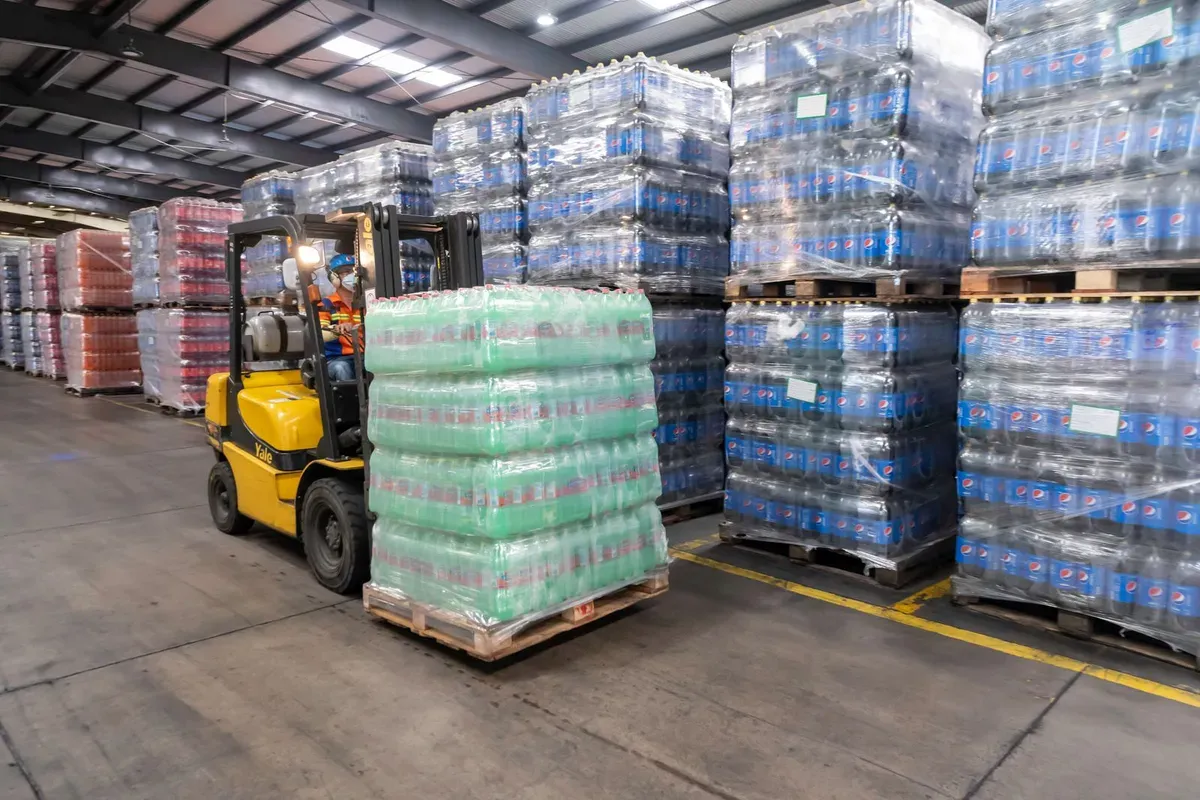
4. The 2026 US Duty Stack: What Your DDP Quote Must Cover
Every DDP quote to the USA must now absorb three layers of tariffs plus customs fees — the MFN base rate from the HTSUS, the legacy Section 301 duties from the 2018 trade action, and the new 12.5% Section 301 forced-labor duty that took effect on July 24, 2026. Understanding the stack tells you whether a quote is realistic.

The Current Layers (as of October 2026)
- MFN duty — the base HTSUS rate for your product, from 0% to 20%+ depending on the classification.
- Section 301 (2018 action) — 25% on List 1–3 products, 7.5% on List 4A, 50% on semiconductors and solar products, and 100% on Chinese-made electric vehicles. A second four-year review is underway in 2026, and certain exclusions run through November 2026.
- Section 301 forced-labor duty — a flat 12.5% on Chinese goods, effective July 24, 2026. It stacks on top of the layers above.
- Possible overcapacity tariff — USTR has signaled a further 7.5% Section 301 layer tied to its excess-capacity investigation. Confirm the current status before signing a DDP quote for late 2026 or early 2027 delivery.
- Customs fees — the Merchandise Processing Fee (MPF) at 0.3464% of the entered value (minimum and maximum caps apply, adjusted annually) and, for ocean freight, the Harbor Maintenance Fee (HMF) at 0.125%.
A typical List 1–3 consumer product therefore pays its MFN rate plus 37.5% in additional tariffs — lower than the 45%+ peak of early 2026, but still the dominant line in the landed cost.
The End of De Minimis Changed Everything
Since May 2, 2025, the $800 de minimis exemption no longer applies to goods from China and Hong Kong, and the suspension has since been extended to all origins — with Section 321 scheduled for full repeal for commercial shipments in mid-2027. Every shipment, however small, now requires a customs entry and duty payment. This is precisely why DDP demand has surged: instead of your customer or your small business getting a duty bill and a clearance headache at the border, the forwarder absorbs the process end to end.
Compliance Warning: Some operators still offer suspiciously cheap “DDP” rates built on undervalued declarations or misclassified HTSUS codes. CBP audits entries for years after import, and the legal liability lands on the Importer of Record — which under a shady DDP arrangement can end up being you. Always insist on a quote that shows the declared value, the HTSUS classification, and the duty calculation.
5. How Long Does DDP Shipping from China to the USA Take?
Plan on 25–45 days door-to-door by sea and 6–10 working days by air, depending on the port pair and your final delivery address. Ocean transit alone runs about 14–20 days to West Coast ports and 28–35 days all-water to the East Coast; customs and final delivery add 5–10 days.
| Origin Port | US Gateway | Ocean Transit | Door-to-Door (DDP Sea) |
|---|---|---|---|
| Shenzhen (Yantian) | Los Angeles / Long Beach | 14–18 days | 25–32 days |
| Shanghai (Yangshan) | Los Angeles / Long Beach | 15–19 days | 26–33 days |
| Ningbo-Zhoushan | New York / New Jersey (all-water) | 27–32 days | 35–45 days |
| Shenzhen (Yantian) | Houston | 28–35 days | 38–48 days |
| Guangzhou (Nansha) | Savannah | 29–34 days | 37–46 days |
For a port-by-port breakdown of America’s main gateways, see our guide to the top USA ports for imports from China. And if you are weighing a faster option, our article on how long a cargo ship takes from China to the port of Los Angeles explains what drives sailing time on the busiest trans-Pacific lane.
What Adds Time at the Destination
- US customs clearance: 1–3 days when the entry is pre-filed; 5–10 days if CBP flags the shipment for an exam
- Container devanning and palletizing: 1–2 days
- Final trucking: 1–4 days depending on distance from the port — IPI rail to inland points like Chicago or Dallas adds 5–10 days
- Peak season congestion: August–October surges can add a week or more at LA/Long Beach; build buffer into your Q4 inventory plan
Pro Tip: Ask your forwarder about pre-clearance — filing the US customs entry while the vessel is still crossing the Pacific. Combined with a continuous bond already in place, pre-clearance routinely cuts 3–5 days off door-to-door time and sharply reduces demurrage risk during peak season.
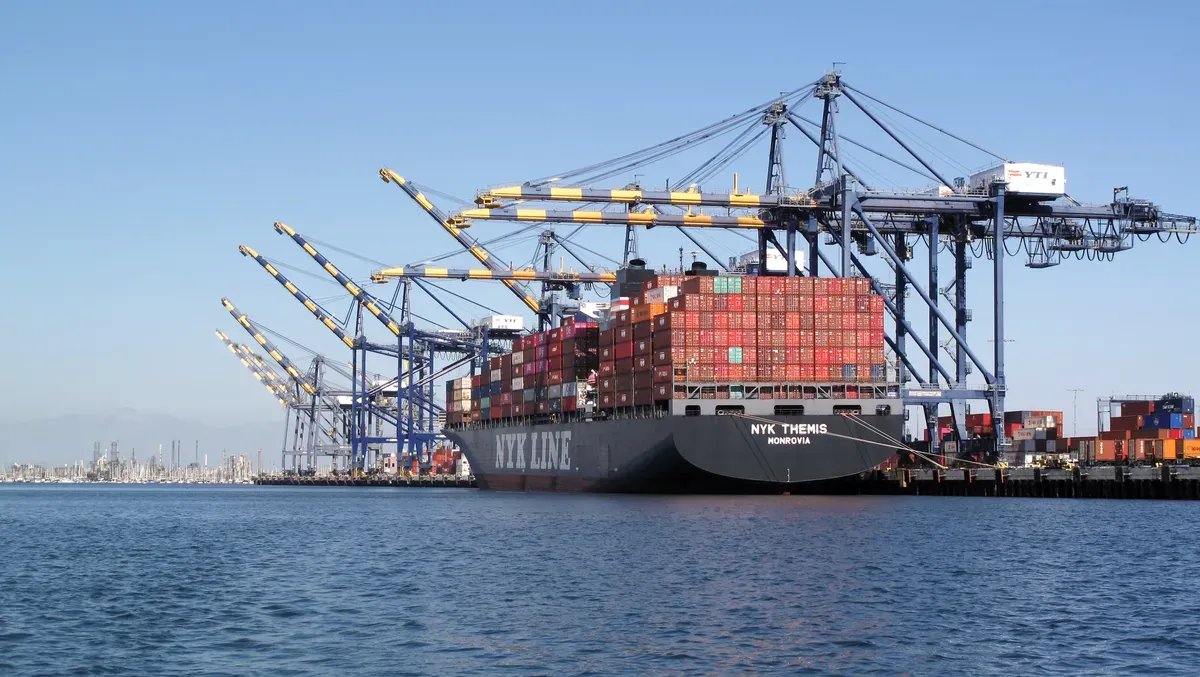
6. US Customs Essentials: IOR, Bonds, and ISF
Under DDP, your forwarder handles all US customs obligations as (or through) the Importer of Record — but knowing the mechanics helps you spot a professional operation.
Importer of Record (IOR)
The IOR is the legal party responsible for the entry: correct HTSUS classification, accurate valuation, and payment of all duties. Under a genuine DDP service, the forwarder serves as IOR through its own US entity or a licensed partner, so you do not need a US company, an EIN, or your own broker. Foreign companies can also be established as a Foreign Importer of Record — your forwarder will tell you which structure fits.
Customs Bonds
Every formal entry needs a bond. Two options:
- Single-entry bond — covers one shipment, typically $50–$75 minimum plus an ISF bond on ocean freight; fine for one-off imports.
- Continuous bond — covers all entries for a year, minimum $50,000 coverage, roughly $450–$600 per year; the default for anyone importing regularly.
A DDP forwarder clears under its own bond, so neither cost touches you directly — but if a quote for regular shipments does not mention bond arrangements, ask why.
ISF (10+2) Filing
For ocean freight, the Importer Security Filing must reach CBP at least 24 hours before the vessel loads in China. Late or inaccurate filings draw liquidated damages of $5,000 per violation. A competent DDP forwarder files ISF as a matter of routine and confirms the acceptance before departure — make sure yours does.
HTSUS Classification Pitfalls
One digit in a classification can move your duty rate by 5–25 percentage points — the difference between a profitable shipment and a loss under the 2026 stack. Experienced forwarders review every product’s classification before the cargo sails, not after CBP holds the container. If your shipment includes regulated goods (FCC, FDA, CPSC, EPA jurisdictions), confirm the extra documentation at the quote stage.
7. DDP Shipping to Amazon FBA Centers in the USA
DDP is the default shipping method for Amazon FBA sellers importing from China because it delivers to the fulfillment center with duties prepaid and no US entity required — but Amazon’s receiving rules are unforgiving, and a rejected truck costs real money.
- Direct FBA delivery to centers across the US, with appointment scheduling through Carrier Central handled by the forwarder
- FNSKU labeling, palletizing, and wrapping done at the origin warehouse to Amazon’s specs — cheaper and more reliable than fixing labels at a US prep center
- One all-in cost per unit for precise margin math — critical on thin-margin FBA products
Learn more about our dedicated Amazon FBA from China service.
Our Industry Insight: The most expensive FBA mistake we see is treating the delivery appointment as an afterthought. A missed Carrier Central slot can idle a truck for 3–7 days at $150+ per day. We book the appointment as soon as the container’s ETA firms up, and verify every FNSKU label and pallet dimension at our Shenzhen warehouse before the cargo ever leaves China.
8. How to Choose a Reliable DDP Freight Forwarder from China to the USA
The right DDP forwarder combines transparent itemized pricing, real US customs capability, and proactive communication — not just the lowest headline rate. Use this checklist before booking:
| # | Criterion | What to Look For | Red Flag |
|---|---|---|---|
| 1 | Transparent pricing | Itemized quote: freight, duty stack, fees, delivery shown separately | Vague flat “all-in” with no breakdown |
| 2 | US customs capability | IOR structure, own or partner bond, licensed broker, pre-clearance | No mention of IOR, bond, or ISF |
| 3 | Duty honesty | Duties calculated on declared value with HTSUS review | Flat per-kg rate for every product type |
| 4 | FBA experience | Labeling, palletizing, Carrier Central appointments | Has never delivered to an FBA center |
| 5 | Communication | Dedicated advisor, milestone updates without chasing | You learn about delays from the carrier |
| 6 | Track record | Years in business, references, verifiable history | No company history you can check |
For a fuller evaluation framework, see our guide to choosing the best freight forwarder from China to USA.
Questions to Ask Before Booking
- “Who acts as Importer of Record, and under whose bond?”
- “Show me the duty calculation for my HTSUS code inside this quote.”
- “When do you file the ISF, and how do I know it was accepted?”
- “What happens, and what does it cost, if CBP selects my shipment for exam?”
9. Why Choose Efanda Logistics for DDP Shipping to the USA?
Efanda Logistics has managed China–USA DDP shipments since 2018 from our Shenzhen headquarters — combining factory-side consolidation, licensed US customs brokerage partnerships, and transparent all-in pricing into a single accountable service.
- Founded 2018, headquartered in Shenzhen: direct access to China’s main export manufacturing hubs and the ports of Yantian, Nansha, and Shekou, which keeps pickup fast and origin costs low.
- True end-to-end DDP: multi-supplier consolidation at our own warehouse, export declaration, FCL/LCL sea and air capacity on major trans-Pacific lanes, US entry as IOR with bond in place, full duty-stack payment, and final delivery to any US address or FBA center.
- Transparent pricing: every quote itemizes freight, duties, MPF/HMF, clearance, and delivery — no hidden destination charges, ever.
- Compliance-first customs work: HTSUS classification review before shipment, ISF filed and confirmed 24+ hours before loading, honest declared values.
- Amazon FBA specialists: FNSKU labeling, palletizing, and appointment booking built into the service.
- A dedicated logistics advisor for every client, with proactive tracking updates from factory pickup to the final delivery scan.
Whether you are moving a 100 kg trial order or a program of 40ft containers, we will show you the full landed cost before you commit. For container-load planning, also see our guides to FCL shipping from China to USA and LCL shipping from China to USA.
Get a transparent DDP shipping quote from China to the USA →
Stop letting duty surprises and destination fees eat your margins. Contact Efanda Logistics today for an itemized, all-inclusive DDP quote tailored to your products and your US destination.
10. Frequently Asked Questions
Q1: What is included in DDP shipping from China to the USA?
DDP covers factory pickup, China export clearance, ocean or air freight, ISF filing, the US customs entry under the forwarder’s bond and IOR, all duties (MFN + Section 301 layers) and fees (MPF, HMF), and final delivery to your US address or FBA center — one quote, one invoice. Typical exclusions: customs exam fees, storage beyond free time, redelivery, and remote-area surcharges.
Q2: How much does DDP shipping from China to the USA cost?
As of Q4 2026, planning ranges are roughly $7.50–$9.00 per kg for DDP air (100 kg+), $120–$220 per CBM for DDP sea LCL, and $3,500–$7,000 for the ocean leg of a 40ft container on West Coast lanes, with the duty stack calculated on your declared value and HTSUS code. Rates move weekly — request a current itemized quote.
Q3: How long does DDP shipping from China to the USA take?
Sea DDP takes about 25–32 days door-to-door to the West Coast and 35–48 days to East Coast and Gulf destinations. Air DDP runs 6–10 working days, and express courier DDP 3–6 days. Peak season (August–October) can add a week or more at congested gateways.
Q4: Do I need a US company or customs bond to ship DDP?
No. Under DDP the forwarder acts as Importer of Record through its own US entity or partner and clears under its own customs bond. You need no US entity, EIN, broker, or bond of your own — which is exactly why DDP suits first-time importers and overseas sellers.
Q5: Is DDP shipping to the USA still worth it after the de minimis repeal?
More than before. With the $800 de minimis exemption gone for Chinese goods since May 2025, every shipment now requires a formal entry and duty payment. DDP moves that entire burden — classification, valuation, duty calculation, payment — to the forwarder, so the extra compliance work no longer touches you.
Q6: Can DDP shipments deliver directly to Amazon FBA centers?
Yes. A DDP forwarder with FBA experience delivers directly to US fulfillment centers, handling FNSKU labeling, palletizing to Amazon specs, and Carrier Central appointment booking. Confirm these services are included in the quote, not billed as extras.
Q7: What documents do I need for DDP shipping to the USA?
You typically supply only the commercial invoice details and packing list data from your supplier — accurate product descriptions, values, and quantities. Your forwarder prepares the export declaration, bill of lading or air waybill, ISF filing, and the US customs entry. Regulated products (FDA, FCC, CPSC scope) may need additional certificates — flag them at the quote stage.

Written by the EFANDA Logistics team — a Shenzhen-based freight forwarder established in 2018, moving cargo from China to ports worldwide with end-to-end pickup, consolidation, customs and door delivery.About us