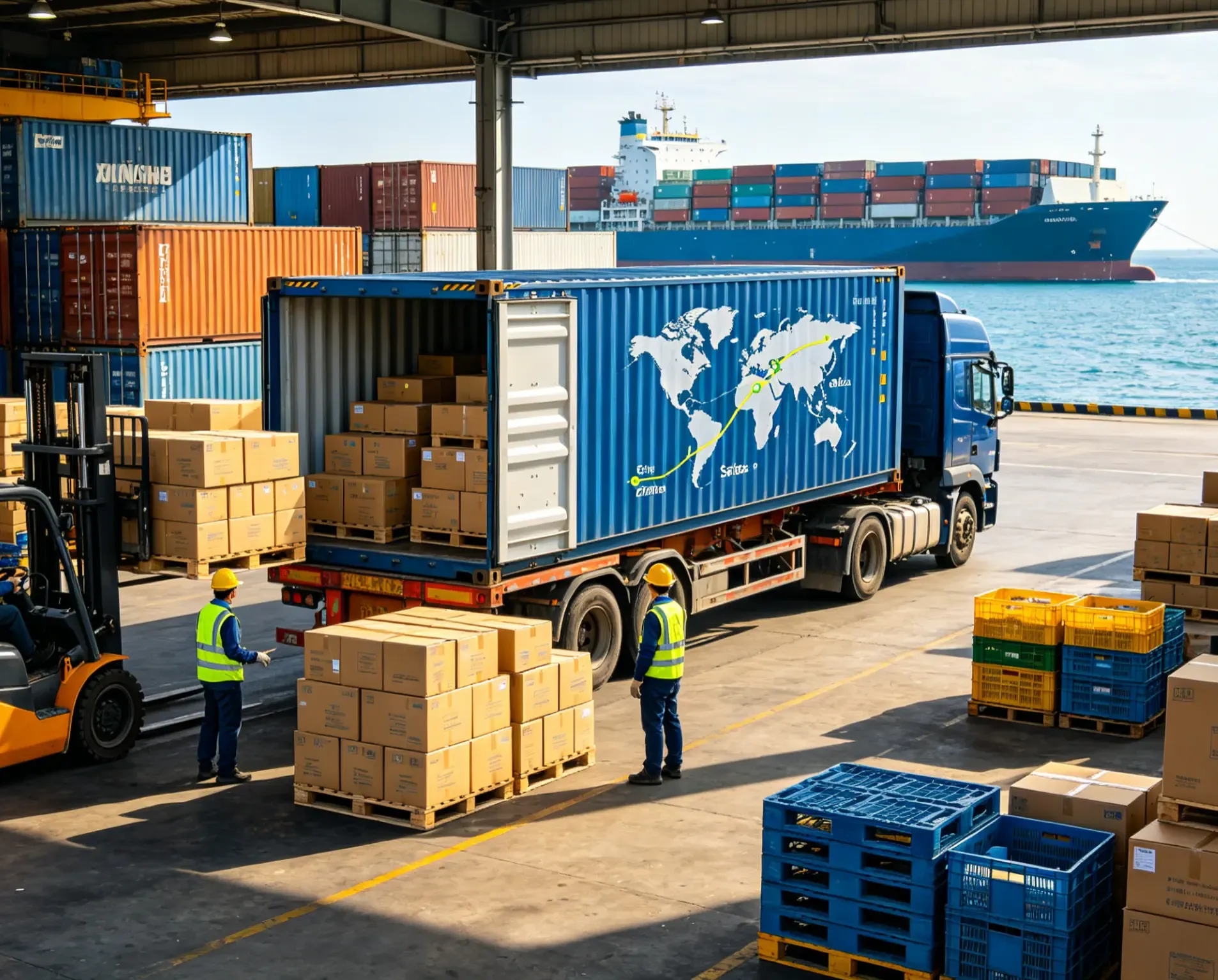
Are you wondering how long does shipping from China to Brazil take in today’s dynamic global market? For B2B importers, e-commerce sellers, and procurement managers managing the China-Latin America trade lane, inventory planning demands absolute precision. Understanding the difference between port-to-port transit and actual door-to-door delivery is crucial because navigating the Pacific Ocean is often faster than clearing goods through Receita Federal (Brazilian customs). In this 2026 guide, we break down precise transit times across all modes of transport, share our first-hand freight forwarding experience on avoiding notorious customs delays, and give you a realistic timeline you can actually plan against.
Quick Answer: How Long Does Shipping from China to Brazil Take?
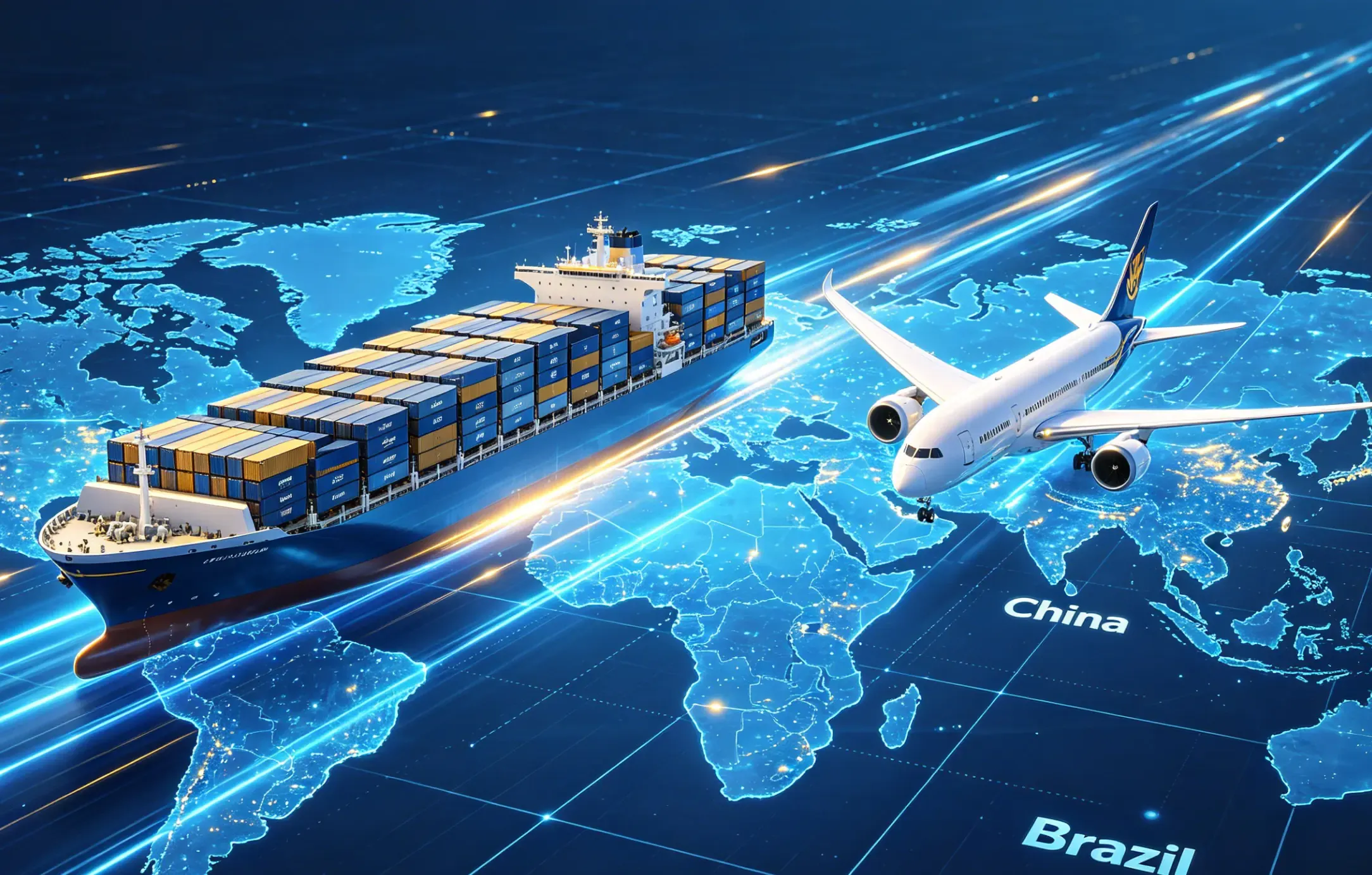
Shipping from China to Brazil takes anywhere from 3 to 65 days depending on your chosen mode of transport. Express courier takes 3 to 5 business days, air freight takes 3 to 8 days, and sea freight takes 30 to 45 days port-to-port (or 45 to 65 days door-to-door).
In our experience handling Latin American logistics at Efanda, the main variable affecting your supply chain is not the ocean transit itself, but the strict Brazilian customs clearance process (Despacho Aduaneiro). Factoring in origin handling, peak season congestion, and final inland delivery is essential for accurate inventory planning.
To help you decide which mode fits your business, here is a quick overview:
| Shipping Mode | Transit Time | Cost Level | Delivery Type | Best For |
|---|---|---|---|---|
| Express Courier | 3–5 business days | $$$$ (Very High) | Door-to-Door | Samples, documents, emergency parts |
| Air Freight | 3–8 days | $$$ (High) | Airport-to-Airport | High-value, urgent, perishable goods |
| Sea Freight (FCL) | 30–45 days port-to-port | $ (Low) | Port-to-Port | Bulk cargo, full container loads |
| Sea Freight (LCL) | 35–55 days port-to-port | $$ (Moderate) | Port-to-Port | Smaller volumes (< 15 CBM) |

Sea Freight Transit Times from China to Brazil
Sea freight from China to Brazil typically takes between 30 to 45 days port-to-port, depending on the specific departure ports in China, the arrival ports in Brazil, and whether you choose a direct sailing or a transshipment route.
Sea freight remains the backbone of the China-Brazil trade lane because it is the most cost-effective method for large-volume imports. However, transit times vary significantly based on whether you are shipping Full Container Load (FCL) or Less than Container Load (LCL), as well as the specific carrier routing.
FCL (Full Container Load) Transit Times
FCL shipping offers the most reliable ocean transit schedule because your container goes directly from the origin port to the destination port without being opened or consolidated. Below are the estimated port-to-port FCL transit times for major routes in 2026:

| Origin Port (China) | Destination Port (Brazil) | Estimated Transit Time |
|---|---|---|
| Shanghai (PVG) | Santos (SSZ) | 32–36 Days |
| Shenzhen (SZX) | Santos (SSZ) | 30–34 Days |
| Ningbo (NGB) | Paranaguá (PNG) | 34–38 Days |
| Shanghai (PVG) | Navegantes (NVT) | 35–40 Days |
| Qingdao (TAO) | Rio de Janeiro (RIO) | 33–37 Days |
Major carriers operating direct services on these routes include COSCO, MSC, CMA CGM, and Maersk. Direct sailings from Shenzhen’s Yantian terminal to Santos typically take 30 to 34 days. However, if your cargo is routed via a transshipment hub such as Singapore, Algeciras (Spain), or Lisbon (Portugal), add an additional 7 to 14 days to the total transit time. Transshipment routes are more common for shipments bound for secondary Brazilian ports like Navegantes or Rio Grande, where direct services are less frequent.
LCL (Less than Container Load) Transit Times
LCL shipping generally takes 5 to 10 days longer than FCL shipments due to the necessary consolidation and deconsolidation processes. In our operational experience, delays often occur at the Container Freight Station (CFS) on both ends. Your goods must first be consolidated with other shipments into a single container in China—a process that can take 3 to 5 days depending on cargo availability. Once the container arrives in Brazil, it must be moved to a bonded warehouse where it is unloaded and sorted before individual customs clearance can begin.
Hidden LCL costs at Brazilian ports—what most forwarders won’t tell you: The deconsolidation (desova) process at Brazilian CFS facilities involves multiple destination fees that are rarely included in your initial freight quote. At the Port of Santos, for example, you should expect:
- CFS Handling Fee (Taxa de Capatazia): Charged per cubic meter for unloading and sorting at the bonded warehouse.
- Storage Fees (Armazenagem): CFS storage becomes chargeable after a short free period—typically 3 to 5 days. If customs holds your cargo for inspection, these fees accumulate rapidly.
- Administrative Release Fees: Documentation processing fees charged by the terminal operator before goods can be released.
These additional charges can easily add USD 200–500 to a small LCL shipment. This is why we at Efanda always provide an all-in destination charges estimate before booking, so you are never surprised by hidden terminal fees.
Air Freight Transit Times from China to Brazil
Air freight from China to Brazil takes 3 to 8 days for airport-to-airport delivery, depending on flight availability, carrier routing, and customs processing times at major Brazilian hubs.
Air freight is ideal for high-value, time-sensitive, or perishable goods. While significantly faster than sea freight, it is also much more expensive. The exact transit time depends heavily on whether you choose a standard service (which often transships through hubs in Europe or the Middle East) or an express air freight service with more direct routing.
Standard vs. Express Air Freight
Standard air freight often involves transshipment through major global hubs in Europe (Frankfurt – FRA, Amsterdam – AMS) or the Middle East (Dubai – DXB, Doha – DOH) before reaching Brazil. Express air freight relies on more direct routing or priority boarding on passenger and cargo flights, cutting out intermediate stops.
| Service Level | Origin Hubs (China) | Destination Hubs (Brazil) | Estimated Transit Time |
|---|---|---|---|
| Express Air | PVG / CAN / SZX | GRU (Guarulhos) / VCP (Viracopos) | 3–5 Days |
| Standard Air | PVG / CAN / SZX / PEK | GRU / VCP / GIG (Galeão) | 5–8 Days |
Key carriers on the China-Brazil air corridor include Air China Cargo (direct PEK-GRU freighter service), Qatar Airways Cargo (via DOH), Turkish Cargo (via IST), and LATAM Cargo. For urgent shipments over 1,000 kg, booking at least 7–10 days in advance is recommended to secure space, especially during peak retail seasons when capacity tightens significantly.
How Long Does Express Shipping from China to Brazil Take?
Express courier services like DHL, FedEx, and UPS deliver from China to Brazil in 3 to 5 business days, offering the fastest and most reliable door-to-door timeline.
While express shipping is unmatched in speed, it is critical to be radically transparent about the downsides. It is the most expensive shipping method available—typically USD 12–18 per kilogram. Furthermore, express shipments to Brazil are subject to strict customs limits and high taxation. Under the official Brazilian government program Remessa Conforme, express shipments are heavily scrutinized for compliance. According to official guidelines, you must account for strict Import Duty (Imposto de Importação—II) enforcement and high state taxes (ICMS). For B2B importers, express is usually reserved for product samples or emergency replacement parts.
The Real Timeline Difference Between Door-to-Door and Port-to-Port
While port-to-port sea freight takes 30 to 45 days, door-to-door shipping from China to Brazil usually takes 45 to 65 days due to complex customs clearance and inland trucking logistics.
Many new importers mistakenly plan their inventory around the port-to-port transit time. The real timeline must account for the entire supply chain:
- Origin Handling (China): 3–7 days (trucking to port, export customs declaration, container loading).
- Main Ocean Transit: 30–45 days (varies by route, carrier, and whether direct or transshipment).
- Destination Customs (Brazil): 7–14 days (unloading, Siscomex entry filing, Receita Federal inspection, tax payment, and release).
- Final Delivery (Brazil): 2–5 days (inland trucking from the port to your warehouse or distribution center).
Real-World Example — Shenzhen to São Paulo via Santos (20GP FCL): In a recent shipment we handled, a 20-foot container of consumer electronics departed from Shenzhen Yantian and arrived at Santos port. Here is the actual day-by-day breakdown:
| Stage | Duration | Cumulative |
|---|---|---|
| Pickup & Export Customs (Shenzhen) | 3 days | Day 3 |
| Ocean Transit (Direct, COSCO) | 32 days | Day 35 |
| Berth Wait at Santos (Port Congestion) | 2 days | Day 37 |
| Unloading & Siscomex Filing | 2 days | Day 39 |
| Customs Inspection (Yellow Channel) | 8 days | Day 47 |
| Tax Payment & Release | 2 days | Day 49 |
| Inland Trucking to São Paulo | 1 day | Day 50 |
Total door-to-door: 50 days. This real case illustrates why the “30-day port-to-port” headline number can be dangerously misleading for inventory planning. Always budget at least 45 to 60 days for sea freight door-to-door to Brazil.
Top 3 Factors That Delay Shipping from China to Brazil
The primary causes of shipping delays to Brazil are strict Receita Federal (customs) inspections, incorrect commercial documentation, and peak season port congestion.

1. Brazilian Customs Clearance (Receita Federal)
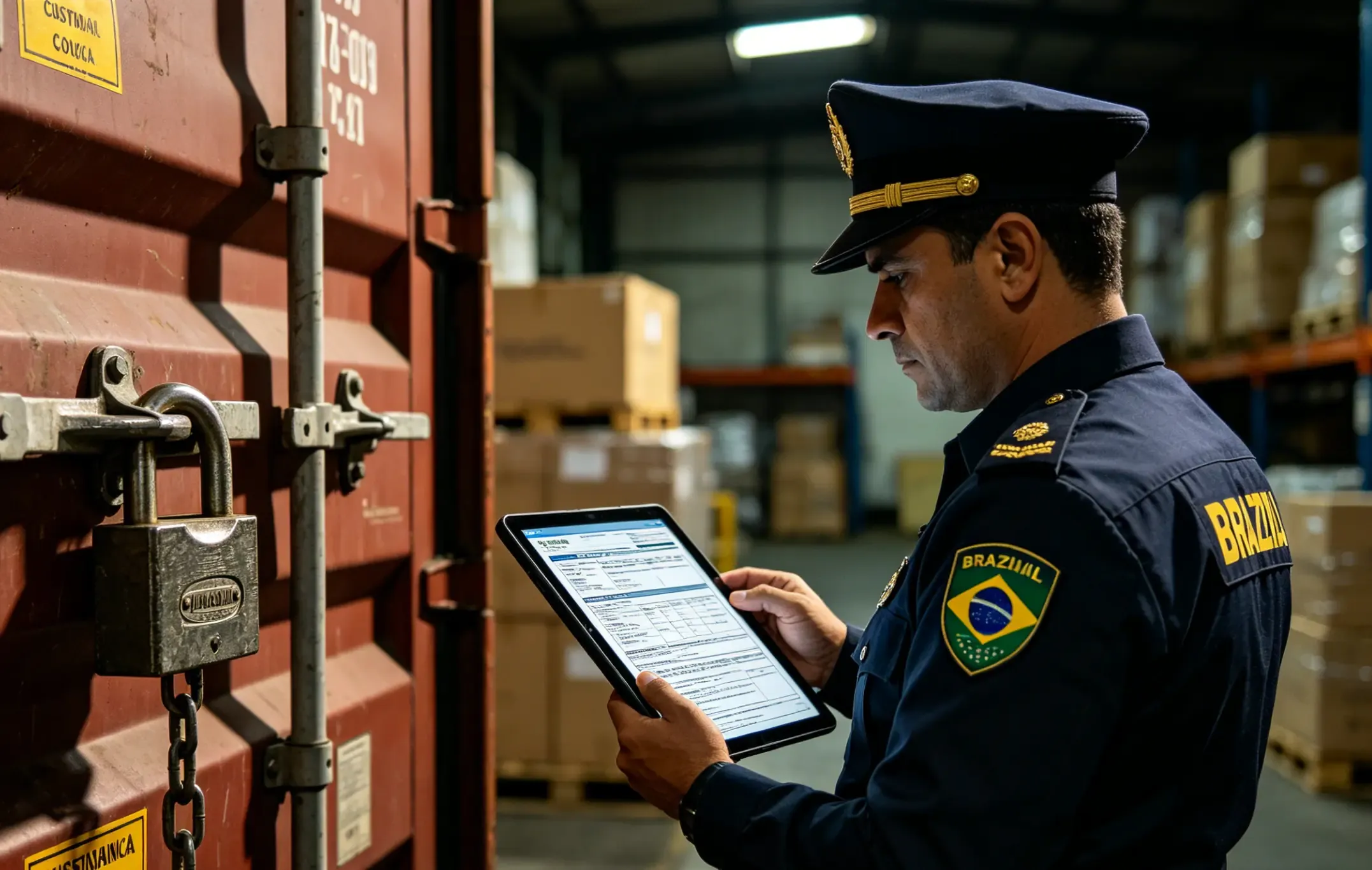
Brazil has one of the most complex customs systems in the world. The Receita Federal uses a parameterized risk-assessment system called Siscomex (Sistema Integrado de Comércio Exterior) that assigns every import declaration to one of four inspection channels:
| Channel | Portuguese Name | Inspection Level | Typical Outcome |
|---|---|---|---|
| Green | Canal Verde | Automatic clearance | Released within 1–2 days |
| Yellow | Canal Amarelo | Document review only | 3–7 days if documents are correct |
| Red | Canal Vermelho | Physical + document inspection | 7–20+ days; storage fees apply |
| Gray | Canal Cinza | Full audit (anti-fraud) | 30–60+ days; most severe |
As an importer, the Receita Federal strictly mandates that you must have an active RADAR license (Habilitação no Siscomex) before any shipping commences. Furthermore, the NCM (Nomenclatura Comum do Mercosul) codes on your commercial invoice must be 100% accurate. Even a minor typo or a missing HS code classification can trigger a “Red Channel” flag, causing weeks of delay and heavy storage fees (Demurrage and Detention).
Additional regulatory approvals can also extend clearance time depending on your product category:
- ANVISA (National Health Surveillance Agency): Required for food, cosmetics, medical devices, and pharmaceuticals. ANVISA inspections add 5–15 business days.
- MAPA (Ministry of Agriculture): Required for agricultural products and any goods with wooden packaging. Fumigation certificates are mandatory.
- INMETRO (National Institute of Metrology): Required for electronics, toys, and household appliances. Products without INMETRO certification may be denied entry entirely.
2. Peak Seasons and Holidays
Global holidays severely impact transit times. Shipping during the weeks leading up to Chinese New Year (January/February) or Golden Week (October) causes origin delays due to factory closures and rolled cargo. Similarly, arriving in Brazil during Carnival (February/March) guarantees a slowdown in customs processing and inland transportation.
3. Port Congestion and Infrastructure
Vessel bunching and infrastructure limitations frequently cause congestion at major Brazilian entry points. In our recent experience, the Port of Santos—the largest port in Latin America—regularly faces berth congestion during peak agricultural export seasons (March–August), forcing incoming container ships from China to wait at anchorage for 2 to 5 days before unloading. Paranaguá faces similar challenges when soybean and corn export volumes peak.
How to Avoid Delays and Speed Up Your Shipping to Brazil
To avoid delays, ensure all commercial documents perfectly match Brazilian customs requirements—especially NCM codes and declared values—and partner with a freight forwarder experienced specifically in the Latin American trade lane.
A proactive approach to compliance is your best defense against delays. Follow these actionable steps to streamline your supply chain:
- Double-Check Documentation Before Cargo Leaves China: Ensure your CNPJ (Cadastro Nacional da Pessoa Jurídica—Corporate Tax ID), Proforma Invoice, Packing List, and Bill of Lading are perfectly aligned in every detail. Note that some Brazilian customs brokers still require original commercial invoices with signatures in blue ink and notarized copies.
- Choose the Right Incoterms for Brazil: We recommend FOB (Free on Board) or CIF (Cost, Insurance, and Freight) for most importers. While DDP (Delivered Duty Paid) sounds convenient, it is exceptionally difficult to execute in Brazil because the foreign shipper cannot legally act as the importer of record (importador) or pay local ICMS taxes directly. Brazilian law requires a locally registered entity with a RADAR license to clear goods. If a forwarder offers “DDP to Brazil,” verify exactly how they handle the importer-of-record requirement.
- Verify NCM Codes Before Booking: The NCM code determines your duty rate (II), IPI, PIS, COFINS, and ICMS—as well as whether ANVISA, MAPA, or INMETRO approvals are required. A wrong NCM code does not just cause delays; it can result in fines of up to 100% of the customs value difference. Your Brazilian customs broker (despachante aduaneiro) should be involved in the NCM classification before the shipment departs China.
- Avoid Peak Booking Windows: Avoid shipping from China in the 3 weeks before Chinese New Year and arriving in Brazil during Carnival week. If your timeline is inflexible, consider air freight for critical inventory during these windows.
- Work with a LatAm-Specialized Forwarder: At Efanda Logistics, our team conducts rigorous pre-clearance document checks before your cargo ever leaves China. By verifying your NCM codes, coordinating with your Brazilian customs broker in advance, and selecting optimal sailing schedules, we minimize the risk of your cargo getting stuck at the border—and we provide all-in destination charge estimates so you never face surprise terminal fees.
How to Choose Between Sea, Air, and Express for Brazil
The best shipping mode depends on your priorities—cost, speed, cargo volume, and product type. Use this decision matrix to guide your choice:
| Your Priority | Recommended Mode | Why |
|---|---|---|
| Lowest cost per unit | Sea Freight (FCL) | Economies of scale for 15+ CBM shipments |
| Balance of cost and speed | Sea Freight (LCL) | Pay only for the space you use |
| Fastest possible delivery | Express Courier | Door-to-door in 3–5 business days |
| Urgent but cost-conscious | Air Freight | 3–8 days at a fraction of courier rates |
| High-volume with strict deadline | Air Freight (charter/consolidated) | Bulk air capacity for priority goods |
| Perishable or temperature-sensitive | Air Freight | Minimizes spoilage risk |
A note on misleading transit time claims: You may encounter some freight comparison websites quoting LCL transit times as low as “9–17 days” from China to Brazil. This is physically impossible for ocean freight. Such figures likely confuse air LCL consolidation services with sea freight, or reflect only the last-mile delivery segment. Always verify whether a quoted transit time is port-to-port (vessel sailing time only) or door-to-door (end-to-end), and ask for a written breakdown of each stage.
Frequently Asked Questions (FAQ)
Why does Brazilian customs take so long to clear goods from China?
Brazilian customs (Receita Federal) employs a strict parameterized channel system (Green, Yellow, Red, Gray) via Siscomex. High import tariffs, complex tax structures (II, IPI, PIS, COFINS, ICMS), and rigorous document verification mean that any discrepancy immediately triggers manual inspections (Red or Gray channels), significantly delaying clearance. Additionally, certain product categories require extra approvals from agencies like ANVISA, MAPA, or INMETRO, which can add weeks to the process.
Is there a direct sea freight route from China to Brazil?
Yes, several major carriers (such as COSCO, MSC, CMA CGM, and Maersk) offer direct sea freight routes from major Chinese ports like Shanghai, Shenzhen, and Ningbo to Brazilian ports like Santos, Paranaguá, and Rio de Janeiro. Direct routes generally take 30 to 35 days, while transshipment routes (often via Singapore for Southeast Asia connections or via Algeciras/Lisbon for European connections) typically take 40 to 50+ days.
Does tracking work accurately for shipments to Brazil?
Yes, international tracking works accurately for the ocean or air transit leg. However, once the goods arrive in Brazil and enter the bonded customs area, standard carrier tracking often pauses. Real-time updates during this phase require your local customs broker (despachante aduaneiro) to monitor the Siscomex system directly until the goods are released. We recommend establishing a direct communication channel with your Brazilian customs broker before the shipment arrives.
Should I use DDP (Delivered Duty Paid) when shipping to Brazil?
In most cases, no. Brazilian regulations make DDP extremely difficult because only a locally registered entity with a RADAR license can act as the importer of record and pay domestic taxes like ICMS. True DDP to Brazil requires a legal local subsidiary or a licensed third-party import agent, which adds complexity and cost. For most B2B importers, FOB or CIF with a trusted Brazilian customs broker is the more practical and compliant approach.

Written by the EFANDA Logistics team — a Shenzhen-based freight forwarder established in 2018, moving cargo from China to ports worldwide with end-to-end pickup, consolidation, customs and door delivery.About us