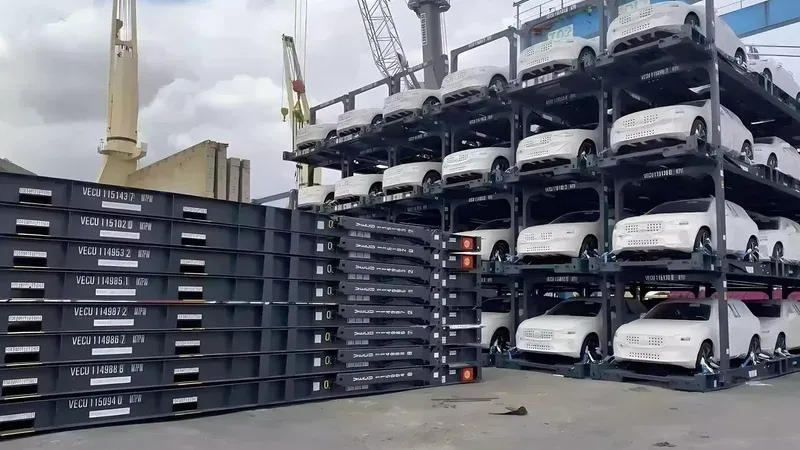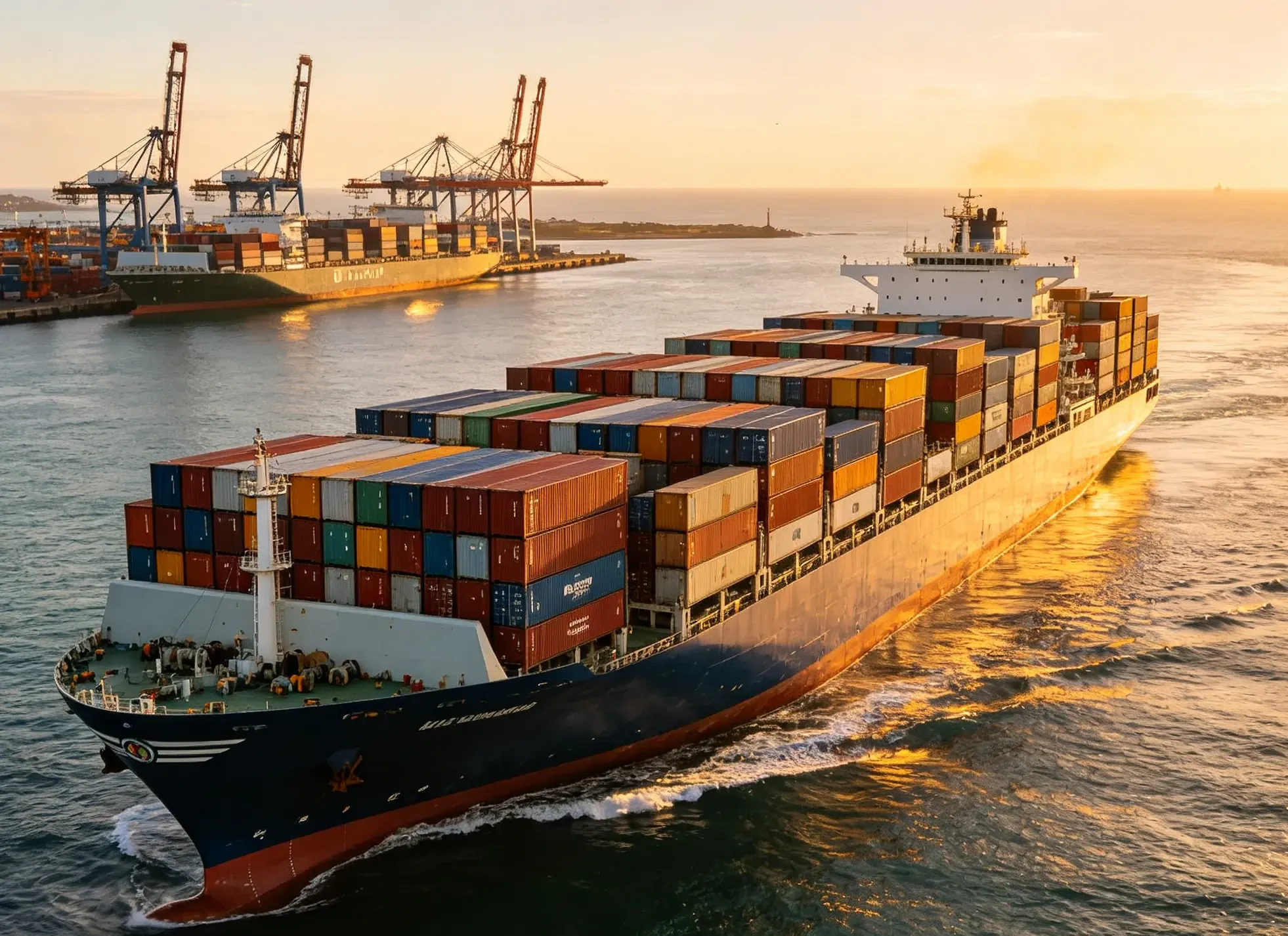
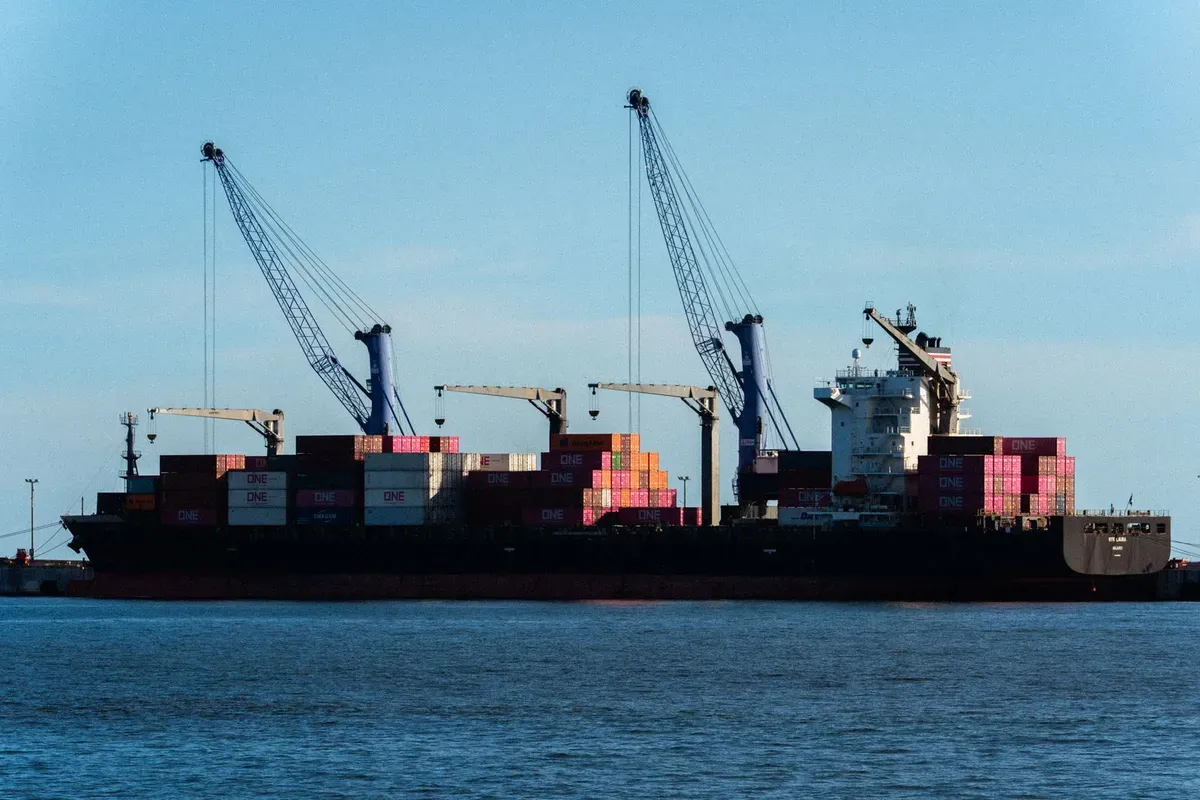
Why does the freight quote say USD 1,800 but the total invoice lands at USD 3,200? Shipping cost from China to South Africa involves far more than the ocean freight rate — SARS customs duties, 15% VAT calculated on a unique Added Tax Value formula, terminal handling charges, and inland delivery together add 35 – 60% on top of the base freight. Understanding the full landed-cost picture is the single most important step before you sign a supplier contract or commit to an import order.
This guide breaks down every cost component on the China–South Africa corridor as of Q4 2026: sea freight (FCL and LCL) from five Chinese ports, air freight rates by weight bracket, the exact SARS duty and VAT calculation, five hidden fees that catch importers off guard, and a worked example showing the total cost of a USD 10,000 shipment from Shenzhen to Johannesburg. For a broader view of the corridor, see our shipping from China to South Africa overview.
Rate disclaimer: All prices in this guide reflect market conditions as of October 2026 and are indicative only. Freight rates fluctuate with fuel costs, carrier capacity, seasonal demand, and global trade dynamics. South African customs duties and SARS valuation practices may change without notice. Always confirm rates with your freight forwarder and verify duty classifications with SARS before finalizing an import order.
What Are the Main Shipping Methods from China to South Africa?
Sea freight handles over 85% of cargo on this corridor because of its cost advantage for the typical 25 – 35 day transit, while air freight at 3 – 7 days suits urgent or high-value goods. The right choice depends on your shipment’s weight, volume, and delivery deadline — and the crossover point is usually around 100 – 150 kg.
| Method | Transit Time | Cost Basis | Best For |
|---|---|---|---|
| Sea FCL (20ft / 40ft) | 25 – 35 days | Per container | Bulk cargo, machinery, full orders |
| Sea LCL | 30 – 45 days | Per CBM | Trial orders, 1 – 15 CBM |
| Air Freight | 3 – 7 days | Per kg (chargeable weight) | Electronics, spare parts, urgent restocks |
| Air DDP | 6 – 9 days | Per kg, all-inclusive | Small importers wanting hands-off delivery |
For context, the sea–air crossover for a typical 1 CBM shipment sits around 100 kg: below that threshold, air freight is competitive on a total-cost basis (you save on inland handling and warehousing); above it, sea freight wins clearly on unit cost. Our sea freight from China and air freight from China service pages detail the options available.
Sea Freight Rates: Port by Port, Container by Container
Full container rates from China to Durban range from USD 1,800 – 2,800 for a 20ft and USD 2,800 – 4,500 for a 40ft, depending on the departure port and carrier. Southern China ports (Shenzhen, Guangzhou) are typically USD 100 – 300 cheaper than northern ports (Qingdao, Tianjin) because of shorter sailing distance and more direct services.
FCL Rates by Port Pair (Q4 2026)
| Departure Port | 20ft to Durban | 40ft to Durban | 40HQ to Durban | Transit |
|---|---|---|---|---|
| Shanghai | USD 2,200 – 2,600 | USD 3,500 – 4,200 | USD 3,600 – 4,300 | 24 – 30 days |
| Ningbo | USD 2,200 – 2,600 | USD 3,500 – 4,200 | USD 3,600 – 4,300 | 25 – 30 days |
| Shenzhen (Yantian / Shekou) | USD 1,800 – 2,400 | USD 2,800 – 3,800 | USD 2,900 – 3,900 | 22 – 28 days |
| Guangzhou (Nansha) | USD 1,900 – 2,500 | USD 3,000 – 4,000 | USD 3,100 – 4,100 | 25 – 30 days |
| Qingdao | USD 2,200 – 2,800 | USD 3,500 – 4,500 | USD 3,600 – 4,600 | 28 – 35 days |
LCL Rates and the FCL Crossover
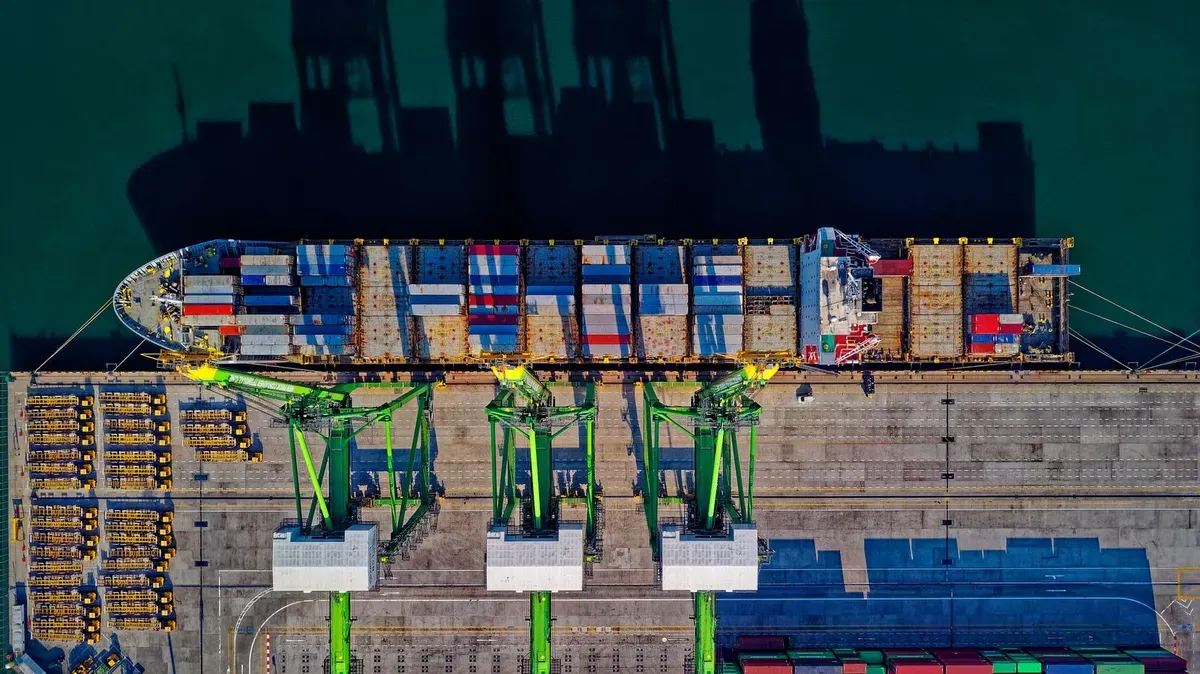
LCL shipping from China to Durban is typically quoted at USD 100 – 180 per CBM. The rule of thumb: once your shipment exceeds 13 – 15 CBM, FCL becomes cheaper per unit and avoids the consolidation / deconsolidation delays that add 5 – 8 days to LCL transit.
Cape Town and Gqeberha (Port Elizabeth): add USD 100 – 300 per container to Durban rates, plus 2 – 4 extra transit days. Cape Town has less frequent direct sailings, so transshipment via Durban or Singapore is common. For a closer look at another major African corridor, see our guide on sea shipping from China to Egypt.
Red Sea disruptions (2024 – 2026): some carriers have rerouted services around the Cape of Good Hope, adding 7 – 10 days on transshipment legs. Always confirm whether your quote uses a direct Suez routing or a rerouted service.
Air Freight Rates: By Weight Break and Departure Airport
Air freight from China to South Africa is billed on chargeable weight — the higher of actual gross weight and volumetric weight (L × W × H in cm ÷ 6,000). Rates drop significantly as volume increases, from around USD 7.50/kg at 45 kg to USD 4.50/kg at 1,000 kg.
| Departure Airport | 100 kg (USD/kg) | 300 kg (USD/kg) | 500 kg (USD/kg) | 1,000 kg (USD/kg) |
|---|---|---|---|---|
| Shanghai (PVG) | 6.00 – 7.50 | 5.20 – 6.50 | 4.80 – 6.00 | 4.50 – 5.50 |
| Guangzhou (CAN) | 5.80 – 7.20 | 5.00 – 6.30 | 4.60 – 5.80 | 4.50 – 5.50 |
| Shenzhen (SZX) | 6.00 – 7.50 | 5.20 – 6.50 | 4.80 – 6.00 | 4.50 – 5.50 |
| Hong Kong (HKG) | 5.50 – 7.00 | 4.80 – 6.00 | 4.50 – 5.50 | 4.20 – 5.00 |
| Beijing (PEK) | 6.50 – 8.00 | 5.50 – 7.00 | 5.00 – 6.50 | 4.80 – 5.80 |
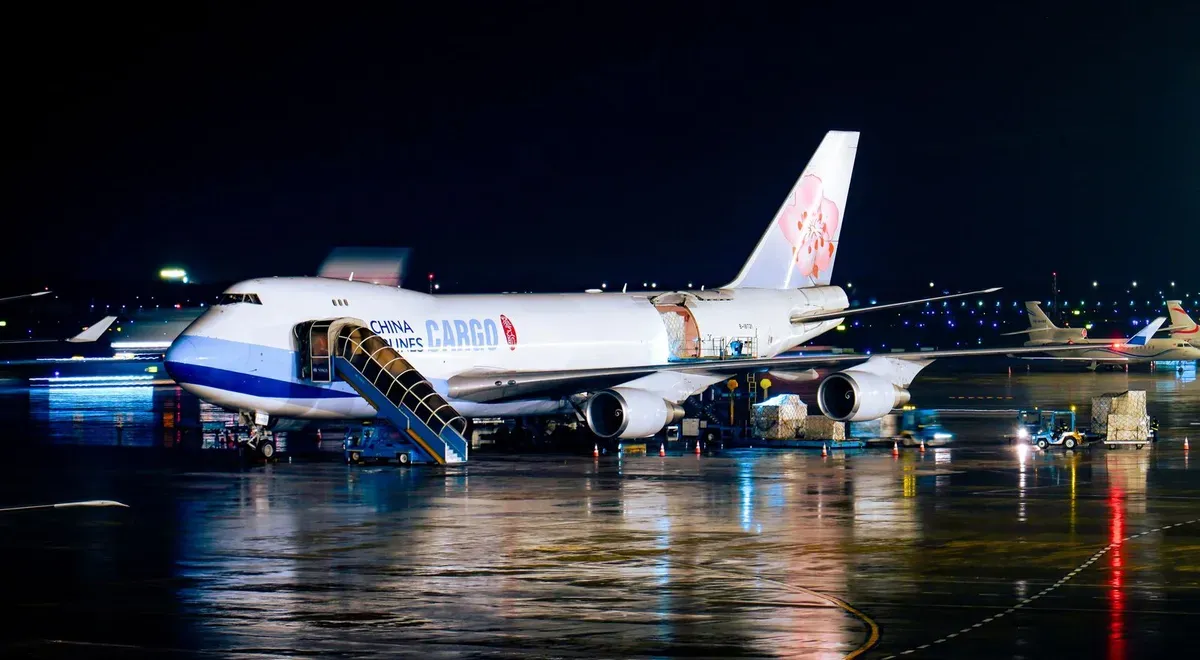
Destination: Most air cargo arrives at OR Tambo International Airport (JNB) in Johannesburg. Shipments to Cape Town (CPT) or Durban (DUR) may incur an extra domestic leg.
Additional air freight surcharges not always included in the headline per-kg rate:
- Fuel surcharge: typically 10 – 25% of freight cost
- Security surcharge: USD 0.10 – 0.20/kg
- Airline handling fee: USD 30 – 80 per shipment
- Export documentation: USD 30 – 60
Air DDP (all-inclusive door-to-door): consolidated air services offer USD 5.00 – 8.00/kg all-in, covering freight, SARS clearance, duty, VAT, and delivery within Johannesburg metro. This suits small importers who want a single price with no surprises.
For time-critical shipments, our air freight service covers all major China–South Africa air corridors with weekly sailings.
How SARS Calculates Import Duty and VAT
South Africa’s tax burden on imports is higher than most first-time importers expect. The SARS formula stacks duty on top of CIF value, then adds a 10% uplift before applying 15% VAT — making the effective tax rate significantly higher than a flat 15%.
The Formula
- CIF Value = Cost (FOB) + Insurance + Freight to South African port
- Customs Duty = CIF Value × Duty Rate (0% – 45%, determined by HS Code)
- ATV (Added Tax Value) = CIF Value × 1.1 + Customs Duty
- VAT = ATV × 15%
The 10% uplift on the customs value is applied when goods originate outside the Southern African Customs Union (SACU) — which includes all imports from China.
Worked Example: USD 5,000 Electronics Shipment
| Step | Calculation | Amount (USD) |
|---|---|---|
| FOB value (goods cost) | — | 5,000 |
| Ocean freight (Shenzhen → Durban, LCL 3 CBM) | — | 450 |
| Marine insurance (0.5% of FOB) | — | 25 |
| CIF Value | 5,000 + 25 + 450 | 5,475 |
| Customs duty at 5% (electronics HS code) | 5,475 × 5% | 274 |
| ATV | (5,475 × 1.1) + 274 | 6,297 |
| VAT at 15% | 6,297 × 15% | 945 |
| Total duty + VAT | 274 + 945 | 1,219 |
| Tax as % of FOB | 1,219 ÷ 5,000 | 24.4% |
On a USD 5,000 electronics order, SARS collects USD 1,219 in duty and VAT — nearly 25% of the goods value before any port fees or inland delivery.
Common Duty Rates by Product Category
| Product Category | Typical Duty Rate | Notes |
|---|---|---|
| Computers, laptops | 0% | Confirm tariff heading |
| Electronics / accessories | 0 – 15% | Varies by specific HS code |
| Solar panels | 0% | Incentivized category |
| Furniture | 20% | Wooden and metal furniture |
| Clothing & textiles | 40 – 45% | Highest standard rate |
| Footwear | 30 – 45% | Sport shoes often 45% |
| Motor vehicles (new) | 25% + ad valorem | Plus luxury excise |
| Processed food | 10 – 20% | Varies by product |
De minimis threshold: goods with a CIF value of ZAR 500 (approximately USD 28) or less are exempt from customs duty, but 15% VAT still applies.
5 Hidden Fees That Inflate Your Landed Cost
Beyond freight and SARS taxes, at least five categories of charges routinely add USD 400 – 1,000 per container to the final bill — and they rarely appear on the initial freight quote.
1. Terminal Handling Charge (THC) at Destination
DTHC at Durban is approximately ZAR 2,652 for a 20ft container (~USD 145) and ZAR 3,917 for a 40ft (~USD 215) as of the 2026 tariff schedule. This is non-negotiable and charged by the terminal operator on every container.
2. Port Storage
Durban’s free time for import containers is typically 3 days. From day 4, storage charges escalate sharply: ZAR 2,533 (~USD 140) per day for a 20ft, doubling to ZAR 5,067 (~USD 280) per day from day 5. Slow customs clearance is the number one cause of storage overruns.
3. Demurrage and Detention (D&D)
Late container return to the shipping line triggers demurrage (container inside the port) and detention (container outside the port) charges. Typical free time is 5 – 7 days combined, after which USD 50 – 150 per container per day accrues. Planning inland logistics before the vessel arrives prevents these costs.
4. Customs Broker Fee
A licensed South African clearing agent typically charges ZAR 2,000 – 6,000 (USD 110 – 330) per shipment for SARS declaration, duty payment coordination, and release processing. Complex cargo requiring multiple tariff classifications or permits costs more. Our customs clearance service covers export-side clearance in China; for SARS-side clearance, we coordinate with trusted local brokers.
5. Inland Delivery (Port to Warehouse)
Trucking from Durban port to Johannesburg (570 km) costs USD 300 – 600 for a 20ft and USD 450 – 900 for a 40ft container. Cape Town metro delivery is USD 150 – 400. Container handling at the destination depot (stripping, palletizing) adds another USD 100 – 300.
Full Landed Cost Example: USD 10,000 Electronics from Shenzhen to Johannesburg
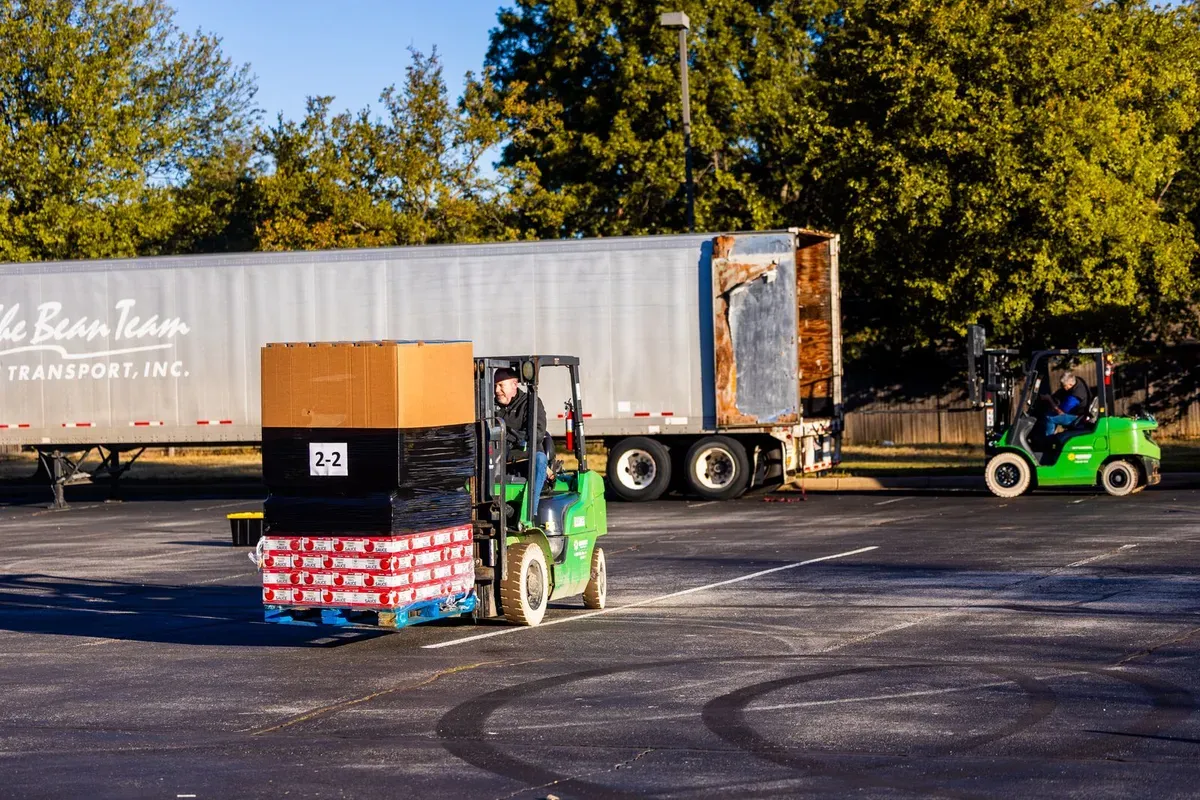
The real test of any cost guide is a worked example with real numbers. Here is the full landed-cost calculation for a USD 10,000 electronics shipment (HS code with 5% duty), traveling as a 20ft FCL from Shenzhen to a warehouse in Johannesburg.
| Cost Component | Amount (USD) | Notes |
|---|---|---|
| FOB value (goods) | 10,000 | Supplier invoice |
| Ocean freight (20ft, Shenzhen → Durban) | 2,100 | Q4 2026 rate |
| Marine insurance (0.5% of FOB) | 50 | Standard coverage |
| CIF Value | 12,150 | SARS valuation basis |
| Customs duty at 5% | 608 | 12,150 × 5% |
| ATV | 13,973 | (12,150 × 1.1) + 608 |
| VAT at 15% | 2,096 | 13,973 × 15% |
| Destination THC (20ft) | 145 | Durban terminal |
| Customs broker fee | 200 | Standard clearance |
| Inland trucking (Durban → JHB) | 450 | 570 km |
| Total Landed Cost | 15,649 | — |
| Cost above FOB | 5,649 (56.5%) | Freight + tax + fees |
The importer pays 56.5% above the supplier invoice price. This is the number that matters for margin calculations — not the USD 2,100 freight quote.
How to Reduce Your China-to-South-Africa Shipping Cost
Five strategies that consistently deliver savings on this corridor, based on patterns we see across hundreds of shipments per year.
1. Ship from Southern China Ports
Shenzhen (Yantian / Shekou) and Guangzhou (Nansha) consistently offer the lowest rates and shortest transit to Durban. Northern ports like Qingdao or Tianjin add USD 200 – 400 per container and 5 – 7 extra days. If your supplier is inland, compare the rail cost to Shanghai vs. Shenzhen — the southern route often still wins.
2. Consolidate to FCL When Possible
Once your shipment exceeds 13 – 15 CBM, FCL is cheaper per CBM than LCL and avoids the 5 – 8 day consolidation delay. Ask your supplier to hold orders until you reach FCL volume, or combine orders from multiple suppliers through a warehouse consolidation service in China.
3. Time Your Shipments Around Peak Season
The September – December peak season and Chinese New Year pre-rush (January) push rates up 10 – 20%. Booking 3 – 4 weeks ahead during these periods and shipping in the off-peak months (February – April) can save USD 200 – 500 per container.
4. Pre-Classify Your HS Codes
Incorrect or missing HS codes cause SARS to assign a higher tariff classification by default. Having your goods classified by a licensed broker before shipment prevents overpayment and avoids the 2 – 3 week reclassification delay at the border.
5. Compare Air vs. Sea on Total Cost, Not Just Freight Rate
For shipments under 500 kg to Johannesburg, air DDP (USD 5.00 – 8.00/kg all-in) may be competitive with sea freight + inland trucking + port fees, especially when you factor in the 3-week time savings and reduced inventory holding cost.
Air vs. Sea: When Does Each Method Win?
The air–sea decision comes down to a weight and volume crossover. For South Africa specifically, the break-even point for most general cargo sits around 100 – 150 kg or 0.5 CBM.
| Factor | Sea Freight | Air Freight |
|---|---|---|
| Cost per unit | Lowest above ~150 kg | Competitive below ~100 kg |
| Transit time | 25 – 45 days (port-to-door) | 3 – 7 days (airport-to-door) |
| Best cargo type | Heavy, bulky, non-urgent | Light, high-value, urgent |
| Customs risk | Moderate (document-intensive) | Lower (streamlined clearance) |
| Inventory cost | Higher (longer pipeline) | Lower (faster turnover) |
Rule of thumb: If your cargo is worth more than USD 50/kg and you need it within 2 weeks, fly it. If it is worth less than USD 20/kg and you can wait 5 weeks, sail it. The middle band (USD 20 – 50/kg) needs a case-by-case comparison of total landed cost.
For another price-focused comparison on a high-volume corridor, see our shipping cost from China to Saudi Arabia guide.
Why Efanda Logistics for China–South Africa Shipping?
Efanda Logistics has been managing export freight from China since 2018, operating from our Shenzhen headquarters with working relationships across Yantian, Shekou, Nansha, and all major Chinese ports. On the South Africa corridor, we cover factory pickup, export documentation, ocean or air freight, SARS coordination with your South African clearing agent, and inland delivery to Gauteng, Western Cape, or Eastern Cape — one transparent quote, no hidden line items.
What sets our door-to-door service apart on this lane:
- Transparent pricing that shows every cost component upfront — freight, insurance, THC, broker, trucking, duty, VAT
- Pre-shipment HS code review to prevent SARS reclassification surprises
- Weekly consolidated sailings from Shenzhen and Shanghai to Durban
- Cargo insurance arranged at 0.3 – 0.5% of CIF value
- A dedicated logistics specialist who tracks your shipment from booking to delivery
Frequently Asked Questions
How much does it cost to ship a 20ft container from China to South Africa? A 20ft FCL from Shenzhen to Durban costs USD 1,800 – 2,400 in ocean freight (Q4 2026). From Shanghai, expect USD 2,200 – 2,600. Add USD 1,000 – 2,000 for SARS duties, VAT, port charges, and inland delivery depending on cargo type and destination.
Is air freight from China to South Africa worth it? For shipments under 100 – 150 kg, air freight (USD 4.50 – 7.50/kg) is often competitive with sea freight on a total-landed-cost basis, especially when you factor in 3-week faster delivery and lower inventory holding costs. Electronics, spare parts, and seasonal restocks are the most common air freight candidates.
How is VAT calculated on imports in South Africa? SARS applies 15% VAT on the Added Tax Value (ATV), calculated as: (CIF Value × 1.1) + Customs Duty. The 10% uplift on CIF applies to all imports from outside the SACU customs union, which includes China.
What is the cheapest way to ship from China to South Africa? Sea freight FCL from Shenzhen to Durban is the cheapest option for bulk cargo, at USD 1,800 – 2,400 per 20ft container. For smaller shipments, LCL at USD 100 – 180 per CBM is economical up to about 15 CBM. Consolidating orders and shipping during off-peak months (February – April) further reduces costs.
How long does shipping from China to South Africa take? Sea freight takes 22 – 35 days port-to-port (Shenzhen to Durban is the fastest at 22 – 28 days). Door-to-door adds 7 – 15 days for customs clearance and inland delivery. Air freight takes 3 – 7 days airport-to-airport, or 6 – 9 days door-to-door on DDP services.
What products have the highest import duty in South Africa? Clothing and textiles face the highest standard rates at 40 – 45%, followed by footwear at 30 – 45%. Electronics and computers often qualify for 0 – 15%. Always verify the exact duty rate against the SARS tariff book using the product’s HS code before ordering.

Written by the EFANDA Logistics team — a Shenzhen-based freight forwarder established in 2018, moving cargo from China to ports worldwide with end-to-end pickup, consolidation, customs and door delivery.About us