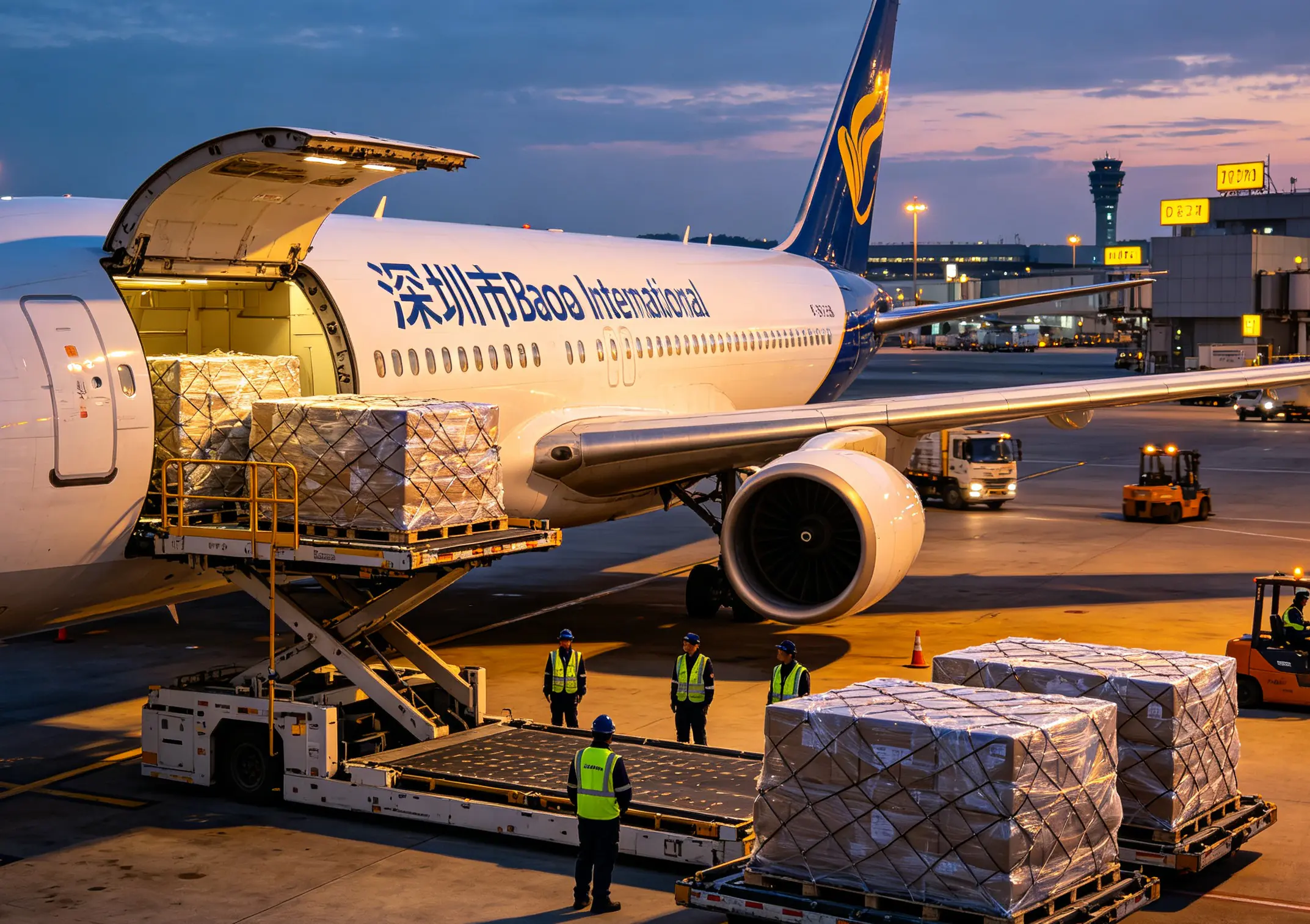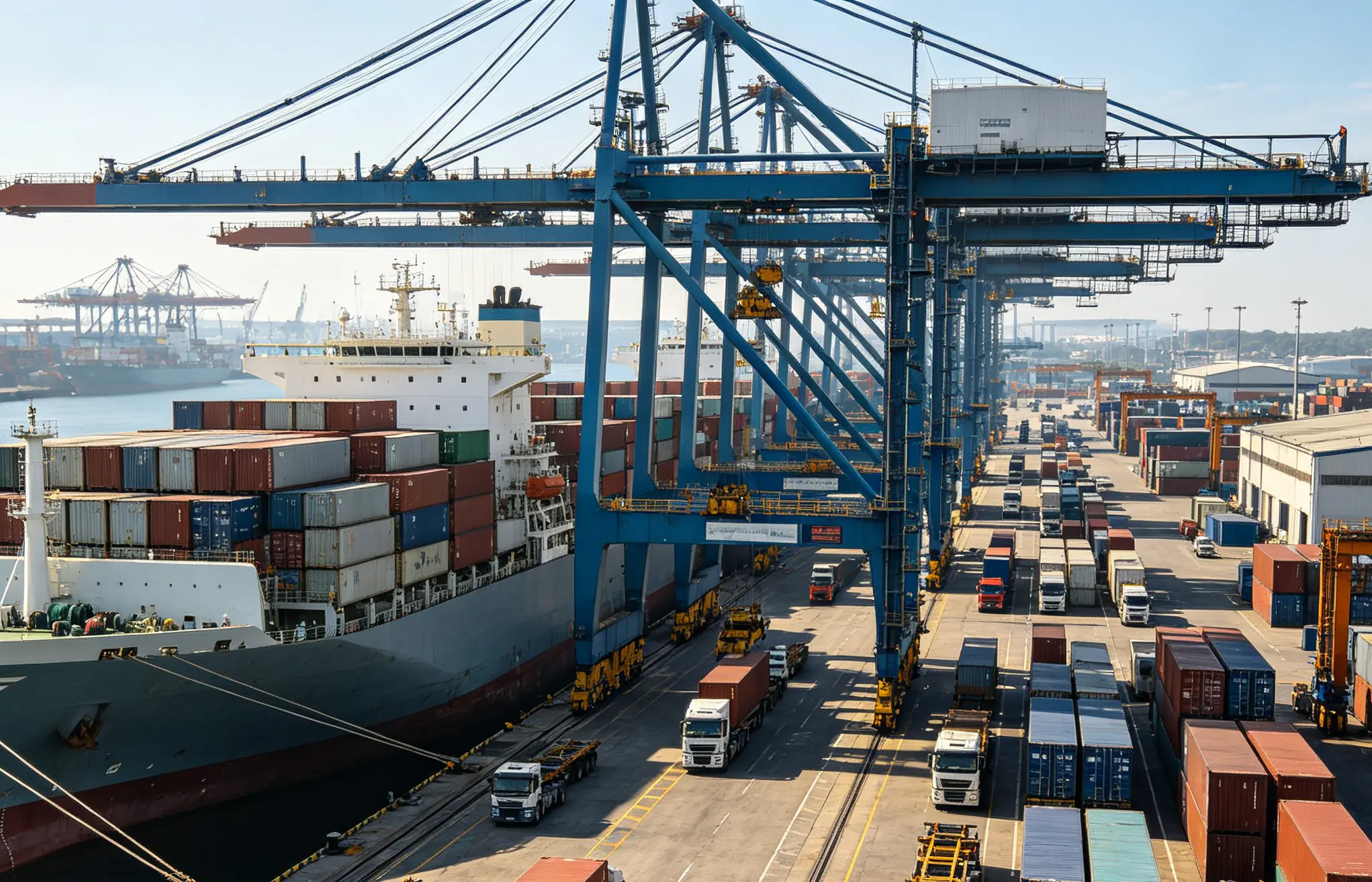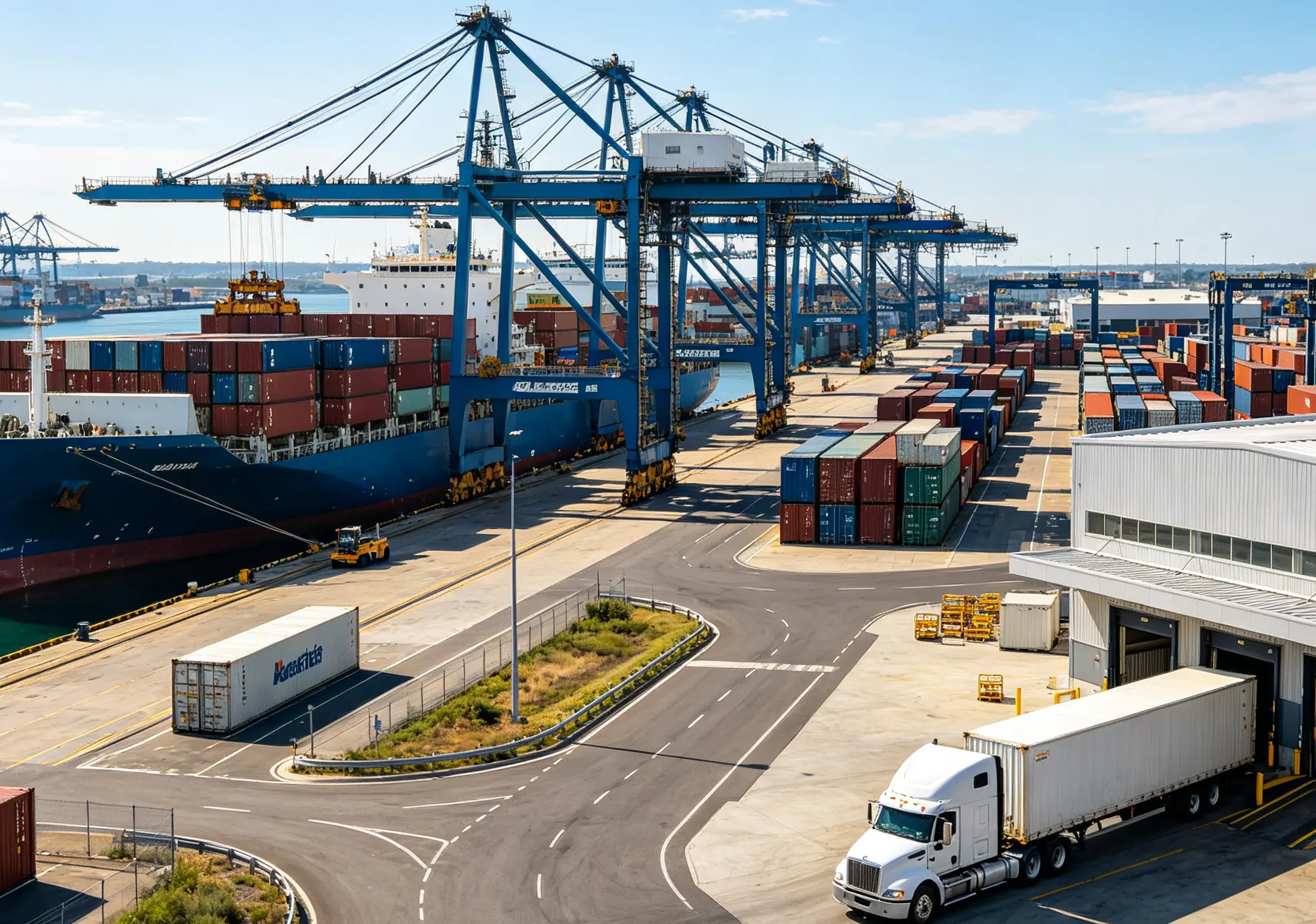
How long does shipping from China to Iraq take? Whether you’re replenishing inventory for a Basra retail chain or airlifting medical equipment to Baghdad, shipping from China to Iraq can take anywhere from 2 days with express courier to 45 days by sea—depending on your route, documentation, and season. In our experience managing China-Iraq shipments from Shenzhen since 2018, most delays don’t come from the ocean or the air; they come from paperwork that wasn’t prepared early enough and transshipment connections that weren’t proactively monitored.
In this guide, we break down exact transit times for sea freight, air freight, express, and door-to-door shipping. You’ll get port-to-port and door-to-door estimates, a compliance timeline that maps document preparation to your cargo-ready date, and a contingency playbook for when things go wrong. All figures reflect market conditions as of June 2026 and are subject to carrier schedule changes, customs efficiency, and geopolitical factors.

China to Iraq Transit Times by Shipping Method
Shipping from China to Iraq typically takes 2 to 45 days, depending entirely on the mode you choose. Express courier is fastest at 2–5 days door-to-door, while sea freight DDP can stretch to 28–45 days when you factor in factory pickup, export clearance, ocean transit, transshipment, customs, and final delivery.
| Shipping Method | Port/Airport-to-Port/Airport | Door-to-Door | Best For |
|---|---|---|---|
| Express / Courier (DHL/UPS/FedEx) | — | 2–5 days | Small parcels, samples, urgent documents |
| Air Freight (Direct Flight) | 3–5 days | 7–10 days | High-value, time-sensitive cargo |
| Air Freight (Via Hub) | 5–10 days | 8–14 days | Standard air cargo with cost savings |
| Sea Freight FCL | 20–30 days | 25–40 days | Bulk shipments, machinery, construction materials |
| Sea Freight LCL | 25–40 days | 30–45 days | Smaller shipments sharing a container |
| Door-to-Door Air DDP | — | 7–12 days | Hassle-free urgent delivery |
| Door-to-Door Sea DDP | — | 28–45 days | Full-service pickup to final warehouse |
Note: Door-to-door times include factory pickup, export customs, main transit, import customs, and inland delivery. Actual times vary by carrier, season, and documentation accuracy.
How Long Does Sea Freight From China to Iraq Take?
Sea freight from China to Iraq takes 20 to 40 days port-to-port, or 25 to 45 days door-to-door. Based on our bookings through the first half of 2026, nearly all containerized cargo must transship at Jebel Ali Port in Dubai because there are no regular direct mainline vessels from China to Iraq, and that transshipment adds 2–5 days to every journey.
Port-to-Port Transit Time Matrix
| Origin Port (China) | Destination Port (Iraq) | FCL Transit Time | LCL Transit Time |
|---|---|---|---|
| Shanghai | Umm Qasr | 22–30 days | 25–35 days |
| Ningbo | Umm Qasr | 24–33 days | 27–38 days |
| Shenzhen | Umm Qasr | 21–32 days | 25–36 days |
| Guangzhou | Umm Qasr | 23–31 days | 26–35 days |
| Qingdao | Basra | 31–38 days | 35–45 days |
| Shanghai | Basra | 25–35 days | 28–40 days |
Umm Qasr is Iraq’s primary deep-water seaport and handles the vast majority of general cargo imports. Basra serves more specialized industrial and oil-sector shipments. If your warehouse is in Baghdad or Erbil, you must add inland trucking time on top of these port-to-port figures (see Section 5).
FCL vs. LCL: How Consolidation Affects Your Timeline
FCL (Full Container Load) means your cargo occupies an entire container—typically a 20GP or 40HQ—and the container is sealed at your supplier’s factory in China and opened only at your facility in Iraq. Because there is no consolidation or deconsolidation, FCL averages 20–30 days port-to-port.
LCL (Less than Container Load) means your cargo shares container space with other shippers. Your freight forwarder consolidates multiple shipments at a Container Freight Station (CFS) in China, which adds 2–4 days. Upon arrival in Iraq, the container must be deconsolidated at a destination CFS, adding another 2–3 days. LCL averages 25–40 days port-to-port.
For dedicated full-container loads on this corridor, see our dedicated page on FCL shipping from China to Iraq.
The break-even volume is roughly 13–15 CBM. If your shipment exceeds that threshold, FCL is almost always the better choice—not just for cost per unit, but for speed and cargo security.
Not sure which mode fits your cargo? Our FCL vs LCL shipping comparison breaks down cost, speed, and handling differences in detail.
The Transshipment Factor: Why Sea Freight Adds Extra Days
This is the detail most importers miss. Because no major carrier operates a direct China-to-Iraq container service, every container unloads at Jebel Ali Port in Dubai and reloads onto a smaller feeder vessel bound for Umm Qasr or Basra. That handoff alone takes 2–5 days, and during peak season, missed feeder connections or vessel rollovers can stretch it longer.
From our Shenzhen operations hub, we track this transshipment daily. In June 2026, feeder vessels from Jebel Ali to Umm Qasr run on a 3-day frequency, but space tightens significantly during Ramadan and the pre-holiday rush. A forwarder with direct feeder contracts can secure confirmed space before the mainline vessel even departs Shanghai—while importers booking through generic broker networks often discover their container has been rolled to the next sailing only after it misses the connection.
If your supply chain also includes direct UAE destinations, see our dedicated guide on shipping from China to UAE for direct-route options and transshipment alternatives.
A typical sea freight journey looks like this:
- Factory pickup to export port: 1–2 days
- Export Customs Clearance: 1–2 days
- Mainline vessel to Jebel Ali: 18–28 days
- Transshipment at Jebel Ali: 2–5 days
- Feeder vessel to Umm Qasr: 1–2 days
- Import customs clearance: 3–7 days
- Inland delivery: 1–3 days
- Total door-to-door: 25–40 days

Container Types and Their Impact on Timing
Not all containers move at the same speed through Iraqi customs.
| Container Type | Time Impact | Reason |
|---|---|---|
| Standard Dry Container (20GP / 40HQ) | Baseline | No special handling required |
| Reefer Container | +1–2 days | Cold-chain inspection priority at Umm Qasr |
| Open Top / Flat Rack (OOG) | +2–5 days | Special stowage and handling needed |
| Dangerous Goods (IMO Class) | +3–7 days | Additional port approvals and documentation |
If you’re shipping Dangerous Goods, automotive parts requiring a Radiation-Free Certificate, or food items needing a Health Certificate, build extra time into your schedule. Iraqi port authorities inspect these categories more rigorously than standard dry cargo.
Before booking, verify your cargo fits the container by reviewing standard shipping container dimensions to avoid loading issues.
The Northern Gateway Route: An Alternative for Northern Iraq
No competitor guide covers this, but it matters. If your final destination is Erbil, Sulaymaniyah, or northern Baghdad, there is a strategic alternative to the standard Jebel Ali–Umm Qasr corridor:
- Route: China port → Mersin, Turkey (sea) → cross-border trucking to Erbil / Baghdad / Sulaymaniyah
- Total time: 35–45+ days
- Best for: Kurdistan-region deliveries, cargo avoiding Umm Qasr congestion, or periods of heightened southern port instability
The trade-off is longer overall transit, but you bypass Umm Qasr entirely and eliminate transshipment risk. For northern Iraq importers, this can actually be faster when Jebel Ali feeder delays spike during peak season.
If you’re evaluating routes across the broader Gulf region, compare our guides on shipping from China to Iran and shipping from China to Saudi Arabia for alternative corridor transit times.
How Long Does Air Freight From China to Iraq Take?
Air freight from China to Iraq takes 3 to 7 days airport-to-airport for direct flights, and 5 to 10 days if routed through a Middle Eastern hub like Dubai, Doha, or Istanbul. Door-to-door air freight, including pickup, export clearance, flight time, import customs, and local delivery, typically ranges from 7 to 12 days.
Airport-to-Airport Transit Time Matrix
| Origin City (China) | Baghdad (BGW) Direct | Baghdad (BGW) Via Hub | Erbil (EBL) Direct | Basra (BSR) Via Hub |
|---|---|---|---|---|
| Shanghai (PVG) | 3–5 days | 5–8 days | 4–6 days | 6–9 days |
| Guangzhou (CAN) | 4–6 days | 6–9 days | 5–7 days | 7–10 days |
| Shenzhen (SZX) | 3–6 days | 5–7 days | 4–7 days | 6–9 days |
| Beijing (PEK) | 4–5 days | 6–8 days | 5–7 days | 7–10 days |
| Hong Kong (HKG) | 3–5 days | 4–7 days | 4–6 days | 6–8 days |
Direct flights from Shanghai and Hong Kong to Baghdad are the fastest options. Erbil International Airport serves the Kurdish region and is ideal if your warehouse is in northern Iraq. Basra has limited direct cargo connections, so most air freight to southern Iraq routes through Dubai or Doha.
Express Courier vs. Standard Air Freight
Express courier (DHL, UPS, FedEx) delivers in 2–5 days door-to-door. The price premium is significant—often 30–50% above standard air freight—but you get integrated tracking, customs handling, and last-mile delivery in one service.
Standard air freight moves on commercial airline cargo space or dedicated freighters. You need a customs broker in Iraq to handle import clearance, and you must arrange pickup and delivery separately. Standard air freight is more economical for shipments above 100 kg or 1 CBM.
Volumetric Weight: Why Your Air Freight Timeline Can Stretch
Airlines charge by chargeable weight—the greater of actual gross weight or volumetric weight. If you miscalculate this during booking, your cargo may be bumped to a later flight while paperwork is adjusted.
| Calculation Method | Formula |
|---|---|
| Standard Air Cargo | Length × Width × Height (cm) ÷ 6000 |
| Express Air Freight | Length × Width × Height (cm) ÷ 5000 |
Always confirm chargeable weight with your forwarder before booking to avoid last-minute flight changes.
How Long Does Door-to-Door Shipping From China to Iraq Take?
Door-to-door shipping from China to Iraq takes 7 to 12 days by air and 28 to 45 days by sea, depending on whether you choose air DDP or sea DDP. These ranges include factory pickup, export clearance, international transit, Iraqi import customs, duties, and final delivery to your warehouse.
Door-to-Door Transit Time by Mode
| Service Type | Transit Time | What’s Included |
|---|---|---|
| Air DDP | 7–12 days | Pickup + air freight + customs + duties + delivery |
| Sea DDP | 28–45 days | Pickup + ocean freight + customs + duties + delivery |
| Express DDP | 2–5 days | Courier pickup + customs + duties + delivery |
DDP (Delivered Duty Paid) means your forwarder handles everything. You pay one quote, and the cargo arrives at your door. For Iraq, DDP is particularly valuable because Iraqi customs is complex—Arabic translations, CoC requirements, and broker coordination are not beginner-friendly.
Inland Trucking Time Matrix: From Port/Airport to Your Warehouse
This is the piece almost every guide forgets. Your cargo doesn’t stop at the port; it still needs to reach your facility.
| Route | Transit Time | Notes |
|---|---|---|
| Umm Qasr → Basra | 30–60 minutes | Shortest inland leg |
| Umm Qasr → Baghdad | 1–2 days | Major highway; occasional checkpoints |
| Umm Qasr → Erbil | 2–3 days | Long-haul trucking; security stops possible |
| Basra → Baghdad | 1–2 days | Alternative to Umm Qasr routing |
| Baghdad → Sulaymaniyah | 1 day | Mountain route; weather can add delays |
| Baghdad → Najaf | 1 day | Central-southern corridor |
Security checkpoints on Iraqi highways can add 0.5–1 day depending on current alert levels. Road conditions also vary by region—highway 1 from Basra to Baghdad is generally paved and passable, but mountain routes toward Sulaymaniyah can degrade during winter rains. In our operations experience, experienced local trucking partners with established checkpoint relationships save more time than routing shortcuts.
Why DDP Is Often the Best Choice for First-Time Importers
If you’ve never imported into Iraq, DDP eliminates the coordination headache. Your forwarder manages the Commercial Invoice, Packing List, Bill of Lading (B/L) or Air Waybill (AWB), Arabic translations, and broker selection. You get a single quote with no hidden fees, and you know exactly when to expect delivery.
For example, a medical equipment importer we work with in Baghdad switched from EXW to DDP after their first shipment was held at Umm Qasr for 11 days due to missing Arabic translations. Under DDP, their subsequent shipments cleared customs in 4 days on average because the documentation was prepared and pre-approved before the cargo left Guangzhou.
To understand the full mechanics of this Incoterm, read our guide DDP shipping explained. Efanda also operates as a dedicated door to door shipping agent from China to Middle East partner for corridors including Baghdad, Basra, and Erbil.
For first shipments under 500 kg, we recommend starting with Air DDP to validate your supplier’s documentation quality before scaling to sea freight.
If you prefer a fully managed solution, explore our door to door shipping service for seamless pickup-to-delivery logistics. When speed is critical, our DDP air shipping from China to Iraq option delivers within 7–12 days including customs clearance.
What Factors Can Delay Your Shipment From China to Iraq?
The most common delays when shipping from China to Iraq are customs documentation errors, seasonal peak-season congestion, and missed transshipment connections at Jebel Ali. While ocean and air transit are relatively predictable, the variables on either end of the journey—documentation, port congestion, and inland logistics—are where timelines slip.
Iraqi Customs Clearance: The Biggest Time Variable
With complete, accurate documents, Iraqi customs clearance takes 3–7 days. With errors or missing paperwork, it can stretch to 2–3 weeks or longer.
Under Iraqi Customs Regulation No. 4 of 2019, all commercial documents—invoices, packing lists, and certificates of origin—must include certified Arabic translations. English-only documents are frequently rejected outright.
Additionally, Iraq’s Central Organization for Standards and Quality Control (COSQC) enforces the ICIGI pre-import inspection program. Many product categories require a Certificate of Conformity (CoC) before shipment. Without it, your cargo will be held at the port, and you may face re-export orders.
Common documentation pitfalls that cause delays:
- Missing Arabic translations
- Incorrect HS Code classifications (Iraq uses GCC Harmonized System with local subheadings)
- Incomplete CoC for electrical goods, automotive parts, toys, or food products
- Missing Health Certificate for food and cosmetics
- Missing Radiation-Free Certificate for automotive parts
- Delayed embassy endorsements
Seasonal Delays and Peak Seasons
Building buffer time around these windows is non-negotiable:
| Season | Dates | Impact | Recommended Buffer |
|---|---|---|---|
| Chinese New Year | Jan/Feb (2027: Jan 29) | Factory closures, limited space | Book 4–6 weeks ahead |
| Golden Week | Oct 1–7 | Factory closures in China | +3–5 days |
| Ramadan & Eid al-Fitr | Variable lunar dates | Customs efficiency drops 20–40% | +5–7 days |
| Eid al-Adha | Variable | Port closures for 3–5 days | +5–7 days |
| Pre-Holiday Rush | Nov–Dec | Umm Qasr congestion spikes | +5–7 days |
During Ramadan, Iraqi customs operates on reduced hours, and inspectors may be less available. If your shipment arrives during this window, expect delays regardless of how perfect your paperwork is.
Port Congestion and Transshipment Risks
Umm Qasr occasionally experiences vessel backlogs, especially when multiple feeder vessels arrive within the same 48-hour window. Waiting times of 2–4 days are not unheard of during peak season.
At Jebel Ali, the bigger risk is rollover—when your container misses its scheduled feeder connection because the mainline vessel arrived late. During peak season, rollovers can add 3–7 days as you wait for the next available feeder slot.
Weather also plays a role. Typhoon season in China (July–September) can delay vessel departures, while sandstorms in the Gulf region occasionally slow port operations.
Broader geopolitical events, such as the ongoing Red Sea crisis 2026, can also force carriers to reroute vessels, indirectly affecting feeder schedules into Jebel Ali.
Documentation Errors That Cost You Weeks
The single most expensive mistake importers make is treating Iraqi customs like European or North American customs. Iraq does not operate on automated clearance systems. Every document is reviewed manually, and discrepancies trigger holds.
If your Commercial Invoice and Packing List don’t match the Bill of Lading exactly—down to the spelling of product descriptions—you will face delays. If your CoC doesn’t cover the exact HS Code subheading for your product, you will face delays. Precision is everything.
Pre-Shipment Compliance Timeline: How Documentation Affects Your Schedule
Document preparation for shipping to Iraq should begin at least 3 weeks before your intended cargo-ready date. In our compliance team’s experience, the most common cause of missed sailings is not production delays—it is documentation that was started too late. Pre-shipment compliance is not a same-day task; it is a parallel workflow that runs alongside production and directly determines whether your cargo moves on schedule or sits in a warehouse waiting for paperwork.
The Documentation Countdown
| Compliance Task | Timeline Before Shipment | Who Handles It |
|---|---|---|
| HS Code Pre-Screening | 2–3 weeks | Forwarder + importer |
| ICIGI / CoC Application | 2 weeks (5–10 business days) | Approved inspection body |
| Arabic Translation | 1–2 weeks (2–3 business days) | Certified translator |
| Chamber of Commerce Legalization | 1–2 weeks (3–5 business days) | Exporter / forwarder |
| Iraqi Embassy Endorsement | 1–2 weeks (5–7 business days) | Forwarder |
Start this process while your supplier is still in production. If you wait until the cargo is ready, you will miss your sailing or flight.
Which Products Need a Certificate of Conformity (CoC)?
The COSQC ICIGI program covers a broad range of products. The most commonly affected categories include:
- Electrical appliances and electronics
- Automotive parts and accessories
- Toys and children’s products
- Food and cosmetics
- Building materials and construction products
The process is straightforward but time-bound: your product is tested by an approved inspection body, a CoC is issued, and that certificate is submitted with your customs declaration. Without a valid CoC, your cargo will be held at Umm Qasr, and you risk demurrage charges of $75–$120 per day while you resolve the issue.
How to Choose the Right Shipping Method for Your China-Iraq Route
The right shipping method depends on three variables: how fast you need it, how much you’re shipping, and how much complexity you’re willing to manage. Use this framework to match your priorities to the optimal mode.
Decision Framework: Speed vs. Cost vs. Volume
| Your Priority | Best Method | Typical Transit | Ideal For |
|---|---|---|---|
| Speed critical (0–5 days) | Express Courier | 2–5 days | Samples, urgent spare parts, medical supplies |
| Speed matters, cost secondary (5–10 days) | Air Freight | 3–7 days | Electronics, high-value goods, project deadlines |
| Balanced cost and speed (20–30 days) | Sea FCL | 20–30 days | Construction materials, bulk inventory, machinery |
| Cost primary (25–40 days) | Sea LCL | 25–40 days | Small-volume restocking, non-urgent goods |
| Hassle-free delivery (28–45 days) | Sea DDP | 28–45 days | First-time importers, full-service convenience |
Incoterms and Their Impact on Your Timeline
Your choice of Incoterms directly affects how much of the timeline you control.
- EXW (Ex Works): Longest door-to-door. You coordinate pickup, export clearance, freight, import clearance, and delivery. Only choose this if you have a dedicated logistics team in China.
- FOB (Free On Board): Balanced. Your supplier delivers to the port and handles export clearance; you control ocean freight and onward logistics. FOB is usually the safest starting point for experienced importers.
- CIF (Cost, Insurance, and Freight): Similar to FOB, but the seller arranges and pays for freight and insurance to the destination port. You still handle import clearance.
- DDP (Delivered Duty Paid): Shortest perceived lead time from the buyer’s perspective. The forwarder handles everything from factory to your door. For Iraq, DDP is often the cleanest structure for first-time importers because it eliminates customs complexity.
If you’re unsure, start with FOB to maintain freight cost control, or DDP if you want a single quote and zero coordination headaches.
Still deciding between trade terms? Our FOB vs CIF comparison explains exactly where risk and cost transfer.
Proven Strategies to Reduce Transit Time From China to Iraq
You can shave days—or even weeks—off your China-Iraq transit time by focusing on documentation accuracy, forwarder selection, and route optimization. Here are six tactics our operations team in Shenzhen uses daily.
1. Perfect Your Documentation Before Cargo Moves
Submit bilingual (English + Arabic) Commercial Invoice and Packing List templates to your supplier before production ends. Pre-screen HS Codes with your forwarder to catch classification errors early. Secure your CoC for regulated products at least 10 days before the cargo ready date.
2. Choose a Forwarder With Direct Jebel Ali–Umm Qasr Feeder Contracts
Most forwarders rely on third-party feeder brokers at Jebel Ali, which increases rollover risk. A forwarder with direct feeder contracts gets priority space allocation and real-time transshipment milestone tracking. That single relationship can reduce your transshipment wait from 5 days to 2.
3. Optimize Your Route and Port Selection
For general cargo to Baghdad or Basra, Umm Qasr is the standard choice. For oil-sector or industrial shipments, Basra may offer faster discharge. For Erbil-bound cargo, evaluate the Northern Gateway via Mersin during periods of Umm Qasr congestion.
4. Consolidate LCL Shipments Into FCL When Possible
If you have multiple smaller orders arriving from Chinese suppliers within the same two-week window, ask your forwarder to consolidate them into a single FCL container. This saves 3–7 days compared to separate LCL bookings and reduces handling damage risk.
5. Book Buffer Time Around Seasonal Peaks
Chinese New Year requires 4–6 week advance booking to secure space. Ramadan and Eid warrant a 2–3 week buffer. If your shipment falls within 10 days of a major holiday, assume delays and plan accordingly.
6. Use Proactive Tracking and Milestone Alerts
Set up automated alerts for these critical milestones:
- Vessel departure from Shanghai/Shenzhen/Ningbo
- Arrival at Jebel Ali
- Feeder vessel departure to Umm Qasr
- Berth assignment at Umm Qasr
- Customs clearance initiation
Knowing about a delay in real time gives you 24–48 hours to escalate—often the difference between a 1-day fix and a 1-week hold.
What to Do When Your Shipment Is Delayed
When your shipment is delayed, the first 24 hours are critical. In our experience resolving China-Iraq corridor delays from our Shenzhen operations center, identifying the root cause quickly and escalating through the right channels can turn a week-long delay into a one-day fix. The importers who recover fastest are those with forwarders who maintain direct relationships with Jebel Ali feeder operators and Iraqi customs brokers—not those relying on email chains through multiple intermediaries.
Delay Contingency Playbook
| Delay Scenario | Immediate Action | Escalation Path |
|---|---|---|
| Vessel rolled at Jebel Ali | Contact forwarder’s Dubai desk for next feeder schedule | Request priority rebooking; consider partial air freight upgrade |
| Customs rejection at Umm Qasr | Identify missing document within 24 hours | Engage Arabic-speaking broker; arrange same-day legalization |
| Port congestion >5 days | Assess diversion feasibility to Basra | Activate Northern Gateway trucking from Mersin if timeline allows |
| Supplier missed sailing cut-off | Check next vessel schedule | If timeline is critical, pivot to air freight immediately |
Hidden Costs of Delays
Delays are expensive beyond the obvious timeline impact:
- Demurrage at Umm Qasr: $75–$120 per day per container
- Detention (container held beyond free time): $50–$90 per day
- CFS storage (LCL): $35–$65 per CBM per day
- Air freight upgrade differential: Often 3–5× sea freight cost if you need to expedite
To mitigate financial risk from unexpected delays, many importers add cargo insurance services that cover expedited freight and demurrage penalties.
The best way to avoid these costs is to prevent delays through the documentation and planning strategies outlined above. But when delays happen, speed of response matters more than anything else.
You may be interested in the following related articles:
- shipping from china to israel
- shipping from china to qatar
- shipping from china to bahrain
- shipping from china to jordan
- shipping from china to kuwait
FAQ
What is the fastest way to ship from China to Iraq?
Express courier services like DHL, UPS, and FedEx deliver in 2–5 days door-to-door. For larger commercial shipments, air freight DDP typically takes 5–9 days from factory to your warehouse. These are your only options if you have a hard deadline under one week.
How long does customs clearance take in Iraq?
With complete and accurate documents, Iraqi customs clearance takes 3–7 days. With errors, missing Arabic translations, or an invalid CoC, delays can stretch to 2–3 weeks or more. Arabic translations and incorrect HS codes are the most common bottlenecks.
Is there a direct sea route from China to Iraq?
No. There are no regular direct container services from China to Iraq. All sea freight transships at Jebel Ali Port in Dubai, where cargo is transferred from mainline vessels to smaller feeder vessels bound for Umm Qasr or Basra. This transshipment adds 2–5 days to every sea freight journey.
Can I ship directly to Erbil or Sulaymaniyah?
By air, yes—cargo can fly directly to Erbil International Airport (EBL). By sea, cargo arrives at Umm Qasr and then trucks 2–3 days to Erbil. An alternative for northern Iraq is the Northern Gateway route via Mersin, Turkey, which avoids Umm Qasr entirely.
What documents are required for shipping to Iraq?
You need a Commercial Invoice, Packing List, Bill of Lading (B/L) or Air Waybill (AWB), Certificate of Origin, certified Arabic translations of all commercial documents, and a Certificate of Conformity (CoC) for regulated products. Embassy endorsements may also be required depending on the product category.
How much does it cost to ship from China to Iraq?
Based on carrier rate sheets and our own booking data from Q2 2026, sea freight for a 20ft container from Shanghai to Umm Qasr ranges from $2,000 to $3,500, while a 40ft container ranges from $3,300 to $5,000. Air freight averages $4–$9 per kg, and express courier runs $6–$12 per kg. Costs fluctuate weekly with fuel surcharges (BAF), peak season demand (June–August and November–December), and USD-CNY exchange rates. Always request a live quote before booking, as rates change with market conditions.
Should I choose FOB or DDP for Iraq?
Choose FOB if you want freight cost control and already have a trusted customs broker in Iraq. Choose DDP if you want simplicity, predictable total cost, and a single point of contact. For first-time importers, DDP is strongly recommended because Iraqi customs is complex and manually processed.
What happens if my shipment is held at Umm Qasr?
Your customs broker will identify the issue—usually a documentation error or missing CoC—and submit corrected paperwork to Iraqi customs. You may need to pay penalties or additional inspection fees. Demurrage accumulates at $75–$120 per day while the container sits at the port, so resolving the hold quickly is essential.
Conclusion
Shipping from China to Iraq takes 2 to 45 days depending on your mode, route, and preparation. Sea freight FCL averages 20–30 days port-to-port, air freight reaches Baghdad in 3–5 days, and express courier delivers door-to-door in as little as 2 days. The three variables that matter most are your documentation accuracy, your route selection, and your buffer planning around seasonal peaks.
Iraq’s logistics landscape is complex, but it is absolutely manageable with the right preparation. Perfect your Arabic translations before the cargo leaves China. Choose your route based on your final destination—Umm Qasr for southern Iraq, the Northern Gateway for Kurdistan. And build relationships with partners who understand the Jebel Ali–Umm Qasr feeder network.
If you’re new to international logistics, learn what is freight forwarding and how a single partner coordinates every leg of your supply chain.
While carrier-direct rates might look appealing, the hidden costs of poor coordination, delayed customs clearance, and lack of transshipment visibility often make an experienced freight forwarder the more cost-effective choice.
Efanda Logistics, headquartered in Shenzhen since 2018, has managed end-to-end shipping from China to Iraq for B2B importers, government contractors, and e-commerce operators across the Middle East. Our operations team in Shenzhen coordinates direct feeder contracts at Jebel Ali, works with certified Arabic-speaking customs brokers in Baghdad and Basra, and pre-screens every shipment’s HS codes and documentation before cargo leaves the factory. We publish transparent, all-in quotes with no hidden fees—what we quote is what you pay.
Transit times and costs in this guide reflect market conditions as of June 2026. Actual times vary based on carrier schedules, customs efficiency, seasonal demand, and geopolitical factors. Always confirm current rates and schedules with your freight forwarder before booking.