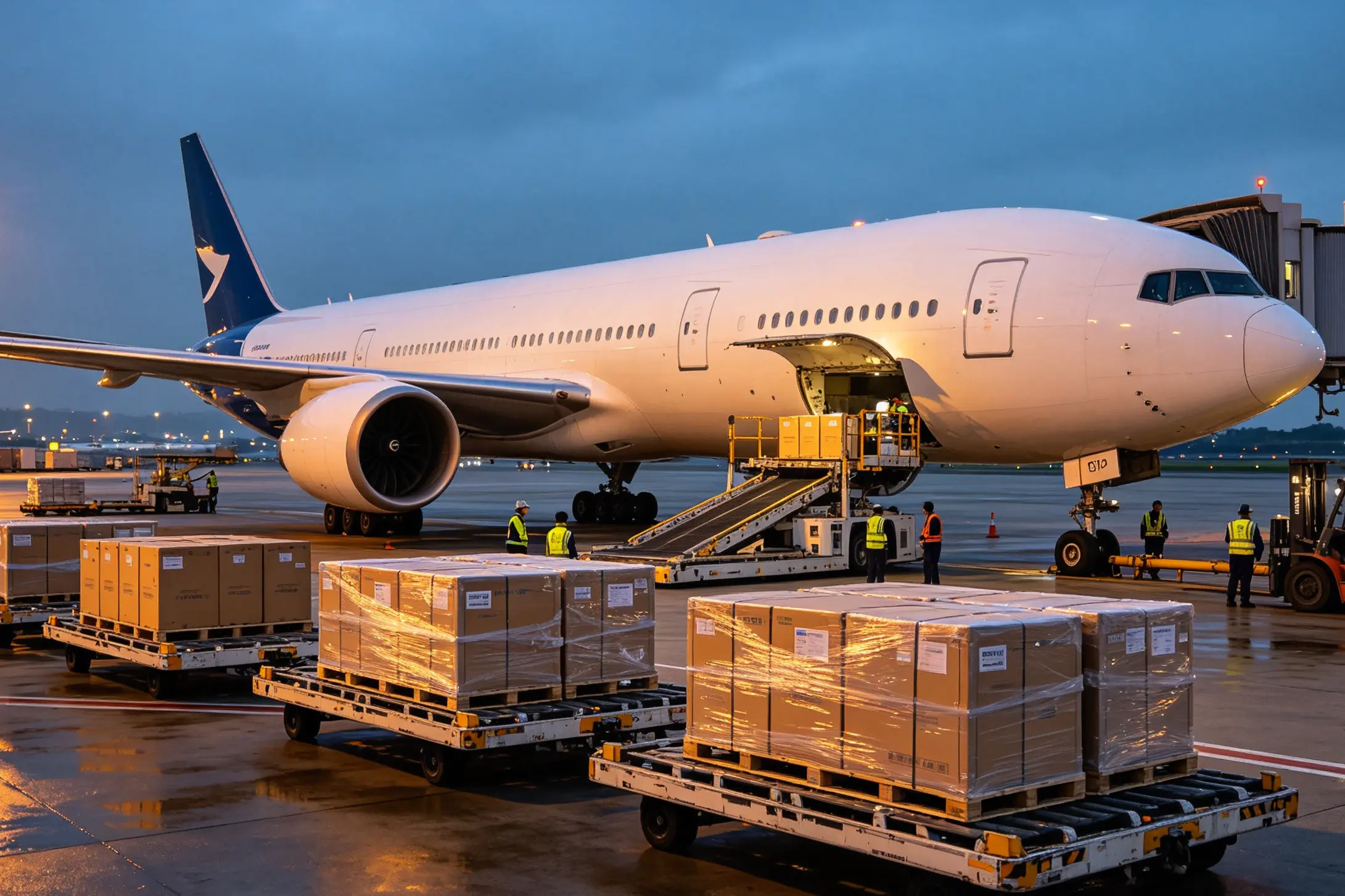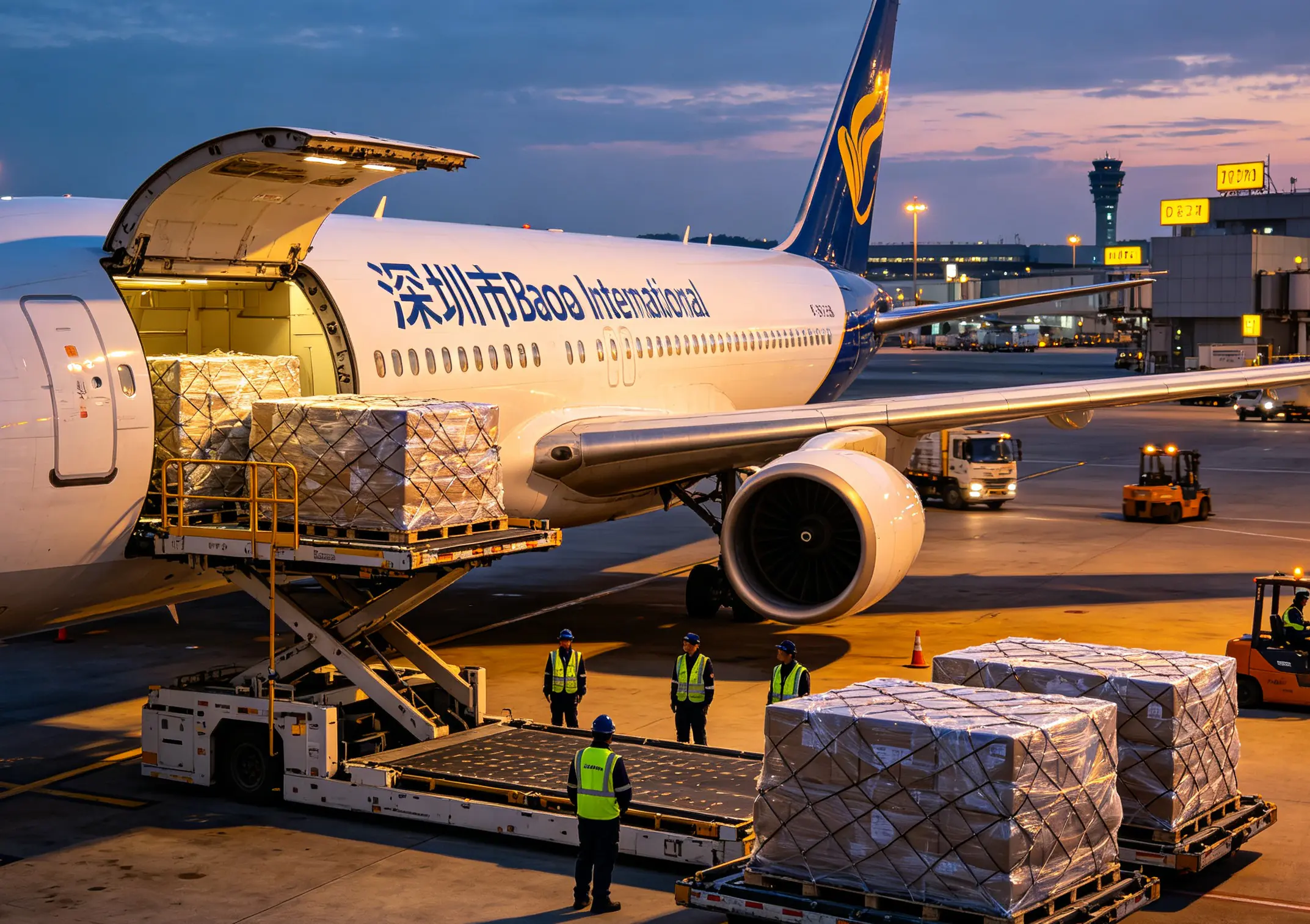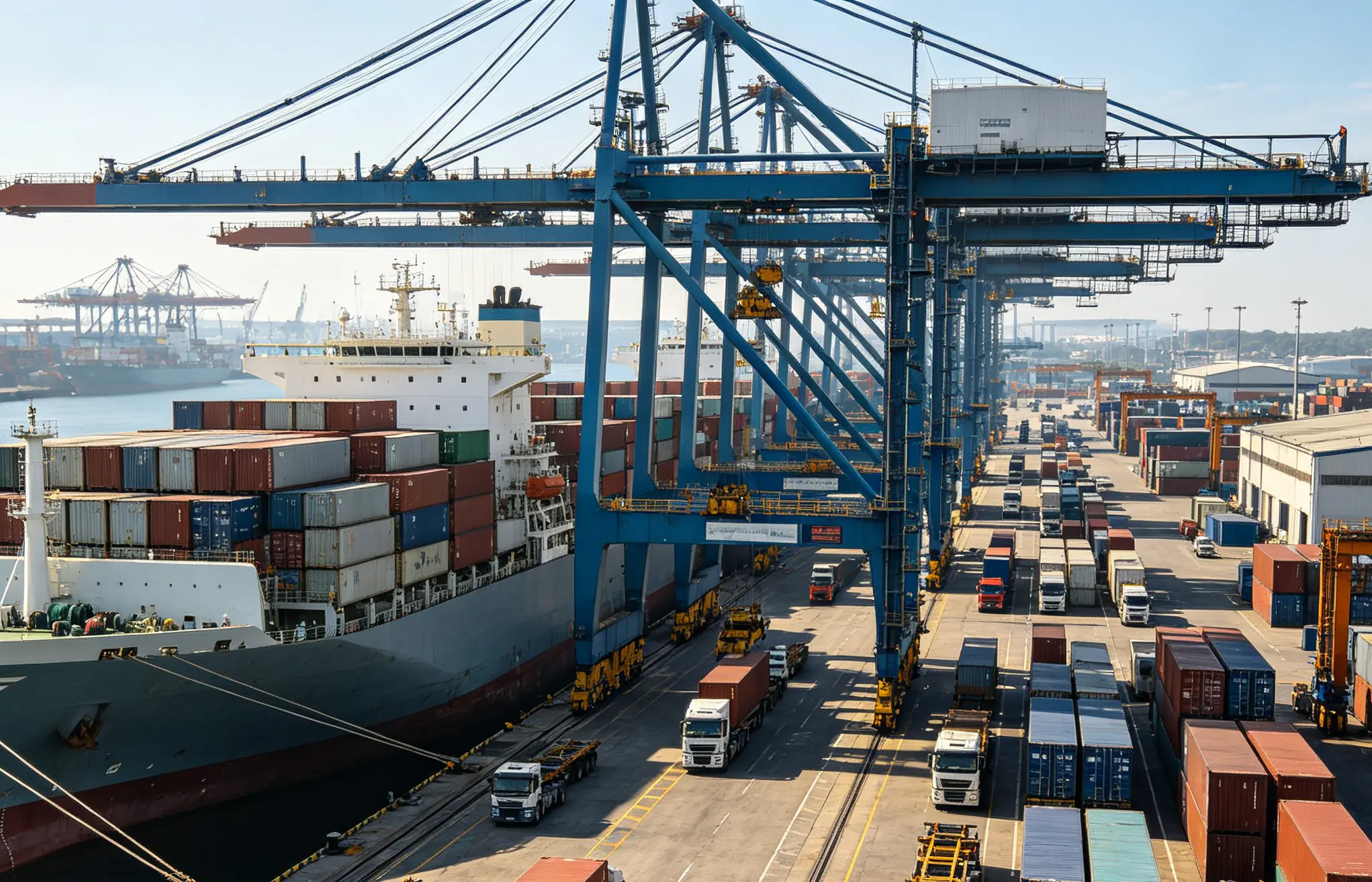
Is air freight from China to Egypt really worth the premium over sea freight in 2026? For Egyptian importers watching their sea freight shipments stretch past 40 days due to Red Sea disruptions, the answer is increasingly yes — but only when you understand the actual cost structure, choose the right routing, and navigate Egypt’s ACID customs system correctly. The difference between a smooth 4-day air delivery and a cargo detention nightmare at Cairo International Airport often comes down to a handful of details that most generic guides gloss over.
This article gives you mid-2026 market rates broken down by origin airport and weight tier, a realistic door-to-door transit timeline, a side-by-side comparison of airlines serving the China–Egypt corridor, a step-by-step ACID/Nafeza compliance walkthrough, and a practical decision matrix to help you pick the right shipping mode for your exact shipment profile. Whether you are moving electronics from Shenzhen, textiles from Guangzhou, or industrial spare parts from Shanghai, you will finish this guide with a concrete plan for your next air freight shipment. For a complete overview of sea, air, and door-to-door options on this lane, explore our dedicated shipping from China to Egypt page.

What Is Air Freight from China to Egypt?
Air freight is the transportation of commercial cargo via scheduled passenger or all-cargo aircraft between Chinese and Egyptian airports — distinct from express courier services like DHL, FedEx, or UPS, which operate dedicated door-to-door networks at a significantly higher per-kilogram cost.
When you book air freight, you typically work through a freight forwarder who purchases cargo space from airlines such as EgyptAir, Emirates, or Qatar Airways. The forwarder issues a House Airway Bill (HAWB) under their contract, while the airline holds the Master Airway Bill (MAWB) . Your cargo may travel on a direct flight from Guangzhou or Shenzhen straight to Cairo, or move via a transfer hub such as Dubai, Istanbul, or Doha.
The most important concept to understand before booking is chargeable weight — the metric airlines use to price your shipment. Airlines charge based on whichever is greater: your shipment’s actual gross weight or its volumetric weight, calculated as (Length × Width × Height in cm) ÷ 6000. If you ship 10 cartons of clothing that weigh 80 kg in total but occupy enough space to equal 200 kg of volumetric weight, you pay for 200 kg — not 80 kg.
Another key distinction for importers familiar with ocean freight: unlike a Bill of Lading (B/L) , an Air Waybill (AWB) is not a document of title. It cannot be endorsed or transferred to transfer ownership of goods in transit. Once cargo is airborne, the consignee named on the AWB has the right to take delivery — there is no equivalent of surrendering an original B/L.
Consolidated air freight (Consol) lets multiple shippers combine their cargo into one master shipment, unlocking lower rates at higher weight-break thresholds. This is how smaller importers access rates normally reserved for 500 kg or 1,000 kg shipments.
Typical cargo moved by air on this lane includes electronics and mobile accessories, textile samples and fast-fashion restocks, industrial spare parts, pharmaceutical samples, and high-value consumer goods — essentially anything where speed to market outweighs the freight premium.
Why Choose Air Freight Over Sea Freight in 2026?
Because sea freight transit from China to Egypt has doubled to 40–55 days due to Red Sea disruptions, while air freight delivers door-to-door in 3–7 days. When your inventory takes nearly two months to arrive, the “savings” of ocean freight often evaporate through stockout losses, missed seasonal sales windows, and capital tied up in transit. For importers who still rely on ocean transport for bulk volumes, we maintain a complete sea shipping from China to Egypt guide with current container rates and port options.
The numbers tell a stark story. According to UNCTAD, rerouting vessels around the Cape of Good Hope has added approximately 10 days to Asia–Mediterranean sailings, and Suez Canal tonnage remains roughly 70% below pre-crisis levels. For Egyptian ports — Alexandria, Port Said, Ain Sokhna — this means typical FCL transit now runs 40–50 days, while LCL shipments can drag past 55 days once consolidation and deconsolidation are factored in.
Smart importers evaluate air freight through a total cost of ownership (TCO) lens, not just a per-kilogram comparison:
- Inventory carrying cost: Capital tied up in goods sitting on a vessel for 50 days incurs financing costs that partially offset the freight savings.
- Stockout risk: Missing a two-week Ramadan or Eid sales window can cost far more in lost revenue than the air freight premium.
- Cash flow velocity: Goods that arrive in 5 days can be sold and reordered while a sea freight shipment is still in transit.
Industry Insight: We have seen Egyptian electronics importers shift from 100% sea freight to a 70/30 sea–air split after calculating that one air shipment per quarter during peak retail seasons added roughly 8% to their logistics costs but prevented an average of $12,000 in stockout losses per cycle. For shipments under approximately 300 kg or 2 CBM, air freight’s total landed cost regularly beats LCL sea freight once you factor in consolidation minimums, destination deconsolidation fees, and weeks of tied-up working capital.
The financial case for air freight strengthens when you are moving high-margin goods — a $50,000 shipment of consumer electronics can absorb a $2,500 air freight bill far more easily than a $5,000 shipment of low-margin commodities. If your gross margin exceeds 30%, the speed-to-market advantage of air freight almost always justifies the premium.
Air Freight Costs from China to Egypt: 2026 Rates Per KG
As of mid-2026, standard air freight from China to Egypt ranges from $3.50 to $6.50 per kilogram, depending on your origin airport and chargeable weight tier. Rates have held relatively stable through the first half of 2026, though seasonal spikes of 20–40% are common during the pre-Chinese New Year rush (January–February) and the Q4 holiday inventory buildup.
Rates by Origin Airport
| Origin Airport | Rate Range (USD/kg) | Best For |
|---|---|---|
| Shenzhen (SZX) → Cairo (CAI) | $3.50 – $5.50 | Electronics, high-tech, Dongguan factory belt |
| Guangzhou (CAN) → Cairo (CAI) | $3.50 – $5.20 | Textiles, consumer goods, EgyptAir direct |
| Shanghai (PVG) → Cairo (CAI) | $4.20 – $6.50 | Machinery, automotive parts, East China exports |
| Beijing (PEK) → Cairo (CAI) | $4.30 – $6.30 | Industrial goods, North China manufacturing |
| Hong Kong (HKG) → Cairo (CAI) | $3.50 – $4.50 | Mixed cargo, global consolidation, most competitive |
| Express Courier (DHL/FedEx/UPS) | $10.00 – $15.00 | Samples, documents, parcels under 100 kg |
South China airports — Shenzhen, Guangzhou, and Hong Kong — consistently offer the lowest rates to Cairo due to high cargo volume and strong airline competition on the corridor.
Weight Break Economics
Rates drop significantly as your chargeable weight crosses higher thresholds:
| Chargeable Weight | Example Rate (USD/kg) | Estimated Cost | Typical Scenario |
|---|---|---|---|
| 100 kg | $5.90 | $590 | Small urgent shipment, spare parts |
| 300 kg | $4.60 | $1,380 | Medium restock for a promotion |
| 500 kg | $4.05 | $2,025 | Weekly scheduled replenishment |
| 1,000 kg | $3.75 | $3,750 | Large planned procurement |
What Makes Up Your Final Invoice
Beyond the base airline tariff, your invoice includes several additional charges:
- Fuel surcharge (FSC): Adjusted monthly, typically $0.30–$0.60/kg in 2026
- Security surcharge (SSC): Covers mandatory X-ray screening, roughly $0.15/kg
- Origin terminal handling: Pickup trucking and export documentation, $80–$150 per shipment
- Destination terminal handling: Unloading and processing at Cairo International Airport, $100–$200
Real-Life Scenario: An Alexandria-based garment importer shipped 15 cartons of fabric samples from Guangzhou to Cairo. Each carton weighed 12 kg (180 kg actual weight). But each carton measured 60 × 50 × 45 cm — volumetric weight per carton: (60 × 50 × 45) ÷ 6000 = 22.5 kg. Total chargeable weight: 15 × 22.5 = 337.5 kg, nearly double the actual weight. At a rate of $4.60/kg, the air freight bill was $1,553 instead of the $828 the importer had budgeted based on gross weight. After this experience, the importer switched to vacuum-compressed packaging, cutting carton height by 15 cm and reducing volumetric weight by 33% — saving roughly $500 per shipment.
How to Reduce Your Air Freight Costs
- Consolidate orders across multiple suppliers into one weekly shipment to cross the 500 kg or 1,000 kg weight break.
- Compress packaging aggressively — reducing carton height by just 10 cm cuts volumetric weight by roughly 25%. Use vacuum bags for textiles, remove unnecessary inner packaging, and nest smaller items inside larger ones.
- Ship from South China — Shenzhen and Guangzhou consistently undercut Shanghai and Beijing by $0.70–$1.00/kg.
- Book 2–3 weeks ahead of Chinese New Year and Q4 to lock in rates before peak season surcharges kick in.
- Use consolidated air freight (Consol) instead of direct flights when speed is important but not critical — consol services via Dubai or Doha save 15–25% on the per-kilogram rate.
Air Freight Transit Time from China to Egypt: Door-to-Door Breakdown
Door-to-door air freight from China to Egypt typically takes 3 to 7 days. The actual flight is only 11–14 hours — the rest of the timeline is consumed by ground handling, export and import customs clearance, and last-mile delivery.
Day-by-Day Timeline
| Day | Activity |
|---|---|
| Day 0 | Supplier pickup or warehouse delivery in China |
| Day 1 | Export customs clearance, security screening, aircraft loading |
| Day 1–2 | Flight — direct (11–14 hours) or via transfer hub |
| Day 2–4 | Egyptian import customs clearance at Cairo Airport (1–3 working days) |
| Day 4–5 | Last-mile trucking to Cairo, Alexandria, Giza, or inland destinations |

Direct vs. Transfer Routing
| Route | Flight Time | Door-to-Door Total |
|---|---|---|
| Guangzhou (CAN) → Cairo (CAI) — Direct | ~11 hours | 3–4 days |
| Shenzhen (SZX) → Cairo (CAI) — Direct | ~12 hours | 3–4 days |
| Shanghai (PVG) → Cairo (CAI) — Direct | ~13 hours | 4–5 days |
| Via Dubai (DXB) — Transfer | 15–20 hours | 4–5 days |
| Via Istanbul (IST) — Transfer | 16–20 hours | 4–6 days |
Four Factors That Cause Delays
- Missing ACID number: Without the 19-digit ACID registered in Nafeza, cargo sits in Cairo customs indefinitely — and may be re-exported at the shipper’s expense.
- HS code mismatch on the commercial invoice: Egyptian customs cross-references declared values against historical import data. Discrepancies trigger inspections that add 2–5 days.
- Peak-season capacity shortages: November through March sees tight belly-hold space on passenger flights serving the Middle East and North Africa.
- Random customs inspections: Particularly common for electronics, branded apparel, and shipments with declared values that appear unusually low.
Best Airports, Airlines & Routes for China–Egypt Air Freight
Your choice of origin airport and airline directly impacts both cost and transit time. Here is what matters on the China–Egypt corridor.
Origin Airports in China
| Airport | IATA | Strategic Advantage |
|---|---|---|
| Shenzhen Bao’an | SZX | Adjacent to Dongguan electronics cluster; Efanda headquarters location for fastest pickup response in South China. Learn more about shipping from Shenzhen China to Egypt. |
| Guangzhou Baiyun | CAN | Largest South China cargo gateway; EgyptAir direct service to Cairo |
| Shanghai Pudong | PVG | China’s busiest air cargo hub; strongest capacity for machinery and East China exports |
| Beijing Capital | PEK | Primary North China gateway; Air China and Middle Eastern carrier networks |
| Hong Kong | HKG | Asia’s largest cargo hub; most competitive rates and highest flight frequency |
Cairo International Airport (CAI) handles over 90% of air freight from China to Egypt. Alexandria’s Borg El Arab Airport (HBE) is a secondary option for coastal consignees but has very limited direct freighter service from China.
Airline Comparison
| Carrier | Hub | Frequency | Best Use Case |
|---|---|---|---|
| EgyptAir (MS) | Direct CAN–CAI | 3× weekly | Fastest direct routing; electronics, urgent shipments |
| Emirates (EK) | Dubai (DXB) | Daily | High-volume textiles; best cost-to-weight ratio for bulky goods |
| Qatar Airways (QR) | Doha (DOH) | Daily | High-value electronics, pharmaceuticals, temperature-controlled cargo |
| Turkish Airlines (TK) | Istanbul (IST) | Daily | Reliable backup routing; mixed cargo when primary lanes are full |
| Ethiopian Airlines (ET) | Addis Ababa (ADD) | Daily | General cargo; most competitive rates for cost-sensitive shipments |
For electronics and battery-containing cargo, EgyptAir direct from Guangzhou or Shenzhen offers the fastest route. For bulky textiles where volume drives chargeable weight up, Emirates via Dubai consistently delivers the best cost efficiency. Pharmaceutical and cold-chain shipments should prioritize Qatar Airways for their active temperature-controlled container fleet.
Egypt Customs Clearance: ACID, Nafeza & CargoX Guide
All air freight entering Egypt requires pre-registration through the ACID (Advanced Cargo Information Declaration) system — your ACID number must be issued at least 48 hours before your flight departs China, or your cargo will be rejected upon arrival at Cairo International Airport.
The ACID Process in Three Steps
- Register on Nafeza: The Egyptian importer registers on the Nafeza single-window platform (nafeza.gov.eg) and requests a 19-digit ACID number for the specific shipment. The ACID number is valid for six months from issuance.
- Upload documents via CargoX: Using the CargoX blockchain platform — the only document transfer system approved by Egyptian Customs — the exporter or forwarder uploads the commercial invoice, packing list, and certificate of origin. These documents are encrypted and transmitted directly to Egyptian Customs before the cargo departs China.
- Print the ACID number on all documents: The 19-digit ACID number must be clearly printed on the Air Waybill (AWB), commercial invoice, and packing list. Any document missing the ACID number will cause clearance failure.
Required Documents Checklist
- Air Waybill (AWB) — with ACID number printed
- Commercial Invoice — legalized by the Egyptian embassy or consulate in China; must accurately state goods description, value, HS codes, and country of origin
- Packing List — detailed breakdown of weights, dimensions, and contents per package
- Certificate of Origin (CO) — proving the goods were manufactured in China
- Importer’s commercial registry and tax ID — proof the Egyptian buyer is legally authorized to import
Duties and VAT
Egypt applies 14% VAT on the CIF value (goods cost + insurance + freight). Customs duties vary by HS code:
| Product Category | Customs Duty Range |
|---|---|
| Electronics | 10% – 30% |
| Textiles & Apparel | 5% – 20% |
| Machinery & Equipment | 2% – 15% |
| Auto Parts | Up to 35% |
Critical Warning: Storage fees at Cairo International Airport are notoriously high and accumulate rapidly when customs clearance is delayed — sometimes reaching $50–$100 per day for a standard pallet after the initial free period. Always ensure your ACID registration and document upload via CargoX are completed before the aircraft departs China. A cargo sitting in CAI customs for one extra week due to a missing ACID number can easily add $350–$700 in unexpected storage charges.
Air Freight vs. Sea Freight vs. Express: Decision Matrix
The right shipping mode depends on three variables: how much you are shipping, how fast you need it, and what your cargo is worth.
| Dimension | Air Freight | Sea Freight (FCL) | Express Courier |
|---|---|---|---|
| Door-to-door time | 3–7 days | 40–55 days | 2–5 days |
| Cost | $3.50–$6.50/kg | ~$105/CBM (LCL) | $10–$15/kg |
| Minimum shipment | 45–100 kg | 15 CBM+ (FCL economical) | 0.5 kg |
| Best cargo value | Medium–high | Low–medium | High / samples |
| Customs clearance | ACID required | ACID required | Included in service |
| Ideal scenario | Urgent restocks, seasonal, <300 kg | Bulk, non-urgent, >15 CBM | Samples, documents, <30 kg |
Decision Framework by Shipment Profile
- Under 30 kg, extremely urgent → Express Courier (DHL, FedEx, UPS). Door-to-door in 2–5 days with customs clearance included. The premium over standard air freight is justified by simplicity and speed for small parcels.
- 50–500 kg, needed within 7 days → Standard Air Freight. The sweet spot where air freight delivers strong speed-to-cost value. Book direct flights from CAN or SZX for the fastest turnaround.
- 500 kg–15 CBM, moderate timeline flexibility → Consolidated Air Freight (Consol) or Sea-Air via Dubai. Sea-Air routes ship cargo by sea from China to Dubai (roughly 10–12 days), then fly it to Cairo — cutting total transit to approximately 14–18 days at roughly 40% less than pure air freight.
- Over 15 CBM, non-urgent → Sea Freight FCL. Despite 40–55 day transit, the per-unit cost advantage is decisive for bulk shipments. Book capacity early — Red Sea rerouting has tightened vessel space on the Asia–Mediterranean lane.
For a deeper dive into the cost and speed tradeoffs between these two modes, see our full sea freight vs air freight comparison with real-world case studies.
For importers who want cost certainty without managing customs themselves, DDP (Delivered Duty Paid) air freight bundles pickup, air transport, Egyptian customs clearance, duties, VAT, and final delivery into one all-inclusive rate. This door to door shipping model is particularly valuable for first-time importers and e-commerce sellers who lack an established customs broker in Egypt.
5 Common Air Freight Mistakes Egyptian Importers Make
These five errors account for the majority of air freight delays, budget overruns, and cargo rejections we see on the China–Egypt lane.
1. Applying for the ACID Number After the Flight Departs
The ACID registration must be completed and the number printed on all shipping documents before your cargo leaves China. If your shipment arrives at Cairo Airport without a valid ACID number on the AWB, Egyptian Customs will reject it — and you will pay for re-export or destruction. Fix: Initiate the ACID application with your Egyptian importer at least one week before the planned departure date. Confirm the number is printed on every document before the flight takes off.
2. Ignoring Volumetric Weight Until the Invoice Arrives
Lightweight, bulky cargo — textiles, empty containers, foam packaging — routinely costs double what importers budget because volumetric weight exceeds actual gross weight. Fix: Always share exact carton dimensions with your forwarder at the quotation stage. Invest in vacuum-compression packaging and right-size your boxes to minimize empty space.
3. Booking at the Last Minute During Peak Season
Air freight rates spike 20–40% during pre-Chinese New Year (January–February) and the Q4 holiday buildup. Last-minute bookings during these windows often face both inflated rates and no available capacity. Fix: Reserve space 2–3 weeks ahead of any known peak period. Forwarders with block-space agreements can often honor pre-negotiated rates even when spot market prices surge.
4. Under-Declaring Invoice Values to Reduce Duties
Egyptian Customs cross-references declared values against a database of historical import data for the same HS codes. A commercial invoice stating $5,000 for a shipment of smartphones that typically clears at $25,000 will trigger an automatic inspection, valuation reassessment, and penalty. Fix: Declare accurate transaction values and retain supplier payment records. Legitimate duty optimization should come through correct HS code classification — not invoice manipulation.
5. Forgetting to Budget for Destination Charges
The $3.50–$6.50/kg air freight rate you are quoted is typically airport-to-airport. Destination-side costs — Cairo terminal handling, customs brokerage fees, inspection charges, and last-mile delivery — add $200–$500 to a typical shipment. Storage fees accumulate fast if clearance is delayed. Fix: Request an all-inclusive (All-In) quote from your forwarder, or choose a DDP service that bundles every cost upfront. If you use an airport-to-airport service, budget an additional 15–25% above the freight rate for destination-side expenses.
Frequently Asked Questions
How much does air freight from China to Egypt cost per kg?
Standard air freight ranges from $3.50 to $6.50 per kilogram as of mid-2026, depending on the origin airport, chargeable weight tier, and season. Express courier services (DHL, FedEx, UPS) cost $10–$15/kg for parcels under 100 kg.
How long does air freight take from China to Egypt?
Door-to-door air freight typically takes 3–7 days. Direct flights from Guangzhou or Shenzhen to Cairo deliver in 3–4 days; transfer routings via Dubai, Doha, or Istanbul add 1–2 days.
Which Chinese airport is cheapest for air freight to Egypt?
Hong Kong (HKG) and Guangzhou (CAN) consistently offer the lowest rates at $3.50–$5.20/kg, driven by high cargo volume and strong airline competition on the Africa corridor.
What is ACID and why do I need it for air freight to Egypt?
ACID (Advanced Cargo Information Declaration) is Egypt’s mandatory pre-shipment electronic registration system. Every air freight shipment must have a valid 19-digit ACID number printed on the Air Waybill and all supporting documents before departure from China — cargo arriving without an ACID is rejected at Cairo Airport.
Can I ship electronics by air from China to Egypt?
Yes — electronics are the single largest air freight commodity on this lane. Use EgyptAir direct or Qatar Airways for high-value electronics. Lithium battery shipments require UN38.3 test reports and a Material Safety Data Sheet (MSDS).
Is DDP air freight available from China to Egypt?
Yes. DDP (Delivered Duty Paid) air freight covers factory pickup, export clearance, air transport, Egyptian import customs clearance, duties and VAT, and last-mile delivery under one all-inclusive rate. It is recommended for first-time importers and e-commerce sellers who want cost certainty and minimal hands-on involvement.
Air freight or sea freight — which should I choose?
Air freight wins when your shipment is under approximately 300 kg, time-sensitive, or high-value. Sea freight is the right choice for bulk orders above 15 CBM where 40–55 day transit is acceptable and per-unit cost is the primary concern.
What documents do I need for air freight to Egypt?
You need the Air Waybill (AWB) with the ACID number, a legalized commercial invoice, packing list, certificate of origin, and the Egyptian importer’s commercial registry and tax ID. All documents must carry the 19-digit ACID number and be uploaded via the CargoX platform before departure.