How do you keep goods moving from a Chinese factory to a buyer in Tehran when the sea lane is throttled, rail schedules are contested, and a container that once took 25 days now takes 50? Since the Strait of Hormuz disruptions that began in early 2026, that question has pushed Iran-bound trade onto an overland answer that used to be a niche product: China to Iran trucking. Sealed trailer loads now run from Chinese consolidation hubs through Central Asia to Tehran’s bonded customs yards in roughly three weeks — and with container lines avoiding Bandar Abbas and rail capacity squeezed, road freight has quietly become the backbone of the lane.
This guide breaks the corridor down the way a forwarder plans it: the two live routes (Wuqia via Kyrgyzstan, Khorgos via Kazakhstan), transit times and rates as of October 2026, the documents Iranian customs will not release cargo without, the payment and insurance realities that catch first-time shippers off guard, and when a truck beats rail, sea, and air. For the wider picture, start with our route overview of shipping from China to Iran; for the container-train alternative, see China to Iran rail freight.
Why Is Trucking Now the Backbone of China–Iran Trade?
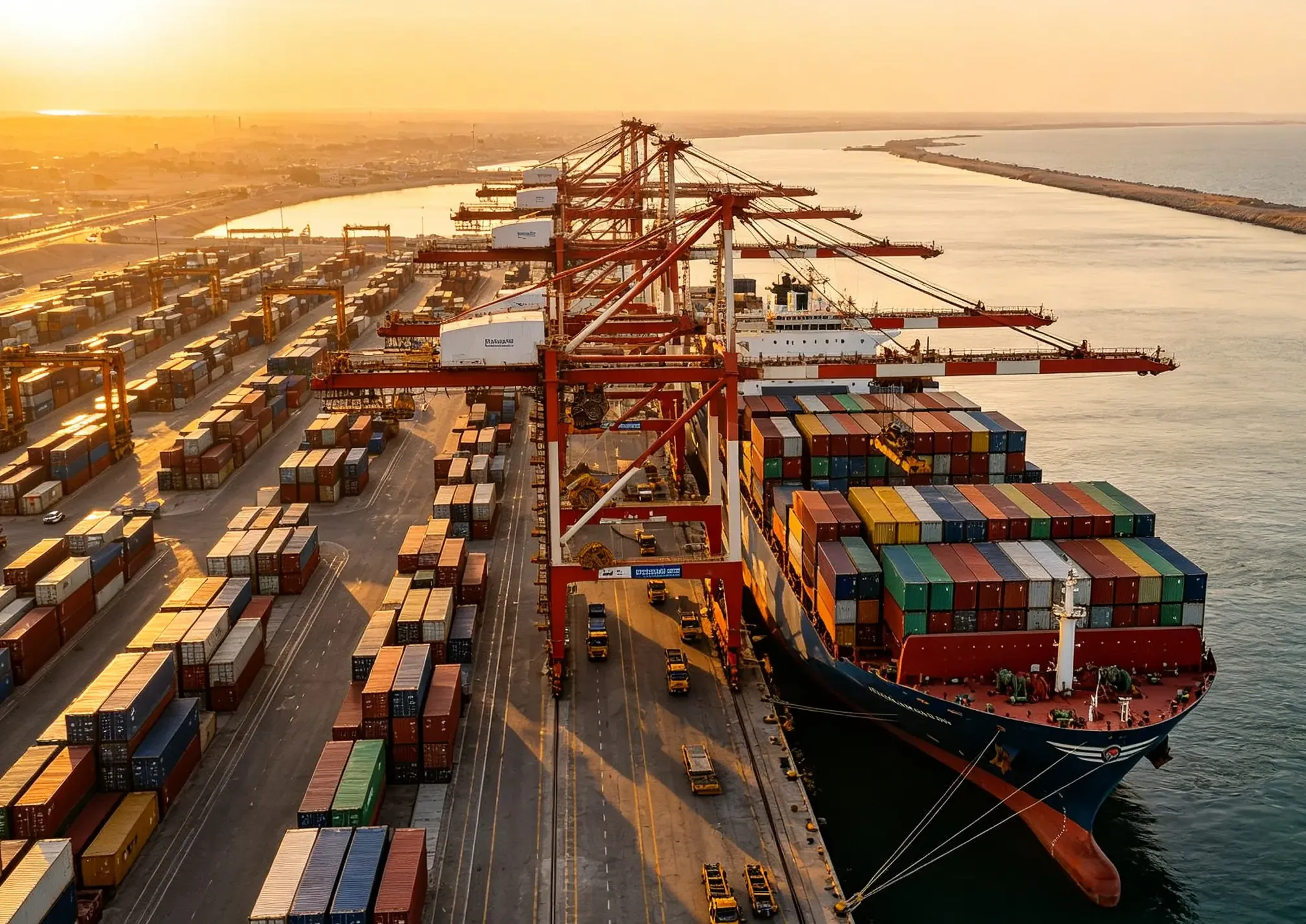
Road freight became the default China–Iran mode in 2026 because it is the only corridor that bypasses both the Strait of Hormuz and the Gulf transshipment hubs while still delivering in about three weeks. The year rewrote this lane from the sea side: since late February 2026 the Strait of Hormuz has been effectively closed to container shipping, and a US naval blockade of Iranian ports followed. A peace framework was reached in mid-June 2026, but recovery is deliberately slow: minesweeping was expected to run four to six months, and war-risk premiums need months of proven stability before they normalize. Direct services from Chinese ports to Bandar Abbas still run, but at 30 – 50+ days with routing risk no importer can plan around.
The second shock landed in August 2026, when the UAE — historically the largest transshipment and re-export source for Iranian imports — suspended trade and banking channels with Iran, cutting the classic sea-plus-Jebel-Ali relay. And in October 2026, fresh US sanctions on Iran’s railway companies, with reports that Turkmenistan is tightening rail transit, put question marks around the rail corridor’s reliability. Those shocks all landed on modes other than the road — which is why sealed trucks now carry so much of the machinery, auto parts, and consumer goods keeping Iranian factories and shelves stocked.
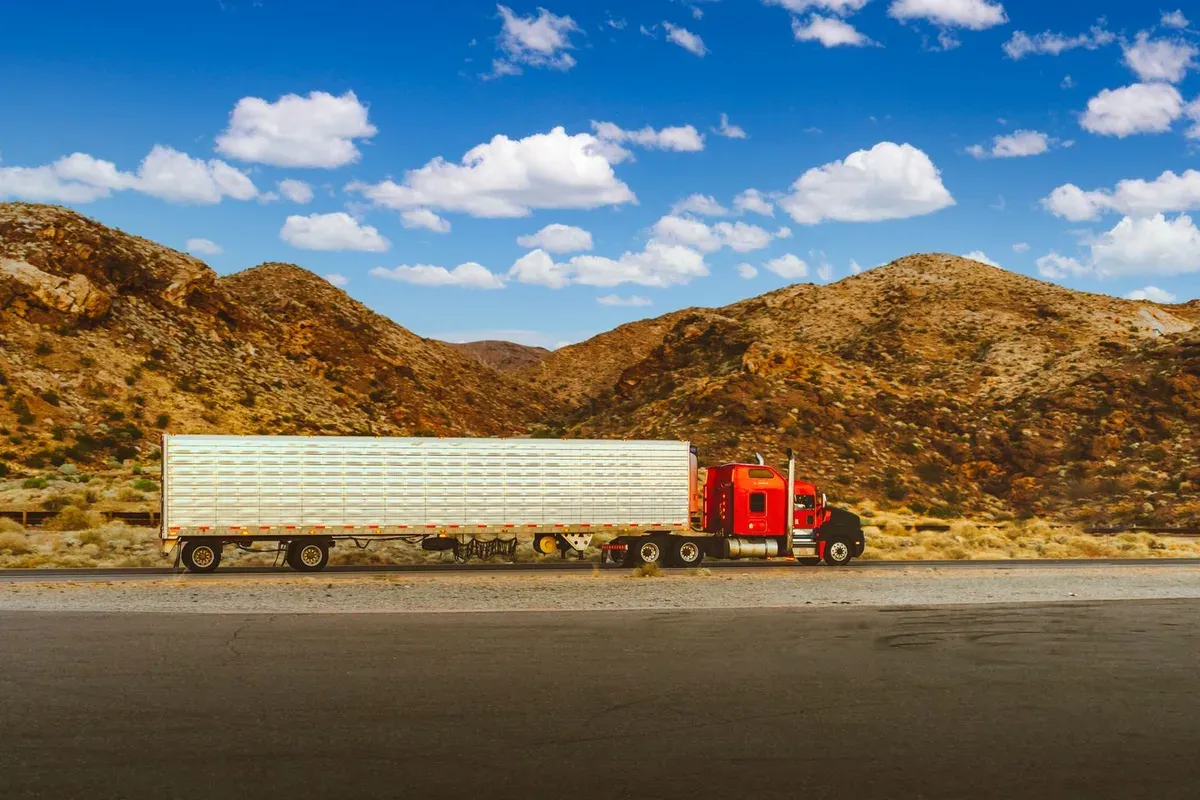
In practice, China–Iran trucking is hub-to-customs linehaul, not door-to-door delivery: cargo consolidates at a Chinese hub, trucks to Xinjiang, clears export customs, is sealed at the gateway — Wuqia or Khorgos — and runs under a single TIR carnet across Kyrgyzstan or Kazakhstan, Uzbekistan, and Turkmenistan; every country on the corridor, Iran included, accepts the carnet. Entry is at Sarakhs; delivery is to a bonded yard in Mashhad or Tehran — Tehran West Customs (Gomrok Gharb), Shahriyar Customs, or Aprin Dry Port — where the consignee’s licensed broker clears it.
Which Route Do China–Iran Trucks Take — Wuqia or Khorgos?
Two corridors carry almost all China–Iran trucking: the Wuqia line, which exits Xinjiang into Kyrgyzstan and runs Uzbekistan–Turkmenistan–Sarakhs, and the Khorgos line, which exits into Kazakhstan before joining the same Uzbekistan–Turkmenistan corridor. Both deliver to the same Iranian customs yards, and both move under TIR.
| Corridor | Routing | Iran entry | Key characteristics |
|---|---|---|---|
| Wuqia line | Origin hub → Wuqia gateway → Kyrgyzstan → Uzbekistan → Turkmenistan | Sarakhs | Published direct-truck schedules; 0.4% Kyrgyz transit tax on invoice value |
| Khorgos line | Origin hub → Khorgos → Kazakhstan → Uzbekistan → Turkmenistan | Sarakhs | No Kyrgyz transit tax; transit time quoted case by case |
| Southern alternatives | Khunjerab → Pakistan → Iran, or Afghanistan routing via Herat | Taftan / Islam Qala | Niche use; political and security volatility keeps most commercial cargo north |
On the Wuqia line, the truck clears Chinese export customs and is sealed at the gateway — TIR lock plus electronic seal — then crosses into Kyrgyzstan and Uzbekistan. A direct truck transloads once, at Bukhara; a transshipment truck transloads at Osh and again at Bukhara, costs less, and takes longer. Across Turkmenistan (Farap–Mary) the truck enters northeast Iran at Sarakhs, where customs checks the seal, records the consignment in Iran’s ASYCUDA system, and issues a bonded in-country transit permit to the delivery customs.
The Khorgos line exits at Khorgos (Alashankou is the alternate Kazakh gateway), avoids the 0.4% Kyrgyz tax, and joins the same corridor through Uzbekistan and Turkmenistan. No day count is published on this line — it is quoted per shipment, and queue length at the Kazakh border usually sets the schedule. Pick the corridor on schedule confidence and gateway congestion, not on the tax line alone.
Southern alternatives exist — via Khunjerab and Pakistan, or via Afghanistan and Herat for the western provinces — but political and security volatility keeps most commercial cargo on the northern corridors. The Afghanistan corridor’s mechanics are covered in our guide to shipping goods from China to Afghanistan by rail and road.

How Long Does China to Iran Trucking Take?
Counted from the Wuqia crossing, a direct truck currently runs 21 – 23 days to the Tehran West Customs bonded warehouse and 18 – 21 days to Mashhad Customs; a transshipment truck runs 24 – 28 days to Mashhad and 26 – 30 days to Tehran. The domestic leg from any Chinese hub to the exit gateway takes up to about 7 days, counted separately.
| Service | To Mashhad Customs | To Tehran (West Customs / Aprin) | Notes |
|---|---|---|---|
| Direct truck | 18 – 21 days | 21 – 23 days | One transload, at Bukhara; sealed TIR trailer |
| Transshipment truck | 24 – 28 days | 26 – 30 days | Transloads at Osh and Bukhara; cheaper |
| Domestic leg to the exit gateway | — | within ~7 days | From any Chinese origin hub; counted separately |
| Operator-advertised direct TIR departures | 10 – 15 days | 10 – 18 days | Marketing figures — confirm what the day count covers |
The clock starts at the border, not at your factory: from a coastal hub, plan roughly 28 – 35 days from pickup to delivery at the Tehran customs yard. Consolidated cargo departs on fixed weekly schedules — waiting for the next truck is part of the lead time math for smaller loads.
These ranges move with border conditions: queue length at the exit gateway, Turkmen transit formalities, and season. Winter — December through February — adds days on the mountain approaches, and the figures above are operating bands as of October 2026, not guaranteed transits.
How Much Does China to Iran Trucking Cost?
Budget $3,000 – $5,000 for a full truckload from China into Iran via the Kyrgyzstan–Uzbekistan routing, and around $2.50 – $3.50 per chargeable kilogram for consolidated cargo to Tehran — both as October 2026 indicative bands, not fixed prices.
| Cost element | Indicative range (Oct 2026) | Notes |
|---|---|---|
| Full truckload (FTL), China → Tehran area | $3,000 – $5,000 per trailer | Via the Wuqia–Uzbekistan routing; direct service |
| TIR vs conventional trucking | saves ~$300 – $500 per shipment | Fewer unsealings and transloads under one guarantee |
| Kyrgyz transit tax (Wuqia line only) | 0.4% of cargo invoice value | A tax, not freight — excluded from freight quotes, paid by the cargo owner |
| Consolidated LTL to Tehran | $2.50 – $3.50 per chargeable kg | From as little as 1 CBM or 100 kg; fixed weekly departures |
| Trailer capacity ceiling | up to 96 CBM / 25 T per vehicle | Heavy or over-quota cargo quoted separately |
Consolidated trucking bills on chargeable weight — the greater of actual and volumetric weight — so dense cargo like tiles, stone, and steel effectively bills on weight, and the load plan per trailer is set by axle-weight limits. For cargo in the 300 – 3,000 kg range that cannot wait for the next sea sailing, trucking at $2.50 – $3.50 per kg sits comfortably below the $4.00 – $8.50 per kg that air freight from China to Iran commands, and arrives weeks earlier than any 2026 ocean option.
Disclaimer: these are indicative market ranges for October 2026. Road freight on this corridor moves with fuel prices, currency, border conditions, transit-permit costs, and seasonal capacity. Confirm live pricing against your cargo-ready date before committing.
Freight is the smaller half of the bill. Iranian imports attract customs duty of roughly 4 – 55 percent by HS code, a product-specific commercial benefit tax that can exceed the duty itself, and VAT — now 10 percent, raised from 9 percent under Iran’s 1404 budget law — and the combined stack typically adds 40 – 80 percent on top of the freight invoice. Our FCL shipping from China to Iran guide breaks that landed-cost math down container by container.
Our Industry Insights: The Quote Is Not the Invoice On this corridor the quote-to-invoice gap comes from four line items: whether the Bukhara transload is included, whether Turkmen transit permits and escort fees are priced in, who pays the 0.4% Kyrgyz tax, and what destination customs-yard handling covers. At Efanda Logistics we itemize all of them on the first quote, because a rate you cannot audit is not a rate you can budget.
What Documents and Customs Formalities Does the Road Corridor Require?
Iran clears a truck arrival on the same core document stack as any other import — commercial invoice, packing list, certificate of origin, and the importer’s registration — plus two road-specific documents: the TIR carnet and the CMR consignment note. What differs on the road corridor is where originals must physically be.
| Document | Who arranges it | What goes wrong |
|---|---|---|
| Commercial invoice and packing list | Supplier / forwarder | HS codes stated; values must survive the TSC check |
| Certificate of origin | CCPIT / Chamber of Commerce | Iran wants the original — courier it ahead of the truck |
| Import registration | Iranian importer, via the trade system | Filed before arrival; ties the shipment to currency allocation |
| Commercial card (Kart-e Bazargani) | Iranian importer | No commercial clearance without a valid card |
| TIR carnet and CMR | Carrier / forwarder | Seals are checked at Sarakhs; every transload is recorded |
| ISIRI conformity and Persian labeling | Supplier | Regulated goods without certificates can be refused entry |
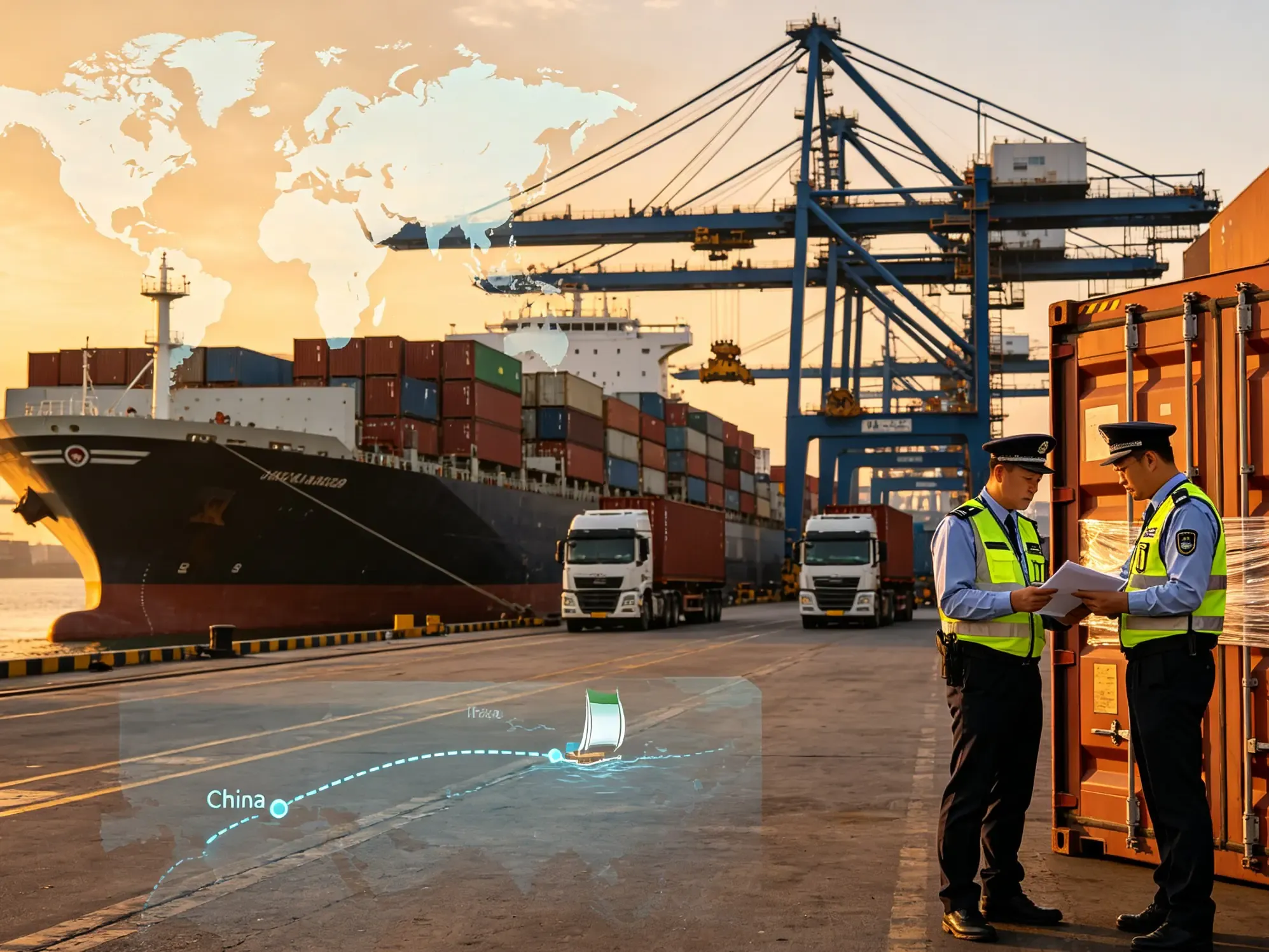
On the Iran side, the licensed broker files through ASYCUDA World, and the declared value is screened against the TSC system — Iran’s reference-price database. Invoices priced meaningfully below reference values get reassessed with duties recalculated. Regulated categories — most electronics, appliances, food, and cosmetics — need ISIRI conformity documents and Persian labeling before the goods leave China; the rules on what cannot ship at all are covered in our prohibited items guide for Iran. At delivery, the customs yard issues a warehouse entry receipt — the Ghabz-e Anbar — to the broker, and that document, not the truck’s arrival, is what starts the clearance clock. A licensed Tehran broker (a Tarkhis Kar) files the declaration; if you do not have one, your forwarder’s customs clearance desk should.
Product categories follow their own rules: machinery needs inspection certificates and careful load planning — see shipping machinery and industrial equipment from China to Iran — while auto parts, the lane’s classic volume cargo, demand the HS-classification precision covered in shipping automotive parts and spare parts from China to Iran.
What Are the Main Risks — and How Do You Manage Them?
The risks that actually cost money on this lane are border dwell, transit permits, payment settlement, and insurance gaps — not road security, which the sealed-TIR system has largely engineered out. All four are fixable before the truck leaves.
| Risk | What it costs you | How to manage it |
|---|---|---|
| Border queue at the exit gateway | Days of dwell, missed weekly slots | Book fixed departures; use an operator with gateway dispatch |
| Transit permits and driver formalities | Re-routing or indefinite waits | Ask whether Turkmen transit permits are pre-arranged or ad hoc |
| Winter closures (Dec – Feb) | 3 – 7 extra days on mountain approaches | Ship before winter or plan a buffer; avoid fixed-date promises |
| Payment settlement | Failed transfers; cargo parked at customs | Agree the payment channel in writing before booking |
| Insurance coverage gap | Uninsured loss on a 6,000 km corridor | Check the policy for Iran geographic exclusions |
| Sanctions exposure | Refusal, penalties, stranded funds | US or EU-exposed companies should take compliance advice first |
Payment deserves its own paragraph: since August 2026 the classic Dubai relay is largely gone, and most China–Iran trade now settles in Chinese yuan through Chinese regional banks and CIPS, China’s cross-border payment system. The practical rule: agree currency, bank, and channel with your forwarder and supplier in advance. A payment that cannot clear will strand cargo at a customs yard faster than any border queue will.
Insurance is the quiet one: many standard cargo policies exclude Iranian destinations. Confirm in writing that cover runs door to customs yard, including the Iranian leg, or place specialist cover — our cargo insurance for China exports primer covers what the policy should say.
Compliance, finally, is a planning variable rather than a reason to panic. Ordinary commercial trade into Iran is lawful under Chinese law and moves on this corridor daily, but secondary-sanctions rules apply to companies with US dollar clearing, US ownership, or EU nexus — take advice before booking if any part of your banking touches those systems. It is the one lane variable you cannot delegate to the truck driver.
Trucking vs Rail vs Sea vs Air: Which Mode Wins in Late 2026?
For most Iran-bound cargo in late 2026, the choice comes down to trucking versus rail: sea is the cheap-but-slow baseline, air is the urgent premium, and the two overland modes split the middle by cargo shape.
| Mode | Typical transit (late 2026) | Indicative cost | Where it wins |
|---|---|---|---|
| TIR trucking | 18 – 30 days | $3,000 – $5,000 per FTL; $2.50 – $3.50 per kg LTL | Flexible pickup anywhere in China; sealed single-load security; delivery to inland customs yards |
| Rail (Khorgos → Sarakhs → Tehran) | 12 – 20 days station to station | $3,500 – $4,500 per TEU plus $500 – $800 gauge-change handling | Full containers on fixed schedules; lowest overland cost per box |
| Sea (Bandar Abbas) | 30 – 50+ days | 20ft from about $2,200 in basic ocean freight | Non-urgent full-container volume that can absorb the risk |
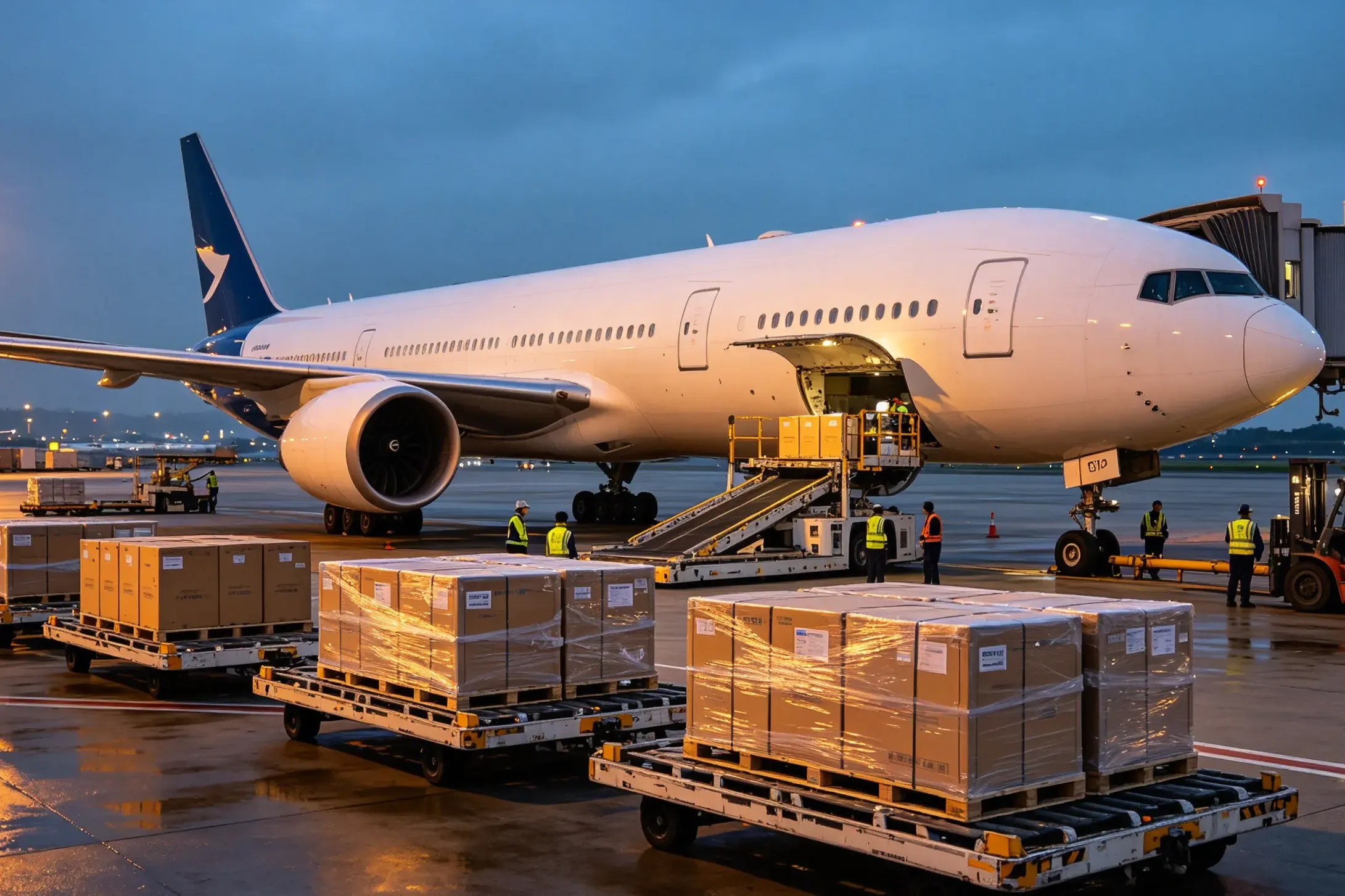
| Air (Tehran IKA) | 3 – 10 days | $4.00 – $8.50 per kg | Urgent, high-value, production-line cargo |
Trucking’s structural advantages are origin flexibility — a truck collects in any Chinese city, while a rail box needs a ramp — shape flexibility for out-of-gauge and awkward palletized cargo, and per-load security with one seal and one consignee. Rail wins on cost per container and schedule discipline, but capacity is rationed and the October 2026 sanctions attention on Iranian railways is a risk worth hedging. The sea and air math is covered in our LCL shipping from China to Iran and rail guides.

For importers without an Iranian customs setup, DDP road services — where the forwarder handles linehaul, clearance, duty, and VAT — flatten the lane into one invoice and one contact. The trade-offs are the ones our door to door shipping page walks through.
How Do You Pick a China–Iran Trucking Forwarder?
Five checks separate operators who run this corridor from resellers who resell it: dispatch presence at the exit gateway, TIR carnet capability, a Tehran partner who files ASYCUDA declarations, per-charge transparency, and transit commitments quoted as ranges.
Ask four questions in the first email: where does my load transload and how many times, who holds the Turkmen transit permits, who is the consignee-side broker in Tehran, and what exactly does the quoted price include. A forwarder who answers those four in one reply will also answer them when a truck is sitting at Sarakhs — the moment the answers are worth money. Importers without an Iranian customs setup can ask for DDP terms, which moves the customs yard, the broker, and the tax stack onto the forwarder’s side of the ledger.
6 Ways to Cut Cost and Delay on China–Iran Trucking
- Consolidate to a full truck where the math allows. Multi-supplier cargo consolidated into one FTL at a China-side warehouse strips 15 – 25 percent out of the linehaul spend versus booking pieces — our warehouse services in China exist for exactly this.
- Pick the corridor on total cost, not headline rate. On a $120,000 machinery load the Wuqia line’s 0.4% Kyrgyz transit tax is $480 — real money, but rarely decisive; gateway queues and schedule confidence matter more.
- Fix the payment channel before you book. Nothing parks cargo faster than a transfer that cannot clear — agree currency, bank, and channel in writing first.
- Book around the calendar. The pre-Chinese-New-Year capacity crunch and the December – February winter both add days; book well before both.
- Pre-clear your HS classification. Iran’s TSC reference prices reassess under-declared values, and classification disputes at the customs yard cost weeks — a pre-clearance review costs a rounding error by comparison.
- Insure with Iran coverage in writing. A standard policy with a geographic exclusion is not insurance on this lane.
FAQ
Q: How long does a truck take from China to Iran? A: Counted from the Wuqia border crossing, a direct truck currently runs 21 – 23 days to Tehran West Customs and 18 – 21 days to Mashhad. Add the domestic leg from your Chinese origin hub — typically within 7 days — and plan roughly 28 – 35 days from pickup to the Tehran customs yard.
Q: How much does a full truck from China to Iran cost? A: A working budget is $3,000 – $5,000 per trailer for the China → Tehran movement via Kyrgyzstan and Uzbekistan, excluding Iranian duty and VAT. Consolidated cargo runs roughly $2.50 – $3.50 per chargeable kilogram.
Q: Can I ship less than a full truck? A: Yes. Consolidated trucking accepts loads from about 1 CBM or 100 kg, billed on chargeable weight, with fixed weekly departures from hubs such as Yiwu, Shenzhen, Guangzhou, and Shanghai.
Q: Do Chinese trucks drive all the way to Tehran? A: Mostly no. Loads typically transload at Bukhara on a direct service, or at Osh and Bukhara on a transshipment service. Delivery is to a bonded customs yard — Tehran West Customs, Shahriyar Customs, Aprin Dry Port, or Mashhad — where the consignee’s licensed broker clears and pays duty; terms are usually CPT or DAP.
Q: Does the Kyrgyz transit tax apply to every truck? A: No. Only the Wuqia line crosses Kyrgyzstan and carries the 0.4% tax on cargo invoice value; the Khorgos line runs via Kazakhstan and never adds it.
Q: Is trucking to Iran affected by sanctions? A: The corridor operates openly and moves ordinary commercial goods daily, but banking is constrained — most settlement now runs in yuan through Chinese channels — and companies with US or EU exposure should take compliance advice before booking.
Conclusion
The three numbers that decide most China–Iran trucking choices in late 2026: 21 – 23 days from the Wuqia crossing to Tehran’s customs yards, $3,000 – $5,000 per full trailer as an October 2026 working budget, and a destination tax stack that typically adds 40 – 80 percent on top of freight. Get the corridor and the document stack right, fix the payment channel early, and the overland route does what the sea lane currently cannot — deliver on a schedule you can plan around.
Efanda Logistics has run China–Middle East lanes from Shenzhen since 2018, with transparent per-charge quoting and a dedicated logistics specialist on every shipment. Contact us at +86 18929345880 for a China–Iran trucking quote with every transit charge itemized.

Written by the EFANDA Logistics team — a Shenzhen-based freight forwarder established in 2018, moving cargo from China to ports worldwide with end-to-end pickup, consolidation, customs and door delivery.About us