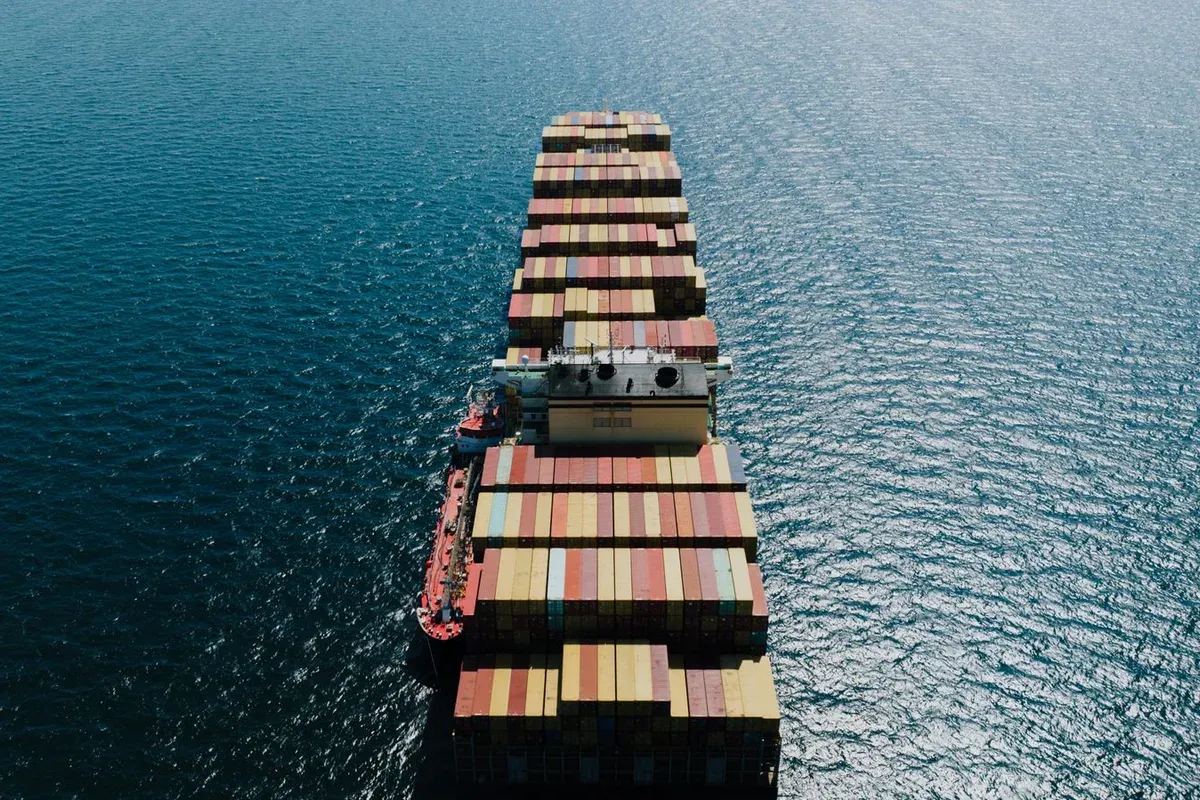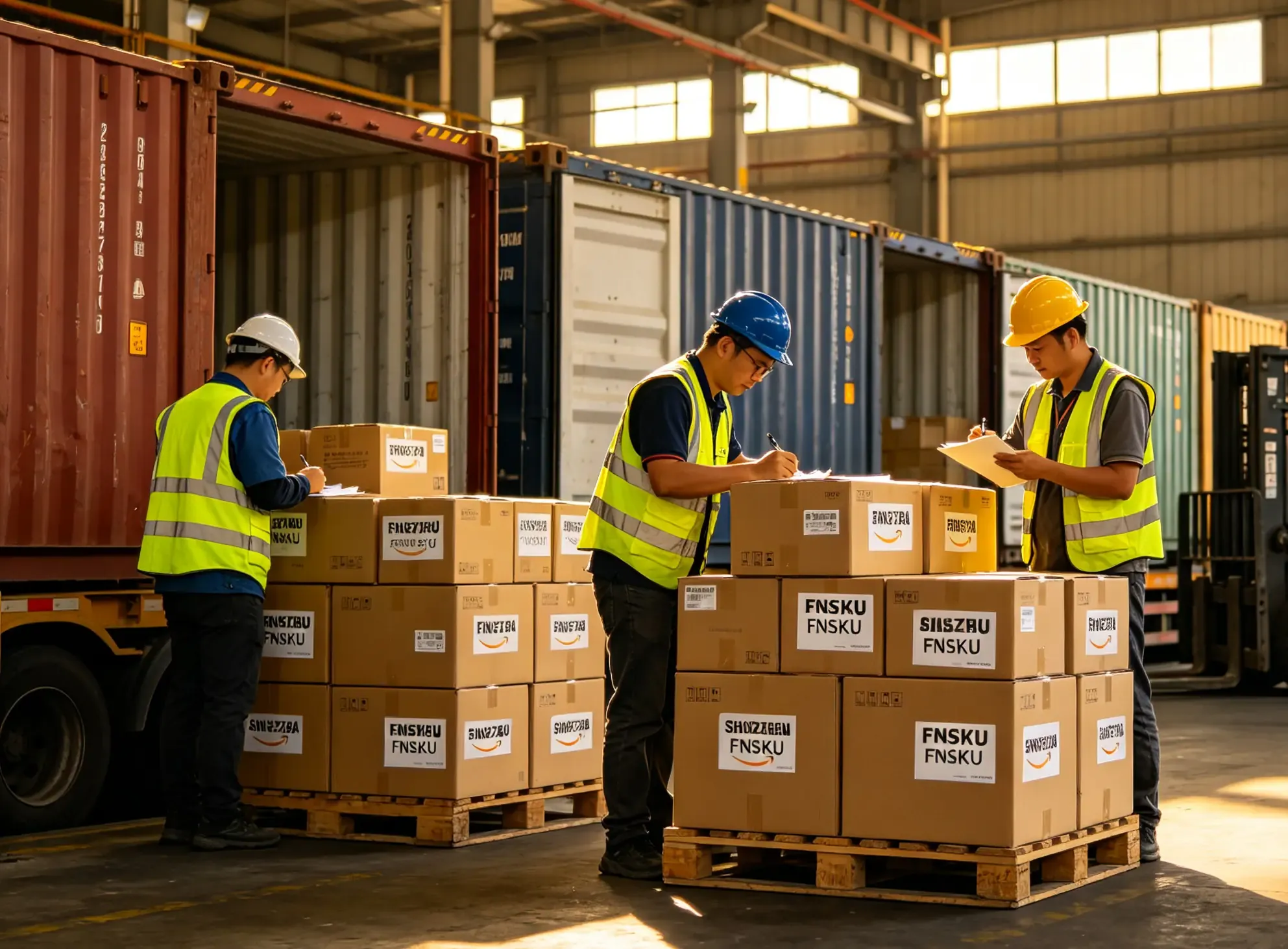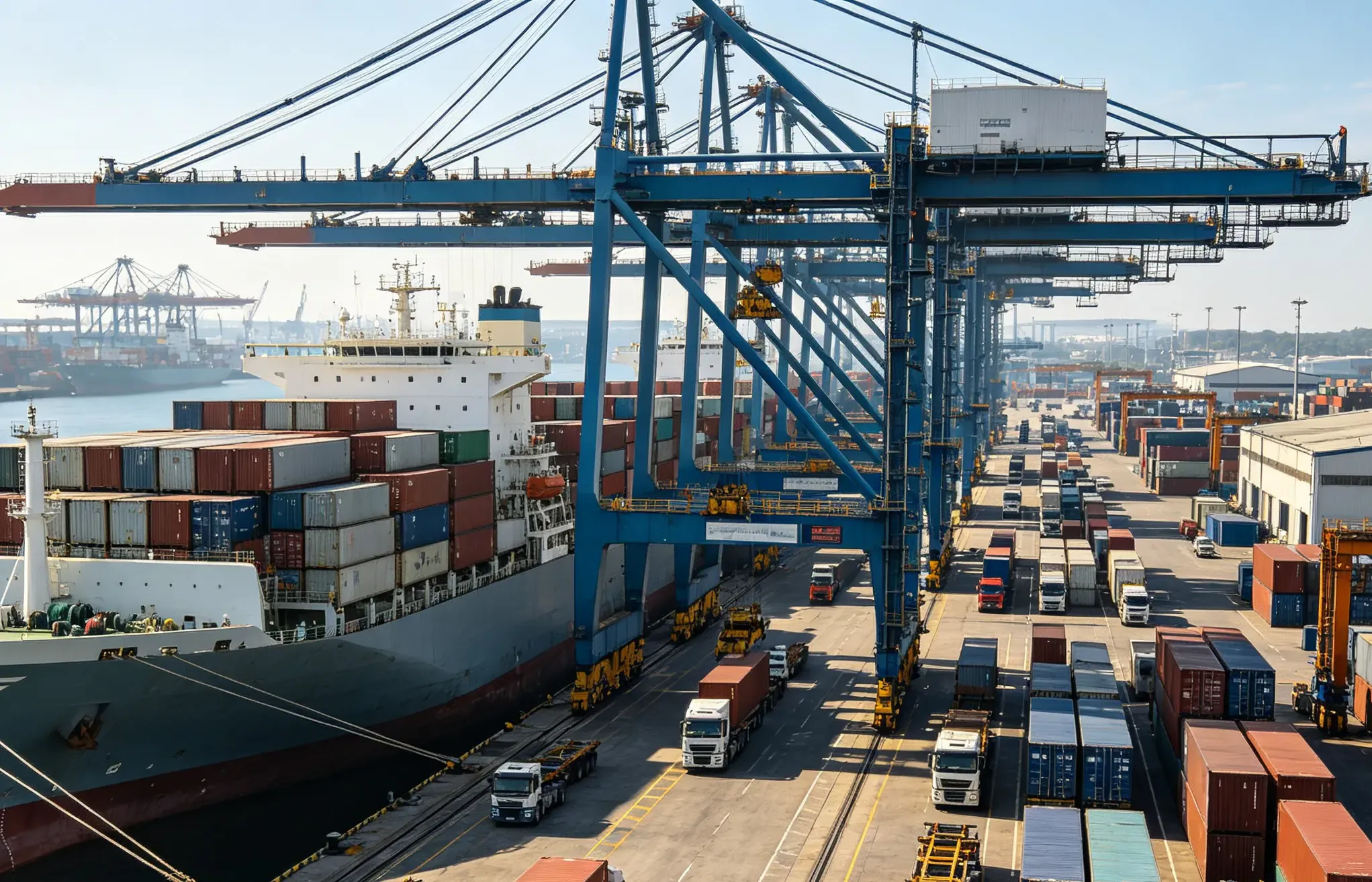
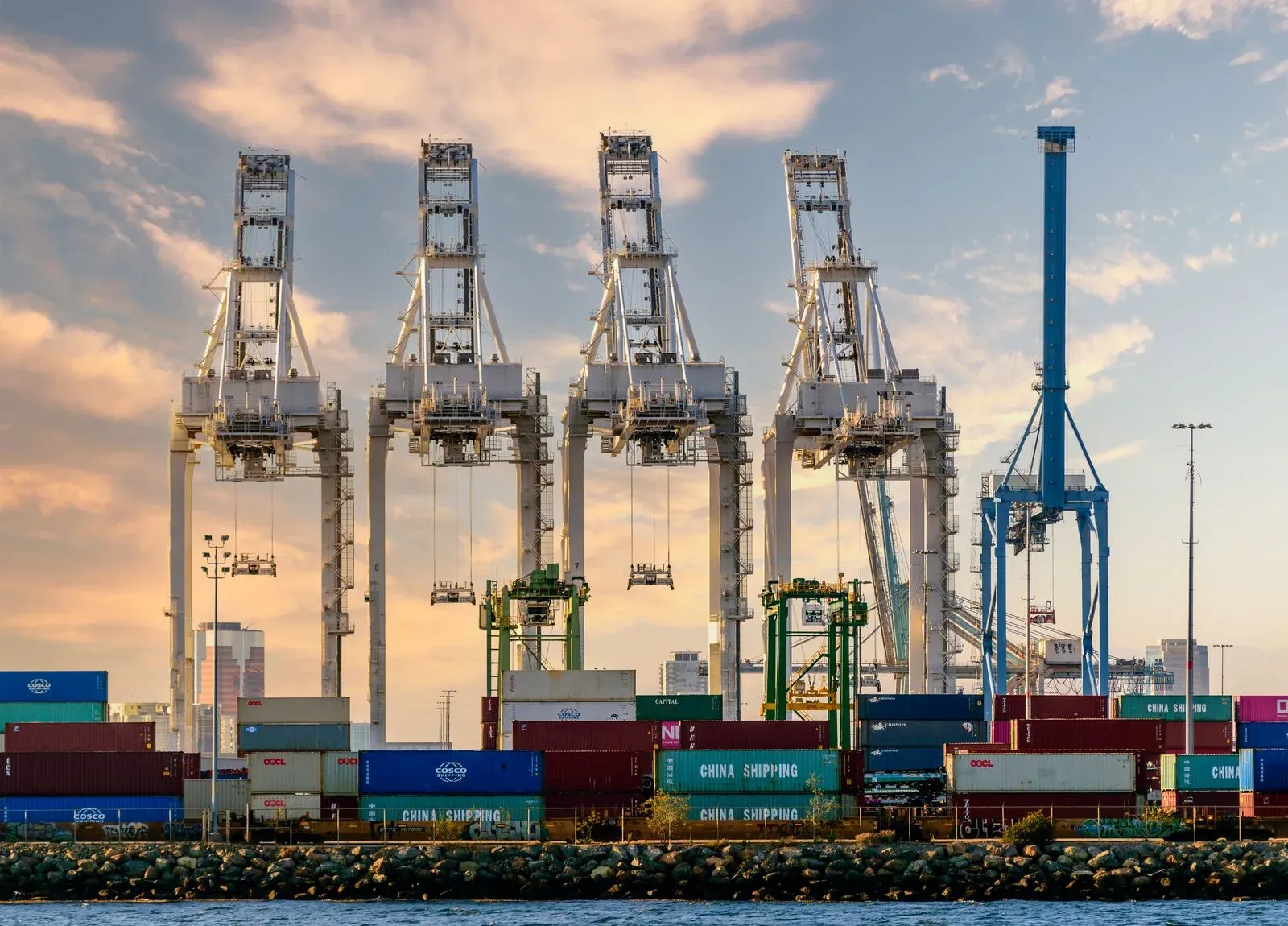
Do you know which UK port your last container from China actually arrived at, and why it went there instead of somewhere two hours closer to your warehouse? Most importers cannot answer that, because the port was chosen inside a booking confirmation they never read. Choosing among the top UK ports for imports from China is not a matter of picking the busiest one. It is a short calculation about where your goods are going, what they are, and which vessel services are willing to carry them.
The UK container map has shifted. London Gateway passed three million TEU in 2025 after a 52 percent jump, the Thames estuary overtook Felixstowe as the busiest container cluster, and from September 2026 four Asia to Europe services moved back to the Suez Canal. This guide covers how port choice really works, the 2025 official numbers, the five gateways that handle most China traffic, transit times on both routings, and the customs and free time terms that decide your landed cost.
1. Which UK Port Should Your China Import Arrive At?
The right UK port is the one your carrier’s vessel rotation already calls, close to your final delivery address, with enough terminal capacity to release your container on time. Everything else is secondary. Importers rarely get a free choice of port, because container ships follow fixed loops: a service that calls Felixstowe and Rotterdam will not discharge in Liverpool to save you a lorry journey.
So the practical question changes. Instead of “which port is best”, ask “which services serve my destination, and which of those ports do they call.” Three variables decide most of the answer.
| Variable | Why it decides the port | Where to get the answer |
|---|---|---|
| Final delivery postcode | Inland haulage is the most controllable cost, and distance from the terminal dominates it | Your own delivery data, quoted per port |
| Cargo type and handling needs | Reefer plugs, out-of-gauge, dangerous goods and project cargo are not equally available | Ask the terminal, not just the carrier |
| Service rotation and frequency | Weekly loops from South China, East China and North China do not call the same UK ports | Shipping line or forwarder schedules |
| Free time and release speed | Two extra free days can outweigh a cheaper ocean leg | Booking confirmation, in writing |
A useful habit is to quote the same shipment to two ports before booking. If the difference is small, take the port closer to your warehouse. If it is large, take the cheaper one and spend the saving on a longer buffer. Our own shipping from china to uk service quotes both options on one line, which is where that comparison normally starts.
2. UK Container Port Throughput in 2026: What the Official Data Shows
Felixstowe remains the UK’s largest container port, but it is no longer growing, while London Gateway is expanding fast. The Department for Transport’s Port Freight Annual Statistics 2025, published on 29 July 2026, show UK ports handled 428.3 million tonnes of freight in 2025, with imports up 2 percent to 237.5 million tonnes and container tonnage up 6.2 million tonnes, or 10 percent.
| Port | 2025 TEU | Share of UK TEU | Change on 2024 | 2024 TEU | 2023 TEU |
|---|---|---|---|---|---|
| Felixstowe | 3,599,800 | 33% | 0% | 3,611,000 | 3,246,100 |
| London (London Gateway and Tilbury) | 2,802,600 | 26% | +56% | 1,801,000 | 1,717,900 |
| Liverpool | 765,200 | 7% | +2% | 746,800 | 672,900 |
| All UK ports | 10,828,300 | 100% | +13% | 9,621,500 | 9,090,100 |
Read the table with three cautions. First, the statistics count tonnage as well as units, and the two rankings differ: Immingham is the UK’s largest port by tonnage at around 46 million tonnes a year, mostly bulk and energy, while Felixstowe leads on containers. Second, the London line includes Tilbury, so it is an estuary total rather than one terminal. Third, and most important, the statistics record the port where cargo was loaded onto the ship, not where it was made. A container transshipped through Rotterdam is counted as a Netherlands movement: the Netherlands alone accounted for 17 percent of UK international tonnage in 2025. That is why container volumes look lower than the volume of Chinese goods on UK shelves.
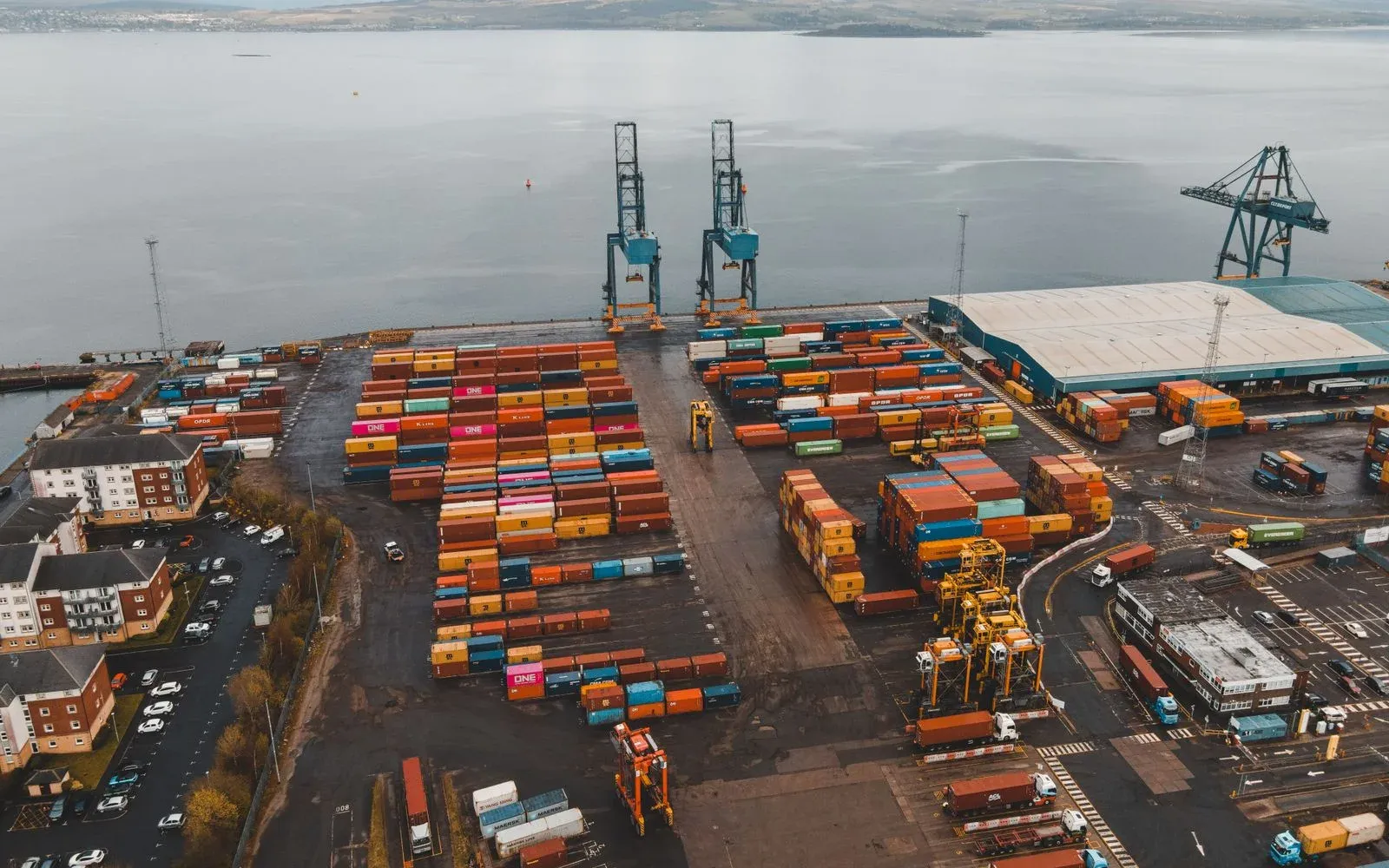
Only one port group explains the 2025 growth: container traffic through the Port of London rose 38 percent after London Gateway’s fourth berth came online. UK container throughput reached 10.83 million TEU, up 13 percent on 2024, and the fastest movers on that number were imports from Asia, which rose 2 million tonnes, or 5 percent.
3. Port of Felixstowe: Still the UK’s Largest Container Port
Felixstowe handled 3,599,800 TEU in 2025 and remains the country’s busiest container port, and its deep water and rail connections keep it the default for large consignments headed to the Midlands and the South East. It has the deepest approach of any UK port, with a 16 metre maintained channel and berths up to 18 metres alongside, which is why the largest vessels call here first, two hours from pilot to berth.
For importers, the rail side matters more than the ship side. Felixstowe is Britain’s largest intermodal rail facility, moving around a million TEU by rail each year on 58 daily trains to 15 inland destinations. If your goods are going to a Midlands or northern distribution centre, that rail product shortens the final leg and avoids the A14, which remains the single point of failure for road haulage in and out of the port.
Felixstowe sits inside Freeport East, alongside Harwich. Duty suspension there applies only inside an authorised customs site, not across the whole port area.
Two caveats. Lorry collection depends on the port’s Vehicle Booking System, and in busy weeks slots fill days ahead, so book haulage before the vessel berths. The port is also part of Hutchison Ports, whose global portfolio has been in a long-running sale process, which has left investment decisions slower than at competing terminals.
4. London Gateway: Deep Water Closest to London
London Gateway is the fastest-growing container port in the UK and the obvious alternative when Felixstowe is congested, moving more than three million TEU in 2025, a rise of 52 percent on the 1.9 million TEU of 2024. The first full year of operation for its all-electric fourth berth did most of that work, helped by new Asia to Europe calls from the Gemini Cooperation, the Maersk and Hapag-Lloyd alliance.
Capacity is still being built. Two further all-electric berths (five and six) are under construction as part of a one billion pound investment announced by DP World, and a second rail terminal started operating in 2025. A BoxBay automated container handling system is also planned. For a port that opened in 2013, this is the difference between a challenger and a main gateway.
Its commercial advantage is inland position. Alongside the terminal sits one of Europe’s largest logistics parks, and the two rail terminals feed the Midlands and the North, which suits sellers restocking amazon fba fulfilment centres and means London, the South East and well-connected rail hubs can be served without a road leg out of Suffolk. Thames Freeport covers the site, adding customs and tax site options for goods that are stored or processed before entering free circulation.
Practical limitations are worth knowing before you commit a season’s imports here. The port is smaller than Felixstowe in absolute capacity, so when an alliance shifts calls it fills quickly, and haulage rates from the Thames estuary into some northern postcodes are higher than from Liverpool or Teesport.
5. Port of Southampton: Deep-Sea Gateway for the South and West
Southampton’s container terminal passed two million TEU for the first time in 2025, making it the UK’s second largest box terminal after Felixstowe, and it suits importers whose customers sit in southern England, the West Country and the western Midlands. DP World, which operates the terminal, handled more than five million TEU across its two UK ports last year, with London Gateway and Southampton splitting that total.
The terminal is investing in size. A sixty million pound programme is bringing Europe’s tallest quay crane fleet to the port, capable of working 24,000 TEU vessels, with the first cranes arriving this year. Southampton also handles around 900,000 vehicles a year across its car terminals, so temperature-controlled food and automotive parts have real handling depth here.
Rail and road both work. The M27 links to the M3 and M4 corridors, and rail services run to inland terminals in the Midlands and the North. Gemini has also made Southampton its final European outbound call to Asia on its NE3 service, which usually means a reliable slot back to China too.
The constraint is geography. For a warehouse in Leeds or Glasgow, Southampton adds hundreds of miles of inland haulage compared with Liverpool or Teesport, and that road cost usually exceeds any saving on the ocean leg. Use it when the delivery address justifies it.
6. Port of Liverpool: The Direct Far East Route into the North
Liverpool handled 765,200 TEU in 2025, up 2 percent, and it is the only northern port with a direct Far East container service, which makes it the shortest inland haulage option for the North West, Yorkshire, Scotland and Northern Ireland. MSC’s standalone Britannia loop connects China and Vietnam with Liverpool, calling Vung Tau before the Mersey and linking onward to Rotterdam, Antwerp and Hamburg, and it exists because UK retailers asked for a way to bring goods closer to their northern distribution centres instead of trucking them up from the south.
The infrastructure is genuinely deep water. Liverpool2, opened in 2016 at a cost of 400 million pounds, is an in-river terminal able to take vessels of up to 380 metres and around 13,500 TEU, and it sits alongside the Royal Seaforth Container Terminal. Peel Ports reports a vessel turn within a 12 hour tide, average truck turnaround under 30 minutes, and close to 1,000 reefer plugs, which matters if you import chilled or frozen food.
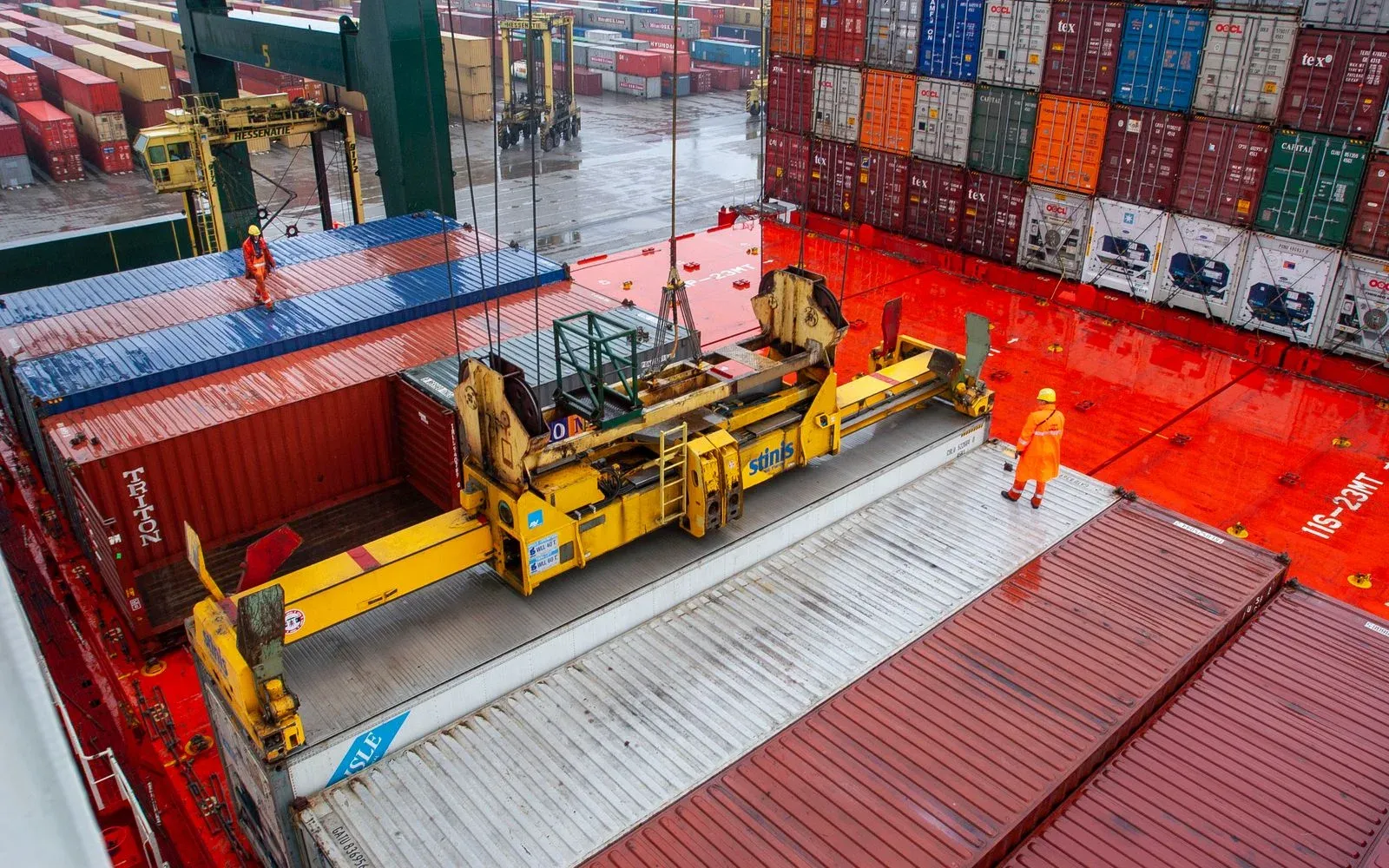
Where Liverpool wins is total cost to a northern postcode, not headline ocean freight. A container discharged in Liverpool and delivered to Manchester avoids a long domestic leg, reduces demurrage exposure because collection is faster, and cuts road miles. Where it loses is frequency: fewer weekly sailings than Felixstowe or London Gateway, so a booking missed in a peak week can cost you a week. Port-wide volumes are also still well below the southern gateways, so confirm your specific service actually calls before you build a plan around it.
Liverpool sits in the Liverpool City Region Freeport, and containers for Belfast or Dublin can move onward by short-sea or landbridge services rather than being trucked the length of the country.
7. Teesport, Immingham, Tilbury and Scotland: Who Handles What
Container volume is not the only way to choose a port, because around 84 percent of UK port tonnage is bulk and roll-on roll-off rather than containers. Immingham is the UK’s largest port by tonnage at roughly 46 million tonnes a year, built on oil products, chemicals and agribulk rather than boxes, and a new eastern Ro-Ro terminal is under construction there. Teesport handles around 23 million tonnes a year, has roughly 600,000 TEU of annual container capacity, and is the natural entry point for industrial, steel and project cargo for the North East and Yorkshire. Tilbury sits in the same estuary as London Gateway and is usually counted with it in the statistics, which is worth remembering when you read the London figure above.
| Port or cluster | Best suited to | Why |
|---|---|---|
| Teesport | Steel, machinery, project and industrial cargo | Deep-water berths, bulk and container handling on one estate, North East and Yorkshire hinterland |
| Immingham and the Humber | Chemicals, energy, agribulk, Ro-Ro trailers | Largest UK port by tonnage, purpose-built bulk and Ro-Ro facilities |
| Tilbury and the Thames | Bulk, paper, construction materials, London distribution | Counted within the London statistics, strong for high-volume non-container cargo |
| Grangemouth and Scottish feeders | Central Scotland and the Highlands | Coastal feeder and short-sea services from English container ports |
| Belfast | Northern Ireland | Short-sea links from Liverpool and Heysham plus Ro-Ro services |
Two planning points follow. If your cargo is not containerised, the container ranking above is irrelevant, and you should be asking about berth availability and heavy-lift capacity instead. If your customers are in Scotland or Northern Ireland, ask specifically whether your container can travel by feeder or short-sea vessel from the English gateway, because that route is usually cheaper and more predictable than 400 miles of road haulage.
8. China to UK Transit Times by Port in 2026
Most of this cargo still moves as sea freight from china, and transit time now depends more on the routing than on the port pair, because part of the Asia to Europe fleet returned to the Suez Canal in September 2026 while the rest remains on the Cape of Good Hope. Maersk and Hapag-Lloyd moved four Gemini services back to the canal, including AE5, whose rotation runs Qingdao, Ningbo, Tanjung Pelepas, Suez, London, Bremerhaven, Hamburg, Rotterdam and back through Suez. Services still routed around Africa take seven to ten days longer, which is why two importers shipping the same week from the same factory can see arrival dates a fortnight apart.
| Chinese loading port | UK discharge port | Suez-routed services | Cape of Good Hope routed services |
|---|---|---|---|
| Shanghai | Felixstowe | 30 to 35 days | 40 to 50 days |
| Ningbo | Felixstowe | 31 to 36 days | 41 to 50 days |
| Shenzhen (Yantian) | Southampton | 30 to 35 days | 40 to 48 days |
| Ningbo or Shanghai | London Gateway | 30 to 36 days | 40 to 50 days |
| Guangzhou (Nansha) | Liverpool | 35 to 42 days | 45 to 55 days |
| Qingdao | Felixstowe or London Gateway | 33 to 38 days | 43 to 52 days |
These are port to port figures for loaded ocean transit, valid for the fourth quarter of 2026, and they move with carrier schedules, blank sailings and how quickly a service is reinstated on the canal routing. Door to door delivery adds five to fifteen days for factory pickup, export declaration, UK customs clearance and inland haulage, so plan on 44 to 67 days end to end, and keep a buffer of at least seven days on any inventory plan that depends on a fixed arrival date.
Our industry insight: We track arrival dates by service, not by port. Two containers leaving the same Shenzhen warehouse on consecutive days can arrive eight days apart if one is booked on a Suez loop and the other on a Cape loop, and the booking screen does not always make that clear. When we quote the China to UK lane, we name the routing and the first vessel, so a delay has a name and a cause rather than a shrug. That single change ends most arguments about “slow shipping”.
9. Customs, Free Time and Compliance: What Changes by Port
The customs process is national, and the port only changes where and how fast your container is released. Importers need a GB EORI number, declarations filed through the Customs Declaration Service, and a decision on import VAT: postponed VAT accounting lets VAT-registered businesses declare and recover import VAT on the same return instead of paying at the border. None of that varies by port.
Terminal economics do vary, and they are where budgets break.
| Cost item | What drives it | How to control it |
|---|---|---|
| Terminal handling and destination charges | Terminal and consolidator tariffs, LCL deconsolidation | Ask for an all-in landed quote, not a bare ocean rate |
| Free time | Typically 5 to 7 days of free storage, then demurrage and detention charges above 100 pounds a day | Negotiate free time in the booking, in writing, before the vessel sails |
| Inland haulage | Distance from port, transporter availability, appointment slots | Get the delivery postcode quoted to two ports before booking |
| Rail leg | Availability of a ramp near your warehouse | Ask whether your chosen port has a rail product to that region |
| Customs fees and deferment | Broker charges, duty deferment account setup | Set up a deferment account before your first large consignment |
Two policy deadlines belong in the plan. UK CBAM starts on 1 January 2027 and taxes embodied emissions in imported iron and steel, aluminium, cement, fertiliser and hydrogen once imports of those goods exceed 50,000 pounds in any 30 day period, so importers of metal products should be registering with HMRC now rather than in December. Separately, the government has confirmed that customs duty relief for consignments valued at 135 pounds or less is being removed, brought forward to October 2028, which will change the economics of low-value parcel imports and e-commerce replenishment.
Port health controls depend on the goods rather than the port. Food, plant and animal products need pre-notification and may be directed to an approved point of entry, while most consumer goods, electronics and textiles do not. Freeport customs sites can suspend duty on goods that are stored or processed and then re-exported, but a normal UK retail import does not qualify simply because it lands inside a freeport boundary. Importers who would rather not manage terminal, haulage and clearance separately can put the whole journey with one party through door to door shipping.
10. FAQ: Top UK Ports for Imports from China
Q: Which is the busiest UK port for imports from China? Felixstowe remains the busiest container port, handling 3,599,800 TEU in 2025, followed by London Gateway within the London total of 2,802,600 TEU. On tonnage rather than containers, Immingham leads with around 46 million tonnes a year.
Q: Will London Gateway overtake Felixstowe? It is close: London Gateway grew 52 percent in 2025 while Felixstowe was flat, and two more berths are under construction. Felixstowe’s rail network and deeper approach still give it an edge for very large consignments.
Q: Is there a direct container service from China to Liverpool? Yes. MSC’s Britannia loop connects China and Vietnam with the Port of Liverpool, calling Vung Tau and then linking onward to Rotterdam, Antwerp and Hamburg. Frequency is lower than on the southern services, so confirm the rotation for your sailing dates.
Q: Which UK port is cheapest for imports from China? Cost is decided by the total journey, not the ocean rate. For a delivery in the North West, Liverpool or Teesport usually wins on total cost even if the ocean leg is dearer, because it avoids 200 miles or more of haulage. For London and the South East, London Gateway and Felixstowe are normally level.
Q: Do transit times improve now that some services are back on the Suez Canal? Partly. Services moved back to the canal from September 2026, cutting around seven to ten days off the Cape of Good Hope routing, but others remain on the longer route. Ask your forwarder which routing your booking uses, not just which port.
Q: Can I choose the port my container arrives at? You can express a preference, and on most lanes a forwarder can route you through more than one UK gateway. The limit is the vessel rotation: no service will discharge early to suit one container. If a specific port matters to your landed cost, say so before the booking is confirmed.
Q: How much free time should I expect at a UK port? Between five and seven days in typical arrangements, after which demurrage and detention charges set in, often above 100 pounds a day. Free time is negotiable and it should be confirmed in writing before sailing, because port releases and lorry slots do not slow down when your account does.
Q: Do the 2027 and 2028 rule changes affect my imports? Only some of them. UK CBAM from 1 January 2027 applies to iron and steel, aluminium, cement, fertiliser and hydrogen imports above the threshold. The removal of duty relief on consignments under 135 pounds is scheduled for October 2028 and mainly affects parcel and e-commerce flows rather than container imports.
Planning the port is the cheapest freight saving available to most importers, and it is decided weeks before any rate is negotiated. For smaller consignments we compare lcl shipping from china to the uk groupage rates against air and express before recommending sea. Tell us your delivery postcode, your cargo and your deadlines, and we will quote the realistic options through the ports that actually serve them, with routing, free time and clearance terms stated up front.

Written by the EFANDA Logistics team — a Shenzhen-based freight forwarder established in 2018, moving cargo from China to ports worldwide with end-to-end pickup, consolidation, customs and door delivery.About us