

How do you import furniture from China to the UK without losing money to the wrong container, the wrong commodity code, or a rejected fire-safety label? The short answer: ship by sea in a 40ft high cube (about $3,000–$4,500 in late October 2026, 28–38 days door to door), pay 0% duty on most finished furniture, and budget 20% import VAT — but treat UK compliance as the hard part: upholstered furniture must pass the 1988 fire regulations before it can legally be sold, and wooden furniture needs timber paperwork the factory must supply before your order ships.
Efanda Logistics has run this lane from Foshan and Shenzhen to UK warehouses since 2018, and the pattern is consistent: importers who plan volume, compliance, and landed cost together make healthy margins — importers who chase the cheapest freight quote alone get stuck at Felixstowe. For broader lane context, see our guide to shipping from China to the UK.
Why Import Furniture from China to the UK?
Because China supplies roughly 40% of the UK’s furniture imports, at price points UK manufacturing cannot match. In 2025 the UK imported £10.45 billion of furniture under HS Chapter 94, with China alone at £4.19 billion, up 3.2% year on year, according to the FIRA Statistics Digest. The commercial logic is simple: a three-seat fabric sofa leaves a Foshan factory at roughly $600–$1,500 ex-works; the same build quality retails in the UK at £1,200–£2,500.
Where UK Importers Source: Inside the Foshan Furniture Cluster
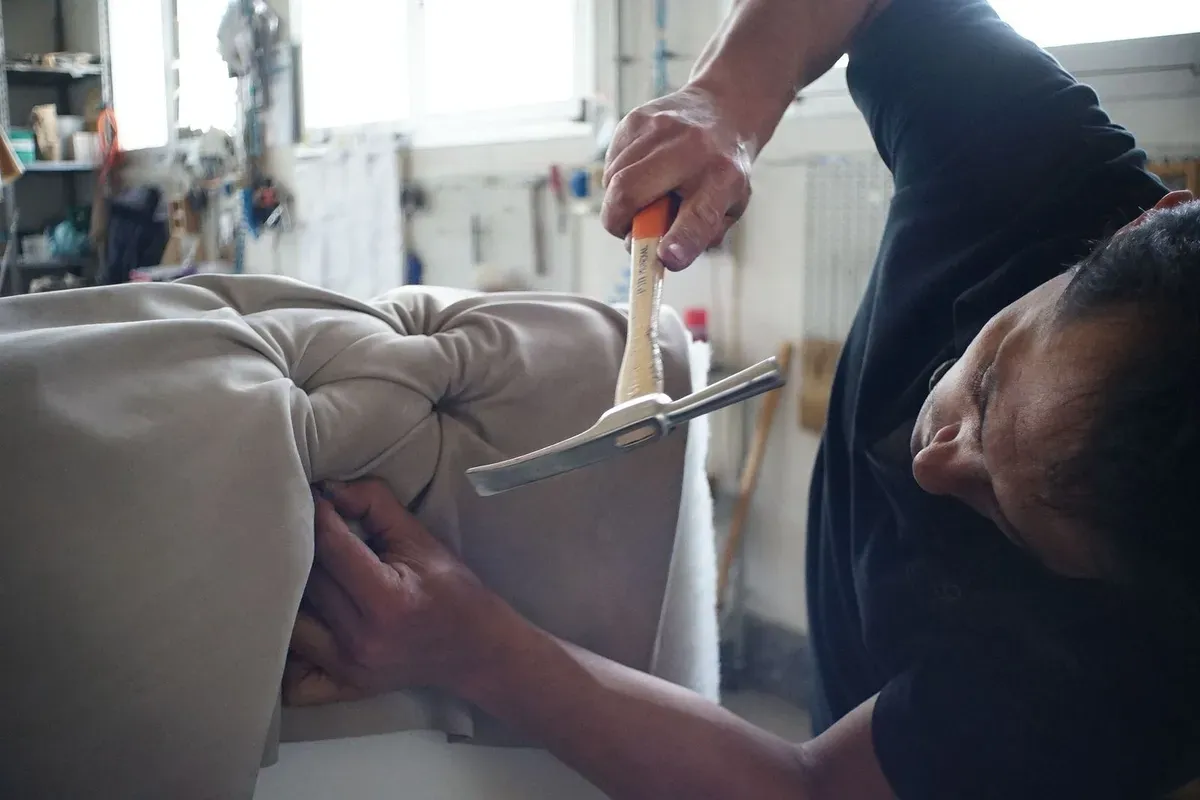
Foshan in Guangdong produces an estimated 35% of China’s furniture across roughly 30,000 related companies, and its clusters specialize in ways that matter for sourcing:
| Cluster | What It Makes | Why It Matters for UK Buyers |
|---|---|---|
| Lecong (Shunde) | World’s largest furniture trading district — 4 million+ m² of malls, 10,000+ dealers | Compare thousands of factories in days; no minimums |
| Longjiang (Shunde) | 1,200+ sofa, bed, and upholstery factories | Factory-direct pricing 15–30% under showroom quotes |
| Dongguan (Houjie) | Export-grade plants used to Western specs | Contract and hotel furniture to UK drawings |
| Anji (Zhejiang) | About half of China’s office chairs | Volume office seating |
| Huizhou | Motion and recliner sofas | Close to half of China’s motion-sofa exports |
Indicative ex-works prices: a three-seat fabric sofa on a kiln-dried hardwood frame runs $600–$1,500; a 1.8–2.0 m stone-top dining table $500–$1,500; an upholstered king bed frame $500–$1,400. FR-grade foam and covers are not the factory default — the fire-safety spec below moves these numbers.
How Much Does It Cost to Import Furniture from China to the UK?
Budget $3,000–$4,500 ocean freight for a 40ft high cube, or $55–$80 per CBM for LCL, as of late October 2026 — then add UK destination charges, 20% VAT, and delivery. Furniture is volume cargo: the box you fill, not the weight you move, drives the bill, so packing design matters more than the freight rate.
| Shipping Mode | Cost (October 2026) | Transit Time | Best For |
|---|---|---|---|
| Sea LCL | $55–$80 per CBM + destination CFS charges | 30–45 days door to door | Trial orders, mixed suppliers under 15 CBM |
| Sea FCL 20GP | $1,900–$2,800 | 28–38 days door to door | Dense flat-pack up to ~28 CBM |
| Sea FCL 40HQ | $3,000–$4,500 | 28–38 days door to door | Full furniture loads up to ~68 CBM |
| Air Freight | $6–$10 per kg | 5–10 days | Samples, fabric swatches, show stock |
| Express Courier | $8–$15 per kg | 3–7 days | Small samples and documents only |
These bands reflect the post-peak softening of October 2026 — 40ft rates into Felixstowe and Southampton fell roughly 20% month on month as carriers rolled services back toward Suez, while Cape routings still price at the top of the range. Rates shift with surcharges and seasonal space, so re-quote before you commit; see our shipping cost from China to the UK breakdown for how the pieces stack up.
What Fits in a Container: Volume Planning for Furniture
A 20ft container gives about 28 usable CBM, a standard 40ft about 58, a 40ft high cube about 68 — and how much furniture that holds depends entirely on packing format:
- Assembled three-seat sofas at roughly 1.9–2.2 CBM each: about 30 pieces per 40HQ
- Knock-down (KD) or flat-packed sofas at roughly 0.6–0.8 CBM each: 60–80 pieces per 40HQ
- Stacking chairs: 250–300 pieces per 40HQ
Settle knock-down versus assembled with the factory before production starts — KD multiplies what fits per container but shifts assembly labor to the UK side. Under roughly 15 CBM, LCL consolidation through a Shenzhen or Foshan warehouse usually beats separate shipments; our LCL shipping from China to the UK guide covers how per-CBM pricing really works.
Worked Example: The Landed Cost of One 40HQ Container
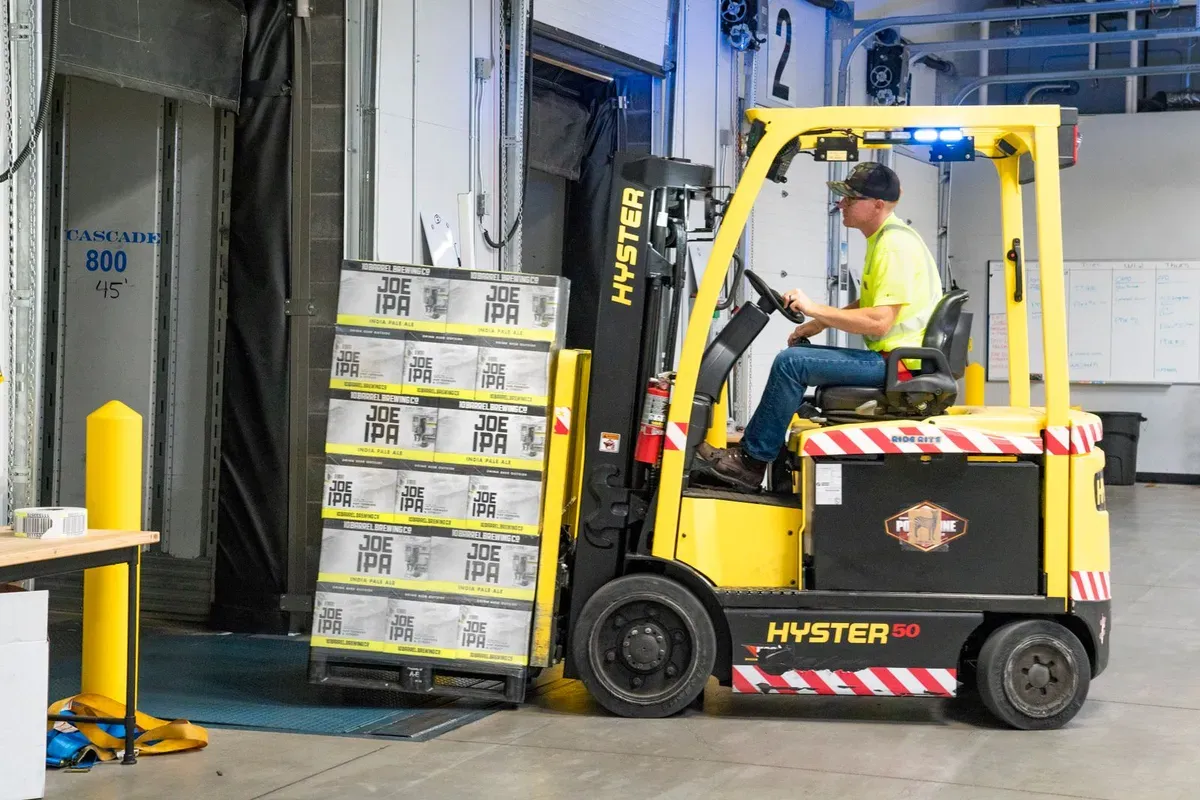
Say a UK importer buys a mixed load of 30 sofas and chairs plus KD bedroom cartons, worth £28,000 ex-works, and ships FOB Shenzhen:
| Cost Element | Indicative Amount | Notes |
|---|---|---|
| Goods (EXW value) | £28,000 | Mixed 40HQ load, ~68 CBM |
| Origin charges + loading | £500–£700 | THC, doc fee, consolidation, loading supervision |
| Ocean freight (40HQ) | £2,400–£3,600 | $3,000–$4,500, October 2026 band |
| Insurance | £150–£300 | Around 0.3–1% of value |
| Import duty | £0 | Upholstered seating is duty-free under the UK Global Tariff |
| Import VAT (20%) | ~£6,200 | On customs value (goods + freight + insurance); reclaimable via PVA |
| UK destination + haulage | £700–£1,200 | Agency, port charges, delivery to a Midlands warehouse |
Out-of-pocket landed cost lands near £32,000–£34,000 before VAT recovery — roughly £720 per upholstered piece against UK retail equivalents of £1,200–£2,500. With PVA the VAT is a cash-flow item, not a true cost, and the gap between profit and break-even is usually an unlisted destination charge.

How Long Does It Take to Import Furniture from China to the UK?
Plan on 28–38 days door to door for a full container and 30–45 days for LCL on Suez-routed services in late 2026 — longer on Cape routings. Port to port, South China to Felixstowe, Southampton, or London Gateway runs about four to five weeks via Suez. From the port, containers move by truck, or by rail into the Midlands and the North — our top UK ports for imports from China guide matches ports to final destinations.
One timing variable matters more than any schedule: Chinese New Year. Foshan factories close for two to four weeks around Lunar New Year, and rates spike in the ten days before the shutdown — if furniture needs to land in the February window, book space in January. And because carriers are still returning loops to Suez one at a time, confirm the rotation at booking: a Cape routing quietly adds two weeks to a quote that looks identical on paper.
Air freight (5–10 days at $6–$10 per kg) only makes sense for samples — a full sofa consignment by air costs more than the goods. See air freight shipping from China to UK for this lane.
What Are UK Duty, VAT, and HS Codes for Furniture?
Most finished furniture enters the UK duty-free under the UK Global Tariff — 0% on the main seating, bedroom, dining, living-room, office, metal, and plastic lines — while kitchen furniture, furniture parts, and mattresses carry ordinary duty, and import VAT is 20% on everything. Furniture classifies under HS Chapter 94, with the rate set at the 10-digit commodity-code level:
| HS Code | Products | Duty | Compliance Notes |
|---|---|---|---|
| 9401 | Seats — upholstered sofas and chairs, sofa beds, dining and office seating | 0% (main lines) | FFR 1988 applies to upholstered domestic seating; not on the UKTR list |
| 9403.30–9403.60 | Wooden furniture — bedroom, dining, living-room, office | 0% (kitchen lines excepted) | In scope of UK Timber Regulations — due diligence required |
| 9403.10 / 9403.20 / 9403.70 | Metal and plastic furniture | 0% | Outside UKTR scope |
| 9403.91 / 9403.99 | Furniture parts — panels, frames, legs | Ordinary duty | Wooden parts in UKTR scope; loose-packed KD kits can land here |
| 9404.21 / 9404.29 | Mattresses and bed bases | Ordinary duty | Covered by fire regulations; no permanent label needed |
The UK has no anti-dumping measure on Chinese furniture as of October 2026. But a KD kit with parts packed loose can classify as parts instead of finished furniture, changing the duty line and the timber paperwork — confirm the exact 10-digit code on the UK Trade Tariff service before you order; our guide to import duties and taxes from China to UK covers the lookup workflow.
How Import VAT Works (and How to Reclaim It)
Import VAT is charged at 20% on the customs value — which in the UK includes freight and insurance to the border — plus any duty and delivery costs to the first UK destination. A VAT-registered importer can use postponed VAT accounting (PVA): the VAT is declared and reclaimed on the same VAT return instead of being paid at the border, but you elect it on the customs declaration and the choice cannot be changed afterwards. Before any of this, your business needs a GB EORI number (free, issued by HMRC), and declarations are filed through the Customs Declaration Service.
What UK Compliance Rules Apply to Chinese Furniture?
Three rulebooks decide whether your furniture can legally be sold in the UK: the Furniture and Furnishings (Fire) (Safety) Regulations 1988 for anything upholstered for domestic use, the UK Timber Regulations for wooden furniture, and general product safety. These are market-surveillance rules enforced by trading standards, and the importer who first places the goods on the UK market carries the legal responsibility.
Fire Safety: The FFR 1988
The FFR 1988 is the biggest compliance trap in this lane. Upholstered furniture for domestic use — sofas, armchairs, beds and headboards, scatter cushions, furniture supplied in rented homes — must have covers, fillings, and composites that pass the ignition tests: the match test for covers, and cigarette (ignition source 0) plus higher ignition sources for fillings. New furniture must carry a permanent label listing the filling and covering materials, the first UK supplier’s name and postcode, a batch number, and the date of manufacture.
Since 30 October 2025, amendments have removed certain baby and young children’s products from scope and dropped the retail display (swing) label — but the permanent label and ignition tests remain fully in force, and a wider smoulder-test reform consulted on in mid-2026 is still pending. Contract furniture for hotels sits outside the FFR — UK hospitality specs normally demand BS 7176 instead.
The practical workflow: put the FFR test reports in the purchase contract, verify labels during pre-shipment inspection, and reject the batch if they are missing. Fixing labels in the UK costs several pounds per piece; enforcing it at the factory costs a clause.
Timber: The UK Timber Regulations
Wooden furniture under 9403.30–9403.60, wooden parts, and plywood are on the UK Timber Regulations product list for Great Britain. The importer who first places the goods on the GB market — you — must run a due-diligence system: species, quantity, supplier, and country-of-harvest information; an illegal-harvest risk assessment; and mitigation until the risk is negligible. The data has to come from the factory and its timber suppliers, so request it with the order.
Product Safety, UKCA Marking, and Other Obligations
Consumer furniture in Great Britain falls under the General Product Safety Regulations 2005: only safe products may be placed on the market, and you must be able to trace what you sold. Furniture with motors or lighting — power recliners, illuminated headboards — is also electrical equipment, needing UKCA or CE marking and the UK importer’s name and postal address on the product or packaging. Wooden pallets and crates must be debarked, heat-treated or fumigated, and ISPM 15-marked — a certificate cannot replace the stamp.
| Compliance Item | Applies To | When to Act |
|---|---|---|
| FFR ignition tests + permanent label | Upholstered domestic furniture | Purchase contract; verified at inspection |
| UKTR due diligence | Wooden furniture, parts, plywood (GB) | Requested with the order |
| UKCA / CE + importer marking | Furniture with motors or lighting | Before production |
| ISPM 15 wood packaging | Pallets, crates, dunnage | Loading day — mark, not certificate |
| GPSR 2005 traceability | All consumer furniture | Ongoing record-keeping |
How Should Furniture Be Packed for UK-Bound Shipments?
Specify knock-down flat-pack wherever your retail model allows, wrap every piece in double-wall cartons with corner protection, and ship on ISPM 15-marked pallets — furniture damage is almost always a packing-spec failure, not a carrier failure. The default Chinese export pack (carton over stretch wrap with foam corners) survives gentle handling, not a 38-day journey with three transshipments; add polybags on table tops and cardboard edging on glass and stone. For upholstered goods, vacuum compression cuts shipped volume dramatically but over-compression crushes foam — test one piece first. Consolidating several Foshan suppliers into one container through an origin warehouse beats separate LCL shipments, each with its own CFS charges at both ends — our warehouse services in China exist for exactly this step, with loading photographed carton by carton.
Step by Step: Importing Furniture from China to the UK
The full cycle runs eight steps over roughly 10–14 weeks from first contact to UK warehouse:
- Register your import identity. Get a GB EORI number and confirm VAT registration before ordering.
- Source and verify in Foshan. Shortlist in Lecong showrooms, audit the factories, order samples, verify licenses before paying a deposit.
- Order with compliance written in. Specify FFR test reports and labels, timber species data, UKCA files, and ISPM 15 packaging in the contract.
- Fix the packing spec and container plan. Assembled versus knock-down, CBM plan, carton grades — your biggest freight lever.
- Choose Incoterms and book freight. FOB keeps the ocean leg under your control — our FOB vs CIF comparison explains why furniture importers overwhelmingly ship FOB.
- Inspect and load. Pre-shipment photos, label verification, supervised stuffing, sealed container.
- Clear UK customs. Your agent files the CDS declaration under your EORI with PVA elected, using invoice, packing list, and bill of lading.
- Deliver and sell. Haulage to your warehouse or 3PL, assembly for KD lines, retail-ready checks.

Three practices from importers who run this lane profitably: quote freight before confirming the order, so landed cost is known at signing; keep a standing compliance file per supplier so repeat orders need no scramble; and time orders against the Chinese New Year cycle rather than into it.
Common Mistakes When Importing Furniture from China to the UK
The failure modes repeat across first-time importers, and nearly all are planning failures:
- Skipping the FFR tests. Upholstered furniture without match-test labels and test reports is unsellable in the UK, yet buyers routinely assume “the factory knows UK rules.” Most do not, unless it is written in the contract.
- Ordering assembled where KD was possible. Shipping air around assembled sofas can double the freight per piece.
- Misclassifying KD kits. The 9403.91/99 parts lines carry duty where finished furniture is free, so a loose-packed kit changes your cost base and timber paperwork.
- Ignoring UK destination charges. CFS fees, agency, and haulage add £700–£1,200 to a 40HQ and more to LCL — never in the ocean freight number.
- No timber due-diligence file. Wooden bedroom and dining furniture needs species and harvest data before it is placed on the GB market.
- Uninsured furniture moves. A 68 CBM container is a six-figure retail value in one box; insurance at 0.3–1% of value is the cheapest line on the invoice — see cargo insurance for China exports.
Selling through Amazon? FBA consignments face extra prep and delivery-appointment rules — see our Amazon FBA shipping from China to the UK guide. For the United States, the compliance picture changes completely — see how to ship furniture from China to the USA.
Why UK Importers Choose Efanda Logistics
Efanda Logistics is a Shenzhen-based freight forwarder, founded in 2018, that runs this exact lane: Foshan and Shenzhen consolidation, supervised loading with photo verification, and door-to-door delivery to UK warehouses — with every fee itemized before the container sails. UK furniture importers use us for container planning that maximizes pieces per 40HQ, origin-side QC that catches fire-safety label and packing failures while they are still fixable at the factory, and one point of contact from sea freight from China booking to customs clearance under your EORI.
For a first trial LCL of chairs or a monthly 40HQ program, ask for a landed-cost quote before signing the purchase order — door to door shipping from China quotes come back with freight, duty, VAT, and UK delivery broken out line by line.
FAQ
Is there import duty on furniture from China to the UK? Most finished furniture — seats (9401), wooden bedroom/dining/living-room/office furniture, metal and plastic furniture — is duty-free under the UK Global Tariff. Kitchen furniture, furniture parts (9403.91/99), and mattresses carry ordinary duty, and import VAT at 20% applies to everything. The UK has no anti-dumping measure on Chinese furniture as of October 2026.
How much does it cost to import furniture from China to the UK? As of late October 2026, ocean freight runs $3,000–$4,500 per 40ft high cube and $55–$80 per CBM for LCL, before destination charges and VAT. A realistic all-in landed cost for a £28,000 container is £32,000–£34,000, with VAT recoverable through postponed VAT accounting.
How long does it take to import furniture from China to the UK? Plan on 28–38 days door to door for a full container and 30–45 days for LCL; Cape routings add roughly two weeks. Air freight moves in 5–10 days but only makes sense for samples at furniture volumes.
How many sofas fit in a 40ft high cube container? Roughly 30 assembled three-seat sofas, or 60–80 pieces knocked down; alternatively 250–300 stacking chairs. The packing format you agree with the factory sets your freight cost per piece.
Do I need fire-safety labels on furniture imported into the UK? Yes — upholstered furniture for domestic use must pass the FFR 1988 ignition tests and carry a permanent label with filling and covering descriptions, the first UK supplier’s name and postcode, and the manufacturing date. The swing label was dropped in October 2025, but the permanent label and tests remain mandatory.
Do I need timber due diligence for wooden furniture from China? Yes, in Great Britain. Wooden furniture under 9403.30–9403.60, wooden parts, and plywood are in scope of the UK Timber Regulations: the importer needs species, supplier, and country-of-harvest information plus a documented risk assessment. Request the data with your purchase order.
Do I need a license to import furniture into the UK? No product license exists for furniture, but you need a GB EORI number, and every commercial import requires a full customs declaration through CDS. Motorized or lit furniture additionally needs UKCA or CE marking with your importer details on the product.
Is it better to ship furniture by sea or air from China? Sea, almost always. Furniture is low-density, high-volume cargo, so air freight’s per-kg pricing makes a full sofa consignment cost more than the goods themselves. Air is for samples — $6–$10 per kg is tolerable at 50 kg, not at 3,000 kg.
Conclusion
Importing furniture from China to the UK is a volume game wrapped in a compliance exercise. The winning sequence is fixed: source in Foshan with the factory’s UK-spec capability verified, write FFR fire tests and timber data into the purchase contract, plan the container around knock-down packing, ship FOB in a 40HQ, clear under your EORI with postponed VAT accounting, and reclaim the 20% VAT on your return. Do that, and a £28,000 container lands at roughly £720 per-piece cost against £1,200+ UK retail — skip the compliance steps, and no freight rate is cheap enough to save the order.
Planning your first furniture container, or want a second opinion on a quote you already have? Send us the order details and destination postcode, and Efanda Logistics will return an itemized landed-cost breakdown before you sign anything: https://efandatrans.com/

Written by the EFANDA Logistics team — a Shenzhen-based freight forwarder established in 2018, moving cargo from China to ports worldwide with end-to-end pickup, consolidation, customs and door delivery.About us