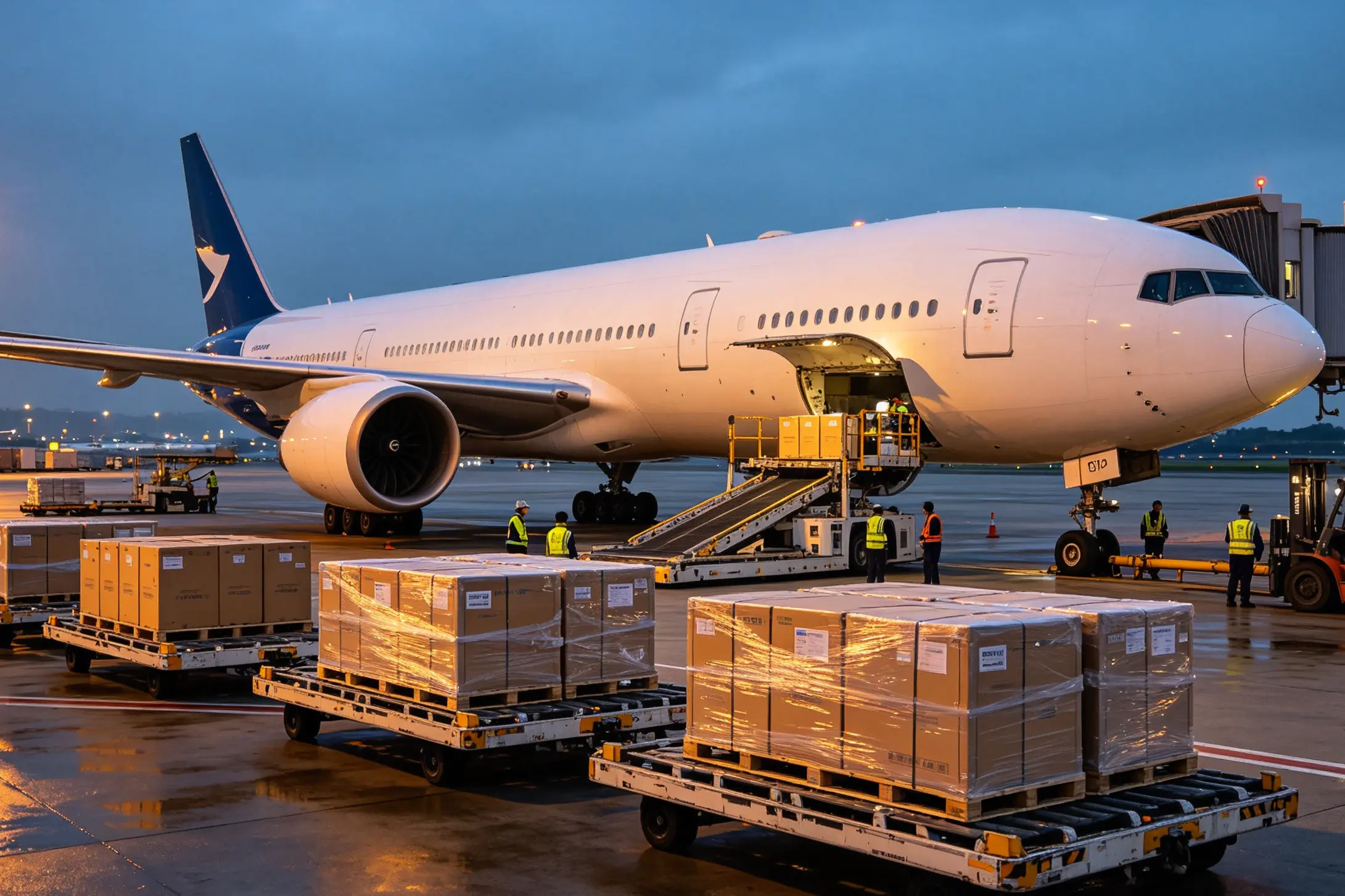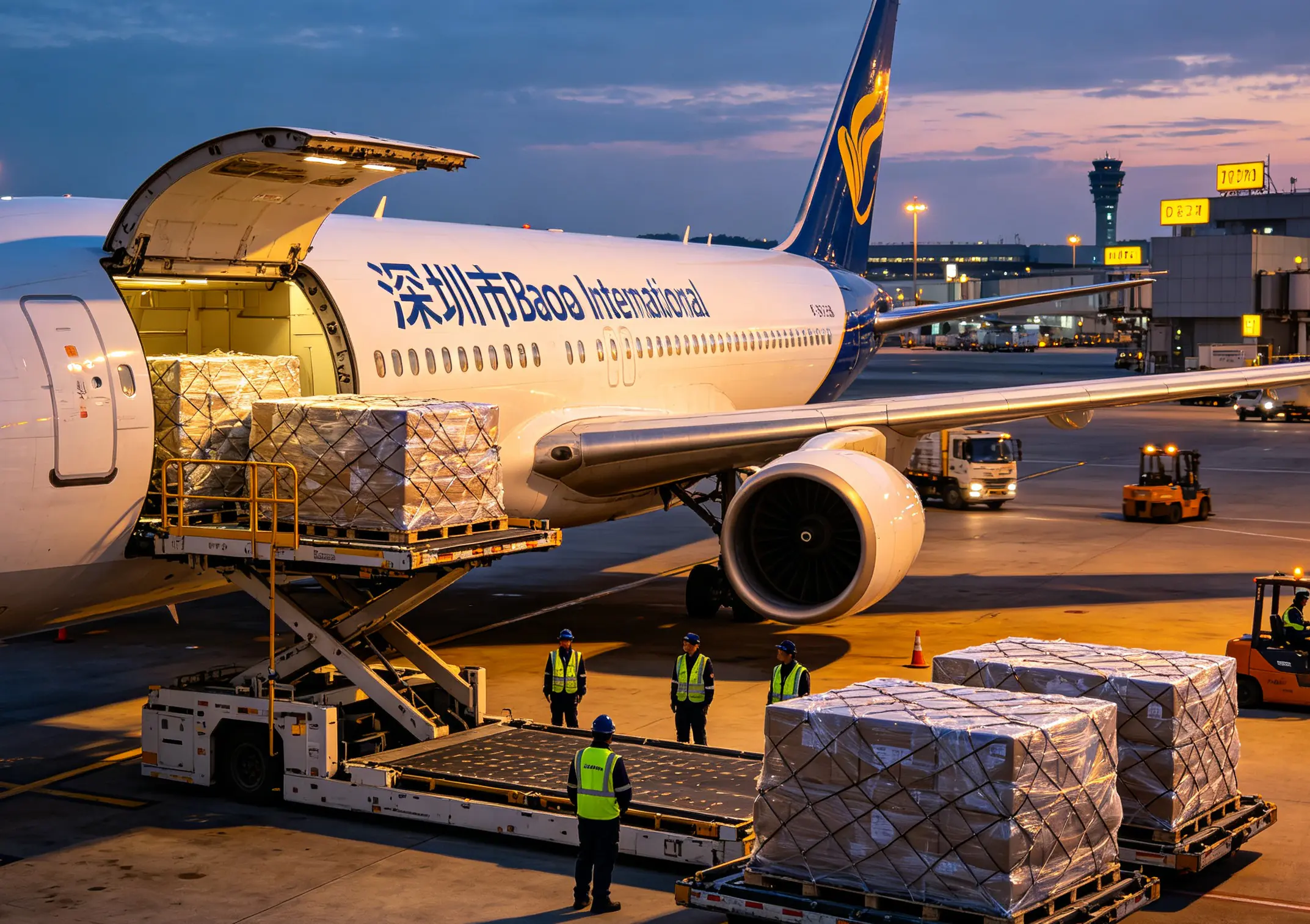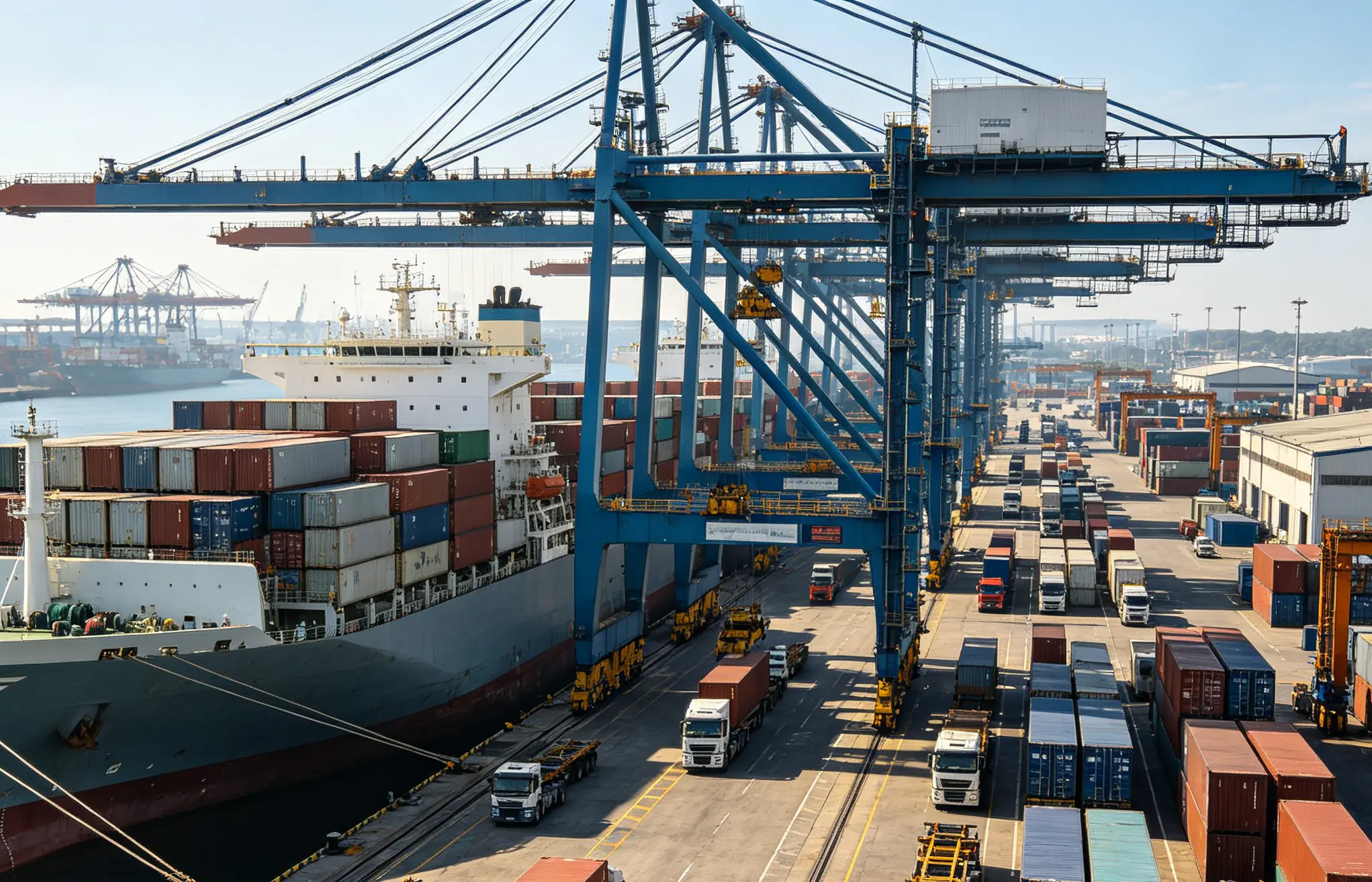
What is the safest and most cost-effective way to ship air conditioners from China to the UK in 2026? Most importers find that sea freight (FCL or LCL) is the best balance of cost and capacity, with port-to-port transit times of 25–45 days and total landed cost driven by the product value, freight rate, UK import duty under HS Code 8415, and 20% import VAT. However, air conditioners are bulky, fragile, and often contain refrigerants that trigger strict UK F-Gas and safety rules—so choosing the wrong shipping method or paperwork can turn a profitable order into an expensive customs delay.
At Efanda Logistics, we have helped UK importers move everything from split-system residential units to commercial HVAC systems out of Shenzhen, Foshan, and Guangzhou. In this guide, we break down the real 2026 costs, transit times, Incoterms, packaging requirements, and UK compliance steps you need to know before you book your first—or next—air conditioner shipment from China. For a wider view of this trade lane beyond HVAC, see our complete guide to shipping from China to the UK.
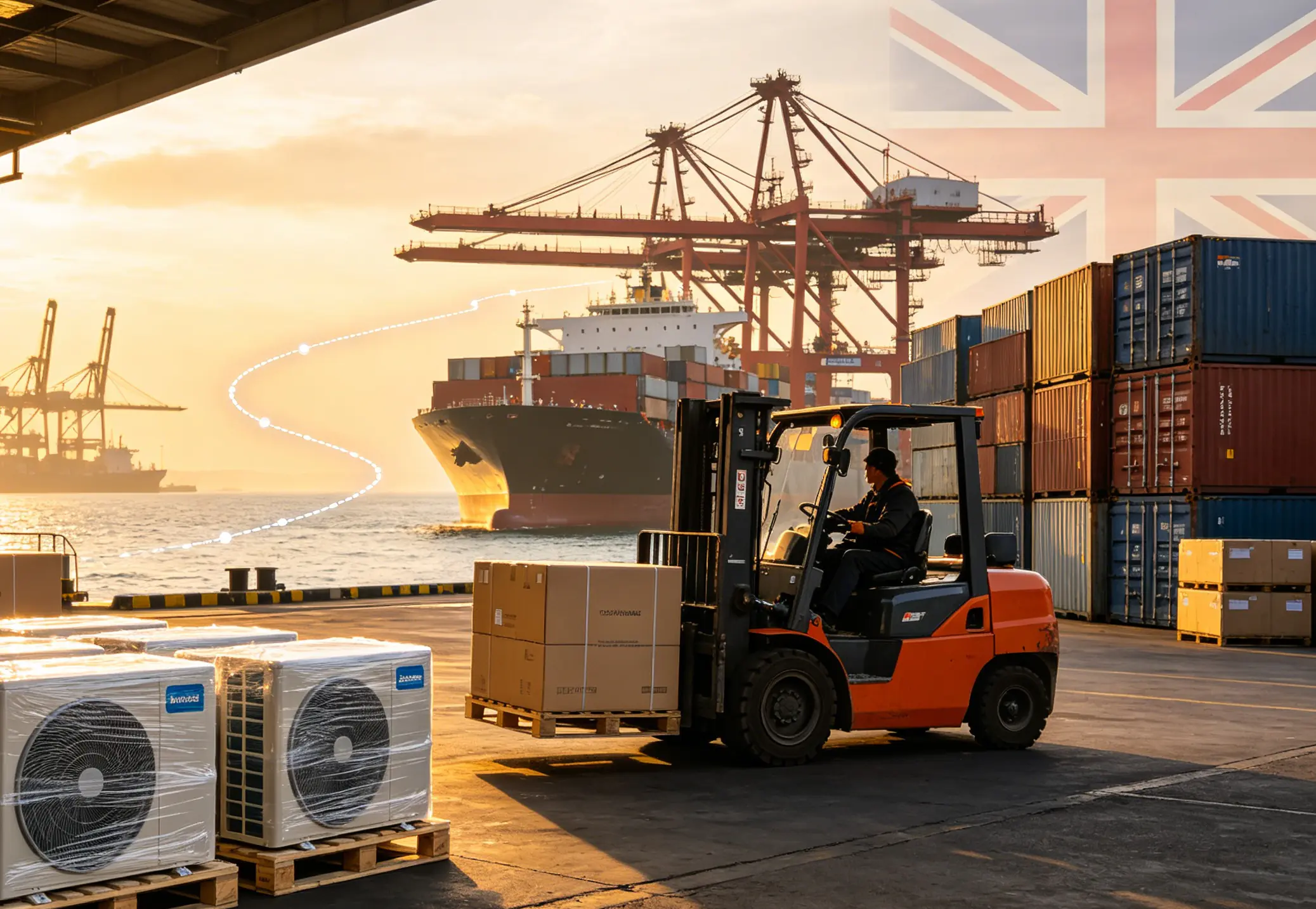
What Types of Air Conditioners Do Importers Ship from China?
China is the world’s largest producer and exporter of air conditioning equipment. In 2024, Chinese air conditioner exports reached approximately $26.2 billion, supported by a complete supply chain covering compressors, condensers, copper tubing, motors, and controllers.
UK importers typically source one or more of the following product types:
- Split-system air conditioners (the most common residential and light-commercial import)
- Window air conditioners
- Portable air conditioners
- Cassette/ceiling-mounted units
- Floor-standing units
- Multi-split and VRF systems
- Heat pumps (many UK buyers now source these under the same supplier base)
Understanding which category you are importing matters because it determines the correct HS Code, the applicable UK duty rate, and whether special refrigerant rules apply.
Major Air Conditioner Manufacturing Bases in China
Proximity to the right production cluster can reduce inland trucking time and cut your EXW pickup cost. Most air conditioner production is concentrated in South and East China, close to major ports.
| Manufacturing Hub | Main Air Conditioning Products | Nearest Major Ports |
|---|---|---|
| Foshan | Residential AC, split systems | Shenzhen, Guangzhou |
| Zhongshan | Split AC, commercial AC | Shenzhen, Guangzhou |
| Guangzhou | HVAC equipment, commercial units | Guangzhou, Shenzhen |
| Shenzhen | Smart/inverter AC, connected HVAC | Shenzhen, Hong Kong |
| Ningbo | Heat pumps, export-oriented units | Ningbo, Shanghai |
| Qingdao | Household appliances, window units | Qingdao |
| Hefei | Residential and commercial AC | Shanghai, Ningbo |
| Suzhou | Industrial cooling equipment | Shanghai |
If your supplier is based in the Pearl River Delta—Foshan, Zhongshan, or Guangzhou—you benefit from fast pickup and consolidation through Shenzhen or Guangzhou, the same logistics corridor Efanda Logistics uses every day.
How Much Does It Cost to Ship Air Conditioners from China to the UK?
The cost to ship air conditioners from China to the UK depends on the transport mode, shipment volume, season, fuel surcharges, and whether you need a door-to-door DDP service. The figures below are market indications for July 2026 and should be confirmed with a live quote because ocean and air rates can move 20–30% within a single month. You can also benchmark them against general shipping cost from China to the UK figures across all cargo types.
| Shipping Mode | Typical Cost | Port-to-Port Transit | Best For |
|---|---|---|---|
| Sea Freight FCL 20GP | $2,790–$3,410 | 25–28 days | 20–28 CBM of AC units |
| Sea Freight FCL 40HQ | $5,085–$6,215 | 25–28 days | 40–58 CBM of AC units |
| Sea Freight LCL | $55–$90 per CBM | 30–45 days | 1–13 CBM |
| Rail Freight 20GP | $4,554–$5,566 | 13–14 days | Mid-volume, time-sensitive cargo |
| Air Freight | ~$7.00 per chargeable kg | 5–8 days | Urgent or high-value samples |
| Express Courier | $12.59+ per kg | 5–9 days | Small samples or documents |

For context, a typical split-system indoor unit plus outdoor unit occupies roughly 0.15–0.25 CBM. That means a 20GP container can hold roughly 100–160 split sets, depending on packaging density, while a 40HQ can carry 200–320 sets.
Do Not Forget the Extra Charges
A headline freight rate is never the full story. Budget for:
- Origin charges: trucking, export customs declaration, terminal handling (THC), loading
- Ocean/air surcharges: BAF/CAF, peak-season surcharges, war-risk or route diversions (Cape of Good Hope routing has added 10–14 days on some services)
- Destination charges: UK port handling, unloading, customs clearance admin, inspection fees
- Inland delivery: haulage from Felixstowe, Southampton, or London Gateway to your warehouse
At Efanda Logistics, we quote all-in DDP pricing and door-to-door shipping whenever possible so you know your true landed cost before the goods leave the factory.
How Long Does Shipping Air Conditioners from China to the UK Take?
For most bulk air conditioner orders, you should plan on 38–55 days door-to-door by sea. Air freight cuts that to roughly 8–12 days door-to-door, but the cost is usually too high for full-volume orders. For a mode-by-mode breakdown, see our guide on how long shipping takes from China to the UK.
| Shipping Mode | Port-to-Port | Door-to-Door | Notes |
|---|---|---|---|
| Sea FCL | 25–35 days | 38–50 days | Most economical for volume |
| Sea LCL | 30–45 days | 42–55 days | Adds consolidation/deconsolidation time |
| Rail | 13–14 days | 18–25 days | Stable alternative when sea rates spike |
| Air Freight | 5–8 days | 8–12 days | Best for samples or urgent stock |
| Express | 2–4 days | 3–6 days | Only viable for very small shipments |
Remember to add buffer time during peak seasons (July–September and pre-Chinese New Year) and when vessels are rerouted around the Cape of Good Hope. We recommend locking in quotes 2–3 weeks before your intended departure and confirming validity.
Sea Freight vs Air Freight: Which Is Better for Air Conditioners?
For air conditioners, sea freight is almost always the better choice. Air conditioners are large, relatively heavy, and moderately priced—so the air freight cost per unit can erase your margin. Our detailed sea freight vs air freight comparison breaks down when each mode wins. Air freight should be reserved for:
- Urgent replacement stock during a heatwave spike
- High-end or high-value samples for certification
- Small pilot orders before a larger FCL commitment
Use this simple decision framework:
| Factor | Choose Sea Freight | Choose Air Freight |
|---|---|---|
| Shipment volume | > 2 CBM or > 100 kg | < 2 CBM or < 100 kg |
| Unit value | Standard consumer/residential AC | Premium or commercial units |
| Timing | Can wait 35–50 days | Need stock within 7–10 days |
| Margin sensitivity | Tight margins | Margin can absorb air cost |
| Refrigerant concerns | Easier to document for sea | More restricted for some refrigerants |
If you are unsure, a freight forwarder can model both options using your actual carton dimensions and weight.
FCL or LCL: What Is the Break-Even Point?
The standard FCL vs LCL break-even point for China–UK routes is around 13–15 CBM. Below that, LCL is usually cheaper; above it, a 20GP container gives you more control and lower risk of damage from co-loading.
| Container Type | Usable Volume | Approximate Split-AC Sets* | Typical Use Case |
|---|---|---|---|
| 20GP | ~28 CBM | 110–180 sets | Single mid-size order |
| 40HQ | ~58 CBM | 230–380 sets | Large seasonal stock-up |
| LCL | Per CBM | Varies | Small orders or mixed SKUs |
*Assumes 0.15–0.25 CBM per split set; actual count depends on packaging.
For air conditioners, FCL is often preferable because it reduces handling points, lowers the risk of crushing in a shared container, and makes it easier to control humidity.
UK Import Duty, VAT, and HS Codes for Air Conditioners
When you import air conditioners from China to the UK, you must classify the goods under HS Code 8415 (air conditioning machines). The exact subheading and duty rate depend on the product type.
| Product Category | Common UK HS Code | Typical UK Import Duty | Import VAT |
|---|---|---|---|
| Window/wall air conditioners | 8415.10.10 / 8415.10.90 | Often 0–2.5% | 20% |
| Split-system air conditioners | 8415.10.90 variants | Often 0–2.5% | 20% |
| Vehicle air conditioners | 8415.20 | Check Trade Tariff | 20% |
| Other AC machines (parts) | 8415.81 / 8415.82 | Check Trade Tariff | 20% |
Always verify the exact code and duty rate in the UK Government Trade Tariff before shipping, because classifications change and anti-dumping duties can apply to some HVAC products. For a full walkthrough of rates and calculations, read our guide to import duties and taxes from China to the UK.
How UK Import VAT and Duty Are Calculated
You will need a GB EORI number to import. Duty is usually calculated on the CIF value (cost of goods + insurance + freight). VAT is then applied to the CIF value plus duty.
Example: CIF shipment of split air conditioners
| Cost Item | Amount |
|---|---|
| Product value | £20,000 |
| Freight & insurance to UK port | £3,000 |
| CIF value | £23,000 |
| Import duty at 2.5% | £575 |
| VAT base (CIF + duty) | £23,575 |
| Import VAT at 20% | £4,715 |
| Estimated landed cost before local delivery | £28,290 |
If you purchase under FOB terms, duty is calculated only on the goods value (not freight/insurance). If you are weighing your options, our FOB vs CIF breakdown explains how each term affects your landed cost. Under DDP, your freight forwarder pre-pays duty and VAT and invoices you later, usually adding a clearance administration fee. Many importers prefer DDP for simplicity and cash-flow predictability.
VAT-registered businesses can use Postponed VAT Accounting to defer import VAT and recover it later through the C79 certificate, which improves cash flow.
UK Compliance: UKCA, Energy Labels, and F-Gas Regulations
This is where many first-time importers get caught out. Air conditioners are regulated electrical products, and units containing refrigerants must comply with UK F-Gas rules.
Essential UK Compliance Checklist
| Requirement | Why It Matters |
|---|---|
| UKCA or CE marking | Demonstrates conformity with UK safety, EMC, and low-voltage regulations |
| Energy efficiency label | Mandatory for many residential AC units sold in the UK |
| F-Gas registration | Required if you import pre-charged equipment containing HFC refrigerants |
| WEEE compliance | Electrical equipment must meet waste and recycling obligations |
| GB EORI number | Required to clear goods through UK customs |
| HMRC CDS declaration | UK customs declarations must be submitted through the Customs Declaration Service |
F-Gas Rules You Must Understand
Air conditioners containing HFC refrigerants such as R32 or R410A fall under UK F-Gas Regulation. Key points for 2026:
- The UK has capped and is reducing HFC quotas, which affects the supply of high-GWP refrigerants.
- Pre-charged equipment may require registration and compliance documentation before import.
- Mobile air conditioners with refrigerant charges above certain limits have been restricted.
- HCFC refrigerants (such as R22) are banned in the UK/EU.
Failure to comply can result in goods being held at the border, fines, or forced return to China. We strongly recommend that importers obtain full refrigerant declarations and certificates from the supplier before booking cargo.
How to Pack Air Conditioners for International Shipping
Air conditioners are high-value, easily damaged goods. The wrong packaging can lead to dented panels, cracked copper lines, or compressor damage.
Our standard recommendations:
- Keep original factory cartons whenever possible; they are designed for stacking and handling.
- Use wooden pallets for every stack; never ship loose cartons on LCL.
- Shrink-wrap and strap each pallet to prevent shifting.
- Add moisture absorbers inside containers to protect against sea condensation.
- Use wooden crates for large commercial units or VRF outdoor units.
- Label clearly with handling instructions, product model, serial numbers, and UK destination.
For units containing refrigerants, your supplier should also provide:
- Material Safety Data Sheet (MSDS) for the refrigerant
- Dangerous goods classification report if applicable
- Refrigerant type and charge weight on the packing list
These documents may be required by the carrier, the port, or UK customs.
Step-by-Step: How to Ship Air Conditioners from China to the UK
Here is the complete flow we manage for Efanda clients:
- Confirm supplier terms and Incoterms
Decide whether you will buy EXW, FOB, CIF, or DDP. FOB is common for experienced importers; DDP is best if you want one invoice and no surprises. - Verify product compliance
Confirm UKCA/CE marking, energy labels, F-Gas registration, and refrigerant documentation before production finishes. - Arrange pickup and export clearance
Your freight forwarder collects the goods, verifies the commercial invoice and packing list, and files the China export declaration. - Book ocean or air freight
Choose FCL, LCL, or air based on volume, timing, and budget. Confirm sailing schedule and quote validity. - UK import customs clearance
Submit the declaration through HMRC CDS using the correct HS Code, EORI number, and duty/VAT payment method. - Inland delivery
Truck the container from Felixstowe, Southampton, or London Gateway to your warehouse, Amazon FBA depot, or installer. Many air conditioner shipments arrive on Shanghai to Felixstowe sailings.
For Amazon FBA sellers, this same flow can be adapted with FBA-compliant labeling, palletizing, and direct delivery to Amazon UK fulfillment centers.
Common Mistakes When Shipping Air Conditioners to the UK
Avoid these costly errors:
- Using the wrong HS Code: A misclassification can trigger duty reassessment and penalties.
- Ignoring F-Gas compliance: Pre-charged units can be refused entry without proper registration.
- Buying CIF without reading the fine print: CIF may leave you responsible for expensive destination charges.
- Skipping cargo insurance: AC units are high-value and vulnerable to moisture and impact damage.
- Waiting too long to book in peak season: July–September demand can double lead times and rates.
Why UK Importers Choose Efanda Logistics for Air Conditioner Shipments
Shipping air conditioners from China to the UK is not just about finding the cheapest ocean rate. It is about matching the right transport mode, managing refrigerant compliance, protecting the cargo, and clearing customs without delays.
At Efanda Logistics, we offer:
- End-to-end solutions from factory pickup in Foshan, Zhongshan, Guangzhou, or Shenzhen to UK doorstep delivery
- Transparent, all-in pricing with no hidden destination fees
- Experienced customs support for HS Code 8415 and F-Gas documentation
- Dedicated logistics specialists who track every shipment and alert you to delays
- DDP, FCL, LCL, and air freight options tailored to your order size and timeline
Founded in 2018 and headquartered in Shenzhen, we sit at the heart of South China’s air conditioner manufacturing region. Whether you are importing your first pallet of split units or scaling up to full-container loads, we can help you ship air conditioners from China to the UK safely, compliantly, and on budget.
FAQ
What is the cheapest way to ship air conditioners from China to the UK?
For most importers, LCL or FCL sea freight is the cheapest option. LCL works below 13–15 CBM; FCL becomes more economical above that threshold.
How long does it take to ship air conditioners from China to the UK?
Sea freight typically takes 25–45 days port-to-port and 38–55 days door-to-door. Air freight takes 5–8 days port-to-port and 8–12 days door-to-door.
What HS code is used for air conditioners imported into the UK?
Most air conditioners fall under HS Code 8415. Split and window units commonly use subheadings such as 8415.10. Always confirm the exact code in the UK Trade Tariff.
Do I need F-Gas registration to import air conditioners into the UK?
If you import pre-charged equipment containing HFC refrigerants such as R32 or R410A, you likely need to comply with UK F-Gas Regulation, which may include registration and quota considerations.
Is air freight or sea freight better for air conditioners?
Sea freight is better for volume orders because of lower cost. Air freight is only practical for urgent samples, small high-value orders, or emergency stock replenishment.
Can I ship air conditioners with refrigerant by sea?
Yes, but you must provide the correct documentation, including an MSDS, refrigerant type and weight, and any required dangerous goods classification. Your freight forwarder can confirm carrier acceptance.
Do I pay import VAT when importing air conditioners from China?
Yes. The standard UK import VAT rate is 20%, applied to the goods value plus duty and shipping. VAT-registered businesses can use Postponed VAT Accounting to defer payment.
What documents are needed to ship air conditioners from China to the UK?
Typically: commercial invoice, packing list, bill of lading or air waybill, certificate of origin (if required), compliance certificates (UKCA/CE, energy label), and refrigerant/MSDS documentation.
Disclaimer: The freight rates and transit times in this guide are indicative market figures for July 2026 and are subject to change. Always request a live quote and confirm the latest UK duty rates, VAT rules, and F-Gas requirements with HMRC or a qualified customs broker before shipping.