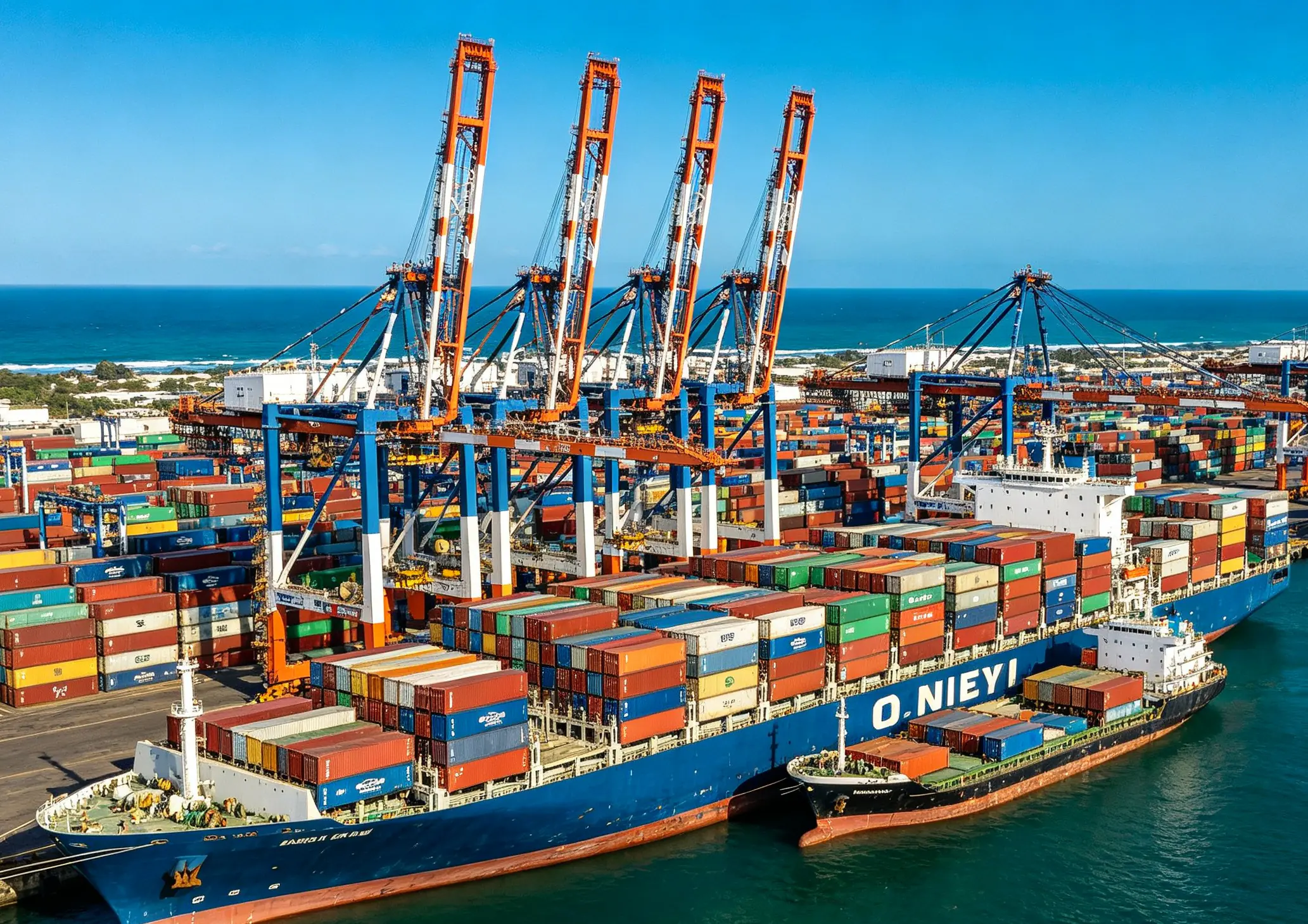
How much will it cost, how long will it take, and will your shipment clear UK customs without getting stuck at the border? These are the three questions every Amazon seller asks before moving inventory from a Chinese factory to a UK fulfilment centre — and since Brexit, the answers have become significantly more complicated.
Amazon FBA shipping from China to the UK currently costs between $50–$80 per CBM for sea freight LCL and $6–$10 per kg for air freight (as of Q3 2026), with door-to-door transit times ranging from 3 days (express courier) to 45 days (ocean LCL). But price and speed are only half the equation. Since January 2026, UK regulators have enforced a compliance framework — UKCA certification, GB EORI numbers, mandatory VAT registration, Import Entry Numbers (IEN), and a designated UK Responsible Person — that can stop your shipment before it ever reaches an Amazon warehouse.
In this guide, we break down current freight rates across five shipping modes, walk through the full customs compliance checklist, compare DDP vs DAP Incoterms, detail Amazon’s 2026 packaging and labelling requirements, and flag the six mistakes that cost FBA sellers the most money. Whether you’re launching your first product or scaling an established UK storefront, this is the operational blueprint you need.
Disclaimer: Freight rates and transit times cited in this article reflect market conditions as of Q3 2026. Ocean and air freight prices fluctuate significantly due to fuel costs, geopolitical disruptions (including Red Sea routing changes), and seasonal demand. Always request a current quote before booking.
How Much Does Amazon FBA Shipping from China to the UK Cost?
The short answer: sea freight LCL runs $50–$80 per CBM, a full 40HQ container costs $3,000–$4,500, air freight averages $6–$10 per kg, and express courier services range from $8–$15 per kg — all figures as of Q3 2026 and subject to market volatility. Rail freight sits between sea and air at roughly $80–$120 per CBM. For a deeper dive into ocean pricing, see our guide to sea freight from China; for air cargo specifics, our air freight from China service page outlines routing and surcharge details.
The mode you choose depends on your shipment volume, margin structure, and how urgently you need the stock live on Amazon. Here’s how the five primary options compare:

| Shipping Method | Pricing Unit | Cost Range (Q3 2026) | Door-to-Door Transit | Best For | Main Limitations |
|---|---|---|---|---|---|
| Sea Freight (LCL) | $/CBM | $50–$80/CBM | 30–45 days | Mixed-SKU restocks under 15 CBM | Consolidation delays, destination CFS fees |
| Sea Freight (FCL 40HQ) | Per container | $3,000–$4,500 | 28–38 days | High-volume, predictable replenishment | Demurrage & detention, capital tied up in inventory |
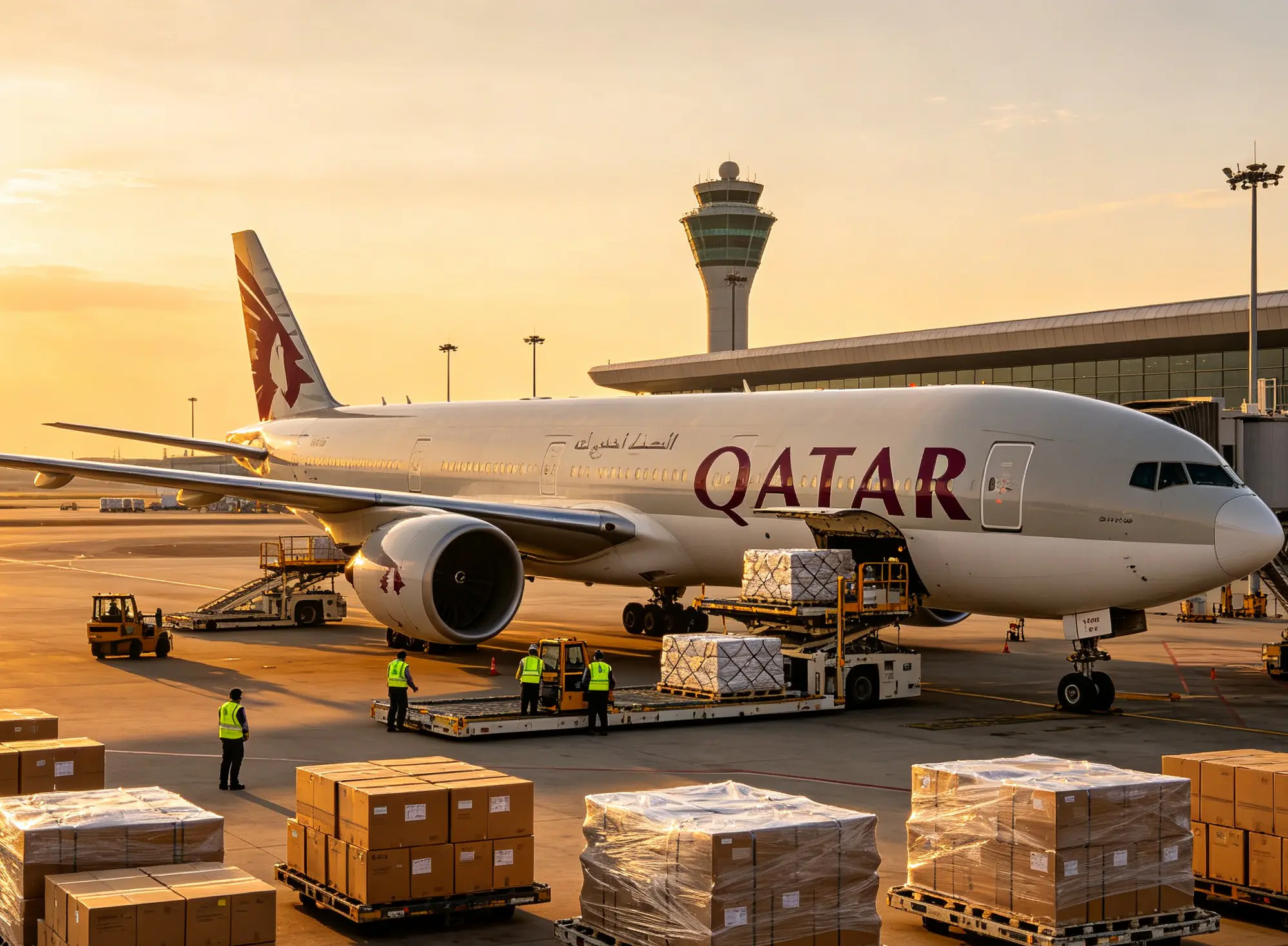
| Air Freight | $/kg | $6–$10/kg | 5–10 days | High-value, urgent top-ups | Volumetric weight billing, fuel surcharges |
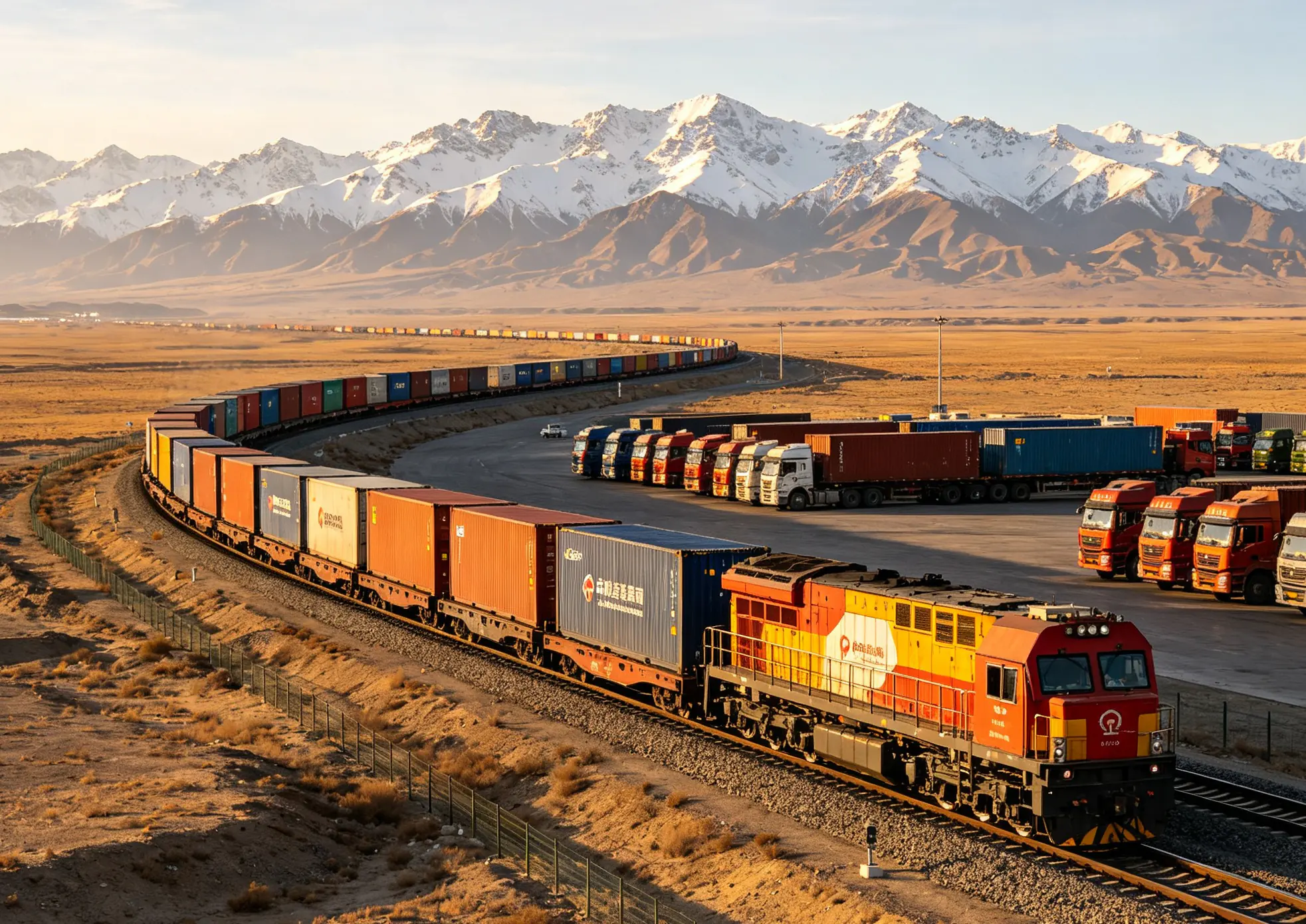
| Rail + UK Truck | $/CBM | $80–$120/CBM | 18–28 days | Mid-speed, mid-cost bulk cargo | Capacity constraints, border transhipment |
| Express Courier (DDP) | $/kg | $8–$15/kg | 3–7 days | Samples, small trial orders | Highest per-kg cost, strict size limits |
Hidden Costs to Watch For
The base freight rate is rarely the final number. Budget for these additional charges:
- Origin charges: THC (Terminal Handling Charge), documentation fees, customs declaration
- Destination charges: UK port handling, CFS deconsolidation (LCL), customs brokerage
- Duties and taxes: Import duty (0–25% depending on HS Code) plus 20% UK VAT on the total of goods value + shipping + duty
- FBA delivery: Appointment booking and last-mile trucking to the fulfilment centre
Our Industry Insight: The difference between a $3,000 and a $4,200 quote for the same 40HQ container is rarely the ocean freight itself — it’s the surcharge stack. At our Shenzhen warehouse, we itemise every fee before loading so sellers know their true landed cost before the vessel sails, not after it arrives.
Actionable tip: Lock rates during the February–April low season and avoid shipping during the Q4 peak (August–October), when rates typically climb 15–25% ahead of Black Friday and Christmas.
How Long Does FBA Shipping from China to the UK Take?
Door-to-door, you’re looking at 3 days minimum (express courier) to 45 days maximum (ocean LCL) — but the mode is only part of the story. Here’s how the timeline actually breaks down across each stage:
| Stage | Duration | Responsible Party |
|---|---|---|
| Factory pickup → Shenzhen consolidation | 1–3 days | Freight forwarder |
| Export clearance + container loading | 3–7 days | Freight forwarder / customs broker |
| Main transit (ocean / air / rail) | 3–38 days (mode-dependent) | Carrier |
| UK import clearance (CDS declaration) | 24–48 hours (documents complete) | UK customs broker |
| FBA appointment + final delivery | 3–7 days | Forwarder’s UK agent |
Four variables consistently stretch these estimates:
- Customs inspection probability: Random inspections add 3–10 days. Incomplete HS Code documentation is the most common trigger.
- FBA appointment availability: During Q4, appointment slots at major UK fulfilment centres (LTN, BHX, MAN, EMA) can book out two weeks in advance.
- Port of origin congestion: Yantian and Ningbo move faster than secondary ports during peak weeks. If you’re comparing UK entry ports with Continental alternatives, our overview of shipping from China to the Netherlands covers Rotterdam routing for EU-bound inventory.
- UK destination port: Felixstowe handles the highest volume and occasionally backs up; Southampton and London Gateway often offer faster turnaround for time-sensitive cargo.
Real-Life Scenario: A UK-based seller shipping 12 CBM of home goods via LCL from Shenzhen to a fulfilment centre in Luton planned for 38 days door-to-door. A last-minute HS Code correction request from HMRC added 5 days at the border, and a missed 72-hour FBA appointment window added another 4. Total: 47 days. The seller’s buffer formula — daily sales velocity × (transit time + 7 days) — absorbed the delay without a stockout. Without that buffer, they’d have lost their Best Seller rank.
Actionable tip: Calculate your safety stock as daily sales × (door-to-door transit + 7-day buffer). For ocean freight, that means keeping 45–55 days of inventory either in transit or at the FBA warehouse.
UK Customs, VAT & Compliance Checklist for FBA Shipments (2026)
Since Brexit, the UK operates its own customs framework entirely separate from the EU — and in 2026, enforcement has tightened considerably. Before your cargo leaves China, you need five compliance items in place:

| Compliance Item | Applies To | Processing Time | Consequence If Missing | Who Arranges |
|---|---|---|---|---|
| UKCA certification | Electronics, toys, cosmetics, PPE (CE no longer valid in GB) | 2–6 weeks | Shipment detained at UK customs | Manufacturer / testing lab |
| GB EORI number | All commercial imports | Instant–5 business days | Cannot clear customs | Seller / importer |
| UK VAT registration | Mandatory for all FBA sellers (no threshold) | 4–8 weeks | Cannot create FBA shipment plans | Seller (via HMRC) |
| IEN (Import Entry Number) | Every individual shipment | Issued by HMRC post-clearance | Amazon restricts new shipment creation | Carrier / customs broker |
| UK Responsible Person | Non-UK goods entering UK storage (mandatory since 2026-01-06) | Must be arranged before shipping | Container can be returned | UK authorised representative |
Handling the 20% Import VAT: Three Options
- PVA (Postponed VAT Accounting) — our recommendation for most sellers. You clear goods using your own EORI and VAT numbers but defer the VAT payment to your quarterly return, where it’s claimed back as input tax. No cash tied up at the border. For broader guidance on UK-bound customs procedures, see our dedicated resource on shipping from China to the UK.
- Cash payment at import — straightforward but ties up working capital.
- DDP via your freight forwarder — the forwarder’s UK entity pays duty and VAT on your behalf. Convenient, but verify the IOR is a legitimate UK entity and request a tax payment receipt.
The IEN Upload Process
After UK customs clearance, your carrier or broker provides the C88 customs entry document, which contains your IEN. Upload this to Seller Central within 7 days. Amazon cross-references IENs electronically with HMRC — missing or duplicate numbers trigger shipment plan restrictions.
Our Industry Insight: HMRC has been running reverse audits on shared VAT numbers used by budget forwarders. In 2026, if a forwarder’s shared VAT number gets flagged, every shipment linked to it — including yours — can be held. We clear every client’s goods under their own EORI and VAT details. It takes more coordination, but it’s the only approach we’d trust with our own inventory.
Actionable tip: Start your EORI and VAT registration at least 8 weeks before your first shipment. HMRC processing delays are the single most common reason new sellers push back their UK launch.
DDP vs DAP: Which Incoterm Should FBA Sellers Choose?
For most China-based sellers without a UK legal entity, DDP (Delivered Duty Paid) is the practical choice — your freight forwarder acts as importer of record, pays all duties and VAT, and delivers directly to the Amazon fulfilment centre via a door-to-door shipping from China service. Sellers with an established UK company and in-house tax capability should consider DAP (Delivered at Place) paired with PVA for better cash flow and tax record control.
| Factor | DDP (Delivered Duty Paid) | DAP (Delivered at Place) |
|---|---|---|
| Importer of Record (IOR) | Forwarder / seller’s designated entity | Buyer / UK entity |
| Duty + 20% VAT | Included in the quote | Paid by buyer at import |
| Compliance burden | Forwarder manages clearance | Buyer manages clearance |
| Cash flow | Simple — one all-in price | PVA defers VAT; better cash flow |
| Best for | Sellers without a UK entity; first-time shippers | UK-registered companies with tax teams |
Five Things to Verify in Any DDP Quote
- Who is the IOR? It must be a legitimate, verifiable UK entity — not an anonymous shelf company.
- Does the quote itemise duty and VAT? A lump sum with no breakdown is a red flag.
- Is a Power of Attorney (POA) included? Your broker needs documented authorisation to act on your behalf.
- Are FBA appointment and delivery fees included? Some quotes stop at the UK port.
- What insurance coverage applies? Standard carrier liability is rarely sufficient for full-value cargo. Ask about cargo insurance services with a defined claims process before you load.
Actionable tip: Reject any DDP quote that can’t itemise freight, duty, VAT, and delivery as separate line items. Transparency in the quote predicts transparency in the operation.
Amazon FBA Packaging, Labeling & Delivery Requirements (2026 Updates)
Amazon has materially tightened its receiving requirements over the past 12 months. The changes that matter most for China-origin shipments:
| Requirement | 2026 Rule | Penalty for Non-Compliance |
|---|---|---|
| FNSKU labels | Mandatory on every unit since 2026-03-31 (sticker-less commingled inventory discontinued) | Rejection, return to sender |
| Carton dimensions | No side exceeding 63.5 cm | Rejection at FC dock |
| Carton weight | Maximum 23 kg; cartons over 15 kg need “Team Lift” + “Heavy Package” labels on all 5 faces | Manual handling surcharge |
| Carton barcode | 2D Data Matrix barcode format (from 2026-06-15, replacing 1D) | Scan failure, processing delay |
| Delivery appointment | Minimum 72 hours advance booking; cancellation triggers a 7-day rebooking ban | Delivery refused at gate |
| Poly bags | Minimum 1.5 mil thickness with suffocation warning | Rejection |
The Shenzhen Pre-Inspection Advantage
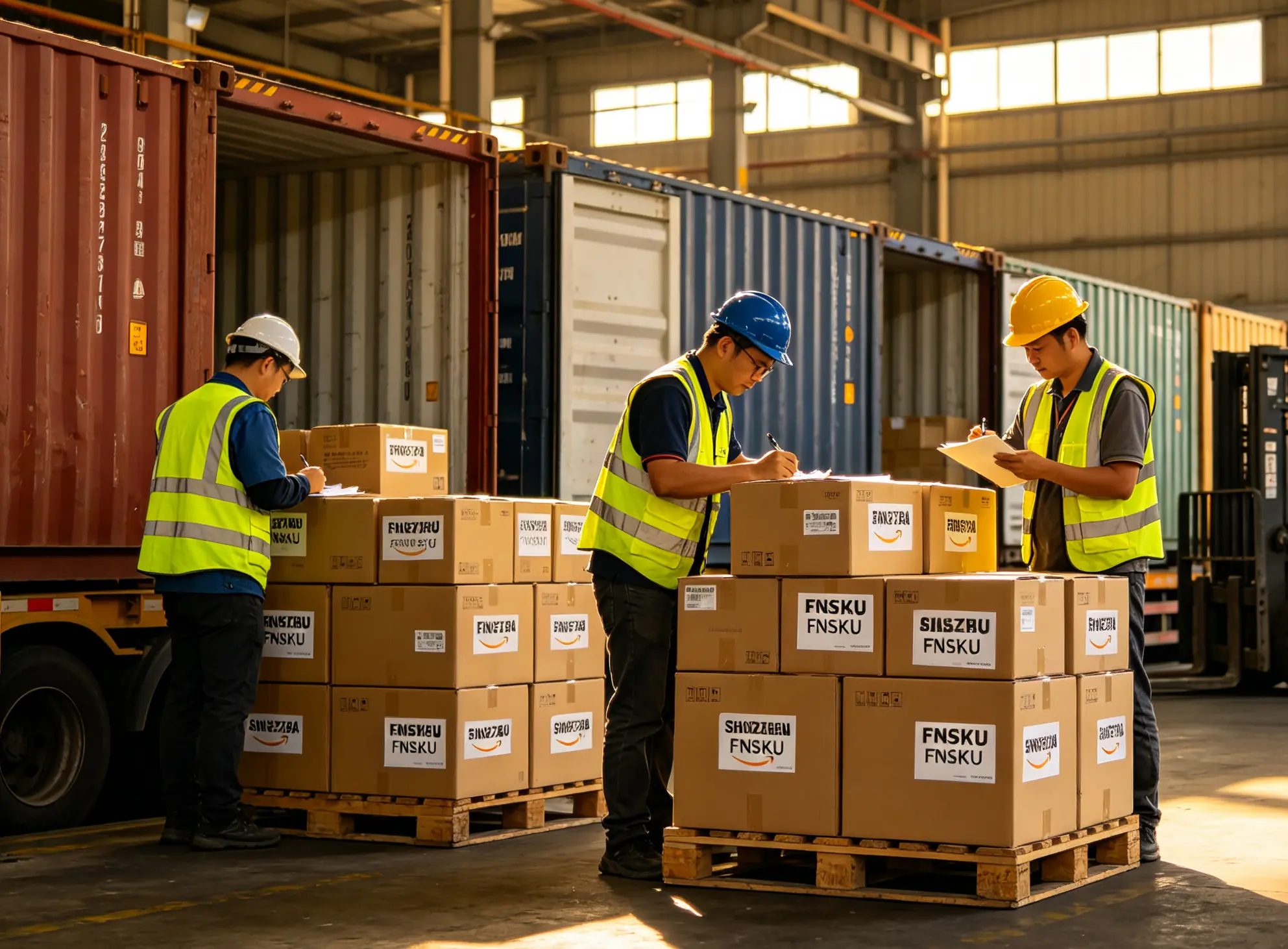
Fixing labelling errors in the UK costs $2–$5 per carton plus 5–10 days of rework time. Fixing them at a Shenzhen consolidation warehouse before export costs a fraction of that — and a photo-verified pre-shipment report gives you documentary proof of compliance. Our Amazon FBA service includes origin-side labelling, bundling, and pallet configuration as standard.
Real-Life Scenario: We recently managed a multi-container shipment for a multi-category seller — electronics, home goods, and pet products — all consolidated at our Shenzhen warehouse. Our team applied FNSKU labels, verified carton dimensions against Amazon’s 63.5 cm rule, and issued a photo report before loading. The containers cleared UK customs in under 36 hours and were received at the assigned fulfilment centres with zero rejection fees. The seller’s IPI score stayed above 550 throughout Q3.
Actionable tip: Require your forwarder to provide a photo pre-inspection report — labels, carton marks, pallet configuration — before the container is sealed. This single step eliminates the majority of FBA rejection scenarios.
Step-by-Step: From Your Chinese Factory to a UK FBA Warehouse
Here’s the complete eight-stage process, with responsibility at each step:

- Factory pickup — Your forwarder collects goods from your supplier’s facility in Shenzhen, Guangzhou, Yiwu, or elsewhere in China. Consolidation at a central hub is standard practice.
- Warehouse processing — Multi-supplier cargo is merged, quality-checked, FNSKU-labelled, and repacked if needed. This is where pre-compliance happens.
- China export clearance — Export customs declaration with verified HS Codes and accurate commercial documentation.
- Main transit — Ocean (LCL/FCL), air, or rail, per your mode selection.
- UK import clearance — CDS (Customs Declaration Service) entry submitted by the UK broker; EORI and IOR verified; duty and VAT assessed.
- IEN issuance — HMRC generates the Import Entry Number upon clearance.
- FBA delivery — 72-hour advance appointment booked; palletised cargo trucked to the assigned fulfilment centre.
- IEN upload + POD — IEN uploaded to Seller Central within 7 days; Proof of Delivery confirmed and archived.
Our Industry Insight: The physical journey is the easy part. What separates a smooth shipment from a stalled one is the data flow — invoice accuracy, HS Code logic, POA documentation, and appointment timing. We lock the document packet before the container leaves the warehouse. Late corrections are always slower, more expensive, and harder to coordinate across suppliers, brokers, and Amazon teams.
Actionable tip: Choose a forwarder that provides end-to-end milestone tracking — from origin warehouse receipt through final POD — so you can see stalled handovers before they become stockout emergencies.
Common Mistakes That Cost FBA Sellers Money (and How to Avoid Them)
Most first-leg shipping losses don’t come from freight rates — they come from preventable compliance and coordination errors. These six account for the overwhelming majority:
- Skipping UKCA certification → Arrange testing 6 weeks before your ship date. Electronics, toys, and cosmetics are the highest-risk categories.
- Failing to upload the IEN → Set a 7-day reminder from the clearance date. Amazon will restrict your ability to create new shipment plans until it’s resolved.
- FNSKU label errors (too small, covered by tape, smudged) → Use a professional labelling service at origin and request photo verification.
- Consignee name mismatch — If the IOR name on your customs entry doesn’t match your Amazon store’s legal entity, expect a 15-day hold. Verify alignment before booking.
- Late appointment booking — The 72-hour rule is a minimum, not a target. Start booking when the vessel departs China, not when it arrives in the UK.
- Using a forwarder’s shared VAT number → As covered above: HMRC reverse audits in 2026 make this a genuine account-level risk, not just a customs issue.
Actionable tip: Create a standardised compliance folder for every shipment — commercial invoice, packing list, HS Code notes, product compliance files, POA, and IOR documentation — stored in one accessible location. When customs or Amazon asks, you’re answering in minutes, not days.
Conclusion
Amazon FBA shipping from China to the UK comes down to three decisions: choose sea freight for base inventory and reserve air or express for urgent top-ups; treat UK compliance — UKCA, EORI, VAT, IEN, and your Responsible Person — as a prerequisite, not an afterthought, starting the process at least 8 weeks before your first shipment; and default to DDP with a transparent, itemised quote unless you have a UK entity capable of managing its own import declarations.
At Efanda Logistics, we’ve been handling China-to-UK FBA shipments from our Shenzhen headquarters since 2018. Our team manages the full chain — supplier pickup, consolidation, labelling, export clearance, ocean and air freight, UK customs, and final-mile FBA delivery — with transparent, itemised quotes and a dedicated logistics specialist tracking every milestone. We clear every shipment under our clients’ own EORI and VAT numbers, because that’s the only approach that holds up under HMRC’s 2026 enforcement environment. For sellers also building inventory across the Continent, we offer the same end-to-end Amazon FBA support for EU destinations, including shipping from China to Germany and shipping from China to France.
Freight rates will continue to fluctuate with global market conditions, and transit times will always carry some uncertainty. What you can control is preparation, documentation, and the quality of your logistics partner. If you’re planning your first — or next — FBA shipment to the UK, contact us for a free, itemised DDP quote and a transit plan built around your inventory runway.
FAQ
Do I need UKCA certification to ship from China to UK Amazon FBA?
Yes — for any product category that previously required CE marking. As of 2026, CE marks are no longer accepted in Great Britain. Electronics, toys, cosmetics, and personal protective equipment all require UKCA certification, with RoHS test reports needed for electronic goods. Arrange certification through an accredited testing lab at least 6 weeks before your ship date.
How long does it take to get an EORI number and VAT registration for UK FBA?
A GB EORI number is typically issued within 5 business days; UK VAT registration takes 4–8 weeks. You need both before your first shipment — Amazon requires VAT registration for all FBA sellers storing inventory in the UK, with no minimum revenue threshold. Start the process at least 8 weeks before your planned ship date.
Can I use my freight forwarder’s VAT number for UK customs clearance?
We strongly advise against it. HMRC has been conducting reverse audits on shared VAT numbers in 2026. If a forwarder’s number is flagged, every shipment linked to it can be held — and Amazon now cross-references importer data with Seller Central accounts, which can trigger a secondary review of your selling account. Always clear goods under your own EORI and VAT numbers.
What is the cheapest way to ship from China to Amazon FBA UK?
Ocean freight is consistently the lowest-cost option — LCL shipping from China to the UK runs $50–$80 per CBM for shipments under 15 CBM, or FCL (40HQ at $3,000–$4,500) for larger volumes. To reduce costs further, consolidate multiple suppliers’ goods into one shipment at a Shenzhen warehouse and book during the February–April low season.
What happens if I don’t upload my IEN to Amazon Seller Central?
Amazon will restrict your ability to create new FBA shipment plans until the IEN is uploaded and verified. HMRC cross-references IENs electronically, so missing or fabricated numbers are quickly flagged. Upload the IEN from your C88 customs entry document within 7 days of clearance.
Should I choose DDP or DAP for my first FBA shipment to the UK?
Choose DDP if you don’t have a UK legal entity — it’s the only practical way to act as importer without local presence, and a reputable forwarder will manage clearance, duties, and final delivery. Choose DAP + PVA if you have a UK-registered company with the capacity to manage customs declarations and quarterly VAT returns in-house.