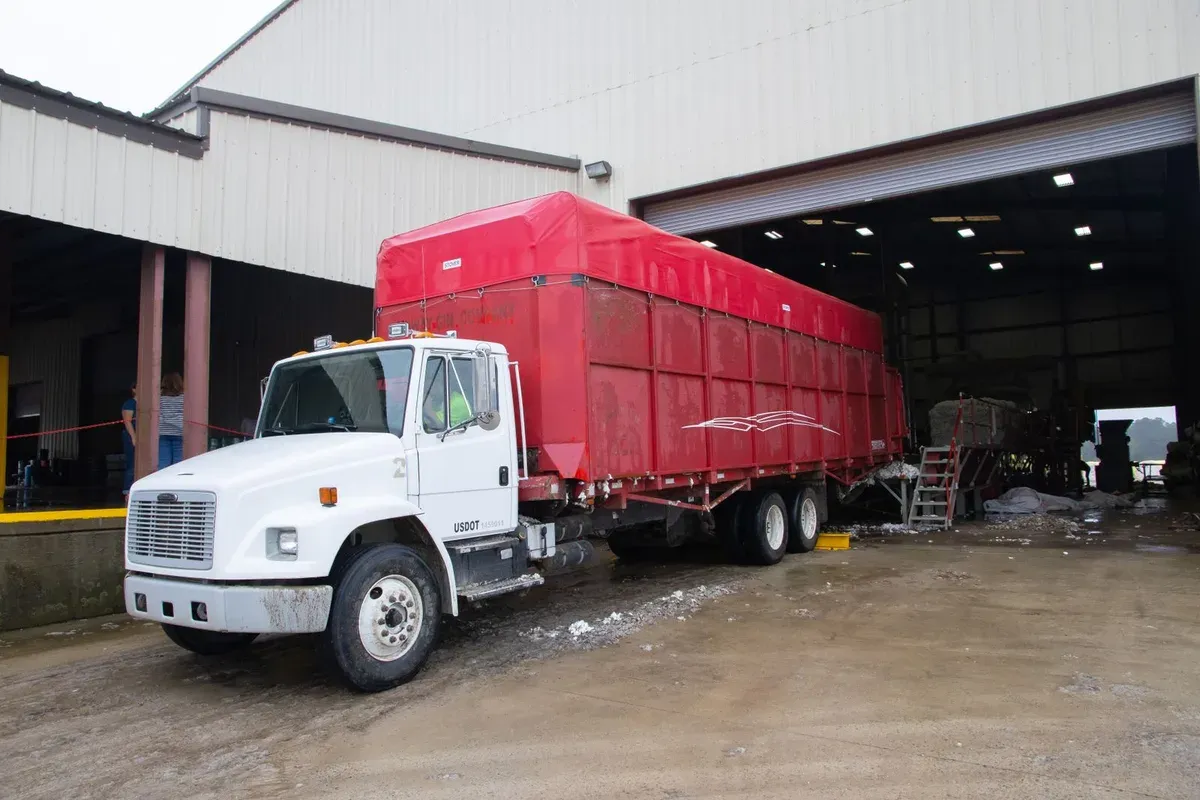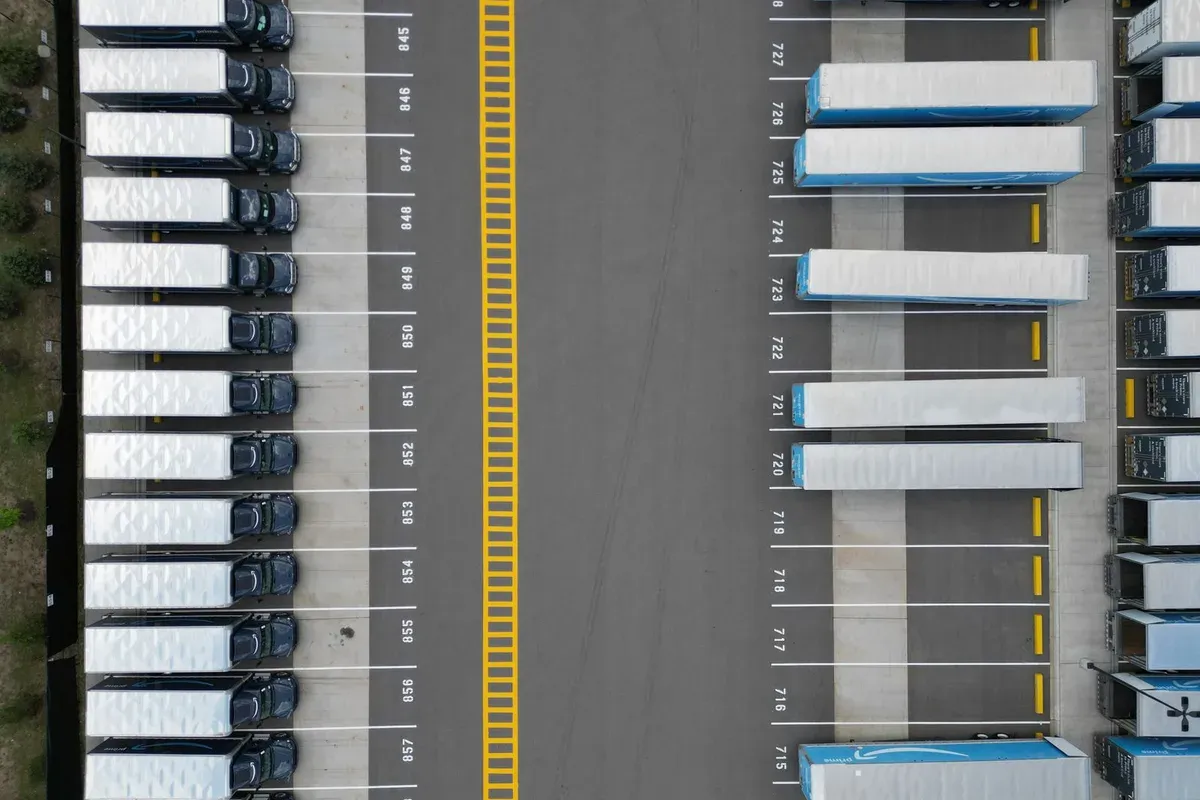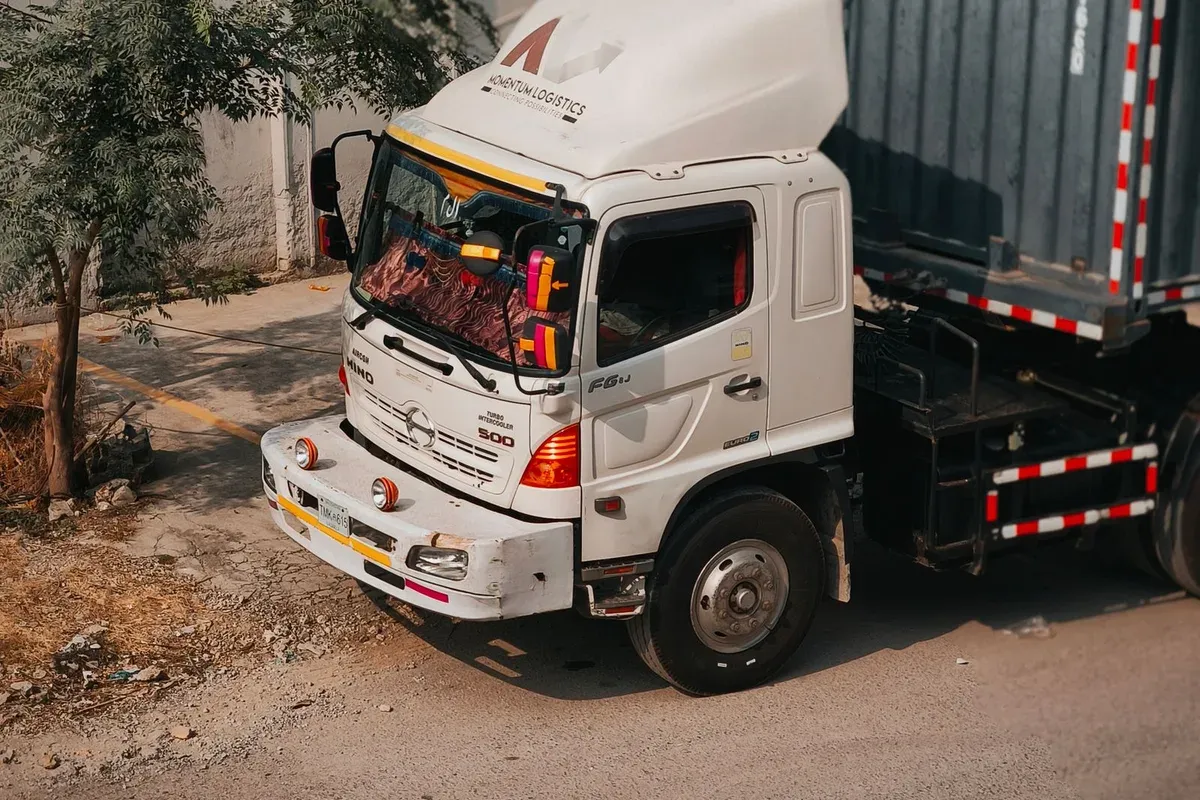
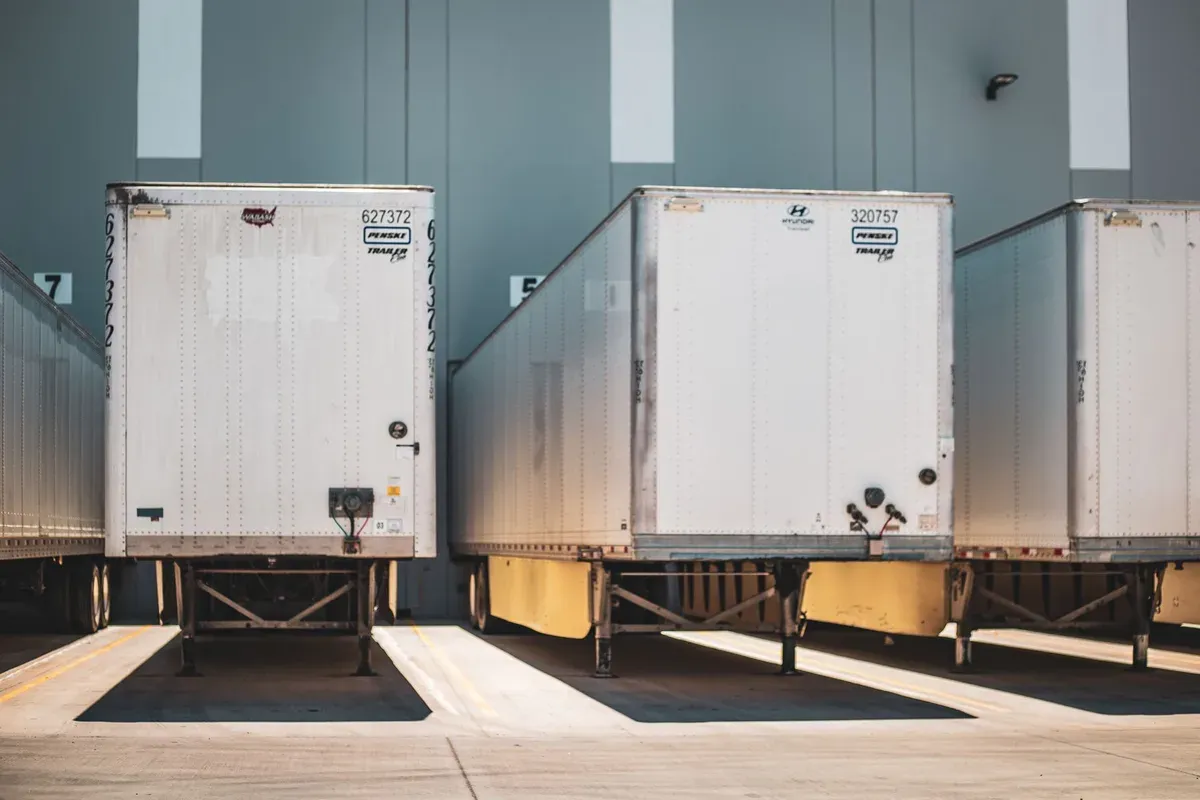
Does your freight need an entire trailer, or only a slice of one? That question decides one of the largest controllable line items in your landed cost, and most importers answer it by habit — booking a shared trailer because it feels cheaper, or a full truck because it feels safer. FTL vs LTL is not a personality test. It is a cost-line comparison, and once you know where the two lines cross on your own lane, the answer stops being a judgment call.
The catch is that the crossing point is expressed in a different unit in every market: per hundredweight against a freight class in the US, per loading metre in Europe, per chargeable kilogram on China’s overland corridors. A guide that hands you one number — “switch at 10,000 pounds” — is quoting one market’s arithmetic to the rest of the world. This guide builds the comparison in each market’s own unit, prices out the 2026 rate levels, and connects the theory to the lane-specific work in our full truckload trucking from China to Iran and LTL trucking on the same corridor guides.
What Is the Difference Between FTL and LTL?
FTL — full truckload — means one shipper buys the exclusive use of a whole trailer; LTL — less-than-truckload — means your cargo shares that trailer with other shippers’ freight and you pay only for the weight and space you occupy. In a single line: FTL buys a vehicle, LTL buys a place in one.
That distinction drives everything downstream. An FTL booking loads at your supplier, seals, and opens at your consignee — one pickup, one delivery, one chain of custody, and a schedule you can plan against. An LTL shipment enters a hub-and-spoke network: collected on a pickup route, consolidated at an origin terminal, linehauled to a breakbulk hub, sorted again, linehauled onward, and delivered locally. That is three to six handlings, and each one is a chance for a pallet to be re-stacked, mis-routed, or dropped.
On international lanes the same two products appear under other names. Ocean shipping splits into FCL and LCL — the container equivalents, explained in our FCL vs LCL shipping guide — while overland trucking splits into FTL and LTL, also called groupage, part-load, or 零担 in Chinese. The mechanism is identical: exclusive use versus shared space.
FTL vs LTL at a Glance
| Dimension | FTL (full truckload) | LTL (less-than-truckload) |
|---|---|---|
| What you buy | The whole trailer and its schedule | Space and weight on a shared trailer |
| Pricing unit | Flat lane rate, effectively per mile per vehicle | Per chargeable weight and class (CWT, kg, or LDM) |
| Typical shipment | 12 – 26 pallets, up to ~45,000 lb on a US 53-footer | 1 – 6 pallets, 150 – 15,000 lb |
| Minimum charge | One trailer, however little you load | Commonly 1 CBM / 100 kg internationally |
| Handling touches | Two: loaded once, unloaded once | Three to six through terminals |
| Transit time | Direct, 1 – 5 days faster on comparable lanes | Adds terminal dwell at both ends |
| Damage exposure | Lowest — load not re-handled | Highest — 2 – 5% damage incidence in industry data |
| Claims denial rate | Roughly 20 – 35% of claims | Roughly 50 – 60% of claims |
| Best fit | Volume, urgency, fragile or high-value cargo, one consignee | Small consignments, low urgency, cost-sensitive freight |
How Are FTL and LTL Rates Built?
LTL prices weight and space through a class-and-density tariff; FTL prices a vehicle through a lane rate.
An American LTL rate starts with the NMFC freight class — a scale of 50 to 500 driven mainly by density in pounds per cubic foot, then by stowability, handling difficulty, and liability. The density-based chart in force since July 19, 2025 maps 13 density tiers onto that scale, and the class, lane, and weight break then produce a price per hundredweight (CWT).
International LTL rhymes with that but replaces class with a volumetric divisor. The forwarder converts cubic metres into chargeable kilograms at a ratio, commonly 1 CBM = 200 – 333 kg on overland groupage, and bills whichever is greater — actual gross weight or volumetric weight. Dense cargo bills on the scale; light, bulky cargo bills on the space it eats, because a trailer runs out of cube long before it runs out of payload.
FTL is simpler. The forwarder quotes a flat rate for the lane and the equipment — dry van, curtain-side, flatbed, reefer — and nothing about the rate changes when you load 60 percent instead of 100 percent. In the US spot market that flat rate is expressed per mile; on cross-border Asian lanes it is quoted per truck, at $3,000 – $5,000 for a sealed trailer from a Chinese hub to Tehran and five figures for the far longer run to Germany or Poland.
| Market | LTL pricing unit | FTL pricing unit | 2026 reference level |
|---|---|---|---|
| US domestic | Per CWT against NMFC class, by zone | Per mile, flat per lane | LTL ~$46.40/CWT contract average; FTL $2.16 – $2.41 per mile excluding fuel |
| Europe (cross-border) | Per LDM (loading metre) or per pallet | Per vehicle | Groupage €165 – €195 per LDM; FTL €1,800 – €2,200 per truck on short runs |
| China overland (Central Asia, Iran) | Per chargeable kg after a volumetric divisor | Per trailer | $2.50 – $3.50 per chargeable kg; $3,000 – $5,000 per trailer |
| China domestic | Per kg with a volumetric divisor, or per tonne-km | Per trip, per vehicle | Roughly RMB 1.5 – 2.5 per tonne-kilometre as a published reference |
Rates above are indicative mid-to-late 2026 levels, not quotations. Trucking prices move with fuel, capacity, currency, and border conditions; a band older than a few weeks should be reconfirmed against your cargo-ready date.
Where Is the Break-Even Between FTL and LTL?
On a US domestic lane the crossover sits at roughly 8 – 12 pallets or 10,000 – 15,000 pounds; in European groupage at 6 – 7 loading metres, about 15 – 18 EUR pallets; and on China’s overland corridors at roughly 12 – 15 CBM or 1,000 – 2,000 chargeable kilograms. The thresholds differ because each market builds its LTL rate from a different unit, not because the physics differ.
The shape of the crossing is always the same. The LTL line climbs with volume — every extra pallet adds weight and cube, and in the US can add a higher class if density drops. The FTL line is flat. Where they meet is your break-even, and past it every additional kilogram on the LTL meter is money spent for capacity you are not using.

Run the arithmetic on a middle-sized shipment and the crossover stops being abstract. Take 12 pallets weighing 9,000 lb on a 900-mile US lane. At a class-driven rate near $46 per CWT, the LTL linehaul is about $4,140 before accessorials, and liftgate, appointment, and reweigh charges commonly add 15 – 40 percent — so the realistic bill lands near $4,800 – $5,800. The truckload rate for the same lane at $2.16 per mile is about $1,944 of linehaul, and even after fuel and waiting time it stays under $2,600. The flat line has already won.
The same test on a China–Iran overland lane produces a bigger gap. Eighteen cubic metres of light consumer goods at a 1:250 divisor bills as 4,500 chargeable kilograms, which at $2.50 – $3.50 per kg is $11,250 – $15,750 — two to three times the $3,000 – $5,000 a dedicated trailer costs on that corridor. That is why the lane guide puts the FTL crossover at 1,000 – 2,000 chargeable kilograms rather than at a fixed pallet count.
Two variables move the crossing point on any given week:
- Density. Low-density freight reaches break-even sooner, because LTL penalizes cube twice — once through the divisor, once through the class.
- Capacity. When truckload capacity tightens, spot rates climb and the break-even shifts upward; September 2026 dry van spot rates ran 33 percent above a year earlier, pushing the crossover toward the top of every range here.
What Do the 2026 Rates Actually Look Like?
In the US, truckload is running $2.16 per mile spot and $2.41 per mile contract excluding fuel, while LTL contract rates average about $46.40 per CWT — roughly $0.20 – $0.45 per pound, with a single pallet typically costing $120 – $250. At 2,000 lb, LTL costs $400 – $900 where a whole 800-mile trailer costs about $1,730 — and the gap widens with every pallet added.
Europe prices groupage per loading metre and full trucks per vehicle, which is why European shippers think in pallets rather than kilograms. On China’s overland corridors consolidation is run by forwarders rather than a national carrier network, so the quote is per chargeable kilogram: $2.50 – $3.50 from a minimum of 1 CBM or 100 kg, against $3,000 – $5,000 for a sealed trailer. The full stack, including transit taxes and destination duty, is in our China to Iran trucking costs breakdown.
Which Hidden Charges Land on the Wrong Mode?
LTL collects its surprises at the terminal — reweigh, reclassification, liftgate, appointment, and detention — while FTL collects them in time: loading delays, multi-stop detours, and empty miles.
| Charge | Typical 2026 level | Where it lands |
|---|---|---|
| Reclass / reweigh | New class rate plus a per-shipment fee | LTL — a density error reprices the whole move |
| Liftgate | $50 – $150 per stop | LTL mostly, also FTL without a dock |
| Residential / limited access | $75 – $200 per stop | LTL, and any FTL to a non-commercial address |
| Appointment or inside delivery | $50 – $150 | Both, LTL more often |
| Detention / waiting time | After 1 – 2 free hours, then hourly or a flat cap | FTL primarily — the driver and trailer are yours |
| Redelivery | A second attempt at full rate | LTL, when nobody is at the dock |
| Linear-foot surcharge | Re-rated on floor space, not weight | LTL — commonly past 12 linear feet or 750 cubic feet |
| Multi-stop or drop-trailer | Per stop, per day | FTL — the flat rate assumes one origin, one destination |
The linear-foot rule catches more shippers than any other LTL clause. A shipment can sit comfortably inside the weight limit and still be re-rated because it occupies too much floor: national carriers commonly trigger space-based pricing at 12 linear feet or 750 cubic feet, and some set thresholds at 10, 16, or 20 feet. Long, light freight — furniture, extruded profiles, empty packaging — hits that wall first. FTL’s exposure is the clock: a truck waiting four hours at a factory bay bills for it, and a multi-stop delivery quoted as one destination becomes a per-stop charge.
Why Handling Count Decides Damage and Claims
Every extra terminal is another chance to drop, re-stack, or lose a piece, and the data tracks it: industry figures put LTL damage claims at about 1.24 percent of shipments — roughly one in eighty — with LTL damage incidence of 2 – 5 percent against 0.5 – 2 percent for truckload. The claims outcome is worse than the incidence: LTL claims are denied 50 – 60 percent of the time against 20 – 35 percent on FTL, because a shared trailer makes it far harder to prove where the damage happened.

Three practices change the outcome more than any carrier choice:
- Pack for the network, not for the pallet. Corner boards, banding, and full shrink-wrap survive breakbulk sorting; loose cartons do not.
- Photograph every pallet face at pickup and at delivery. Timestamped photos are the entire evidentiary case for an LTL claim, and they are free.
- Insure above carrier liability. LTL liability is capped by tariff — often per pound, not per value — so a $20,000 shipment on a 500 lb pallet is structurally under-covered. Our cargo insurance for China exports guide covers the geographic and mode exclusions that void policies.
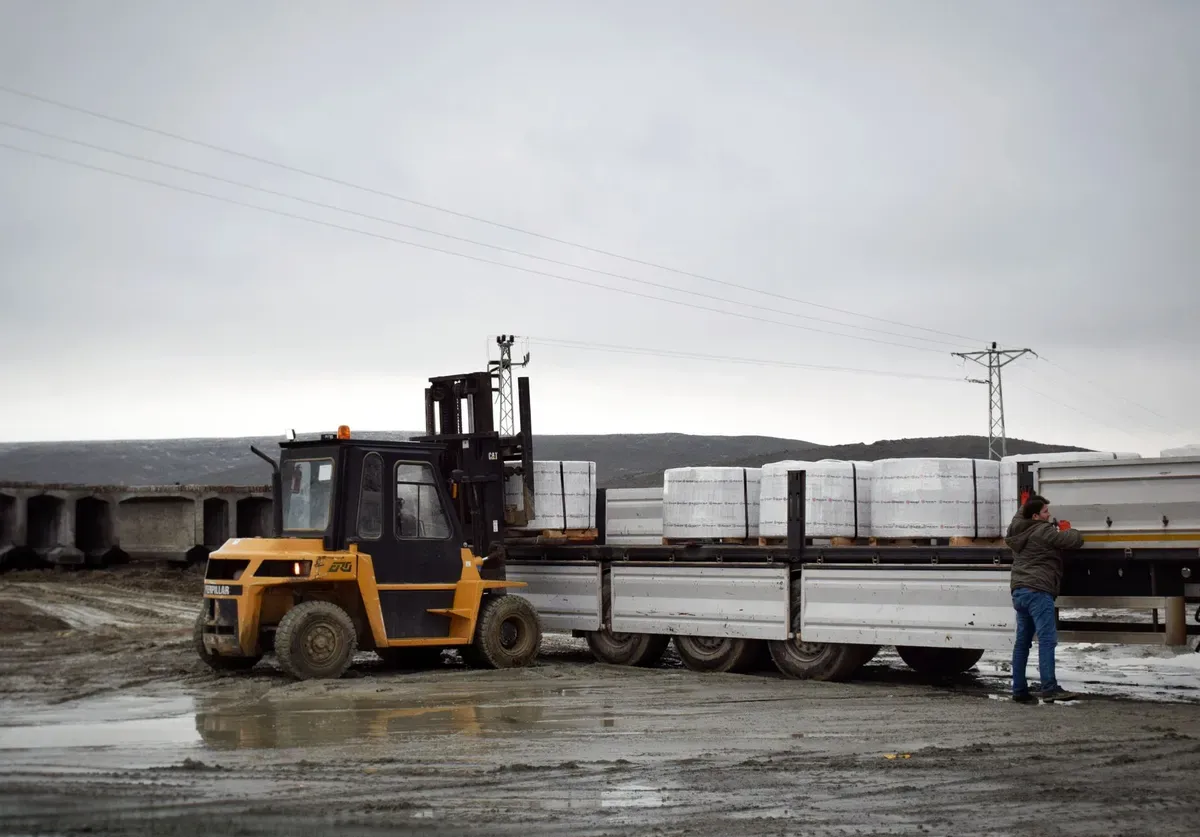
FTL’s structural advantage is the seal: one lock, one opening, and any tampering visible at the door — which is why high-value electronics move as full loads even half empty.
When Does Each Mode Win?
LTL wins when the shipment is small, durable, and not urgent; FTL wins when it is large, valuable, fragile, or date-critical; and partial truckload wins in the gap most shippers skip.
| Shipment profile | Best mode | Why |
|---|---|---|
| 1 – 6 pallets, under 5,000 lb, flexible date | LTL | You pay for space used, not a vehicle |
| 6 – 12 pallets, 5,000 – 15,000 lb | Partial truckload | 20 – 40% under LTL in that band, far less handling |
| 12+ pallets or over 15,000 lb | FTL | The flat rate is already cheaper |
| High-value, fragile, or theft-prone cargo | FTL | Two touches and one seal |
| Hard delivery appointment or production-line feed | FTL | No terminal dwell, no re-routing |
| Out-of-gauge, over-length, or non-stackable | FTL (flatbed or low-bed) | LTL tariffs re-rate or refuse it |
Four rules of thumb survive contact with real quotes:
- Price both modes above six pallets. The crossover moves with capacity, and the comparison takes ten minutes.
- Ask for the accessorial list, not just the rate. A quote without liftgate, appointment, and detention terms is a headline, not a price.
- Convert to a chargeable unit first. Kilograms on Asian lanes, CWT in the US, loading metres in Europe — mixing units is how importers conclude LTL is cheaper when it is not.
- Consolidate purchase orders before switching modes. Two half-loads a month are frequently one load at a better flat rate.
What About Partial Truckload — the Middle Mode?
Partial truckload (PTL) is a dedicated slice of a trailer with no terminal handoffs, priced flat or per mile, and it typically lands 20 – 40 percent below LTL in the 6 – 12 pallet band. It exists because the LTL tariff punishes volume while a full trailer punishes emptiness.
Mechanically, PTL looks like LTL at booking and like FTL in operation: rated without a freight class, loaded at origin, delivered without a breakbulk hub. On China’s overland corridors the equivalent move is booking a consolidated trailer on a direct, no-transload routing, or buying a half-trailer block from a consolidator. If your cargo sits at 15 – 20 CBM, ask for a dedicated-trailer rate and a consolidated rate in the same email — the gap is frequently smaller than the service difference justifies. Pallet dimensions and stack heights decide how many units a trailer really holds; our guide to standard pallet sizes covers those measurements.
How Do You Book FTL or LTL Without Losing Money?
Measure in the units the rate is built from, declare every service you need, and compare quotes that name their inclusions.
- Measure and weigh every pallet. Length, width, height, gross weight, stackability. Volume in cubic metres and density in pounds per cubic foot are what both tariffs actually read.
- Classify before requesting a rate. Confirm the NMFC class in the US, or the volumetric divisor internationally. A quote built on the wrong class is a reclassification claim waiting to happen.
- Request both modes on the same lane and date, plus a partial-truckload quote — on 6 – 12 pallets it frequently wins.
- Get the inclusion list in writing. Origin handling, fuel, liftgate, appointment, detention terms, clearance, and border taxes. Two quotes are comparable only when scope matches.
- Book backward from the departure. LTL networks run fixed cutoffs; cargo ready the morning after a cutoff waits a full cycle.
- Document and insure. Photos at pickup, a packing list that matches the pallets, and cover naming the route and mode. For international moves, our warehouse services in China and customs clearance teams handle the consolidation and export side that makes either mode bookable.
FAQ
Q: Is LTL always cheaper than FTL? A: No. LTL is cheaper only below the break-even, around 8 – 12 pallets or 10,000 – 15,000 lb in the US, 6 – 7 loading metres in Europe, and 12 – 15 CBM on China’s overland lanes. Above those points the flat trailer rate wins, often by a wide margin.
Q: What is the minimum shipment for LTL? A: On international groupage, commonly 1 CBM or 100 kg. US domestic LTL has no hard minimum, but minimum charges make anything under a few hundred pounds disproportionately expensive — at that size compare air or express instead.
Q: How many pallets fit in a truck? A: A US 53-foot dry van holds about 26 standard 48×40 pallets up to roughly 45,000 lb payload; a European 13.6-metre trailer holds 33 – 34 EUR pallets up to about 25 tonnes. Curtain-side trailers on China’s corridors are rated up to roughly 96 CBM and 25 tonnes, but stackability is the real limit.
Q: Does FTL mean no stops between pickup and delivery? A: Usually yes — the standard flat rate assumes one origin and one destination. Extra stops, drop-trailer arrangements, and waiting beyond the free period are quoted separately, so declare them at booking.
Q: Which mode should high-value or fragile cargo use? A: FTL or partial truckload. Handling touches, not distance, drive damage and claim rates — LTL damage incidence runs 2 – 5 percent against 0.5 – 2 percent for truckload, and LTL claims are denied roughly twice as often.
Conclusion
FTL vs LTL comes down to one comparison performed in the right unit: convert your shipment to chargeable weight — kilograms on Asia lanes, CWT in the US, loading metres in Europe — price the shared option and the flat trailer on the same lane and date, and add the accessorials each will actually attract. Below the crossing, LTL is the efficient buy. Above it, every extra kilogram on the shared meter subsidizes a vehicle you are not filling. Between them sits partial truckload, which most importers never ask for and which frequently wins.
Efanda Logistics has moved both products since 2018 from Shenzhen — consolidated groupage on weekly departures, and sealed dedicated trailers on the Central Asian corridors — with every quote itemized line by line: pickup, consolidation, linehaul, transit taxes, and handover. A dedicated logistics specialist walks each shipment from booking to delivery, and the mode recommendation comes from your cargo data, not from whichever product is easier to sell that week. Contact us at +86 18929345880 for a side-by-side FTL and LTL quote on your own shipment.

Written by the EFANDA Logistics team — a Shenzhen-based freight forwarder established in 2018, moving cargo from China to ports worldwide with end-to-end pickup, consolidation, customs and door delivery.About us