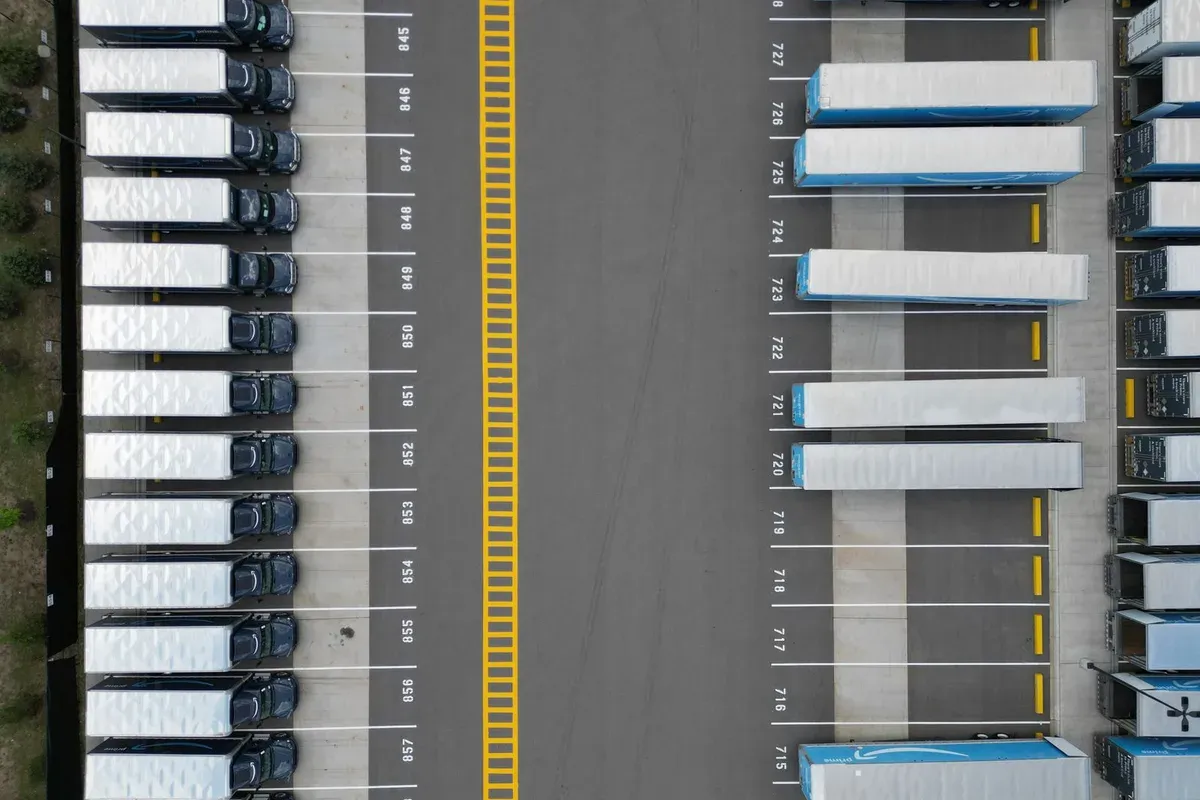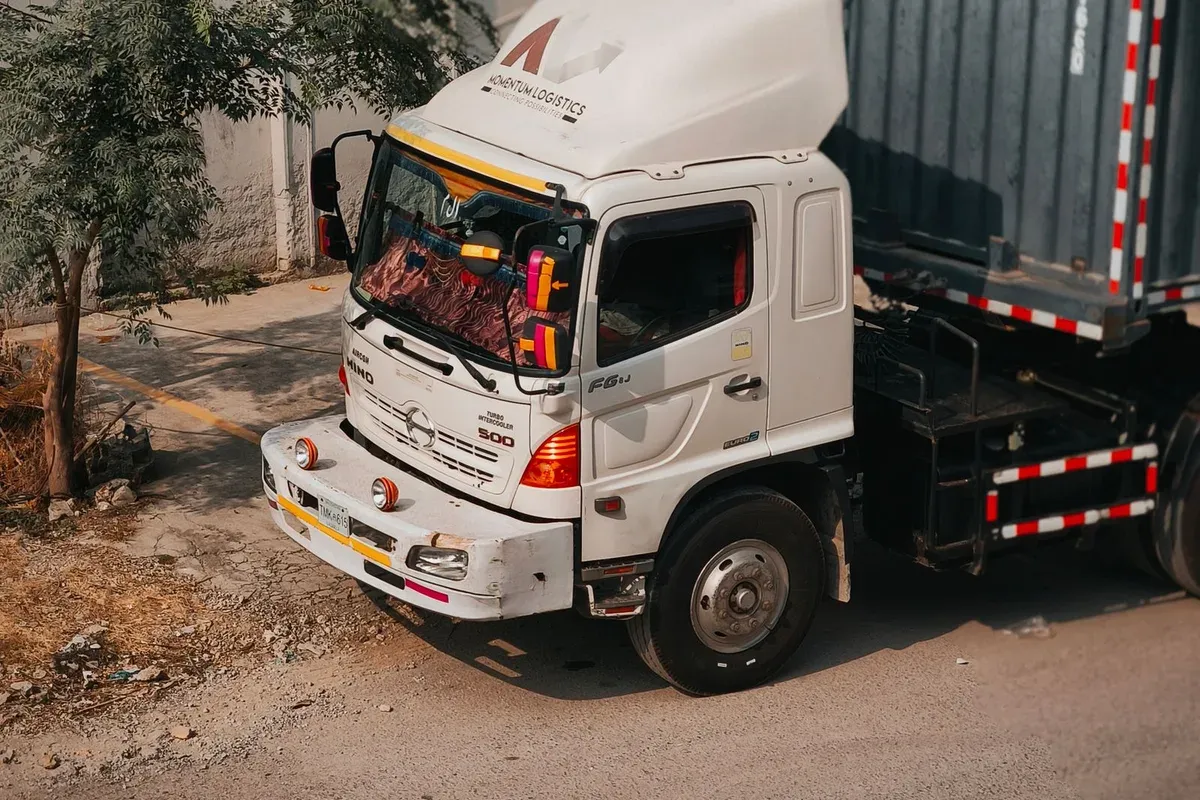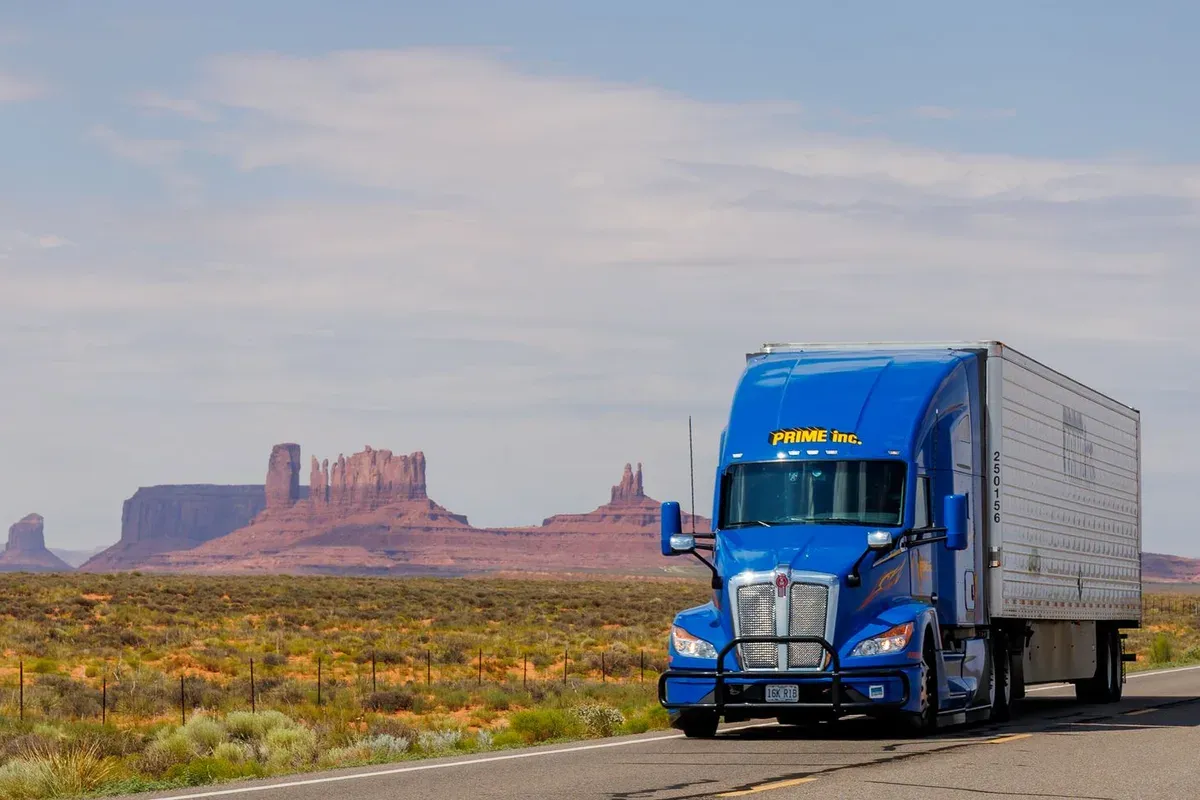
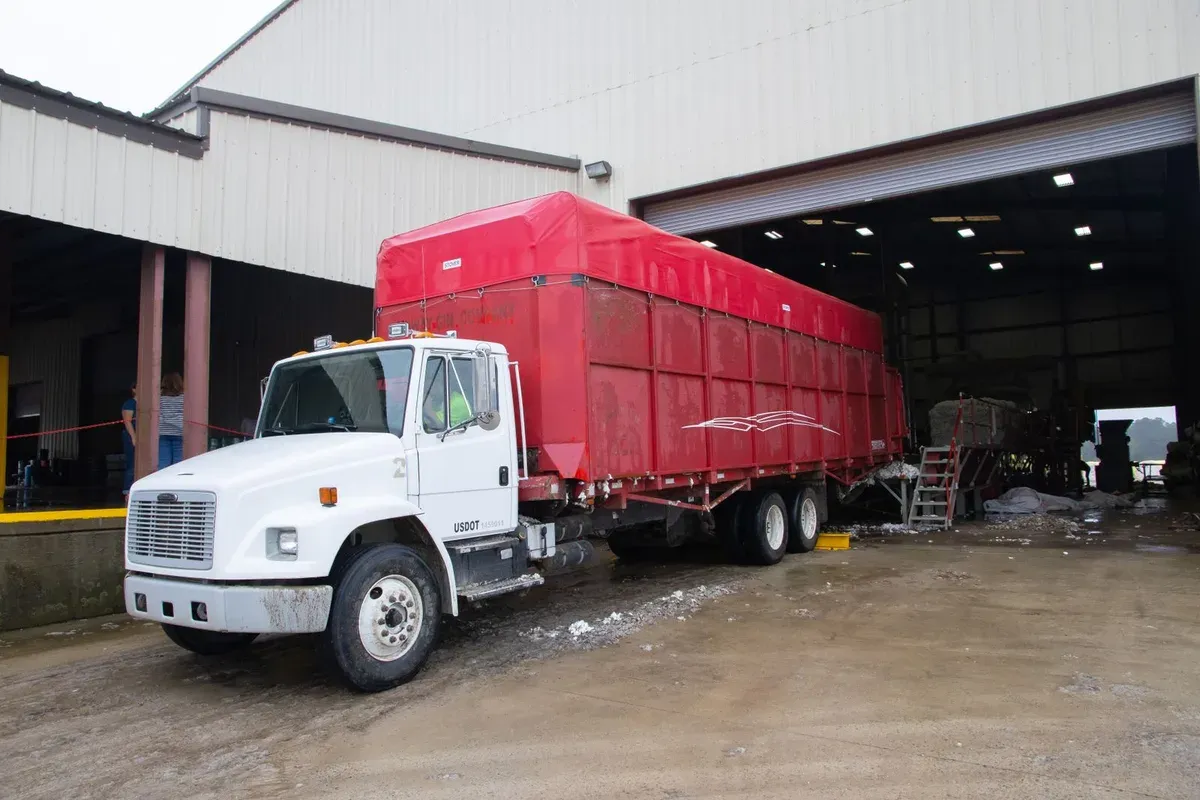
What do you do with five pallets of auto parts — too heavy to stomach air freight at $4.00 – $8.50 per kg, too small to justify a dedicated trailer at $3,000 – $5,000, and too urgent to sit 30 – 50+ days on a ship into Bandar Abbas? You book LTL trucking from China to Iran: your cargo rides a shared, TIR-sealed trailer through the Central Asian corridor, you pay only for the space and weight you actually use, and it reaches a Tehran bonded warehouse in roughly three to four weeks. Since the 2026 Strait of Hormuz disruptions pushed Iran-bound volume off the water and onto the road, consolidated trucking has become the lane’s workhorse for small and mid-size importers — and the mechanics of how it works are where most first-timers lose money.
This guide covers the consolidated product specifically: what LTL trucking actually is on this corridor, current November 2026 rate bands and what a real quote must itemize, how chargeable weight is calculated (the single biggest source of invoice surprises), realistic transit windows from weekly cutoff to last mile, the seven-step process, and the cargo profiles it fits best. For the corridor itself — routes, TIR mechanics, and the Wuqia-versus-Khorgos choice — start with our companion guide to China to Iran trucking; for the full cost stack including the Iranian tax math, see China to Iran trucking costs.
What Is LTL Trucking from China to Iran?
LTL — less-than-truckload — trucking from China to Iran is groupage: several shippers’ cargo shares one TIR-sealed trailer, and each shipper pays per chargeable kilogram instead of renting the whole vehicle. Freight forwarders consolidate compatible shipments at Chinese hubs — Yiwu, Shenzhen (Pinghu) and Guangzhou are the main ones — load them into a single trailer under one TIR carnet, and run fixed weekly departures through Kyrgyzstan or Kazakhstan, Uzbekistan and Turkmenistan, entering Iran at Sarakhs. Each shipper keeps their own commercial invoice and packing list; the cargo travels as one consolidated load and is separated again at the destination warehouse.
Three things define the product. First, the entry threshold is low: most consolidators accept from 1 CBM or 100 kg. Second, the schedule is fixed — trucks leave on set days whether or not your cargo is on them, so the week you book matters more than the day. Third, it is commercial freight only: LTL trucking is not a parcel service, and personal shipments or postal items do not belong on it.
How Much Does LTL Trucking from China to Iran Cost?
Budget $2.50 – $3.50 per chargeable kilogram as of November 2026, with a practical minimum of 1 CBM or 100 kg per shipment. That band buys the consolidated linehaul from a Chinese hub to the Tehran-area bonded warehouse; it does not include Iranian import duty, benefit tax, or VAT, which typically exceed the freight itself and are settled at clearance through your Iranian broker.
| Cost element | Indicative November 2026 band | Notes |
|---|---|---|
| LTL linehaul (hub to Tehran bonded warehouse) | $2.50 – $3.50 per chargeable kg | From 1 CBM or 100 kg; weekly fixed departures |
| Origin pickup | $50 – $150 per shipment | Or free drop-off at the hub — sending cargo to Yiwu or Shenzhen yourself removes this |
| Kyrgyz transit tax (Wuqia routing only) | 0.4% of invoice value | A tax, not freight — the Khorgos routing through Kazakhstan does not carry it |
| Cargo insurance | ~0.5% of cargo value | Must name Iran in the geographic coverage; many standard policies exclude it |
| Iranian duty + benefit tax + VAT | Roughly 40 – 60% of CIF in most worked examples | Assessed at clearance; see the cost breakdown guide |
Two traps inflate cheap LTL quotes. The first is the volumetric divisor — a shipment of light, bulky goods can bill at two or three times its scale weight, and a quote that omits the divisor is not a quote. The second is scope: a rock-bottom per-kg rate that excludes origin handling, the bonded-warehouse handover, or the Kyrgyz tax will grow on the invoice. Ask for the rate, the divisor, and the inclusion list in one email; any forwarder who cannot answer all three in a single reply is telling you something.
LTL trucking sits deliberately between the modes — faster than sea, cheaper than air, and far more forgiving than rail, which currently rations capacity on this corridor:
| Mode | Transit (pickup-to-warehouse) | Price basis | Best for |
|---|---|---|---|
| LTL trucking | 28 – 40 days | $2.50 – $3.50 per chargeable kg | 1 – 15 CBM of palletized commercial cargo |
| FTL trucking | 18 – 30 days | $3,000 – $5,000 per trailer | Full loads, out-of-gauge, single-consignee security |
| Rail LCL | 25 – 35 days | $3,500 – $4,500 per TEU + $500 – $800 handling | Volume-shaping cargo when capacity is available |
| Sea LCL (Bandar Abbas) | 30 – 50+ days | $180 – $210 per CBM ocean-side | Non-urgent bulk where inland haul and deconsolidation are acceptable |
| Air (Tehran IKA) | 3 – 10 days | $4.00 – $8.50 per kg | Urgent, high-value, production-line cargo |
All figures are indicative November 2026 market bands, not fixed prices — this corridor’s rates move with fuel, FX, seasonal capacity, and border conditions, and any quote older than a few weeks should be reconfirmed.

How Is Chargeable Weight Calculated on an LTL Truck?
Your LTL invoice bills the greater of the shipment’s actual gross weight and its volumetric weight — and the volumetric weight is your CBM multiplied by a divisor the forwarder sets, commonly in the 1 CBM = 200 – 333 kg range on this lane. Dense cargo — tiles, steel parts, machinery — bills on actual weight; light, bulky cargo — foam, plastics, assembled furniture — bills on volume, because the truck runs out of space long before it runs out of payload.
The worked example is worth doing before you book. Say four pallets of packaged lighting fixtures measure 4 CBM and weigh 340 kg gross. At a 1:250 divisor, the volumetric weight is 4 × 250 = 1,000 kg, which is what you pay on. At $2.50 – $3.50 per kg, the linehaul runs $2,500 – $3,500 — not the $850 – $1,190 that the scale weight suggests. The same money on air freight would be $4,000 – $8,500, and on a dedicated trailer it buys the whole vehicle whether or not you fill it, which is exactly why the divisor belongs in every comparison you run.
This is also where the crossover to FTL lives. Once consolidated cargo passes roughly 12 – 15 CBM, the per-kilogram math starts to rival the cost of a half-loaded dedicated trailer — and a trailer gives you sole use, one seal, and a faster clock. Below that threshold, LTL is almost always the right buy; above it, price both.
How Long Does LTL Trucking from China to Iran Take?
Plan on 28 – 40 days from pickup to delivery at a Tehran warehouse: two to seven days catching the weekly consolidation cutoff, 21 – 23 days from the Wuqia border crossing to the Tehran West Customs bonded warehouse on a direct truck (26 – 30 if the service transloads once at Bukhara), then customs clearance and deconsolidation days on the Iranian side. Mashhad-bound cargo typically lands a few days earlier — 18 – 21 days from the border on direct services.
Three things stretch the window. Consolidation timing is the most predictable: cargo that arrives at the hub the morning after a cutoff waits a full cycle, so booking around the Tuesday and Friday departures is the easiest transit day you will ever save. Winter is the second — snow on the Kyrgyz and Kazakh passes slows everything, and January departures deserve an extra week. The third is inspection: TIR-sealed cargo clears transit borders fast, but any customs authority on the route may open a trailer, adding days.

How Does the LTL Process Work, Step by Step?
The chain runs seven steps: quote, pickup or drop-off, export clearance and TIR sealing, linehaul, Sarakhs entry, bonded-warehouse handover, then deconsolidation and delivery.
- Quote and booking. Send the packing list, HS code, gross weight and CBM, origin city, and destination customs (Tehran West Customs, Aprin, or Mashhad). A usable quote comes back with the divisor, the inclusion list, and the routing named.
- Pickup or drop-off at the consolidation hub. Factory pickup anywhere in China is standard; delivering to the Yiwu or Shenzhen (Pinghu) facility yourself removes the pickup fee and a day of handling.
- Export clearance and TIR sealing at Wuqia or Khorgos. Chinese export customs clears the consolidated load, the trailer is locked with a TIR cable seal, and the carnet is issued. The routing choice happens here — and it is a cost decision, not just a geography one, because only the Wuqia line through Kyrgyzstan carries the 0.4% transit tax. Our Wuqia vs Khorgos comparison walks the trade-off.
- Linehaul through Central Asia. The sealed trailer crosses Kyrgyzstan (or Kazakhstan), Uzbekistan, and Turkmenistan under the single carnet. Direct trucks stay sealed throughout; transshipment services reload once at Bukhara and add roughly a week.
- Entry into Iran at Sarakhs. The TIR regime means no import clearance happens at the transit borders — only at the Iranian destination.
- Bonded warehouse handover. The trailer reports to the Tehran West Customs (Gomrok Gharb) bonded warehouse, where a warehouse entry receipt — the Ghabz-e Anbar — is issued to your broker. This document is your clearance starting gun; without it, nothing moves.
- Deconsolidation, clearance, and last mile. Your cargo is separated from the group, Iranian customs assesses duty, benefit tax, and VAT, and the cleared freight delivers to your door. If you want this flattened into one prepaid number, that product is called DDP — see our door to door trucking guide.
What Cargo Is (and Isn’t) Right for LTL?
LTL trucking suits palletized general commercial cargo between about 1 CBM / 100 kg and 12 – 15 CBM — auto parts, machinery spares, building materials, consumer goods, electronics — and it does not suit out-of-gauge freight, undeclared hazardous cargo, personal parcels, or anything that cannot be palletized. The constraint is the group: your cargo shares a trailer with everyone else’s, so it must stack, strap, and survive being handled at both ends.
Three cargo properties move the price. Stackability is the big one — non-stackable freight pays for the air above it, because a pallet that cannot take weight occupies two pallet positions. Packaging matters at the destination sort: shrink-wrapped, banded pallets with corner boards survive deconsolidation intact, while loose cartons arrive as loss claims. Labeling matters more than most shippers expect — every pallet needs shipper, consignee, destination city, and piece marks legible on two sides, because separation at the Tehran warehouse is done by eye and by manifest. Check the lane’s prohibited and restricted items list before booking; items that are restricted rather than banned need declaration paperwork in the booking file, not surprises at the border.
LTL, FTL, Rail LCL, or Sea LCL: Which Should You Choose?
Choose LTL trucking when your cargo is between 1 and 15 CBM, palletized, and needed in Iran within about a month; the alternatives win at the volume extremes, on pure cost with time to spare, or when urgency outranks everything.
- Volume below ~12 – 15 CBM: LTL trucking wins the math. FTL is the comparison point above it — and a dedicated trailer also wins whenever cargo security demands one seal and one consignee, or the load is out-of-gauge.
- Clock under two weeks: nothing on the ground beats air freight from China to Iran at 3 – 10 days, at a price. Between two and five weeks, trucking is the natural home — rail LCL overlaps it at 25 – 35 days but with rationed capacity and a less forgiving schedule.
- Budget over clock: sea LCL into Bandar Abbas at $180 – $210 per CBM is the cheapest per-cubic-metre ticket on the lane, before the inland haul, deconsolidation, and a 30 – 50+ day transit that ties up working capital. When total landed cost and cash timing both count, the truck frequently beats the ship on the full equation — the math is laid out in our China to Iran trucking costs guide.
How Do You Keep an LTL Shipment Safe?
The load is protected by three layers: the TIR seal and carnet that make tampering visible at every border, all-risks cargo insurance that actually names Iran, and documentation that is complete before the truck leaves. Skimp on any one and the savings evaporate in a single bad week.
The seal is the corridor’s quiet workhorse. Under TIR, the trailer is locked once at origin and the carnet vouches for the cargo at every transit border — cargo arrives with the seal intact or the discrepancy is documented at the border where it happened. Insurance is the layer most importers get wrong: many standard cargo policies carry geographic exclusions for Iran, and a policy that does not name the destination will not pay. Valid cover on this lane typically costs around 0.5 percent of cargo value — confirm the geographic coverage in writing before departure, and read our cargo insurance for China exports guide before you sign a certificate. The documentation layer is unglamorous and decisive: commercial invoice, packing list, HS codes, and — on the Iranian side — a broker backed by an Iranian commercial card, because only a commercial-card holder can legally be the importer of record. Freight can ride consolidated; import responsibility cannot.
Practical Tips for Booking LTL Trucking to Iran
- Send the packing list before the cargo moves. Weight, CBM, HS code, and photos of the pallets — with these four, a forwarder can lock the divisor, the routing, and the inclusion list in writing, which is the entire defense against invoice surprise.
- Book backward from the weekly cutoff, not forward from today. Tuesday and Friday departures mean a shipment ready on Wednesday effectively ships Friday; a shipment ready Saturday ships Tuesday. Naming your cargo-ready date in the enquiry gets you the honest departure.
- Consolidate purchase orders into one movement. Several small consignments a month each pay minimums; one combined shipment steps the whole lot into a better rate position and one set of documents.
- Design for the group. Stackable pallets, banded and shrink-wrapped, with marks on two sides — at the destination sort, well-packed cargo clears in hours and poorly packed cargo clears in claims.
- Ask which routing the quote uses. Wuqia is faster for many origins but carries the 0.4% Kyrgyz transit tax; Khorgos skips the tax with a different capacity picture. The right answer depends on your origin and calendar.
Frequently Asked Questions
Q: What is the minimum size for LTL trucking from China to Iran? A: Most consolidators accept from 1 CBM or 100 kg. Below that, combine purchase orders or compare air freight — the minimum charge makes tiny LTL shipments disproportionately expensive.
Q: Is LTL trucking to Iran the same as DDP? A: No. LTL is a freight product: you pay for the linehaul, and Iranian duties, taxes, and clearance are settled separately by your broker. DDP folds all of that into one prepaid invoice under a service like our door to door trucking from China to Iran.
Q: What documents do I need for LTL trucking to Iran? A: On the export side, a commercial invoice, packing list, and HS codes; the forwarder handles the TIR carnet. On the import side, an Iranian customs broker backed by a commercial card, because only a commercial-card holder can be the importer of record.
Q: How is LTL trucking different from sea LCL to Iran? A: Both are groupage — you pay for a share, not the whole vehicle or box. The difference is the corridor: LTL trucks run overland through Central Asia in about three to four weeks, while sea LCL sails to Bandar Abbas in 30 – 50+ days before inland haul and deconsolidation. Trucking costs more per CBM and buys you a month.
Q: Why do two LTL quotes for the same shipment differ by 40 percent? A: Almost always one of four things: a different volumetric divisor, a different inclusion list (origin handling, bonded handover, transit tax), Wuqia versus Khorgos routing, or a stale rate. A quote that names the divisor, the inclusions, the routing, and the date is comparable; one that does not is a guess.
Conclusion
LTL trucking from China to Iran boils down to a simple position in the middle: pay $2.50 – $3.50 per chargeable kilogram from as little as 1 CBM or 100 kg, catch a weekly departure from Yiwu or Shenzhen, and take delivery in Tehran in 28 – 40 days — one TIR seal protecting the cargo the whole way, with Iranian taxes settled transparently at clearance instead of hidden in the freight rate. Get the divisor, the inclusion list, and the routing in writing before the truck loads, and the corridor rewards you with the one thing the current sea lane cannot: a schedule measured in weeks, priced per kilogram, that scales from a single pallet upward.
Efanda Logistics has moved consolidated cargo on the China–Iran corridor from Shenzhen since 2018, with every LTL quote itemized line by line — pickup, consolidation, TIR linehaul, transit taxes, and bonded handover — and a dedicated logistics specialist tracking each milestone from hub departure to the Ghabz-e Anbar at Tehran West Customs. Contact us at +86 18929345880 for a fully itemized LTL trucking quote from China to Iran.

Written by the EFANDA Logistics team — a Shenzhen-based freight forwarder established in 2018, moving cargo from China to ports worldwide with end-to-end pickup, consolidation, customs and door delivery.About us