Why do two forwarders quote the same China–Tehran truck movement $1,800 apart — and why does the invoice still surprise the importer who picked the cheaper one? Because China to Iran trucking costs are not one number: they are a stack of origin charges, linehaul legs, transit taxes, border formalities, and Iranian customs charges that different quotes include, exclude, or hide. Since the Strait of Hormuz disruptions pushed most Iran-bound cargo onto the road corridor in 2026, understanding that stack has become the difference between a budget that holds and one that collapses at Sarakhs.
This guide breaks the lane down to its cost elements: current FTL and LTL rate bands as of November 2026, the line items a real quote should itemize, how chargeable weight moves your price, the Iranian tax stack with a worked example, and the hidden charges that inflate cheap quotes. For routes, schedules, and transit times, start with our companion guide to China to Iran trucking; for the wider lane picture, see shipping from China to Iran.
How Much Does China to Iran Trucking Cost in 2026?
Budget $3,000 – $5,000 for a full truckload (FTL) from a Chinese consolidation hub to the Tehran area via the Kyrgyzstan–Uzbekistan routing, or $2.50 – $3.50 per chargeable kilogram for consolidated LTL cargo to Tehran — both as November 2026 indicative bands, not fixed prices.
| Pricing model | Indicative range (Nov 2026) | What it covers |
|---|---|---|
| FTL, China → Tehran area | $3,000 – $5,000 per trailer | Direct truck, one transload at Bukhara, to the bonded customs yard |
| LTL consolidated | $2.50 – $3.50 per chargeable kg | From about 1 CBM or 100 kg; fixed weekly departures |
| Kyrgyz transit tax (Wuqia line only) | 0.4% of cargo invoice value | A tax, not freight — excluded from freight quotes |
| TIR carnet advantage | saves ~$300 – $500 per shipment | Versus conventional multi-permit trucking |
| Trailer ceiling | up to 96 CBM / 25 T | Over-limit cargo quoted separately |
For calibration against other modes on the same lane: rail freight from China to Iran runs $3,500 – $4,500 per TEU station to station plus $500 – $800 of gauge-change handling, sea freight into Bandar Abbas starts around $2,200 per 20ft in basic ocean freight but currently takes 30 – 50+ days, and air freight from China to Iran commands $4.00 – $8.50 per kg. The truck sits in the middle on price and beats everything overland on pickup flexibility.
Disclaimer: these are indicative market ranges for November 2026. Road freight on this corridor moves with fuel prices, currency, border conditions, transit-permit costs, and seasonal capacity, and can swing ±20 – 30% in a bad month. Confirm live pricing against your cargo-ready date before committing.
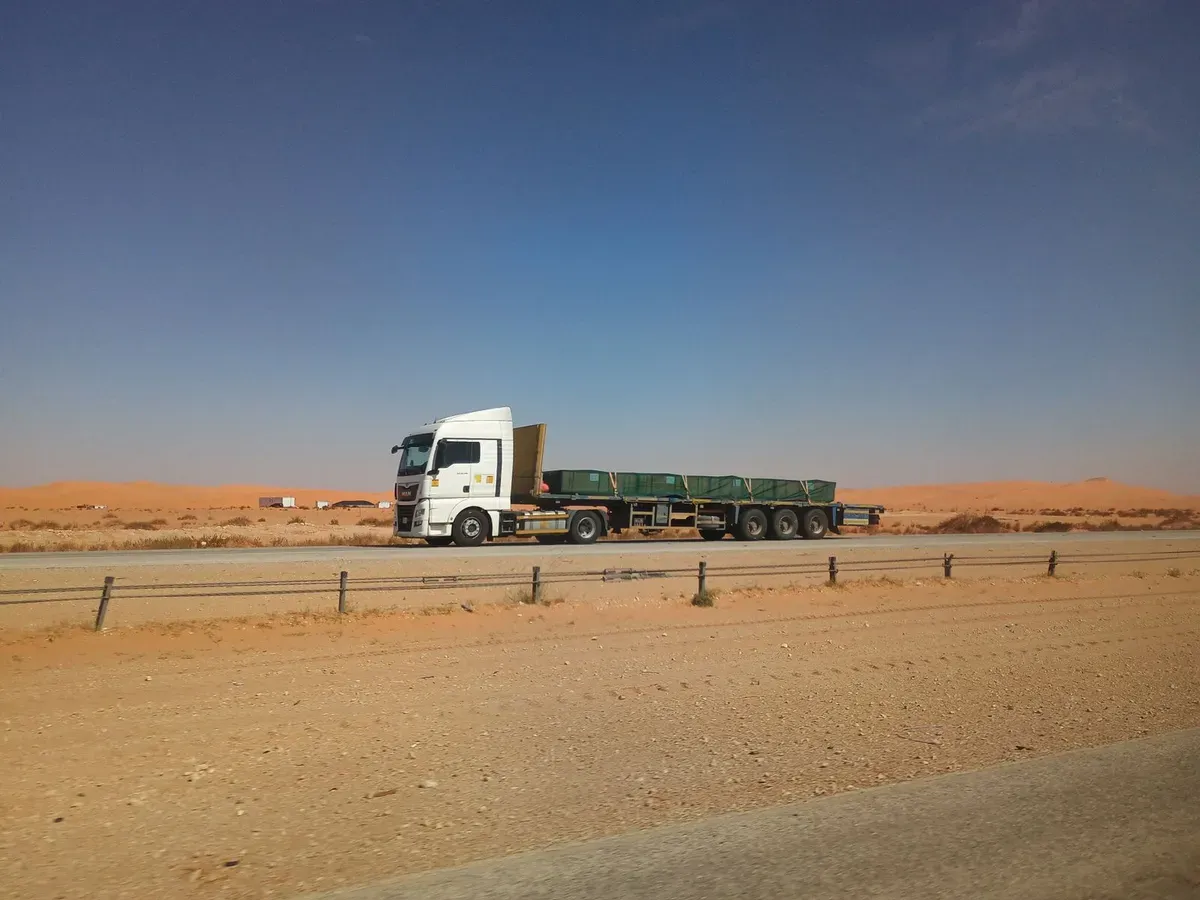
What Line Items Make Up a Trucking Quote?
A China–Iran trucking rate is assembled from nine cost elements, and two quotes differ mainly in which of the nine they mention. The linehaul — the truck itself from the Chinese hub to the Iranian border — is usually only 60 – 70 percent of the freight invoice.
| Cost element | Typical treatment | Where it bites |
|---|---|---|
| Origin pickup and consolidation | Included from major hubs; surcharged from factory addresses far off-hub | Multi-supplier pickups add per-stop fees |
| Export customs declaration and sealing | Small fixed fee, usually included | Wrong export HS codes stall the truck at the gateway |
| Domestic leg to the exit gateway | Included in hub-based quotes | Counted separately from some inland origins |
| Linehaul to Iran | The headline number | Fuel and season move it month to month |
| Transloads (Bukhara; Osh on transshipment service) | Included on direct trucks, itemized by some operators | Each transload is a handling fee plus a damage risk |
| Turkmenistan transit permits and escort | Should be pre-arranged and priced in | Ad-hoc permits mean days of queue and extra fees |
| Kyrgyz transit tax (0.4% of invoice value) | Always excluded — it is a tax, paid by the cargo owner | On a $120,000 load that is $480, Wuqia line only |
| Sarakhs entry and bonded in-country transit | Small fixed charges | Seal checks and ASYCUDA recording |
| Destination yard handling and broker | Varies by Tehran yard and broker | Storage starts accruing if documents lag |
The two corridor choices also price differently: the Wuqia vs Khorgos comparison explains why the Khorgos line skips the Kyrgyz tax but often carries longer border queues, and why the cheaper headline rate is not always the cheaper shipment.
Our Industry Insights: The Cheapest Quote Is the Most Expensive One On this corridor, a quote that omits transloads, Turkmen permits, and destination handling is not cheaper — it is unfinished. At Efanda Logistics we quote China–Iran trucking as a nine-line itemization, because a rate you cannot audit line by line is not a rate you can budget against.
How Does Chargeable Weight Change the Price?
Consolidated trucking bills on chargeable weight — the greater of actual weight and volumetric weight — so the cargo’s density, not its size or value, decides the per-kilogram spend. Most consolidators on this lane convert volume to weight at roughly 300 – 333 kg per CBM, though the exact divisor is an operator choice worth asking about in writing.
The math splits cargo into two camps. Dense goods — tiles, stone, steel parts, machinery — bill on actual weight, and their per-CBM cost is high but their per-kg cost is the floor of the band. Light, bulky goods — furniture, plastics, apparel — bill on volume, and a pallet of foam products can cost as much to truck as a pallet of engine parts weighing five times more. When you compare an LTL quote against a per-CBM ocean rate, run the chargeable-weight conversion first; the truck looks expensive per CBM and cheap per kilogram, and which yardstick applies is decided by your cargo, not by the forwarder.
For FTL buyers the ceiling matters more than the rate: a standard trailer tops out around 96 CBM or 25 tonnes, and axle-weight limits decide how that tonnage can be loaded. Heavy cargo that would fill the volume at half the weight allowance — or the reverse — is quoted on its actual constraint, so send gross weight and CBM together, never one without the other.
What Taxes and Customs Charges Does Iran Add?
Freight is the smaller half of a China–Iran landed cost. Iranian imports face customs duty of roughly 4 – 55 percent by HS code, a commercial benefit tax that runs from a flat 4 percent on many industrial inputs to rates exceeding the duty on restricted consumer categories, and VAT at 10 percent — raised from 9 percent under Iran’s 1404 budget law — applied to the CIF value plus duty plus commercial benefit tax.
A worked example shows the stacking. Take an FTL of auto parts — the lane’s classic cargo, covered in detail in our guide to shipping automotive parts and spare parts from China to Iran:
| Cost element | Basis | Amount |
|---|---|---|
| Goods value (FOB) | Commercial invoice | $40,000 |
| Truck freight + insurance to Tehran yard | $4,200 + $200 | $4,400 |
| CIF value | FOB + freight + insurance | $44,400 |
| Import duty (illustrative 20%) | 20% × CIF | $8,880 |
| Commercial benefit tax (illustrative 4%) | 4% × CIF | $1,776 |
| VAT | 10% × (CIF + duty + benefit tax = $55,056) | $5,506 |
| Yard handling, broker, and sundries | Tehran West Customs area | ~$500 |
| Total landed cost | ~$61,062 |
In this example the destination tax stack alone is about $16,162 — roughly 36 percent of CIF and nearly four times the freight. Restricted consumer goods at the top of the duty band stack far higher. Two disciplines keep the number honest: get the HS classification reviewed before shipping, because classification decides the duty line, and declare a value that survives Iran’s TSC reference-price system, because invoices priced meaningfully below reference values get reassessed with duties recalculated — and the truck pays storage while that happens. Your broker files through ASYCUDA World at the yard; if you do not have a licensed Tehran broker, your forwarder’s customs clearance desk should arrange one before the truck departs, not after it arrives.

FTL, LTL, or DDP: Which Pricing Model Fits Your Shipment?
The model decision is mostly volume math: below about 12 – 15 CBM consolidated LTL wins, above it a dedicated trailer usually beats the per-kilogram rate, and DDP is a different product entirely — not cheaper freight, but freight plus clearance plus taxes flattened into one invoice.
| Model | Sweet spot | Price logic | Watch out for |
|---|---|---|---|
| LTL consolidated | 100 kg – ~15 CBM | $2.50 – $3.50 per chargeable kg | Weekly fixed departures; waiting time is part of lead time |
| FTL dedicated | ~15+ CBM, or high-value cargo | $3,000 – $5,000 per trailer | Trailer ceiling 96 CBM / 25 T; direct vs transshipment service |
| DDP road service | Importers without an Iranian customs setup | Freight + duty + VAT + clearance in one quote | Price embeds the tax stack — audit the HS assumptions behind it |
DDP deserves a caveat of its own: because the forwarder advances and prices the Iranian duty, commercial benefit tax, and VAT, a DDP quote is only as honest as the HS classification and declared value inside it. A DDP rate that looks 15 percent below the market usually embeds an under-declared value — which is the importer’s legal exposure, not the forwarder’s, when TSC reassesses it. The service structure is the same one our door to door shipping page walks through; the Iran-specific discipline is to ask which HS code and value the DDP price was built on.
How Does Trucking Compare with Rail, Sea, and Air on Cost?
On a pure freight basis, sea remains cheapest per container and air most expensive per kilogram, with rail and trucking splitting the middle — but late-2026 pricing reflects disrupted capacity, not the old hierarchy, and freight is never the whole bill.
| Mode | Indicative freight (Nov 2026) | Transit | Cost character |
|---|---|---|---|
| Trucking | $3,000 – $5,000 per FTL; $2.50 – $3.50 per kg LTL | 18 – 30 days border-to-yard | Any-city pickup; one seal, one consignee; flexible cargo shapes |
| Rail | $3,500 – $4,500 per TEU + $500 – $800 handling | 12 – 20 days station to station | Lowest overland cost per box; rationed capacity; sanctions attention on Iranian railways |
| Sea (Bandar Abbas) | 20ft from about $2,200 ocean freight | 30 – 50+ days | Cheapest per container; schedule risk no importer can plan around |
| Air (Tehran IKA) | $4.00 – $8.50 per kg | 3 – 10 days | Urgent, high-value cargo only |
Run the comparison on landed cost per sellable unit, not freight per container. A $2,200 ocean box that arrives 50 days late and ties up working capital for two extra months can cost more than a $4,500 truck that delivers in three weeks — the full sea-side math is in our FCL shipping from China to Iran guide. And whatever mode carries the cargo, the Iranian tax stack applies identically at the end, so mode choice moves the freight line but not the customs line.
Which Hidden Costs Inflate the Real Bill?
Five costs that rarely appear on a headline quote decide what the shipment actually costs: transload handling, transit permits, the payment channel, insurance gaps, and storage at the destination yard.
- Transload handling. A transshipment service transloads at Osh and again at Bukhara; a direct truck only at Bukhara. Each transload is a handling charge plus a re-sealing event — ask how many are inside the quoted price.
- Turkmenistan transit formalities. Permits and escort fees priced ad hoc rather than pre-arranged convert a border queue into a surcharge. This is the single most common gap between two FTL quotes.
- Payment settlement. Since August 2026 the classic Dubai relay is largely gone, and most China–Iran trade settles in Chinese yuan through Chinese regional banks and CIPS. Currency conversion spreads and intermediary fees are a real cost line — a payment channel agreed after booking is a cost negotiated from weakness.
- Insurance with a geographic exclusion. Many standard cargo policies exclude Iranian destinations; cover typically runs about 0.5 percent of cargo value when it exists at all. Our primer on cargo insurance for China exports covers what the policy must say for this lane.
- Storage and dwell at the customs yard. The bonded yard issues the warehouse entry receipt — the Ghabz-e Anbar — and storage accrues while documents, payments, or TSC reassessments lag. Slow paperwork is a freight cost wearing a customs uniform.
Cargo that never should have shipped is the most expensive kind: restricted and banned categories can be refused entry outright, so check the prohibited items guide for Iran before the purchase order, not at the border.
6 Ways to Cut China–Iran Trucking Costs
- Consolidate into a full truck where volume allows. Multi-supplier cargo merged into one FTL strips 15 – 25 percent out of linehaul spend versus booking pieces — our warehouse services in China exist for exactly this consolidation step.
- Match the model to the volume. Below ~15 CBM take LTL; above it price both, because a half-empty dedicated trailer is often cheaper than 20 CBM at per-kilogram rates.
- Pick the corridor on total cost. The Khorgos line skips the 0.4% Kyrgyz tax but can carry longer queues; price the tax, the dwell risk, and the schedule together, not the headline rate alone.
- Pre-clear the HS classification. Duty runs 4 – 55 percent by HS code, so a classification review before shipping is worth more than any freight negotiation — it moves the largest single line in the landed cost.
- Fix the payment channel before booking. Agree currency, bank, and channel in writing; a transfer that cannot clear strands cargo at a yard where storage is billing daily.
- Book around the calendar. The December – February winter adds days and the pre-Chinese-New-Year crunch adds price; booking three to four weeks ahead of both is the cheapest capacity you will ever buy.
FAQ
Q: How much does it cost to truck goods from China to Iran? A: As of November 2026, budget $3,000 – $5,000 per full trailer from a Chinese hub to the Tehran area via Kyrgyzstan and Uzbekistan, or $2.50 – $3.50 per chargeable kilogram for consolidated LTL cargo. Iranian duty, benefit tax, and VAT are additional and typically exceed the freight itself.
Q: Is trucking cheaper than rail from China to Iran? A: Per container, rail is usually cheaper — $3,500 – $4,500 per TEU versus $3,000 – $5,000 per trailer — but trailers and TEUs carry different volumes, rail capacity is rationed, and trucking collects from any Chinese city. Compare on landed cost per unit, not freight per box.
Q: What is chargeable weight in China–Iran trucking? A: The greater of actual weight and volumetric weight, with volume commonly converted at around 300 – 333 kg per CBM. Dense cargo bills on weight; light, bulky cargo bills on volume.
Q: Does the quoted truck rate include Iranian customs duty? A: No. Standard trucking quotes are freight only — duty (4 – 55 percent by HS code), the commercial benefit tax, and 10 percent VAT are paid by the importer’s broker at the destination yard. DDP services bundle them into one price; audit the HS assumptions inside any DDP quote.
Q: What is the 0.4% Kyrgyz transit tax? A: A tax of 0.4 percent of the cargo’s invoice value, levied only on routings that cross Kyrgyzstan (the Wuqia line). It is excluded from freight quotes and paid by the cargo owner — on a $120,000 load it is $480.
Q: Why do two forwarders quote very different prices for the same shipment? A: Usually scope, not margin: transloads, Turkmen transit permits, destination handling, and whether the quote assumes a direct or transshipment service. Ask both forwarders for a line-item quote and the difference becomes visible.
Conclusion
Three numbers frame China to Iran trucking costs in November 2026: $3,000 – $5,000 per full trailer as the freight working budget, a destination tax stack that in our worked example added $16,162 on a $44,400 CIF value, and a quote-to-invoice gap that is always explained by scope — transloads, permits, handling, and taxes somebody declined to mention. Budget the stack, not the headline, and this corridor delivers what the disrupted sea lane cannot: a cost you can plan.
Efanda Logistics has run China–Middle East lanes from Shenzhen since 2018, with every China–Iran trucking quote itemized line by line — freight, transloads, permits, and the destination charges — so the invoice never surprises you. Contact us at +86 18929345880 for a fully itemized China–Iran trucking quote.

Written by the EFANDA Logistics team — a Shenzhen-based freight forwarder established in 2018, moving cargo from China to ports worldwide with end-to-end pickup, consolidation, customs and door delivery.About us