Can a Chinese electric car with a USD 25,000 factory invoice really cost more than USD 57,000 by the time it is plated in São Paulo? It can, and that gap explains most of what matters when importing electric cars from China to Brazil. Brazil is Latin America’s largest electric-vehicle market and bought USD 5.9 billion of Chinese electrified vehicles in the first nine months of 2026 — roughly a tenth of everything it imports from China. Yet since 1 July 2026 a fully assembled electric car pays a 35% import duty, the federal and state taxes stacked behind that duty roughly double the customs value again, and homologation rules decide who may import at all. An individual cannot register a new imported car; a properly set-up company can.
This guide walks the corridor in the order an importer actually experiences it: eligibility first, then the 2026 tariff and tax reality, then the CAT, LCVM and INMETRO homologation stack, then the ocean leg — RoRo versus container, with the lithium-battery rules that changed in January 2026 — and finally the full landed-cost math with a worked example. For broader corridor context, rates and transit times, start with our shipping from China to Brazil overview.
Rate and rules disclaimer: all figures reflect market conditions and published rules as of October 2026 and are indicative only. Ocean freight reprices with capacity, fuel and season. Tariff steps, IPI rates, ICMS benefits and quota windows change by government decree, usually with little notice. Confirm every duty, tax and document with your Brazilian customs broker on the actual entry date.
Can You Legally Import Electric Cars from China to Brazil?
Yes — if you are a Brazilian-registered company with import credentials bringing in a homologated model; no, if you are an individual trying to self-import one new car. That split, not the tariff, is the first thing to settle before any money moves.
The market is big enough that the question is worth asking properly. More than 20 Chinese brands now sell in Brazil, and Chinese-badged models carry well over 80% of the country’s electrified-vehicle sales. BYD finished September 2026 as the fourth best-selling brand in the country — ahead of Hyundai and Toyota — with about 22,000 registrations in the month, and its Dolphin Mini topped the retail model ranking in February 2026. Much of that volume now comes from local assembly: BYD’s Camaçari complex in Bahia, its largest plant outside Asia, has already built more than 100,000 vehicles from imported kits, and GWM assembles the Haval H6 in Iracemápolis at a 50,000-unit annual line. Imports still matter because the local lines do not yet cover every model, trim or battery option, and dealers and fleet buyers fill those gaps with completely built-up (CBU) imports from China.
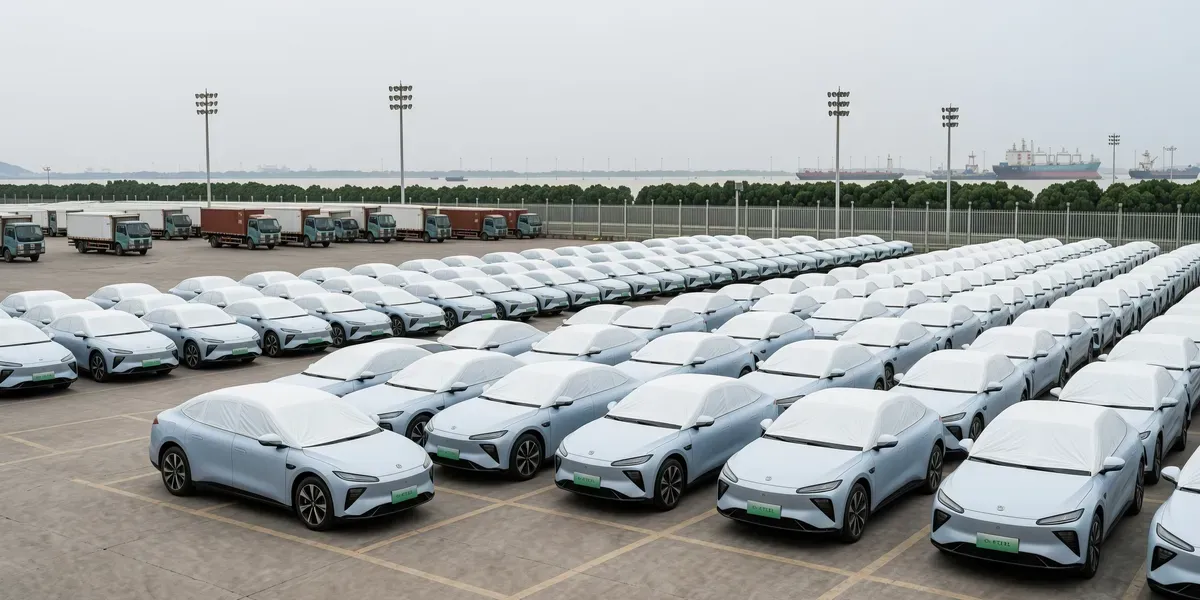
For individuals the door is narrower than most blog posts admit. Brazil does not let a private person import a new vehicle, full stop: the homologation certificates described below are simply not obtainable by an individual for a new car. Used personal cars only enter under residence-transfer rules — your own car, licensed in your name abroad for more than six months under settled case law, imported as part of a definitive move, with a resale lock after nationalization — or as collector vehicles (generally 30 years or older) and competition cars with Senatran authorization.
| Who imports | What can be imported | The controlling gate |
|---|---|---|
| Brazilian company with RADAR/Siscomex access | New CBU, SKD or CKD electrified vehicles for resale or own fleet | Homologation (CAT, LCVM, INMETRO) must exist for that exact brand, model and version |
| Official distributor or brand subsidiary | Same, at scale, including new-model homologation and CKD/SKD assembly | Local homologation investment; the USD 463 million zero-tariff kit quota |
| Individual | No new vehicles. Own used car only when transferring residence to Brazil | Receita Federal baggage rules; ownership and licensing proof; resale restrictions |
| Collector or motorsport importer | Used vehicles 30+ years old, or competition cars | Senatran authorization and specific documentation |
Our industry insight:
Plenty of coverage frames the July 2026 tariff as a “ban” on Chinese EVs. It is not a ban — Brazilian importers brought in USD 5.9 billion of Chinese electrified vehicles through September 2026, and volumes rebounded within two months of the 35% rate taking effect. The tariff is a price wall. What actually blocks imports is arriving without homologation or without the prior import license: those shipments do not get a second chance, they get storage bills.
What Does the 35% Import Duty Actually Mean in 2026?
The 35% is real, it is the Mercosur ceiling, and it is only the first of five taxes — the four behind it each charge a base the previous ones have already inflated. Brazil finished its three-year tariff ramp on 1 July 2026, and the schedule explains both the 2024–2025 import boom and the 2026 shift toward local assembly.
| Effective date | CBU — fully assembled | CKD — fully knocked-down kit |
|---|---|---|
| January 2024 | 10% | Preferential rates |
| July 2024 | 18% | Preferential rates |
| July 2025 | 25% (PHEVs 28%, conventional hybrids 30%) | Preferential rates |
| July 2026 | 35% for BEV, PHEV, hybrid and SKD | 14% |
| January 2027 (scheduled) | 35% | 35% |

Two wrinkles matter to anyone planning 2027 volumes. First, in June 2026 the government renewed a zero-tariff quota of USD 463 million for CKD and SKD electrified vehicles, valid from 1 July to 31 December 2026 — but it exists for companies that assemble in Brazil, not for importers of finished cars, and there is no quota of any kind for CBU. Second, the 14% CKD rate is itself a closing window: it steps to 35% in January 2027. The policy direction is unambiguous — Brazil wants the cars built in Bahia and São Paulo, and it is pricing finished imports accordingly.
The import duty (Imposto de Importação, II) is charged on the customs value, effectively CIF. Then the stack builds:
| Tax | Typical rate (Oct 2026) | Charged on |
|---|---|---|
| II — import duty | 35% (CBU electrified) | Customs value (CIF) |
| IPI — excise on manufactured products | ~13.5% for BEV passenger cars above 90 kW, after the zero-rate window lapsed on 31 July 2026 — verify at entry | Customs value + II |
| PIS-Import + COFINS-Import | 11.75% combined | Customs value |
| AFRMM — merchant marine surcharge | 25% of ocean freight | The freight amount |
| ICMS — state VAT | 12%–18% by state; São Paulo applies a reduced 12% for BEVs priced up to R$ 200,000, standard 18% otherwise | Grossed-up base: (CIF + II + IPI + PIS + COFINS + AFRMM + Siscomex fee) ÷ (1 − rate) |
The last line is the one that surprises importers who have worked other Latin American markets. ICMS is calculated “por dentro” — inside its own tax base — so a nominal 18% rate consumes about 22% of the pre-ICMS total. More than 20 states and the Federal District offer some form of ICMS reduction for battery-electric vehicles, but the benefits carry price caps and expiry dates and are revised year by year, so treat them as a possibility to confirm, not a planning assumption. Minas Gerais, for example, exempts BEVs priced up to R$ 180,000 — a cap that most fully imported CBU cars exceed precisely because of the taxes above it.
How Do You Get a Chinese EV Through Homologation: CAT, LCVM and INMETRO?
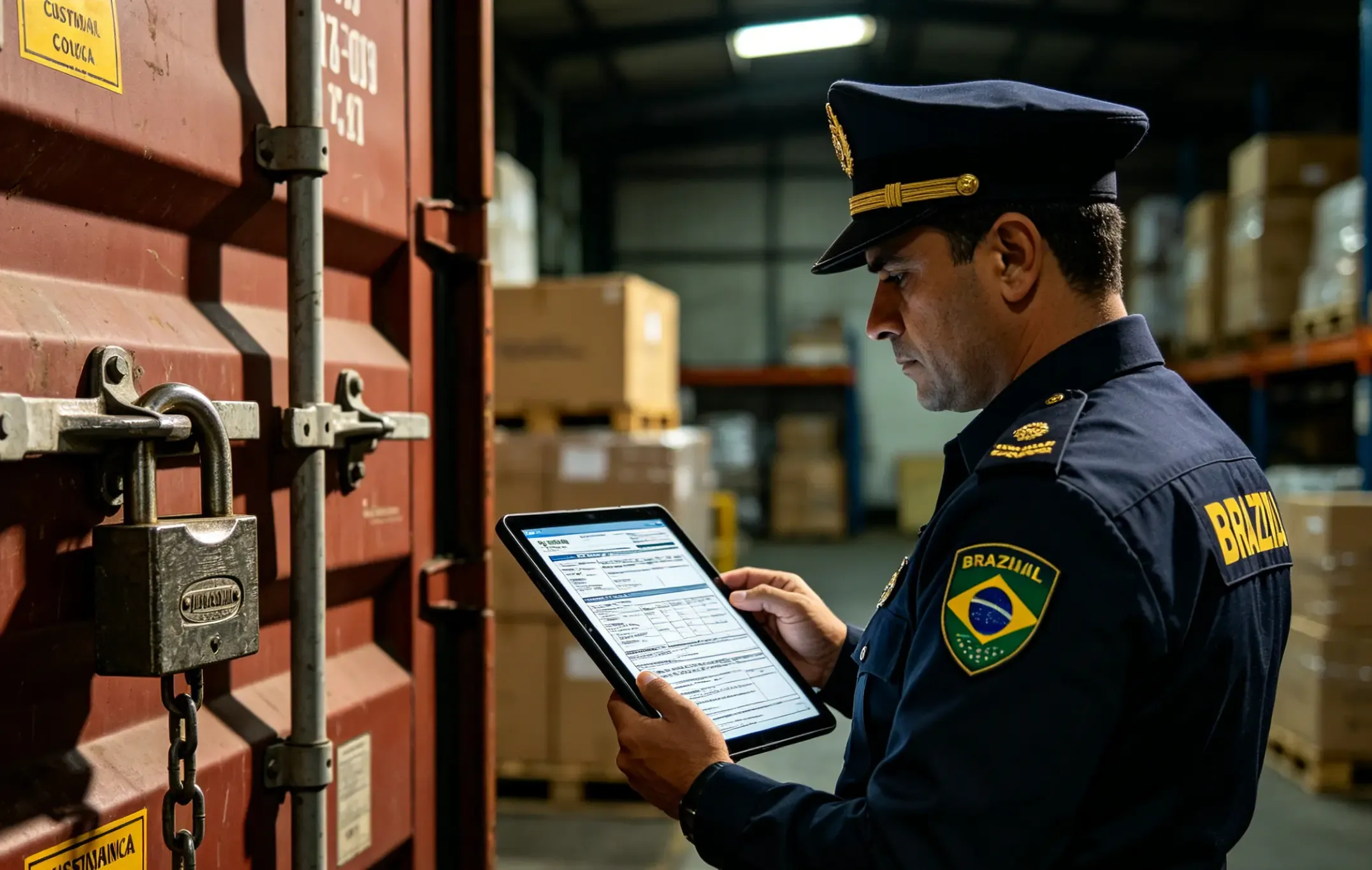
Homologation is where vehicle imports live or die in Brazil. Three certificates must exist for the exact brand, model and version before the car can clear customs and be registered — and in practice they are held either by the brand’s Brazilian entity or by whoever invested in the process before you.
| Certificate | Issued by | What it proves | Practical notes |
|---|---|---|---|
| CAT — Certificado de Adequação à Legislação Nacional de Trânsito | Senatran (formerly DENATRAN) | The vehicle complies with Brazilian traffic and technical regulation, the CONTRAN resolutions | Tied to brand/model/version in the RENAVAM system; local testing by a recognized technical laboratory is generally required even when foreign type approval exists |
| LCVM — Licença para Uso da Configuração do Veículo ou Motor | IBAMA, the environmental agency | Emissions and energy configuration compliance (PROCONVE) | Must be applied for before importation; EVs are not exempt from holding one |
| INMETRO certification | INMETRO, via accredited certification bodies | Product quality and safety conformity for vehicles and components | Requires document review, testing and periodic certificate maintenance |
If the exact model and version you are buying is already homologated — a BYD Dolphin Mini or a Haval H6 in a Brazilian-market specification, say — your job is documentation: cite the existing CAT, LCVM and INMETRO references against the vehicle identification numbers and ship. If it is not homologated, you are not importing a car, you are running a project. The homologation procedure under DENATRAN Ordinance 190/09 requires testing in Brazil by accredited laboratories, takes months rather than weeks, and costs vary widely with the model — get written quotes from a designated technical service before budgeting anything else.
One freshness rule catches importers of “bargain” stock: Brazil requires imported new vehicles to be genuinely new production, and current guidance is read as roughly 30 days between the foreign invoice and entry. Warehouse-clearance cars from a slow quarter in China are effectively unimportable no matter how attractive the price.
RoRo or Container: How Do Electric Cars Actually Travel to Brazil?
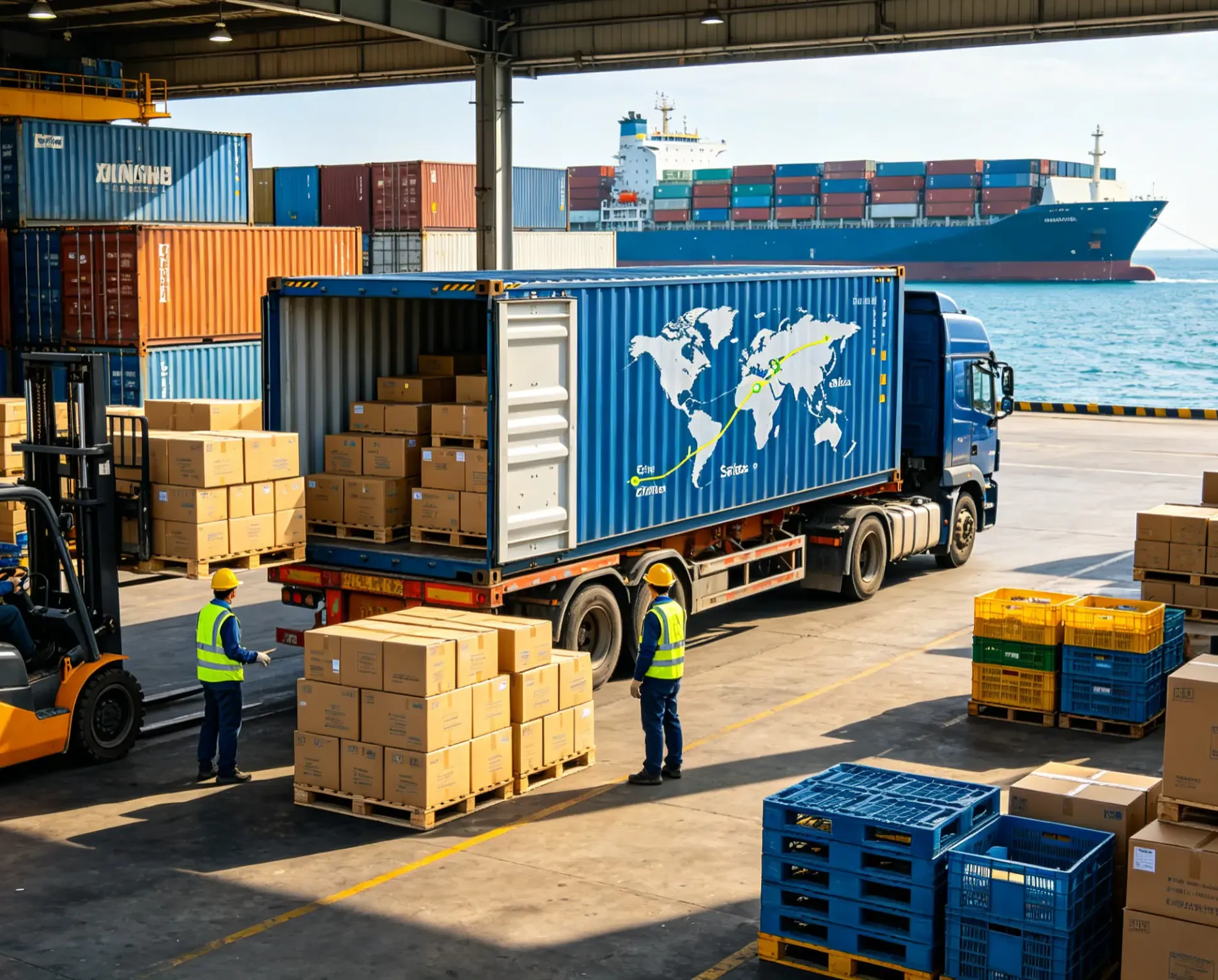
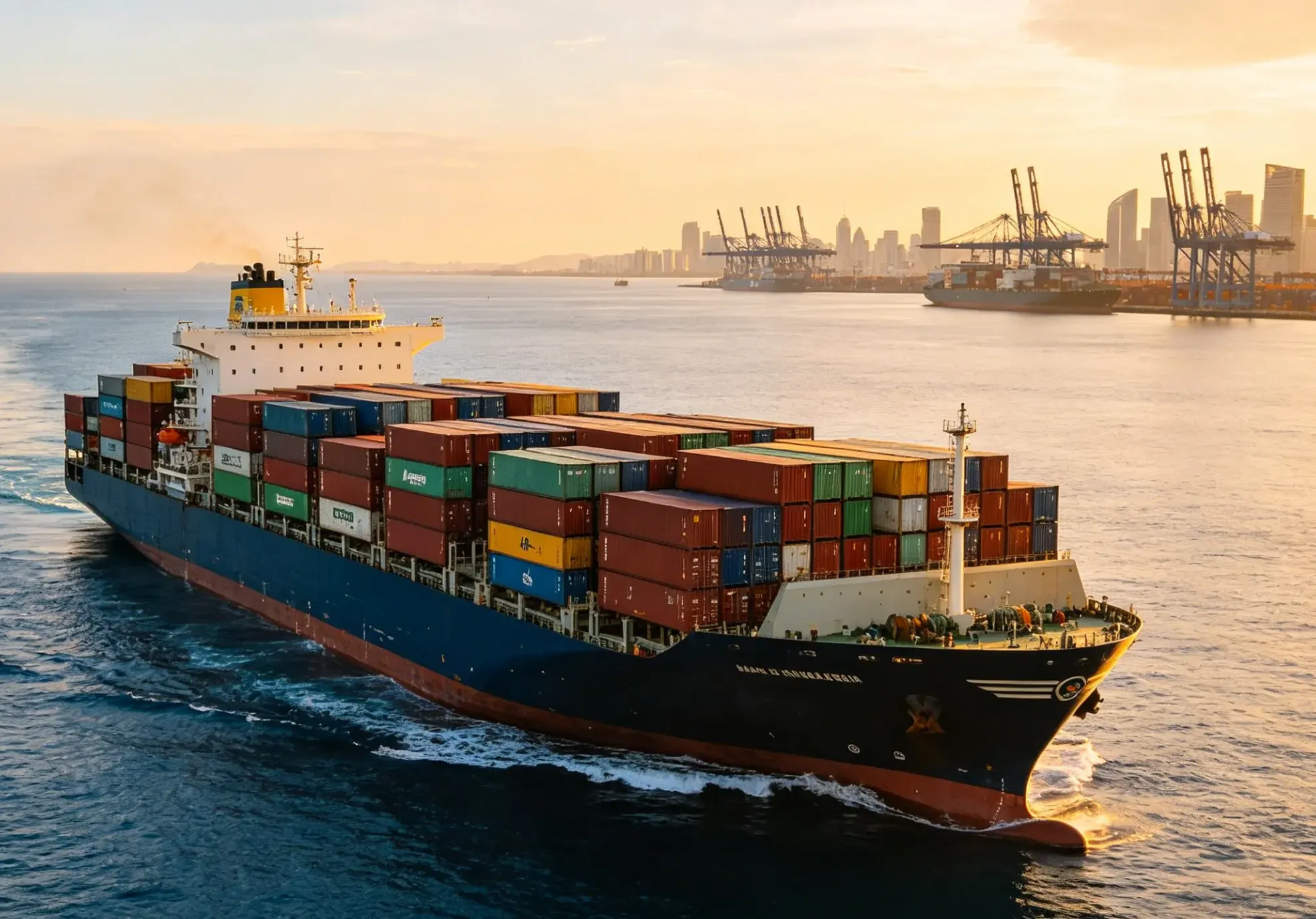
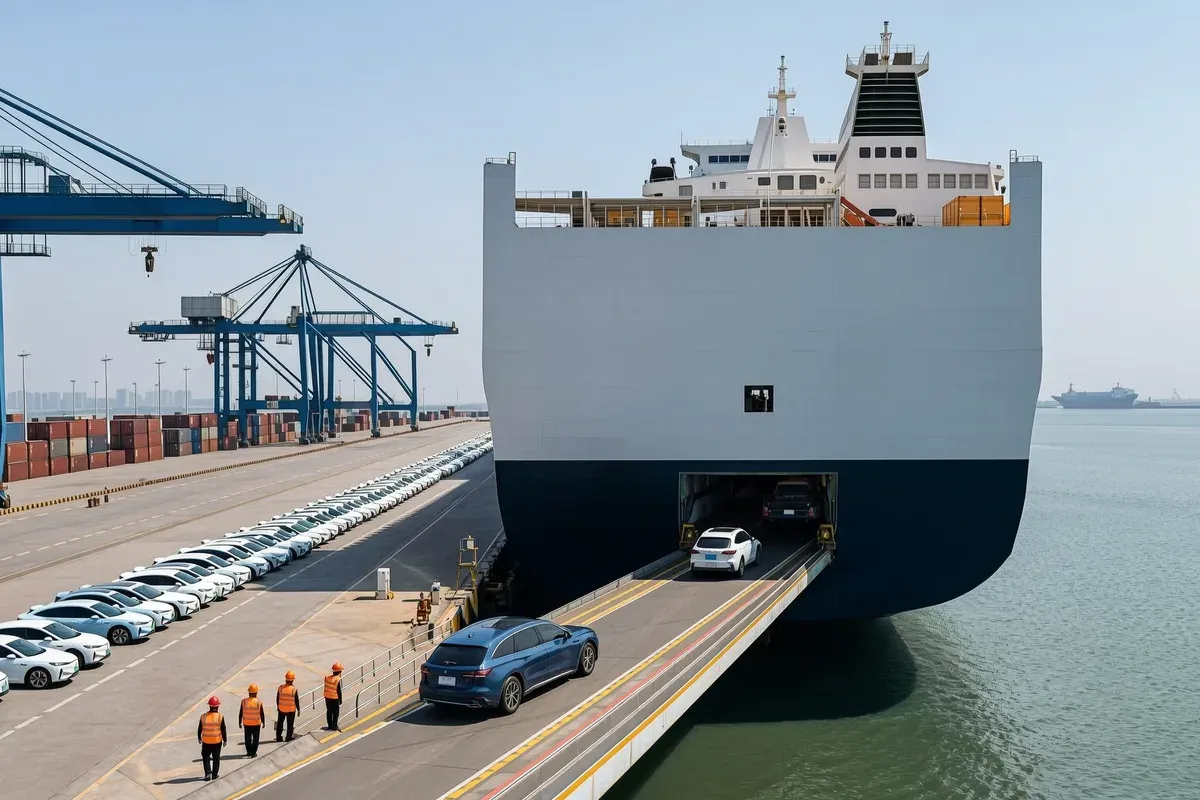
RoRo is how finished EVs move at volume, and it is the cheapest per unit once you are shipping four or more drivable cars to a port with car-carrier calls; containers win for one-to-three units, high-value cars, and shipments that mix vehicles with spare parts. Santos is Brazil’s vehicle gateway, with Paranaguá, Itajaí and Rio de Janeiro taking secondary volume; on the China side, loadings concentrate at Shanghai’s vehicle terminals plus Guangzhou, Lianyungang and Tianjin. BYD’s own growing fleet of dedicated car carriers has added capacity that freight forwarders can now book space on, which has loosened a market that was badly capacity-constrained in 2024.
| Factor | RoRo (car carrier) | 40ft container, racked |
|---|---|---|
| Indicative freight (Oct 2026) | USD 2,000 – 2,800 per unit to Santos | USD 4,800 – 7,000 per box carrying 2 – 3 EVs, plus USD 150 – 350 per car for racking and lashing |
| Transit, Shanghai to Santos | ~30 – 40 days direct | 32 – 45 days, often with transshipment |
| Damage and theft risk | Moderate — open decks, repeated handling | Low — sealed box, professional lashing |
| Sailing frequency | Roughly monthly per carrier and port pair | Weekly, flexible booking |
| Battery dangerous goods handling | Simplified route under IMDG Special Provision 961 for new compliant vehicles in dedicated spaces | Full Class 9 declaration and carrier DG approval required |
| Best for | 4+ running cars, fleet orders | 1 – 3 units, high-value models, vehicles plus parts |
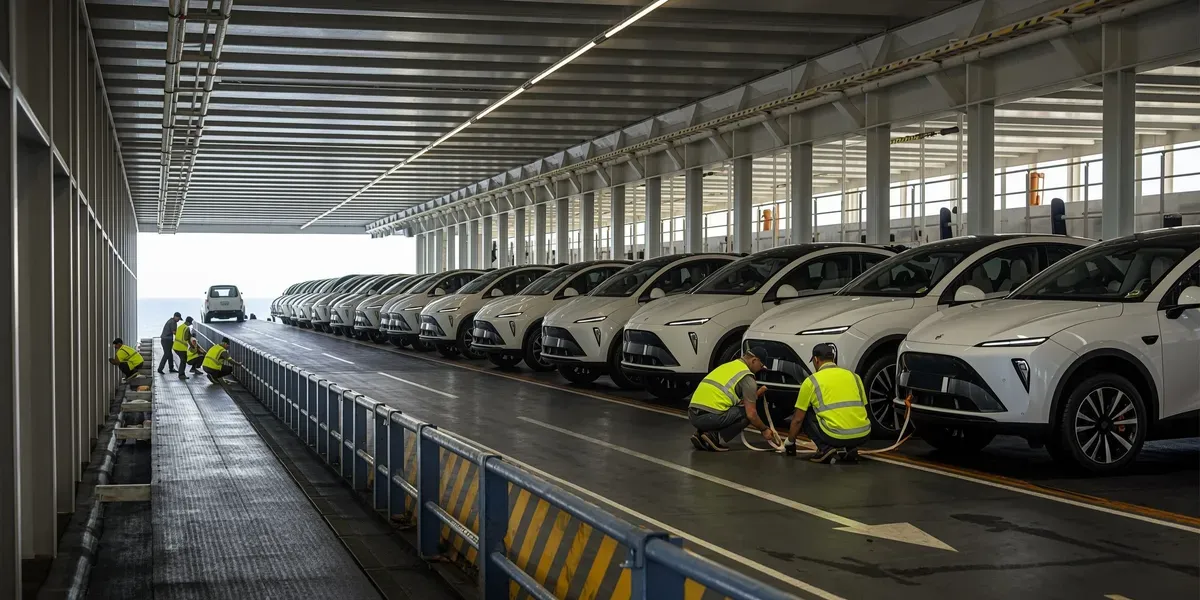
The battery is the part that changed. Since 1 January 2026, when Amendment 42-24 to the IMDG Code became mandatory, a lithium-battery vehicle is no longer declared under the old catch-all UN 3171. It now ships under its own entry by chemistry — UN 3556 for lithium-ion, UN 3557 for lithium-metal, UN 3558 for sodium-ion — all Class 9 dangerous goods. Carriers typically require the traction battery at a reduced state of charge (most operators work inside a 30–50% band and some cap lower), a battery condition statement, no active fault codes, no open safety recalls, and a UN 38.3 test summary for the pack. A shipment declared under the retired UN number gets rejected at the terminal, and rebooking costs weeks — on the RoRo cadence above, potentially a full month. Our guide to how to ship energy storage systems from China covers the same battery documentation in more depth, and the mode-selection logic in FCL vs LCL shipping applies once you start mixing parts into the shipment.
For transit-time planning on specific lane pairs, see how long does shipping from China to Brazil take; for current container rate bands, shipping container rates from China to Brazil tracks the 20ft and 40ft market. Neither article changes the mode decision above: run the numbers per batch, not per habit.
What Is the Step-by-Step Process from Supplier to Registered Vehicle?
A CBU EV import runs through eight gates, and two of them happen before the car even sails. The sequence matters — the import license for vehicles is a prior authorization, not a formality you can fix after arrival.

- Set up the importing entity. A Brazilian company (CNPJ), RADAR habilitation with the Receita Federal, Siscomex access, and a customs broker engaged. RADAR categories cap your annual import value, so match the category to your real volume.
- Pick a homologated model and version. Confirm the CAT, LCVM and INMETRO references against the exact specification and VIN range you are buying, in writing, before any deposit.
- Contract and pay under a clean Incoterm. FOB keeps freight and valuation visible; CIF bundles them. Receita Federal audits vehicle invoices against reference prices, so an invoice trimmed to reduce the II base buys penalties and red-channel delays, not savings. Our fob vs cif comparison explains the trade-off.
- Apply for the Import License (LI) in Siscomex before the car sails. Vehicles are prior-licensed goods; Decex reviews the application with the CAT attached. Booking freight before the LI is approved is the single most common way to start a demurrage clock at Santos.
- Book freight with the battery paperwork attached. RoRo or racked container; the UN 3556 declaration, state-of-charge statement and UN 38.3 summary travel with the booking file, plus pre-shipment inspection and photographic evidence of VIN, odometer and condition.
- Ocean leg. 30 – 45 days to Santos with container tracking; insure the cargo — marine cover runs around 0.3% – 0.5% of insured value, and cargo insurance services explain what a vehicle shipment actually needs.
- Arrival and the Declaration of Importation. Register the DI in Siscomex, pay II, IPI, PIS/COFINS and AFRMM, and clear with your broker. Terminal free time is short; storage and demurrage start accruing on day one of delay. Our customs clearance team pre-checks documents against the physical cargo in China precisely to keep this window tight.
- Pay ICMS to the state and register the vehicle. With tax receipts and the certificates in hand, complete licensing at the state DETRAN. Only a registered, plated car can be legally resold or driven — until then you own inventory, not a car.
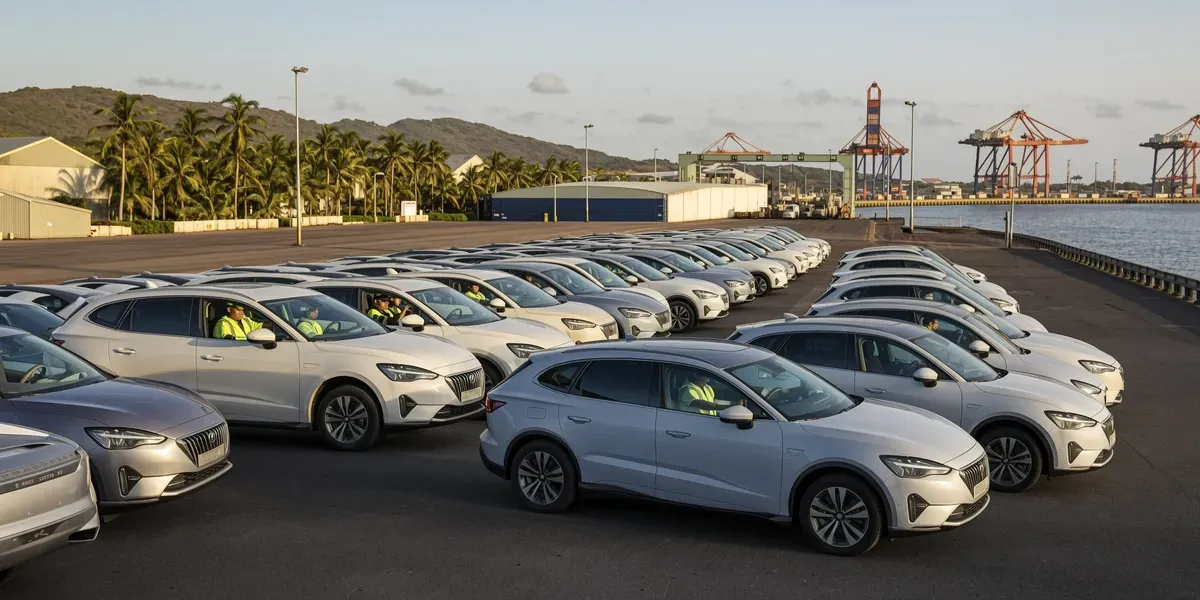
The document set for steps 4 – 8: commercial invoice, bill of lading, packing list, the CAT/LCVM/INMETRO references, the battery dangerous-goods file, and a certificate of origin. That last one does not reduce duty — Brazil grants China no tariff preference — but banks and some state authorities ask for it, so have it issued anyway.
What Does an Imported Chinese EV Actually Cost? A Worked Example
Here is the full stack on a representative mid-size Chinese BEV with a USD 25,000 factory price, RoRo freight to Santos at USD 2,400, and marine insurance at 0.4% — modeled with São Paulo’s standard 18% ICMS and the post-lapse 13.5% IPI rate. Every figure is rounded, and the caveats below are part of the math, not fine print.
| Cost line | Amount (USD) |
|---|---|
| Vehicle, FOB China | 25,000 |
| RoRo freight to Santos | 2,400 |
| Marine insurance (0.4%) | 110 |
| Customs value (CIF) | 27,510 |
| Import duty II (35%) | 9,628 |
| IPI (13.5% on CIF + II) | 5,014 |
| PIS-Import + COFINS-Import (11.75%) | 3,232 |
| AFRMM (25% of freight) | 600 |
| ICMS (18%, calculated por dentro) | 10,101 |
| Total taxes | 28,575 |
| Terminal handling, clearance, broker, Siscomex fee, inland to São Paulo | ~1,200 |
| Landed cost before any dealer margin | ~57,300 |

Total taxes come to about 104% of the customs value, and the landed cost lands at roughly 2.3 times the factory price. If the model qualifies for São Paulo’s reduced 12% BEV ICMS, the ICMS line drops to about USD 6,275 and the landed cost to around USD 53,460 — but that benefit applies only up to the R$ 200,000 price cap, and a fully taxed CBU import generally blows through it. That is the quiet policy trap: the relief exists on paper, and the taxes it is meant to relieve are what push the car above the cap.
Three caveats before you build a spreadsheet on this table. First, the IPI rate must be re-verified at entry — the zero-IPI window for electrified vehicles priced up to R$ 250,000 lapsed on 31 July 2026, and rates above 90 kW of power read from the TIPI table, but excise treatment of imported EVs has moved repeatedly and can move again. Second, ICMS varies by destination state and by benefit renewal, which is why two importers clearing identical cars in different states can differ by five-plus points of total cost. Third, if you are the first to import a non-homologated model, amortize the homologation project across your expected units — on small volumes it can add four figures per car.
For comparison shopping on the freight side, shipping container rates from China to Brazil carries the current 20ft/40ft bands, and LCL shipping from China to Brazil covers spare-parts consolidation — charging cables, floor mats and service stock do not need to ride with the car. Importers moving complete door-to-door programs should also read door to door shipping from China to Brazil.
Where Do Brazil EV Imports Go Wrong?
The failure modes repeat across first-time importers, and all of them are cheaper to prevent than to cure.
Shipping before the LI is granted. The vehicle import license is a prior authorization. A car that sails on an application still “in analysis” risks a refused or delayed license on arrival, and while that sorts itself out the terminal charges storage by the day. At Santos volumes, a two-week documentation stumble can cost more than the freight.
Model and version mismatches. The CAT covers a specific brand, model, version and year in the RENAVAM system. A “same model” with a different battery pack, charging inlet or software calibration is not the same version, and the mismatch surfaces at registration — after every tax is already paid. Match the certificate to the VIN, not the brochure.
Retired dangerous goods numbers. The old habit of declaring lithium-battery vehicles under UN 3171 stopped being valid on 1 January 2026. Bookings declared under the wrong number, with the state of charge outside the carrier’s band, or without the UN 38.3 summary, are refused at load port.
Invoice games. Under-declaring the vehicle value against Receita Federal reference prices triggers penalties and channel-selection delays; a DDP quote that quietly absorbs an unknown II burden just moves the same risk onto your supplier’s margin. Price the car honestly and pick the Incoterm that keeps the valuation auditable.
Quota wishful thinking. The USD 463 million zero-tariff window is for CKD/SKD kits assembled in Brazil, and the 14% CKD rate expires on 31 December 2026. Neither number belongs in a finished-car business plan. Build the plan on the 35% you can prove, and treat any relief that arrives as upside.
Five Checks Before You Wire a Deposit
- Confirm homologation in writing for the exact version and VIN range. Cite the CAT, LCVM and INMETRO references in the purchase contract. If they do not exist for your specification, either change the specification or budget the homologation project before signing anything.
- Model the full tax stack before negotiating price. A 35%-duty CBU needs roughly 2.1 – 2.3 times its FOB price to land and register. Deals priced against a single “35% + something” mental line fail quietly at the DI stage.
- Sort RADAR and the LI path before booking freight. The license is prior; the vessel is not. A booking made against an unapproved application is a bet on a bureaucracy, at monthly RoRo cadence.
- Choose the mode by batch size, not by preference. Four or more running cars: RoRo. One to three units, high-value trims, or vehicles mixed with parts: racked 40ft. Then verify the actual sailing window for your port pair — RoRo acceptance for battery vehicles is confirmed per booking and in writing.
- Budget the clock, not just the freight. Thirty to forty-five days of ocean plus clearance and registration, terminal free time agreed in the quote, and a named broker at Santos before the vessel sails. Demurrage is the line item nobody prices until it is the only line item left.
Efanda Logistics has run China export freight since 2018 from our Shenzhen base, with working relationships across the Shanghai, Yantian, Shekou and Nansha vehicle gates. On this corridor we handle factory and yard pickup, pre-shipment inspection with photographic VIN evidence, export declaration, RoRo and racked-container booking with the full UN 3556 dangerous-goods file, marine insurance, tracking, and coordination with your Brazilian broker on LI and DI timing — one transparent quote with no hidden fees and a dedicated logistics consultant who checks the homologation, licensing and tax questions before you commit money. Importers running parallel programs will find the same machinery in our guide to importing new energy vehicles from China to the USA. Rates and rules move, so send us the model, version, quantity and intended entry port, and we will return a dated, itemized quote showing whether the car can enter, how it should travel, and what it costs on the road.
FAQ: Importing Electric Cars from China to Brazil
Can I personally import a new electric car from China to Brazil? No. Individuals cannot obtain the homologation a new vehicle needs, so a private import cannot be registered. The personal route is limited to your own used car when transferring residence to Brazil — licensed in your name abroad, generally for more than six months, with resale restrictions after entry — plus collector cars around 30 years or older and competition vehicles with authorization.
How much is the import duty on a Chinese EV in Brazil? The II rate is 35% for fully assembled and semi-assembled electrified vehicles since 1 July 2026. Fully knocked-down kits pay 14% until 31 December 2026, then 35%. On top of the II sit IPI (about 13.5% for BEV passenger cars after the July 2026 lapse), PIS/COFINS at 11.75%, the 25% AFRMM freight surcharge, and ICMS at 12% – 18% compounded into its own base.
Is there any way to avoid the 35% duty? Not for a finished car imported from China. The zero-tariff quota of USD 463 million (July – December 2026) applies to CKD/SKD kits for assembly in Brazil, and Mercosur-origin vehicles avoid the TEC only when genuinely produced in the region. There is no individual exemption and no China – Brazil preference agreement.
How much does it cost to ship one EV from China to Brazil? RoRo runs about USD 2,000 – 2,800 per unit to Santos; a racked 40ft container runs USD 4,800 – 7,000 holding 2 – 3 cars plus racking charges. Insurance adds roughly 0.4%. All figures are October 2026 indications and hold for weeks, not months.
How long does the whole import take? Ocean transit is 30 – 45 days to Santos. With the LI approved before sailing and clean documents, clearance and registration add one to four weeks, for roughly two to three months end to end on a homologated model. A missing homologation adds months.
RoRo or container for electric vehicles? RoRo for four or more drivable cars to a served port; a racked 40ft container for one to three units, high-value models, or vehicles shipping with parts. Both are Class 9 dangerous-goods moves requiring the UN 3556 documentation file and carrier approval.
Which Brazilian port should electric cars enter? Santos handles the highest vehicle volume, the main car-carrier calls and the deepest clearance bench. Paranaguá and Itajaí serve southern destinations; Rio de Janeiro takes selected carrier routings. Confirm the port pair per sailing, because RoRo schedules are not weekly.
Do I need dangerous goods paperwork for the traction battery? Yes. Under IMDG Amendment 42-24, in force since 1 January 2026, lithium-battery vehicles declare as UN 3556 (lithium-ion), UN 3557 (lithium-metal) or UN 3558 (sodium-ion), Class 9. Carriers want a reduced state of charge, a battery condition statement, no open recalls and the UN 38.3 test summary, and RoRo acceptance is confirmed per booking.

Written by the EFANDA Logistics team — a Shenzhen-based freight forwarder established in 2018, moving cargo from China to ports worldwide with end-to-end pickup, consolidation, customs and door delivery.About us