How to prevent goods shipped from China to the UAE from suffering devastating physical damage or facing weeks of customs delays? This is the million-dollar question for importers navigating the booming Middle Eastern market. The UAE offers incredible business opportunities, but extreme summer heat (often exceeding 50°C in steel containers) and strict customs regulations can easily ruin your cargo, leading to massive financial losses and eroded customer trust.
With over a decade of experience managing international freight forwarding at Efanda Logistics, I’ve seen firsthand how importers frequently deal with moisture-ruined electronics, crushed packaging, or costly shipping delays due to customs holds at Jebel Ali port. This comprehensive guide reveals exactly where the breakage happens and provides actionable strategies on how to prevent cargo damage when shipping from China to UAE, including secure packaging methods, essential customs clearance tips, and why partnering with an expert Shenzhen freight forwarder can completely safeguard your supply chain.
Where Do Cargo Damage and Delays Actually Happen?
Most importers instinctively blame the ocean carrier when a shipment arrives damaged or late. However, industry data and our own internal shipping audits at Efanda Logistics tell a very different story: up to 85% of physical cargo damage occurs before the vessel even leaves ports like Shenzhen or Shanghai.
The primary sources of physical transit damage stem from inadequate supplier packaging in China, improper FCL (Full Container Load) / LCL (Less than Container Load) container loading that causes shifting during transit, and severe temperature and moisture fluctuations during the sea voyage. On the other hand, the vast majority of shipping delays are not caused by slow vessels, but by missing or inaccurate paperwork failing to meet UAE customs regulations. This administrative failure inevitably leads to goods being detained at the port, racking up daily Demurrage & Detention (D&D) charges. Always remember: transit times and shipping rates from China to the Middle East fluctuate; relying solely on carrier-direct rates often hides the true cost of poor coordination and delays.
How to Prevent Cargo Damage: Physical Protection & Packaging
Secure Packaging for Shipping from China to Dubai
To effectively prevent goods loss and damage, you must understand the critical difference between standard Chinese domestic packaging and international export-grade standards. Domestic corrugated boxes are often only 3-layer and easily collapse when stacked inside a shipping container.
For international transit, you must demand 5-layer heavy-duty corrugated boxes. Inside the box, delicate items require comprehensive bubble wrap & dunnage (such as foam inserts or inflatable airbags) to absorb shocks and prevent internal movement. Secure packaging for shipping from China to Dubai is your absolute first line of defense against the rigors of ocean freight.
Proper Palletizing & Secure Container Loading
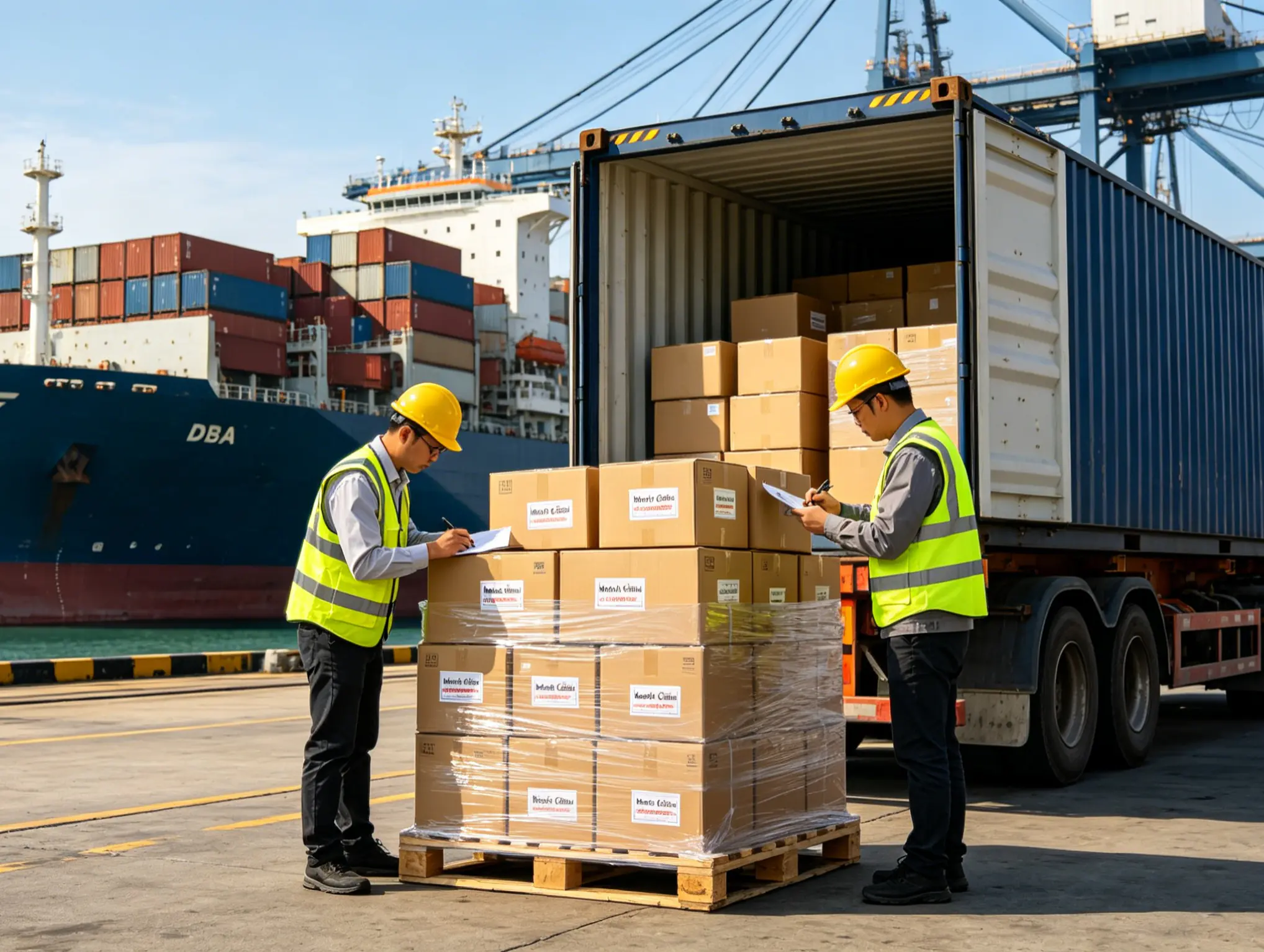
Throwing loose cartons into a container is a recipe for disaster. Proper palletizing ensures that your cargo is unitized and protected. Always use standard Euro pallets, add corner protectors to prevent strap damage, and heavily shrink-wrap the entire unit. When loading the container, your logistics team must use proper lashing and internal bracing to ensure the cargo cannot shift, tip, or crush adjacent items. For more details on transit times, check our guide on how long does shipping from china to uae take. If you are budgeting for your next shipment, we also recommend reviewing the exact shipping container rates from china to uae 2026 update.
Temperature Control & Moisture Prevention
The journey from China to the Middle East involves extreme environmental changes. Container rain (condensation that forms inside the container) can destroy textiles, electronics, and cardboard packaging. Implementing strict moisture prevention strategies, such as hanging high-capacity container desiccants and using moisture barrier bags, is non-negotiable. If you are shipping highly sensitive goods like cosmetics, pharmaceuticals, or high-end electronics, investing in temperature control shipping (using Reefer containers) is the only guaranteed way to survive the 50°C summer heat in the UAE.

Customs Clearance Tips to Prevent Delays China to UAE
Mastering UAE Customs Regulations
Physical protection is useless if your goods are seized at the border. The UAE’s Federal Customs Authority (and ZATCA in neighboring Saudi Arabia) enforces rigorous compliance. For example, a major stumbling block for new importers is the “Made in China” label. It is a strict requirement that the country of origin must be permanently affixed to the product (e.g., engraved or sewn), not just attached as an easily removable sticker. Failing this single rule will result in immediate rejection. We once intervened when a client nearly shipped $50,000 worth of unbranded electronics; our compliance team caught the missing permanent labels at our Shenzhen warehouse, preventing a catastrophic rejection at Dubai Customs.
Document Accuracy is Key
These customs clearance tips to prevent delays China to UAE will save you thousands of dollars: ensure your Commercial Invoice & Packing List accuracy is flawless. Your commercial invoice and packing list must perfectly match the physical cargo. Furthermore, applying the correct HS Code (Harmonized System Code) classification is vital, as it determines your duty rates and import restrictions. Customs delays can derail your entire supply chain. Recently, our compliance team pre-screened a client’s HS codes and commercial invoices for a shipment to the Middle East, preventing a potential 2-week hold at the destination port due to missing certification documentation. Finally, never ship without a valid Certificate of Origin issued by the relevant Chinese Chamber of Commerce.
Handling Sensitive Goods
If your cargo includes items like batteries, liquids, cosmetics, or chemicals, it will be heavily scrutinized. You must prepare the Material Safety Data Sheets (MSDS) well in advance. Providing these documents early to your Freight Forwarder ensures they can book the appropriate carrier and avoid last-minute carrier rejections or customs holds.
Controlling the Source: Managing Chinese Suppliers
Bridging the Communication Gap
A significant reason for cargo damage is that Chinese factories, in an effort to maintain competitive pricing, often default to the cheapest available packaging. To prevent this, you must eliminate ambiguity. Write highly specific packaging requirements directly into your purchasing contract, detailing box thickness, pallet types, and void-fill materials.
The Power of Pre-shipment Inspection
Never blindly trust that a supplier has followed your packaging instructions. Conducting a pre-shipment inspection at the factory level is crucial. Verifying the packaging quality, labeling, and product condition before the goods are loaded into the container is the most cost-effective risk management in logistics strategy you can deploy.
Leveraging a Shenzhen Freight Forwarder
Rather than dealing with factories directly on complex logistics, smart importers leverage a Shenzhen Freight Forwarder like Efanda Logistics for seamless shipping from shenzhen to uae. We intercept shipments at our local Shenzhen warehouse to perform quality checks, re-pack flimsy cartons, reinforce pallets, and verify compliance labels before container loading. Navigating multiple carriers and local handlers is a headache for importers. Our Door-to-Door (D2D) service eliminated this complexity for a Middle Eastern client recently, coordinating factory pickup in Guangzhou, export clearance, ocean freight, and final truck delivery directly to their warehouse in Dubai. This true End-to-End Solutions approach stops 80% of damage and delay risks before the cargo even leaves Chinese soil.
Comparison: Factory Standard vs. Export-Grade Packaging
Understanding the return on investment for better packaging is crucial for your bottom line.
| Packaging Type | Box Quality | Internal Protection | Moisture Control | Risk of Transit Damage | Suitability for UAE |
|---|---|---|---|---|---|
| Factory Default | 3-layer corrugated | Thin foam, empty voids | None | High (Crushing, shifting) | Poor (High risk of water/heat damage) |
| Export-Grade | 5-layer heavy-duty | Bubble wrap, custom dunnage | Desiccants & barriers | Low (Cargo remains secure) | Excellent (Built for ocean transit & heat) |
Spending a little extra upfront on proper palletizing and export-grade packaging saves thousands of dollars in potential freight claims, delayed sales, and ruined brand reputation.
Risk Management: Insurance and Handling Freight Claims
Insurance for Goods Shipped from China to UAE
Even with perfect packaging, unforeseen events at sea or during port handling can occur. Standard carrier liability (often calculated by weight) pays out pennies on the dollar for damaged cargo. Therefore, securing comprehensive Cargo Insurance (All-risk coverage) for goods shipped from China to the UAE is essential, especially for high-value commercial shipments. It is the ultimate safety net for your investment.
Action Plan for Damaged Goods
If the worst happens and your goods arrive damaged, how you handle the first 48 hours determines whether you recover costs or absorb the loss.

- Stop and Secure: Do not forward damaged goods to your final customers or Amazon FBA (Fulfillment by Amazon) centers.
- Photograph Everything: Immediately take 15-20 timestamped, high-resolution photos of the damaged products, the packaging, and any visible container damage.
- Notify Your Forwarder: Contact your freight forwarder instantly to request a damage inspection report. Remember, for ocean freight, you have a strict 9-day window from delivery to file freight claims with the carrier. Furthermore, be aware that you’ll need the original Bill of Lading (B/L) or Air Waybill (AWB) to process the claim efficiently.
You may be interested in the following related articles:
- shipping from china to oman
- shipping from china to yemen
- shipping from china to israel
- shipping from china to qatar
- shipping from china to kuwait
FAQ
How to prevent cargo damage when shipping from China to UAE during the summer months?
To combat the extreme summer heat, use container desiccants to absorb moisture, ensure export-grade 5-layer packaging, and upgrade to temperature control shipping (Reefer containers) if your goods are sensitive to temperatures exceeding 50°C.
Who is responsible if goods are damaged during UAE customs clearance?
Generally, customs authorities are not liable for damage during inspection. The liability falls on your cargo insurance policy or the freight forwarder if negligence during port handling can be proven. Always ensure your goods are insured door-to-door.
How can real-time cargo tracking help prevent goods loss freight forwarding China to UAE?
Real-time cargo tracking provides visibility over your shipment’s location and status. It alerts you and your forwarder to unexpected route deviations or extended port stays, allowing for rapid intervention before delays escalate into cargo loss.
Is Door-to-Door shipping Dubai safer than Port-to-Port?
Yes. Door-to-Door shipping Dubai reduces the number of independent handlers touching your cargo. By using a single reliable door to door-shipping agent from china to middle east to manage the entire journey, you minimize the risk of miscommunication, mishandling, and delays.
Conclusion
Preventing damage and delays is not about luck; it requires proactive risk management, starting from the factory floor in China all the way to final delivery in the UAE. By enforcing strict packaging standards, mastering customs compliance, and knowing how to act swiftly if damage occurs, you can protect your supply chain and your bottom line.
While carrier-direct rates might look appealing initially, the hidden costs of poor coordination, delayed customs clearance, and lack of tracking often make an experienced freight forwarder a much more cost-effective choice. Stop leaving your cargo to chance. Partner with Efanda Logistics for competitive and transparent pricing based on real market conditions, personalized service from a dedicated logistics specialist, and reliable end-to-end solutions. Contact our Shenzhen team today (+86 18929345880), and let us safeguard your next shipment to the Middle East.