Are you paying more than you should for sea shipping from China to Chile? San Antonio and Valparaíso together handle the bulk of Chile’s container imports from Chinese factories, yet plenty of importers still get caught out by seasonal rate spikes, destination charges they never budgeted for, and customs holds that turn a 35-day voyage into a 50-day headache. Whether you are moving a few pallets of consumer goods or full containers of machinery for a Santiago warehouse, the difference between a smooth import and an expensive one usually comes down to a handful of numbers nobody showed you up front.
This 2026 guide breaks down what sea shipping from China to Chile really costs, how long it takes, how Chilean customs taxes your cargo, and where the hidden fees hide. You will find current FCL and LCL rate tables, a FCL-vs-LCL breakeven calculation, a Chile customs clearance checklist built around the China–Chile free trade agreement, and practical advice on choosing a freight forwarder worth your money.
How Long Does Sea Shipping Take from China to Chile?
Typical sea freight transit from China to Chile takes 28–38 days port-to-port, and 38–50 days door-to-door once consolidation, customs clearance, and inland trucking to Santiago are included. The route runs across the Pacific and through the Panama Canal to Chile’s central coast, which puts it firmly in “month-plus” territory no matter which carrier you book.
| Origin Port (China) | Destination Port (Chile) | Transit Time | Route Type |
|---|---|---|---|
| Shenzhen / Guangzhou | San Antonio | 28 – 33 days | Panama Canal |
| Shanghai / Ningbo | San Antonio | 30 – 36 days | Panama Canal |
| Shanghai / Ningbo | Valparaíso | 30 – 37 days | Panama Canal |
| Qingdao / Tianjin | San Antonio | 33 – 38 days | Panama Canal |

Three factors explain most of the spread between quotes:
- Panama Canal transit. Nearly all China–Chile container services transit the Panama Canal before turning south along the Pacific coast of South America. Canal slot availability and seasonal transit restrictions can add 2–5 days at short notice.
- FCL vs. LCL. Full Container Load (FCL) moves directly from origin to destination port. Less than Container Load (LCL) adds 4–7 days for consolidation at a Chinese warehouse and deconsolidation at a bonded facility in San Antonio.
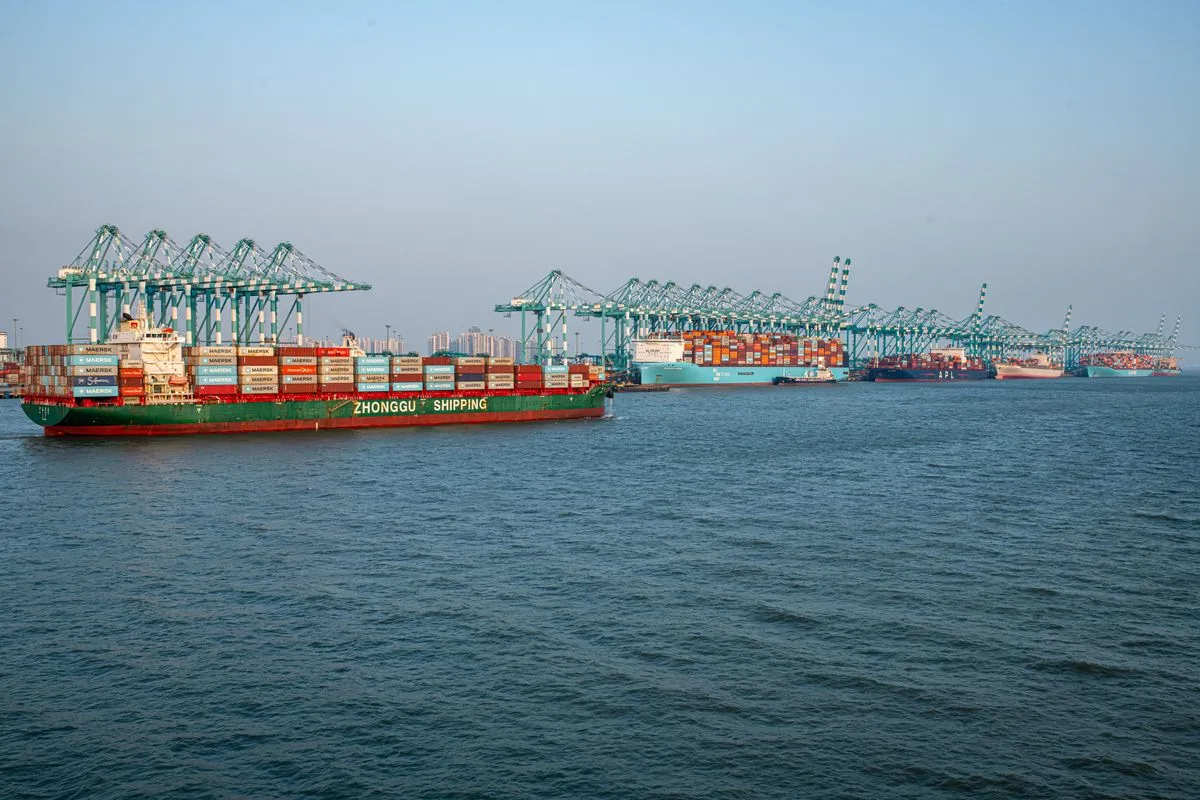
- Port congestion at San Antonio. Chile’s largest container port has operated near capacity through 2026, with vessel waiting times and terminal backlogs adding 3–7 days compared with early 2025. Build buffer time into any delivery promise you make to your own customers.
One timing point unique to this lane: Chile’s cherry export season (December–February) floods the same ports with reefer containers bound for China. Departure delays and equipment shortages on inbound services are common in those months, so avoid cutting it close if your goods need to land before Chile’s summer sales peak.
Our Industry Insights: When a client asks us for a firm delivery date in Santiago, we quote the ocean transit plus a realistic 7–10 days for terminal handling, Chilean customs clearance, and the truck leg from San Antonio. In our experience the single biggest delay factor on this lane is not the ocean; it is a commercial invoice that does not match the packing list, which can hold a container in customs for a week.
Sea Freight Cost from China to Chile: FCL, LCL & Container Rates
In 2026, a 20ft container from China to Chile costs roughly $2,300 to $4,100, a 40ft or 40HQ container runs $3,400 to $5,100, and LCL cargo is charged at $65 to $120 per cubic meter (CBM). These are port-to-port ocean freight estimates. Rates on this lane have climbed since August 2025 on the back of pre-holiday restocking and tight capacity, and your total landed cost adds origin charges, destination handling, Chilean duties and VAT, and inland delivery.
FCL Shipping Rates from China to San Antonio
The table below shows 2026 estimated ocean freight for full containers by port pair. The lower end applies in shoulder periods; the upper end reflects the August–November pre-holiday rush and space shortages around Chinese New Year.
| Origin (China) | Destination (Chile) | 20ft Container | 40ft / 40HQ Container |
|---|---|---|---|
| Shenzhen (Yantian/Shekou) | San Antonio | $2,300 – $3,600 | $3,400 – $5,000 |
| Shanghai | San Antonio | $2,400 – $3,800 | $3,500 – $5,100 |
| Ningbo | San Antonio | $2,350 – $3,700 | $3,450 – $5,050 |
| Guangzhou (Nansha) | Valparaíso | $2,500 – $3,900 | $3,600 – $5,200 |
| Qingdao | San Antonio | $2,600 – $4,100 | $3,800 – $5,400 |
Shipping Container Rates from Shenzhen to San Antonio
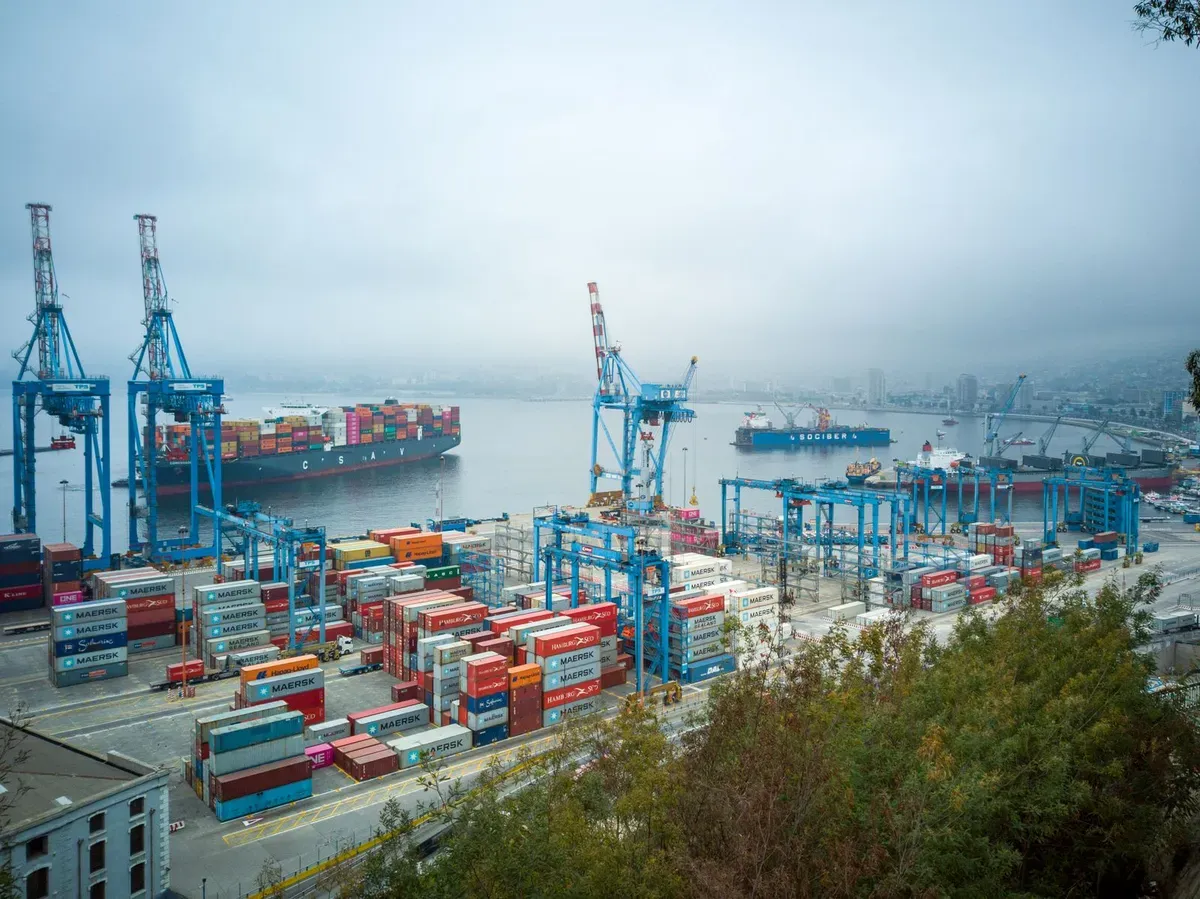
For importers sourcing in the Pearl River Delta, Shenzhen to San Antonio is the most competitive port pair on this lane, with dense weekly sailings from Yantian and Shekou. A 20ft container typically quotes $2,300–$3,600, a 40HQ $3,400–$5,000, with 28–33 days of ocean transit. If your supplier sits anywhere in Guangdong, this is usually your default routing.
How Much Does It Cost to Ship a 20ft Container to Chile?
A 20ft container is the right tool when your cargo fills 15–28 CBM and is heavy or compact: machinery, building materials, hardware, auto parts. Budget $2,800–$4,200 all-in for 2026 depending on season and origin. LCL makes sense below 14–15 CBM, and the 40HQ becomes the cheapest unit per cubic meter once you pass roughly 28 CBM — for smarter load planning, see our guide to what is the standard pallet size. Oversized project cargo that will not fit a standard box can move on open-top or flat-rack (OOG) equipment on the same lane.
Several forces move these numbers week to week. The Bunker Adjustment Factor (BAF) follows global fuel prices, carriers announce General Rate Increases (GRI) at the start of most months, and demand ahead of Chile’s summer consumption peak (December–February) typically lifts rates 10–20%. Chile’s peso (CLP) swings against the USD also shift landed costs, which is why many importers ask their forwarder for a short-term fixed quote. Whatever rate you are quoted, do not skip cargo insurance services — at roughly 0.2%–0.5% of the CIF value, it is cheap protection on a 35-day voyage through two oceans and a canal.
Whatever your cargo size, a trustworthy sea freight from China quote is itemized from the start — freight, origin charges, destination handling, and taxes listed separately, so nothing surfaces as a surprise at the port.
FCL vs LCL: Which Container Mode Saves You More on the China–Chile Route?
For shipments under roughly 14–15 CBM, LCL is usually cheaper; above that threshold, a 20ft FCL container wins on total landed cost. Chilean destination charges are moderate compared with African or Middle East ports, but LCL still stacks up per-shipment fees that erase its headline savings once your cargo gets big. We break the full comparison down in our fcl vs lcl shipping guide.
LCL looks cheap on paper at $65–$120/CBM, but San Antonio adds destination terminal handling, CFS unpacking charges, and document handover fees per shipment. Once your cargo reaches about 14–15 CBM, those combined costs pass the flat rate of an entire 20ft container — and FCL removes the risk of your goods sharing space with other shippers’ freight.
| Cargo Volume | LCL Total Cost (freight + destination fees) | 20ft FCL Total Cost | Cheaper Option |
|---|---|---|---|
| 5 CBM | ~$550 – $1,000 | $2,800 – $4,200 | LCL |
| 10 CBM | ~$1,000 – $1,800 | $2,800 – $4,200 | LCL |
| 14 CBM | ~$1,400 – $2,450 | $2,800 – $4,200 | Borderline |
| 16 CBM | ~$1,600 – $2,800 | $2,800 – $4,200 | FCL |
| 22 CBM | LCL not recommended | $2,800 – $4,200 | FCL |

Beyond the breakeven point, FCL delivers faster transit (no consolidation or deconsolidation), lower damage risk, and a container you can seal at the factory and control until delivery.
Real-Life Scenario: A Santiago importer of LED lighting was shipping 15 CBM by LCL every six weeks from Shenzhen. After we compared the actual San Antonio CFS and unpacking fees against a 20ft FCL booking, they switched. Their per-shipment cost fell by about 15%, and the cargo stopped arriving with repacking damage from shared container loads.
Door to Door Shipping China to Chile DDP: What’s Really Included
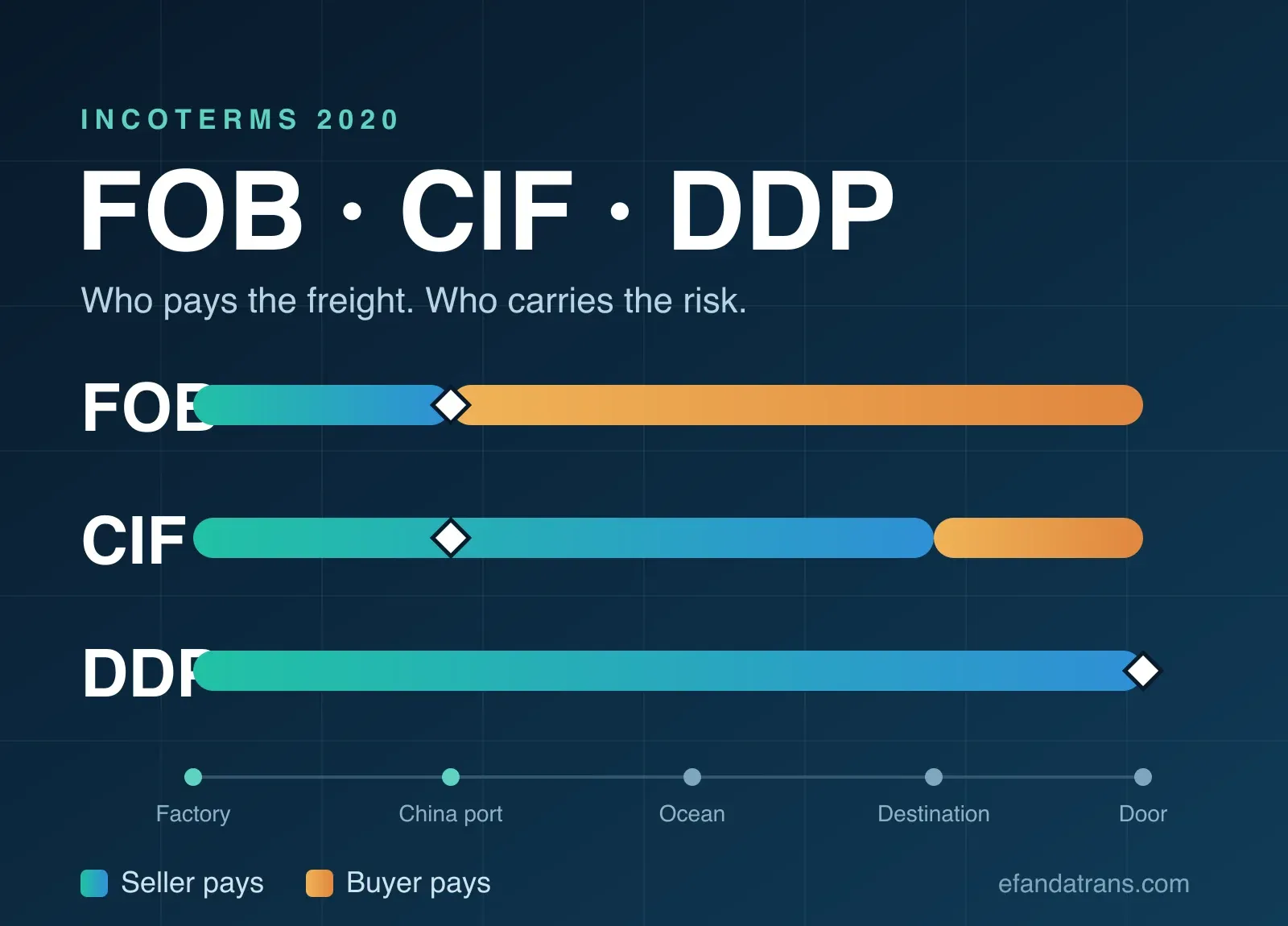
Door-to-door DDP (Delivered Duty Paid) shipping from China to Chile bundles every step into one all-inclusive price: pickup at the Chinese factory, export customs, ocean freight through the Panama Canal, Chilean import clearance, payment of all duties and VAT, and final delivery to your door. It is the most hands-off option on this lane, and it removes the most common causes of surprise costs.
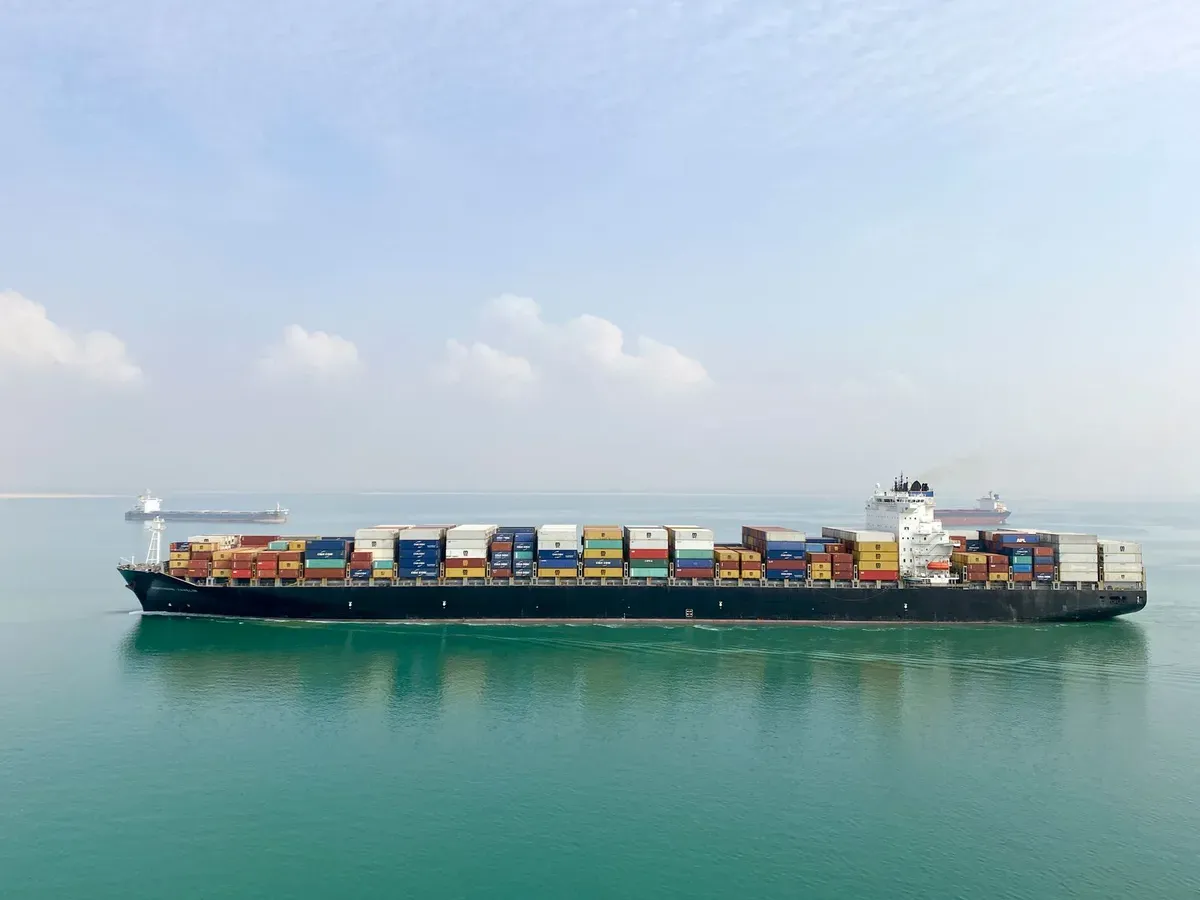
Under Incoterms 2020, DDP pushes responsibility for the entire logistics chain onto the freight forwarder. Compare that with FOB (Free on Board), where you take over risk and cost once the cargo crosses the ship’s rail in China, or CIF (Cost, Insurance, and Freight), where the seller arranges ocean freight but you still handle Chilean clearance and inland delivery. EXW (Ex Works) is the riskiest for buyers, because responsibility starts at the factory gate.
| Incoterm | Who Pays Ocean Freight | Who Handles Chilean Import Clearance | Who Pays Duties & VAT | Risk for Buyer |
|---|---|---|---|---|
| EXW | Buyer | Buyer | Buyer | Highest |
| FOB | Buyer | Buyer | Buyer | High |
| CIF | Seller | Buyer | Buyer | Medium |
| DDP | Seller/Forwarder | Forwarder | Forwarder | Lowest |
Still deciding between buyer-arranged and seller-arranged terms? Our fob vs cif guide explains exactly where risk and cost shift.
A typical DDP sea freight rate to Chile runs $180–$300 per CBM all-in — no surprise terminal charges, no customs bills you did not budget for, and no customs broker to manage yourself. DDP suits first-time Chilean importers without an established customs setup, e-commerce sellers fulfilling from Santiago, and businesses that do not want to build an import department. If you already work with a Chilean customs agent and hold your own importer registration, buying under FOB can be cheaper — but you take on the clearance responsibility and the risk that comes with it. This end-to-end service is exactly what Efanda Logistics delivers: founded in 2018, headquartered in Shenzhen, with transparent itemized pricing and a dedicated logistics specialist tracking your cargo from factory pickup to final delivery in Chile.
Chile Customs Clearance: 6% Duty, 19% IVA & the China–Chile FTA
Clearing customs in Chile means paying a 6% ad valorem duty on the CIF value plus 19% VAT on top — unless your goods qualify for the China–Chile free trade agreement, which zeroes the duty on roughly 98% of products. Chile has one of Latin America’s simplest tariff structures, and understanding it before you ship is the cheapest insurance you can buy.
How Chilean Import Taxes Are Calculated
Chile’s tax math is refreshingly simple compared with most destinations:
- Ad valorem duty: 6% of the CIF value (goods + insurance + freight). A small set of products — wheat, sugar, and some price-band items — carry specific duties instead.
- VAT (IVA): 19% applied to the CIF value plus the duty.
Worked example from the Chilean customs authority (Servicio Nacional de Aduanas), on a CIF value of USD 1,000: duty is $60 (6%), VAT is $201.40 (19% of $1,060), total customs taxes $261.40. Luxury goods, alcoholic beverages, and fuels attract additional specific taxes on the same base.
The China–Chile FTA: Your 6% Back
The free trade agreement in force since 2006 — upgraded by a protocol effective March 1, 2019 — removes the ad valorem duty entirely on about 98% of tariff lines when you present a valid certificate of origin. In practice, almost every ordinary consumer and industrial product shipped from China enters Chile at 0% duty, leaving only the 19% VAT. Skipping the certificate of origin is literally paying 6% you do not owe.
Documents Required for Chilean Customs
| Document | Issued By | Purpose |
|---|---|---|
| Commercial Invoice | Exporter | Declares the value of the goods |
| Packing List | Exporter | Details contents, weights, and dimensions |
| Bill of Lading (B/L) | Carrier | Contract of carriage and title to the goods |
| Certificate of Origin (FTA) | Exporter / Chamber | Unlocks 0% duty under the China–Chile FTA |
| Price Affidavit | Importer | Declared-value sworn statement, supplied via your customs agent |
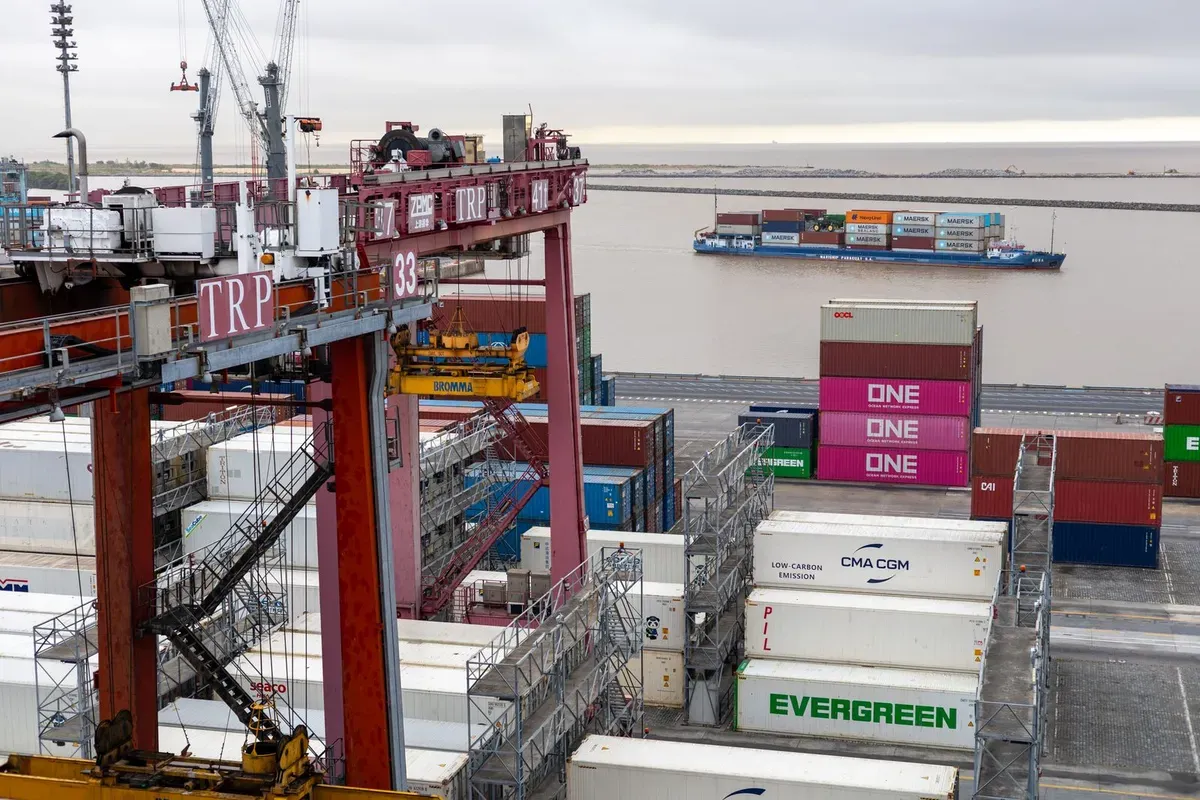
Two Chile-specific rules catch first-time importers. First, for commercial imports with an FOB value above USD 1,000, the customs declaration must be filed by a licensed customs agent (agente de aduana) — you cannot self-clear. Second, your company needs a Chilean tax ID (RUT) registered for imports; without it, cargo sits in the terminal accruring storage charges. With complete, consistent paperwork, clearance typically takes 2–5 days; Chile’s electronic declaration system moves faster than most Latin American peers.
Real-Life Scenario: A Valparaíso client importing kitchenware paid the 6% duty for two years because their Chinese supplier never issued the FTA certificate of origin. We flagged it during a routine quote review, helped the supplier register with the authorized issuing body in China, and their next shipment cleared at zero duty — saving about $1,900 on a single 40HQ container.
San Antonio Port Congestion & Hidden Destination Charges: Demurrage, Detention & THC
The cheapest ocean freight quote is rarely the cheapest shipment, because destination charges at San Antonio and Valparaíso — THC, delivery order fees, port storage, demurrage, and detention — routinely add $250–$500 per container to your landed cost. Chilean terminal charges are moderate by global standards, but they still turn a “great rate” into a margin problem when nobody budgeted for them.
Destination Charges You Will Actually See
| Charge | Typical Amount (San Antonio) | Trigger |
|---|---|---|
| THC (Terminal Handling Charge) | $100 – $160 / container | Terminal handling at destination |
| Delivery Order (DO) Fee | $30 – $70 / bill | Release documents from carrier |
| Customs Agent Fee | $100 – $250 / entry | Chilean declaration and release |
| Port Storage | $35 – $90 / day | Container sits in terminal beyond free time |
| Inland Trucking (San Antonio → Santiago) | $250 – $550 / container | Road delivery to the capital region |
Carriers commonly grant around 14–21 days of free time at Chilean ports, which is more generous than most destinations — but only if you actually use it. Pre-book your customs agent and trucking before the vessel arrives, and the free time rarely matters.

Demurrage and Detention: Still Budget Killers
Demurrage applies when your container stays inside the terminal beyond free time; detention applies when you have taken the empty unit out but not returned it. Even with generous free days, we have seen clients lose a shipment’s margin to five days of demurrage because an arrival notice sat unread. Set tracking alerts from the day the vessel departs China, not the day it arrives.
Three habits keep D&D off your invoice:
- Have your RUT, customs agent, and import documents ready before the vessel arrives.
- Pre-book inland trucking to Santiago so the container leaves the terminal within a day of release.
- Diarize every free-time deadline from the bill of lading.
A low base rate quoted well under market is a warning sign: forwarders who undercut on freight typically inflate THC, document fees, or “handling” charges at destination to recover it. Always demand a transparent, itemized, all-in quote before booking.
How to Choose the Best Freight Forwarder from China to Chile
The best freight forwarder from China to Chile shows full-service capability — factory pickup, export clearance, Panama Canal ocean transport, Chilean customs coordination, and final delivery — backed by verifiable licenses and itemized pricing. A forwarder that only books ocean space is a booking agent, and you will pay for the coordination gap at the worst possible moment. New to the industry? Start with our guide to the best freight forwarder from China to USA.
Use this 8-point checklist when comparing candidates:
- Lane experience — How many China–Chile shipments per month, and which carriers do they work with?
- Full-service capability — Pickup → export customs → ocean freight → Chilean import clearance → delivery.
- Credentials — Ask for their Class-A freight forwarder license, NVOCC qualification, and memberships such as FMC or Jctrans. No license, no deal.
- Transparent pricing — Do they itemize THC, duties, VAT, and inland delivery, or quote a bare freight rate?
- Bilingual support — Chinese-English communication cuts document errors sharply.
- Real-time tracking — Can they tell you where your container is, including the canal transit?
- Contingency plans — What happens if the vessel is rolled at Panama or San Antonio is congested?
- Client references — Ask for a Chilean importer you can actually call.
When you request a quote, ask five questions: Is this an all-in landed price or port-to-port only? What destination charges are included? How many free days at San Antonio before demurrage starts? Who files the Chilean customs declaration, and who holds the importer RUT? What is your policy if the shipment misses the vessel? Companies that answer clearly and in writing are the ones worth shipping with.
For a partner that ticks every box — established in 2018, based in Shenzhen, offering end-to-end sea shipping from China to Chile with transparent pricing and a dedicated logistics consultant on every shipment — reach out to Efanda Logistics for a free quote.
FAQ
How long does sea freight take from China to Chile?
Port-to-port via the Panama Canal takes 28–38 days. Add 7–10 days for customs clearance and inland trucking for a realistic door-to-door estimate of 38–50 days.
Is LCL or FCL better for shipping to Chile?
Below about 14–15 CBM, LCL is cheaper. Above that, a 20ft FCL wins on total landed cost and adds speed plus lower damage risk.
Do I need a customs agent to import into Chile?
Yes, for commercial cargo over USD 1,000 FOB, a licensed agente de aduana must file the declaration. You also need a Chilean RUT tax ID registered for imports.
Do Chinese goods pay import duty in Chile?
Normally 6% ad valorem on CIF, but with a valid certificate of origin under the China–Chile FTA, roughly 98% of products enter at 0% duty. The 19% VAT always applies.
What documents are needed for Chilean customs?
Commercial invoice, packing list, bill of lading, FTA certificate of origin, and the importer’s price affidavit. They must match each other exactly to avoid inspections.
How much does it cost to ship a 20ft container to Chile?
In 2026, expect $2,300–$4,100 port-to-port depending on origin port and season, plus roughly $250–$500 in destination charges and 19% VAT (plus 6% duty if you skip the FTA certificate).
If your goods cannot wait a month at sea, compare our air freight from China option for time-critical Chilean cargo.
Conclusion
Sea shipping from China to Chile is the most cost-effective way into one of South America’s most open import markets — provided you price the whole journey, not just the ocean freight. Plan for 28–38 days port-to-port through the Panama Canal, budget $2,300–$5,100 for FCL or $65–$120/CBM for LCL, remember the FCL breakeven at 14–15 CBM, and never let a shipment leave Shenzhen without its FTA certificate of origin.
If you want a transparent, all-in quote for your next shipment — with a dedicated logistics specialist managing your cargo from Shenzhen to your door in Chile — contact Efanda Logistics today. Send us your cargo volume, weight, product type, and HS Code, and we will show you exactly what sea shipping from China to Chile costs before you commit. Rates above are 2026 estimates and fluctuate with market conditions; always confirm a live quote for your specific shipment.

Written by the EFANDA Logistics team — a Shenzhen-based freight forwarder established in 2018, moving cargo from China to ports worldwide with end-to-end pickup, consolidation, customs and door delivery.About us