How do you get a container from a Chinese factory to a warehouse in Amman without the freight quote quietly doubling along the way? That is the question every Jordanian importer eventually confronts, because sea shipping from China to Jordan concentrates risk in a way few lanes do: one destination port, one road up to Amman, a tax stack that runs well past the freight invoice, and a Red Sea crossing that no carrier can route around. China is Jordan’s largest source of imports — Chinese exports to Jordan reached about $6.29 billion in 2025 — and virtually all of that volume heavier than a courier parcel moves through the Port of Aqaba.
This guide breaks the lane down the way an experienced forwarder would: real FCL and LCL rate bands for October 2026, transit times by departure port and transshipment hub, Jordan’s customs math (duty by HS code, the 16% general sales tax, and the small fees nobody mentions), the 2026 congestion story at Aqaba, and the levers that actually cut landed cost. For air cargo and express, see our companion guide on air freight from China to Jordan; for the full route overview, start with shipping from China to Jordan.
How Long Does Sea Shipping Take from China to Jordan?
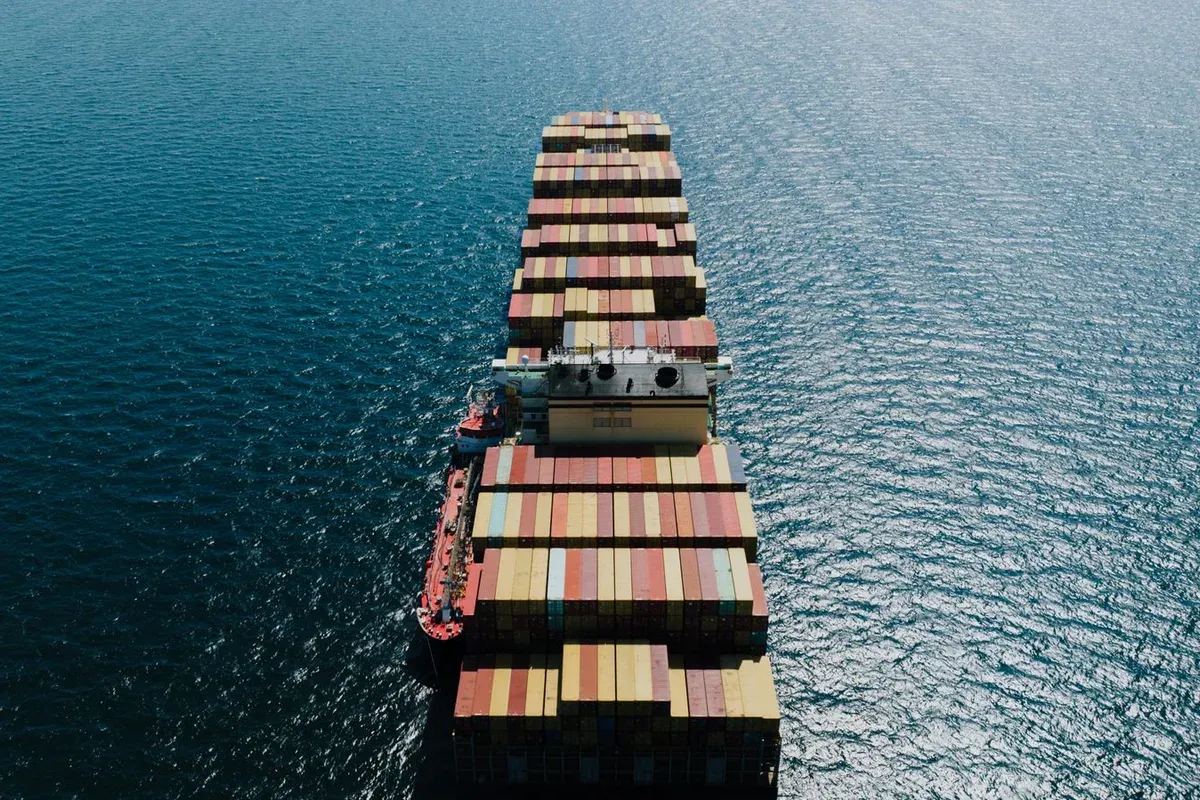
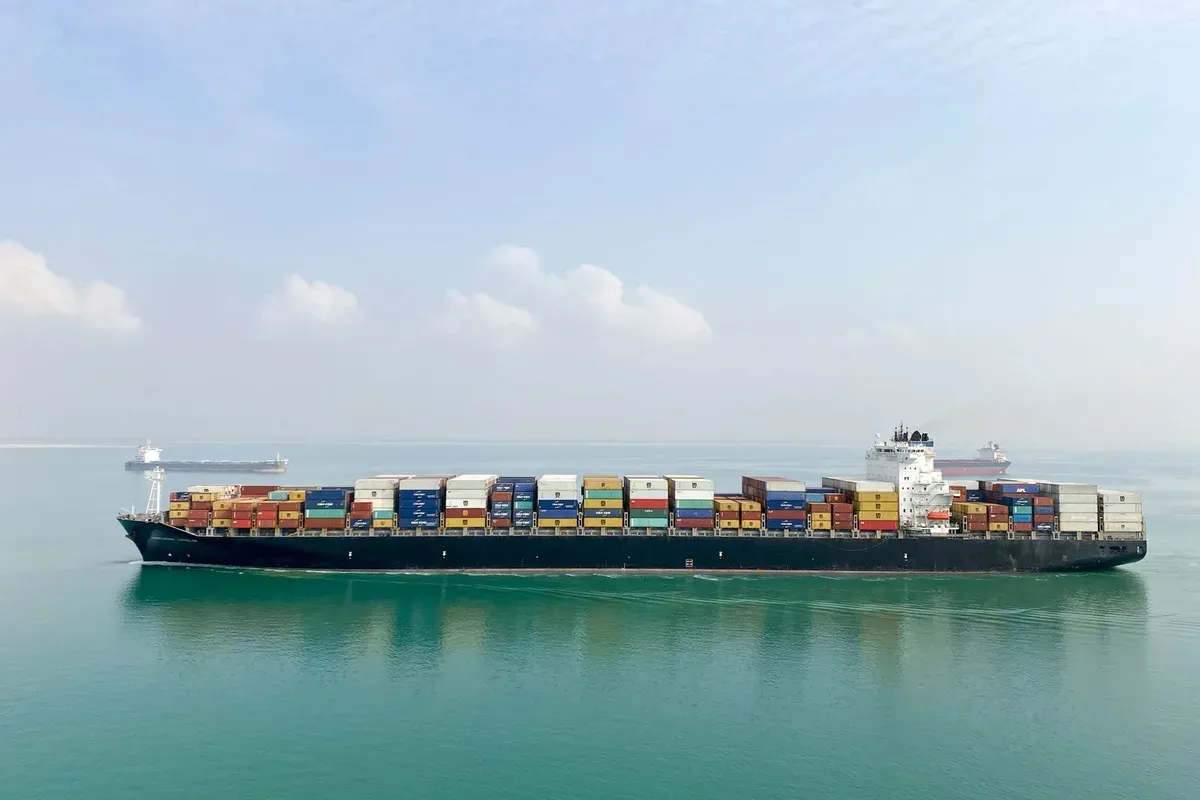
Port-to-port transit from China to Aqaba runs 25 – 35 days for FCL and 3 – 7 days longer for LCL, depending on which Chinese port your cargo loads at and which transshipment hub the carrier uses. Aqaba is a regional feeder port, not a trunk-route destination — most boxes from China are discharged at a hub and relifted onto a feeder vessel for the final call.
The corridor itself is fixed: South China Sea, Strait of Malacca, Indian Ocean, Bab el-Mandeb, Red Sea, and finally the Gulf of Aqaba at the Red Sea’s northern tip. What varies is where your container waits in between. The hubs that matter on this lane are Jebel Ali (Dubai), Jeddah, Port Said, and Salalah — and the hub wait, typically 3 – 7 days, is where unreliable schedules lose the most time.
| China Port | Typical Routing | FCL Transit | LCL Transit |
|---|---|---|---|
| Shenzhen (Yantian / Shekou) | Via Salalah or Jebel Ali | 25 – 32 days | 28 – 38 days |
| Guangzhou (Nansha) | Via Salalah or Jebel Ali | 26 – 34 days | 29 – 39 days |
| Ningbo | Via Port Said or Jeddah | 26 – 33 days | 29 – 38 days |
| Shanghai | Via Jeddah or Port Said | 28 – 35 days | 31 – 40 days |
| Qingdao | Via Jeddah or Busan relay | 30 – 35 days | 33 – 40 days |
Southern ports load closest to the Malacca corridor and post the fastest numbers; Qingdao adds roughly a week because the vessel first coasts down China before joining the trunk route. When you compare quotes, ask each forwarder which hub they route through — the feeder connection out of that hub drives both your ETA and your risk of delay.


The Red Sea Factor: Why Aqaba Cannot Dodge It
Since 2024, carriers have coped with Red Sea security risk by diverting Asia–Europe and Mediterranean services around the Cape of Good Hope. That workaround does not exist for Aqaba: the port sits inside the Red Sea, so every container from China transits Bab el-Mandeb regardless of what the wider market does. When war-risk premiums for Bab el-Mandeb transits climbed toward 3 percent in September 2026, Aqaba-bound rates absorbed it directly. Our Red Sea crisis 2026 tracker covers the security picture in detail; the practical takeaway for this lane is that schedule reliability matters more than headline rate shopping, because there is no alternative routing to fall back on.
Two schedule realities follow from this. A missed feeder at Jeddah costs 7 – 10 days, not 2, so treat the hub connection as part of the product you are buying. And total door time stacks Jordanian customs — 2 – 5 business days for clean documentation — on top of the 330 km, 4 – 6 hour truck haul from Aqaba up to Amman, with Zarqa and Irbid served off the same corridor.
Sea Freight Cost from China to Jordan: FCL, LCL & Container Rates
In October 2026, expect $2,200 – $3,800 port-to-port for a 20ft container, $3,500 – $5,500 for a 40ft, $3,800 – $6,000 for a 40ft high cube, and $80 – $150 per CBM for LCL. Ocean freight to Aqaba runs above Jeddah-class Red Sea rates because the port is smaller, direct sailings are scarce, and feeder legs add cost — the same box that reaches Jebel Ali cheaply pays again for the last hop.
Disclaimer: these are indicative market ranges for October 2026. Ocean freight moves with GRI cycles, fuel surcharges, war-risk insurance, and equipment availability. Confirm live pricing against your cargo-ready date before committing.
| Shipping Method | Indicative Rate | Typical Transit | Best For |
|---|---|---|---|
| LCL sea freight | $80 – $150 per CBM | 28 – 40 days | Shipments under ~15 CBM |
| FCL 20ft (20GP) | $2,200 – $3,800 | 25 – 35 days | Dense cargo, machinery, tiles |
| FCL 40ft (40GP) | $3,500 – $5,500 | 25 – 35 days | High-volume general cargo |
| FCL 40ft HQ | $3,800 – $6,000 | 25 – 35 days | Lightweight bulky goods |
| Air freight (comparison) | $5.00 – $8.20 per kg | 3 – 7 days | Urgent, high-value cargo |
FCL Rates by Port Pair
| China Port | Destination | 20ft | 40ft / 40HQ |
|---|---|---|---|
| Shanghai | Aqaba | $2,400 – $3,400 | $3,600 – $5,000 |
| Ningbo | Aqaba | $2,300 – $3,300 | $3,500 – $4,900 |
| Shenzhen (Yantian / Shekou) | Aqaba | $2,200 – $3,400 | $3,500 – $5,300 |
| Guangzhou (Nansha) | Aqaba | $2,300 – $3,500 | $3,600 – $5,400 |
| Qingdao | Aqaba | $2,500 – $3,800 | $3,800 – $6,000 |
Southern China usually quotes the lowest baseline to Aqaba; northern ports pay a coastal-leg premium. Rate spreads within the same week can be wide because different carriers price the feeder leg differently — a quote is a routing decision as much as a price.
LCL Rates and How Chargeable Volume Works
LCL is billed per revenue ton under the W/M rule — one CBM or 1,000 kg, whichever yields more — with origin CFS and destination CFS fees on top of the per-CBM base. Budget $80 – $150 per CBM ocean plus origin consolidation and destination deconsolidation charges, and expect 3 – 7 extra days versus FCL for the CFS handling at both ends. For the mechanics of consolidation pricing, our FCL vs LCL shipping comparison walks through the math.
Our Industry Insights: The Quote Is Not the Invoice The biggest cost surprises on this lane are rarely the ocean freight itself. They are destination terminal handling, the delivery order fee at Aqaba, customs broker charges, and — in 2026 more than ever — demurrage when yard congestion slows down container pickup. Ask any forwarder you evaluate to quote origin charges, destination charges, and stated free time in writing. At Efanda Logistics we break all three out on the first quote, because a rate you cannot audit is not a rate you can budget.
FCL vs LCL: Which Container Mode Wins on the China–Jordan Route?
Below about 15 CBM, LCL usually wins on price; above it, a 20ft container is almost always cheaper per cubic meter and clears faster. The break-even shifts with the market: when 20ft rates sit near the bottom of the $2,200 – $3,800 band, FCL’s threshold drops toward 12 CBM; when they peak, it climbs toward 18 CBM.
| Container | Usable Capacity | Payload | Typical Cargo |
|---|---|---|---|
| 20GP | ~28 CBM | ~21,700 kg | Dense cargo: tiles, steel, machinery |
| 40GP | ~58 CBM | ~26,500 kg | General cargo, furniture, appliances |
| 40HQ | ~68 CBM | ~26,300 kg | Lightweight bulky goods: textiles, foam, furniture |
LCL carries three hidden costs beyond the per-CBM rate. Deconsolidation at the Aqaba CFS adds days and handling risk; pilferage exposure is higher because your cargo is co-loaded with other importers’ goods; and per-CBM pricing punishes dense cargo — a 10 CBM, 12-ton machinery lot is billed at 12 revenue tons, not 10. FCL cargo, by contrast, moves sealed from the loading port to Aqaba, which is why high-value or fragile goods often justify a full container even below the volume break-even. Neighboring lanes follow the same logic — our guides to sea shipping from China to Egypt and sea shipping from China to Saudi Arabia cover how that plays out on the Jeddah and Port Said corridors.
Door to Door Shipping from China to Jordan: What DDP Actually Covers
Door-to-door DDP delivers a sealed container from the Chinese factory floor to your Amman warehouse in roughly 30 – 40 days, with the forwarder owning every handoff: supplier pickup, export declaration, ocean freight, Aqaba clearance, duty and tax payment, and final trucking. The appeal on this lane is specific — Jordan’s import process requires a licensed clearance company, an importer card, and original documents, so handing that stack to a forwarder who files ASYCUDA declarations daily removes the most common source of delay.
Under DAP terms you keep the import responsibilities yourself; under DDP the forwarder pays Jordanian duty and the 16% sales tax on your behalf and recovers them in the quote. Importers without a customs setup almost always land flatter total costs on DDP, while established importers with their own broker and deferred-tax arrangements often prefer DAP or FOB. If you are weighing FOB against CIF at the sourcing stage, our FOB vs CIF breakdown covers where each term transfers cost and risk. Full end-to-end service details are on our door to door shipping page.
Jordan Customs Clearance: Duty, 16% Sales Tax & the ASYCUDA Process
Jordan levies customs duty of 0 – 30 percent by HS code on the CIF value, then a 16 percent general sales tax on the CIF value plus the duty — and on top of those, three smaller charges most importers never budget. Customs valuation uses CIF, with insurance assumed at 1 percent of the invoice value when no premium is shown.
How Jordanian Import Taxes Stack Up
| Charge | Base | Rate |
|---|---|---|
| Customs duty | CIF value, by HS code | 0 – 30% (tobacco and alcohol up to 200%) |
| General sales tax | CIF value + customs duty | 16% standard |
| Income tax fee | CIF value | 2% |
| Apposition (service) fee and stamps | CIF value | 0.02% plus nominal stamp fees |
A worked example shows how fast the stack grows. A 20ft container of wooden furniture — invoice $15,000, ocean freight $2,900, insurance $150 — lands at a CIF value of $18,050. Furniture carries roughly 15 – 20 percent duty; at 20 percent that is $3,610. The 16 percent sales tax then applies to $21,660 (CIF plus duty), adding $3,466. With the 2 percent income tax fee ($361) and minor fees, the tax bill reaches about $7,450 — 41 percent on top of the CIF value before trucking. Product category moves the needle hard:
| Product Category | Typical Duty | With 16% GST, Total Burden |
|---|---|---|
| Electronics, smartphones | 0 – 10% | 16 – 27.6% |
| Ceramic tiles, building materials | 10 – 15% | 27.6 – 33.4% |
| Wooden furniture | 15 – 20% | 33.4 – 39.2% |
| Textiles and apparel | 20 – 25% | 39.2 – 45% |
Rates are indicative; final assessment rests with Jordan Customs based on your specific HS classification. Classify goods before booking, not after arrival — reclassification mid-clearance is a leading cause of Aqaba delays and retroactive bills.

ASYCUDA World, the Importer Card & Required Documents
Jordan Customs processes all import declarations through ASYCUDA World, its electronic system, filed by a licensed clearance company under the National Trade Single Window. Declarations are registered before the vessel arrives; once the manifest is live, the system assigns green, yellow, or red lanes that determine whether cargo releases on documents, gets a document check, or gets physically inspected. Clean, non-regulated cargo typically clears in 2 – 5 business days; JSMO conformity checks or valuation reviews can stretch that to one or two weeks.
The document set is unforgiving about originals:
- Bill of lading — telex release or original
- Commercial invoice — original preferred; copies accepted only against a cash deposit held for 60 days
- Packing list
- Certificate of origin — original; same 60-day deposit rule for copies
- Importer card — valid card in the importer’s name; a missing or invalid card triggers a fine of 2.5 percent of the shipment value
Importers without a registered Jordanian entity can ship under a forwarder’s or broker’s arrangement, but the importer card requirement is exactly why many first-time importers choose DDP on this lane. Our customs clearance service page covers how we handle the Jordan side for clients.
JSMO Conformity for Regulated Goods
Electronics, home appliances, children’s toys, and a range of consumer products fall under the Jordan Standards and Metrology Organization (JSMO). Non-conforming cargo without the right certificates can be seized or refused entry at the border — a fate that costs more than any freight rate you will ever negotiate. Medical devices and pharmaceuticals additionally require Jordan Food and Drug Administration (JFDA) approval. If your product line is regulated, confirm the conformity route with your forwarder before the goods leave the factory, not after the container sails.
The Aqaba Special Economic Zone Wrinkle
The Aqaba Special Economic Zone (ASEZ) is duty-free and zero-rated for sales tax — but only for goods that enter and stay inside the zone. The moment goods transfer from the ASEZ to the Jordanian mainland, a standard import is triggered with full duty and GST assessed at the transfer value. For importers warehousing in Aqaba itself or re-exporting through the zone, the savings are real; for anyone assuming the exemption follows the goods to Amman, it is an expensive misunderstanding.
Aqaba Port: One Gateway — and a 2026 Congestion Problem
Aqaba is Jordan’s only container gateway. The Aqaba Container Terminal (ACT), operated with APM Terminals involvement, serves roughly 15 carriers including Maersk, MSC, CMA CGM, COSCO, Hapag-Lloyd, and ZIM, feeding a market that stretches beyond Jordan into Iraq and, for some cargo flows, Saudi Arabia.
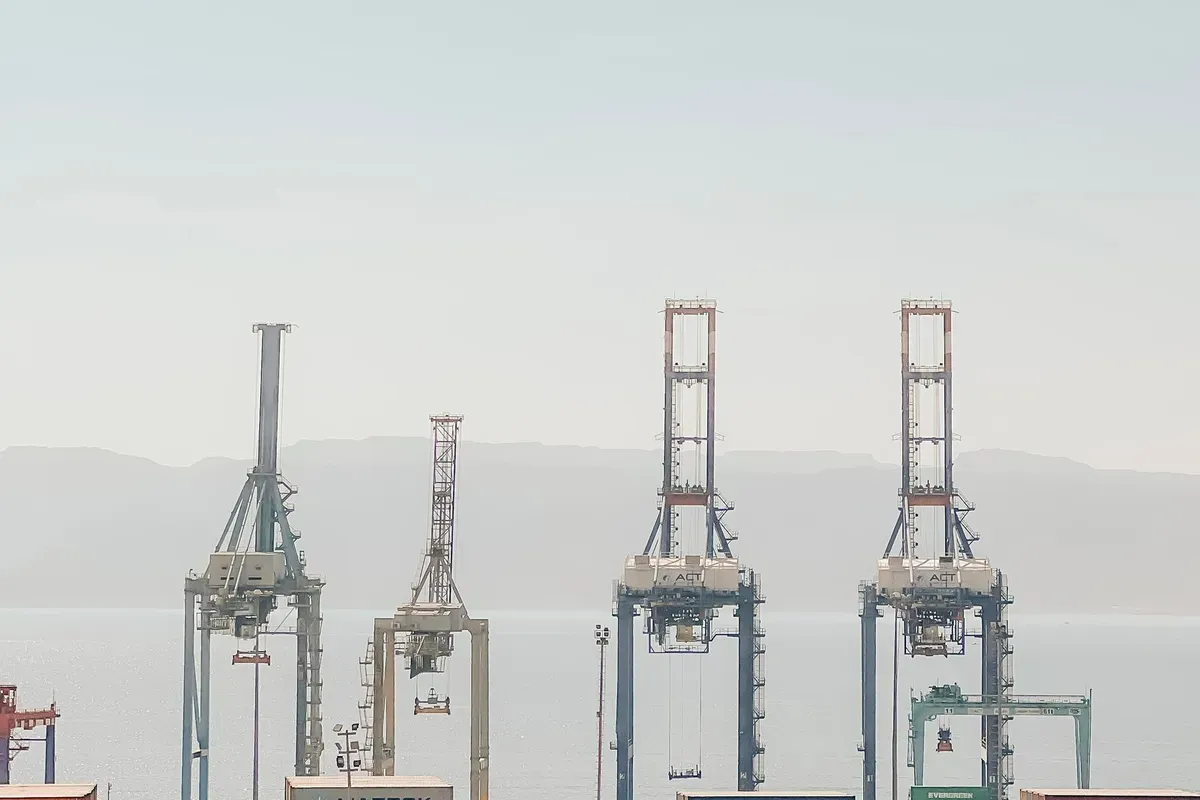
The 2026 story at Aqaba is volume. Transit containers through the port jumped from 30,763 in the first seven months of 2025 to 80,235 in the same period of 2026 — a 160.8 percent surge — driven overwhelmingly by Iraq-bound cargo, which grew 933 percent as reconstruction trade shifted toward the Jordanian corridor. Truck traffic through the Al-Karama/Trebil border crossing with Iraq more than doubled. Authorities are responding with new container yards, expanded reefer plug capacity, and a planned Aqaba–Ma’an dry port inland, but yard pressure is real in the meantime.
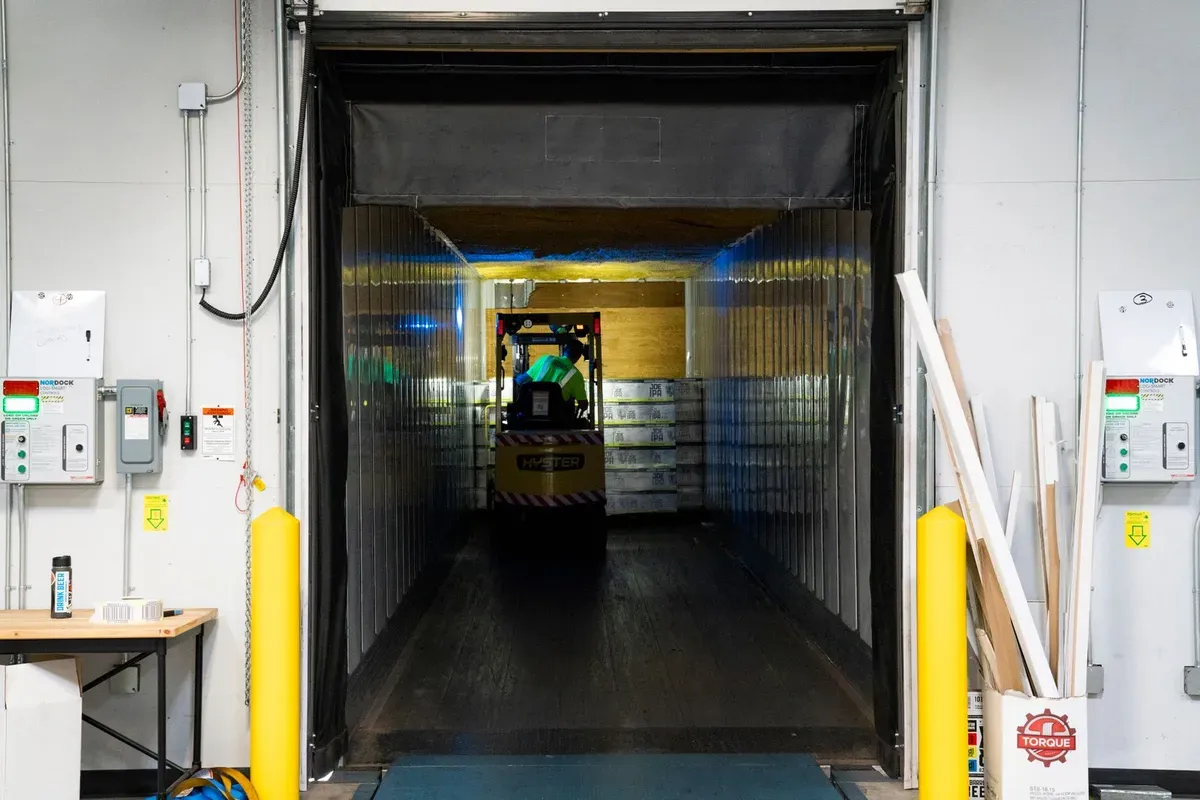
For importers, that pressure converts directly into demurrage risk. Standard free time at Aqaba varies by carrier contract, so negotiate it explicitly at booking, and make sure your broker is ready to file the declaration before the vessel berths. Demurrage and detention charges — for containers sitting in the yard and for equipment held after pickup — are the classic budget killers when clearance slows down.
6 Ways to Cut Your China–Jordan Shipping Cost
- Match the origin port to your factory geography. Trucking goods from a Zhejiang supplier to Shenzhen to save $150 on ocean freight burns the savings in inland haulage. Book the port nearest your supplier cluster — our sea freight from China desk can compare the port pairs against your actual sourcing map.
- Consolidate suppliers into one container. Multi-supplier buyers who ship LCL from three vendors pay three CFS fees and three minimum charges. Consolidating into one FCL through a Shenzhen warehouse typically strips 15 – 25 percent out of the total logistics spend; our warehouse services in China exist exactly for this.
- Respect the calendar. Space tightens and rates spike before Chinese New Year and during the Ramadan restocking window.
- Ask which transshipment hub each quote uses. Two quotes with identical headline rates can differ by a week of transit if one routes via Salalah and the other via a congested hub. The hub choice also sets your exposure to feeder misses.
- Verify HS codes before the goods ship. Duty swings from 0 to 30 percent by classification, and Jordan Customs scrutinizes valuations. A classification check costs minutes; a mid-clearance reclassification costs weeks plus penalty exposure.
- Insure the cargo. A policy costs a fraction of a percent of cargo value, and on a lane where every box crosses Bab el-Mandeb, it is cheap protection. See our primer on cargo insurance for China exports.
FAQ
Q: Is there a direct sailing from China to Aqaba? A: Direct calls are scarce. Most China–Aqaba containers transship at a hub — typically Jebel Ali, Jeddah, Port Said, or Salalah — and ride a feeder for the final leg. Quotes that look “direct” are usually through-bills of lading covering the transshipment.
Q: How much does a 20ft container from China to Jordan cost? A: In October 2026, expect $2,200 – $3,800 port-to-port depending on the origin port and carrier routing, with 40ft containers at $3,500 – $5,500. Origin charges, Aqaba destination charges, duty, and the 16% sales tax are additional.
Q: When is LCL cheaper than FCL to Jordan? A: Below roughly 15 CBM — adjusted toward 12 CBM when 20ft rates are soft and toward 18 CBM when they peak. Dense, heavy cargo favors FCL earlier because LCL bills by the revenue ton under the W/M rule.
Q: What exactly is Jordan’s 16% sales tax calculated on? A: On the CIF value plus customs duty. For a shipment with a $10,000 CIF value and 10% duty, the sales tax is 16% of $11,000, or $1,760 — on top of the $1,000 duty.
Q: Can Aqaba-bound cargo avoid the Red Sea? A: No. Aqaba sits inside the Red Sea at the Gulf of Aqaba, so every vessel from China transits Bab el-Mandeb. Unlike Mediterranean destinations, there is no Cape of Good Hope alternative — Red Sea security conditions and war-risk premiums apply to this lane directly.
Q: How long does customs clearance take at Aqaba? A: 2 – 5 business days for clean, non-regulated cargo with original documents; 1 – 2 weeks when JSMO conformity checks, valuation review, or inspections apply. Declarations are filed electronically through ASYCUDA World before arrival, so broker readiness drives the clock.
Q: Do I need an original certificate of origin? A: Jordan Customs wants the original. Copies are accepted only against a cash deposit held for 60 days, which is returned when the original is produced. Build the courier time for originals into your schedule.
Conclusion
The three numbers that decide most China–Jordan shipments: 25 – 35 days port-to-port, $2,200 – $3,800 for a 20ft container in October 2026, and a tax stack of duty plus 16 percent sales tax that can add a third or more to your CIF value. Get the port pair right, demand a quote that shows destination charges and free time, and have your ASYCUDA documentation ready before the vessel berths, and Aqaba becomes one of the more predictable small-destination lanes out of China.
Efanda Logistics has run China–Middle East lanes from Shenzhen since 2018, with transparent per-charge quoting and a dedicated specialist on every shipment. Contact us at +86 18929345880 for a China–Jordan sea freight quote with every destination charge itemized.

Written by the EFANDA Logistics team — a Shenzhen-based freight forwarder established in 2018, moving cargo from China to ports worldwide with end-to-end pickup, consolidation, customs and door delivery.About us