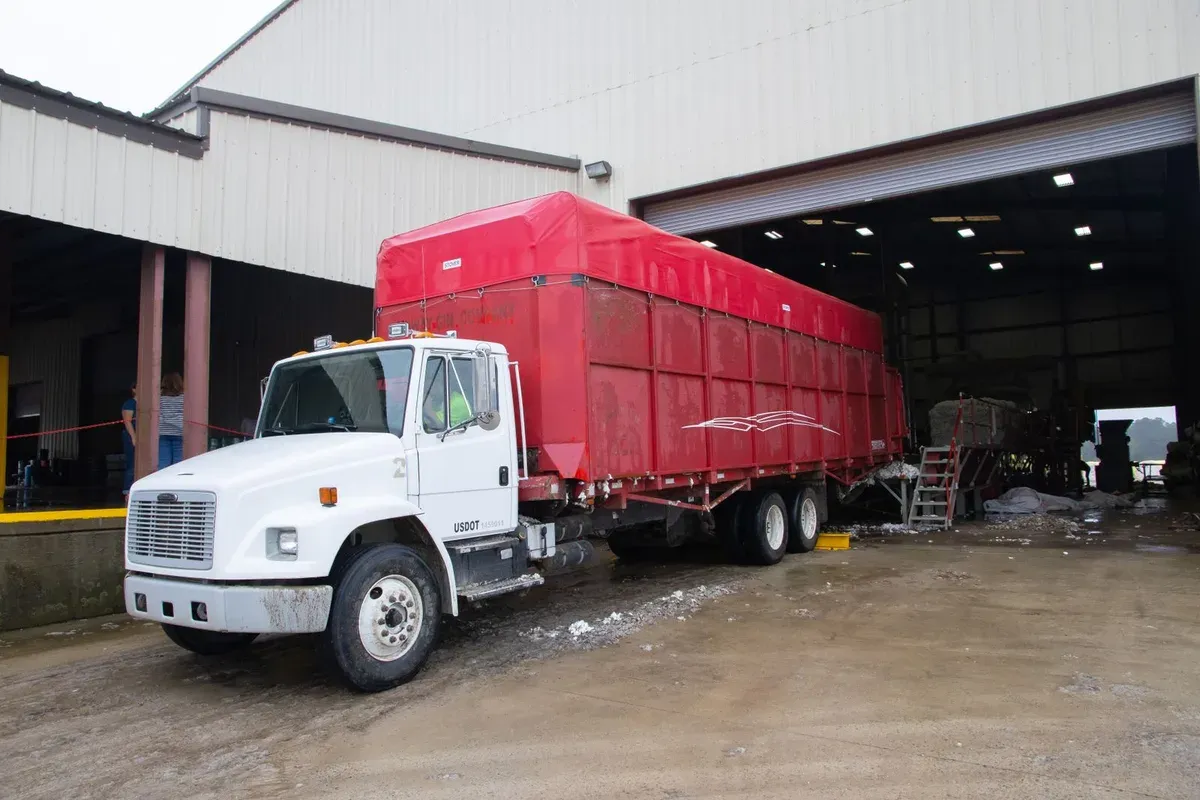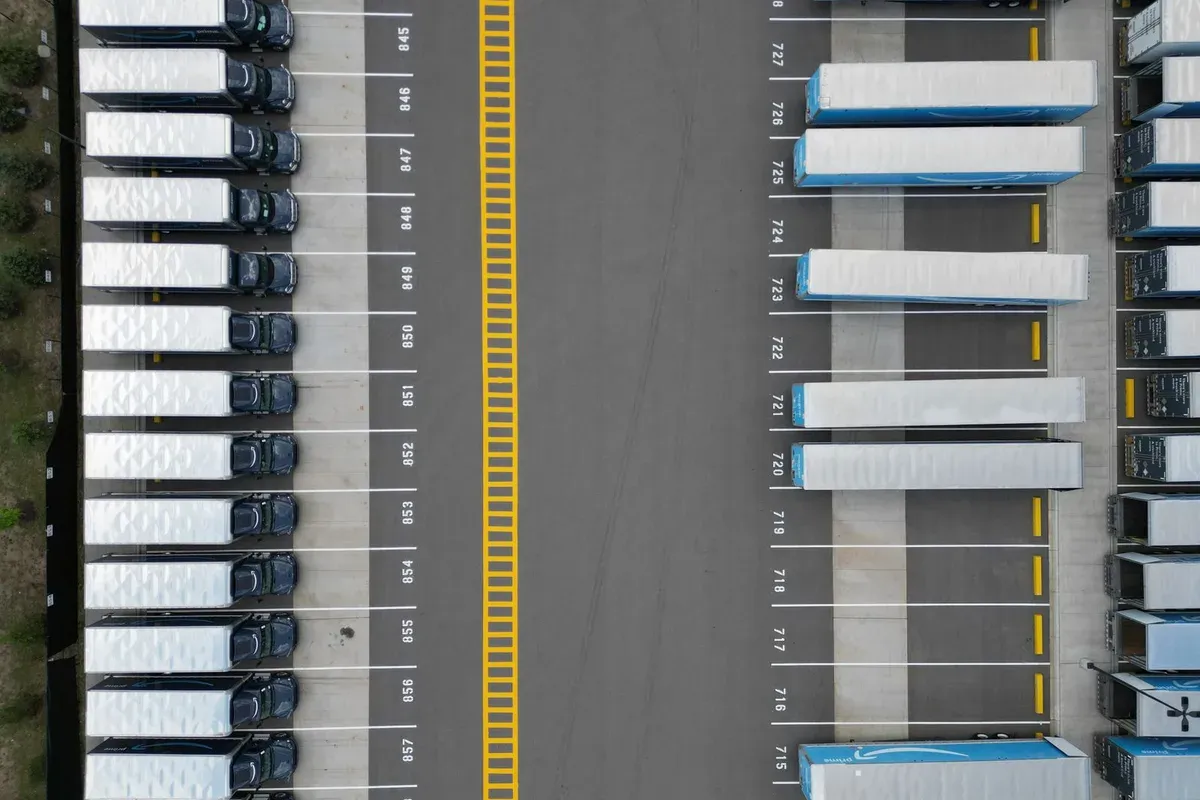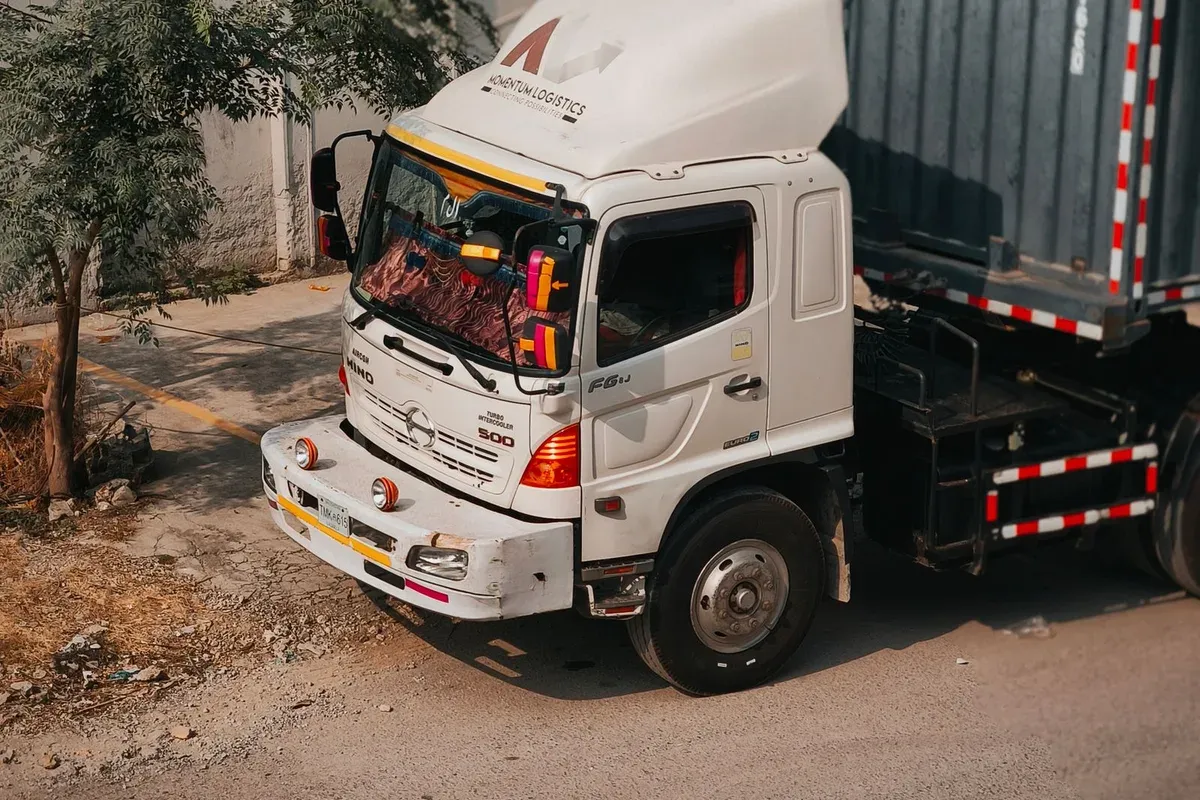
Which way should your truck leave China when the buyer is in Tehran — through the Irkeshtam pass above Wuqia county into Kyrgyzstan, or through the Khorgos dry port into Kazakhstan? For almost every China–Iran shipper in 2026, Wuqia vs Khorgos is the one routing decision that sets cost, schedule confidence, and border risk for the whole journey — and it has to be made before the trailer is loaded, because the two exits feed different corridors for the first half of the run.
Both lines rejoin in Uzbekistan, cross Turkmenistan, and enter Iran at Sarakhs under a single TIR carnet, so the differences live upstream: a 0.4% transit tax on one side, a digitized mega-port on the other, published day counts versus case-by-case quotes. This guide compares the two exits the way a forwarder quotes them — geography, cost, transit time, border mechanics, and the rail fallback — so you can name the right gateway in your booking. For the full lane picture (rates, documents, payment channels), start with our guide to China to Iran trucking; the wider mode choice sits in shipping from China to Iran.
Where Exactly Are Wuqia and Khorgos?
Both gateways sit in China’s Xinjiang region, but they serve different ends of the map: Wuqia is the Irkeshtam crossing on the Kyrgyz border southwest of Kashgar, while Khorgos is a road-and-rail dry port on the Kazakh border, roughly 300 km from Almaty.
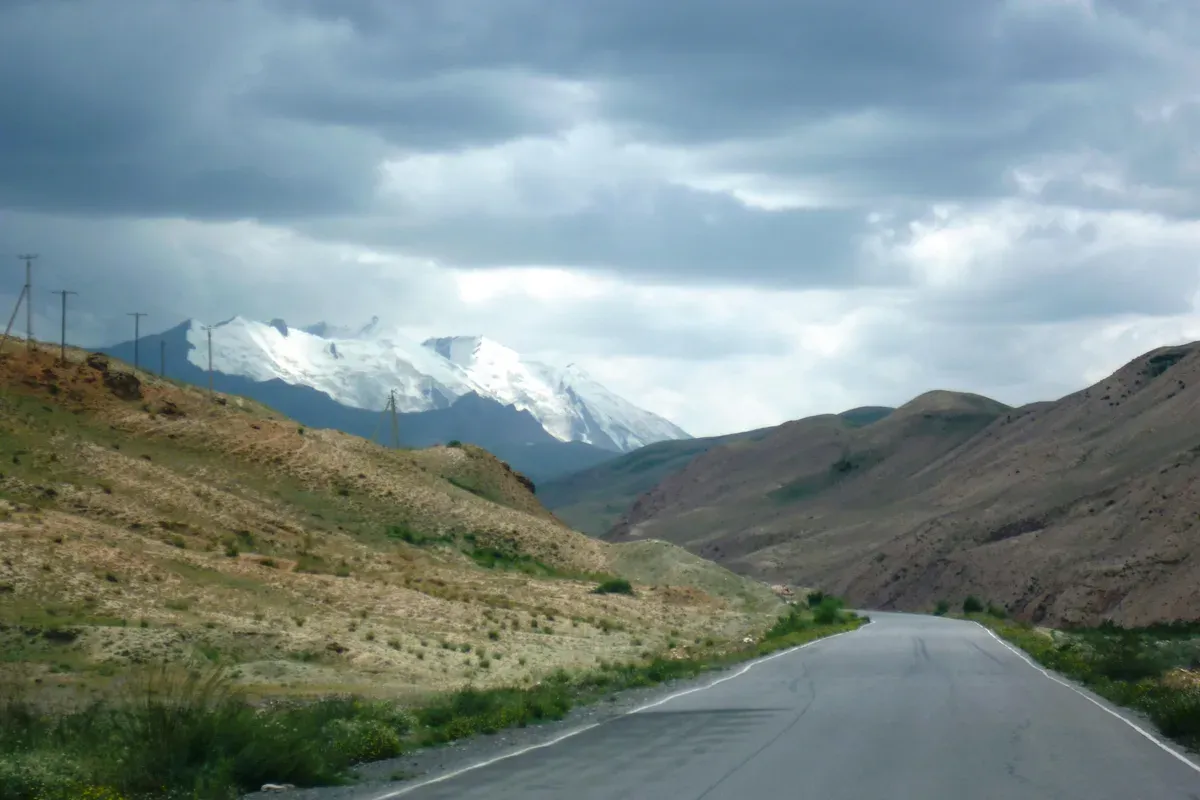
The Wuqia exit — its border post is named Irkeshtam, and the county also appears on documents as Ulugqat — sits in the high Alay valley at the end of the road from Kashgar, about 250 km from the Kyrgyz city of Osh. It is the terminus of European route E60 and the practical commercial gateway into Kyrgyzstan’s Fergana Valley side. When a quote says Wuqia, Ulugqat, or Irkeshtam, it means one and the same exit.
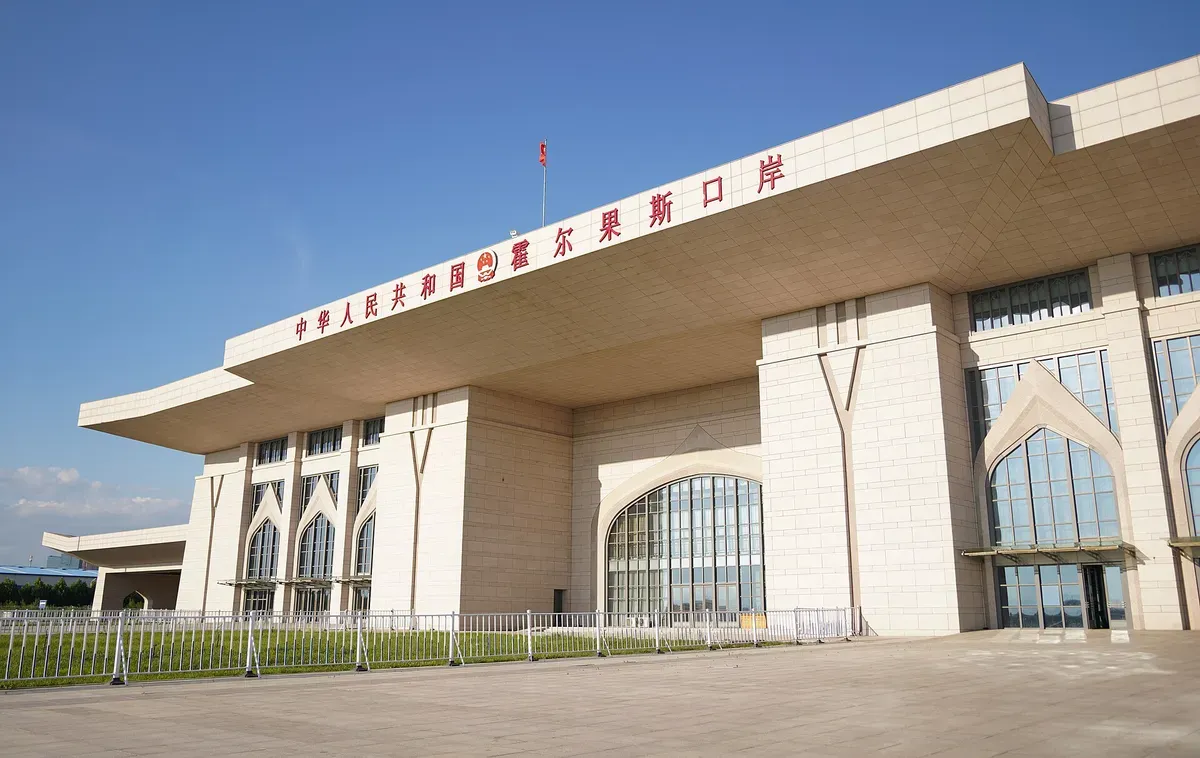
Khorgos is a different animal: not a mountain pass but a purpose-built logistics hub — dry port, customs terminal, free-trade zone, and new city on the steppe. On the Kazakh side the paired post is Nur Zholy, with Altynkol as the railhead. The crossing handles up to 2,500 vehicles a day, has run 24/7 since August 2023, and is China’s largest land port for automobile exports. It is also where containers change from China’s 1,435 mm rail gauge to the 1,520 mm broad gauge — which matters later, when we get to the rail fallback.
Which Corridor Costs Less?
On the invoice, Khorgos is usually the cheaper exit, because only the Wuqia line crosses Kyrgyzstan — and Kyrgyzstan levies a transit tax of roughly 0.4% of the cargo’s invoice value, billed separately from the freight.
The math is simple and scales with cargo value: about $320 on an $80,000 consumer-goods load, $480 on a $120,000 machinery shipment, $2,000 on a $500,000 project consignment. Real money, but rarely decisive on its own — queue days and transload count often cost more than the tax.
The freight itself sits in the same band on both corridors. As of October 2026, a full truckload from China to the Tehran area budgets at $3,000 – $5,000 per trailer, and consolidated LTL cargo runs $2.50 – $3.50 per chargeable kilogram — indicative bands that move with capacity and border conditions, not fixed prices.
| Cost component | Wuqia line (via Kyrgyzstan) | Khorgos line (via Kazakhstan) |
|---|---|---|
| FTL freight, China → Tehran area | $3,000 – $5,000 per trailer | Same band; quoted per booking |
| Transit tax | ~0.4% of invoice value, billed separately | None — the corridor stays out of Kyrgyzstan |
| Distance, gateway → Tehran | Longer mountain leg via Osh | ~3,585 km, the shortest road corridor |
| Transloads en route | 1 (direct truck) to 2+ (transshipment) | Usually 1, at Bukhara |
| Hidden cost driver | Transshipment tier saves money, adds 5 – 7 days | Peak-season queue slots at China’s busiest land port |
One nuance for dense cargo: consolidated trucking bills on chargeable weight — the greater of actual and volumetric weight — so tiles, stone, and steel effectively bill on the scale, and the 0.4% tax bites hardest on exactly the high-value machinery loads that fill the Wuqia line’s direct trucks.
Which Crossing Is Faster — and More Predictable?
Measured from the border to Tehran, operator quotes put Khorgos ahead on raw speed — around 12 – 18 days from the dry port — while the Wuqia line is the only one of the two that publishes firm day counts at all: 21 – 23 days to Tehran by direct truck, counted from the Wuqia crossing.
The Wuqia schedule breaks down by service type. A direct truck — one transload, at Bukhara — currently runs 21 – 23 days to Tehran and 18 – 21 days to Mashhad. A transshipment truck, which transloads at Osh and again at Bukhara (and occasionally once more at the Iranian border), runs 26 – 30 days to Tehran and 24 – 28 days to Mashhad. The domestic leg from the consolidation hub to Wuqia, typically within 7 days, is counted separately. Fewer transloads means a shorter and more predictable transit — that is what the direct premium buys.
The Khorgos line publishes no day count; transit is quoted per booking. Operator bands put the dry-port-to-Tehran run at 12 – 18 days, or roughly 18 – 25 days door to door from eastern Chinese origins once the inland leg is included. What changed in 2026 is the queue: Kazakhstan’s transport ministry reported in early October that waiting time on the Nur Zholy – Khorgos direction fell from around 30 days to about 3, after a digital freight passport with a single QR code replaced the paper queue ticket — over 11,000 passports issued and clearance speed up 30%, with a 30-minute per-checkpoint target on the way.
Two caveats keep that from being a blank check. First, Khorgos is the busiest road gateway on the China–Kazakh border — China–Kazakhstan road traffic grew 24.5% year on year in the first eight months of 2026, and Chinese vehicle transit through Kazakhstan rose 56.1% — so peak seasons can rebuild queues, and crossing slots should be booked in advance. Second, both exits shut for Chinese public holidays: during the 2026 National Day break the Chinese side suspended road crossings from October 1 – 3, and Irkeshtam closed from the evening of October 1 to the morning of October 4.
The Wuqia line carries one more variable: altitude and weather. The Chinese side of Irkeshtam has run 24 hours since June 2025, but the Kyrgyz side keeps shorter official windows, and winter snow on the Alay passes is the corridor’s standing risk — the standard fallback is a switch to the Torugart crossing or a detour through Khorgos and Kazakhstan.

What Actually Happens to Your Truck at Each Border?
The paperwork spine is identical on both lines — Chinese export declaration, TIR carnet, electronic seal — but the physical crossing works differently at the two gateways.
At the Wuqia exit, export customs is cleared and the trailer is sealed at the gateway, then it makes the high-altitude crossing into Kyrgyzstan, where the 0.4% transit tax is assessed against the invoice. The truck runs via Osh into Uzbekistan. At Khorgos, the truck is scheduled into an hourly slot through the electronic queue and digital passport system, then runs the Almaty – Shymkent corridor into Uzbekistan — no transit tax on the way.
From Uzbekistan onward the corridors merge. Bukhara is the transload point for both lines; then the truck crosses Turkmenistan (Farap – Mary), where transit control is strict and convoy scheduling follows conditions on the day. Entry into Iran is at the Sarakhs road crossing: customs checks the seal, records the consignment in Iran’s ASYCUDA system, and issues a bonded in-country transit permit. Delivery is to Mashhad Customs or one of Tehran’s bonded yards — Tehran West Customs (Gomrok Gharb), Shahriyar, or Aprin Dry Port — where the consignee’s licensed broker clears the cargo. Our customs clearance team coordinates that last step with the Iranian broker so the seal, carnet, and warehouse entry receipt line up.
When Does the Khorgos Rail Option Change the Answer?
Choose Khorgos when you want the truck-versus-rail decision available at the same gateway — it is the only one of the two exits with a working rail fallback on the same corridor.
The rail product moved from pilot to regular service in 2026: the inaugural China – Iran block train crossed at Khorgos – Altynkol and departed the Altynkol railhead on September 7, running more than 6,000 km through Kazakhstan, Uzbekistan, and Turkmenistan to the Sarakhs rail crossing in about 14 – 16 days. Full containers ride at roughly $3,500 – $4,500 per TEU plus $500 – $800 in gauge-change handling — the gauge transfer itself takes 1 – 2 hours in normal conditions, stretching to 3 – 5 days when terminals congest. Capacity is proven: 12,473 China – Europe and Central Asia trains passed through Khorgos and Alashankou in January – August 2026 alone, up 5% year on year. Our China to Iran rail freight guide covers the train product in detail.
The Wuqia side has no equivalent today — the China – Kyrgyzstan – Uzbekistan railway is still under construction — so Wuqia remains road-only, and shippers who might pivot a full container to rail should treat that as a structural argument for Khorgos.
Which Gateway Should You Choose for Your Cargo?
Default to Khorgos for high-value, containerized, or eastern-China cargo that can use its capacity and rail fallback; default to Wuqia when you need published schedule discipline or your cargo consolidates near Kashgar.
| Your situation | Better exit | Why |
|---|---|---|
| Cargo value above ~$100,000 | Khorgos | Avoids the 0.4% Kyrgyz transit tax — $400+ saved per $100,000 of invoice |
| Consolidation near Kashgar / western Xinjiang | Wuqia | Short domestic leg straight to the gateway |
| A firm day count needed in the contract | Wuqia | The only line with published border-to-destination days |
| Full container, flexible dates | Khorgos (rail) | Block train runs 14 – 16 days to Sarakhs at per-TEU pricing |
| Oversized or project cargo | Khorgos | The main entry for oversize loads into Central Asia; digitized slots ease planning |
| November – March departure | Compare on the day | Irkeshtam snow risk vs Khorgos peak queues — check both before booking |
| Small lots on a deadline | Either line’s LTL service | Consolidated trucking runs $2.50 – $3.50 per kg on both corridors |

Southern alternatives exist — via Khunjerab and Pakistan, or through Afghanistan and Herat for Iran’s western provinces — but political and security volatility keeps most commercial cargo on the two northern corridors; the Afghanistan routing is covered in our guide to shipping goods from China to Afghanistan by rail and road. And if your cargo cannot absorb three weeks of transit at all, air freight from China to Iran at $4.00 – $8.50 per kg is the escalation path, with FCL shipping from China to Iran and LCL shipping from China to Iran covering the sea options as the Strait of Hormuz normalizes.
How Should You Book Either Corridor?
Book the corridor the same way on both lines: name the gateway in writing, run the tax math, and buffer for closures. Five working rules:
- Name the gateway in the quotation. “China to Iran by truck” is not a route. Insist the quote states Wuqia (Irkeshtam) or Khorgos, the service type (direct or transshipment truck), and whether the day count starts at your consolidation hub or at the border — a 12-day quote from the dry port and a 21-day quote from Wuqia can describe the same total timeline.
- Run the tax math before chasing the cheaper headline. On the Wuqia line, add 0.4% of invoice value to the freight. Below roughly $80,000 of cargo value that is under ~$320 — and a published 21 – 23 day schedule may be worth more than $320.
- Build a closure buffer into every booking. Both exits shut for Chinese public holidays, and winter slows the Kyrgyz passes. Add 3 – 5 buffer days to any booking departing between November and March, and confirm the crossing’s slot before the trailer leaves the hub.
- Book the document stack with the truck, not after it. The TIR carnet, export declaration, and the consignee’s broker appointment at Mashhad or Tehran all have to be in place before the seal goes on — a missing broker booking strands cargo at Sarakhs. A door to door shipping from China arrangement bundles this; pair it with cargo insurance services, because war-risk pricing on this lane still moves month to month.
- Fix the payment channel early. Sanctions-compliant settlement is the step that delays first-time Iran shippers most often — the payment and insurance realities are laid out in our China to Iran trucking guide, and nothing in them changes between the two gateways.
Frequently Asked Questions
Is Wuqia the same crossing as Irkeshtam? A: Yes — one exit, two names. Wuqia (Ulugqat) is the county and the Chinese customs post; Irkeshtam is the pass and the paired Kyrgyz post. Quotes, waybills, and news reports use both interchangeably.
Does the 0.4% transit tax apply on the Khorgos line? A: No. It is a Kyrgyz levy, and the Khorgos line transits Kazakhstan, not Kyrgyzstan. On the Wuqia line it is billed separately, calculated on the cargo’s invoice value.
Which exit is cheaper for a $120,000 machinery load? A: Usually Khorgos. The Wuqia line adds roughly $480 of Kyrgyz transit tax, and Khorgos operator quotes also run shorter at 12 – 18 days from the dry port. The exception: if you need a firm contractual day count, only the Wuqia line publishes one — 21 – 23 days to Tehran by direct truck.
Do both crossings operate year-round? A: Yes, with caveats. Both close for Chinese public holidays (the 2026 National Day closure ran October 1 – 3). Khorgos has run 24/7 since August 2023; the Chinese side of Irkeshtam has run 24 hours since June 2025, but the Kyrgyz side keeps shorter windows, and winter snow can force a reroute via Torugart or Khorgos.
Can I switch gateways after booking? A: Practically, no. The export declaration and TIR carnet are issued against a named exit, so changing gateways mid-shipment means rebooking the movement. Make the Wuqia vs Khorgos call before the trailer loads.
Conclusion: Two Exits, One Decision Framework
The Wuqia vs Khorgos choice is not about which border is “better” — it is about which variable you cannot compromise on. Khorgos gives you capacity, no transit tax, the shortest road distance at about 3,585 km to Tehran, and a rail fallback on the same corridor; Wuqia gives you the lane’s only published day counts and a short domestic leg for cargo consolidating near Kashgar, at the price of the 0.4% Kyrgyz tax and winter exposure. Both corridors end at the same Sarakhs entry and the same Tehran customs yards — so decide at the origin, name the gateway in the quote, and buffer for closures.
Efanda Logistics has run overland cargo from China into Iran since 2018 from our Shenzhen headquarters — both gateways, both service types, with transparent pricing and no hidden fees, plus a dedicated logistics advisor who tracks your trailer from hub to bonded yard. Rates and transit ranges in this guide are October 2026 working bands that move with border conditions; for a quote that names the gateway and fixes the schedule, talk to us through door to door shipping from China or directly at https://efandatrans.com/.
Written by the EFANDA Logistics team — a Shenzhen-based freight forwarder established in 2018, moving cargo from China to ports worldwide with end-to-end pickup, consolidation, customs and door delivery.About us