Are you staring at a supplier quote and wondering whether a 20ft or 40ft container is the smarter move? FCL shipping from China to Saudi Arabia remains the backbone of high-volume trade between the two countries, but getting it right means more than booking a box on a ship. Rate volatility, confusing Incoterms, strict SABER compliance, and hidden destination charges can turn a straightforward shipment into a costly headache if you are not prepared.
In this guide — updated for August 2026 — you will learn how to choose the right container type, port, and trade term for your cargo, what documents Saudi customs actually requires, how to avoid demurrage and detention fees, and how to lock in reliable rates even when the market surges. Whether you are a B2B importer, an Amazon or Noon seller, or a procurement team scaling your Saudi supply chain, the next sections will give you a practical framework you can use immediately.
What Is FCL Shipping and When Does It Make Sense for Saudi Imports?
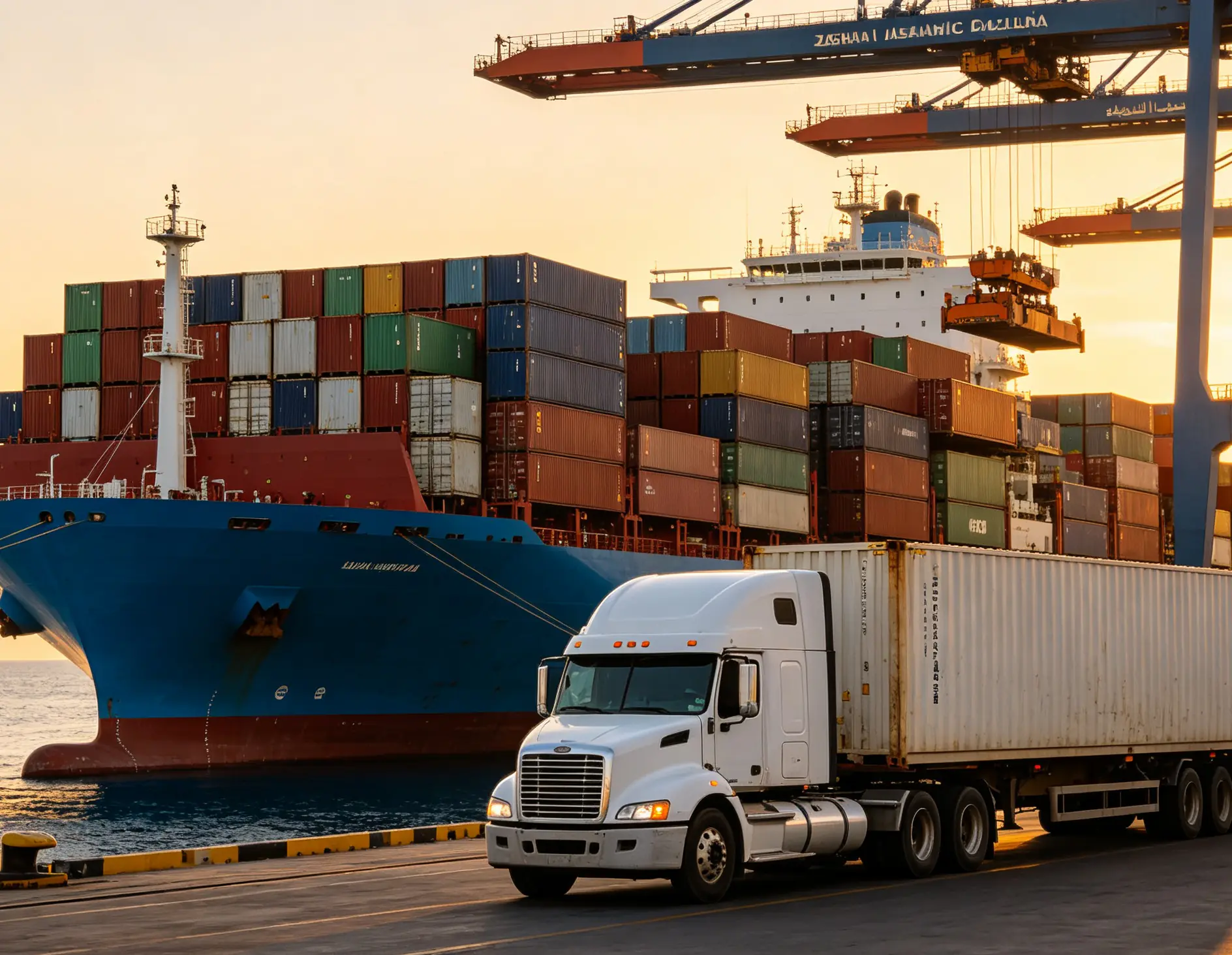
Full Container Load (FCL) means one shipper books an entire shipping container exclusively for their cargo. The container is sealed at the supplier’s factory or warehouse in China and stays sealed until it reaches your facility or a de-vanning point in Saudi Arabia. Because no other shipper’s goods share the space, FCL reduces handling, contamination risk, and the chance of damage during consolidation and deconsolidation.
FCL usually becomes the better choice once your cargo exceeds roughly 15 cubic meters. Below that threshold, LCL shipping from China to Saudi Arabia can be more economical because you only pay for the space you use. Above 15 CBM, the per-unit cost of an entire 20ft container often beats LCL, and you gain the security of a sealed container on a long ocean transit. For Saudi-bound shipments — which commonly include electronics, furniture, machinery, construction materials, and retail inventory — FCL is the default choice for importers moving serious volume. If you are still comparing transport modes, our overview of shipping from China to Saudi Arabia covers sea, air, and door-to-door solutions.
FCL vs LCL vs Air Freight: Which Mode Should You Choose?
Choose FCL when your shipment is over 15 CBM, not time-sensitive, and you want the lowest per-unit cost and full control over the container. Choose LCL for 1–15 CBM trial orders, and choose air freight or express only when speed is worth a premium.
The right shipping mode depends on cargo volume, urgency, value, and how much risk you are willing to absorb. FCL is not always the answer, and choosing incorrectly can inflate your landed cost or leave you with stockouts. For a deeper comparison of the two ocean options, see our guide to FCL vs LCL shipping.
| Shipping Mode | Typical Cost Range | Transit Time | Best For |
|---|---|---|---|
| FCL (20ft/40ft) | $1,200 – $3,800 per container (baseline); $5,085 – $8,085 during August 2026 surge | 18 – 35 days port to port | Bulk inventory, repeat shipments, cargo over 15 CBM |
| LCL | $70 – $180 per CBM | 25 – 45 days | Smaller shipments, 1 – 15 CBM, lower volume testing |
| Air Freight | $4 – $9 per kg baseline; ~$6.90/kg in August 2026 | 3 – 7 days | Urgent, high-value, or perishable goods |
| Express Courier | $6.5 – $12 per kg baseline; ~$11.05/kg in August 2026 | 3 – 5 days | Samples, small urgent parcels, e-commerce top-ups |
Key rule of thumb: If your shipment is large, heavy, or not time-sensitive, FCL is usually the most cost-effective and secure option among sea freight from China services. If you are restocking fast-moving SKUs or shipping prototypes, air freight or express may be worth the premium. LCL sits in the middle and works well for smaller trial orders.
How Much Does FCL Shipping from China to Saudi Arabia Cost?
Baseline port-to-port FCL rates from China to Saudi Arabia in 2026 range from approximately $1,200 for a 20GP to $3,800 for a 40HQ, but surge pricing into Jeddah and Dammam pushed 20GP rates to $5,085–$6,215 and 40ft units to $6,615–$8,085 in July–August 2026.
FCL shipping rates fluctuate with fuel, carrier capacity, seasonality, and geopolitical risk. As of mid-2026, baseline port-to-port rates for standard dry containers generally fall within the following ranges:
| Container Type | Capacity | Baseline Rate Range (USD) | Best Cargo Profile |
|---|---|---|---|
| 20ft Standard (20GP) | ~33 CBM | $1,200 – $2,600 | Heavy, dense cargo such as tiles, metal parts, machinery |
| 40ft Standard (40GP) | ~67 CBM | $1,800 – $3,500 | Mixed palletized goods, furniture, general merchandise |
| 40ft High Cube (40HQ) | ~76 CBM | $2,000 – $3,800 | Lightweight, bulky cargo such as electronics, textiles, foam products |
However, the market shifted sharply in mid-2026. Due to the Red Sea crisis 2026 and the resulting Strait of Hormuz risk premium, spot rates into Jeddah Islamic Port and King Abdulaziz Port (Dammam) surged approximately 120–157% month-over-month. During that period, indicative FCL rates ranged from $5,085–$6,215 for a 20GP and $6,615–$8,085 for a 40GP. These figures are not guaranteed and can change weekly, so always request an all-in quote with 2–3 week validity.
The total landed cost includes more than ocean freight. For a detailed breakdown of every cost component, see our dedicated shipping cost from China to Saudi Arabia guide. A realistic budget should cover:
- Origin charges: trucking, terminal handling, export customs, documentation
- Ocean freight: base rate plus surcharges such as BAF and CAF
- Destination charges: THC, unloading, port handling at Jeddah or Dammam
- Customs duties: typically 5–20% depending on HS code
- VAT: 15% on CIF value plus duty
- Inland delivery: trucking from port to your warehouse, plus possible demurrage or detention if containers are not returned on time
Saudi Import Duties and VAT by Product Category
Duties and VAT are calculated on the CIF value (cost of goods + insurance + freight). Below is a representative guide for common Saudi-bound categories:
| Product Type | Common HS Code Chapter | Customs Duty | VAT |
|---|---|---|---|
| Electronics | 85 | 5% – 20% | 15% |
| Machinery | 84 | 5% – 15% | 15% |
| Textiles & Apparel | 61 – 63 | 12% | 15% |
| Toys | 95 | 10% – 20% | 15% |
| Furniture | 94 | 15% | 15% |
| Construction Materials | 68 – 73 | 5% – 15% | 15% |
| Automotive Parts | 87 | 5% – 20% | 15% |
Always confirm the exact HS code and applicable duty rate before production. Misclassification is one of the fastest ways to trigger a customs inspection.
How Long Does FCL Shipping Take from China to Saudi Arabia?
Port-to-port transit time for FCL from China to Saudi Arabia usually ranges from 18 to 35 days, while a complete door-to-door shipment typically takes 30 to 45 days.
| Route (Port to Port) | Estimated Transit Time |
|---|---|
| Shenzhen → Jeddah | 20 – 25 days |
| Guangzhou → Jeddah | 18 – 25 days |
| Shanghai → Jeddah | 22 – 28 days |
| Shanghai → Dammam | 22 – 30 days |
| Ningbo → Dammam | 23 – 30 days |
| Qingdao → Jeddah | 25 – 32 days |
A complete door-to-door shipment typically takes 30 to 45 days. That includes booking, supplier pickup, export clearance in China, ocean transit, Saudi import clearance, and final inland delivery. Direct sailings from South China to Jeddah are often the fastest, while transshipment routes through Singapore, Port Klang, or Jebel Ali can add 7–10 days.
Transit reliability is affected by port congestion, equipment availability, customs readiness, and regional events affecting Red Sea or Gulf routing. Preparing your SABER and import documents before the vessel arrives is one of the most effective ways to prevent delays.
Which Container Type Should You Choose?
Match the container to your cargo density: use a 20GP for heavy cargo that hits weight limits first, a 40GP for balanced palletized loads, and a 40HQ for lightweight bulky cargo that needs extra volume.
For most Saudi-bound FCL shipments, the choice comes down to three standard container types: 20GP, 40GP, and 40HQ. Choosing the wrong one can waste money or create loading problems, so match the equipment to your cargo volume, weight, and density.
| Container Type | Internal Volume | Max Payload | Typical Rate Range | Best For |
|---|---|---|---|---|
| 20GP | ~33 CBM | ~28,000 kg | $1,200 – $2,600 (baseline) | Heavy, dense cargo that hits weight limits before volume limits |
| 40GP | ~67 CBM | ~26,000 kg | $1,800 – $3,500 (baseline) | General palletized cargo, balanced weight and volume |
| 40HQ | ~76 CBM | ~26,000 kg | $2,000 – $3,800 (baseline) | Bulky lightweight cargo such as furniture, textiles, electronics |
The 40HQ is popular because it offers 15% more volume than a 40GP for a relatively small price premium. If your cargo is lightweight and bulky, the 40HQ usually delivers the lowest cost per CBM. If your cargo is heavy — such as ceramic tiles, steel products, or machinery — a 20GP may be the only option because you will reach the weight limit before filling the space.
For specialized cargo, consider:
- Reefer container: temperature-controlled goods such as food, pharmaceuticals, and chemicals
- Flat rack: oversized machinery, steel structures, or vehicles that cannot fit through standard container doors
- Open top: heavy-lift cargo loaded from the top, such as large equipment or pipes

Always confirm the latest shipping container dimensions and weight limits with your carrier before loading. Proper loading also matters: distribute weight evenly, secure cargo with dunnage and lashings, and avoid leaving empty space that allows goods to shift during the ocean transit.
Major Ports: China Origins and Saudi Destinations
The most important Chinese origin ports for Saudi-bound FCL are Shenzhen, Shanghai, Ningbo, Guangzhou, Qingdao, and Xiamen; the main Saudi destination ports are Jeddah Islamic Port, King Abdulaziz Port (Dammam), King Abdullah Port, and King Fahd Industrial Port (Jubail).
Origin and destination ports directly affect cost, transit time, and inland trucking.
Major Chinese origin ports for Saudi-bound FCL:
- Port of Shenzhen — ideal for South China suppliers, frequent Middle East sailings
- Port of Shanghai — largest container port, strong carrier coverage
- Port of Ningbo-Zhoushan — major alternative to Shanghai with competitive rates
- Port of Guangzhou — serves the Pearl River Delta industrial belt
- Port of Qingdao — strong for North China exports
- Port of Xiamen — option for Fujian-based suppliers
Major Saudi destination ports:
- Jeddah Islamic Port — largest Red Sea gateway, serves western Saudi Arabia
- King Abdulaziz Port (Dammam) — main Gulf gateway, closest major port to Riyadh
- King Fahd Industrial Port (Jubail) — industrial and petrochemical cargo
- King Abdullah Port — modern, high-capacity container terminal north of Jeddah
Choosing an origin port close to your supplier reduces pre-carriage costs. For destination, match the port to your final delivery location rather than automatically booking the cheapest rate.
Jeddah vs Dammam: Which Port Should You Use?
Choose Jeddah if your final destination is in western Saudi Arabia or you want the fastest Red Sea transit; choose Dammam if you are delivering to Riyadh or the Eastern Province, because inland trucking is shorter and more cost-effective.
The decision between Jeddah and Dammam should be based on your final destination, inland delivery budget, and desired transit reliability.
| Factor | Jeddah Islamic Port | King Abdulaziz Port (Dammam) |
|---|---|---|
| Best for regions | Western Saudi Arabia: Jeddah, Mecca, Medina, Yanbu | Eastern province and Riyadh |
| Ocean route | Red Sea direct sailings from South China | Gulf route, often via transshipment |
| Typical transit | 18 – 25 days from Shenzhen/Guangzhou | 22 – 30 days from Shanghai/Ningbo |
| Inland to Riyadh | Longer road/rail haul | Shorter, more established corridor |
| Cargo types | Consumer goods, retail, FMCG | Industrial, oil & gas, project cargo |
If your warehouse or consignee is in Riyadh, Dammam is usually the more efficient choice despite a slightly longer ocean leg, because inland trucking is shorter and well-developed. If you are serving western Saudi Arabia or want the fastest Red Sea transit, Jeddah is the better option.
FCL Incoterms: FOB, CIF, or DDP?
Use FOB or CIF if you have a Saudi Commercial Registration and want to control freight or customs yourself; use DDP if you do not have a local Saudi entity and want the forwarder to handle duties, VAT, and inland delivery.
The Incoterm you choose determines who pays for freight, insurance, duties, and inland delivery, as well as where risk transfers from seller to buyer. For a side-by-side comparison of the two most common origin-managed terms, read our FOB vs CIF guide.
| Incoterm | Seller Pays For | Buyer Pays For | Risk Transfer | Best For |
|---|---|---|---|---|
| FOB (Free On Board) | Delivery to port, export clearance | Ocean freight, insurance, import duties, inland delivery | On board vessel at origin port | Experienced importers with own freight network |
| CIF (Cost, Insurance & Freight) | Freight to destination port, minimum insurance | Import clearance, duties, VAT, inland delivery | On board vessel at origin port | Buyers who want freight arranged but control customs |
| DDP (Delivered Duty Paid) | Everything to buyer’s door including duties and VAT | Nothing additional at destination | At buyer’s premises | First-time importers, e-commerce sellers, no local Saudi CR |
Under FOB and CIF, you need a Saudi Commercial Registration to act as the importer of record. Under DDP, your freight forwarder can handle import clearance and duty payment on your behalf, which is why door-to-door FCL shipping from China to Saudi Arabia is popular with foreign sellers who do not have a local entity.
Required Documents and Saudi Customs Compliance (SABER/SASO)
For a standard FCL shipment into Saudi Arabia, you must prepare a Commercial Invoice, Packing List, Bill of Lading, Certificate of Origin, and — for regulated products — a SABER Certificate of Conformity before the cargo leaves China.
Saudi customs clearance is strict, and incomplete paperwork is one of the most common causes of port delays. For a standard FCL shipment, prepare the following:
- Commercial Invoice — detailed product description, HS codes, unit prices, total value
- Packing List — exact weights, dimensions, and carton counts
- Bill of Lading (B/L) — contract of carriage and proof of ownership
- Certificate of Origin — confirms goods were manufactured in China
- SABER Certificate — product and/or shipment conformity certificate for regulated goods
SASO is the Saudi Standards, Metrology and Quality Organization. SABER is the online platform where importers register products and obtain the required certificates before shipment. Many consumer products, electronics, machinery, and toys fall under SABER regulation. Without SABER clearance, cargo can be held, returned, or confiscated, and daily demurrage charges will accumulate.
Additional requirements may apply for:
- SFDA registration for food, cosmetics, pharmaceuticals, and medical devices
- IECEE approval for certain electrical and electronic products
- Arabic-language labels with country of origin and product details
The safest approach is to verify HS code classification and SABER requirements before production finishes, not after the container has sailed.
How to Avoid Demurrage, Detention, and Hidden Costs
Avoid demurrage and detention by pre-clearing your shipment before the vessel arrives, pre-booking inland trucks, returning empty containers within free time, and negotiating extended free time when you book space.
Demurrage is the daily charge for keeping a container at the port beyond the free period. Detention is the charge for keeping the container outside the port beyond the free period. Together, they can add hundreds of dollars per day if your clearance or trucking is delayed.
Standard free time is often 7 days for demurrage and 7–10 days for detention, but this varies by carrier and contract. After free time, per-diem charges can range from $50 to $150+ per day depending on container type and port.
To avoid these costs:
- Pre-clear your shipment — submit documents and pay duties/VAT before the vessel arrives
- Book trucking in advance — ensure trucks are ready to pull the container as soon as customs releases it
- Return empty containers quickly — coordinate unloading so the empty box goes back within free detention time
- Request longer free time — negotiate extended demurrage/detention terms when booking space
Other hidden costs to watch for include terminal handling charges (THC), documentation fees, customs inspection fees, war-risk surcharges, and currency adjustment factors. An all-in quote from a transparent forwarder helps eliminate surprises.
Should You Buy Cargo Insurance for FCL Shipments?
Yes — carrier liability is limited and usually covers only a small fraction of cargo value, so standalone cargo insurance is strongly recommended for high-value, fragile, or project cargo.
Even though an FCL container is sealed, it is not automatically fully insured. Carrier liability is limited and often covers only a fraction of the cargo value. For high-value electronics, fragile goods, project cargo, or shipments routed through geopolitically sensitive waters, standalone cargo insurance services are strongly recommended.
Common coverage types include:
- All-risk — broadest coverage, protects against most physical loss or damage
- Warehouse-to-warehouse — covers cargo from supplier’s facility to your final destination
- Total-loss — covers only complete loss of the shipment, not partial damage
Make sure the declared value on your insurance certificate reflects the true commercial invoice value, including freight and duty if required. Under-insurance can leave you with a partial payout if a claim arises.
Step-by-Step FCL Booking Process
A well-managed FCL shipment moves through eight main stages: confirm cargo details, choose equipment and Incoterm, request all-in quotes, book space and sailing, arrange pickup and loading, complete export clearance, track and prepare import docs, and finally clear customs and deliver.
Knowing the sequence helps you spot bottlenecks early.
- Confirm cargo details — collect volume, weight, dimensions, and product HS codes from your supplier
- Choose container type and Incoterm — match equipment and trade terms to your cargo and capability
- Request all-in quotes — compare 2–3 forwarders on freight, surcharges, and destination fees
- Book space and confirm sailing — lock the booking and receive the Booking Confirmation
- Arrange pickup and loading — coordinate factory pickup or deliver cargo to the container yard
- Complete export clearance — your forwarder or supplier handles Chinese customs declaration
- Track the vessel and prepare import docs — monitor ETA, finalize SABER, and pre-clear with Saudi customs
- Clear customs and deliver — pay duties and VAT, arrange inland trucking, and return the empty container
Clear communication between your supplier, forwarder, and consignee is critical. A single missing document or mislabeled carton can trigger inspections and delay the entire shipment.

Special Cargo: Reefers, Flat Racks, and Project Shipments
Use reefer containers for temperature-sensitive cargo, flat racks or open tops for oversized machinery, and dedicated project logistics for large Vision 2030 infrastructure shipments that exceed standard FCL limits.
Saudi Arabia’s Vision 2030 infrastructure push continues to drive demand for machinery, construction materials, and specialized equipment. Not all of this cargo fits in a standard dry container.
- Reefer containers are essential for temperature-sensitive cargo such as frozen food, fresh produce, and pharmaceuticals. They require pre-cooling, reliable power supply, and accurate temperature settings.
- Flat racks and open tops handle out-of-gauge (OOG) cargo such as excavators, steel beams, transformers, and project machinery. These shipments need special lashing, loading plans, and often port-side crane coordination.
- Project cargo under Vision 2030 frequently moves on a case-by-case basis with dedicated freight planning rather than standard FCL spot bookings.
Major carriers serving the China–Saudi lane include COSCO, Maersk, MSC, CMA CGM, ONE, Hapag-Lloyd, and Evergreen. Carrier selection should balance schedule reliability, equipment availability, and rate, not just the lowest price.
When Should You Book to Lock the Best FCL Rate?
For standard sailings, book FCL space 3–4 weeks before your intended departure; during peak seasons or rate surges, extend that to 4–6 weeks and request quotes with 2–3 week validity.
Booking at the wrong time can cost 20–50% more than necessary. Peak periods to plan around include:
- Chinese New Year — factories close and pre-holiday capacity tightens
- Ramadan and Eid — demand surges before the holy month and festive season
- August–October — pre-holiday inventory rush and peak season General Rate Increases (GRI)
If your supply chain is predictable, ask your forwarder about contracted rates or volume commitments. These can provide more stability than the volatile spot market.
How to Choose the Best Freight Forwarder for FCL China to Saudi Arabia
Choose a freight forwarder with proven China–Saudi lane experience, transparent all-in quoting, and in-house SABER compliance support.
The right partner does more than move a container; they coordinate suppliers, carriers, customs brokers, and trucking companies across two countries. Look for a forwarder with:
- Proven experience on the China–Saudi Arabia trade lane
- Transparent, all-in quoting with no hidden destination charges
- In-house or partner customs expertise for SABER and Saudi clearance
- Warehousing and consolidation capability in China
- Real-time tracking and a dedicated point of contact
- Strong carrier relationships for equipment allocation during tight markets
Efanda Logistics, headquartered in Shenzhen and active since 2018, specializes in end-to-end FCL solutions from China to Saudi Arabia. Our team handles supplier pickup, export clearance, ocean freight, Saudi customs coordination, and final-mile delivery — with transparent pricing and a dedicated logistics specialist assigned to every shipment. If you are planning an FCL shipment, share your cargo details and we will provide a tailored quote with clear route and cost breakdowns.
FCL Action Checklist: Before You Book
Use this checklist to make sure nothing falls through the cracks:
- Confirm cargo volume and weight — will a 20GP, 40GP, or 40HQ fit your cargo profile?
- Match the destination port to your warehouse — Jeddah for the west, Dammam for Riyadh and the east.
- Choose the right Incoterm — FOB/CIF if you have a Saudi CR; DDP if you do not.
- Verify SABER and HS code requirements — before production, not after sailing.
- Request all-in quotes from 2–3 forwarders — including origin, ocean, destination, duties, VAT, and inland delivery.
- Book 3–4 weeks ahead — or 4–6 weeks during peak season or rate surges.
- Pre-clear and pre-book trucks — so containers do not sit in the port incurring demurrage.
- Confirm cargo insurance — especially for high-value, fragile, or geopolitically sensitive routings.
- Coordinate unloading and empty return — to avoid detention charges after free time expires.
- Lock rates with 2–3 week validity — and reconfirm before the vessel sails.
FAQ
How much does a 40ft container cost from China to Saudi Arabia?
Baseline 2026 rates for a 40GP or 40HQ typically range from $1,800 to $3,800 port to port, but rates surged to $6,615–$8,085 in July–August 2026 due to Gulf risk premiums. Always request a current all-in quote because ocean freight rates change frequently.
How long does FCL shipping take from China to Jeddah?
Direct FCL sailings from Shenzhen or Guangzhou to Jeddah usually take 18–25 days port to port. From Shanghai, expect roughly 22–28 days. Door-to-door delivery adds another 7–15 days depending on customs clearance and inland trucking.
Do I need a SABER certificate for FCL shipments?
If your product falls under Saudi regulated categories, yes. SABER is required for many consumer goods, electronics, machinery, and toys. The certificate must be obtained before shipment departs China to avoid customs holds.
What is the cheapest way to ship FCL from China to Saudi Arabia?
The cheapest option is usually a direct FCL sailing from a South China port such as Shenzhen or Guangzhou to Jeddah, booked 3–4 weeks in advance. Optimizing packaging to fit more cargo into a 40HQ also lowers your per-CBM cost.
Can I ship door-to-door FCL from China to Saudi Arabia without a Saudi company?
Yes, under DDP terms a freight forwarder can act as the importer of record, handle duties and VAT, and deliver to your warehouse or fulfillment center. This is common for foreign e-commerce sellers and first-time importers.
What happens if my cargo is held at Saudi customs?
Customs may hold cargo for missing documents, incorrect HS codes, lack of SABER certification, or physical inspection. You will incur storage and demurrage fees until the issue is resolved, so pre-clearing documentation is critical.
Is cargo insurance included in FCL shipping?
No. Carrier liability is limited and does not cover the full commercial value. We recommend purchasing all-risk or warehouse-to-warehouse cargo insurance, especially for high-value or fragile goods.
When should I book FCL shipping to avoid peak-season surcharges?
Book 4–6 weeks ahead of Chinese New Year, Ramadan, and the August–October peak season. For normal periods, 3–4 weeks is usually sufficient to secure space at competitive rates.
Conclusion
FCL shipping from China to Saudi Arabia is the most reliable way to move large volumes, but success depends on four decisions: choosing the right container, routing through the right port, selecting the right Incoterm, and partnering with the right freight forwarder. Get any of these wrong and you risk inflated costs, customs delays, or demurrage bills that erase your margins.
The best importers treat logistics as a planning function, not an afterthought. They verify SABER requirements before production, lock rates during stable windows, and work with forwarders who understand both Chinese export procedures and Saudi import compliance.
If you are ready to move your next container, contact Efanda Logistics for a transparent, tailored FCL quote. Our Shenzhen-based team will review your cargo, recommend the best route and container type, and assign a dedicated logistics specialist to keep your shipment on track from factory floor to Saudi warehouse.
All rates and transit times in this guide are indicative as of August 2026 and are subject to market fluctuations, carrier schedules, and geopolitical conditions. Confirm every figure with a live quote before booking.