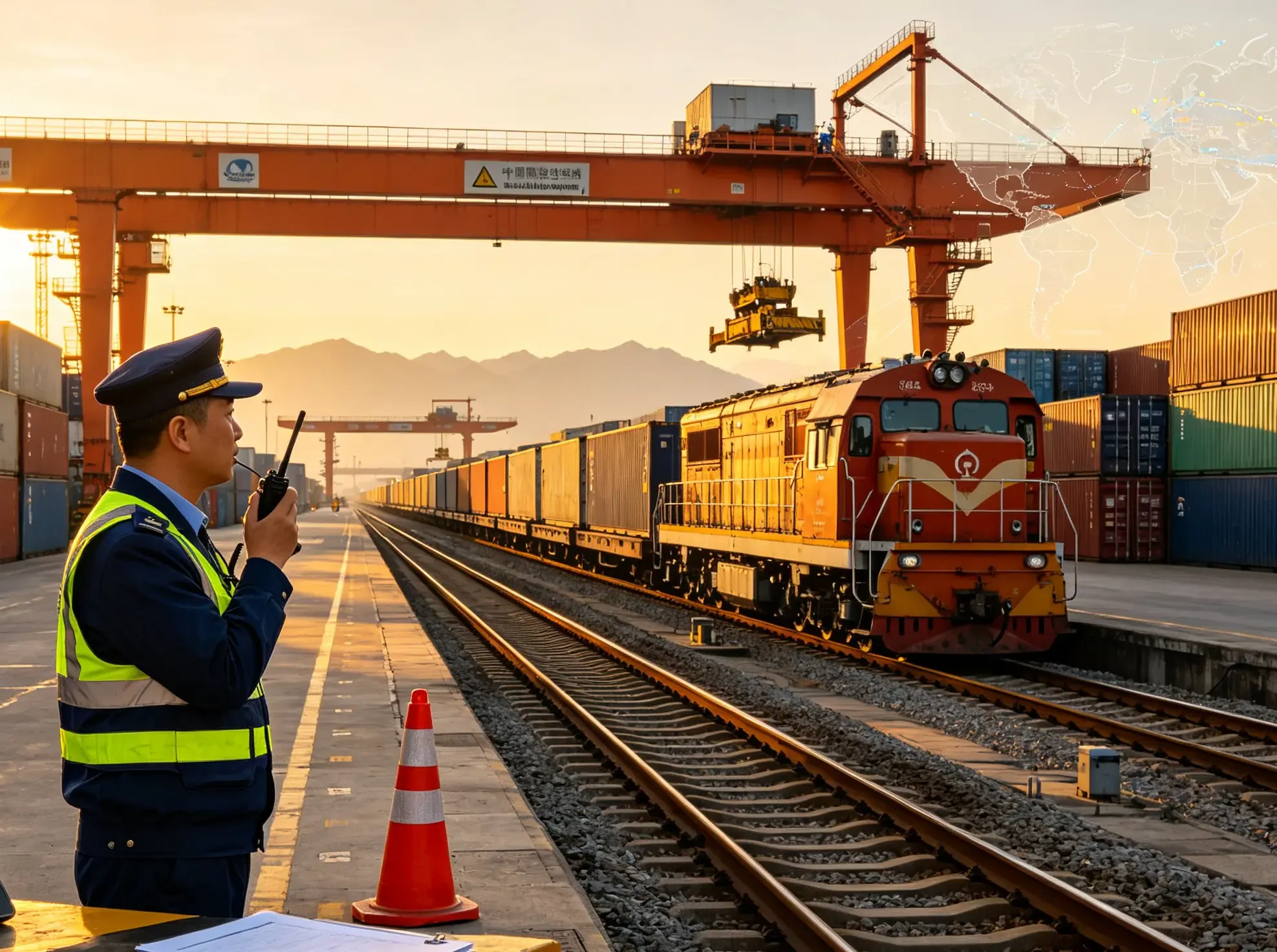
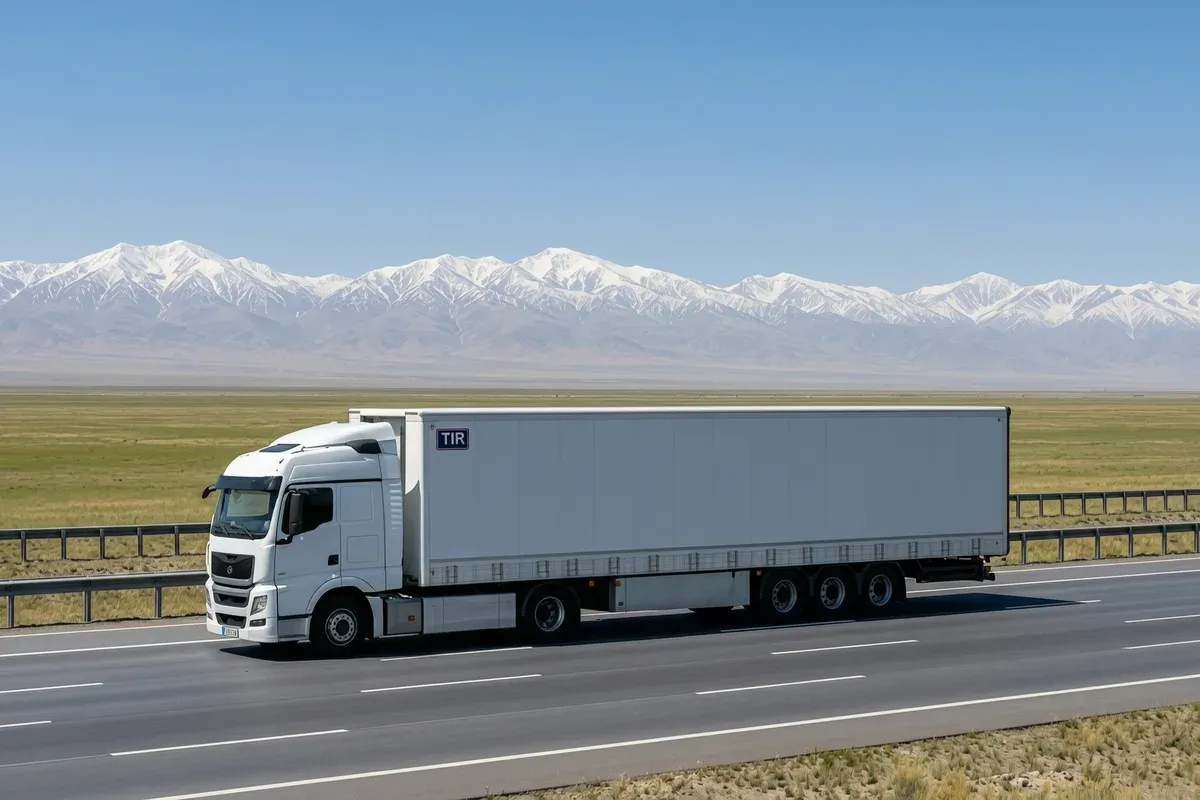
What does it actually cost to have a truck leave a factory in Guangzhou and arrive — cleared, duty-paid, unloaded — at a warehouse door in Tashkent, with a single invoice and zero surprises in between? That is the promise of DDP trucking from China to Uzbekistan, and in 2026 it is one of the most requested products on the Central Asia corridor. It is also one of the most misunderstood, because the per-kilogram rate a forwarder quotes you is not a freight rate at all — it is freight, two border crossings, Uzbek customs duty, 12% VAT, and last-mile delivery compressed into one number.
This guide unpacks that number. We break down what a DDP trucking quote actually contains, current rate bands for LTL and FTL as of November 2026, the Uzbek tax stack with a worked example, the route decision between the Khorgos and Irkeshtam corridors, realistic door-to-door transit times, and the customs rules — including Uzbekistan’s 2025 reference-price controls — that decide whether your shipment glides through Gisht-Kuprik or sits in a bonded yard. For the all-modes lane overview, see our guides to door to door shipping from China to Uzbekistan and shipping cost from China to Uzbekistan.
What Does “DDP Trucking” Actually Mean on the China–Uzbekistan Lane?
DDP trucking is a road freight service sold as one all-in price per kilogram or per cubic metre, in which the forwarder handles everything — pickup, export declaration, the international truck leg through Kazakhstan or Kyrgyzstan, Uzbek import clearance, duty and VAT payment, and final delivery — so the buyer simply receives the goods. Under Incoterms 2020, DDP (Delivered Duty Paid) places maximum obligation on the seller: your supplier or your forwarder is responsible for the shipment until it is unloaded at your named place in Tashkent, Samarkand, or the Fergana Valley.
Two things make this lane specific. First, China and Uzbekistan share no border, so every truck transits a third country — Kazakhstan via Khorgos or Alashankou, or Kyrgyzstan via Irkeshtam or Torugart — which means two sets of border formalities instead of one, and a transit regime that has to keep the cargo sealed and bonded the whole way. Second, DDP requires an importer of record inside Uzbekistan. Foreign companies without a local legal entity cannot act as IOR themselves, so compliant forwarders run DDP through licensed local IOR partners who become the legal importer on your behalf. If a forwarder quotes “DDP” but cannot explain who their IOR partner is and how they remit duty to the State Customs Committee, that is not a discount — that is a declaration someone plans to undervalue, and Uzbek customs has spent 2025 making that strategy expensive.
The alternative worth knowing is DAP (Delivered at Place): the truck still arrives at your door, but you act as importer of record and settle duty and VAT yourself. If you hold an Uzbek legal entity with a bonded warehouse setup, DAP can be cheaper. If you do not, DDP trucking is usually the practical answer — as long as the quote is transparent about how it gets done.
What’s Inside a DDP Trucking Quote? The Six Layers
A legitimate DDP trucking quote is a bundle of six distinct cost layers — and the per-kg rate only makes sense once you can see all six. When a forwarder refuses to itemize, the missing layers do not disappear; they resurface as “unexpected” charges at the border.
| Layer | What it covers | Typical 2026 magnitude |
|---|---|---|
| Origin charges | China pickup, export declaration, consolidation warehouse handling | Included in per-kg rate; $15–$40 per CBM if itemized |
| International linehaul | Truck leg via Kazakhstan or Kyrgyzstan to the Tashkent hub, fuel, tolls, driver costs | LTL: $1.00–$1.80/kg or $80–$150/CBM; FTL 13.6 m: $6,500–$9,500 |
| Border & transit formalities | Two border crossings, transit guarantee or TIR carnet, seal management, brokerage at each side | Bundled; a TIR-carnet leg typically runs $200–$400 in fees and guarantees per truck |
| Uzbek import taxes | Customs duty by HS code (0–30% for most goods), 12% VAT on CIF + duty, excise on selected goods, BCU-based customs fees | The single biggest variable — see the worked example below |
| Certification & compliance | UzStandard conformity documents, permits for regulated cargo | $50–$300 per product line when required |
| Destination & last mile | Tashkent hub handling, unloading, delivery to your address, IOR service fee | $30–$60 per CBM or a flat $150–$300 per consignment |
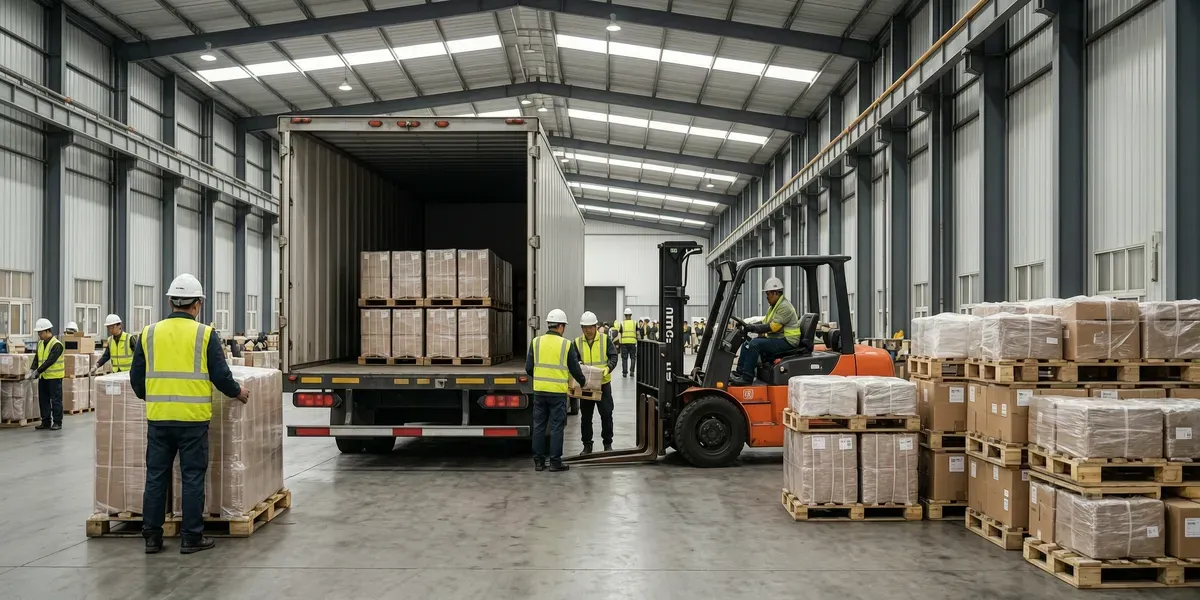
The fourth layer is where DDP quotes genuinely differ. Uzbek import duty runs from 0% to 30% depending on the HS code — electronics and machinery often sit at 0–5%, general merchandise at 5–15%, textiles, furniture and footwear at 20–30% — and the 12% VAT stacks on top of CIF value plus duty. A forwarder quoting one flat DDP rate for “general cargo” without asking what you ship is guessing, and the guess will be recovered somewhere: either padded into every shipment, or invoiced as a surprise “adjustment” after customs reassesses the declaration.
How Much Does DDP Trucking from China to Uzbekistan Cost?
Budget roughly $1.50–$3.00 per kg for consolidated DDP LTL, and $9,000–$13,000 all-in for a full 13.6 m DDP truck — with the spread driven mostly by your duty band, not by the trucking itself.
| Shipment profile | Indicative DDP rate (Nov 2026) | What’s driving it |
|---|---|---|
| LTL — low-duty goods (electronics, machinery parts, 0–5% duty) | $1.50–$2.20/kg | Freight dominates; taxes add under $1/kg on typical goods values |
| LTL — standard goods (hardware, plastics, auto parts, 5–15% duty) | $2.10–$2.80/kg | Duty becomes visible in the per-kg math |
| LTL — high-duty goods (textiles, furniture, footwear, 20–30% duty) | $2.70–$3.50+/kg | Duty and VAT can exceed the freight line itself |
| FTL — 13.6 m trailer, ~85 CBM / up to 25 T | $9,000–$13,000 all-in | $6,500–$9,500 linehaul plus taxes on cargo value; unit cost drops sharply at 15–20 T |
| Fergana Valley delivery via Irkeshtam | +5–10% vs. Tashkent-via-Khorgos | Shorter distance, tighter pass capacity, fewer departures |
Rates are indicative November 2026 market ranges, not quotations. Truck capacity on the corridor, border queue length, and the soum exchange rate all move weekly.
To see why the duty band matters so much, run a $10,000 commercial consignment through the Uzbek tax stack at three duty rates:
- At 5% duty: duty $500; VAT 12% × $10,500 = $1,260; total tax $1,760
- At 10% duty: duty $1,000; VAT 12% × $11,000 = $1,320; total tax $2,320
- At 30% duty: duty $3,000; VAT 12% × $13,000 = $1,560; total tax $4,560

At the 30% band, the tax stack is roughly 1.5× a typical LTL freight bill — which is precisely why two “DDP” quotes for identical cargo can sit $1.50/kg apart and both be technically honest, and why the cheapest quote on this lane is usually the one that plans to lie to customs. For the freight-only side of these numbers, our shipping cost from China to Uzbekistan guide breaks the corridor down mode by mode.
DDP FTL or DDP LTL: Which One Matches Your Shipment?
Above roughly 60–70 CBM or 18–20 tonnes, a dedicated DDP full truck beats consolidated pricing on unit cost and on handling risk; below it, LTL consolidation is the right product — and the break-even sits lower if your cargo is dense.
Consolidated DDP LTL bills on chargeable units — the greater of actual weight and volume at a road revenue-ton convention of roughly 333 kg per CBM. Light, bulky cartons are billed on the volume side; dense metal parts flip to the weight side. A 13.6 m curtain-side trailer on this corridor carries about 85 CBM but is weight-capped near 22–25 tonnes, so dense cargo hits the ceiling around 70–75 CBM of practical loading space. Do the division and the FTL break-even lands near 60–70 CBM of typical-density cargo, or 18–20 tonnes of the dense stuff — above that, paying $9,000–$13,000 for the whole truck undercuts the per-kg meter, and your freight stops sharing a trailer with eight other consignees.
The non-price differences matter on a double-transit corridor. An FTL loads once, seals once under a TIR carnet or transit guarantee, and its consignee is a single name at a single Tashkent yard — every unsealing on a consolidated truck is a customs event that can cost a day. LTL, by contrast, runs on fixed weekly departures from hubs like Yiwu, Guangzhou and Urumqi, waits for cutoff dates, and unloads at the destination hub where each consignee’s paperwork clears separately. If you are replenishing a retail chain on a schedule, LTL on a weekly fixed departure usually beats waiting to accumulate an FTL. For the full loading math, see our companion guide to FTL vs LTL.
Which Route Will Your Truck Take — Khorgos or Irkeshtam?
From eastern and southern China the default is Khorgos into Kazakhstan; from western China, or for any delivery in the Fergana Valley, Irkeshtam or Torugart through Kyrgyzstan is shorter and often faster.
Uzbekistan is one of only two doubly landlocked countries on earth, so the route question is never whether you transit a third country — only which one.
| Route | Path | Distance & character | Best for |
|---|---|---|---|
| Via Kazakhstan (Khorgos / Alashankou) | Hub → Urumqi → Khorgos → Almaty → Shymkent → Tashkent | ~5,000 km from eastern hubs; all-season highway, the highest departure frequency | General cargo from Guangzhou, Yiwu, Shanghai; Tashkent, Samarkand, Bukhara delivery |
| Via Kyrgyzstan (Irkeshtam / Torugart) | Kashgar → Irkeshtam → Osh → Andijan → Tashkent | ~1,500 km from Kashgar; mountain passes, weather-sensitive in winter | Western China origins; Andijan, Namangan, Fergana delivery — saves 2–4 days of backtracking |
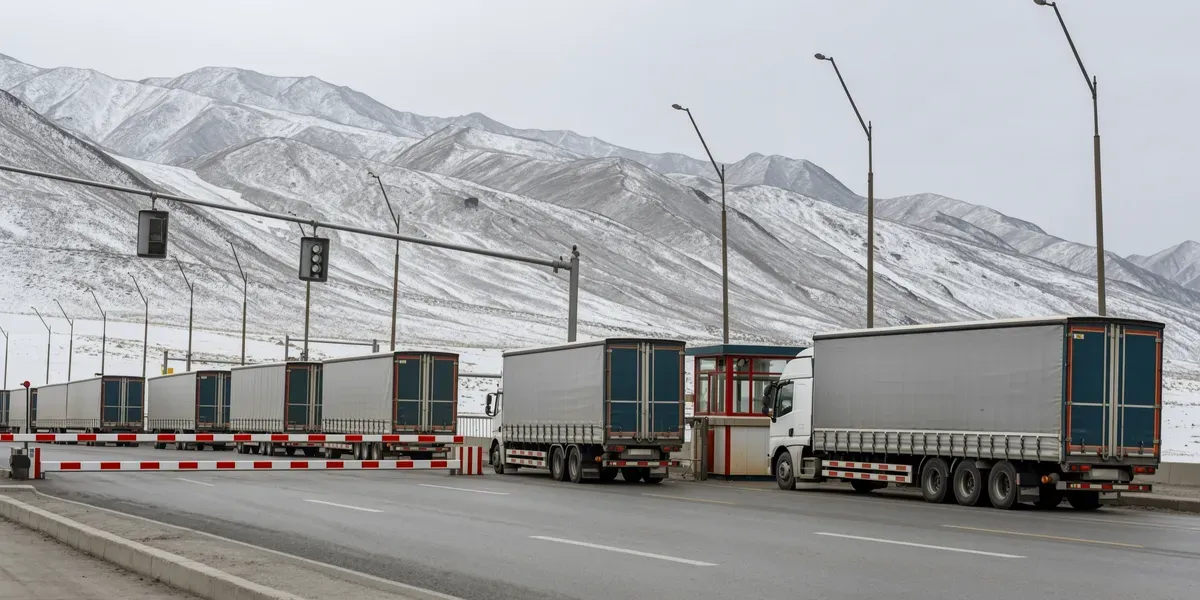
Under DDP the route choice is the forwarder’s operational problem, not yours — but it explains the transit spread in your quote. Khorgos queues ran 1–3 days through most of 2026, stretching toward 5 days before Golden Week and CNY, while the Irkeshtam pass can lose days to winter weather on top of tighter capacity. The corridor mechanics — sealed transit, TIR carnets, how the two gateways compare — are covered in depth in our Wuqia vs Khorgos gateway analysis, and the rail-side corridor economics in China to Uzbekistan rail freight.
How Long Does DDP Trucking Take, Door to Door?
Plan on 10–15 days door to door for a sealed DDP full truck and 13–18 days for consolidated DDP LTL — and treat anything promising single-digit days as a quote that excludes customs.
| Stage | FTL (sealed, TIR) | LTL (consolidated) |
|---|---|---|
| Pickup & export declaration (China) | 1–3 days | 2–5 days (incl. consolidation cutoff) |
| Linehaul to the exit gateway | 2–5 days | 2–5 days |
| Exit border + transit country transit | 2–4 days (one queue) | 3–6 days (hub re-handling adds a touch) |
| Uzbek entry border & customs clearance | 1–3 working days | 2–4 working days |
| Last-mile delivery & unloading | 1–2 days | 1–2 days |
| Realistic door-to-door total | 10–15 days | 13–18 days |

Uzbek customs clearance itself is fast when the paperwork is right — one to two working days is normal for a clean commercial declaration — which is exactly why document discipline matters more than raw driving speed on this lane. A missing UzStandard certificate or a HS code that mismatches the invoice can park a truck longer than the entire linehaul.
Uzbek Customs Under DDP: The Rules That Decide Your Invoice
DDP works on this lane because the forwarder’s IOR partner runs the Uzbek declaration — but the duty, VAT, and valuation rules underneath are fixed by Uzbek law, and 2025 made them noticeably stricter.
The commercial stack, briefly: customs duty by HS code (0–30% for most goods; selected categories higher), 12% VAT on customs value plus duty and excise, excise tax on a short list of goods (alcohol, tobacco, fuel, vehicles), and customs processing fees calculated in Basic Calculation Units — 1 BCU has run near $32 since mid-2025 — scaled to declared value. Declarations must be filed within 15 calendar days of arrival under the Customs Code.
Three 2025-era rules every DDP shipper should know:
- Reference-price enforcement. Since May 2025, declared prices for roughly 70 product categories may not fall below 80% of the trailing 90-day average. The undervaluation play that some “cheap DDP” lanes still run in other markets dies at the Uzbek border — reassessment, penalties, and a damaged importer record follow.
- The personal-import cap. Cabinet Resolution No. 244 (April 2025) capped duty-free courier imports for individuals at $200 per calendar month, tracked by personal ID. If your business model is B2C dropshipping to Uzbek consumers, DDP trucking consolidation under a commercial IOR is the compliant structure; personal-channel workarounds no longer survive contact with customs.
- UzStandard conformity. Regulated product categories — electrical equipment, machinery, food-adjacent goods, toys — need conformity documents before clearance. A DDP forwarder who asks for your product specs and certificates before quoting is protecting your timeline; one who asks for nothing is planning to sort it out at the bonded yard, on your clock.
How to Book DDP Trucking: A 6-Step Checklist
Get these six things right before the truck rolls, and the corridor’s complexity becomes the forwarder’s problem instead of yours.
- Classify your cargo first. Lock the 10-digit HS code and confirm the duty band before comparing quotes — a $0.40/kg spread between two DDP prices usually means different assumptions about your duty, not different trucking.
- Demand the six-layer itemization. Freight, borders, taxes, certification, destination, IOR fee — in writing. Vague “all-in” quotes on this lane are how surcharges are born.
- Verify the IOR arrangement by name. Ask who acts as importer of record, how duty is remitted, and what happens to your goods if the IOR partner’s registration is ever questioned.
- Match the service shape to your volume. Under ~60 CBM or ~18 T, book weekly-departure LTL; above it, take the whole truck and insist on a single seal and a named consignee.
- Pre-file documents a week out. Invoice, packing list, HS codes, certificates — into your forwarder’s hands before departure, so Uzbek clearance starts the day the truck arrives, not the day someone notices it.
- Book insurance on the goods value, not the freight value. Road risk on a 5,000 km double-transit corridor is real; standard carrier liability covers a fraction of cargo value. Ask about cargo insurance services sized to your declaration.
FAQ
Is DDP trucking to Uzbekistan legal without a local company?
Yes — through a forwarder with a licensed Uzbek IOR partner who acts as importer of record. What is not legal is routing commercial cargo through individuals’ duty-free channels; the 2025 rules ended that.
Why is one forwarder’s DDP rate $1.60/kg and another’s $2.80/kg for the same cargo?
Different duty assumptions, different IOR cost structures, and different honesty about border fees. The spread is normal; a quote with no questions about your HS code is the dangerous kind of cheap.
Can I ship batteries, liquids, or magnetic goods DDP by truck?
Usually yes by road — one of trucking’s advantages over air on this lane — but they need proper MSDS documentation, classification, and sometimes UN-compliant packaging, declared up front.
What is the cheapest way to ship small parcels to Uzbekistan?
Under about 100 kg, express courier or air; above that, consolidated truck LCL starts winning on cost per kg, and DDP trucking wins outright once you want duty and delivery handled for you.
Does DDP trucking include unloading at my warehouse?
Delivery to the address is included; tail-lift unloading, indoor handling, and pallet jack work are destination services to confirm in the quote — specify them before departure, not at the door.
How do I track a DDP truck across two borders?
Reputable forwarders provide milestone tracking — departure, gateway exit, transit progress, Uzbek entry, customs release, delivery — with photos at handover. GPS on the trailer is increasingly standard on FTL.
Conclusion
DDP trucking from China to Uzbekistan is the corridor’s most complete product: one price, one counterparty, and a truck that arrives in Tashkent cleared, duty-paid, and ready to unload. The rate you should trust is an itemized one — six layers, a named IOR partner, and a duty assumption that matches your actual HS code. At $1.50–$3.00/kg all-in for LTL and $9,000–$13,000 for a full truck, it sits between rail on cost and air on speed, and it is the only mode that delivers deep into the Fergana Valley without transloading.
Efanda Logistics has run China–Central Asia road freight since 2018 from our Shenzhen headquarters, with weekly consolidated departures, sealed FTL service under TIR, licensed IOR arrangements in Tashkent, and a dedicated logistics specialist on every account. We quote DDP trucking with every layer itemized — no blended rates, no border surprises. For a quote built on your actual cargo and HS codes, call +86 18929345880.

Written by the EFANDA Logistics team — a Shenzhen-based freight forwarder established in 2018, moving cargo from China to ports worldwide with end-to-end pickup, consolidation, customs and door delivery.About us