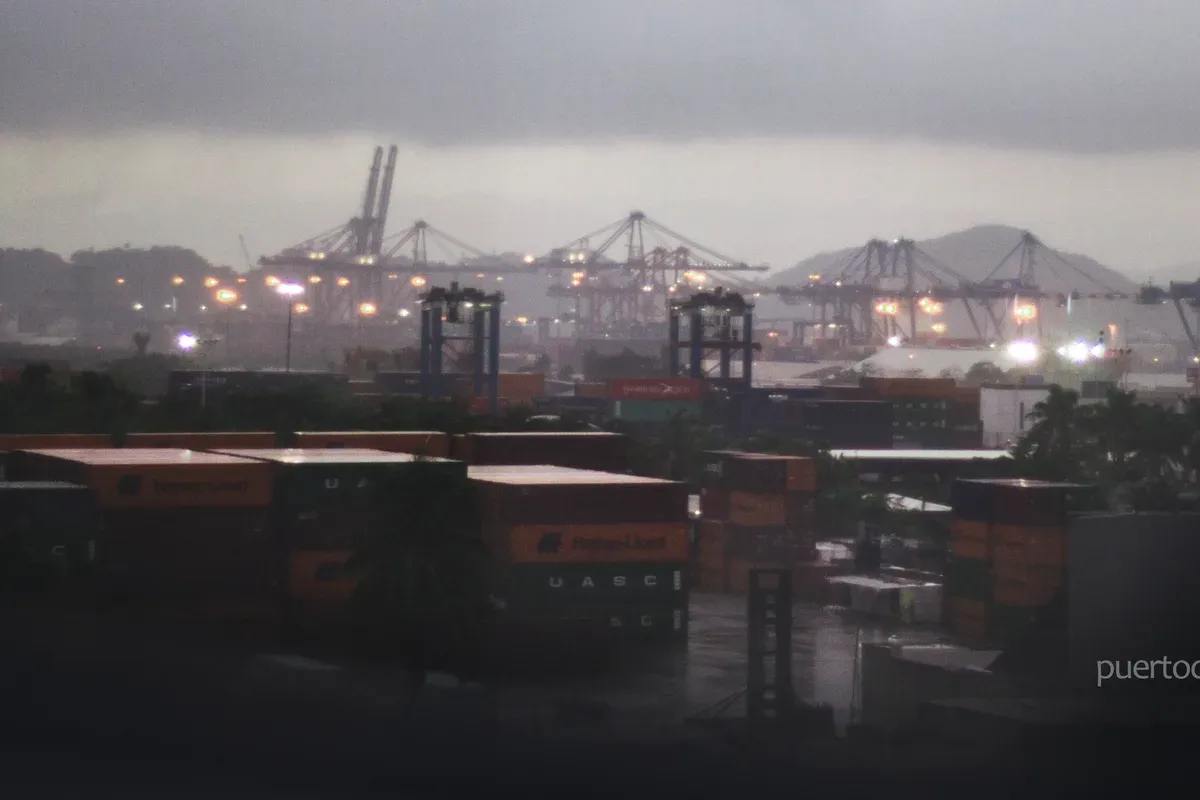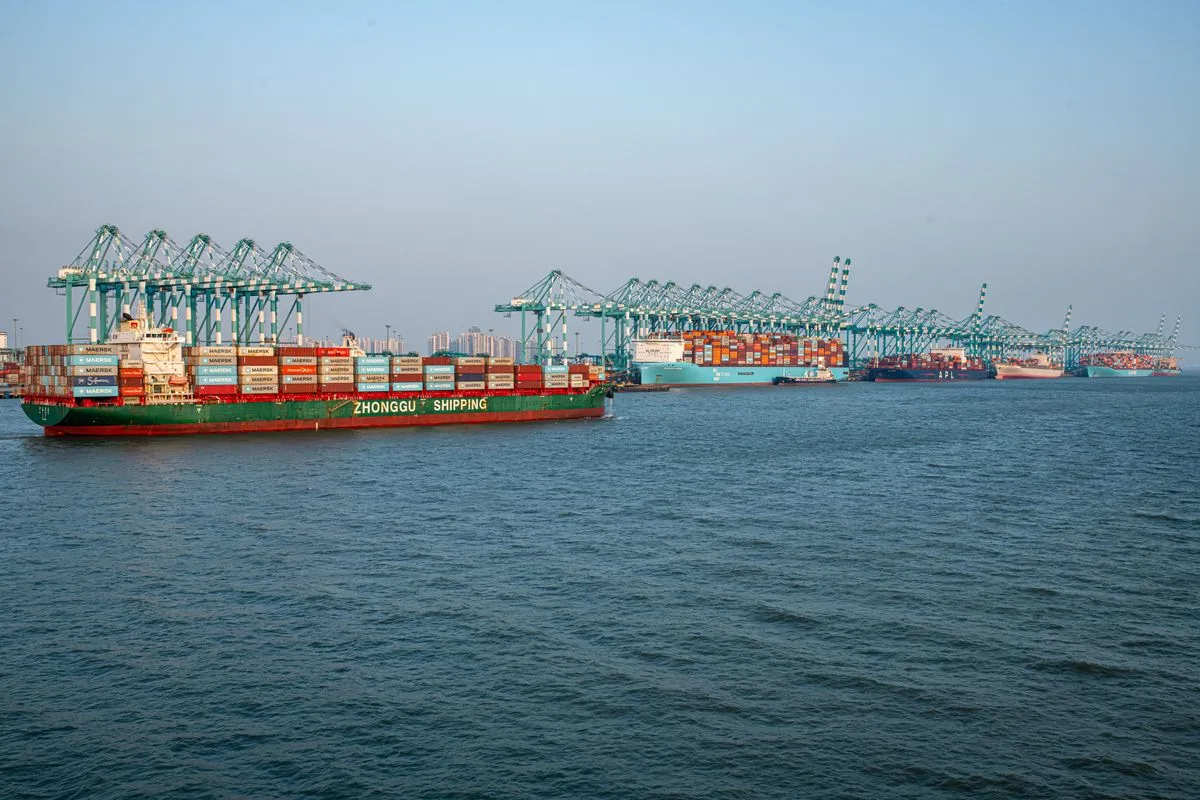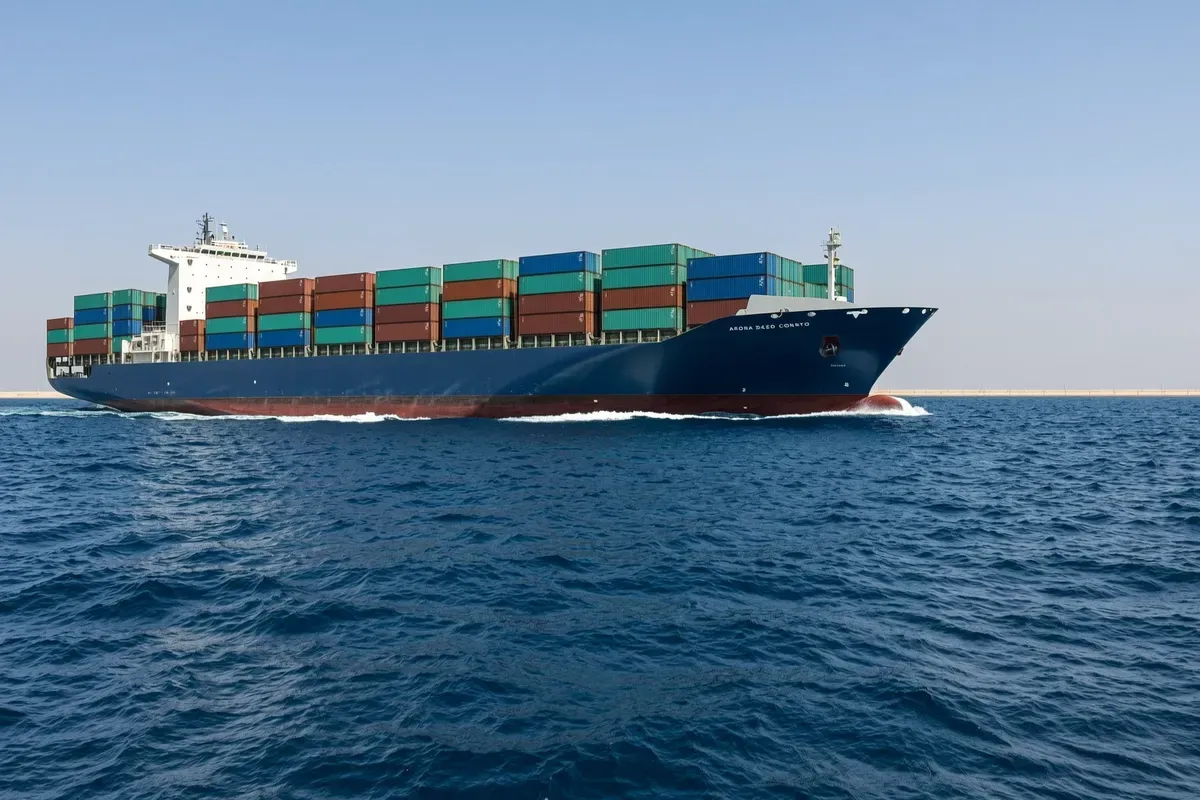
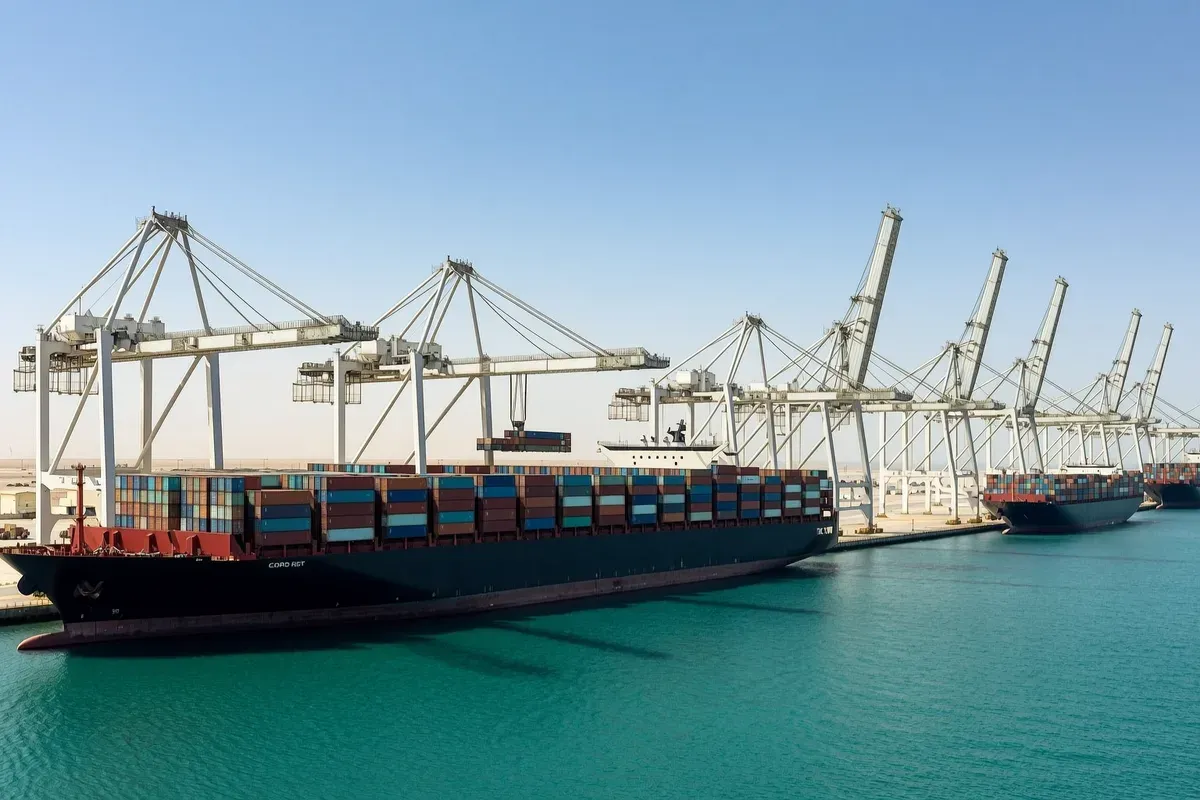
Which port does your container actually call at when you book freight from China to Dubai? For the overwhelming majority of importers, the answer is Jebel Ali. Operated by DP World and voted the Best Seaport in the Middle East for 24 consecutive years, Jebel Ali is the region’s dominant container gateway — in a normal year it handles roughly 15 million TEU, more than any port between Singapore and Rotterdam. For buyers managing shipping from China to UAE, it is the default door and the hub of a re-export system that feeds the entire Gulf.
But 2026 has been anything but normal. April’s Strait of Hormuz conflict cut Jebel Ali’s second-quarter throughput by 90 percent and knocked the port out of the global top 30 for the first time in decades, even as its terminals kept running. This Jebel Ali port guide covers what shippers need to know now: which terminal receives your box, what transit times and rates from China look like after the recovery, how Dubai customs clearance really works, what JAFZA can do for GCC distribution, and how to plan around the disruption risk 2026 made impossible to ignore.
1. Jebel Ali Port at a Glance: Scale and Rankings
Jebel Ali sits about 35 kilometers southwest of central Dubai, inside the free zone corridor that runs to the Abu Dhabi border. Opened in 1979, it is DP World’s flagship facility and the largest man-made harbor in the world. The headline numbers:
- Normal-year volume: roughly 15 million TEU annually, historically placing Jebel Ali around 9th–10th among the world’s container ports and first in the Middle East.
- 2026 disruption: 3.1 million TEU in the first half of 2026, down 59.5 percent year on year, after the April Strait of Hormuz conflict slashed vessel traffic through the strait. Alphaliner’s mid-year ranking dropped the port from 10th to 32nd globally.
- Recovery: DP World’s interim reporting confirms the infrastructure was never damaged, and volumes have been rebuilding since the summer as carrier loops returned.
The port’s real moat is not the quay but the ecosystem: the JAFZA free zone, one of the largest in the world, sits directly beside the terminals, and more than 80 percent of Jebel Ali’s containerized cargo is tied to international trade and re-export rather than local consumption.
2. Container Terminals: T1 to T4 — Where Does Your Box Land?
Jebel Ali is not one terminal but four, spread across more than nine kilometers of quay, with 26 container berths and over 100 ship-to-shore cranes. Which terminal receives your container depends on the carrier you book:
| Terminal | Quay Length | Berths | Terminal Area | Quay Cranes |
|---|---|---|---|---|
| Terminal 1 | 3,242 m | 10 | 133.34 ha | 37 |
| Terminal 2 | 2,911 m | 8 | 184.56 ha | 32 |
| Terminal 3 | 1,860 m | 5 | 82.29 ha | 19 |
| Terminal 4 | 1,180 m | 3 | 76.44 ha | 13 |
Terminal 1 is the original workhorse; Terminal 3 was built for the largest vessels afloat; Terminal 4, the newest, runs semi-automated operations.
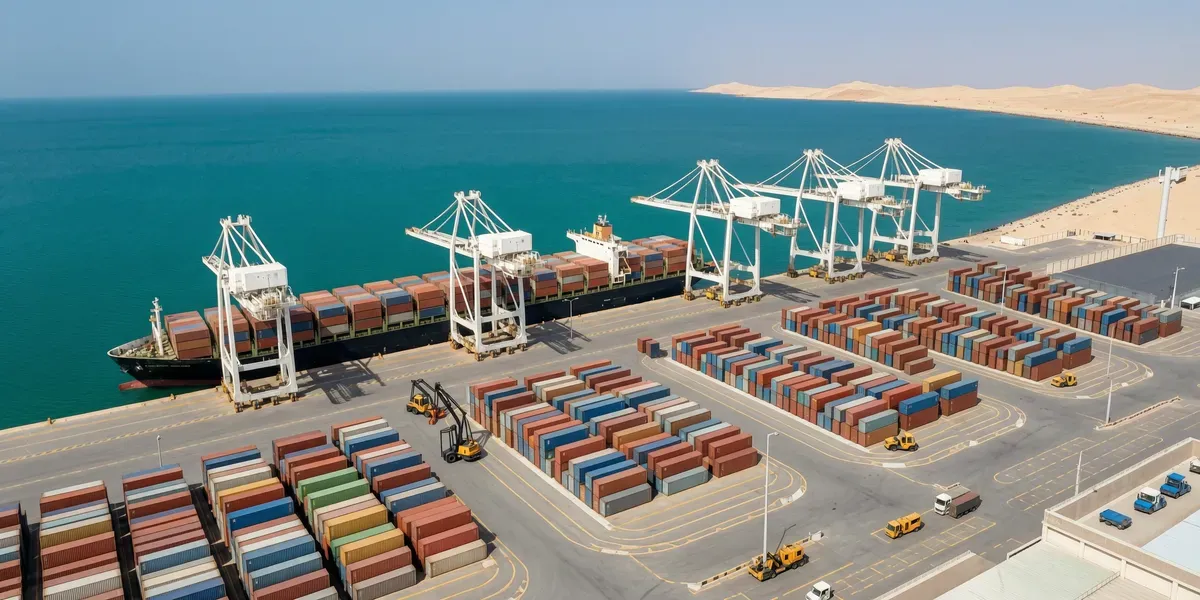
Terminal assignment is the carrier’s choice, not yours — but each terminal runs its own appointment system and free-time clock, so your broker and trucker need it confirmed before the vessel berths. Second, Jebel Ali is not only containers: dedicated general cargo and RoRo berths handle vehicles, break-bulk, and project cargo — self-propelled machinery often lands here on a car carrier instead of in a box (see our RoRo shipping from China to UAE guide for that mode).
3. Shipping Routes from China: Transit Times to Jebel Ali
Every major Asia–Gulf carrier — MSC, Maersk, CMA CGM, COSCO, ONE, Evergreen, Hapag-Lloyd, OOCL — serves Jebel Ali with direct loops from China, mostly weekly or better. Direct sailings from South China reach Jebel Ali in 13–16 days, East China in 18–24 days, and North China in 24–32 days.
Port-to-port transit times and current FCL rate bands by origin port:
| Origin Port | 20GP to Jebel Ali | 40GP / 40HQ to Jebel Ali | Port-to-Port Transit |
|---|---|---|---|
| Shenzhen / Yantian | $2,100–$2,600 | $3,500–$4,400 | 15–18 days |
| Guangzhou / Nansha | $2,200–$2,800 | $3,650–$4,700 | 18–22 days |
| Shanghai | $2,400–$3,200 | $3,850–$5,000 | 20–25 days |
| Ningbo | $2,350–$3,100 | $3,750–$4,900 | 22–28 days |
| Qingdao | $2,450–$3,400 | $3,900–$5,200 | 25–30 days |
| Tianjin / Xingang | $2,550–$4,086 | $4,050–$6,563 | 28–32 days |

A few things the table does not show:
- LCL shipments add 4–7 days for consolidation in China and deconsolidation at destination.
- Check the rotation. Some Gulf services call at Hamad or Sohar before Jebel Ali; a booking that reads as 18 days can land at 23 if Dubai is the second port of call.
- Add buffer at destination. Customs clearance and gate-out add 1–3 days in normal conditions, plus 1–2 days for delivery — a Shenzhen-to-Dubai door move lands at 20–31 days. For the full picture, see how long does shipping from China to UAE take.
For urgent cargo, air freight from China into Dubai runs 5–10 days door to door; our air shipping from China to UAE guide breaks down the rates and cut-offs.
4. What Does Shipping from China to Jebel Ali Cost in Late 2026?
The honest answer: it depends on the week you book. A 20GP from South China to Jebel Ali currently runs $2,100–$2,800, and a 40GP or 40HQ $3,500–$4,700, rising as you move north to Ningbo, Qingdao, and Tianjin, where transshipment adds cost and days. LCL runs $55–$180 per CBM, air freight $3.80–$6.50 per kg, and express $6.50–$12.00 per kg. These bands match our September 2026 cost guide and still held as of mid-November, but treat any published figure as a baseline with a two-to-three-week shelf life — our sea freight from China rates on this lane are re-validated weekly.
Ocean freight is only part of the bill. Budget for these destination-side charges at Jebel Ali:
| Charge | Typical Cost | When It Applies |
|---|---|---|
| Destination THC and D/O fee | A few hundred USD per container | Every import container |
| MOFAIC invoice attestation | Fixed fee | Commercial invoices above AED 10,000 |
| Customs duty | 5% of CIF value | Most goods under the GCC Common External Tariff |
| VAT | 5% of (CIF + duty) | Recoverable for TRN-registered importers |
| Storage after free time | Escalating daily tariff | After the standard 5–7 free days |
| Demurrage / detention | $50–$150 per day | Once free time runs out |

The D&D row is where importers get hurt: a standard 5–7 day free period evaporates fast during Ramadan or a holiday week, and negotiating 10–14 days at booking costs nothing upfront yet routinely saves four-figure demurrage bills. For the full landed-cost walkthrough, see how much does it cost to ship from China to the UAE; for container-selection math, FCL shipping from China to UAE.
One more 2026 lesson on rates: geopolitical surcharges can dwarf the ocean rate itself. During the April Hormuz escalation, war-risk surcharges on this lane ran $3,000–$5,000 per container, and a Shanghai-to-Jebel Ali box that would normally move for $3,000–$4,000 briefly priced at $6,500–$10,000 all-in — spot quotes touched $11,000 at the peak before normalizing over the summer. Cargo insurance services at 0.3%–0.5% of CIF are cheap protection on a lane this volatile.
5. Customs Clearance at Jebel Ali: Mirsal 2, Duty, and VAT
Clearance at Jebel Ali runs through a single digital channel: the Dubai Trade portal, which fronts the Mirsal 2 declaration system used by customs, the port, and JAFZA. Every commercial import needs an importer code tied to a UAE trade license, and in practice a licensed customs broker files the declaration for you.
The standard flow:
- Pre-arrival filing. Your broker submits the import declaration in Mirsal 2 before the vessel berths — B13 for goods entering the local market, B15 for goods bound for a free zone, B23 for re-export, and transit declarations for GCC movements.
- Risk assessment. The system assigns a channel: green for instant release, yellow for a document check, red for physical inspection — roughly 3–8 percent of consignments.
- Duty and VAT payment. The GCC Common External Tariff charges 5% duty on CIF for most goods, and 5% VAT applies on the duty-inclusive value; TRN-registered importers can account for VAT under the reverse charge mechanism instead of paying cash at the border.
- Release order. With payment registered and the channel cleared, the release order issues electronically.
- Gate-out. Your trucker collects against the delivery order and terminal appointment.
| Document | Purpose | Common Mistake |
|---|---|---|
| Commercial Invoice | Declares value and parties | Missing MOFAIC attestation above AED 10,000 |
| Packing List | Itemized weights and dimensions | Mismatch with actual cargo |
| Bill of Lading | Transport contract | Consignee name errors block release |
| Certificate of Origin | Proves origin for tariff treatment | Missing chamber legalization |
| Import Declaration (Mirsal 2) | The customs entry | Wrong HS classification |
| Delivery Order | Releases the box from the terminal | Exchanged late, burning free time |
With clean documents, green-channel cargo clears in 24–48 hours, and 1–3 days is a realistic planning band. Three tips that save real time:
- Classify before the vessel sails. HS code errors are the most expensive paperwork mistake in Gulf customs — a wrong code can mean re-filing, inspection, and fines that dwarf any broker fee.
- Attest invoices in China, not in Dubai. Chasing MOFAIC attestation after arrival adds days to a clearance that should take hours.
- Match the B/L consignee to the importer code exactly. A mismatch between the bill of lading and the registered importer blocks the declaration outright.
Our customs clearance team coordinates with licensed brokers at Jebel Ali daily and pre-validates documents before cargo leaves China — which is when corrections are still cheap.
6. JAFZA and the Re-Export Engine: Why Cargo Stops Here Before the GCC
Jebel Ali’s defining feature is what sits beside the quay. The Jebel Ali Free Zone — JAFZA — is one of the world’s largest free zones, and under the GCC customs framework, goods inside it are treated as if they never entered UAE customs territory: no import duty, no VAT, for as long as the cargo stays in the zone or moves onward as a re-export.
That turns Jebel Ali into a distribution hub rather than a destination. A typical pattern: a full container of machinery parts arrives from China on a B15 declaration, moves straight into a JAFZA warehouse, gets repacked and relabeled for individual markets, then leaves on B23 re-export declarations — by truck to Saudi Arabia through the Al Ghuwaifat border post, to Oman via Hatta or Al Ain, or by feeder vessel to Shuwaikh in Kuwait, Khalifa bin Salman in Bahrain, or Hamad in Qatar. Duty is paid once, at the point each shipment enters its destination market, under that market’s own clearance rules.
The practical advantages: duty-suspended inventory until orders materialize, regional labeling and kitting beside the port, and one consolidation point serving six GCC markets. Our guides to sea shipping from China to Saudi Arabia and sea shipping from China to Oman cover the onward legs into the two largest Gulf markets.
7. The 2026 Hormuz Disruption: What Happened and How to Plan Around It
No honest Jebel Ali guide in late 2026 can skip the year’s defining event. When conflict closed the Strait of Hormuz to normal traffic in April, MSC, Maersk, and CMA CGM suspended or restructured Middle East loops, and Jebel Ali — sitting inside the strait — bore the brunt: second-quarter throughput collapsed to 374,000 TEU, down 90.1 percent year on year.
The UAE fast-tracked overland alternatives to the strait: DP World established bonded corridors linking Fujairah and Khorfakkan — both on the Gulf of Oman, outside Hormuz — with Jebel Ali, and has moved 500,000 TEU through GCC road and rail corridors since March, at a tempo now supporting roughly 3,000 truck movements a day. Etihad Rail ran more than 100 freight trains in the days following the escalation, carrying some 459,000 tons of cargo inland. And in July, DP World signed a 50-year deal to develop two east-coast terminals, including Al Rugaylat in Fujairah — 2.5 million TEU of future annual capacity at a gateway that bypasses the strait entirely.
Three planning rules we now apply for our own clients on this lane:
- Quote Jebel Ali and an east-coast alternative. For time-critical cargo during elevated regional tension, pricing Khorfakkan or Fujairah with a bonded land bridge takes one email and turns a theoretical risk into a costed option.
- Watch the surcharge lines, not the headline rate. War-risk and emergency surcharges reprice within days of an escalation — the April spike added $3,000–$5,000 per container before ocean freight moved at all.
- Hold buffer stock in JAFZA. Duty-suspended inventory beside the port is the cheapest insurance against a two-week service suspension.
For the seasonal layer, our Ramadan 2027 shipping to the Middle East guide maps the booking deadlines that compress Gulf capacity every spring.
8. Getting Cargo Inland: Trucks, Etihad Rail, and the Sea-Air Corridor
The port plugs directly into the E11 and E311 highway corridors, and the Jebel Ali Rail Terminal anchors Etihad Rail’s growing freight network across the Emirates.
| Destination | Mode | Typical Transit from Jebel Ali |
|---|---|---|
| Dubai (city / Deira / Business Bay) | Truck | Same day |
| Sharjah / Northern Emirates | Truck | Same day |
| Abu Dhabi / KEZAD | Truck or rail | 3–5 hours by road |
| Muscat (Oman) | Truck | 1–2 days incl. border |
| Dammam / Riyadh (Saudi Arabia) | Truck | 2–3 days incl. border |
| Kuwait / Bahrain / Qatar | Feeder vessel | 2–5 days port to port |
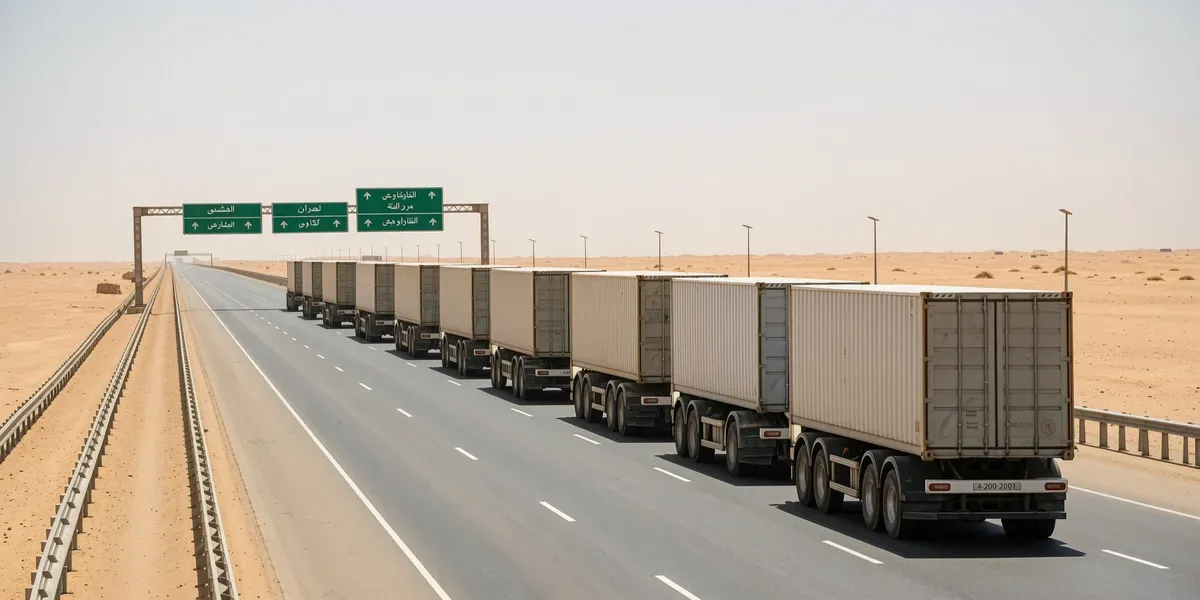
Road is the default inside the UAE — Dubai consignees are effectively same-day, Abu Dhabi an afternoon’s drive — and cross-border GCC trucking under duty-suspended transit status carries the JAFZA re-export model. Etihad Rail’s freight services already link the port to industrial hubs across the Emirates, with the network built to reach the Saudi border at Al Ghuwaifat.
The option most importers underuse is the sea-air corridor: Dubai World Central (Al Maktoum International) sits a short bonded transfer from the port, so the urgent contents of a sea container can be flying onward within hours — a middle path between 25 days by sea and a full air-freight bill. For e-commerce, pairing sea freight for baseline stock with door to door shipping by air for fast movers is the pattern we see working.
9. Jebel Ali vs Khalifa vs Sharjah: Which UAE Gateway?
Jebel Ali is the default, but it is not the only door. Abu Dhabi’s Khalifa Port and Sharjah’s terminals serve real niches — and in 2026, geography made some of them strategically important:
| Factor | Jebel Ali (Dubai) | Khalifa (Abu Dhabi) | Sharjah / Khorfakkan |
|---|---|---|---|
| Location vs Hormuz | Inside the strait | Inside the strait | Khorfakkan: outside, on the Gulf of Oman |
| Free zone | JAFZA, beside the quay | KEZAD, beside the quay | Hamriyah Free Zone |
| Sailing frequency from China | Highest in the UAE | Good, fewer loops | Limited; mostly feeders |
| 2026 disruption impact | Severe, recovering | Severe; dropped out of the global top 50 | Khorfakkan gained as a Hormuz-bypass call |
| Best for | Dubai, GCC re-export, JAFZA distribution | Abu Dhabi industry, KEZAD manufacturing | East-coast bypass routings, northern Emirates |
Jebel Ali is the default for anything consumed in Dubai or redistributed across the GCC — no other UAE port matches its sailing frequency, JAFZA’s scale, or its inland connectivity. Khalifa earns its place when the consignee is Abu Dhabi industry or a KEZAD facility, where it can cut a day of drayage. Khorfakkan and Fujairah are the strategic alternates: outside the strait, they kept UAE cargo moving when Hormuz was closed, and every Gulf routing plan now prices them as the contingency. Quote both before assuming the cheaper port means the cheaper delivery — Khalifa and Sharjah typically add 3–6 days on China routings.
10. Frequently Asked Questions
What is the port code for Jebel Ali? The UN/LOCODE is AEJEA (AE JEA). Use it on bills of lading, shipping instructions, and customs declarations to avoid confusion with Jebel Dhanna, also in the UAE.
How long does customs clearance take at Jebel Ali? With clean documents, green-channel cargo clears in 24–48 hours, and 1–3 days from vessel arrival to gate-out is a realistic planning band. A red-channel physical inspection — roughly 3–8 percent of consignments — adds several days.
Do I need a UAE company to import through Jebel Ali? You need an importer code tied to a UAE trade license, held either by your own entity or by your consignee. Buyers without a UAE entity typically ship DDP, where the forwarder’s local structure clears and delivers for a single all-in price.
Is Jebel Ali or Khalifa better for cargo from China? For Dubai consumption and GCC distribution, Jebel Ali: more sailings, JAFZA, faster clearance corridors. For Abu Dhabi consignees, Khalifa can save a day of trucking. During elevated Strait of Hormuz risk, also price Khorfakkan or Fujairah on the east coast.
How far in advance should I book space to Jebel Ali? Two to three weeks before ETD in normal conditions, and four weeks during the pre-Ramadan and Q4 peaks. Booking early also locks your rate — spot prices on this lane moved by thousands of dollars within a single quarter of 2026.
What are Jebel Ali Port’s operating hours? The container terminals operate 24 hours a day, 7 days a week for vessel and yard operations. Dubai Customs systems clear electronically around the clock, but inspection capacity and truck appointments run on scheduled windows.
Jebel Ali has spent four decades as the Gulf’s front door to Chinese cargo, and 2026 stress-tested that role rather than ending it — the terminals never stopped working, and the recovery has been measured in months, not years. The shippers who move through it smoothly are the ones whose paperwork is right before the vessel arrives and whose routing plan already includes an east-coast alternative. That is exactly how we run it: Efanda Logistics has coordinated China–UAE shipments since 2018, with pre-validated documentation, licensed broker coordination at Jebel Ali, and transparent pricing with no hidden fees. Tell us what you are shipping, and we will quote the full journey — ocean, customs, and GCC delivery included.

Written by the EFANDA Logistics team — a Shenzhen-based freight forwarder established in 2018, moving cargo from China to ports worldwide with end-to-end pickup, consolidation, customs and door delivery.About us