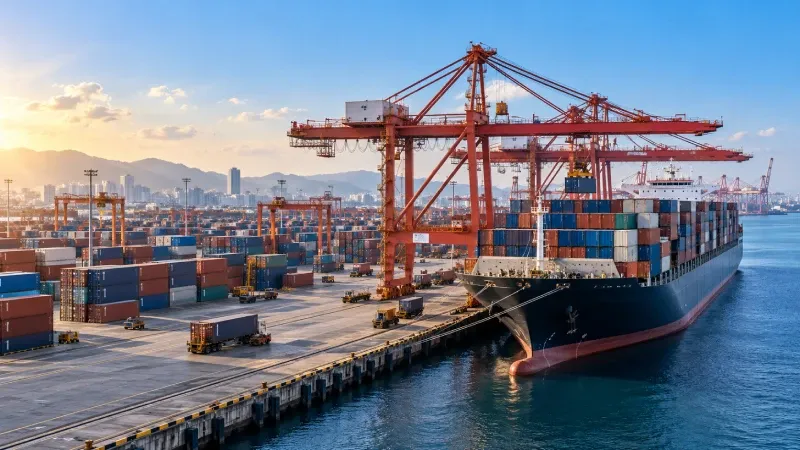
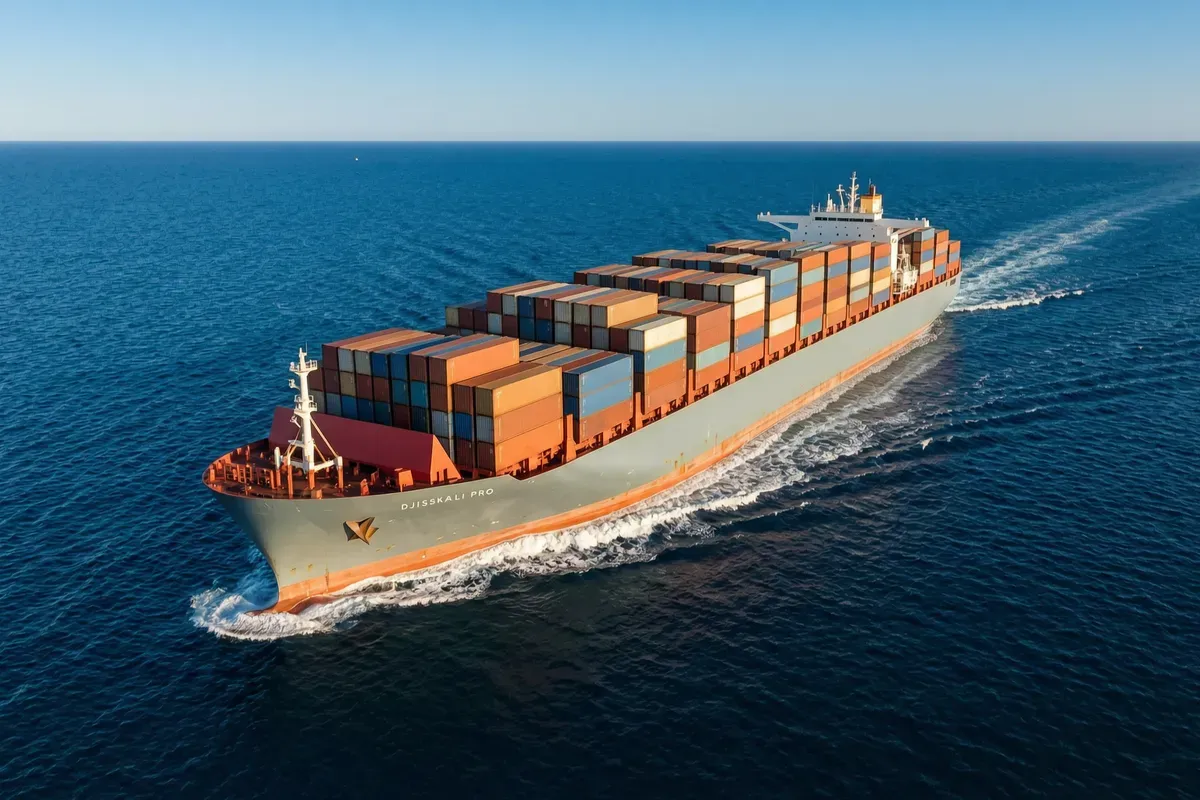
Sea shipping from China to Nigeria carries the overwhelming majority of goods on West Africa’s busiest import corridor. In the first half of 2026, Nigeria brought in ₦11.01 trillion of merchandise from China — 39.27% of total imports that half year, according to National Bureau of Statistics data — and sea freight moved most of that volume through Lagos and Lekki. Whether you are a first-time importer testing the market with five cubic metres of mixed goods or a distributor booking a 40ft container every month, the ocean leg is where your landed cost is won or lost.
This guide covers 2026 sea freight rates by port, transit times, shipping lines, port choice, and the Form M and SONCAP clearance chain. For a dedicated container rate card, see our FCL shipping from China to Nigeria guide; for a single price with duty paid, see our DDP sea shipping from China to Nigeria service.
Rate disclaimer: All figures reflect market conditions as of late 2026 and are indicative only. Ocean freight on the China–West Africa corridor reprices weekly with demand, capacity, fuel and equipment availability. Always confirm a live quote, and expect most quotes to hold for only 2–3 weeks.
What Is Sea Shipping from China to Nigeria?
Sea shipping from China to Nigeria is the movement of containerised or bulk cargo by ocean vessel from a Chinese export port — typically Shenzhen, Guangzhou, Ningbo, Shanghai or Qingdao — to a Nigerian destination port, most often in the Lagos complex. It is the default mode for non-urgent shipments above two to three cubic metres.
Three service types cover almost every commercial shipment on this lane:
| Service Type | How It Works | Best Cargo Profile |
|---|---|---|
| FCL (Full Container Load) | You book an entire container; sealed at origin, not opened until Nigeria | Building materials, machinery, full production runs, any cargo above ~15 CBM |
| LCL (Less than Container Load) | Your cargo shares a container with other shippers; billed per CBM | Trial orders, mixed SKUs, e-commerce restocks, cargo under ~12 CBM |
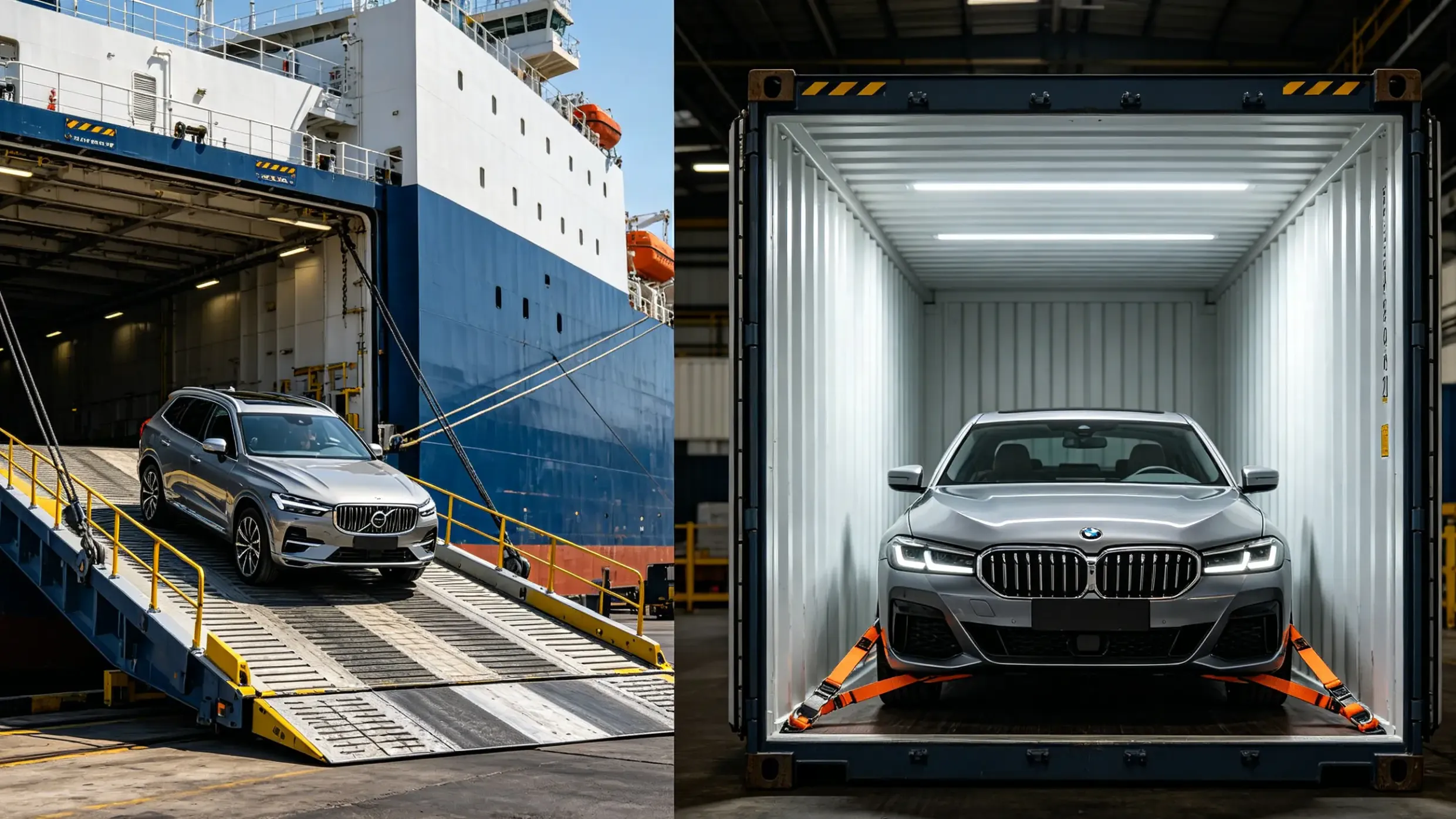
| RoRo (Roll-on/Roll-off) | Vehicles and wheeled machinery are driven on and off the vessel | Cars, trucks, buses, construction equipment |
Most FCL and LCL cargo moves in standard dry containers. The three sizes that dominate this lane:
| Container Type | Usable Volume | Max Payload | Typical Nigeria Cargo |
|---|---|---|---|
| 20GP (20ft Standard) | ~28 CBM | ~28,000 kg | Tiles, cement, steel, machinery, auto spare parts |
| 40GP (40ft Standard) | ~58 CBM | ~26,000–28,000 kg | Mixed wholesale goods, appliances, general merchandise |
| 40HQ (40ft High Cube) | ~68 CBM | ~26,000 kg | Furniture, foam, plastics, textiles, bulky light goods |
The 20GP pays for itself most often on this lane because so much Nigeria-bound cargo is dense: building materials, tiles and machine parts hit the payload ceiling before the cubic capacity fills. If your cargo is vehicles, see our guide to how to import and ship cars from China to Nigeria for the RoRo and container-carrier comparison.
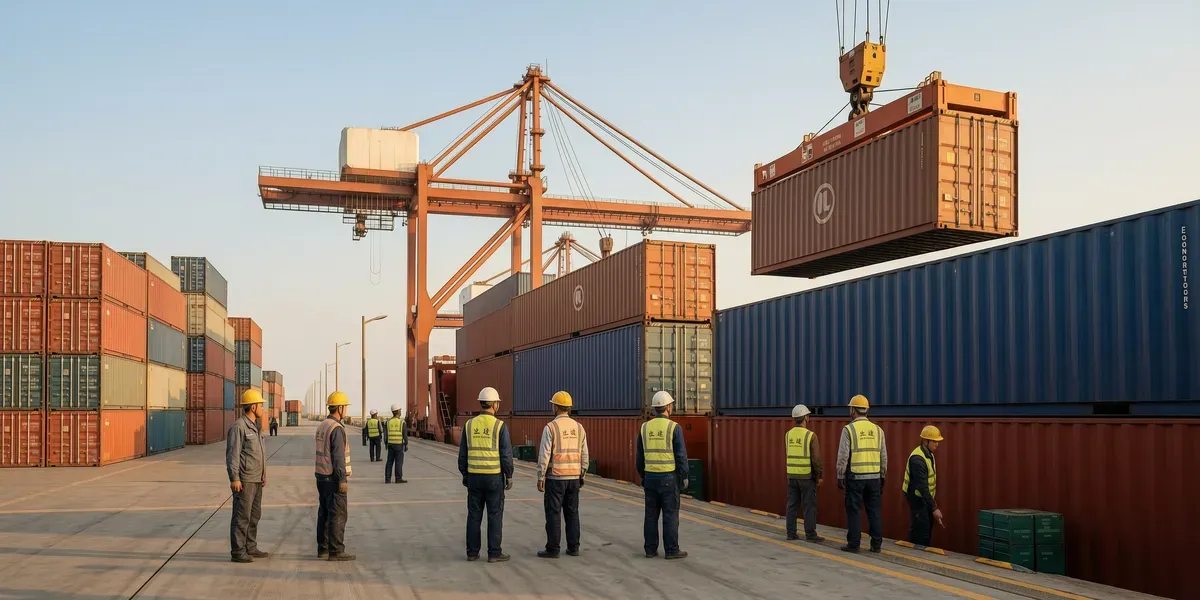
Sea Freight Rates from China to Nigeria in 2026
Indicative all-in port-to-port rates from South China to Lagos in Q4 2026 run about $2,900–$3,700 for a 20GP and $3,150–$4,300 for a 40GP or 40HQ, while LCL is charged at roughly $80–$150 per CBM port to port. The corridor band is wider — roughly $2,500–$4,000 for a 20ft and $3,800–$6,000 for a 40ft — because peak weeks and equipment shortages can move the same box by 40% or more. A complete door-to-door DDP shipment typically lands between $4,500 and $8,500 per container once destination charges, duty and VAT are inside the price.
| Origin Port (China) | 20GP to Lagos | 40GP / 40HQ to Lagos | Typical Direct Transit |
|---|---|---|---|
| Shenzhen / Yantian | $2,900–$3,500 | $3,150–$4,100 | 32–40 days |
| Guangzhou / Nansha | $3,000–$3,600 | $3,300–$4,250 | 30–38 days |
| Ningbo-Zhoushan | $2,950–$3,550 | $3,250–$4,200 | 33–42 days |
| Shanghai | $3,000–$3,600 | $3,300–$4,300 | 35–45 days |
| Qingdao / Tianjin | $3,200–$3,900 | $3,600–$4,800 | 38–48 days |
Figures are indicative all-in port-to-port levels for late 2026 and include origin handling, documentation and fuel surcharges. They exclude destination terminal charges, duty and VAT.

LCL is priced per CBM or per weight-tonne, whichever is greater, at roughly $80–$150 per CBM port to port. On an all-in DDP door-to-door basis — where the forwarder handles Lagos clearing, duty and delivery — LCL typically runs $220–$350 per CBM. Comparing a port-to-port quote against a DDP quote is the most common budgeting error on this lane. For a full cost breakdown that includes the duty and VAT maths, read our shipping cost from China to Nigeria guide.
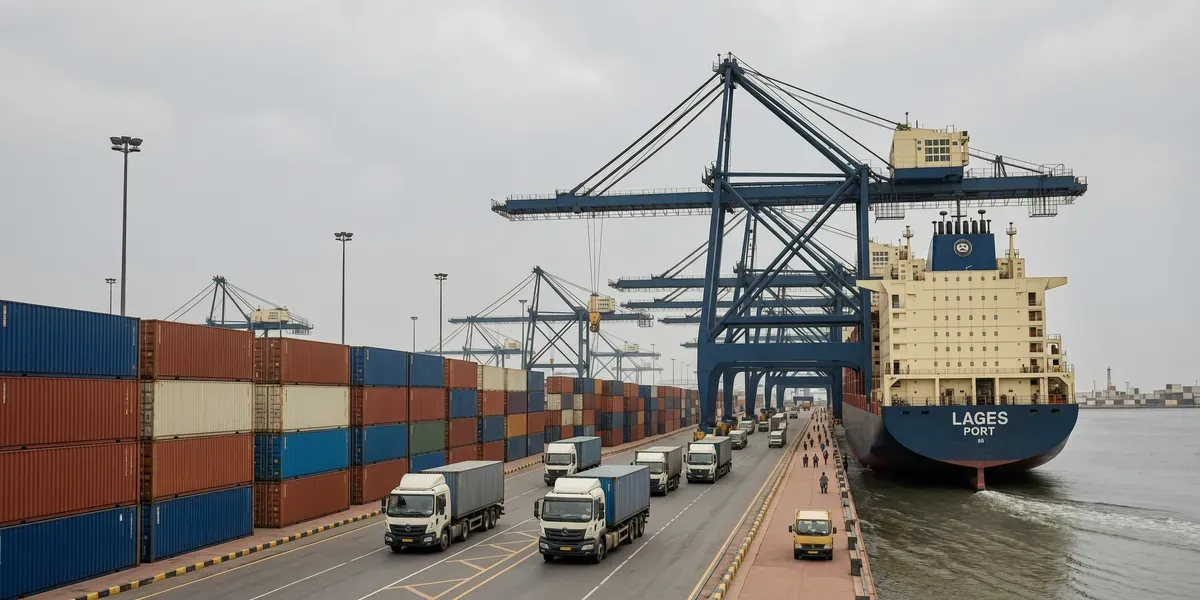
Four variables explain nearly all of the spread between quotes:
- Scope. Port to port, to warehouse, and DDP with duty and VAT paid are three different products.
- Timing. Chinese New Year, Golden Week and the Q4 restocking peak tighten space and add $300–$700 per container.
- Equipment and congestion. Lagos terminals periodically run short on empty equipment; vessel turnaround at Apapa worsened from 5.9 to 6.1 days in H1 2026.
- Naira settlement. Duty and levies are assessed in Naira at the CBN rate on the day of entry.
FCL vs LCL: Where the Break-Even Sits
Below roughly 12 CBM, LCL is usually cheaper. Between 12 and 15 CBM it is genuinely close and worth quoting both ways. Above 15 CBM, a dedicated 20ft container almost always wins on total landed cost, and the advantage widens with every extra cubic metre.
| Factor | Choose LCL | Choose FCL |
|---|---|---|
| Cargo volume | Under 12 CBM | 15 CBM and above |
| Cash flow | Pay only for the space you use | Full container cost upfront |
| Transit predictability | Waits for consolidation and deconsolidation | Sails on your schedule, sealed end to end |
| Cargo security | Shared with other shippers | Sole use of the box |
| Nigeria handling | CFS deconsolidation, extra touches, per-CBM fees | Terminal to truck, one move |
| Best fit | Trial orders, mixed SKUs, e-commerce restocks | Full production runs, project cargo, building materials |
Two Nigeria-specific points tip the decision further toward FCL. LCL cargo is deconsolidated at a Container Freight Station in Lagos, which adds days before your goods are available for entry, and every extra handling step is a chance for shortage. Because dense cargo dominates this lane, LCL’s weight-to-volume charging often erases the saving on goods that look small on paper. For a deeper side-by-side, read our FCL vs LCL shipping comparison, and for the full container rate card by port and size, see the FCL shipping from China to Nigeria guide.
How Long Does Sea Shipping from China to Nigeria Take?
Direct sailings from Chinese ports to Lagos take roughly 30–45 days port to port depending on origin, and a realistic door-to-door shipment runs 40–55 days including factory pickup, export clearance, Lagos clearing and inland delivery. Peak-season congestion and heavy-rain yard pressure at Apapa and Tin Can can push the outer edge to 60 days.
| Route (Port to Port) | Typical Transit |
|---|---|
| Guangzhou / Nansha → Lagos | 30–38 days |
| Shenzhen / Yantian → Apapa | 32–40 days |
| Ningbo-Zhoushan → Tin Can Island | 33–42 days |
| Shanghai → Lagos | 35–45 days |
| Qingdao / Tianjin → Lagos | 38–48 days |
| Door-to-Door Stage | Estimated Duration |
|---|---|
| Factory pickup, consolidation and loading | 2–4 days |
| Export customs clearance in China | 1–3 days |
| Ocean transit | 30–45 days |
| Nigerian customs clearance and terminal release | 3–7 days |
| Inland trucking to your warehouse | 1–3 days |
| Total door to door | 40–55 days |
Plan inventory with a 55-day buffer, not a 40-day one. The delays that hurt importers on this lane are almost never at sea — they happen at origin when a quantity or invoice value changes after the documents were issued, and at the terminal when paperwork is still being corrected as the vessel berths. In 2026 the land side has been the bigger risk: NPA data shows cargo dwell time at Nigerian ports running 10–18 days against a four-day target, compared with 7–10 days at competing facilities in Lomé and Tema.
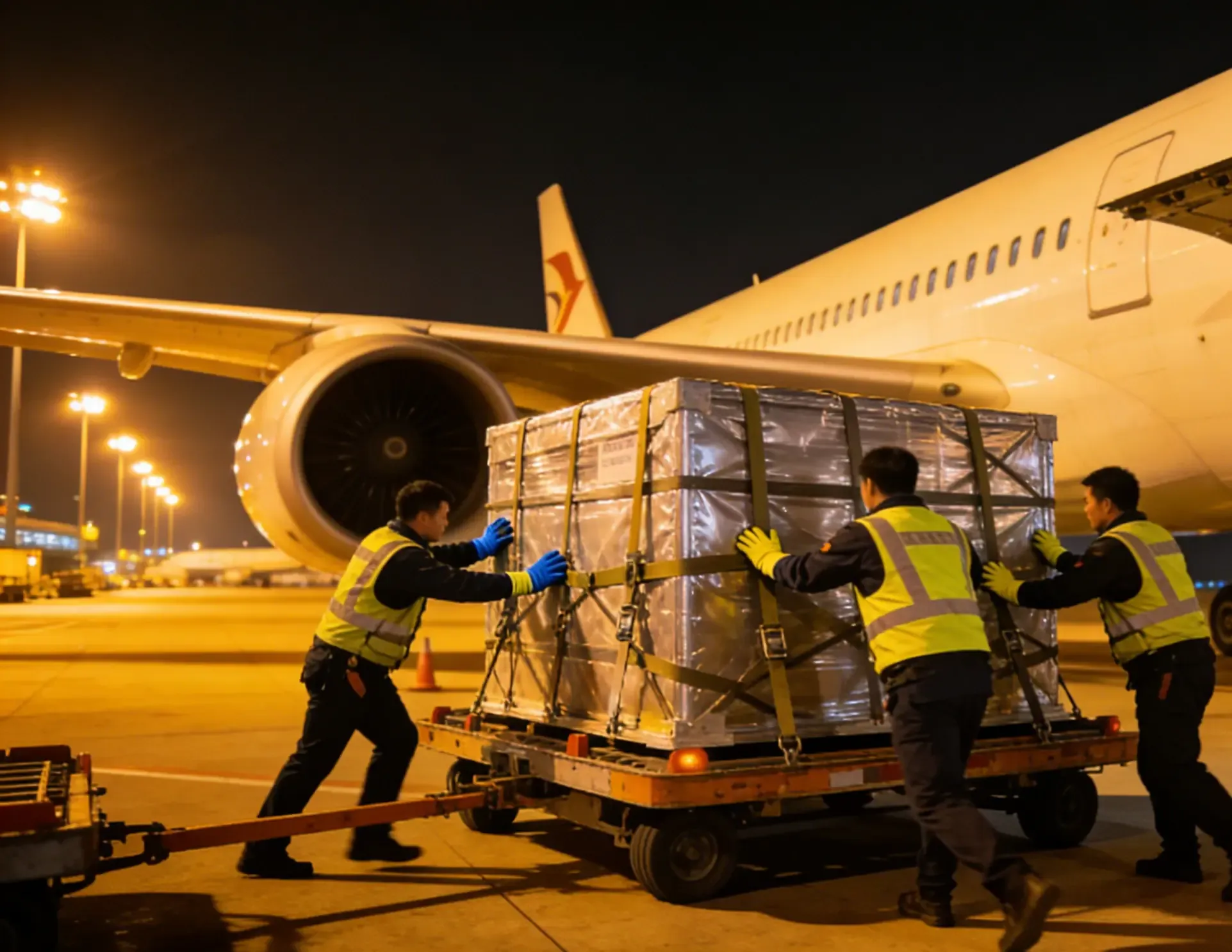
If speed matters more than cost, air freight shipping from China to Nigeria cuts transit to 4–7 days for urgent or high-value cargo. For the lowest possible cost on flexible timelines, our cheapest shipping from China to Nigeria guide breaks down every cost-saving lever.
Shipping Lines and Routing on the China–Nigeria Corridor
Five carrier groups move almost all containerised cargo between China and Nigeria: MSC, Maersk (with Hapag-Lloyd under the Gemini Cooperation), CMA CGM, COSCO, and Pacific International Lines (PIL), plus regional feeders that connect Gulf of Guinea hubs to Lagos. The carrier your forwarder books determines your transit time more than any other single factor, because routing — direct versus transshipment — is where the days are gained or lost.

| Routing Type | Typical Transit | How It Works | Common Carriers |
|---|---|---|---|
| Direct or near-direct (via Cape) | 28–38 days | Vessel rounds the Cape of Good Hope to Lagos or Lekki without a Gulf of Guinea transshipment | COSCO, Maersk (select sailings) |
| Transshipment via Singapore / Port Klang / Colombo | 35–45 days | Mother vessel to a transshipment hub, then feeder to Lagos | CMA CGM, MSC, ONE, Maersk |
| Transshipment via Gulf of Guinea hubs (Lomé / Tema / Abidjan) | 38–48 days | Common for LCL and carriers without direct Lagos calls | MSC feeder, regional lines |
| Northern China origin (Qingdao / Tianjin) | 38–48 days | Additional coastal leg to a South China hub before the main voyage | Multiple carriers |
The corridor’s routing landscape shifted in late 2024 and 2026. In November 2024, COSCO, ONE and ZIM added direct services calling Lekki Deep Sea Port, giving importers routing options beyond the traditional Apapa calls. In April 2026, MSC launched a weekly feeder service connecting Lekki with Lomé in Togo, with the rotation Apapa – Tin Can – Lekki – Lomé; the first vessel arrived at Lekki on 30 May 2026. That service signals carriers now treat Lekki as a core West African hub rather than an optional extra.
Carrier surcharges also move the effective rate well beyond the base freight. In June 2026, Maersk introduced a $1,000 per 20ft and $2,000 per 40ft surcharge on the Asia–West Africa corridor; CMA CGM applied a Peak Season Surcharge of $715 per TEU on the Far East–West Africa lane from March 2026. These can add 20–35% to the base rate — always ask whether a quote includes them.
Choosing the Right Ports: Chinese Origins and Nigerian Gateways
Match the Chinese origin port to where your factory is, and the Nigerian port to where your buyer is. Rate differences between ports are usually smaller than the inland trucking and waiting costs of choosing wrong.
| Chinese Origin Port | Manufacturing Cluster It Serves | Typical Inland Trucking |
|---|---|---|
| Shenzhen (Yantian / Shekou) | Electronics, appliances, e-commerce stock (Dongguan, Huizhou) | $100–$300 |
| Guangzhou (Nansha) | Building materials, ceramics, furniture, textiles (Foshan, Zhongshan) | $150–$350 |
| Ningbo-Zhoushan | Zhejiang hardware, small commodities, auto parts, tools | $100–$400 |
| Shanghai | Machinery, chemicals, high-value goods (Yangtze Delta) | $150–$400 |
| Qingdao / Tianjin | Heavy industry, steel, agricultural products (North China) | $200–$600 |
On the Nigerian side, four gateways matter for container imports, and their 2026 performance diverges sharply:
| Nigerian Port | 2026 Status | Best For |
|---|---|---|
| Lagos Port Complex (Apapa) | Largest general-cargo gateway; vessel turnaround worsened to 6.1 days in H1 2026; $1 billion modernisation underway with ground-breaking on 25 November 2026 | Lagos mainland, Ikeja, Ogun State industrial buyers |
| Tin Can Island (Lagos) | Turnaround deteriorated from 4.4 to 5.1 days; established container and vehicle terminal | Vehicle imports, wholesale goods to mainland markets |
| Lekki Deep Sea Port | Nigeria’s deepest port at 16.5 m draft; handled 40.6% of all port cargo in 2025; NPA reported capacity effectively exhausted by November 2026; turnaround rose from 2.1 to 3.3 days | Larger vessels, Lagos Free Zone and Lekki corridor consignees |
| Onne (Port Harcourt) | Multipurpose complex at 7.5–10 m draft serving the south-east; road access remains congested | Buyers in Port Harcourt, Aba, Owerri and the south-east |
The practical rule: quote door to door, not port to port, before you choose. Clearing at Lekki and trucking 60 km to a warehouse in Ogun State can cost more in the end than clearing a slightly higher rate at Apapa a few kilometres from the delivery address. More than 70% of cargo still passes through Lagos today, despite government approval to modernise Onne, Rivers, Delta and Calabar ports. If you distribute onward into the region, plan the lane differently — see our shipping from China to Ghana route for re-export flows through Tema.
Nigeria Customs Clearance: Form M, SONCAP and the Duty Stack
A container cannot leave any Nigerian port without a validated Form M, a Pre-Arrival Assessment Report (PAAR) and, for regulated products, a SONCAP certificate or NAFDAC registration. The documents must agree with the physical cargo down to the carton count; a discrepancy triggers a Debit Note, a full examination and days of storage at your expense.
| Document | Who Issues It | Why It Matters |
|---|---|---|
| e-Form M | Your Nigerian bank, on the NCS single window | Mandatory import declaration tied to the proforma invoice and the goods |
| Product Certificate / SONCAP | Standards Organisation of Nigeria through accredited firms | Required for regulated goods before the vessel sails, not after arrival |
| NAFDAC registration | NAFDAC | Food, drugs, cosmetics, medical devices and packaged water |
| PAAR | Nigeria Customs Service | The duty assessment that a licensed agent files a declaration against |
| Commercial invoice, packing list, B/L | Supplier, forwarder, carrier | The documentary spine: values, quantities and weights must match |
| Certificate of origin | Exporter / chamber | Supports origin treatment and valuation checks |
Clearance with a complete, consistent document set typically takes 3 to 5 working days after arrival, and pre-filing 48 to 72 hours before the vessel berths is the fastest way to hit that range. Where imports go wrong is almost always paperwork logic: a packing list that says 150 cartons when the container holds 156, or an HS code chosen to look cheaper than the actual product.
Duty is calculated on the CIF value in Naira. Under the ECOWAS CET 2022 to 2026 tariff book, the components stack in a fixed order:
| Cost Component | Basis | Typical Band |
|---|---|---|
| Import duty | % of CIF | 0–35% depending on HS code |
| Surcharge (port levy) | 7% of the duty amount | Fixed |
| ETLS levy | 0.5% of CIF | ECOWAS |
| Import levy (FCS) | 4% of FOB value | Applied and suspended in turns since August 2025 — confirm with your broker |
| VAT | 7.5% of CIF + duties + levies | Fixed |
If you do not present a Nigerian-issued insurance certificate, Customs applies a 1.5% insurance benchmark to the FOB value. For a worked landed-cost example, see the FCL shipping from China to Nigeria guide; for the DDP alternative, read our DDP sea shipping from China to Nigeria guide. Our customs clearance team pre-checks every document before the vessel sails.
Demurrage, Detention and Free Time at Lagos Ports
Nigerian terminals typically grant only 3 to 7 free days before demurrage starts, and shipping lines allow 5 to 7 days of container detention after delivery. Once free time expires, import storage and demurrage at Apapa have been running in the $200–$500 per day range per container, while cargo pulled for examination can also attract storage of around $25 per CBM per day.
Demurrage and detention are two different charges, often invoiced by different parties:
- Demurrage is charged by the terminal for the container occupying space beyond the free period.
- Detention is charged by the carrier for the box being out of circulation after delivery until it is returned empty.
Both escalate daily. A five-day document delay can add more to your landed cost than the entire origin handling fee, and none of it appears in a port-to-port quote.
How to stay out of it:
- Validate the Form M and complete SONCAP or NAFDAC certification before the vessel sails, not while it is berthing.
- Send draft documents to your clearing agent 48 to 72 hours before ETA so the declaration can be pre-filed.
- Cross-check invoice, packing list and B/L against the loading tally before departure.
- Pre-book trucking and confirm your warehouse can receive and unload on the release date.
- Return the empty container on the carrier’s schedule and photograph the interchange receipt.
When to Book: Seasonal Planning on the Nigeria Lane
The China–Nigeria sea freight market has three predictable pressure points each year, and booking four to six weeks ahead of each one is the single most effective way to control both rate and space availability.
| Season | Window | Impact on the Nigeria Lane |
|---|---|---|
| Chinese New Year | Late January to mid-February (CNY 2027 falls on 17 February) | Factories close for 2–3 weeks; space tightens 4–6 weeks before; rates spike $300–$700 per container |
| Golden Week | 1–7 October | Export surge before the shutdown; book by mid-September |
| Q4 restocking peak | October to December | West Africa importers stock for the holiday sales season; equipment shortages at Lagos terminals |
The Nigerian rainy season from May to October adds a separate layer of risk: heavy-rain yard pressure at Apapa and Tin Can stretches vessel waiting times and extends dwell time, and the Mile 2 to Wharf to Apapa truck corridor slows to a crawl. If your delivery deadline falls inside the rains, build an extra 5–7 days into your buffer. For a full calendar of Chinese holiday shutdowns and booking deadlines, see our Chinese New Year 2027 shipping guide.
FAQ: Sea Shipping from China to Nigeria
How much does sea shipping from China to Nigeria cost in 2026? Port-to-port FCL rates in Q4 2026 run about $2,900–$3,700 for a 20GP and $3,150–$4,300 for a 40GP, with the corridor band stretching from $2,500 to $6,000 depending on season and equipment. LCL is roughly $80–$150 per CBM port to port, or $220–$350 per CBM on a DDP door-to-door basis. A door-to-door DDP shipment typically lands between $4,500 and $8,500 per container.
How long does sea shipping from China to Nigeria take? Direct sailings take 30–45 days port to port from Chinese ports to Lagos. Door to door, plan 40–55 days including pickup, export clearance, Lagos clearing and delivery, with a buffer in peak season. Transit from Guangzhou is the fastest at 30–38 days; from Qingdao or Tianjin, expect 38–48 days.
Which Nigerian port should my container go to? Apapa and Tin Can Island for the Lagos mainland and Ogun State belt, Lekki Deep Sea Port for the Lagos Free Zone and Lekki corridor, and Onne for south-east buyers. Compare door-to-door numbers, not port-to-port rates — clearing at Lekki and trucking 60 km can cost more than a slightly higher rate at Apapa near your delivery address.
What documents do I need to clear a sea shipment in Nigeria? A validated e-Form M, a PAAR, commercial invoice, packing list, Bill of Lading, certificate of origin, and SONCAP or NAFDAC approval for regulated products. Every figure must match the physical cargo. Pre-filing 48–72 hours before the vessel berths is the fastest way to clear in 3–5 working days.
Can I ship door to door with duty paid? Yes. A DDP service covers factory pickup, export declaration, ocean freight, Nigerian clearance, duty and VAT payment, and delivery under one price. See our door to door shipping from China to Nigeria guide for how it works.
Shipping to Nigeria Without Surprises
A sea shipment to Nigeria touches more moving parts than most importers expect: service-type selection, carrier routing, port choice, Form M, product certification, pre-filing, Naira-settled taxes, terminal free time and inland trucking. Each is manageable alone; the cost appears when they are sequenced badly.
Efanda Logistics has arranged international freight since 2018, with headquarters in Shenzhen and consolidation warehouses in Guangzhou and Yiwu. On the China to Nigeria lane we handle factory pickup, consolidation, export declaration, ocean freight, customs clearing at Apapa, Tin Can, Lekki and Onne, duty and VAT settlement, and final delivery under one transparent quote with no hidden fees.
Rates and transit times move with the market, so ask us for a fresh, dated quote based on your exact cargo, HS code and delivery address.

Written by the EFANDA Logistics team — a Shenzhen-based freight forwarder established in 2018, moving cargo from China to ports worldwide with end-to-end pickup, consolidation, customs and door delivery.About us