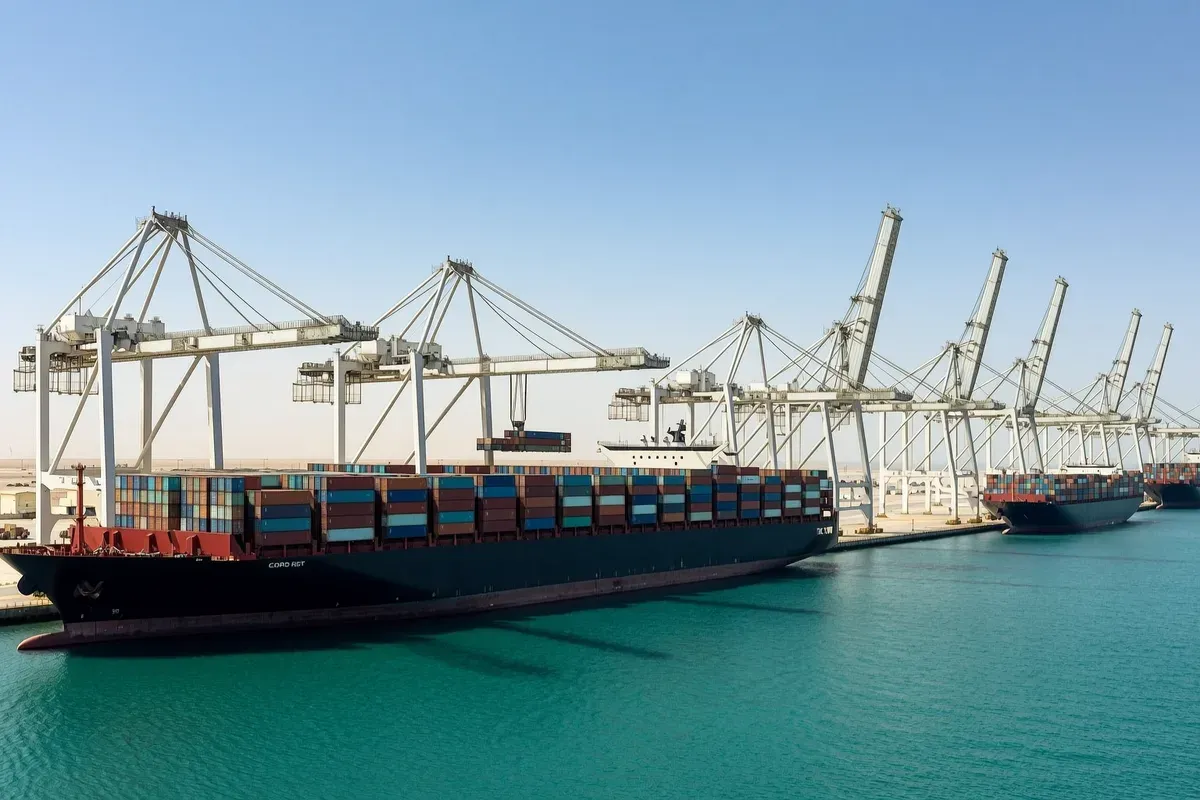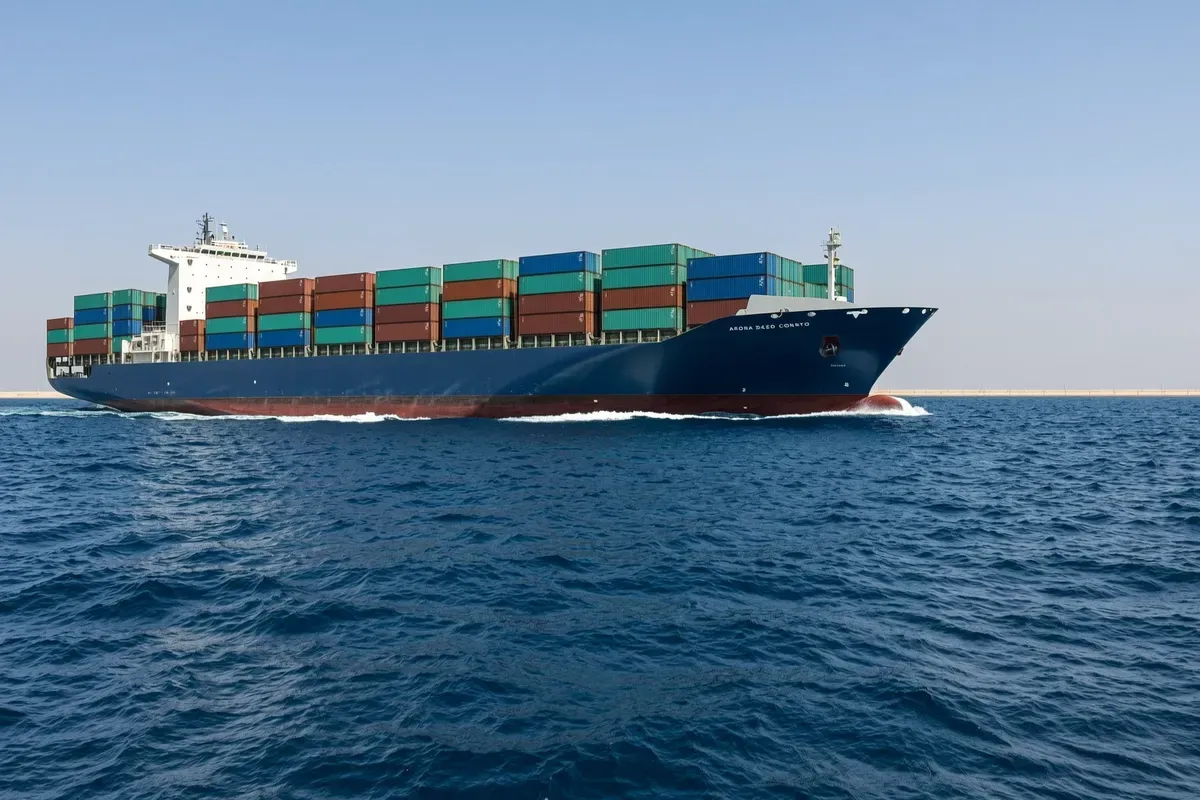
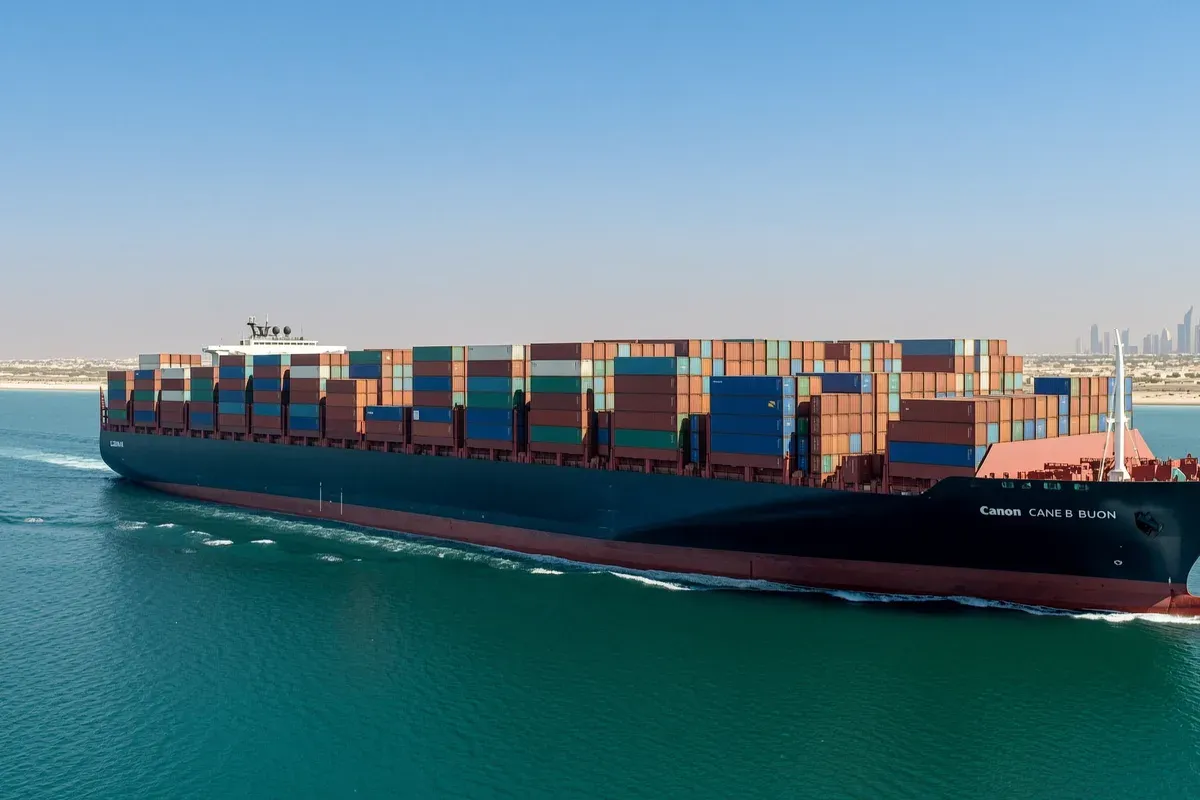
What happens when your first container of Chinese sofas reaches Jebel Ali with crushed cartons, a duty bill calculated on the factory invoice instead of the CIF value, or a hotel fit-out stalled because the fire-test certificate doesn’t match the fabric on the production line? For many first-time buyers, how to import and ship furniture from China to the UAE becomes a research topic only after something expensive has gone wrong.
None of it is inevitable. The UAE runs one of the simplest tax and customs regimes in the world for furniture — a flat 5% duty, no product-specific tariffs, and general furniture is not even on the ECAS conformity list. The complexity lives elsewhere: in container loading math, wood-packaging rules, and fire-safety paperwork for commercial projects. This guide covers all of it — market context, the 10.25% effective tax stack, flat-pack loading tables, Dubai Civil Defence requirements, and a realistic landed-cost breakdown for Q4 2026.
Why Is the UAE Importing So Much Furniture in 2026?
Three numbers explain the lane. The UAE furniture market was worth roughly USD 3.82 billion in 2025 and is projected to reach about USD 4.85 billion by 2031 (Mordor Intelligence estimate). Furniture is also the country’s most import-dependent retail category: imports of HS 9403 furniture and parts reached approximately USD 1.39 billion in 2024, and China supplied about 30% of that — roughly USD 366 million in 2023 alone. No domestic manufacturing base comes close to filling the gap.
Demand is concentrated in Dubai, which holds about 40% of national furniture revenue. Dubai recorded approximately 147,500 property sales in 2025, up 25% year on year — every handed-over apartment and villa is a fit-out order for bedroom, living-room, and dining furniture. Behind that sits a continuous hospitality pipeline: hotel openings and refurbishments furnish hundreds of rooms at a time, and much of that FF&E (furniture, fixtures & equipment) is sourced from the Foshan–Shunde furniture cluster in Guangdong, the factory belt that also supplies hotel projects worldwide.
The catch is that scale hides fragility. Furniture is bulky, cartons crush, upholstery burns, and a single documentation gap can hold a container at Jebel Ali longer than the ocean leg took. The importers winning on this lane treat compliance as part of sourcing — not as an afterthought for the forwarder.
Which HS Code Does Your Furniture Clear Under?
Almost all furniture enters the UAE under HS heading 9401 (seats and sofas), 9403 (other furniture — tables, cabinets, wardrobes — and parts), or 9404 (mattresses and bedding), with lighting under 9405. The full 12-digit code depends on material and construction, which is why you classify at the quotation stage rather than at the port.
The tax stack that follows is refreshingly simple:
- Customs duty: 5% of the CIF value — cost of goods plus international freight and insurance, not the factory invoice. Undervaluing the declaration is the fastest way to turn a routine clearance into a fine plus a cargo hold.
- VAT: 5% on the duty-inclusive value — so the effective tax on a standard consignment is about 10.25% of CIF.
- Low-value exemption: consignments worth AED 1,000 or less are exempt from duty (VAT may still apply) — relevant for sample parcels, not container loads.
Two structural options shape the total. First, the free-zone route: goods stored in JAFZA or Dubai South pay no duty until they enter the mainland, which suits re-exporters serving the wider GCC and African markets — Dubai’s break-bulk ecosystem exists precisely for this. Second, the DDP route: a forwarder with a UAE entity clears as importer of record and delivers duty-paid, useful while your own trade licence and importer code are still being set up.
One compliance trap deserves its own warning. General furniture is not an ECAS-regulated category — but electrical components are. Motorized recliner mechanisms, LED mirrors, lighted vanities, and any lighting (HS 9405) require ECAS conformity, and a mixed furniture-and-lighting container is exactly where importers get caught. Classify carefully and, where possible, split the declaration before the cargo sails rather than after it arrives.
Actionable Tip #1: Confirm the HS line and duty treatment in writing before you pay a deposit — a one-line classification memo from your forwarder or broker, per SKU family, costs nothing and prevents the most common clearance delays.
How Much Furniture Fits in a Container?
For furniture, volume binds long before weight. A well-loaded 40HQ of flat-pack furniture weighs 8–10 tonnes against a 26-tonne payload — the box fills up while the chassis stays light. That flips the usual freight logic: your cost driver is usable cubic meters, and nobody loads to the nominal figure.

| Container | Usable Volume | Typical Flat-Pack Load | Freight per Usable CBM |
|---|---|---|---|
| 20ft GP | 25 – 28 CBM | ≈ 30 – 35 KD 3-seater sofas | ≈ $75 – $100 |
| 40ft GP | 55 – 58 CBM | ≈ 65 – 70 KD 3-seater sofas | ≈ $60 – $85 |
| 40ft HQ | 65 – 68 CBM | ≈ 75 – 85 KD 3-seater sofas | ≈ $51 – $72 |
| LCL (per CBM) | 1 CBM | 1 – 2 KD sofas per CBM | $55 – $180 |
The multiplier that matters is knock-down (KD) versus assembled. An assembled three-seater sofa occupies 3–5 CBM; the same sofa flat-packed in export cartons takes 0.8–1.1 CBM — a 40–60% volume saving that doubles or triples units per container. Packed CBM per SKU, in writing from the factory, is the single most important number in your freight quote: supplier estimates of carton volume run about 15% optimistic, and the CBM you load is the CBM you pay for.
The practical break-even sits at roughly 15 CBM. Below that, LCL shipping consolidation costs less; above it, a full container wins per unit, and the 40HQ is the default choice because carriers on this lane quote 40GP and 40HQ at nearly the same rate. Sofa-heavy loads shipped assembled are the exception that proves the rule: enclosed upholstered frames waste space, and utilization can fall to 50–55 CBM in a 40HQ.
Do You Need a Fire Certificate to Sell Furniture in Dubai?
For residential retail, generally no — but for commercial projects, yes, and it is non-negotiable. The UAE Fire and Life Safety Code of Practice, published by Dubai Civil Defence, governs materials placed in hotels, restaurants, offices, and other public occupancies. Upholstered seating, mattresses, curtains, and carpets in those spaces require documented fire performance.
The Code accepts several test routes, including BS 5852, BS 7176, EN 1021-1/-2, NFPA 701, and ASTM E1537. Three details decide whether your paperwork survives a project submittal:
- The certificate must match the production construction. A fabric-only certificate does not prove that a complete seat — cover, interliner, and foam combination — passes a composite test. If the factory switches fabric after certification, the report no longer describes what you are shipping.
- Test reports belong at the sample stage, not at handover. Reputable Foshan hotel-furniture suppliers routinely hold BS 5852 crib-5 composite reports for their standard builds; ask for them when you approve samples, so there is time to re-test if a fabric changes.
- The project fire consultant maps your FF&E submittal to the Code. For hotel and restaurant work, coordinate with that consultant early — the approval path, not the customs declaration, is where upholstered cargo gets delayed.
For mainland retail and e-commerce sales to end consumers, Civil Defence approval is not a customs requirement — though mall landlords and fit-out contractors increasingly ask for test evidence anyway. Budget it into sourcing either way: a USD 15 sofa without a fire file is a liability, not a bargain.
Is Fumigation Required for Wooden Furniture?
Not for the furniture itself — but absolutely for the wood packaging. Any pallet, crate, or dunnage made of solid wood must comply with ISPM 15: heat-treated (or methyl-bromide fumigated) and stamped with the IPPC mark on two sides. A missing mark means fumigation at your expense, a customs hold, or re-export. Plywood, OSB, and other manufactured wood are exempt, as is the furniture body itself.
One contrast worth knowing if you also sell into other markets: the United States additionally demands a Lacey Act plant declaration naming species and harvest country for wooden furniture — the UAE does not. That makes the Emirates one of the easiest major markets in the world for wooden furniture entry, provided the packaging paperwork is clean. Our guide to shipping furniture from China to the USA covers that heavier regime in detail.
Actionable Tip #2: Put the ISPM-15 requirement — HT stamp, two sides, certificate on file — into the loading instruction, and photograph the marks during loading. The photo is your evidence if a destination inspector questions the packaging.
What Does It Cost to Import Furniture from China to the UAE in 2026?
Current Q4 2026 lane rates, re-validated weekly on our shipping cost from China to the UAE page: LCL runs $55–$180 per CBM, a 20GP $2,100–$2,800, and a 40HQ $3,500–$4,700 from Shenzhen to Jebel Ali, with the detailed port-by-port table in our 2026 container rates update. Treat every figure as a baseline with a two-to-three-week shelf life — off-peak windows push a 20GP toward $1,450–$2,600, and peak surges lift it past $5,000.
The worked example below is the number set your CFO will ask for: a 40HQ of mixed flat-pack living and dining furniture, FOB Shenzhen, cleared to a Dubai warehouse.

| Cost Line | Amount | Note |
|---|---|---|
| Goods (FOB Shenzhen, ≈ 60 CBM sellable) | $32,000 | Mixed flat-pack living + dining sets |
| Ocean freight + BAF + origin charges | $4,420 | 40HQ, Yantian → Jebel Ali |
| Insurance (≈ 0.3% of cargo value) | $108 | All-risk, door-to-door |
| CIF value | $36,528 | Duty base — not the $32,000 invoice |
| Customs duty (5% of CIF) | $1,826 | GCC Common External Tariff |
| Import VAT (5% of duty-inclusive value) | $1,918 | Recoverable if you are VAT-registered |
| Destination charges + Dubai delivery | $406 | THC, D/O fee, warehouse delivery |
| Total landed cost | ≈ $40,700 | Tax stack ≈ 10.25% of CIF |
Two planning insights fall out of this stack. First, duty plus VAT — about $62 per sellable CBM here — is a bigger line than ocean freight itself ($59 per usable CBM in a full 40HQ). Second, if you are VAT-registered in the UAE, the import VAT is recoverable through your return, which trims the effective stack to roughly 5% of CIF in cash-flow terms. Either way, the UAE’s tax burden is among the lowest of any major furniture market — the landed-cost battle on this lane is won on freight and damage control, not tariffs.
Sea, Air, or Courier: Which Mode Moves Furniture?
| Mode | Rate (Q4 2026) | Transit | Best For |
|---|---|---|---|
| Sea LCL | $55 – $180 per CBM | 22 – 35 days door-to-door | Trial orders, 1 – 14 CBM |
| Sea FCL (20GP / 40HQ) | $2,100 – $2,800 / $3,500 – $4,700 | 20 – 31 days | Restock programs, 15 CBM and above |
| Air freight | $3.80 – $6.50 per kg | 5 – 10 days | Samples, launch stock, urgent spares |
| DDP door-to-door | $120 – $180 per CBM | 22 – 35 days | Buyers without a UAE import entity |
The logic is cargo-specific. Air freight punishes furniture: volumetric weight (1 CBM = 167 kg) means a “light” carton of flat-pack chairs bills like lead, so air is for samples and genuine emergencies — our air freight from China team quotes it honestly when it makes sense and says so when it does not. Ocean FCL is the inventory mode, and for furniture the 40HQ almost always beats the 20GP on cost per CBM. LCL is the right risk-management tool for a first order: you test the supplier, the cartons, and the market before committing a full box. Transit-time planning — including the Ramadan and year-end peaks that tighten Gulf sailings — is mapped in our guide to how long shipping from China to the UAE takes, and the gateway itself is covered in our Jebel Ali port guide.
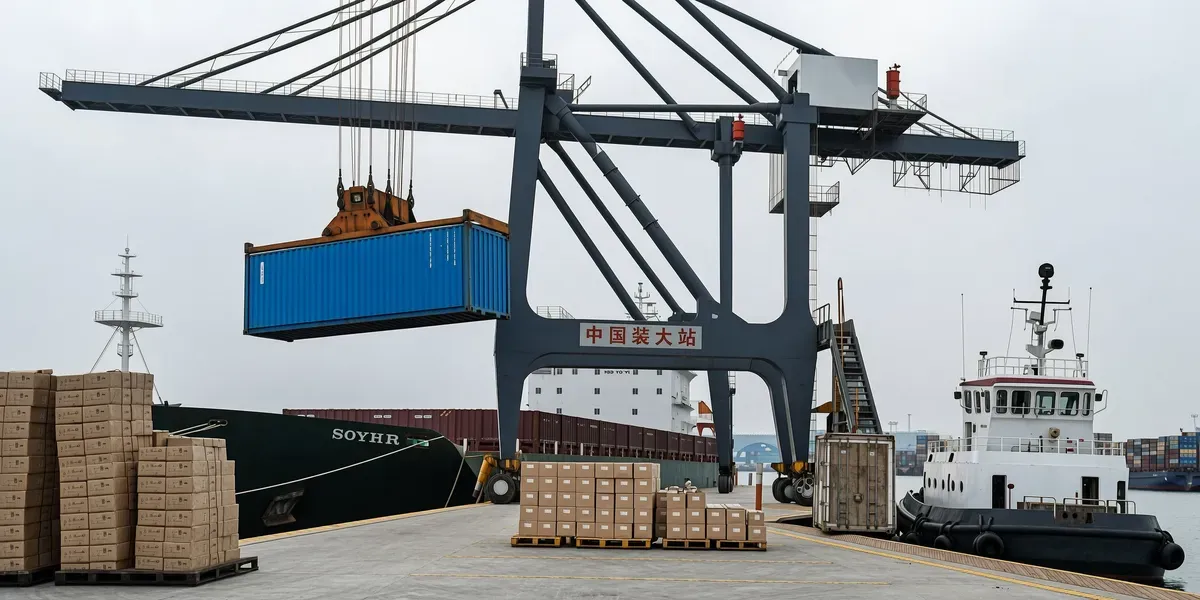
How to Import Furniture from China to the UAE: Step by Step
- Lock the product spec and the KD design — flat-pack construction, carton dimensions, pieces per carton — and get packed CBM and gross weight per SKU in writing. This number drives everything downstream.
- Verify the supplier and the trade term. Confirm the factory can export (or book through a trading partner), and choose FOB, EXW, or DDP — our FOB vs CIF vs DDP breakdown shows who controls which costs under each term.
- Classify and price the compliance stack. Fix the HS line, model the 5% + 5% tax, and check for ECAS-regulated electrical components in the assortment.
- Book freight from the CBM total. Under ~15 CBM, compare LCL; above it, book the 40HQ. Write the packing spec (5-ply export cartons, foam, corner protectors, ISPM-15 marks, desiccant) into the loading instruction.
- Assemble the document set: commercial invoice, packing list, bill of lading, certificate of origin, fire-test reports for project upholstery, and the ISPM-15 certificate for wood packaging.
- Clear through Mirsal 2 with a licensed UAE customs broker: declaration, duty and VAT payment, and release — the standard customs clearance flow our Dubai desk runs daily.
- Inspect at handover and claim fast. Photograph carton condition at the warehouse door; concealed-damage windows in carrier terms are measured in days, not weeks.
How Do You Stop Furniture From Arriving Damaged?
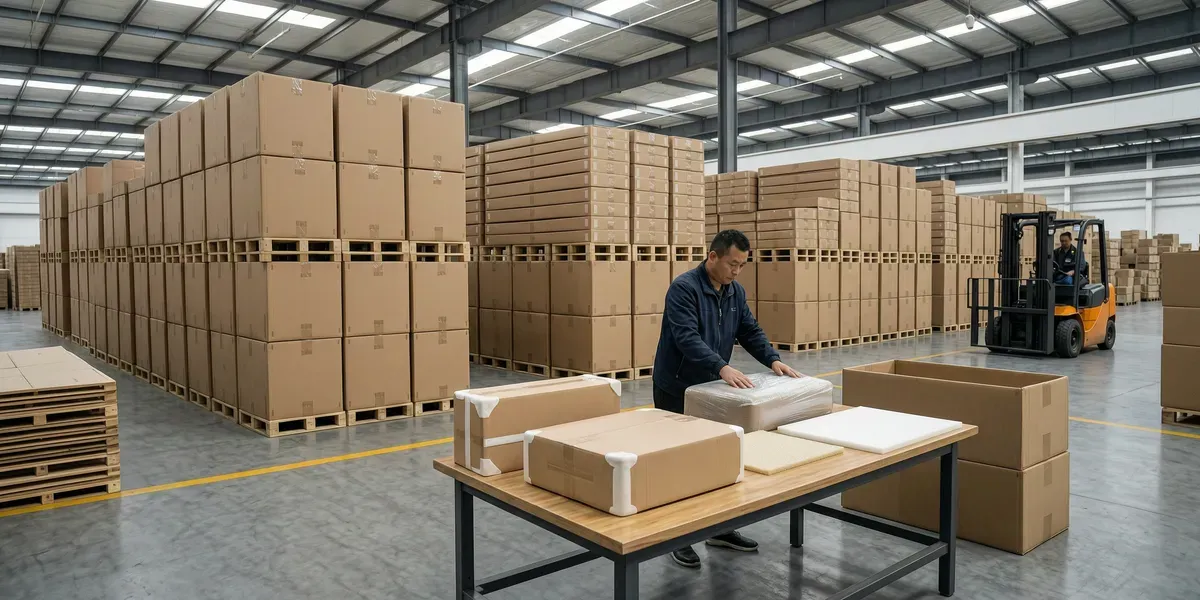
Furniture claims are decided before the vessel sails. Carrier liability on a crushed carton of MDF nightstands is a few dollars against a $180 retail unit, so the defense is packing, photographs, and insurance. Specify 5-ply double-wall export cartons, EPE foam on every finished surface, cardboard corner protectors on edges, and crates for marble, glass, and high-gloss tops. For the UAE’s humidity, add desiccant bags to each carton load — mold on upholstery arriving in August is a real claim category.
Every transload is both a customs event and a forklift event, so put the transload count in the booking and the photo requirement in the loading instruction. Then buy all-risk cargo insurance at roughly 0.3% of cargo value, with the packing standard declared to the insurer — the standard exclusions (insufficient packing, inherent vice) are exactly the clauses an undocumented shipment falls into.
Why Efanda Logistics for Your Furniture Shipments?
Furniture rewards preparation and punishes improvisation — which is precisely what an experienced freight forwarder from China to the UAE is paid for. At Efanda Logistics, we have managed China–UAE furniture shipments since 2018 from our Shenzhen headquarters: factory pickup across the Foshan–Guangzhou furniture belt, multi-supplier consolidation into one container, weekly FCL and LCL sailings to Jebel Ali, UAE import clearance through Mirsal 2, and final delivery to your warehouse, showroom, or project site — with a DDP option if you do not yet hold a UAE import licence.
Our quotes itemize ocean freight, surcharges, duty, VAT, clearance, and delivery with no hidden fees, and we are explicit about rate volatility on this lane. Every client gets a dedicated logistics advisor and packing-standard verification at origin — the two things that decide whether furniture arrives sellable. For a tailored, all-inclusive quote, contact our team at +86 18929345880.
FAQs
What is the total import duty on furniture from China to the UAE?
A 5% customs duty on the CIF value (goods + freight + insurance) plus 5% VAT on the duty-inclusive value — an effective 10.25% of CIF. There are no additional tariffs or anti-dumping duties on furniture, making the UAE one of the lowest-tax furniture markets in the world.
Does furniture need ECAS certification for the UAE?
General furniture does not — it is not an ECAS-regulated category. The exception is electrical components: motorized recliners, LED mirrors, and any lighting (HS 9405) require ECAS conformity. Split or classify mixed containers before shipping.
How many sofas fit in a 40HQ container from China?
Roughly 75–85 three-seater sofas in flat-pack form (0.8–1.1 CBM each) against 65–68 CBM of usable volume. Assembled sofas at 3–5 CBM each cut that to about 25–35 units — the reason virtually all China–UAE furniture ships knock-down.
Is fumigation required for wooden furniture shipped to the UAE?
The furniture itself does not need fumigation, but all solid-wood packaging — pallets, crates, dunnage — must be ISPM-15 heat-treated and carry the IPPC mark. Missing marks trigger fumigation at the consignee’s cost or refusal of entry.
Do I need a fire certificate to import furniture into Dubai?
For mainland retail to end consumers, no. For commercial projects — hotels, restaurants, offices — upholstered items need test evidence (BS 5852, BS 7176, EN 1021-1/-2, or NFPA routes) that matches the production fabric, foam, and interliner combination, mapped by the project’s fire consultant to the UAE Fire and Life Safety Code.
LCL or FCL for a first furniture shipment to the UAE?
Under about 15 CBM, LCL at $55–$180 per CBM is usually cheaper and limits your risk exposure while you test the supplier. Above 15 CBM, a 40HQ at $3,500–$4,700 drops the freight to roughly $51–$72 per usable CBM and protects cartons from consolidation handling.
Conclusion
Furniture importing to the UAE in 2026 comes down to three numbers: 10.25% — the effective tax on CIF to model into every quote; 65–68 CBM — the usable volume of a 40HQ that flat-pack packing is engineered to exploit; and ≈ $40,700 — the realistic landed cost of a $32,000 FOB container delivered to a Dubai door. Get the classification, KD packing, ISPM-15 marks, and fire documentation right before the cargo moves, and the UAE rewards you with one of the cleanest import regimes on earth.
Ready to price your furniture program with an itemized, no-surprises quote? Contact Efanda Logistics today at +86 18929345880 — or start with our shipping from China to the UAE lane page for the full service picture.

Written by the EFANDA Logistics team — a Shenzhen-based freight forwarder established in 2018, moving cargo from China to ports worldwide with end-to-end pickup, consolidation, customs and door delivery.About us